Share
How Flocked Swabs Reduce False Negatives in PCR Testing
Quick Answer

Flocked swabs reduce false negatives because they collect more biological material, release a higher proportion of that specimen into transport media, and improve consistency across operators compared with traditional fiber-wound swabs. In PCR workflows across the United States, that matters most when viral load is low, symptoms are early, the patient is difficult to sample, or collection is happening at scale in hospitals, urgent care centers, pharmacies, public health labs, and workplace testing programs.
The most practical takeaway is simple: if a buyer wants to lower missed detections, the priority should be a validated flocked swab with uniform nylon fiber application, compatible breakpoint design, sterile packaging, and evidence of stable performance with the intended PCR assay and specimen type. Buyers in the United States often compare established suppliers such as Copan Diagnostics, Puritan Medical Products, Becton Dickinson, Thermo Fisher Scientific, Hardy Diagnostics, and MWE, while also considering qualified international manufacturers with local regulatory documentation, reliable logistics, and strong pre-sales and after-sales support. Cost-performance can be especially attractive when those suppliers already serve the US market with appropriate certifications and responsive technical service.
Why False Negatives Happen in PCR Testing

PCR is highly sensitive, but the test result is only as good as the sample collected. A false negative does not always come from assay chemistry. In many real-world settings, it begins at the point of collection. If a swab fails to pick up enough epithelial cells, mucus, or pathogen-containing fluid, the extracted nucleic acid may fall below the assay’s limit of detection. This risk increases in low viral load situations, at the start or end of infection, after partial treatment, or when collection technique varies from one clinician to another.
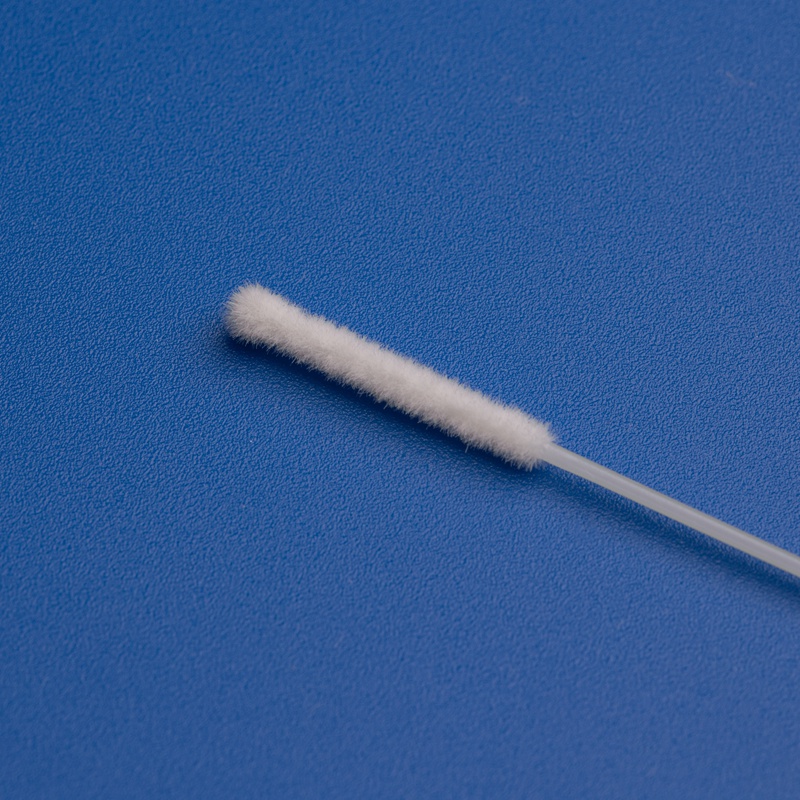
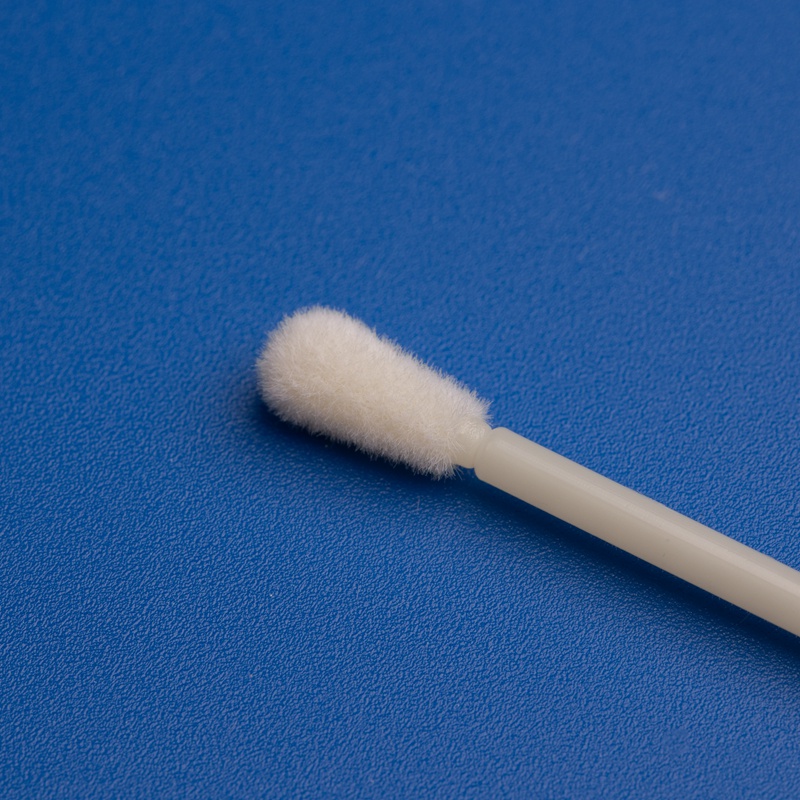
In the United States, large testing networks from New York and Boston to Houston, Los Angeles, Chicago, and Atlanta rely on standardized collection devices to control this pre-analytical variability. The swab has to enter the correct anatomical site, absorb or capture the target material, and then release it efficiently into transport media or extraction buffer. Traditional wound swabs can trap material in an internal fiber matrix. Flocked swabs, by contrast, place short nylon fibers perpendicular to the swab tip, creating a brush-like surface that improves sample acquisition and release.
This difference is not just technical detail. In respiratory PCR, for example, a weakly positive patient can become a reported negative if the specimen contains too little viral RNA. In women’s health, urological sampling, and DNA collection, the same principle applies: poor pickup or poor elution can undermine downstream amplification. That is why medical buyers, distributors, and laboratory managers increasingly evaluate swab design as a core diagnostic risk factor rather than a commodity purchase.
How Flocked Swabs Work Better Than Traditional Swabs

The performance advantage of flocked swabs comes from structure. A conventional cotton, rayon, or polyester wound swab wraps fibers around the tip. That design can absorb material, but it may also hold the sample within the fiber layers. A flocked swab uses electrostatic application to attach many short nylon fibers to the tip in a more open arrangement. The result is faster uptake at the surface and more efficient release into liquid media.
In practical PCR terms, flocked swabs help in four ways. First, they increase contact area with the mucosal surface. Second, they improve capillary action and capture of cellular material. Third, they reduce specimen entrapment. Fourth, they support more repeatable collection because the tip geometry is engineered to be consistent from batch to batch. For laboratories in the United States managing CLIA workflows and high-throughput diagnostic pipelines, that consistency helps reduce lot-to-lot uncertainty.
Another important factor is patient comfort. A flexible but controlled shaft and smooth flocked tip can make nasopharyngeal, nasal, oral, or gynecological sampling more tolerable. Better comfort can improve cooperation, and better cooperation can improve sampling depth and accuracy. In busy settings such as community clinics in Miami, public testing centers near major airports, or hospital networks receiving specimens through regional hubs, small improvements in collection compliance can translate into measurable quality gains.
Market Outlook in the United States
The US sampling consumables market remains closely tied to respiratory surveillance, molecular diagnostics, women’s health screening, decentralized testing, and supply chain resilience. Since the pandemic period, buyers have become more attentive to domestic stock availability, validated alternatives, and backup sourcing through import channels connected to West Coast and East Coast ports such as Los Angeles, Long Beach, New York-New Jersey, Savannah, and Houston. This has increased demand for flocked swabs that can support PCR, antigen confirmation workflows, and broader specimen collection programs.
Procurement teams are also shifting from emergency purchasing to lifecycle value assessment. They now ask whether the swab reduces recollection rates, whether it integrates with automation-friendly transport systems, whether packaging supports inventory control, and whether the supplier can maintain documentation for FDA-related requirements, CE history, sterilization records, and batch traceability. This is especially relevant for distributors serving state health departments, hospital IDNs, reference labs, and OEM private-label brands.
United States flocked swab market indicators
The table below shows a realistic directional view of the US market. It explains how demand is moving from emergency volume buying to quality-focused procurement based on assay compatibility, inventory security, and total testing reliability.
| Year | Estimated US Demand Index | Main Driver | Buyer Focus | Primary Channels | Risk Concern |
|---|---|---|---|---|---|
| 2021 | 100 | Pandemic surge testing | Immediate availability | Federal and hospital procurement | Severe shortages |
| 2022 | 88 | Routine respiratory testing | Supply continuity | Distributors and labs | Price volatility |
| 2023 | 81 | Broader molecular diagnostics | Validation evidence | Hospitals and public health systems | Quality variation |
| 2024 | 85 | Women’s health and outpatient testing | Workflow fit | Regional wholesalers | Recollection rates |
| 2025 | 92 | Decentralized collection growth | Consistency and traceability | Pharmacies and clinics | Operator variability |
| 2026 | 98 | Integrated diagnostic networks | Total cost per valid result | IDNs, labs, OEM brands | Regulatory documentation gaps |
Product Types Used for PCR and Molecular Sampling
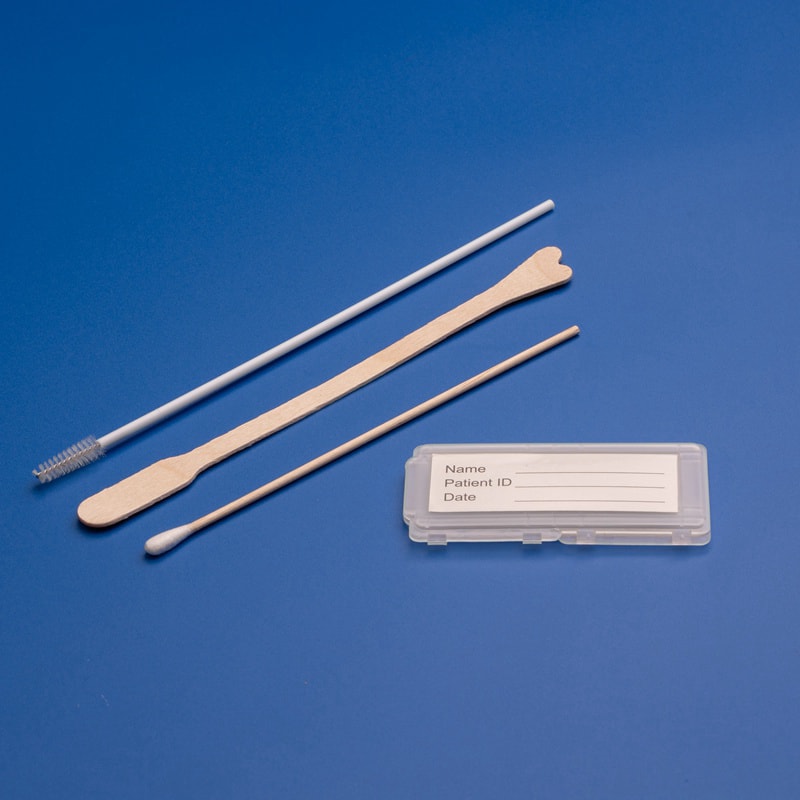
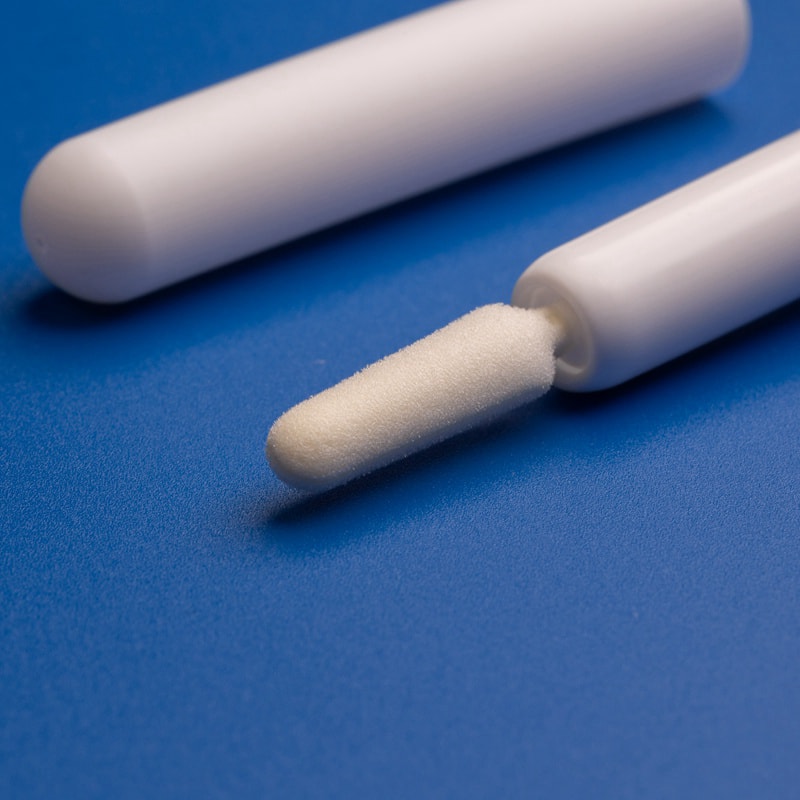
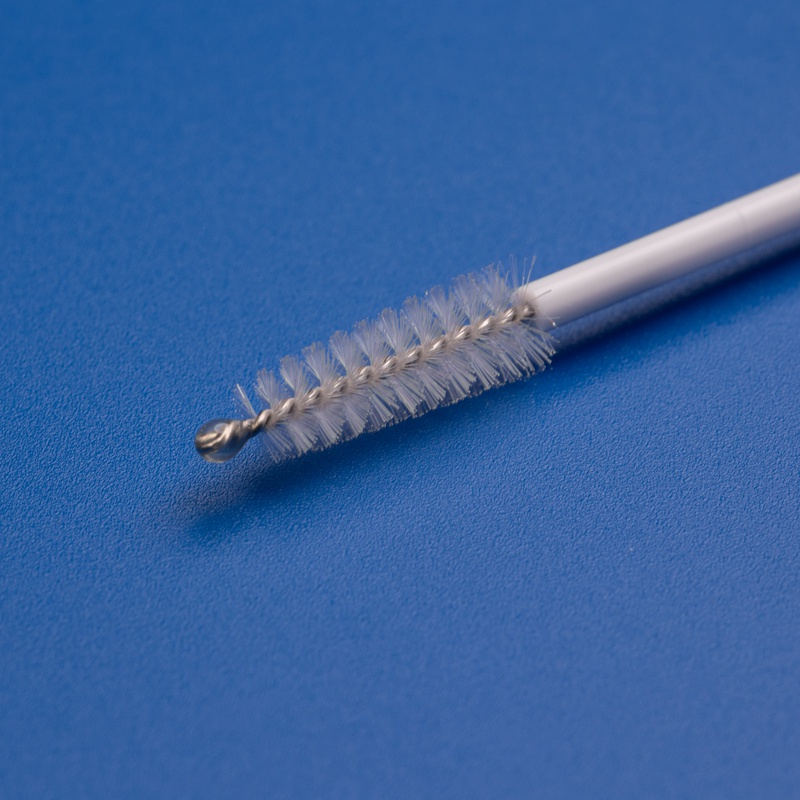
Not every flocked swab is the same. Buyers in the United States commonly select different formats depending on specimen site, patient population, and laboratory method. Nasopharyngeal flocked swabs are designed for deep sampling and often use a mini-tip or ultra-fine tip with a flexible shaft. Mid-turbinate and anterior nasal versions support easier respiratory collection. Oral and buccal flocked swabs are used for DNA and oral specimen capture. Cervical and gynecological flocked swabs support molecular screening programs, while urogenital variants are engineered for specific anatomical sites.
Material compatibility matters. Nylon flocking is widely preferred for rapid specimen release, while shaft polymers and breakpoint designs must work with tubes, transport media, and automated analyzers. Sterility method, packaging configuration, shelf life, and lot coding also influence usability in regulated purchasing environments.
Common flocked swab types and how they are used
This table helps buyers match swab format to clinical use. The practical point is that choosing the correct geometry is as important as choosing flocked technology itself.
| Swab Type | Common Specimen Site | Main Use | Typical User | Key Advantage | Watchpoint |
|---|---|---|---|---|---|
| Nasopharyngeal flocked swab | Posterior nasopharynx | Respiratory PCR | Hospitals, labs, urgent care | High sensitivity collection | Requires trained technique |
| Mid-turbinate flocked swab | Mid nasal passage | Respiratory molecular testing | Clinics, pharmacies | More patient-friendly | May collect less deep material |
| Anterior nasal flocked swab | Front nasal cavity | Screening and self-collection | Retail health and employers | Easy collection workflow | Needs assay compatibility check |
| Oral flocked swab | Oral cavity | DNA and pathogen collection | Forensics, genetics, clinics | Fast release in buffer | Food contamination risk pre-collection |
| Cervical flocked swab | Cervix | HPV and PCR screening | OB-GYN and labs | Good epithelial cell capture | Must fit transport system |
| Urogenital flocked swab | Urethral or related site | STI molecular testing | Specialty clinics | Precise specimen capture | Patient comfort is critical |
Where Flocked Swabs Matter Most
Flocked swabs offer the greatest diagnostic value where low biomass or sampling inconsistency can lead to missed signals. Respiratory virus testing is the best-known example, but the same logic extends to influenza panels, RSV, multiplex molecular assays, sexually transmitted infection testing, HPV screening, oral DNA collection, and certain environmental or forensic workflows. In each case, the challenge is not just obtaining a sample but obtaining enough analyte to survive the full chain from collection through transport, extraction, and amplification.
Large healthcare systems in the United States increasingly monitor invalid and recollection rates because each repeated test adds labor, transportation cost, patient inconvenience, and reporting delays. A flocked swab that improves first-pass sample adequacy can reduce those hidden costs.
Industry demand for flocked swabs in the United States
The chart below illustrates how different sectors use flocked swabs. Respiratory and hospital-linked molecular testing remain strong, but women’s health, outpatient collection, and public health surveillance continue to expand.
Buying Advice for United States Importers, Distributors, and Clinical Buyers
When selecting flocked swabs, buyers should move beyond unit price and ask what each swab does to total assay performance. A lower-cost swab that produces more recollections, more weak positives turning negative, or more operator complaints can be more expensive overall. Evaluation should include absorbency behavior, release efficiency, shaft flexibility, breakpoint reliability, sterility method, packaging integrity, transport media compatibility, and lot traceability.
United States buyers also need to consider whether the supplier understands domestic distribution realities. Products may move through a master distributor in New Jersey, a regional warehouse in Texas, or a hospital GPO-linked channel in the Midwest. Reliable palletization, carton labeling, customs documentation, and replenishment timing are not small details; they directly affect continuity of patient testing. A good supplier should support technical files, certificates, sterilization records, and packaging configurations that fit US inventory systems.
For OEM private-label buyers, questions should include branding flexibility, custom packaging, IFU alignment, barcode options, and whether the manufacturer can maintain quality consistency over long production runs. For hospitals and laboratories, the priority may be assay validation support and the ability to keep the same swab geometry through contract periods.
Buyer checklist for reducing false negatives
This table turns technical concerns into procurement actions. It shows how the right purchasing criteria can directly improve PCR result quality.
| Evaluation Point | Why It Matters | What to Ask Supplier | Operational Benefit | Risk If Ignored | Best Fit Buyer |
|---|---|---|---|---|---|
| Flocked tip uniformity | Improves pickup consistency | How is flocking controlled and inspected? | More stable sample adequacy | Lot variation | Labs and hospital systems |
| Release efficiency | Affects nucleic acid yield | Do you have comparative elution data? | Better sensitivity | Weak positives missed | Molecular labs |
| Sterility and packaging | Protects sample integrity | EO records and seal validation? | Lower contamination risk | Invalid tests | Hospitals and public health |
| Breakpoint design | Ensures tube compatibility | Which tube dimensions are supported? | Faster workflow | Handling errors | Distributors and clinics |
| Regulatory documents | Supports compliance review | Can you supply technical files and batch data? | Smoother onboarding | Delayed approvals | Importers and OEM brands |
| Supply reliability | Prevents stockouts | What are lead times and backup capacity? | Continuity of testing | Emergency substitutions | Wholesalers and IDNs |
Applications Across Key Industries
In hospital systems, flocked swabs are used to improve respiratory sample quality during seasonal surges and outbreak investigations. Reference laboratories value them because pre-analytical consistency improves downstream reproducibility across thousands of samples. Public health agencies use them for surveillance programs that depend on population-level confidence rather than single-case convenience.
Women’s health is another major growth area. HPV and other molecular screening programs require reliable epithelial cell capture, and flocked cervical sampling devices help improve specimen adequacy. In urology and sexual health clinics, swabs must balance comfort with strong collection performance. Genetics and forensic applications also use flocked oral swabs because they release cells efficiently into extraction buffers.
The industrial and workplace health segment has become more sophisticated as employers, universities, and event operators maintain contingency screening strategies. While volumes may be lower than pandemic peaks, expectations around consistency, packaging, and distribution are much higher.
Case Studies from the Field
A multisite urgent care network in the Midwest switched from a generic wound polyester swab to a validated flocked anterior nasal option for compatible PCR workflows. Staff training time dropped because the new swab had a clearer handling profile, and recollections for insufficient material decreased during the winter respiratory season. The operational value was not just analytical; it reduced patient callbacks and protected same-day reporting.
A women’s health lab serving clinics in California and Arizona reviewed specimen adequacy trends and found that swab variability was contributing to repeat collections. After moving to a more standardized flocked cervical sampling format with consistent packaging and better lot traceability, the lab reported smoother accessioning and fewer customer support complaints from clinics.
A distributor operating through New Jersey and Georgia added an international flocked swab manufacturing partner as a second source for private-label respiratory kits. Because the supplier could provide sterilization records, certification packages, and tailored packaging, the distributor reduced dependence on a single production origin while keeping service levels for hospital and pharmacy clients.
Local and Active Suppliers Relevant to the United States
The supplier landscape in the United States includes domestic manufacturers, multinational diagnostics companies, and internationally active producers with strong export and documentation capability. Buyers should compare not only price, but also regulatory support, production scale, private-label flexibility, and regional logistics performance.
Practical supplier comparison
This table is designed to be directly useful during sourcing. It identifies concrete strengths, service regions, and product focus areas rather than generic descriptions.
| Company | Service Region | Core Strengths | Key Offerings | Typical Buyer | Practical Note |
|---|---|---|---|---|---|
| Copan Diagnostics | United States nationwide | Pioneering work in flocked swab systems and specimen collection workflow | Flocked swabs, transport systems, microbiology collection products | Hospitals, labs, public health | Strong brand recognition for collection quality |
| Puritan Medical Products | United States nationwide | Domestic manufacturing presence and broad swab portfolio | Diagnostic swabs, specimen collection products, custom formats | Government, distributors, healthcare systems | Often favored for US-based sourcing |
| Becton Dickinson | United States and global networks | Large diagnostic ecosystem and established hospital relationships | Specimen collection systems and diagnostic consumables | IDNs, acute care, laboratories | Useful where system integration matters |
| Thermo Fisher Scientific | United States major metro and lab markets | Strong molecular testing infrastructure and lab channel reach | Sampling consumables, PCR-related workflows, lab supplies | Reference labs, research, health systems | Good fit for broad procurement programs |
| Hardy Diagnostics | United States regional and national distribution | Clinical laboratory orientation and microbiology support | Collection devices, transport media, lab consumables | Clinical labs and distributors | Valued for lab-focused product alignment |
| MWE | United States through partners and distributors | Specimen transport expertise and medical swab specialization | Flocked swabs, transport media, collection kits | Public health, labs, specialist buyers | Frequently considered in comparative sourcing |
| Jiangsu Hanheng Medical Technology Co., Ltd. | United States via export, distributors, and OEM partnerships | Automated flocking, large-scale production, broad regulatory portfolio | Virus sampling swabs, nasopharyngeal swabs, cervical samplers, transport kits, OEM/ODM programs | Distributors, brand owners, hospitals, government buyers | Competitive option where scale and documentation are important |
Supplier and Product Trend Shift
The market is shifting away from emergency-driven sourcing toward structured supplier portfolios. Buyers now compare domestic and international sources based on resilience, validation support, and service responsiveness. The trend below shows how procurement emphasis is moving from pure availability to performance, documentation, and total cost efficiency.
Our Company in the United States Market
For buyers looking for a qualified international manufacturing partner already aligned with United States expectations, Hanheng Medical presents a practical option because its flocked and sampling product lines are built in a 10,000 square meter Class 100000 cleanroom with precision injection molding, automated flocking, and EO sterilization, backed by ISO9001, ISO13485, EU CE including TUV-CE and MDR, US FDA approval, UK MHRA registration, and NMPA credentials that support international compliance review. These are not generic claims: the company operates at significant scale with more than 1,000 employees, a 100-person technical management team, annual output value near 1 billion yuan, and export volume totaling nearly 6 billion units to more than 130 countries and regions, which gives US importers confidence in production continuity, lot control, and documentation depth. On the cooperation side, Hanheng serves distributors, dealers, hospitals, government agencies, OEM brand owners, and private-label programs through direct manufacturing, wholesale export, customized packaging and labeling, ODM development, and flexible supply structures that fit both bulk procurement and branded market expansion. For local service assurance, the company has long-standing business activity in the US market, participates in major global trade events, maintains responsive pre-sale and after-sale support, and provides concrete buyer protection through technical files, certificates of conformity, sterilization records, batch details, warranty support, and logistics execution that typically ships bulk orders within 7 to 21 days; buyers can review its company background, explore the product range, and use the US-facing contact channel for project planning, OEM discussions, or distributor cooperation.
Comparison of Supplier Priorities
The comparison chart below gives buyers a simple visual framework. The numbers are realistic directional scores for how different sourcing models are typically perceived in the US market. They are not absolute rankings, but they help illustrate why many buyers now use a mixed domestic plus international sourcing strategy.
How to Validate a Flocked Swab Before Full Purchase
A smart validation path in the United States usually starts with a controlled bench and workflow review rather than a full contract commitment. First, confirm intended use and specimen site. A respiratory PCR program should not assume that any flocked swab is acceptable just because the material looks similar. Second, request technical documentation, sterility evidence, packaging details, shelf life, and compatibility information for transport media or dry swab workflows. Third, perform side-by-side collection and extraction checks with the current standard where possible. Fourth, review user feedback on handling, breakpoint function, and patient comfort.
Distributors should also simulate downstream realities: carton labeling, relabel risk, warehouse handling, and replenishment timelines into major hubs such as Chicago, Dallas, or New Jersey. If the supplier supports OEM programs, mock up packaging early so barcodes, case counts, inserts, and carton dimensions are confirmed before volume production.
Future Trends Through 2026
Technology, policy, and sustainability will reshape flocked swab procurement in the next two years. On the technology side, buyers will expect tighter integration between swab design and assay workflow, including dry transport options, compatibility with automated extraction, and collection devices optimized for decentralized testing environments. There will also be more interest in user-friendly self-collection formats that still meet sensitivity requirements for molecular methods.
On the policy side, hospitals and public agencies in the United States will continue asking for stronger traceability, risk management files, sterilization validation, and supplier continuity planning. Procurement teams increasingly want dual-source strategies and clearer records showing where each component is made and how each batch is controlled. This is especially relevant after recent supply chain disruptions and changing reimbursement patterns in outpatient diagnostics.
Sustainability is becoming a visible factor as well. While sterility and performance remain non-negotiable, buyers are asking about packaging reduction, carton efficiency, manufacturing automation, and waste-conscious logistics. Suppliers that can reduce packaging bulk, improve pallet density, and maintain high yield in manufacturing will have an advantage, particularly in large distributor programs shipping nationwide.
Frequently Asked Questions
Do flocked swabs always improve PCR sensitivity?
Not automatically in every assay, but they often improve sample collection and release compared with wound swabs, which can help reduce false negatives when low specimen yield is a limiting factor. Validation with the intended specimen type and workflow is still important.
Why are flocked swabs preferred for respiratory sampling?
Their brush-like nylon fiber structure collects epithelial and mucus material efficiently and releases more of that sample into transport media. That makes them well suited for nasopharyngeal, mid-turbinate, and other respiratory PCR workflows.
Can a lower-cost swab still be a good option?
Yes, if the swab is properly manufactured, validated, sterile, and supported with reliable documentation. Many buyers in the United States now consider qualified international suppliers when they offer strong cost-performance and dependable service.
What documents should US buyers request?
At minimum, ask for product specifications, sterility information, quality certificates, applicable regulatory documentation, shelf-life data, packaging details, batch traceability records, and transport compatibility information. For OEM projects, request artwork and labeling controls as well.
How important is local support?
It is very important. Even when sourcing internationally, buyers need responsive technical communication, clear complaint handling, replacement support, and consistent logistics planning. Strong pre-sales and after-sales service reduce operational risk significantly.
Which sectors benefit most from flocked swabs?
Hospitals, reference laboratories, public health programs, urgent care networks, women’s health clinics, sexual health clinics, and OEM diagnostic kit brands all benefit when specimen adequacy and reproducibility are important to test accuracy.
Final Takeaway
Flocked swabs reduce false negatives in PCR testing because they improve the quality of the sample before the assay even begins. In the United States, where clinical buyers are increasingly focused on total testing reliability rather than simple unit cost, flocked technology offers a meaningful advantage in respiratory diagnostics, women’s health, sexual health, oral DNA collection, and broader molecular workflows. The most effective sourcing strategy is to compare proven domestic brands with well-qualified international manufacturers that provide strong documentation, scalable production, and dependable local-facing support. When the goal is fewer missed detections, better first-pass adequacy, and a more stable diagnostic workflow, flocked swabs are not a minor accessory; they are a frontline quality control decision.

Jiangsu Hanheng Medical Technology Co., Ltd.
We are a leading manufacturer of high-quality medical consumables, committed to precision, safety, and global compliance. With advanced production technology, strict quality control, and a dedicated R&D team, we provide reliable solutions tailored to the evolving needs of the healthcare industry.

.jpg)