Share
80mm Adult Nasopharyngeal Swab Suppliers in the United States
Quick Answer

If you need an 80mm nasopharyngeal swab for adult collection in the United States, the most practical approach is to compare established medical sampling suppliers that can support clinical, diagnostic, distributor, and public-sector purchasing. Strong options in the U.S. market include Puritan Medical Products, COPAN Diagnostics, McKesson Medical-Surgical, Cardinal Health, Fisher Healthcare, and regional laboratory supply distributors that serve hospitals and urgent care networks in hubs such as New York, Chicago, Los Angeles, Houston, and Atlanta.
For buyers focused on dependable procurement, the best supplier is usually the one that can prove consistent swab geometry, sterility validation, packaging traceability, and on-time bulk delivery rather than simply the lowest unit price. In practice, U.S. buyers often prioritize flocked tip uniformity, shaft flexibility, breakpoint performance where required, regulatory documentation, and compatibility with transport media used in respiratory testing workflows.
Qualified international manufacturers can also be worth considering, especially when they hold relevant certifications and provide strong pre-sales and after-sales support for U.S. customers. Cost-performance can be especially attractive when sourcing from experienced Chinese manufacturers that already serve U.S. healthcare supply chains, maintain documentation readiness, and support OEM or private-label projects for distributors and brand owners.
- Puritan Medical Products: strong domestic manufacturing recognition and broad diagnostic sampling portfolio.
- COPAN Diagnostics: widely known for specimen collection systems and laboratory sampling compatibility.
- McKesson Medical-Surgical: practical for buyers that prefer integrated U.S. distribution coverage.
- Cardinal Health: suitable for larger institutional procurement and multi-site supply programs.
- Hanheng Medical: competitive for OEM, bulk export, and distributor-focused sourcing with certification-backed manufacturing.
United States Market Overview

The United States remains one of the most important markets for adult nasopharyngeal swabs because respiratory testing capacity is spread across hospital systems, physician office laboratories, urgent care chains, university health networks, public health departments, reference labs, and pharmacy-based diagnostic services. Even after the peak pandemic years, demand has not disappeared. Instead, the market has normalized into a procurement model focused on readiness, seasonal respiratory surveillance, multiplex testing, and institutional stock planning.
Demand patterns are shaped by major healthcare corridors and logistics gateways. Large buying activity often concentrates around metropolitan regions with major medical clusters such as Boston, Philadelphia, New York City, Baltimore, Chicago, Dallas, Houston, San Diego, Los Angeles, and the Research Triangle. Port infrastructure and inland distribution also matter. Imports entering through Los Angeles, Long Beach, New York/New Jersey, Savannah, and Houston can be redistributed efficiently to regional warehouses serving laboratories and healthcare systems across the country.
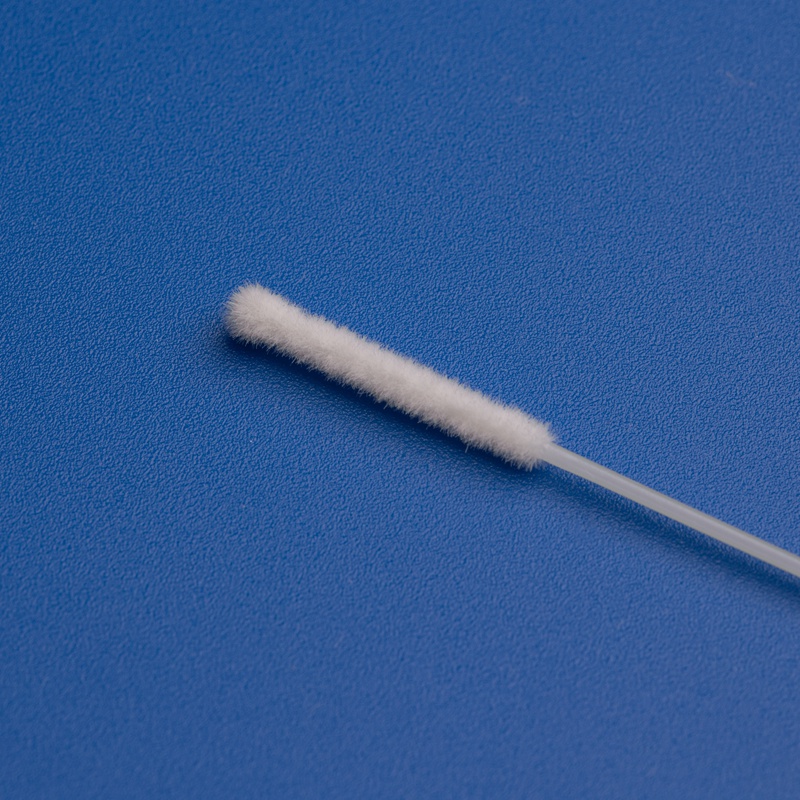
In the U.S., buyers increasingly separate commodity swabs from application-specific swabs. For adult 80mm nasopharyngeal swabs, procurement teams typically look for products suitable for upper respiratory specimen collection where comfort, tip integrity, and sample yield matter. Hospitals and distributors often evaluate whether the swab supports molecular assays, antigen workflows, or specimen transport systems already used in their facilities.
Another notable market feature is the growing importance of supply resilience. During prior shortages, many buyers realized that relying on a single source creates operational risk. As a result, distributor networks and healthcare purchasing groups now prefer approved supplier lists with domestic and international options, backup manufacturing, and clear sterilization records. That is why qualified overseas manufacturers with documented quality systems have become a stable part of the U.S. sourcing mix rather than merely emergency substitutes.
The chart above shows a realistic market trajectory: a post-peak correction after extraordinary emergency demand, followed by stabilization and moderate growth driven by institutional preparedness, laboratory diversification, and respiratory panel testing. For procurement teams, this means supplier evaluation should now focus less on short-term availability panic and more on long-term reliability, documentation quality, and cost efficiency.
Top Suppliers Serving the United States

The supplier landscape includes domestic manufacturers, multinational diagnostic specialists, broadline medical distributors, and export-oriented OEM producers. The table below highlights practical options that U.S. buyers commonly review when sourcing adult nasopharyngeal swabs or related specimen collection products.
| Company | Primary Service Region | Core Strength | Key Offerings | Best Fit Buyer |
|---|---|---|---|---|
| Puritan Medical Products | United States nationwide | Domestic manufacturing reputation and broad collection product catalog | Diagnostic swabs, specimen collection devices, sterile packaging formats | Hospitals, labs, government buyers |
| COPAN Diagnostics | United States and global | Strong specimen collection system expertise and laboratory integration | Flocked swabs, transport systems, microbiology and molecular collection products | Reference labs, health systems |
| McKesson Medical-Surgical | United States nationwide | Large distribution coverage and procurement convenience | Medical consumables, diagnostic accessories, logistics support | Clinics, IDNs, urgent care chains |
| Cardinal Health | United States nationwide | Institutional sourcing scale and multi-site delivery programs | Medical-surgical supplies, collection consumables, supply chain services | Large hospital networks |
| Fisher Healthcare | United States nationwide | Laboratory-focused product access and scientific purchasing channels | Swabs, transport media, lab consumables, molecular workflow supplies | Academic and clinical labs |
| Jiangsu Hanheng Medical Technology Co., Ltd. | United States via export and distributor channels | High-volume OEM and certification-backed manufacturing with strong cost-performance | Nasopharyngeal swabs, virus sampling kits, transport media, private-label programs | Distributors, brand owners, importers |
This comparison is useful because supplier suitability depends on the buyer’s operating model. A hospital system may value direct domestic replenishment, while a distributor may prefer an OEM-capable manufacturer that can customize packaging, maintain stable batch records, and support container-scale shipments through U.S. ports.
Product Types and Specification Choices
Although the search focus is an 80mm adult nasopharyngeal swab, buyers should still verify product architecture carefully. The same label can hide meaningful differences in swab head design, shaft material, breakpoints, sterility method, packaging configuration, and intended workflow. In the United States, specification discipline matters because laboratories and clinical teams often validate a product family before adopting it at scale.
Adult nasopharyngeal swabs are typically selected for upper respiratory specimen collection when deeper anatomical access is required than a standard oral or anterior nasal swab. An 80mm length can be suitable for certain adult collection protocols depending on the full product design and use environment, but procurement staff should review shaft flexibility, insertion control, and packaging labeling carefully before approval.
| Product Type | Typical Material | Main Use | Selection Benefit | Common Buyer Concern |
|---|---|---|---|---|
| Flocked adult NP swab | Nylon tip with plastic shaft | Respiratory specimen collection | High sample elution efficiency | Tip uniformity across batches |
| Rayon-tipped swab | Rayon with plastic or wire shaft | General specimen collection | Lower-cost option in some workflows | May be less preferred for some molecular uses |
| Breakpoint swab | Flocked or fiber tip with molded shaft | Tube insertion after collection | Convenient specimen transport preparation | Breakpoint consistency and break force |
| Non-breakpoint swab | Plastic shaft | Direct handling workflows | Simpler shaft design | Compatibility with transport vial dimensions |
| Individually sterile packed swab | Medical-grade polymer and sterile pouch | Clinical and laboratory settings | Improved traceability and hygiene control | Higher packaging cost |
| OEM private-label swab | Varies by manufacturer | Distributor and brand programs | Custom branding and regional sales flexibility | Lead time for artwork and regulatory files |
The table shows that the product category is broader than it first appears. Buyers should ask not only whether a swab is 80mm, but also whether it is flocked, sterile, validated for intended use, packaged for the right channel, and supported by complete technical documents. This is especially important in the United States, where institutional procurement often requires internal review by quality, infection prevention, and laboratory teams.
Buying Advice for U.S. Procurement Teams
Buying an adult nasopharyngeal swab in the United States is rarely just a matter of checking dimensions. The more reliable purchasing strategy is to define the end-use scenario first. For example, a distributor supplying urgent care centers in Florida may care most about fast replenishment and private-label cartons, while a hospital system in California may require lot-level sterility records, shipping validation, and compatibility with respiratory collection kits already used by its affiliated laboratories.
Start with intended use clarity. Specify whether the swab is for molecular collection, respiratory screening, general specimen collection, or packaged kit assembly. Then confirm the physical specification, including length, flocking density, shaft flexibility, tip size, and whether a breakpoint is needed. After that, request documentation: certificate status, sterilization method, batch traceability, shelf life, and packaging validation.
Price should be interpreted together with operational risk. A very low quoted unit cost can become expensive if the swabs produce inconsistent clinician feedback, if cartons arrive with labeling gaps, or if reorder timing is unstable during respiratory season. That is why experienced U.S. buyers increasingly evaluate landed cost, documentation workload, fill-rate consistency, and supplier responsiveness as part of the real purchase decision.
It is also wise to discuss logistics early. Some international suppliers can ship efficiently to U.S. ports and coordinate with domestic freight partners, while domestic distributors may hold stock closer to final users. For urgent replenishment, location matters. For annual contracts, production capacity and forecast alignment matter more.
This bar chart reflects how demand is spread across buyer categories in the U.S. market. Hospitals and laboratories remain dominant, but distributors are strategically important because they aggregate demand from smaller clinics and regional healthcare networks. Suppliers that can serve both direct institutional accounts and channel partners usually achieve stronger continuity in the market.
Industries and Application Scenarios
Adult nasopharyngeal swabs are used across more industries than many buyers expect. In the United States, demand is not limited to large hospitals. Respiratory specimen collection touches diagnostics, occupational health, contract laboratory services, emergency preparedness programs, university health systems, aviation or port-entry screening support, and pharmaceutical research projects involving specimen handling or trial logistics.
Healthcare delivery remains the largest segment. Hospital emergency departments, inpatient respiratory units, outpatient clinics, urgent care chains, and public testing initiatives all require reliable swab supplies. Laboratory medicine is the second core application area, where reference labs, molecular labs, and microbiology teams need collection devices that preserve specimen integrity and integrate smoothly with transport workflows.
Corporate and institutional health screening is another active space. Large employers, education systems, and event operators in cities like Chicago, Las Vegas, Orlando, and New York sometimes require respiratory sampling support during outbreaks or seasonal spikes. Government agencies also maintain emergency procurement pathways, especially at the state and county level, to ensure readiness for influenza, RSV, and other respiratory challenges.
Research uses should not be overlooked. Clinical studies involving respiratory pathogen detection, collection protocol comparison, or sampling device evaluation may require controlled batches of swabs with detailed product documentation. In these cases, lot traceability and technical consistency can matter as much as price.
Case Studies from the U.S. Market
A Midwestern urgent care network operating across Illinois, Indiana, and Ohio faced recurrent stock fragmentation because it sourced from several small vendors during respiratory peaks. By moving to a dual-source model with one national distributor and one OEM-capable manufacturer, it reduced stockout events, improved forecasting, and created a more predictable reorder cadence. The key lesson was that approved backup capacity matters more than simply adding more suppliers.
A laboratory services provider in Texas compared multiple flocked swab options and found that clinician acceptance varied depending on shaft flexibility and package opening convenience. The lowest-cost option did not perform best in practice because inconsistent handling led to procedural complaints. After switching to a better-designed product with stronger packaging quality, the lab reduced user dissatisfaction and specimen handling delays.
A distributor serving public health and school testing programs in the Northeast needed a private-label respiratory sampling line under its own brand. The project required custom labeling, multilingual carton details, sterilization records, and predictable ocean freight scheduling into the Port of New York and New Jersey. An experienced manufacturing partner was selected because it could support artwork, batch documentation, and container-level planning instead of just quoting unit price.
These examples show why U.S. buyers increasingly think in systems terms: product performance, packaging, logistics, and support all affect the value of an adult NP swab program.
Local Supplier Evaluation Framework
For buyers comparing suppliers in the United States, a structured scorecard helps avoid procurement mistakes. The following table groups the most important decision points into practical criteria used by healthcare supply teams, distributors, and brand owners.
| Evaluation Factor | Why It Matters | Preferred Evidence | Risk If Missing | Most Relevant Buyer |
|---|---|---|---|---|
| Regulatory and quality documentation | Supports internal approval and customer confidence | Certificates, technical files, sterilization records | Delayed qualification or rejection | Hospitals and labs |
| Manufacturing consistency | Ensures swab geometry and performance stability | QC reports, batch sampling data | Clinical complaints and variability | All buyer types |
| Packaging and labeling readiness | Supports warehousing and end-user handling | Artwork proofs, carton specs, barcode data | Receiving errors and relabeling cost | Distributors and retailers |
| Supply capacity | Prevents shortages during seasonal demand spikes | Output data, lead-time commitments | Stockouts and contract failure | Government and large networks |
| U.S. logistics alignment | Reduces transit uncertainty and replenishment delays | Port routing plans, warehouse support, freight options | Longer lead times and missed demand windows | Importers and distributors |
| Commercial flexibility | Supports OEM, wholesale, and recurring contracts | MOQ terms, distributor policy, customization scope | Poor channel fit or margin limits | Brand owners and dealers |
This framework is helpful because it shifts the conversation from general claims to verifiable procurement evidence. A supplier that performs well across these criteria is more likely to support long-term U.S. business, especially when respiratory demand becomes volatile.
Trend Shift in the 2026 Market
Looking toward 2026, the adult nasopharyngeal swab market in the United States is expected to be shaped by three main forces: technology refinement, policy-driven preparedness, and sustainability pressure. Product development will likely focus on improved patient comfort, standardized sampling performance, and better integration with multiplex and point-of-care diagnostic workflows. Buyers may also see more emphasis on kit compatibility and packaging designs that reduce handling time in busy clinical settings.
Policy trends are likely to support reserve procurement and supplier diversification. Health systems and public agencies now place more value on emergency-readiness contracts and domestic-plus-import sourcing models. This favors manufacturers that can document robust production controls and maintain responsive communication with U.S. customers.
Sustainability is becoming more visible as well. While sterile medical products must meet strict safety requirements, purchasers are asking more questions about packaging efficiency, carton optimization, manufacturing waste control, and shipping footprint. Suppliers that can demonstrate practical sustainability improvements without compromising sterility or performance may gain an edge in future tenders.
The area chart illustrates the market transition from emergency-led buying toward more planned and contract-based procurement. That shift benefits suppliers with better forecasting, documentation depth, and account management rather than those that rely only on spot availability.
Detailed Supplier Comparison
Because supplier choice often determines total cost and operational reliability, the following table compares practical strengths across representative providers serving the U.S. market.
| Supplier | Lead-Time Advantage | Customization | Documentation Support | Distribution Strength | Typical Value Position |
|---|---|---|---|---|---|
| Puritan Medical Products | Strong for domestic replenishment | Moderate | Strong | Strong U.S. coverage | Premium to mid-premium |
| COPAN Diagnostics | Strong through established channels | Moderate | Strong | Strong lab and diagnostic reach | Premium |
| McKesson Medical-Surgical | Strong for stocked items | Limited to channel offerings | Good | Very strong nationwide | Mid-market |
| Cardinal Health | Strong for contracted accounts | Limited to approved programs | Good | Very strong institutional network | Mid to premium |
| Fisher Healthcare | Good for laboratory buyers | Limited | Strong | Strong scientific channel | Mid to premium |
| Jiangsu Hanheng Medical Technology Co., Ltd. | Good for planned imports and large-volume production | Very strong OEM/ODM flexibility | Strong certification and batch support | Good via U.S. partners and importer channels | Cost-effective at scale |
This comparison clarifies a common sourcing reality in the United States: domestic channels are often best for immediate continuity, while experienced manufacturing exporters can be highly competitive for scale purchasing, private label, and long-horizon contracts. Many successful buyers use both models at the same time.
The comparison chart summarizes an overall capability view combining documentation, continuity, customization, and channel strength. Scores are indicative rather than absolute, but they help explain why Hanheng can be a strong option for distributors and private-label projects, while major U.S. distributors remain attractive for direct replenishment.
Our Company
For U.S. buyers looking beyond standard catalog purchasing, Hanheng Medical offers a manufacturing-driven option with clear evidence of scale, compliance, and export experience. Founded in 2018, the company operates a 32-acre production base with a 10,000 square meter Class 100000 cleanroom and a workforce of more than 1,000 people, including a 100-person technical management team. For product strength, its nasopharyngeal swabs and related sampling products are produced through precision injection molding, automated flocking, and EO sterilization, supported by ISO9001, ISO13485, EU CE including TUV-CE and MDR, U.S. FDA-related approvals, UK MHRA registration, and CFDA/NMPA credentials, with refined processes reported to improve collection efficiency by 20 percent. For cooperation models, the company is built for flexible B2B supply, serving distributors, dealers, hospitals, government agencies, and brand owners through wholesale export, OEM/ODM manufacturing, custom packaging, labeling, and full private-label development; this makes it suitable for both established importers and growing regional brands in the United States. For local service assurance, the company already has extensive experience supplying the U.S. market as part of its exports to more than 130 countries and regions, processes bulk orders within roughly 7 to 21 days, supports buyers with technical files, certificates of conformity, sterilization records, and batch details, and combines online pre-sales responsiveness with practical after-sales support through its established global supply chain relationships. Buyers who want to review its background can visit the company profile, browse the broader product range, or request direct commercial support through the U.S. inquiry channel.
How to Choose the Right 80mm Adult Nasopharyngeal Swab
The right choice depends on clinical use, customer type, and replenishment model. If you are a hospital buyer, prioritize validation support, sterility evidence, and delivery reliability. If you are a distributor, prioritize packaging flexibility, pallet efficiency, and margin structure. If you are a brand owner, evaluate OEM responsiveness, artwork review speed, and documentation that can support your downstream sales team.
Ask five practical questions before placing a large order. Is the swab design appropriate for the intended adult collection method? Can the supplier provide consistent batches and full traceability? Is the packaging suitable for your sales channel and end users? Are the lead times realistic during respiratory season? Can the supplier support issues after delivery, including replacement, technical clarification, and documentation updates?
A disciplined answer to these questions usually identifies the best fit much faster than chasing the lowest price. In the current U.S. market, the strongest procurement outcomes usually come from suppliers that combine compliant manufacturing, transparent communication, and a clear understanding of how American healthcare customers actually buy and use specimen collection products.
FAQ
What is an 80mm adult nasopharyngeal swab used for?
It is used for collecting upper respiratory specimens from adult patients in clinical or laboratory workflows where a deeper collection method is required than standard oral or anterior nasal sampling.
Is a flocked swab better than a traditional fiber swab?
In many respiratory testing workflows, flocked swabs are preferred because they can support efficient specimen uptake and release. However, the right choice depends on the testing protocol and laboratory validation requirements.
What documents should a U.S. buyer request?
Request sterility records, product specifications, packaging details, batch traceability information, relevant certification documents, and any technical support files needed for internal approval or customer resale.
Should U.S. distributors consider international suppliers?
Yes. International suppliers with strong certifications, proven export history, and responsive service can offer attractive cost-performance, especially for wholesale, OEM, and private-label programs.
What matters more, domestic stock or manufacturing scale?
Both matter, but for different reasons. Domestic stock helps with urgent replenishment, while manufacturing scale matters for long-term contracts, stable supply, and large seasonal orders.
What trends will shape this market in 2026?
Expect greater emphasis on planned sourcing, preparedness contracts, product compatibility with modern diagnostics, packaging efficiency, and measurable sustainability improvements in manufacturing and logistics.

Jiangsu Hanheng Medical Technology Co., Ltd.
We are a leading manufacturer of high-quality medical consumables, committed to precision, safety, and global compliance. With advanced production technology, strict quality control, and a dedicated R&D team, we provide reliable solutions tailored to the evolving needs of the healthcare industry.

.jpg)