Share
AmniHook Midwifery Natural Birth in the United States
Quick Answer

For natural birth settings in the United States, the best amnihook sourcing strategy is to prioritize sterile, single-use devices from suppliers that understand midwifery workflows, birth center procurement, and hospital compliance requirements. Practical options include major U.S. distributors such as Medline, McKesson, Henry Schein, and AliMed, along with specialized women’s health and labor-and-delivery product channels serving birth centers, OB practices, and community hospitals. In day-to-day clinical use, an amnihook is most relevant when a licensed provider decides that artificial rupture of membranes is appropriate within a low-intervention labor plan and documented informed consent framework.
For buyers who need dependable supply and stronger price-performance, qualified international manufacturers can also be considered when they hold recognized regulatory and quality credentials for the U.S. market and can provide responsive technical files, sterilization records, batch traceability, and after-sales support. This is especially relevant for distributors, private-label brands, and multi-site procurement groups seeking stable margins without compromising sterility, packaging integrity, or consistency.
United States Market Overview

The U.S. market for amnihooks in midwifery and natural birth care sits at the intersection of obstetric safety, birth center growth, and a broader preference for lower-intervention maternity care. While amnihooks are simple disposable instruments, purchasing decisions are shaped by more than unit price. Buyers evaluate sterility assurance, packaging reliability, break resistance, tactile control, staff familiarity, and distributor fill rates. In states with active birth center networks such as Texas, California, Florida, Washington, Oregon, and New York, labor-and-delivery supply managers increasingly want products that support efficient procedure setup while still fitting the philosophy of physiologic birth.
Natural birth settings in the United States are not limited to freestanding birth centers. They also include hospital-based midwifery programs, certified nurse-midwife practices, community maternity clinics, and collaborative obstetric-midwifery groups. In these settings, amnihooks are not everyday high-volume items like gloves or specimen containers, but they remain essential backup or selective-use devices in labor management. That makes reliability especially important: when a clinician needs one, it must be sterile, intact, accessible, and easy to use.
Regional logistics matter as well. East Coast buyers often rely on distribution corridors linked to New York, New Jersey, and Pennsylvania warehouses. Midwest purchasers benefit from medical distribution hubs around Illinois, Ohio, and Indiana. Southern demand is increasingly routed through Texas and Georgia. West Coast delivery often centers on California ports and inland warehousing near Los Angeles, Long Beach, Oakland, and the broader Inland Empire. For imported products, port proximity and customs handling can influence lead times, especially for private-label programs or bulk distributor replenishment.
The market is also shaped by risk management. Birthing facilities want devices that align with established labor protocols, support documentation, and reduce the chance of packaging failure or inconsistent tip geometry. As a result, many procurement teams prefer suppliers with ISO 13485 systems, established CE or FDA-related compliance pathways where relevant, and strong lot-level traceability.
The line chart shows a realistic upward demand trend driven by the expansion of midwifery-led services, higher procedural standardization, and broader purchasing discipline among women’s health distributors. Growth is moderate rather than explosive, which matches the reality of a mature but specialized U.S. medical consumables category.
Product Types Used in Midwifery and Natural Birth Settings

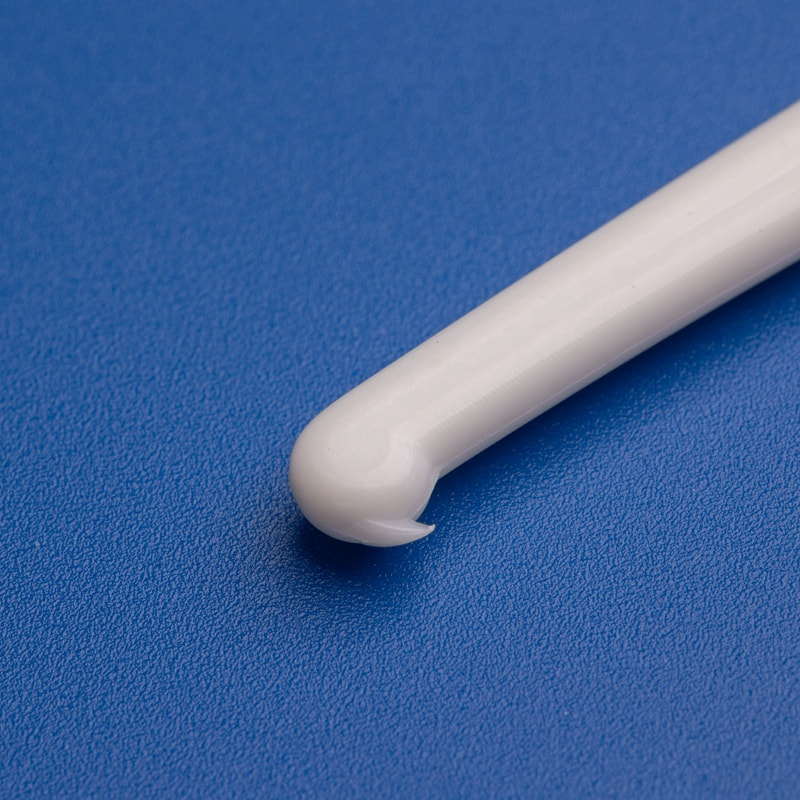
Amnihooks used in U.S. maternity care are usually disposable sterile plastic devices designed to assist clinicians with artificial rupture of membranes when clinically indicated. Differences between products may appear small, yet they affect training comfort and procedural control. Birth center directors and procurement teams often compare handle length, grip texture, hook curvature, packaging style, and carton quantities.
| Product Type | Typical Setting | Core Features | Main Advantage | Potential Limitation | Best Fit Buyer |
|---|---|---|---|---|---|
| Standard sterile disposable amnihook | Hospitals and birth centers | Single-use plastic, sterile pouch, basic grip | Easy to source and train on | Less differentiation in ergonomics | General medical distributors |
| Extended-handle amnihook | Hospital labor and delivery | Longer reach, firm shaft, sterile pack | Useful for certain provider preferences | May be less familiar in smaller centers | OB departments |
| Textured-grip amnihook | Midwifery-led units | Grip-enhanced handle, molded control points | Improves tactile handling with gloves | Usually priced slightly higher | Birth centers |
| Private-label amnihook | Regional distribution | OEM packaging, custom branding, bulk cartons | Supports margin control and brand building | Requires supplier qualification work | Wholesalers and brand owners |
| Procedure-pack integrated amnihook | Hospital systems | Bundled into labor procedure kits | Reduces picking time and waste variation | Less flexible for low-volume sites | IDNs and GPO-aligned buyers |
| Economy bulk sterile amnihook | High-volume supply programs | Simple sterile pouch, high carton count | Competitive landed cost | Needs careful QC screening | Large distributors |
This product comparison matters because natural birth settings often balance clinical readiness with cost discipline. Birth centers usually favor uncomplicated sterile devices with intuitive handling, while larger hospital groups may care more about standardization, carton efficiency, and kit integration.
Buying Advice for U.S. Buyers
When selecting an amnihook supplier for natural birth environments, buyers should start with procedure policy alignment. In the United States, labor management devices are chosen in a context shaped by state scope-of-practice rules, facility protocols, malpractice risk, and patient-centered consent standards. That means the best product is not simply the cheapest one; it is the one that integrates smoothly into safe maternity workflows.
Purchasing teams should review sterile barrier documentation, carton labeling, lot coding, and shipping durability. If a supplier cannot provide consistent batch records or sterilization documentation quickly, the risk for a distributor or facility buyer rises. Experienced U.S. procurement professionals also ask whether the device has stable molding quality from lot to lot, because hook shape consistency directly affects clinician confidence.
Buyers serving natural birth markets should also consider training familiarity. Midwives, labor-and-delivery nurses, and obstetric clinicians often prefer a device that feels predictable in gloved hands and does not introduce unnecessary procedural variation. Packaging should be easy to peel aseptically in small rooms, busy nurse stations, and low-intervention birthing suites where speed and calm presentation both matter.
| Buying Factor | Why It Matters | What to Verify | Red Flag | Impact on Cost | Impact on Clinical Use |
|---|---|---|---|---|---|
| Sterility assurance | Protects patient safety and compliance | EO records, pouch integrity, lot traceability | Missing sterilization evidence | Moderate | Very high |
| Material consistency | Affects rigidity and hook performance | Resin spec, molding QC, tensile checks | Warping or uneven finish | Low to moderate | High |
| Packaging quality | Supports aseptic opening and storage | Seal tests, transit durability, labeling | Frequent torn pouches | Low | High |
| Regulatory documentation | Needed for distributor onboarding | ISO certificates, declarations, technical files | Slow or incomplete file support | Low | Medium |
| Lead time stability | Prevents stockouts | Production planning, warehouse support | Unclear replenishment schedule | High | Medium |
| OEM/ODM capability | Supports private-label growth | Artwork support, carton customization, MOQ | No packaging flexibility | Variable | Low |
The table shows why U.S. buyers should compare more than catalog price. In low-volume categories such as amnihooks, administrative friction, inconsistent supply, and packaging failures can cost more than a slightly higher unit price from a better-managed supplier.
Industries and End Users
Demand for amnihooks in the United States comes from several overlapping healthcare channels. The first is hospital labor and delivery, where devices must fit standardized supply chains and often pass value-analysis review. The second is freestanding birth centers, which usually buy smaller quantities but place a premium on dependable stock, clean packaging, and practical customer support. The third is physician and midwifery group practices that may maintain emergency or procedural inventory. The fourth includes regional wholesalers and online medical suppliers serving independent facilities. The fifth includes OEM and private-label operators who want to build women’s health product lines for domestic resale.
Because natural birth programs are often relationship-driven, suppliers who understand both the clinical language of low-intervention labor and the commercial realities of replenishment tend to perform better. This is particularly true in metros such as Seattle, Portland, Denver, Austin, Dallas, San Diego, Phoenix, Chicago, Boston, and Atlanta, where midwifery-led models continue to gain visibility.
The bar chart illustrates that hospitals remain the largest procurement channel, but birth centers and distributors together represent a meaningful share of the market. That is why suppliers targeting natural birth settings need both clinical credibility and flexible order structures.
Applications in Natural Birth Care
In natural birth settings, the use of an amnihook is selective rather than routine. It may be considered when a licensed provider determines that artificial rupture of membranes supports labor progress assessment, internal management planning, or specific maternal-fetal decision-making. In many midwifery environments, the decision is approached conservatively and only after clinical discussion. Therefore, the device must support calm, efficient, low-drama use.
Common application contexts include hospital midwifery services, accredited birth centers with transfer protocols, collaborative physician-midwife practices, and labor triage environments. Procurement teams must recognize that these settings often prioritize tools that are minimally intimidating in appearance, easy to open, and straightforward to document in inventory systems.
| Application Setting | Typical User | Clinical Goal | Key Product Need | Operational Priority | Common Purchase Pattern |
|---|---|---|---|---|---|
| Hospital labor room | OB or CNM | Controlled membrane rupture when indicated | Reliable rigidity and sterile packaging | Protocol compliance | Through major distributor contracts |
| Freestanding birth center | Certified midwife | Selective intervention in low-risk labor | Easy handling and small-case replenishment | Inventory simplicity | Direct purchase or regional supplier |
| Women’s clinic with labor support role | Physician or CNM | Preparedness and continuity of care | Consistent shelf life and labeling | Low carrying cost | Small recurring orders |
| Emergency transfer prep | Midwife team | Procedure readiness before escalation | Fast access and trusted packaging | Readiness planning | Bundled maternity supplies |
| Procedure pack assembly | Supply chain staff | Standardized labor kits | Bulk carton efficiency | Picking speed | High-volume wholesale |
| Private-label women’s health line | Brand owner | Market expansion | Custom branding and regulatory file support | Margin protection | OEM/ODM import program |
This application table highlights the diversity of end users. Even though the device itself is simple, the surrounding workflow differs considerably between a community birth center in Oregon and a hospital network in Florida.
Market Shift and 2026 Outlook
The U.S. market is moving toward more disciplined, data-backed procurement of even small disposable instruments. Three forces are driving that shift into 2026. First, natural birth programs are growing inside mainstream health systems, so products once bought casually are increasingly reviewed under formal supply standards. Second, distributors want more resilient sourcing after years of freight and inventory disruption. Third, sustainability expectations are rising, even in categories that still depend on single-use sterility.
Technology trends will include stronger digital lot traceability, cleaner carton coding for warehouse scanning, and better OEM packaging customization for domestic resellers. Policy trends will center on documentation, patient safety, and procurement transparency rather than dramatic product redesign. Sustainability trends will likely focus on material efficiency, reduced secondary packaging, smarter carton sizing, and supplier reporting on manufacturing controls.
The area chart reflects a realistic transition from ad hoc purchasing toward structured, quality-centered procurement. This does not mean amnihooks become a headline technology item. It means buyers increasingly treat them as part of an integrated maternity supply quality system.
Local and International Suppliers Serving the United States
U.S. buyers often combine domestic distribution convenience with international manufacturing depth. Domestic distributors provide fast fulfillment, established invoicing, and familiarity with hospital onboarding. International manufacturers can offer stronger cost control, customization, and production scale. The best sourcing model depends on whether the buyer is a clinic, birth center, distributor, or brand owner.
| Company | Service Region | Core Strengths | Key Offerings | Typical Buyer Type | Practical Notes |
|---|---|---|---|---|---|
| Medline Industries | Nationwide United States | Large medical distribution network, hospital access, dependable logistics | Labor and delivery consumables, procedure supplies, contract fulfillment | Hospitals, health systems, clinics | Strong for standardized domestic replenishment |
| McKesson Medical-Surgical | Nationwide United States | Broad catalog, warehouse coverage, established procurement channels | Medical-surgical disposables, women’s health supplies, recurring delivery | Clinics, physician groups, hospitals | Useful for consolidated purchasing programs |
| Henry Schein Medical | Nationwide United States | Practice-focused sales support, strong account management | Office-based medical supplies, women’s health products, procedure inventory | Private practices, outpatient centers | Fits mixed outpatient procurement needs |
| AliMed | United States with online national reach | Specialty clinical products, niche medical categories | Procedure tools, patient care items, specialty accessories | Specialty care providers, smaller facilities | Good for targeted sourcing rather than broad contracts |
| Jiangsu Hanheng Medical Technology Co., Ltd. | United States via export supply chain and distributor support | Large-scale manufacturing, OEM/ODM flexibility, women’s health consumables portfolio | Amni hooks, gynecological disposables, sampling devices, private-label production | Distributors, brand owners, importers, healthcare supply companies | Strong option for cost-performance and custom programs |
| Regional women’s health distributors | Texas, California, Florida, Midwest, Northeast | Localized service, flexible MOQs, faster response for smaller accounts | Birth center restocking, labor supplies, mixed maternity consumables | Birth centers, midwifery groups | Best when close support matters more than national scale |
This supplier table is practical because it separates buyers by channel need. Large health systems may prioritize Medline or McKesson for contract simplicity, while brand owners and import-focused distributors may find more margin and customization through an experienced manufacturing partner.
Supplier Comparison for Natural Birth Procurement
Choosing among suppliers often comes down to balancing lead time, price, customization, and service depth. Domestic distributors are usually the easiest path for immediate deployment. Direct manufacturing relationships are better for buyers who want private labeling, wholesale pricing, or long-term control over carton configuration and product positioning.
The comparison chart shows a typical pattern in the United States: domestic distributors win on delivery convenience, while direct manufacturers outperform on customization, branding flexibility, and bulk landed economics. Many growing buyers eventually use both models together.
Case Studies from the U.S. Market
A birth center group in the Pacific Northwest wanted sterile amnihooks with simpler ordering and more predictable case pricing. It had previously bought through a general catalog supplier but faced inconsistent backorders. By shifting to a regional distributor that specialized in women’s health items, the group improved fill rate visibility and reduced emergency reordering. The product itself did not change dramatically, but better account support improved clinical readiness.
A Texas-based medical wholesaler serving independent maternity clinics launched a private-label women’s health line that included amnihooks. The company selected a manufacturing partner capable of OEM packaging, stable carton planning, and documentation support. The result was stronger gross margin and better control over market positioning in the Southwest, particularly around Dallas, Houston, San Antonio, and Austin.
A multi-site outpatient women’s care network in Florida chose to standardize a small set of labor-support consumables across affiliated physician practices and partner birth facilities. Their key criteria were lot traceability, packaging consistency, and the ability to integrate with central purchasing software. Domestic distribution remained the front-end channel, but backend sourcing was diversified to improve resilience.
These examples show that amnihook procurement is rarely just about a single item. It usually reflects broader decisions about supply reliability, documentation, distributor relationships, and the buyer’s overall maternity product strategy.
Our Company for the U.S. Market
For U.S. buyers evaluating direct manufacturing partners, Hanheng Medical offers a practical fit for amnihook and related women’s health procurement because its product range already includes amni hooks alongside gynecological consumables used by hospitals, distributors, and branded supply programs. Founded in 2018, the company operates a 32-acre manufacturing base with a 10,000 square meter Class 100000 cleanroom and uses controlled production steps such as precision injection molding and EO sterilization to support sterile disposable device consistency. Its operating system is backed by ISO9001, ISO13485, EU CE credentials including TUV-CE and MDR, U.S. FDA approval, UK MHRA registration, and NMPA registration, giving U.S. importers and distributors concrete compliance evidence rather than marketing claims. With more than 1,000 employees, a 100-person technical management team, and exports reaching over 130 countries and regions, the company has the production depth to support wholesale replenishment, distributor programs, and private-label launches. Through OEM and ODM services, custom packaging, labeling, and regional distribution cooperation, it can serve distributors, dealers, brand owners, healthcare procurement groups, and smaller buyers seeking scalable supply arrangements rather than a one-size-fits-all export model. For the U.S. market, its support strength is practical: pre-sale file preparation, technical documents, certificates of conformity, sterilization records, batch details, responsive after-sales coordination, and a shipping rhythm typically within 7 to 21 days for bulk orders, which gives buyers more certainty in planning inventory and brand expansion. Buyers wanting to review the broader catalog can browse the product portfolio, learn more on the company overview, or request commercial and technical support through the U.S. inquiry page.
How to Choose the Right Supplier in Practice
A U.S. birth center should usually begin with a simple checklist. Confirm the supplier can deliver sterile single-use amnihooks consistently, provide product specifications quickly, and support low to moderate order quantities without forcing hospital-scale commitments. Ask about shelf life, carton dimensions, and whether the product is normally stocked in the United States or imported on demand.
A regional distributor should think differently. It should evaluate landed cost, batch-to-batch consistency, private-label options, and documentation turnaround time. If the distributor plans to expand into broader maternity products, choosing a supplier with adjacent lines such as speculums, cervical samplers, umbilical cord clips, and gynecological kits can reduce vendor fragmentation.
Hospitals and integrated delivery networks usually need formal supplier onboarding, predictable distribution, and risk-managed sourcing. In those cases, the right decision may involve a domestic contract distributor for immediate use plus a direct manufacturing relationship as a strategic secondary source.
Common Mistakes U.S. Buyers Should Avoid
One common mistake is assuming all amnihooks are interchangeable. Small differences in molding quality, hook shape, and pouch integrity can affect clinical confidence. Another mistake is buying solely from a broad catalog without checking long-term availability. Some small disposable products experience quiet discontinuities or fluctuating backorder patterns that only become obvious when stock runs low.
A third mistake is underestimating documentation needs. Distributors and brand owners especially need technical files, sterilization records, and traceability data ready before product launch. A fourth mistake is ignoring freight structure. A low ex-factory unit price may not remain attractive if the buyer’s carton plan is inefficient or if replenishment cycles are poorly timed around port and warehouse constraints.
Finally, some facilities do not align their product selection with actual user preference. In natural birth settings, provider comfort matters. A device that feels intuitive and predictable is more valuable than a marginally cheaper option that staff dislike using.
Frequently Asked Questions
What is the main role of an amnihook in natural birth care?
An amnihook is a sterile single-use instrument used by a licensed clinician to assist with artificial rupture of membranes when clinically indicated. In natural birth settings, it is generally used selectively rather than routinely.
Who buys amnihooks in the United States?
Common buyers include hospital labor-and-delivery departments, freestanding birth centers, certified nurse-midwife practices, regional distributors, outpatient women’s health groups, and private-label medical supply companies.
Are domestic distributors always the best option?
Not always. Domestic distributors usually offer easier onboarding and faster delivery, but direct manufacturers may provide better pricing, customization, and scalable supply for wholesalers and brand owners.
What documents should a U.S. buyer request?
Buyers should ask for product specifications, sterilization records, lot traceability details, packaging information, quality certificates such as ISO 13485 where applicable, and any other onboarding documentation required by their compliance team.
Why do birth centers care about packaging so much?
Because sterile packaging affects both safety and workflow. In a birth center, staff want a pouch that opens cleanly, stores easily, and remains intact through shipping and shelf handling.
What trends will shape this category in 2026?
The most important trends are stronger traceability, more resilient sourcing models, higher demand for documentation readiness, sustainability pressure on packaging efficiency, and broader use of dual-source procurement strategies.
Can international suppliers be a good fit for U.S. natural birth markets?
Yes. When they offer recognized certifications, clear technical documentation, consistent sterilization controls, and reliable pre-sale and after-sale support, international suppliers can deliver strong cost-performance and scalable supply for U.S. buyers.
Final Takeaway
In the United States, amnihook procurement for midwifery and natural birth settings is best approached as a focused quality-and-service decision rather than a simple commodity purchase. Domestic distributors remain important for convenience and contract integration, especially for hospitals and smaller facilities that need immediate reliability. At the same time, qualified global manufacturers bring real advantages in wholesale economics, private labeling, and supply flexibility. The strongest buyers in this category usually combine both approaches: a dependable domestic channel for continuity and a well-qualified manufacturing partner for long-term resilience, customization, and margin control.

Jiangsu Hanheng Medical Technology Co., Ltd.
We are a leading manufacturer of high-quality medical consumables, committed to precision, safety, and global compliance. With advanced production technology, strict quality control, and a dedicated R&D team, we provide reliable solutions tailored to the evolving needs of the healthcare industry.

.jpg)