Share
How to Reduce Nasopharyngeal Swab Discomfort in the United States
Quick Answer

To reduce discomfort during a nasopharyngeal swab in the United States, the most effective steps are to use a well-designed flexible flocked swab, position the patient correctly, insert the swab parallel to the nasal floor rather than upward, explain the sensation before collection, and choose trained providers that standardize collection technique. For hospitals, urgent care networks, public health programs, and distributors, reliable suppliers with strong U.S. market familiarity include Copan Diagnostics, Puritan Medical Products, BD, Thermo Fisher Scientific, and Medical Wire & Equipment. Qualified international manufacturers can also be a practical option when they hold relevant certifications and offer dependable pre-sale and after-sales support; cost-performance advantages often matter for large-volume procurement in the United States.
- Copan Diagnostics is widely recognized for flocked swab technology and clinical sampling consistency.
- Puritan Medical Products is a major U.S. manufacturer with broad healthcare distribution coverage.
- BD supports large institutional buyers with strong diagnostic ecosystem integration.
- Thermo Fisher Scientific serves laboratories and testing programs needing scalable supply chains.
- Medical Wire & Equipment is often considered for specimen collection programs requiring varied swab formats.
Why Patient Comfort Matters in the United States

In the United States, patient comfort during upper respiratory specimen collection is not a minor issue. It affects repeat testing compliance, pediatric cooperation, occupational health workflows, and public confidence in screening programs. In large metro areas such as New York, Los Angeles, Chicago, Houston, and Atlanta, high-throughput testing environments require consistent collection quality without causing unnecessary distress. In community settings, especially retail clinics, university health centers, and urgent care chains, a more comfortable swab experience can reduce refusals and improve throughput because anxious patients are easier to guide when they understand what will happen.
Discomfort can come from several sources: a rigid or poorly finished swab shaft, oversized tip geometry, incorrect insertion angle, excessive force, dry nasal passages, and inadequate operator training. Some discomfort is inherent because the swab must reach the posterior nasopharynx for certain sampling protocols, but avoidable pain usually reflects a mismatch between product design and technique. In practice, organizations that want better patient experience focus on both the device and the process rather than treating the swab as a commodity item.
Procurement teams across the United States increasingly ask not only whether a swab is sterile and validated, but also whether it can support smoother collection, better sample release, lower breakage risk, and better user confidence. This shift is especially visible in hospital systems near major logistics hubs such as Los Angeles/Long Beach, New York/New Jersey, Savannah, and Houston, where buyers compare domestic and global supply options on quality, lead time, documentation, and comfort-related performance.
How Nasopharyngeal Swab Discomfort Can Be Reduced

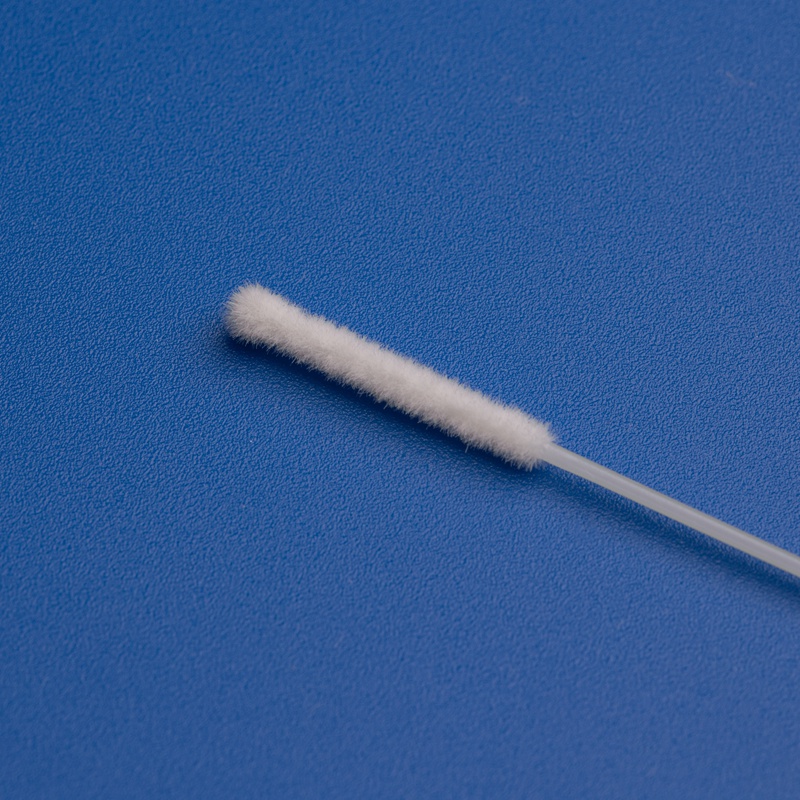
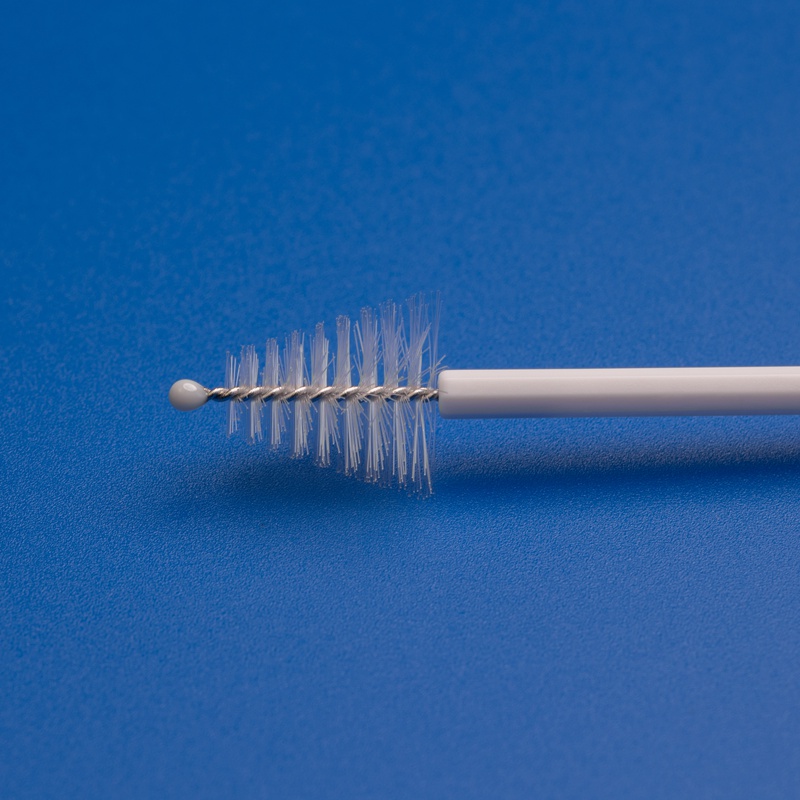
Reducing discomfort nasopharyngeal swab procedures begins with matching the swab to the anatomy and the setting. A flexible shaft helps the swab follow the natural nasal passage. A soft, uniform flocked tip generally glides more smoothly than rougher or inconsistent fiber structures. Operators should ask the patient to relax the face, remove masks only when ready, and keep the head in a neutral or slightly tilted-back position rather than overextending the neck. The swab should move straight back, parallel to the palate, rather than upward toward the bridge of the nose.
Clear communication matters just as much as hardware. Patients should be told that the sensation may feel odd or trigger watering eyes, but the procedure is brief. Telling the patient when to breathe through the mouth often helps. For children and sensitive adults, a calm countdown reduces involuntary movement. In occupational health and travel testing settings, short script-based explanations consistently reduce perceived discomfort because staff avoid abrupt or inconsistent wording.
Another factor is lot-to-lot manufacturing consistency. If shaft diameter, flocking density, breakpoint reliability, or sterilization quality varies, collection experiences become unpredictable. That is why healthcare buyers increasingly favor suppliers with documented manufacturing controls, cleanroom production, and batch traceability. Comfort is not only a bedside issue; it is also a manufacturing and quality-assurance issue.
United States Market Overview
The U.S. specimen collection market remains active even after peak pandemic demand normalized. Testing has diversified into respiratory panels, flu, RSV, occupational screening, clinical diagnostics, molecular surveillance, and public health reserve capacity. While some providers shifted toward anterior nasal methods for convenience, nasopharyngeal collection still matters in settings where specific protocols require deeper sampling and high analytical confidence.
Market demand is concentrated in hospital networks, reference laboratories, public health departments, military and government programs, universities, long-term care operators, and retail healthcare chains. Buyers increasingly want dual priorities: dependable clinical performance and better patient experience. That is why product discussions now include shaft flexibility, flock uniformity, tip finish, absorbency, sample elution efficiency, and packaging formats that support workflow speed.
From a supply-chain perspective, the United States combines domestic production with imports through major gateways such as the Port of Los Angeles, Port of Long Beach, Port Newark-Elizabeth, Port of Savannah, and air cargo centers including Chicago O’Hare and Dallas-Fort Worth. This mix gives procurement teams options, but it also increases the importance of vetting regulatory documentation, sterilization records, and after-sales responsiveness.
The line chart shows a realistic normalization pattern after emergency-era demand, followed by renewed steady growth as respiratory surveillance, decentralized diagnostics, and preparedness programs mature. For buyers, this means the market is no longer driven only by shortage prevention; it is increasingly driven by performance, patient comfort, and supplier reliability.
Product Types Used to Improve Comfort
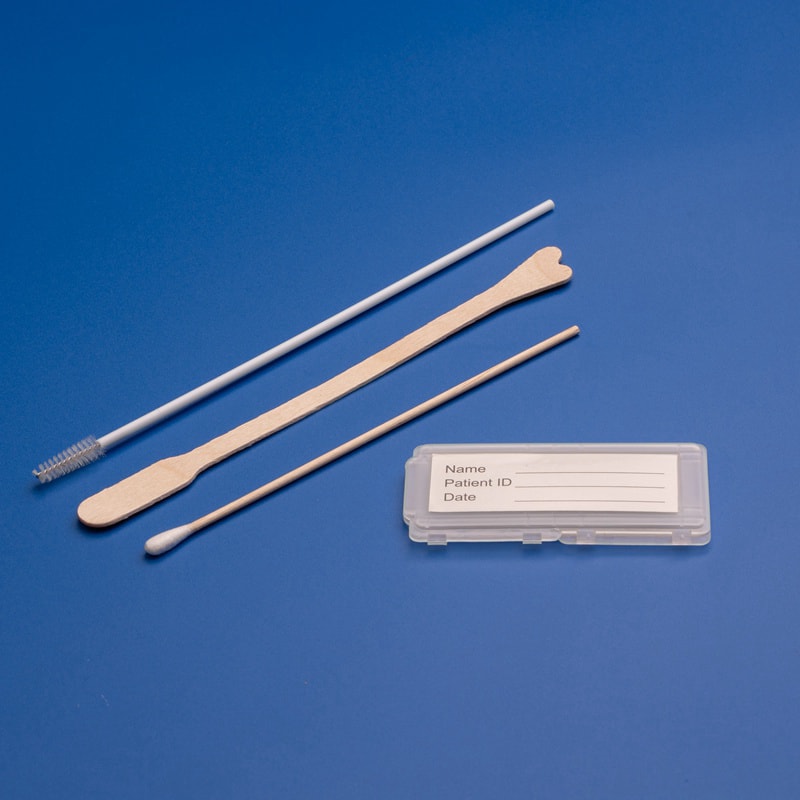
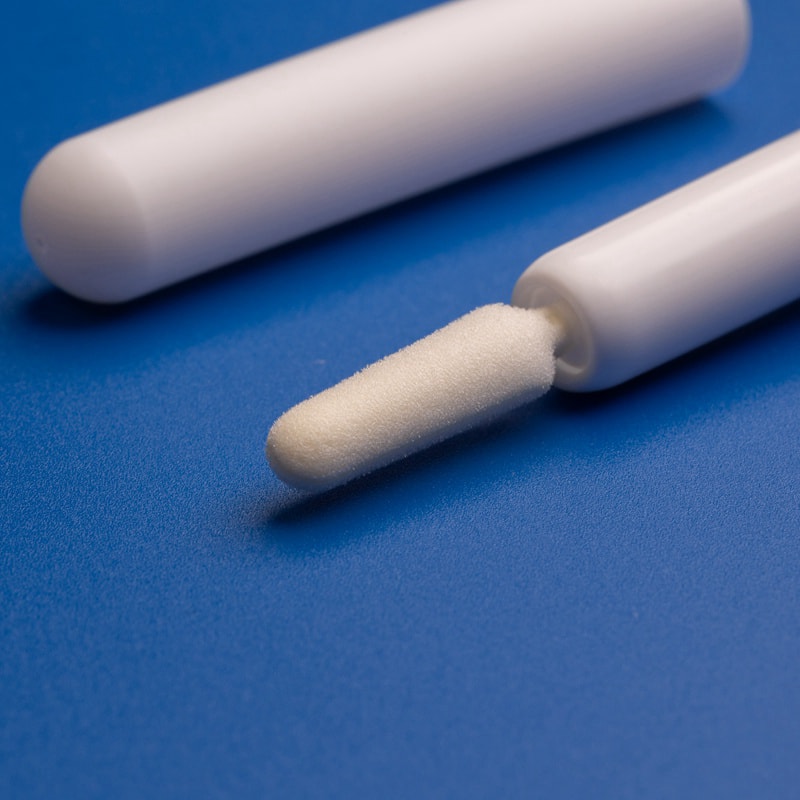
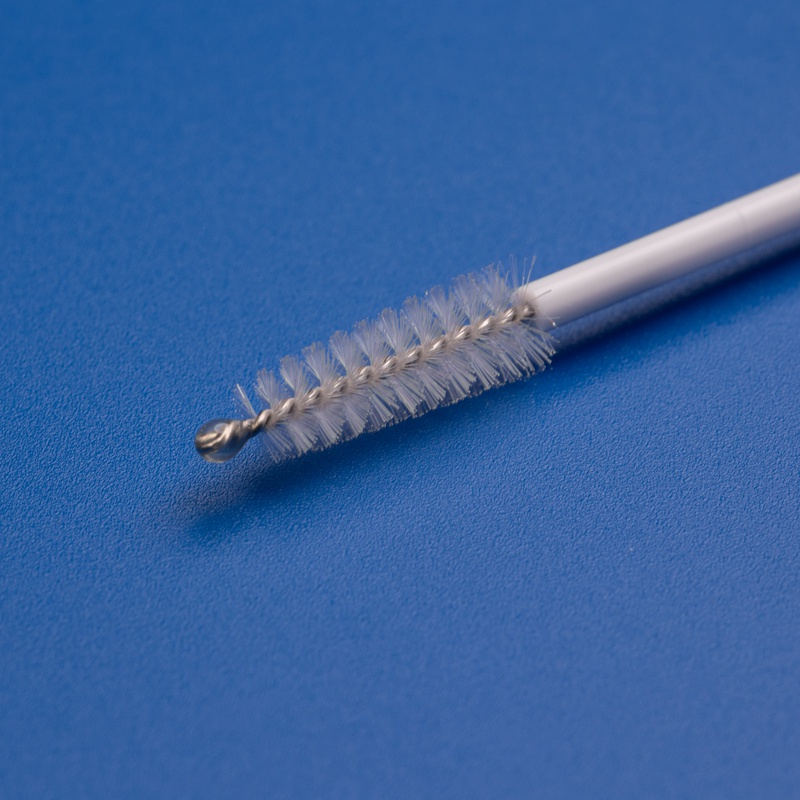
Not every swab marketed for respiratory testing is equally suitable for reducing patient discomfort. Product design directly shapes how smoothly the swab moves through the nasal passage, how stable it feels in the hand, and how much friction the patient experiences. In the United States, procurement teams commonly compare flocked swabs, spun swabs, molded swabs, pediatric-specific designs, and packaged collection kits with transport media.
| Product Type | Typical Use in the United States | Comfort Impact | Sampling Performance | Key Buying Consideration |
|---|---|---|---|---|
| Flexible flocked nasopharyngeal swab | Hospitals, labs, urgent care | Usually best balance of reach and comfort | Strong specimen uptake and release | Check flock uniformity and shaft flexibility |
| Mini-tip flocked swab | Pediatrics, sensitive patients | Lower insertion friction | Good for narrow anatomy | Confirm compatibility with test protocol |
| Molded polymer swab | Specialized diagnostics | Can be smooth if well designed | Varies by design | Review validation and user acceptance data |
| Traditional fiber swab | Legacy or low-cost programs | Often less comfortable | May retain sample unevenly | Assess whether price tradeoff is worthwhile |
| Swab with transport medium kit | Integrated collection workflows | Comfort depends on swab design | Improves standardized handling | Examine kit packaging efficiency |
| Pediatric-specific collection swab | Children’s hospitals and clinics | Designed for reduced distress | Suitable for smaller nasal passages | Need clear age and use labeling |
The most practical takeaway from this table is that comfort does not depend on labeling alone. Buyers should request samples, compare flexibility and tip consistency, and ask frontline staff to evaluate handling. A lower-priced swab that causes more resistance or more patient distress can cost more overall through slower workflows, repeat collections, and lower satisfaction scores.
Buying Advice for U.S. Healthcare Buyers
If your goal is to reduce discomfort nasopharyngeal swab procedures across a hospital, lab, or distribution network, purchasing decisions should go beyond unit cost. Start by reviewing the exact clinical use case. Are you serving emergency departments, outpatient clinics, pediatric practices, mobile testing teams, or employer screening programs? Each environment may need a different balance of softness, shaft control, package format, and media compatibility.
Ask suppliers for evidence in four areas. First, product design data: shaft flexibility, breakpoint stability, flocking method, and swab tip dimensions. Second, quality and compliance data: sterilization method, lot traceability, cleanroom controls, and relevant certifications. Third, workflow fit: peel-pack versus bulk pack, barcode options, kit integration, and shipping configuration. Fourth, support capacity: complaint handling, replacement policy, technical documentation, and response speed in the United States.
Domestic suppliers often appeal because of familiarity and shorter transit paths, but international manufacturers can be highly competitive when they combine scale, documentation discipline, and localized service. This is especially relevant for distributors and private-label buyers that need OEM or ODM flexibility. Whether sourcing from Maine, California, or overseas through West Coast and East Coast ports, the right decision depends on verified performance and dependable support rather than geography alone.
| Buying Factor | Why It Matters | What to Ask the Supplier | Red Flag | Best Fit |
|---|---|---|---|---|
| Shaft flexibility | Supports smoother insertion path | What bend tolerance is validated? | Shaft feels brittle or too stiff | NP swab comfort improvement |
| Tip consistency | Reduces friction and variability | How is flock density controlled? | Visible uneven tip surface | Large institutional buyers |
| Sterility assurance | Protects clinical safety | What sterilization records are provided? | Incomplete batch paperwork | Hospitals and labs |
| Regulatory documentation | Speeds qualification and audits | Can you supply FDA and quality files? | Slow document response | Government and enterprise procurement |
| Packaging workflow | Affects speed and contamination control | Do you offer kit-ready formats? | Packs hard to open with gloves | High-volume testing sites |
| After-sales support | Reduces supply and quality risk | Who handles U.S. complaints and lead times? | No clear service contact | Distributors and multi-site buyers |
This buying framework helps distinguish a clinically useful swab from a merely available one. For U.S. buyers managing recurring orders, support quality often becomes as important as physical product quality after the first few purchase cycles.
Industries That Need More Comfortable Swab Collection
Comfort-focused nasopharyngeal collection matters across more industries than many buyers expect. Acute care hospitals want fewer collection failures and smoother patient interactions in emergency and inpatient settings. Reference laboratories need collection consistency because pre-analytical errors undermine expensive downstream testing. Occupational health providers value speed and predictability when screening large employee groups. University clinics and pediatric networks especially care about patient experience because it affects cooperation and repeat attendance.
Travel medicine providers and retail health clinics also benefit. In these environments, a better patient experience supports brand trust and faster service. Public health departments may still require more traditional collection methods for surveillance programs, and better comfort reduces refusal rates during outreach. Long-term care and home-health programs face additional challenges because elderly patients may be anxious, frail, or unable to tolerate rough technique.
The bar chart highlights where demand for comfort-optimized swabs is strongest. Hospitals and reference laboratories remain leading users because they perform high volumes and carry greater quality accountability. However, urgent care, occupational health, and long-term care are important growth segments because patient acceptance and workflow efficiency are closely linked in those environments.
Applications and Use Scenarios
Different applications shape what “reduced discomfort” means in operational terms. In a pediatric clinic, the priority may be minimizing distress and movement. In a molecular lab network, the main requirement may be obtaining reliable specimens without repeat collections. In an employer health program, the goal may be keeping lines moving with clear, standardized technique that avoids complaints. The same swab may perform differently depending on operator skill and patient population.
For respiratory panels, influenza testing, RSV surveillance, and combined viral detection programs, comfortable collection can support compliance when repeat or seasonal testing is needed. In teaching hospitals, standardized technique is especially important because trainees may be learning collection methods. In telehealth-linked or pharmacy-based testing programs, patient perception can strongly affect whether the service is recommended to others.
A practical application rule is simple: the more likely the patient population is to be anxious, pediatric, elderly, or repeatedly tested, the more valuable comfort-focused design becomes. This is why many U.S. buyers now run side-by-side trials before awarding larger contracts.
Case Studies from the U.S. Market
A Midwestern health system comparing two nasopharyngeal swabs found that staff preferred the model with a more flexible shaft and smoother flock finish because patients showed fewer withdrawal reactions and collections were faster. The difference in unit price was small, but repeat swab incidents dropped enough to justify the higher-cost option. In a Northeast university health program, patient feedback improved after staff adopted a more consistent verbal script and switched to a smaller, better-balanced swab design.
On the distribution side, a Southeast medical distributor serving urgent care groups reported that complaint rates fell when it narrowed its swab portfolio to suppliers that could provide stable lot documentation and faster technical responses. That result mattered because inconsistent products create not only patient discomfort but also commercial risk. In a West Coast public health reserve program, comfort-optimized NP swabs were kept for settings requiring deeper collection, while anterior nasal options were reserved for lower-intensity screening. This segmentation improved both user satisfaction and supply planning.
These examples show that better outcomes usually come from a combined change: product refinement, clearer staff training, and tighter supplier qualification. A single intervention helps, but system-level improvement is more durable.
Local Suppliers and Leading Brands in the United States
The United States market offers a mix of domestic manufacturers, global diagnostics companies, and international suppliers with established U.S. commercial reach. The table below focuses on concrete, practical considerations for buyers evaluating suppliers relevant to nasopharyngeal swab comfort, service region coverage, and offering breadth.
| Company | Primary Service Region | Core Strengths | Key Offerings | Buyer Fit |
|---|---|---|---|---|
| Copan Diagnostics | Nationwide U.S., strong lab and hospital presence | Flocked swab expertise, specimen collection innovation | Nasopharyngeal swabs, transport systems, diagnostic collection products | Hospitals, labs, integrated networks |
| Puritan Medical Products | Nationwide U.S., strong domestic manufacturing profile | Large-scale American production, broad swab portfolio | Diagnostic swabs, specimen collection devices, custom programs | Government, distributors, healthcare systems |
| BD | Nationwide U.S. and major institutional channels | Diagnostic ecosystem integration, procurement familiarity | Specimen collection products, lab consumables, diagnostic systems | Large hospitals and enterprise buyers |
| Thermo Fisher Scientific | Nationwide U.S., strong laboratory coverage | Laboratory integration, supply reliability, technical support | Collection consumables, transport media, lab workflow solutions | Reference labs and research-linked testing sites |
| Medical Wire & Equipment | U.S. distribution through channel partners | Collection device variety, transport media experience | Flocked swabs, specimen transport systems, microbiology sampling tools | Distributors and specialized diagnostics buyers |
| Jiangsu Hanheng Medical Technology Co., Ltd. | Serves U.S. importers, distributors, hospitals, and brand programs | Large-scale cleanroom manufacturing, automated flocking, broad certification base | Nasopharyngeal swabs, virus sampling kits, transport media kits, OEM/ODM packaging | Distributors, private label buyers, bulk procurement teams |
This supplier comparison is useful because different buyers need different strengths. A major hospital system may prioritize domestic familiarity and integrated contracting, while a regional distributor may prioritize OEM flexibility, packaging customization, and landed cost control. International supply can be especially attractive when supported by strong documentation, predictable lead times, and responsive U.S.-facing service.
Supplier and Product Comparison
Comfort-related procurement is easier when buyers compare suppliers on a structured basis instead of relying on brand recognition alone. The chart below models how procurement teams often score vendors across comfort design, documentation, customization, lead-time flexibility, and support responsiveness.
The comparison chart reflects a common U.S. sourcing reality. Domestic premium suppliers often score highly on institutional familiarity and support structure, while scaled international OEM-oriented manufacturers may score better on customization and lead-time flexibility for private label or large-volume orders. Many buyers now use dual-source strategies to combine both advantages.
Trend Shift in the U.S. Swab Market
The U.S. market is shifting from emergency procurement toward optimized procurement. Buyers now ask more detailed questions about usability, patient tolerance, product standardization, and environmentally responsible packaging. Sustainability is becoming more visible in RFP language, especially from large health systems and public sector buyers. While sterile single-use devices remain essential, packaging reduction and better logistics efficiency are becoming differentiators.
The area chart shows how purchasing priorities are shifting toward a more balanced model that values patient comfort, compliance readiness, and supply assurance together. For suppliers, this means purely price-based selling is less effective than it was during shortage-driven periods.
Detailed Evaluation of U.S. Supplier Options
Copan Diagnostics remains one of the most recognized names for flocked specimen collection, and many U.S. buyers associate the brand with technical maturity in sample collection systems. Puritan Medical Products holds a strong position with buyers that prefer American manufacturing and established institutional supply pathways. BD benefits from broad procurement familiarity and diagnostic platform relationships, which can simplify contracting for large health systems. Thermo Fisher Scientific is especially relevant where specimen collection must align with broader laboratory procurement and technical support structures. Medical Wire & Equipment is often evaluated when buyers want a wider microbiology-focused collection portfolio through distribution channels.
At the same time, Jiangsu Hanheng Medical Technology Co., Ltd. is relevant for U.S. buyers seeking scale, customization, and cost-performance in specimen collection consumables. Through its medical sampling manufacturing platform, the company presents a broad respiratory and diagnostic consumables range for importers and healthcare supply partners. Buyers reviewing its product portfolio will find nasopharyngeal sampling swabs, transport kits, and related collection devices suited to both branded and private-label programs. For procurement teams that want to understand production depth and organization background, the company overview gives useful context, while U.S.-facing inquiries can be routed through the contact channel for technical files, batch details, and cooperation discussions.
Our Company
Jiangsu Hanheng Medical Technology Co., Ltd. brings a practical combination of product quality evidence, cooperation flexibility, and market-ready service assurance for U.S. buyers seeking to reduce discomfort nasopharyngeal swab procurement risk. Founded in 2018 and operating a 32-acre manufacturing base with a 10,000 square meter Class 100000 cleanroom, the company uses precision injection molding, automated flocking, and EO sterilization to control shaft dimensions, flock uniformity, and microbial safety at scale. Its medical sampling products are supported by certifications and registrations that matter in cross-border healthcare trade, including ISO9001, ISO13485, EU CE pathways including TUV-CE and MDR, U.S. FDA-related compliance positioning, UK MHRA registration, and NMPA credentials, alongside utility model patents and documented quality control from raw material selection through final inspection. For U.S. market participants, Hanheng supports multiple cooperation models, serving distributors, dealers, hospitals, government tenders, private-label brand owners, and volume buyers through direct export manufacturing, OEM and ODM packaging, labeling, and formulation programs, while its broad export track record across more than 130 countries and nearly 6 billion units shipped demonstrates authority and operational maturity. Just as important for American buyers, the company is not approaching the market as an occasional remote seller; it already works with key markets such as the United States, processes bulk orders efficiently in typical 7 to 21 day shipping windows, provides technical documents, certificates of conformity, sterilization records, and batch details, and backs transactions with responsive pre-sale consultation and after-sales follow-up that help importers, distributors, and healthcare customers manage compliance reviews, replenishment planning, and quality questions with lower execution risk.
How to Train Staff to Reduce Discomfort
Even the best swab cannot fully compensate for poor collection technique. U.S. healthcare organizations that consistently reduce patient discomfort usually build short, repeatable training modules. These include anatomical orientation, insertion angle, approach speed, patient instructions, pediatric handling, and common mistakes such as aiming upward or using unnecessary force. Training should also include what not to say. Alarmist explanations make the experience worse before it begins.
A strong protocol often includes a scripted introduction, confirmation of contraindications such as significant nasal trauma, a visual demonstration of angle using a model, and observation-based signoff for new staff. Video refreshers are especially effective in large systems with multiple outpatient sites. If a facility is trying a new swab model, supervisors should gather patient and operator feedback within the first few weeks rather than waiting for formal complaints.
Discomfort reduction is easiest to sustain when it is treated as a quality metric. Some U.S. providers track repeat collection rates, specimen rejection rates, patient comments, and operator preferences after product changes. This creates a more evidence-based purchasing loop.
Common Mistakes That Increase Discomfort
Several avoidable mistakes continue to cause excessive discomfort. The most common is incorrect angle of insertion. The swab should not be pointed upward toward the forehead. Another frequent error is choosing a swab with insufficient flexibility for the protocol. In some settings, buyers accept any available swab that meets basic labeling expectations, but this often leads to poor frontline feedback. A third issue is rushing the procedure without preparing the patient, which can trigger sudden movement and make the experience feel harsher than necessary.
Other problems include inadequate packaging design, which slows gloved handling and creates awkward collection flow, and weak lot consistency, which makes some swabs feel smoother than others even within the same SKU family. Finally, organizations sometimes overlook the impact of dryness, congestion, or deviated septum considerations. Staff should know when to use the other nostril or when clinical judgment suggests an alternative collection approach.
Future Trends Through 2026
By 2026, the U.S. market for respiratory specimen collection is expected to move further toward smarter, more standardized products and more selective procurement. Three trends are likely to shape decision-making. The first is technology refinement: better flocking consistency, more anatomically considerate shaft engineering, and packaging designed for faster high-throughput use. The second is policy and compliance pressure: buyers will continue to prefer suppliers that can quickly provide sterility, traceability, and regulatory records during audits, especially in government and hospital contracts. The third is sustainability: health systems will increasingly ask about packaging reduction, carton efficiency, and waste-conscious logistics, even for single-use sterile products.
There is also a broader trend toward supplier consolidation. Instead of managing many marginal vendors, U.S. procurement teams are likely to work with a smaller set of qualified partners that can provide both routine supply and surge capacity. This creates opportunities for manufacturers that combine validated quality systems, scalable output, and responsive account support. It also means comfort-oriented design can become a competitive differentiator rather than just a clinical preference.
FAQ
What is the best way to reduce discomfort during a nasopharyngeal swab?
The best approach combines a flexible, well-finished flocked swab with proper technique. The swab should be inserted straight back along the nasal floor, not upward, and the patient should be told what sensation to expect.
Are flocked swabs usually more comfortable than traditional fiber swabs?
In many clinical settings, yes. Uniform flocking and better specimen release often go together with smoother surface characteristics, which can help reduce friction and make collection feel less harsh.
Do U.S. buyers need to prioritize domestic suppliers only?
No. Domestic suppliers remain important, but qualified international manufacturers can also be strong options if they offer appropriate certifications, traceability, technical documentation, and dependable support for the U.S. market.
How can a distributor evaluate comfort-focused swab quality?
Request samples, compare shaft flexibility and tip consistency, review sterilization and batch records, and collect feedback from clinicians who perform real-world testing. Comfort claims should be supported by handling experience and documentation.
Which U.S. sectors care most about reducing swab discomfort?
Hospitals, reference laboratories, urgent care networks, pediatric clinics, occupational health programs, universities, and long-term care providers all benefit because comfort influences cooperation, speed, and repeat testing acceptance.
Can better patient comfort improve operational efficiency?
Yes. More comfortable collection often means fewer withdrawals, fewer repeat attempts, smoother workflow, and better patient cooperation, which can reduce labor friction in high-volume environments.
Final Takeaway
For healthcare buyers in the United States, the most reliable way to reduce discomfort nasopharyngeal swab procedures is to combine a comfort-conscious swab design with consistent operator training and disciplined supplier qualification. The market now rewards products that not only collect reliable specimens but also improve patient tolerance and workflow performance. Whether sourcing from established U.S. brands or experienced international manufacturers with strong certification, customization, and support capabilities, the winning strategy is evidence-based procurement focused on comfort, compliance, and long-term supply reliability.

Jiangsu Hanheng Medical Technology Co., Ltd.
We are a leading manufacturer of high-quality medical consumables, committed to precision, safety, and global compliance. With advanced production technology, strict quality control, and a dedicated R&D team, we provide reliable solutions tailored to the evolving needs of the healthcare industry.

.jpg)