Share
Pediatric Nasopharyngeal Swab Size Guide for the United States
Quick Answer

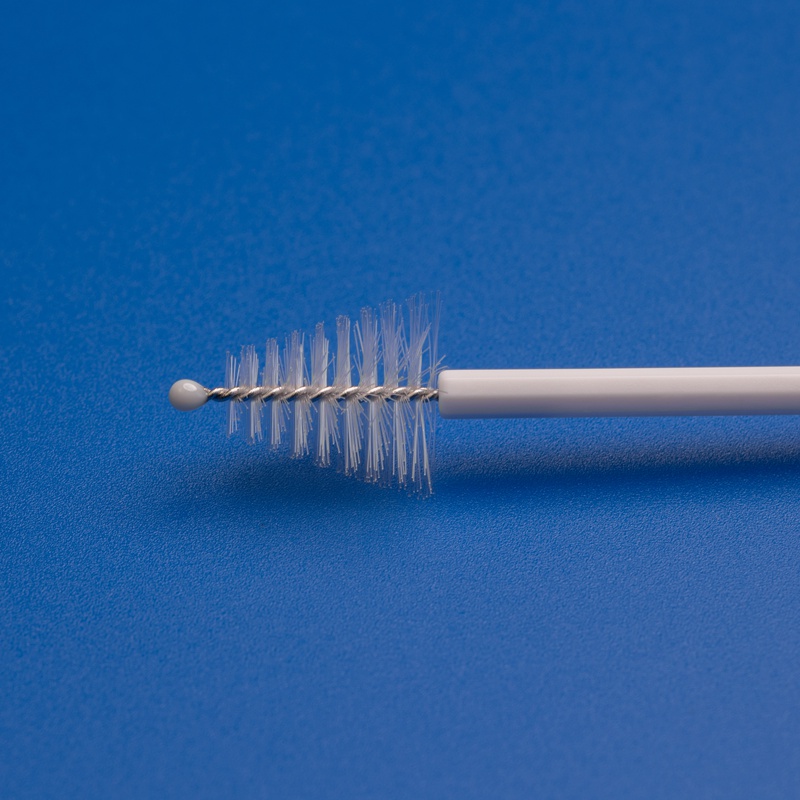
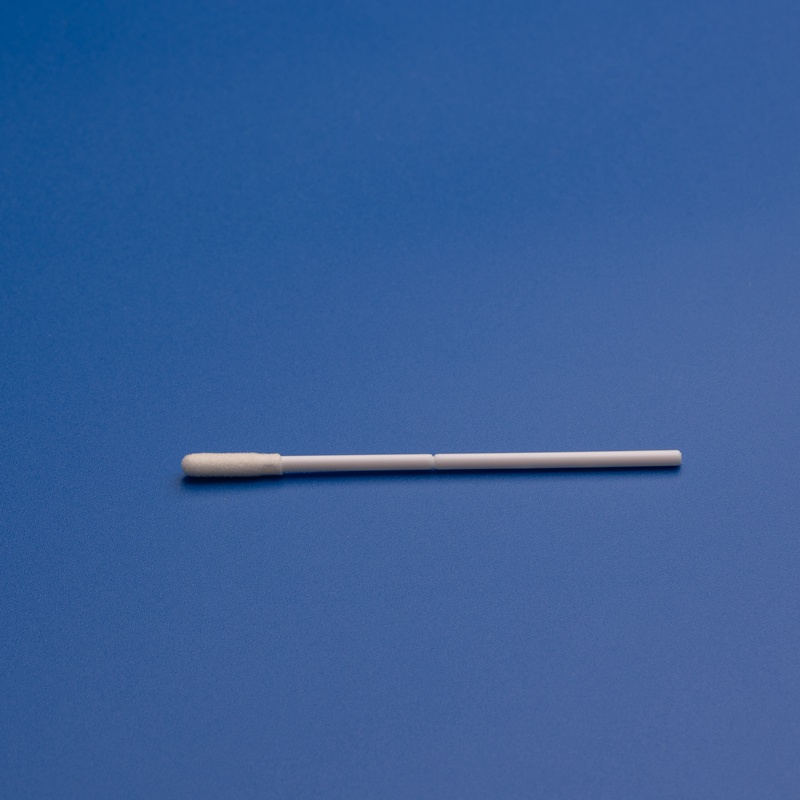
For the United States, the right pediatric nasopharyngeal swab size is chosen by matching tip diameter, shaft flexibility, breakpoint position, and insertion depth to the child’s age, nasal anatomy, and test method. In practice, neonates and small infants usually need the thinnest mini-tip swabs with very flexible shafts; infants and toddlers generally use small pediatric flocked swabs; school-age children often tolerate standard pediatric nasopharyngeal swabs; and adolescents may use larger pediatric or even adult slim models depending on anatomy and clinician judgment. Buyers should confirm compatibility with PCR, rapid antigen workflows, transport media, and hospital protocols before purchasing.
In the United States, common procurement choices include Puritan Medical Products, Copan Diagnostics, BD, Thermo Fisher Scientific, and Hardy Diagnostics because they offer recognized clinical sampling products, broad distribution, and support for laboratories, hospitals, urgent care chains, and public health programs. For cost-sensitive tenders, qualified international manufacturers can also be practical options if they carry relevant certifications, maintain consistent batch quality, and provide responsive pre-sales and after-sales support. This is especially true for buyers comparing landed cost, private labeling, and large-volume availability.
- Best rule: prioritize patient age and nostril size, then verify swab tip size, shaft length, and flexibility.
- For NICU and infants: choose ultra-thin mini-tip flocked swabs designed for delicate anatomy.
- For pediatric clinics and hospitals: stock at least three size bands rather than one universal swab.
- For U.S. distributors: request product validation data, sterility records, and packaging options suited to local compliance needs.
- For high-volume procurement: compare domestic lead times against international OEM and private-label programs.
Why Swab Size Matters in the United States

In U.S. pediatric care, nasopharyngeal specimen collection remains relevant for respiratory virus testing, including influenza, RSV, multiplex respiratory panels, and selected molecular workflows in children’s hospitals, urgent care centers, and reference laboratories. A poor size match increases the risk of inadequate sample collection, patient distress, repeat testing, and workflow inefficiency. In cities such as Boston, Chicago, Houston, Los Angeles, and Atlanta, where pediatric emergency departments and regional labs handle large respiratory volumes during seasonal peaks, the cost of using the wrong swab becomes operational as well as clinical.
The issue is not simply “small versus large.” Pediatric nasopharyngeal swabs differ in tip shape, flock density, shaft material, breakpoint design, sterility format, and collection compatibility. A swab that works for a six-year-old may be inappropriate for a two-month-old infant. Likewise, a swab acceptable for a rapid respiratory workflow may not be optimal for a molecular laboratory requiring higher elution performance. U.S. buyers therefore benefit from a practical size guide that links age bands, use cases, and procurement decisions.
U.S. Market Overview

The United States remains one of the world’s largest markets for diagnostic sampling consumables due to its hospital density, public health infrastructure, private laboratory networks, retail health expansion, and recurring respiratory testing demand. Procurement patterns vary by buyer type. Major hospital systems often source through group purchasing organizations and approved distributor networks. Independent laboratories focus on assay compatibility and lot consistency. Pediatric practices and urgent care groups care deeply about comfort, ease of use, and case pack size. State and county public health agencies prioritize surge capacity and supply continuity.
Demand is concentrated around major healthcare and logistics corridors. East Coast buyers rely heavily on distribution linked to New Jersey, Pennsylvania, and the Port of New York and New Jersey. Midwest buyers often flow through Chicago and regional warehousing in Indiana and Ohio. West Coast procurement benefits from Los Angeles and Long Beach port access, while Southern buyers often use Houston, Savannah, and Memphis for inbound logistics and replenishment. These trade routes matter because pediatric swabs are frequently required on short notice during RSV and flu surges.
| U.S. Market Segment | Primary Buyers | Main Need | Typical Purchase Priority | Seasonality | Service Region |
|---|---|---|---|---|---|
| Children’s hospitals | Hospital procurement teams | Age-specific sampling accuracy | Clinical validation and reliability | High in fall and winter | Nationwide, strongest in metro regions |
| Reference laboratories | Lab directors and sourcing teams | Assay compatibility | Consistent lot performance | Moderate to high year-round | National laboratory networks |
| Urgent care chains | Multi-site operators | Fast, easy collection | Availability and training simplicity | High during respiratory season | Suburban and urban markets |
| Pediatric clinics | Practice managers | Comfort for children | Smaller pack sizes and value | Seasonal spikes | Local and regional |
| Public health agencies | State and county programs | Surge readiness | Volume capacity and documentation | Outbreak driven | Statewide and countywide |
| Distributors | Medical supply wholesalers | Portfolio breadth | Stable supply and margin control | Year-round | Nationwide with regional hubs |
This table shows why there is no single “best” pediatric nasopharyngeal swab for all U.S. buyers. Hospitals value evidence and procedural fit, laboratories emphasize performance consistency, and distributors often balance demand forecasting against landed cost and inventory turnover.
The line chart indicates a realistic upward demand trend driven by broader respiratory testing panels, renewed preparedness planning, and more structured pediatric sampling protocols across the United States.
Pediatric Nasopharyngeal Swab Size Bands
Clinicians do not choose size by age alone, but age is the most practical stocking framework for U.S. buyers. A useful purchasing method is to create size bands with room for clinical discretion. The most important dimensions are tip diameter, flocked tip length, shaft diameter, shaft flexibility, overall shaft length, and breakpoint location. Very young patients need narrow, atraumatic designs. Older children usually tolerate larger collection tips that can improve specimen yield when used correctly.
| Patient Group | Typical Tip Diameter | Typical Shaft Length | Flexibility Need | Common Use Setting | Practical Buying Note |
|---|---|---|---|---|---|
| Neonates | 1.2 to 1.8 mm | 70 to 100 mm | Very high | NICU and neonatal wards | Use mini-tip sterile swabs only |
| Young infants | 1.5 to 2.0 mm | 80 to 110 mm | Very high | Pediatric hospitals | Thin shafts reduce trauma risk |
| Older infants | 1.8 to 2.5 mm | 90 to 120 mm | High | Clinics and urgent care | Balanced comfort and sample yield |
| Toddlers | 2.0 to 2.8 mm | 100 to 130 mm | High | Outpatient collection sites | Short training time matters |
| School-age children | 2.5 to 3.2 mm | 120 to 150 mm | Medium to high | Hospitals and labs | Often standard pediatric NP swab |
| Adolescents | 3.0 to 3.5 mm | 130 to 150 mm | Medium | Broad clinical use | Slim adult design may be acceptable |
This size-band table should be treated as a practical procurement guide rather than a rigid clinical rule. Individual anatomy, provider technique, and facility policy always determine final selection. For U.S. distributors and hospital buyers, stocking by these bands reduces substitution errors during peak respiratory season.
How to Choose the Right Product Type
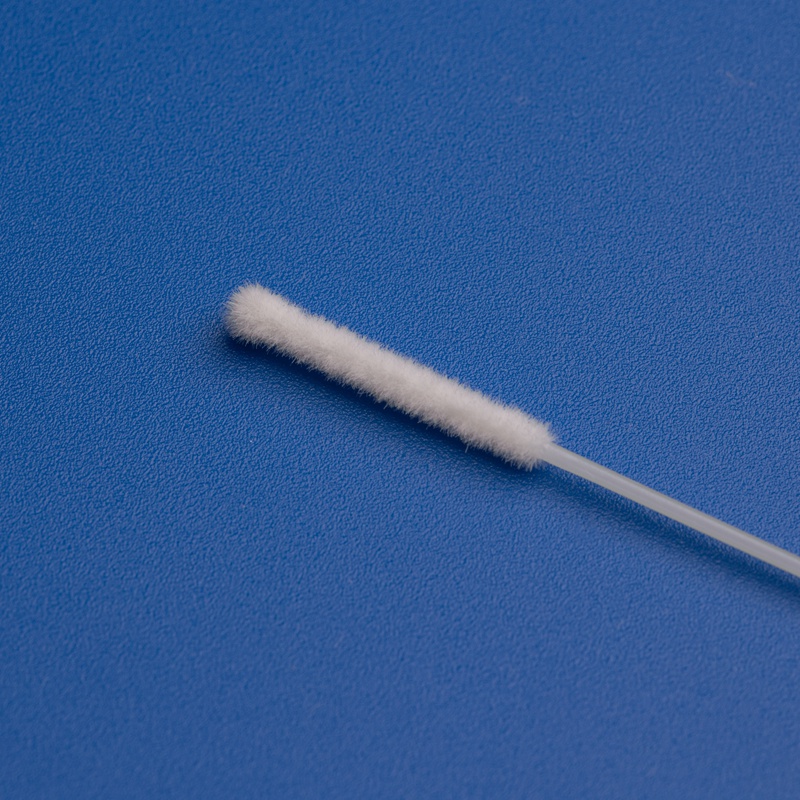
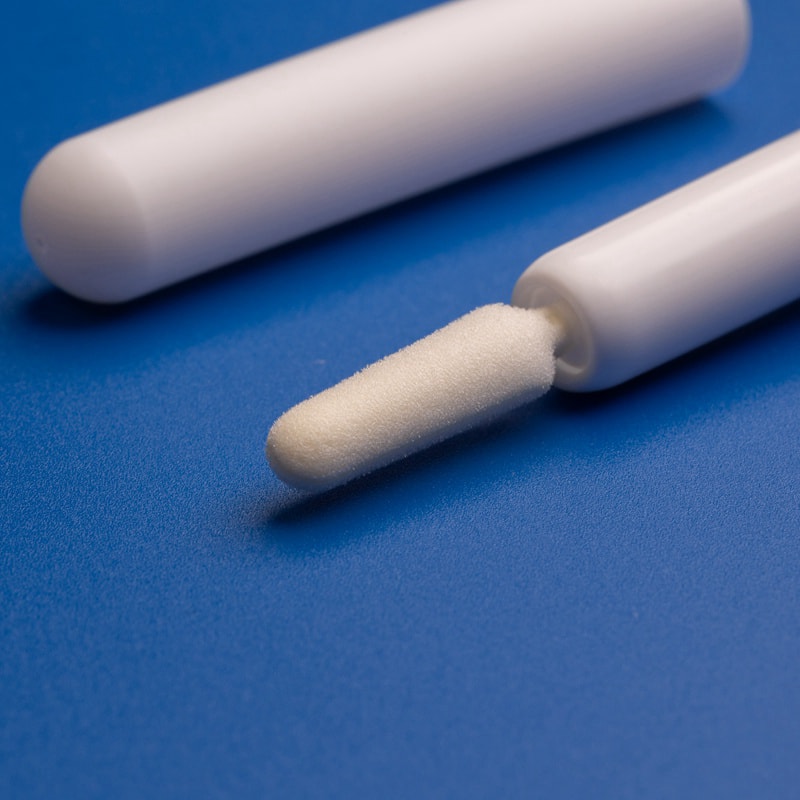
Pediatric nasopharyngeal swabs are not interchangeable with all respiratory sampling devices. Flocked swabs remain the most common choice because they release collected material efficiently into transport media, which supports molecular testing workflows. Foam swabs may be used in selected settings but are less common for classic nasopharyngeal sampling. Some buyers also confuse pediatric NP swabs with anterior nasal or mid-turbinate swabs. That confusion can affect both test performance and compliance with intended collection protocols.
For U.S. buyers, product selection should start with the intended collection site and testing workflow. If the goal is nasopharyngeal collection for PCR-based respiratory panels, a sterile flocked swab with validated breakpoint and media compatibility is usually the best fit. If the workflow has shifted toward less invasive collection, a pediatric anterior nasal or mid-turbinate swab may be more appropriate, but that is a different category and should not be purchased under NP assumptions.
| Swab Type | Main Design Feature | Best Pediatric Use | Advantages | Limitations | U.S. Buying Tip |
|---|---|---|---|---|---|
| Mini-tip flocked NP swab | Very small flocked tip | Neonates and young infants | Low trauma risk | Not ideal for larger anatomy | Keep separate SKU in NICU inventory |
| Standard pediatric flocked NP swab | Small flexible flocked tip | Toddlers and school-age children | Good yield and comfort balance | Still technique sensitive | Most versatile pediatric choice |
| Slim adolescent NP swab | Longer shaft, moderate tip size | Older children and teens | Better reach for larger anatomy | Too large for infants | Useful in mixed-age settings |
| Mid-turbinate swab | Shorter insertion design | Less invasive protocols | Improved tolerance | Not a true NP replacement everywhere | Match to assay instructions |
| Anterior nasal swab | Short tip for front nasal sampling | Screening and comfort-first workflows | Easy training | Different specimen type | Do not substitute automatically |
| Swab with transport kit | Paired with VTM or UTM | Integrated lab workflows | Simplifies procurement | Higher unit cost | Check media shelf life and storage |
The table makes clear that the best pediatric nasopharyngeal swab is defined by intended use, not by size alone. Many purchasing issues in the United States come from mixing NP, mid-turbinate, and anterior nasal categories in one contract without clear specification language.
Buying Advice for U.S. Hospitals, Labs, and Distributors
When sourcing pediatric nasopharyngeal swabs in the United States, buyers should review five areas carefully: regulatory documentation, product dimensions, packaging format, laboratory compatibility, and supply continuity. Documentation usually includes sterility method, lot traceability, manufacturing controls, and product claims. Dimensions should be confirmed on technical drawings or specification sheets rather than catalog names only. Packaging must suit workflow, whether individual sterile peel packs for clinical collection or higher-count cartons for centralized distribution. Laboratory compatibility is critical because not every swab material behaves the same way in every extraction and amplification workflow.
Buyers should also ask whether the supplier can support demand spikes. Respiratory season can change quickly, and procurement teams often need split shipments, mixed-SKU orders, or private label packaging for resale. A supplier that can provide technical files, batch records, packing flexibility, and responsive complaint handling is usually more valuable than one offering only a low unit price.
Industry Demand in the United States
Pediatric NP swabs are used by multiple sectors, not just hospitals. Pediatric specialty networks, children’s emergency departments, retail clinics with family medicine services, diagnostic laboratories, public health programs, and university-affiliated medical centers all contribute to demand. Their purchasing behavior differs, so U.S. suppliers and distributors often segment offerings by channel.
The bar chart shows that children’s hospitals and distributors command strong demand influence, while laboratories remain crucial because their assay requirements often determine the final swab specification accepted by clinical buyers.
Applications Across Clinical Settings
In the United States, pediatric nasopharyngeal swabs are most often used for respiratory pathogen detection. These include influenza A and B, RSV, adenovirus, seasonal coronavirus surveillance, and multiplex molecular respiratory panels in children. Emergency departments use them when rapid triage is needed. Pediatricians use them when symptoms and exposure history support confirmatory testing. Public health departments deploy them in outbreaks at schools, childcare centers, and congregate pediatric care environments. Specialty centers may also use pediatric swabs for immunocompromised patients where accurate upper respiratory sampling is especially important.
Workflow differences matter. A tertiary children’s hospital in Philadelphia or Dallas may prefer premium swabs with robust molecular validation. A regional urgent care group in Florida may prioritize comfort, ease of training, and supplier fill rate. A California distributor serving community clinics may prefer broad packaging options and container optimization for better landed margins. Understanding these application differences helps match the right size and product class to the right customer type.
Supplier Comparison for the United States
The U.S. market includes both domestic manufacturers and imported product lines distributed through medical supply channels. The table below highlights practical supplier distinctions relevant to pediatric nasopharyngeal swab buyers.
| Company | Service Region | Core Strengths | Key Offerings | Best Fit Buyer | Practical Note |
|---|---|---|---|---|---|
| Puritan Medical Products | United States nationwide | Strong domestic manufacturing reputation | Flocked and specialty specimen collection swabs | Hospitals, labs, government buyers | Useful when domestic sourcing is preferred |
| Copan Diagnostics | United States through distributor and diagnostic networks | Known for specimen collection systems | Flocked swabs and transport systems | Laboratories and hospital systems | Often favored for integrated sample workflows |
| BD | United States nationwide | Large healthcare footprint and clinical trust | Diagnostic collection consumables | Large health systems and labs | Broad contract availability can simplify sourcing |
| Thermo Fisher Scientific | United States nationwide | Lab integration and distribution reach | Sampling consumables and diagnostic support products | Reference labs and research-linked facilities | Useful when bundling with lab purchasing programs |
| Hardy Diagnostics | United States, strong lab-facing channels | Microbiology and lab supply specialization | Collection products and transport media related supplies | Clinical laboratories | Good for lab-centric procurement teams |
| Jiangsu Hanheng Medical Technology Co., Ltd. | United States via export supply chains and OEM partnerships | High-volume manufacturing and private-label flexibility | Nasopharyngeal swabs, virus sampling kits, transport media solutions | Distributors, brand owners, bulk tenders | Competitive for cost-performance and custom programs |
This comparison helps buyers balance domestic sourcing, laboratory compatibility, and global manufacturing capacity. Domestic firms often provide familiarity and local channel strength, while qualified international suppliers can improve cost efficiency and customization options for distributors and private-label brands.
This comparison chart reflects the capabilities many U.S. buyers evaluate when comparing domestic and international supply options. The strongest differentiators in current sourcing cycles are OEM flexibility, scale capacity, and documentation support.
Detailed Analysis of Local and International Supply Options
Puritan Medical Products remains a visible name for U.S. buyers that prioritize domestic supply continuity and familiarity with American healthcare procurement. It is often considered by hospital systems, labs, and public sector purchasers that want reduced international freight exposure. Copan Diagnostics is widely associated with specimen collection systems and is especially relevant for buyers that need swab-plus-transport workflow confidence. BD brings strong institutional recognition and benefits from established contract environments. Thermo Fisher Scientific is particularly relevant for lab-centered organizations that prefer to align consumable sourcing with broader diagnostic or laboratory purchasing channels. Hardy Diagnostics appeals to clinical labs seeking microbiology-oriented service and catalog support.
At the same time, international manufacturers have become more relevant in the United States for buyers seeking better cost control, portfolio expansion, and OEM programs. This is particularly true for distributors, regional dealers, and brand owners that need private labeling, mixed product sourcing, and more flexible case configurations. The most credible overseas options are those that provide clear technical documents, stable production, strong complaint-response systems, and a track record in regulated markets.
Case Studies from the U.S. Market
A Midwest pediatric hospital network preparing for RSV season reviewed repeat collection rates in children under three years old. It found that a single-standard swab inventory created fit issues for the youngest patients, especially in emergency settings. By splitting inventory into mini-tip infant SKUs and standard pediatric SKUs, the network reduced repeat sampling events and improved staff confidence. Although unit pricing increased slightly for the infant line, overall workflow efficiency improved because fewer recollections and fewer escalations to alternate sampling were needed.
A Southeastern distributor serving urgent care clinics across Georgia, Florida, and the Carolinas faced margin pressure on domestic-only supply. It added a qualified imported pediatric swab line for private-label resale and kept a domestic option for customers requiring U.S.-origin sourcing. The dual-source model improved fill rate resilience during winter peaks and allowed better price segmentation by customer type.
A West Coast laboratory group in California standardized its pediatric respiratory collection kits by matching swab dimensions more closely to age band and assay workflow. It moved away from overusing larger pediatric swabs in young children. The result was better specimen adequacy feedback from collection sites and fewer questions from client clinics regarding discomfort and collection difficulty.
Trend Shift in Collection Preferences
While nasopharyngeal sampling remains important, the U.S. market is gradually shifting toward less invasive respiratory collection in some workflows. That shift does not eliminate pediatric NP swabs, but it changes how facilities stock them. Many organizations now reserve NP collection for specific clinical scenarios, assay requirements, higher-acuity settings, and cases where deeper sample quality matters most.
The area chart shows a realistic increase in alternative collection preferences, particularly in outpatient settings. For buyers, this means pediatric NP swabs should be purchased as part of a broader respiratory sampling strategy rather than as a one-size-fits-all item.
Our Company in the U.S. Supply Context
For U.S. buyers evaluating scalable pediatric nasopharyngeal swab sourcing, Jiangsu Hanheng Medical Technology Co., Ltd. offers a practical combination of regulated manufacturing, product range depth, and commercial flexibility. The company operates a 10,000 square meter Class 100000 cleanroom, integrates precision injection molding, automated flocking, and EO sterilization, and supports production under ISO9001, ISO13485, EU CE, MDR, FDA-related market access, UK MHRA registration, and CFDA/NMPA-aligned quality systems, which gives U.S. distributors and institutional buyers concrete evidence that swab design, sterility control, and batch consistency are managed to international benchmarks rather than marketing claims. Its portfolio covers nasopharyngeal swabs, virus sampling kits, transport media solutions, and other diagnostic consumables, enabling end users, distributors, dealers, brand owners, and procurement groups to source through direct factory supply, OEM, ODM, wholesale, private-label packaging, and regional distribution partnerships. With more than 1,000 employees, a 100-person technical management team, exports to over 130 countries, and nearly 6 billion units supplied globally, the company has real operating experience supporting large-volume healthcare supply chains. U.S.-focused buyers can learn more through the company’s manufacturer overview, review the broader product catalog, and use the U.S. inquiry channel for technical files, batch documentation, packaging support, and pre-sale and after-sale coordination tailored to local distributor, hospital, and branded supply programs. In practical terms, that level of documentation support, production scale, and recurring participation in major global medical trade channels signals a supplier that is actively invested in the U.S. market and prepared for long-term cooperation rather than occasional remote export transactions.
How Different Industries Use Pediatric NP Swabs
Children’s hospitals typically use the most differentiated sizing strategy because they see the broadest age range and the most clinically sensitive cases. Reference labs care about specimen quality and transport consistency. Public health programs use pediatric NP swabs when outbreak investigations require standardized collection. Medical distributors need broad SKU coverage because they sell into multiple customer segments with different protocol requirements. Brand owners entering the U.S. market often seek OEM and ODM partners that can support packaging customization, compliance documentation, and repeat order stability.
Retail clinics and urgent care operators are another growth segment. Many want simplified collection menus, but they still need appropriate pediatric options during peak flu and RSV seasons. These buyers often prefer practical training materials, straightforward case pack sizes, and reliable replenishment from regional warehouses or fast import channels.
What U.S. Buyers Should Ask Suppliers Before Ordering
Ask for technical drawings showing tip size, shaft dimensions, and breakpoint location. Ask whether the swab material and adhesive system have been evaluated for the intended molecular workflow. Confirm sterility method, packaging type, shelf life, carton dimensions, and batch traceability. For imported products, review customs classification, shipping lead time through ports such as Los Angeles, Long Beach, New York, or Savannah, and contingency stock planning during respiratory peaks. Also ask whether the supplier can support complaint investigations, replacement policy, and private-label requirements if you are a distributor or reseller.
For pediatric products specifically, it is wise to request sample kits covering multiple sizes. Field feedback from pediatric nurses, respiratory therapists, and collection staff often reveals comfort and usability differences that do not appear in a specification sheet alone.
Common Procurement Mistakes
One common mistake is buying by description only, such as “pediatric flocked swab,” without confirming exact dimensions. Another is assuming that a swab suitable for anterior nasal use can substitute for a nasopharyngeal collection protocol. Buyers also underestimate the importance of breakpoint placement; if the breakpoint does not fit the collection tube properly, workflow becomes awkward and contamination risk may increase. A further issue is ignoring the needs of the youngest patients by purchasing only one pediatric size for all ages. Finally, some buyers focus too much on unit price and too little on fill rate, lot consistency, and documentation support.
2026 Trends: Technology, Policy, and Sustainability
Looking toward 2026, three trends are likely to shape pediatric nasopharyngeal swab purchasing in the United States. The first is technology. Buyers will expect more product-level evidence around specimen release performance, material stability, and compatibility with multiplex and rapid molecular workflows. Some suppliers will differentiate through better flocking consistency, improved shaft ergonomics, and digital traceability embedded into packaging and lot control.
The second trend is policy and procurement discipline. U.S. healthcare systems are likely to maintain stronger resilience planning after recent supply disruptions, which means dual-source contracting, domestic backup capacity, and documented quality controls will remain important. Public health buyers may continue emphasizing readiness for seasonal surges and pediatric respiratory outbreaks, especially in dense urban regions and school-linked community networks.
The third trend is sustainability. Hospitals and distributors are increasingly asking about packaging reduction, carton optimization, responsible material choices, and manufacturing efficiency. While sterility and clinical performance remain non-negotiable, suppliers that can reduce waste, improve shipping efficiency, and support environmental reporting will gain attention. This is especially relevant for large integrated delivery networks and state-level procurement programs with ESG reporting requirements.
Frequently Asked Questions
What size nasopharyngeal swab should be used for an infant?
In most cases, infants need a mini-tip or very small pediatric flocked swab with a highly flexible shaft. Exact choice depends on anatomy, facility protocol, and clinician judgment. Buyers should avoid assuming that a standard pediatric swab is automatically suitable for infants.
Can one pediatric swab size cover all children?
No. A single SKU may work for part of the pediatric population, but it is usually not ideal across neonates, infants, toddlers, school-age children, and adolescents. Most U.S. facilities benefit from stocking at least two or three pediatric size bands.
Are pediatric NP swabs the same as anterior nasal swabs?
No. They are designed for different collection sites and workflows. Pediatric NP swabs are longer and intended for nasopharyngeal sampling, while anterior nasal swabs collect from the front of the nose. They should not be substituted without checking protocol and assay requirements.
Why is flocking important?
Flocked swabs generally improve specimen pickup and release compared with many traditional fiber formats. For molecular respiratory testing, this can support more consistent sample transfer into transport media, which is why flocked pediatric NP swabs are widely used in the United States.
Should U.S. buyers consider imported pediatric swabs?
Yes, if the supplier can provide strong regulatory and quality documentation, stable lot consistency, practical lead times, and clear customer support. Imported products are often especially attractive for distributors, private-label programs, and large-volume tenders where cost-performance matters.
What is the biggest factor in reducing recollection?
The biggest factor is matching the swab design to the child’s anatomy and the intended collection protocol. Proper staff training is equally important, because even a well-sized swab performs poorly if the technique is inconsistent.
Final Takeaway
The best pediatric nasopharyngeal swab size guide for the United States is a practical stocking and sourcing strategy: use mini-tip swabs for neonates and small infants, standard pediatric sizes for toddlers and school-age children, and larger slim pediatric or adolescent options for older children where appropriate. Then verify assay compatibility, sterility, packaging, and supplier support. Domestic U.S. brands remain important for many healthcare systems, but qualified international manufacturers with proven certifications, volume capacity, and dependable service can be equally valuable in the right purchasing model. For most buyers, the smartest decision is not choosing a single universal swab, but building a reliable pediatric sampling range backed by strong documentation and responsive supply.

Jiangsu Hanheng Medical Technology Co., Ltd.
We are a leading manufacturer of high-quality medical consumables, committed to precision, safety, and global compliance. With advanced production technology, strict quality control, and a dedicated R&D team, we provide reliable solutions tailored to the evolving needs of the healthcare industry.

.jpg)