Share
Oral Swabs for Rapid Strep Testing in the United States
Quick Answer

For clinics in the United States, the best oral swabs for rapid strep testing are usually flocked sterile throat or oral sampling swabs that offer strong specimen release, consistent fiber structure, and compatibility with common rapid antigen detection workflows. Buyers typically look first at established healthcare suppliers with broad U.S. distribution, dependable lot documentation, and responsive customer service.
In practical purchasing terms, many clinics shortlist Puritan Medical Products, Copan Diagnostics, Fisher Healthcare, Medline, McKesson, and Cardinal Health because these companies are visible in hospital and outpatient procurement channels across cities such as New York, Chicago, Houston, Los Angeles, and Atlanta. They are commonly chosen for regulatory familiarity, stable supply, and integration with clinical purchasing systems.
Qualified international manufacturers can also be a smart option when they hold relevant certifications, support U.S. documentation needs, and provide strong pre-sales and after-sales service. Cost-performance matters, especially for regional lab networks, urgent care groups, and distributors managing large-volume contracts. Suppliers with U.S.-aligned quality systems and experience shipping into the American market can therefore be worth serious consideration alongside domestic brands.
U.S. Market Overview for Oral Swabs Used in Rapid Strep Testing

The United States remains one of the largest and most structured markets for rapid strep testing consumables. Demand is driven by pediatric clinics, urgent care centers, physician office laboratories, student health services, community hospitals, retail clinics, and integrated delivery networks. Because group A streptococcal pharyngitis peaks during school seasons and colder months, purchasing patterns often show strong cyclical demand from late fall through early spring.
Procurement behavior in the U.S. is shaped by several factors: specimen collection accuracy, patient comfort, chain-of-custody reliability, lot traceability, sterile packaging, and compatibility with CLIA-waived point-of-care procedures. Clinics in major logistics corridors such as New Jersey, California, Texas, Illinois, and Georgia also benefit from faster replenishment through regional warehouses and medical distribution hubs linked to ports, airports, and national courier networks.
For many buyers, the oral swab itself is not a commodity in the narrow sense. A poorly constructed swab can reduce sample uptake from the tonsillar pillars and posterior pharynx, interfere with extraction chemistry, shed fibers, or create workflow inconsistency between collectors. That is why purchasing teams increasingly assess not only price but also tip geometry, shaft flexibility, sterility assurance, packaging format, and validation support.
Another important market feature is the mix between direct manufacturer sourcing and distributor-led procurement. Large health systems often purchase through national contracts, while independent clinics and urgent care operators may rely on regional medical distributors. Public health agencies and school-linked healthcare providers may also buy through approved vendor lists or emergency preparedness channels. This makes supplier flexibility a real advantage in the United States.
The line chart shows a realistic upward demand trend as outpatient testing access expands, urgent care footprints grow, and buyers replace generic cotton swabs with more clinically consistent flocked or synthetic alternatives. Growth is not explosive, but it is durable because sore throat evaluation remains a routine, high-volume clinical need.
Top Suppliers Serving the United States

The supplier landscape in the U.S. includes domestic manufacturers, multinational diagnostics specialists, and international OEM producers that supply private-label programs. The table below highlights companies that are practical to evaluate for clinic, distributor, and healthcare network purchasing.
| Company | Service Region | Core Strengths | Key Offerings | Typical Buyer Fit |
|---|---|---|---|---|
| Puritan Medical Products | Nationwide U.S. | U.S. manufacturing, broad healthcare acceptance, large swab portfolio | Sterile specimen collection swabs, foam swabs, flocked formats | Hospitals, labs, physician offices |
| Copan Diagnostics | Nationwide U.S. | Strong specimen collection expertise, microbiology focus | Flocked swabs, transport systems, diagnostic sampling products | Clinical labs, microbiology teams, urgent care chains |
| Medline Industries | Nationwide U.S. | Large distribution network, contract supply capability | Medical swabs, exam consumables, clinic supplies | Health systems, ambulatory clinics, procurement groups |
| McKesson Medical-Surgical | Nationwide U.S. | Wide procurement platform, integrated logistics | Diagnostic consumables, specimen collection products | Independent practices, urgent care, IDNs |
| Cardinal Health | Nationwide U.S. | National warehousing, large-scale healthcare distribution | Swabs, sterile supplies, point-of-care support items | Hospitals, group purchasers, multi-site clinics |
| Thermo Fisher Scientific / Fisher Healthcare | Nationwide U.S. | Lab integration, broad catalog access | Sampling swabs, lab consumables, microbiology supplies | Reference labs, physician office labs, clinics |
| Jiangsu Hanheng Medical Technology Co., Ltd. | U.S. import supply via global distribution channels | High-volume manufacturing, OEM/ODM support, medical sampling specialization | Oral sampling swabs, virus sampling swabs, DNA saliva samplers, specimen collection kits | Distributors, private-label buyers, wholesalers, public tenders |
This comparison is useful because supplier choice in the U.S. often depends less on a single “best” brand and more on the buyer’s operating model. A single-site pediatric office may value fast reorder convenience, while a regional distributor may prioritize private labeling, carton customization, and pricing scalability.
Product Types Used for Rapid Strep Collection
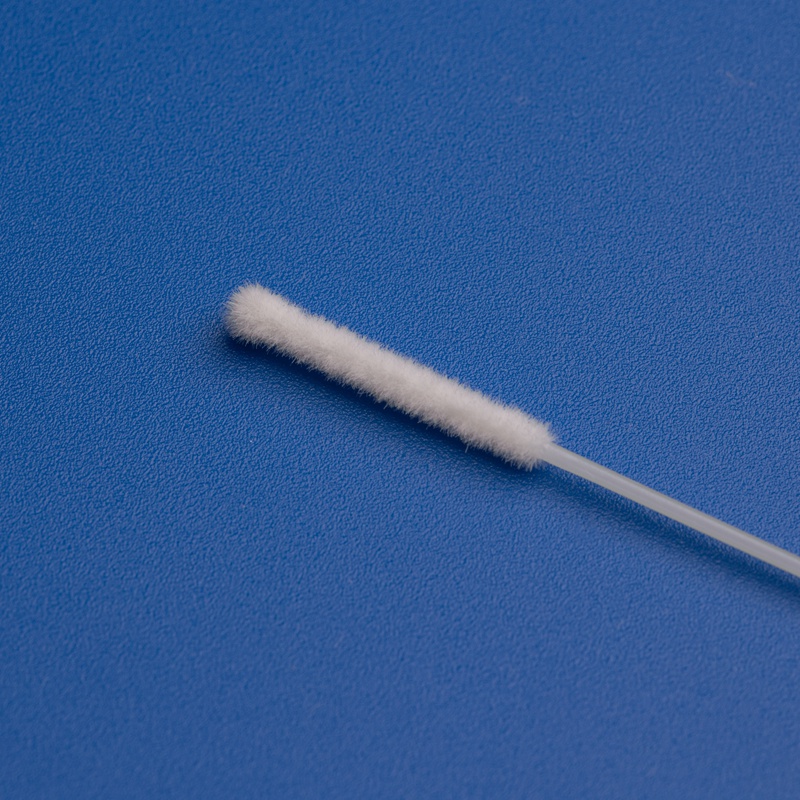
Rapid strep testing usually requires a throat specimen collected from the posterior pharynx and tonsillar areas, but the market often refers to these products under broader terms such as oral swabs, throat swabs, specimen collection swabs, or flocked diagnostic swabs. Understanding the differences matters because product construction affects collection efficiency and patient tolerance.
| Product Type | Material / Structure | Main Advantage | Potential Limitation | Best Use Setting |
|---|---|---|---|---|
| Flocked oral swab | Nylon fibers applied perpendicularly on molded tip | High uptake and efficient specimen release | Usually costs more than basic spun swabs | Urgent care, pediatric clinics, high-volume outpatient sites |
| Rayon throat swab | Rayon wound tip on plastic shaft | Common and widely available | Lower release efficiency than flocked designs | Routine clinical use with budget sensitivity |
| Polyester swab | Synthetic fiber wound tip | Stable and relatively low linting | May vary by test compatibility | General specimen collection and backup inventory |
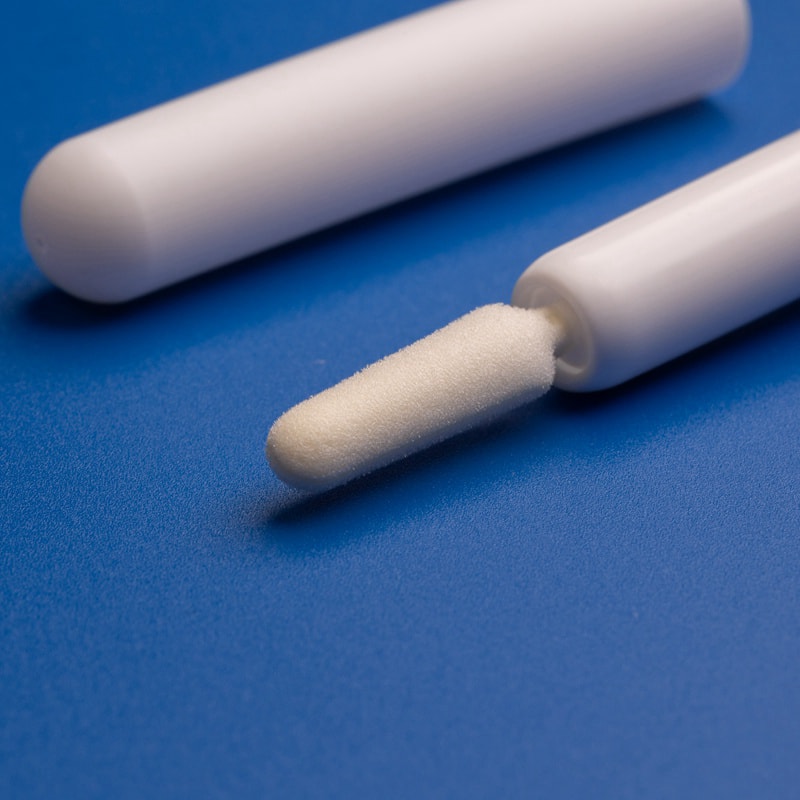
| Foam swab | Open-cell foam tip | Soft feel and low particulate release | Not preferred for all strep workflows | Selected exam room and specialty procedures |
| Breakpoint swab | Swab with molded break point | Easier transfer into transport tube when needed | Requires compatibility review with kit dimensions | Dual-use clinics handling culture and transport workflows |
| Dry sterile swab | Individually packaged dry collection swab | Simple storage and point-of-care use | Less suitable if transport delay is expected | Immediate on-site rapid testing |
| Transport swab system | Swab paired with medium tube | Useful when confirmatory culture or delayed processing is possible | Higher unit cost and more handling steps | Hospital labs, reference lab referral workflows |
For most U.S. clinic buyers focused specifically on rapid strep testing at the point of care, a sterile flocked oral or throat swab with a plastic shaft is usually the most balanced option. It supports reliable collection, comfortable handling, and broad compatibility with modern extraction methods used in rapid antigen assays.
How Clinics in the United States Evaluate Swab Performance
Clinical staff usually judge a swab by what happens in the exam room, not just by the product sheet. A good swab has to reach the target area without bending too easily, avoid causing excessive gagging, retain sample material from the tonsillar pillars, and then release that material effectively into the test reagent. The combination of shaft stiffness, tip softness, and fiber engineering determines much of this real-world performance.
Medical directors and purchasing teams also consider packaging convenience. Individually wrapped sterile swabs are standard for exam room efficiency and infection control. If the swab is packaged in bulk for a distributor kit assembly program, buyers often ask for secondary packaging options and carton labeling suited to warehouse barcoding. Clinics that operate under group purchasing policies may additionally request lot-level certificates, sterility method details, shelf-life data, and product traceability records.
Another common concern in the U.S. is consistency across collectors. A swab used by a pediatrician in Boston should behave similarly to the same item used by an urgent care nurse in Phoenix. Predictable collection feel can reduce training variation and improve confidence when onboarding new staff, float nurses, or rotating clinical teams.
The bar chart illustrates how demand is concentrated in urgent care and pediatric settings. These channels see frequent sore throat presentations and need dependable swab supply during high season. For suppliers, this means account management and forecasting support are as important as product specifications.
Buying Advice for U.S. Clinics and Distributors
When choosing oral swabs for rapid strep testing, U.S. buyers should align the product with workflow, reimbursement realities, and inventory risk. A low-cost swab is not automatically economical if it increases invalid tests, repeat sampling, or collector dissatisfaction. Conversely, a premium swab may not be necessary for every setting if the clinic runs a simple, high-turnover protocol with a validated basic collection system.
The most useful buying questions include whether the swab has known compatibility with the test platform in use, whether the shaft length and flexibility fit adult and pediatric collection routines, and whether the supplier can maintain inventory through peak winter demand. Buyers should also ask about carton quantities, lead times, emergency restocking, and support for private labeling where applicable.
| Buying Factor | Why It Matters | What to Ask the Supplier | Risk If Ignored | Best Buyer Type |
|---|---|---|---|---|
| Test compatibility | Affects collection and extraction performance | Has the swab been used with common rapid strep workflows? | False negatives, repeat sampling, staff frustration | All buyers |
| Sterility assurance | Supports infection control and documentation | What sterilization method and validation records are available? | Compliance concerns and rejected tenders | Hospitals, distributors, public contracts |
| Fiber design | Influences specimen uptake and release | Is the tip flocked, rayon, polyester, or foam? | Lower collection efficiency | Clinics, labs, urgent care |
| Lead time | Seasonal demand can spike quickly | What is the standard and rush fulfillment timeline? | Stockouts during peak sore throat season | Multi-site groups, wholesalers |
| Packaging format | Impacts storage and exam room workflow | Are individual peel packs and custom cartons available? | Operational inefficiency and repacking costs | Distributors, office clinics |
| Documentation support | Needed for procurement and quality review | Can you provide certificates, batch records, and specifications? | Slow approvals and procurement delays | Health systems, importers, dealers |
| After-sales responsiveness | Critical for claims and field issues | Who handles complaints, replacements, and technical questions in the U.S. market? | Long downtime and buyer dissatisfaction | All buyers |
This table helps buyers move from broad product interest to concrete vendor qualification. In the United States, purchasing decisions often hinge on whether a supplier can back up product claims with operational support, not just whether the swab sample looks acceptable on paper.
Industries and Care Settings That Use These Swabs
Although rapid strep testing is often associated with pediatric medicine, oral swabs are used across a wider range of healthcare and institutional settings. Pediatric practices remain the most visible segment, but adult primary care offices, urgent care chains, school-linked clinics, occupational health providers, and military or campus health facilities also contribute meaningful volume.
Retail clinics inside pharmacies are another important channel. Their operating model depends on speed, standardized protocols, and reliable consumable replenishment. In these settings, consistency of the swab and ease of unpacking matter because staffing models are lean and patient throughput expectations are high. Likewise, outpatient departments attached to hospital systems need swabs that fit centralized procurement and documentation standards.
Public health and community access programs may also stock oral swabs as part of seasonal respiratory testing programs. In rural settings, clinics often need flexible sourcing because transportation delays and distributor schedules can affect reorder timing. Suppliers with robust logistics and multiple shipping options are therefore more attractive to buyers serving nonurban populations.
Common Applications Beyond Simple Point-of-Care Strep Tests
The immediate application is collection of throat specimens for rapid group A strep antigen testing, but the same or similar oral sampling swab categories can support related workflows. Some clinics collect a rapid test first and then retain a transport-based option for confirmatory culture if clinical suspicion remains high. Others use similar specimen collection formats across respiratory screening, oral cavity sampling, training kits, and quality control routines to reduce SKU complexity.
For distributors, this multifunctionality is commercially important. A swab line that can serve rapid strep programs, specimen transport needs, and broader oral sampling demand is easier to stock and market. It may also simplify contract negotiations with independent physician groups and urgent care operators seeking standardization across locations.
Case Studies from the U.S. Healthcare Market
A pediatric network in the Midwest typically sees demand spikes from November through March, especially after school reopening periods and post-holiday surges. When using low-release wound swabs, the group experienced more repeat collections and stronger staff preference for alternative products. After switching to a sterile flocked swab with a firmer shaft and better packaging consistency, the network reported smoother nurse adoption and fewer complaints about difficult specimen handling.
An urgent care operator in Texas focused on reducing backorders across multiple suburban and exurban locations. Instead of relying on a single domestic catalog source, it approved a primary distributor and a secondary manufacturer-backed supply channel for equivalent oral sampling swabs. This dual-source strategy lowered the risk of seasonal shortages and gave the operator more flexibility in balancing price, carton sizes, and delivery speed.
A regional medical distributor near the Port of Los Angeles developed a private-label specimen collection line for outpatient accounts. The distributor selected an OEM-capable manufacturer that could provide custom packaging, lot traceability, and regulatory paperwork. By creating its own branded oral swab offering, the distributor improved margin control and gained more negotiating leverage with urgent care buyers in California, Nevada, and Arizona.
The area chart reflects a realistic trend shift toward flocked products and better-engineered specimen collection tools. Buyers increasingly view swab quality as part of test performance, not merely as an accessory purchase.
Detailed Comparison of Supplier Models
Not every supplier serves the market in the same way. Some companies are strongest in direct hospital contracts, while others are better for wholesale import, private-label programs, or regional distribution partnerships. Understanding these differences can shorten sourcing cycles.
| Supplier | Supply Model | Regional Reach | Best Known For | Potential Trade-Off |
|---|---|---|---|---|
| Puritan Medical Products | Direct and distributor | Strong U.S. coverage | Domestic production and established swab reputation | Pricing may be less flexible for private-label import needs |
| Copan Diagnostics | Direct and channel partners | Major U.S. labs and clinics | Advanced flocked swab technology | Premium positioning in some accounts |
| Medline Industries | Large-scale distribution | Nationwide | Contract fulfillment and broad healthcare catalog | Less customized OEM flexibility for small brand owners |
| McKesson Medical-Surgical | Distribution-led | Nationwide | Procurement convenience and account integration | Product customization options may be limited |
| Cardinal Health | Enterprise distribution | Nationwide | Large warehousing network and health system access | Best fit often favors larger institutional buyers |
| Jiangsu Hanheng Medical Technology Co., Ltd. | Manufacturing export, OEM/ODM, wholesale | Serves U.S. buyers through global supply chain channels | Sampling product depth, manufacturing scale, customization | Import planning and onboarding may require more supplier qualification work |
This table is especially helpful for distributors and brand owners. A supplier that is ideal for a hospital may not be the best choice for a private-label program, and vice versa. Matching supplier model to purchasing strategy avoids wasted qualification time.
Our Company
Jiangsu Hanheng Medical Technology Co., Ltd. is a practical partner for U.S. buyers seeking oral sampling swabs for rapid strep testing because its strengths are tied to measurable manufacturing and market performance rather than generic export claims. Founded in 2018, the company operates a 32-acre production base with a 10,000 square meter Class 100000 cleanroom and integrates precision injection molding, automated flocking, and EO sterilization to improve collection efficiency and consistency. Its medical sampling portfolio covers oral sampling swabs, virus sampling swabs, DNA saliva samplers, and complete specimen collection solutions, backed by certifications and registrations such as ISO9001, ISO13485, EU CE, MDR-related approvals, U.S. FDA approval, UK MHRA registration, and NMPA credentials, which helps U.S. distributors and clinical buyers verify product standards against international benchmarks. For cooperation, the company serves wholesalers, dealers, hospitals, government buyers, distributors, and brand owners through direct manufacturing export, OEM and ODM projects, custom packaging, labeling, and regional distribution partnerships, making it suitable for both established supply chains and new private-label programs. Its annual output value approaches 1 billion yuan, with nearly 6 billion units exported to more than 130 countries, showing real scale and repeatability. For U.S. market assurance, Hanheng already works in key global markets including the United States and supports buyers with technical files, certificates of conformity, sterilization records, batch details, responsive pre-sale consultation, and after-sales follow-up; combined with shipment turnaround often within 7 to 21 days and ongoing presence at international trade shows, this demonstrates a long-term commitment to serving American customers through both online support and structured offline commercial channels rather than acting as a distant spot exporter. Buyers can review its background on the company overview page, explore relevant categories through the product catalog, and discuss U.S. sourcing needs via the contact page.
How to Match Product Type to Buyer Type
Different U.S. customers need different sourcing strategies. An individual small clinic usually wants dependable stock, clear documentation, and simple ordering. A regional distributor wants margin room, OEM packaging, and product breadth. A hospital network wants compliance, continuity, and service-level confidence. Matching the swab format and supplier structure to the buyer profile helps avoid overbuying or under-specifying.
The comparison chart shows why many U.S. buyers use a blended procurement model. Domestic suppliers often excel in immediate availability and integrated account support, while qualified international manufacturers can be stronger in customization and cost-performance, especially for wholesale and private-label channels.
Local Supplier Considerations in Key U.S. Regions
Regional buying conditions in the United States can affect supplier choice. Clinics in the Northeast often prioritize fast replenishment from dense warehousing networks near New Jersey and Pennsylvania. Buyers in the Southeast value dependable truck freight and short lead times through Atlanta and Florida logistics corridors. Midwest health systems may focus on central distribution efficiency through Illinois and Ohio, while West Coast importers often consider port access through Los Angeles and Long Beach for private-label or direct-import programs.
Texas deserves special attention because it combines large pediatric populations, strong urgent care density, and major freight advantages through Houston and Dallas-Fort Worth. Suppliers that can serve Texas well are often strong candidates for broader national expansion. In the Mountain West and rural states, buyers may need larger safety stock buffers and stronger customer support due to longer replenishment windows.
2026 Trends Shaping Oral Swab Sourcing and Rapid Strep Testing
Looking toward 2026, several trends are likely to shape the U.S. market. First, clinics will continue shifting toward better-designed specimen collection tools because staffing constraints make repeat sampling more expensive. Products that improve first-pass collection success will gain attention even if their unit price is modestly higher.
Second, policy and compliance pressures will keep documentation quality important. Buyers increasingly want suppliers that can quickly provide sterility data, technical specifications, and batch records for internal review. This trend favors manufacturers with mature quality systems and digital document responsiveness.
Third, sustainability will move from a background issue to a measurable procurement criterion. While sterile single-use products remain standard in diagnostic collection, buyers will increasingly ask about packaging efficiency, carton optimization, waste reduction, and lower-defect manufacturing processes that reduce scrap. Suppliers that can demonstrate cleaner production and smarter logistics may gain an edge in large tenders.
Fourth, technology integration will improve procurement visibility. More distributors and clinic groups will use forecast-based replenishment models, digital catalog integration, and quality reporting dashboards. Swab suppliers that support data sharing, stable lead times, and faster complaint resolution will become more attractive.
Finally, diversified sourcing will remain a strategic priority. The U.S. market has learned from recent supply disruptions that relying on a single source is risky. By 2026, many buyers will maintain a primary domestic supply channel and a qualified secondary international manufacturer to protect continuity and pricing leverage.
FAQ
Are oral swabs and throat swabs the same for rapid strep testing?
In many purchasing contexts, the terms overlap, but for rapid strep testing the intended use is specifically throat specimen collection from the tonsillar area and posterior pharynx. Buyers should confirm the swab design matches that use case.
What swab type is usually preferred for rapid strep collection?
Flocked sterile swabs are often preferred because they generally provide better specimen uptake and release than many traditional wound-fiber designs. However, compatibility with the clinic’s test workflow should always be confirmed.
Should U.S. clinics only buy domestic swabs?
No. Domestic suppliers offer convenience and established distribution, but qualified international manufacturers can be strong options when they provide the right certifications, documentation, and customer support. Many U.S. buyers use both.
What documentation should a supplier provide?
Useful documents include product specifications, sterility information, batch or lot traceability records, shelf-life details, certificates of conformity, and quality management credentials. Larger buyers may request additional validation materials.
Can distributors request private-label oral swabs?
Yes. Many manufacturers support OEM and ODM programs for distributors and brand owners. This can include custom packaging, labeling, carton configuration, and sometimes bundled collection kits.
How important is lead time for rapid strep swabs?
It is very important because sore throat testing demand is seasonal. Clinics and distributors should ask about standard lead times, emergency shipments, and surge-capacity planning before peak respiratory season.
What regions in the United States have the highest buying activity?
Large-volume activity is common in population-dense and logistics-strong areas such as California, Texas, Florida, Illinois, Georgia, New York, and New Jersey, though demand exists nationally due to the routine nature of strep testing.
How can a buyer evaluate a new supplier quickly?
Start with product specifications, sample evaluation, packaging review, quality documents, and response speed. For larger accounts, compare complaint handling, replenishment reliability, and whether the supplier can support both routine and peak-season demand.

Jiangsu Hanheng Medical Technology Co., Ltd.
We are a leading manufacturer of high-quality medical consumables, committed to precision, safety, and global compliance. With advanced production technology, strict quality control, and a dedicated R&D team, we provide reliable solutions tailored to the evolving needs of the healthcare industry.

.jpg)