Share
Oral Swabs Microbiome Research Suppliers in the United States
Quick Answer

For oral swabs microbiome research in the United States, the most practical supplier shortlist includes Puritan Medical Products, Copan Diagnostics, Thermo Fisher Scientific, Mawi DNA Technologies, and Hardy Diagnostics. These companies are widely recognized for research-grade sampling products, established distribution coverage, and compatibility with clinical, academic, and biotech workflows. For projects centered on oral microbiome sequencing, metagenomics, host-microbe interaction studies, and longitudinal cohort sampling, buyers usually prioritize sterile packaging, low background contamination, consistent tip structure, and validated transport compatibility over simple unit price.
Researchers in Boston, San Diego, Houston, Seattle, and the Research Triangle often choose domestic or U.S.-based suppliers when they need faster replenishment, simpler documentation, or tighter study controls. At the same time, qualified international manufacturers can also be a strong option when they hold certifications accepted by U.S. buyers and provide dependable pre-sales and after-sales support. Cost-performance matters, especially for large multicenter studies, surveillance programs, and OEM private-label kits, so internationally experienced suppliers with compliant manufacturing systems deserve serious consideration alongside local providers.
United States Market Overview

The United States remains one of the most active markets for oral microbiome sampling products because of its concentration of academic medical centers, dental schools, genomics companies, CROs, and public health research programs. Demand is driven by studies on periodontal disease, oral cancer biomarkers, respiratory pathogen interactions, gut-oral axis research, pediatric oral ecology, and precision medicine projects using sequencing and multi-omics platforms. Major research hubs such as Boston, New York, San Francisco, San Diego, Chicago, Atlanta, and Houston continue to generate procurement demand for oral swabs that are compatible with standardized sampling protocols and downstream DNA analysis.
Procurement in this market is also shaped by logistics. Buyers often value suppliers with inventory close to major freight corridors and ports such as Los Angeles, Long Beach, New York-New Jersey, Savannah, and Houston. Fast domestic fulfillment lowers study delays when investigators need matched lots, replacement stock, or urgent shipment to satellite collection sites. This is particularly important for multicenter trials and university networks where sample integrity and protocol consistency must be maintained across states.
From a purchasing perspective, the U.S. market separates into several layers: research institutions buying directly from manufacturers, hospital systems sourcing through approved distributors, biotech firms needing custom kit assembly, and brand owners seeking OEM or ODM oral sampling products. Because oral microbiome work is sensitive to contamination and collection variability, buyers increasingly ask for flocking consistency, polymer material documentation, sterility records, and evidence that the swab does not introduce inhibitors that interfere with PCR or sequencing.
The chart suggests a realistic upward trend rather than sudden spikes. That pattern matches how this category behaves in practice: steady expansion as microbiome studies move from exploratory academic research into translational diagnostics, preventive oral health products, and population-scale biobanking. By 2026, demand is likely to be reinforced by larger sequencing cohorts, more decentralized sample collection, and stronger links between oral microbial signatures and systemic disease screening.
Top Suppliers Serving the United States

The suppliers below are useful reference points for U.S. buyers because they represent a mix of domestic manufacturing, strong U.S. distribution, sample collection specialization, and laboratory workflow support. The table is intentionally practical, focusing on service region, strength, and fit for oral swabs microbiome research rather than generic marketing claims.
| Company | Primary Service Region | Core Strengths | Key Offerings Relevant to Oral Microbiome Work | Typical Buyer Fit |
|---|---|---|---|---|
| Puritan Medical Products | United States nationwide | Large-scale swab manufacturing, sterile options, broad healthcare supply presence | Specimen collection swabs, foam and flocked formats, custom configurations | Hospitals, universities, diagnostic labs |
| Copan Diagnostics | United States and global | Strong specimen collection expertise, transport systems, microbiology reputation | Flocked swabs, transport media systems, microbiology collection solutions | Clinical research groups, microbiology labs, distributors |
| Thermo Fisher Scientific | United States and global | Integrated lab workflow ecosystem, procurement convenience, research support | Sampling consumables, molecular biology workflow compatibility, lab sourcing programs | Biotech firms, research institutions, core labs |
| Mawi DNA Technologies | United States focused | Molecular sample collection, nucleic acid preservation, self-collection expertise | DNA collection devices, microbiome-compatible sampling workflows, kit customization | Genomics studies, decentralized trials, kit developers |
| Hardy Diagnostics | United States nationwide | Microbiology market knowledge, distributor access, laboratory consumables | Swabs, transport products, microbiology sampling supplies | Clinical labs, teaching hospitals, regional distributors |
| BD | United States and global | Clinical sampling scale, hospital purchasing access, regulated product systems | Collection swabs, specimen transport products, diagnostic sampling supplies | Hospital networks, public health labs |
| Jiangsu Hanheng Medical Technology Co., Ltd. | United States import supply and global distribution | High-volume OEM/ODM manufacturing, automated flocking, regulatory documentation support | Oral sampling swabs, DNA saliva samplers, transport kits, custom private-label programs | Importers, brand owners, distributors, institutional tenders |
This comparison shows that the U.S. buyer does not need to choose only between premium domestic supply and low-cost imports. There is a middle path: sourcing from manufacturers that can document performance, support custom kits, and maintain dependable fulfillment. That matters for oral microbiome studies where the swab is not just a commodity but the starting point of the entire analytical chain.
Product Types Used in Oral Microbiome Research
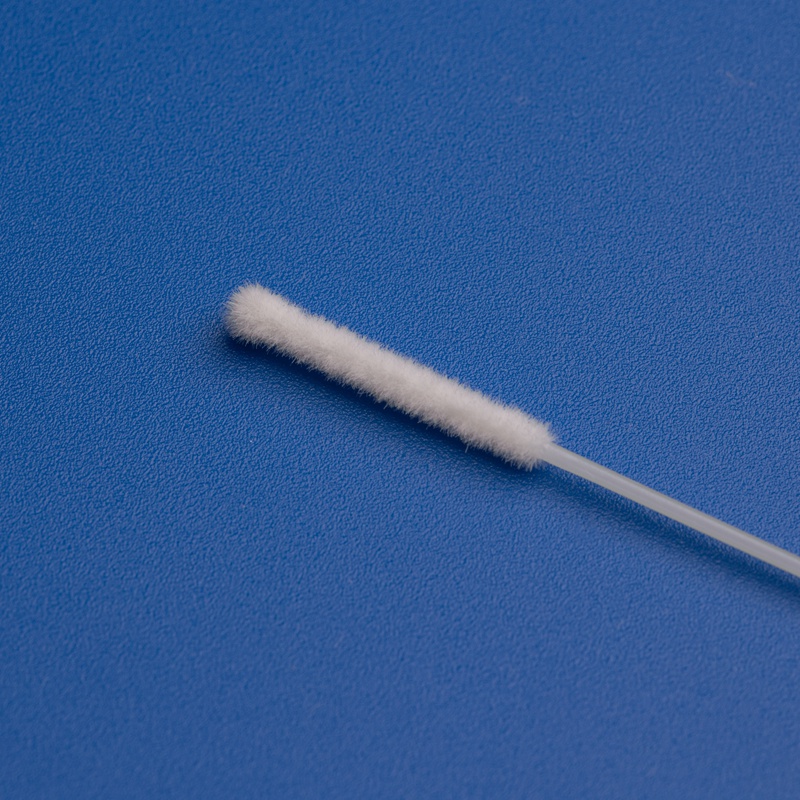
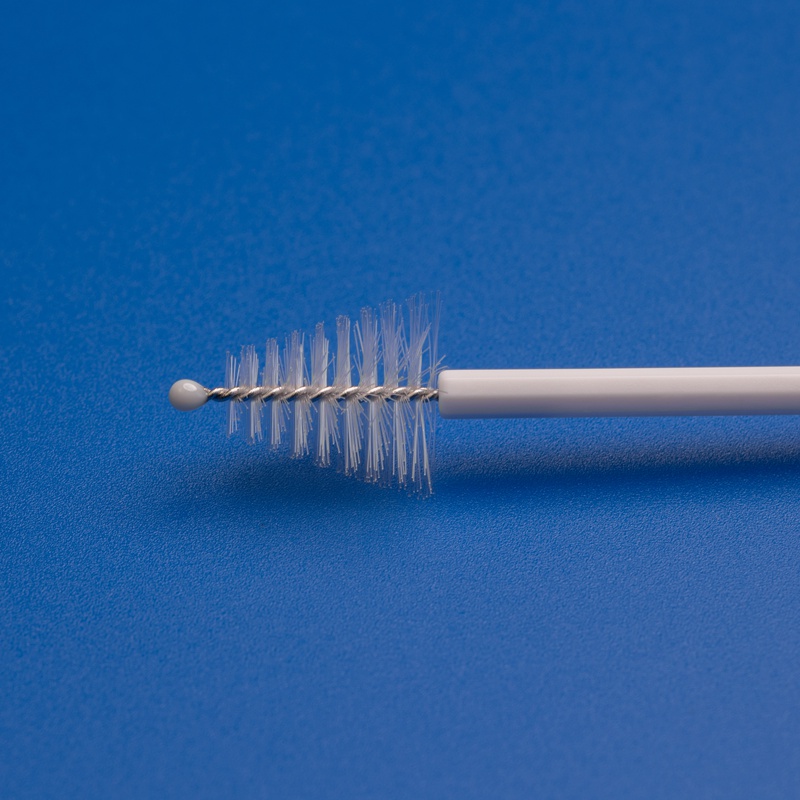
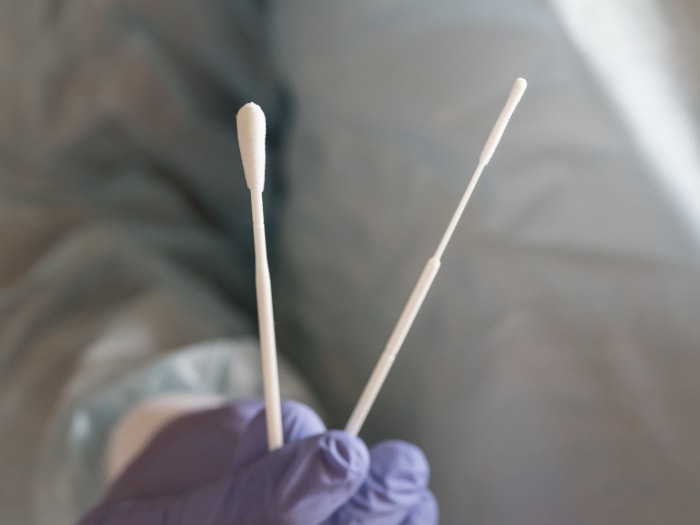
Not every oral swab is equally suitable for microbiome analysis. The oral cavity contains complex communities from the tongue, buccal mucosa, gingival margin, saliva-coated surfaces, and lesion-adjacent areas. Sample recovery quality is influenced by tip material, shaft flexibility, sterility approach, packaging format, and whether the swab is intended for dry transport or transport medium use.
| Product Type | Best Use Case | Main Advantage | Main Limitation | Common U.S. Buyer |
|---|---|---|---|---|
| Flocked oral swab | DNA-rich oral microbiome sampling | High release efficiency and uniform specimen pickup | Usually higher unit cost than simple fiber swabs | Universities, sequencing labs |
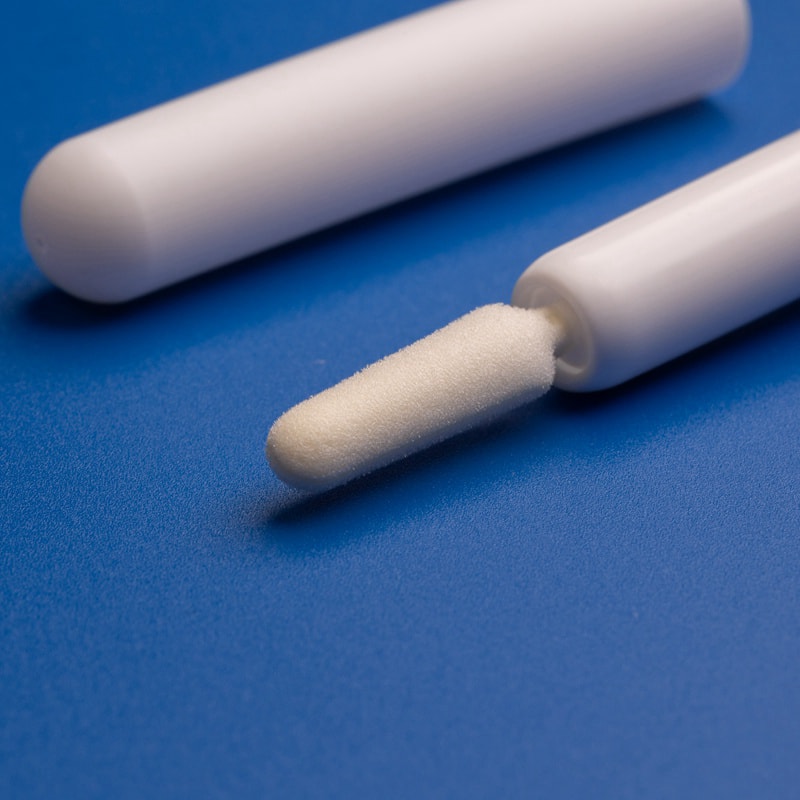
| Foam oral swab | Mucosal surface collection and gentle handling | Comfortable for sensitive oral sites | May be less preferred for some deep molecular workflows | Clinical studies, pediatrics |
| Polyester tipped swab | Routine oral specimen collection | Cost-effective and widely available | Can be less optimized for advanced microbiome release performance | General laboratories, training use |
| Nylon flocked swab with transport tube | Multicenter studies and controlled logistics | Standardized packaging and easier chain-of-custody handling | Higher kit complexity | CROs, hospital systems |
| DNA saliva and oral collection kit | Hybrid saliva-oral cell collection for genomics | Supports broad nucleic acid workflows | Not always optimized for site-specific oral niche studies | Genomics firms, direct collection programs |
| Custom OEM oral swab kit | Private-label or protocol-specific studies | Tailored packaging, labeling, instructions, and tube formats | Requires validation and planning lead time | Brand owners, distributors, trial sponsors |
In U.S. microbiome projects, flocked swabs are often favored because they can improve elution consistency and reduce variability during extraction. Foam swabs remain useful where participant comfort matters, especially in pediatrics, elder care, or repeated longitudinal studies. Custom kits become more attractive once projects move from pilot phase to commercial or multicenter execution.
Buying Advice for U.S. Research Teams
Choosing oral swabs for microbiome research should begin with the study design rather than catalog availability. A swab that works well for routine specimen collection is not automatically ideal for low-biomass sequencing or metagenomic profiling. The practical buying process typically starts by defining the oral site, transport time, storage environment, extraction chemistry, and contamination tolerance.
For a principal investigator at a dental school in Philadelphia, for example, the key issue might be reproducibility across repeated cheek and tongue sampling. For a biotech team in San Diego running microbiome-linked diagnostics, the main issue may be compatibility with extraction automation and kit scale-up. For a distributor serving hospitals across Texas and Florida, the concern may shift toward lot consistency, labeling compliance, and replenishment speed.
Important buying criteria include sterile manufacturing controls, absence of PCR inhibitors, shaft breakpoint design when tubes are used, packaging integrity, and lot traceability. Buyers should also review whether the manufacturer can provide sterilization records, certificates of conformity, and material details. In higher-volume projects, it is wise to request pilot lots and run side-by-side tests before standardizing across sites.
| Buying Factor | Why It Matters | What to Ask Suppliers | Risk if Ignored | Best Fit Scenario |
|---|---|---|---|---|
| Tip material consistency | Directly affects collection and release performance | Ask for material specs and flocking uniformity controls | Variable DNA yield across sites | Sequencing studies |
| Sterility documentation | Supports cleaner sampling workflows | Request sterilization records and batch traceability | Questionable data quality and procurement delays | Clinical and regulated research |
| Transport compatibility | Impacts sample stability in transit | Confirm dry or medium-based workflow suitability | Degraded or inconsistent specimens | Multisite U.S. studies |
| Customization options | Enables protocol-specific packaging and branding | Review OEM/ODM capabilities and lead times | Operational mismatch with study design | Commercial kits and branded programs |
| Inventory and lead time | Reduces interruption risk | Ask about U.S. stock, import cycles, and MOQ | Enrollment delays and site stoppages | Large trials |
| Technical support | Helps solve validation and procurement issues quickly | Check pre-sales consultation and after-sales response process | Slow troubleshooting and wasted lots | New product adoption |
The table shows that the best supplier is often not the one with the lowest price list. It is the one that matches study design, logistics, and documentation expectations. In oral swabs microbiome research, a failed pilot or inconsistent multicenter dataset costs far more than a modest increase in unit price.
Industries Driving Demand
Demand for oral microbiome sampling in the United States is no longer limited to university microbiology labs. The market now spans oral health brands, cancer biomarker research groups, population health initiatives, pediatric care networks, and personalized wellness businesses. This broader adoption is one reason suppliers increasingly offer both standard and customized oral swab formats.
The bar chart reflects a realistic pattern. Academic research still leads because grant-funded and institution-led microbiome studies remain the largest volume users of oral sampling consumables. Biotech research follows closely due to translational work on diagnostics and therapeutic development. Clinical diagnostics, while significant, tends to adopt products more selectively because validation and reimbursement pathways are stricter.
Dental service organizations and specialty oral health companies are growing users as they seek microbiome insights for preventive care, peri-implant monitoring, and patient segmentation. Public health programs are another emerging segment, especially where community-based collection and epidemiological screening are being piloted.
Applications Across Research and Healthcare
Applications for oral swabs in microbiome research are expanding in both sophistication and scale. Simple cross-sectional profiling remains common, but U.S. researchers now increasingly use oral sampling in longitudinal studies, intervention monitoring, and integrated datasets that combine oral, stool, blood, and clinical metadata. This shift favors swabs that are easy to standardize across sites and populations.
Typical applications include oral dysbiosis mapping in periodontal disease, microbiome changes during chemotherapy, study of oral microbial markers linked to cardiovascular risk, neonatal and pediatric oral colonization research, smoking and vaping impact studies, and microbiome response tracking after antibiotics or probiotic interventions. In many of these cases, the oral swab functions as a low-burden, high-frequency collection tool, which is exactly why procurement quality matters.
This area chart illustrates an important market movement: oral swab use is increasingly tied to decentralized collection and repeated sampling models. That trend matters because products must now work not only in controlled labs but also in satellite clinics, mobile programs, and partially supervised home-collection environments. Suppliers that understand instructions-for-use, packaging clarity, and transport robustness will have an advantage through 2026.
Case Studies and Practical Sourcing Scenarios
A multicenter university study based in Boston and Chicago may need 50,000 flocked oral swabs packed individually with lot-level traceability and a 12-month replenishment plan. In that case, a domestic supplier with proven consistency or an internationally scaled OEM manufacturer with strong documentation can both be viable, provided the validation phase confirms equivalent performance.
A dental diagnostics startup in California might require a private-label oral collection kit that includes swab, transport tube, barcode label, and multilingual instruction insert. Here, customization capacity becomes more important than simple catalog breadth. The supplier must support packaging design, batch consistency, and on-time scaling from pilot launch to commercial rollout.
A public health research program in Texas may prioritize cost control across thousands of participants while still needing sterile swabs and dependable shipping. This is where qualified overseas manufacturers with U.S.-oriented support can become attractive. If the supplier can provide certificates, lot records, regulatory paperwork, and responsive issue handling, the cost-performance equation often improves considerably.
| Scenario | Recommended Product Direction | Best Supplier Type | Main Success Factor | Common Pitfall |
|---|---|---|---|---|
| University sequencing cohort | Research-grade flocked oral swab | Domestic specialist or validated OEM manufacturer | Reproducible DNA yield | Switching lots without revalidation |
| Clinical translational pilot | Sterile swab plus transport-ready tube | U.S.-based diagnostics supplier | Traceability and protocol control | Using non-standard packaging |
| Dental startup kit launch | Custom branded oral collection kit | OEM/ODM manufacturer | Packaging and scale-up support | Underestimating lead time |
| Statewide surveillance program | Cost-optimized sterile oral swab | High-volume manufacturer with documentation | Reliable supply continuity | Buying only on unit price |
| Pediatric longitudinal study | Comfort-focused foam or soft flocked swab | Supplier with patient-friendly formats | Participant compliance | Ignoring comfort during protocol design |
| Distributor private label expansion | Bulk oral swab and custom packaging | Export-capable OEM partner | Brand flexibility and stable quality | Weak technical support after launch |
Each scenario confirms the same lesson: there is no single universal swab for every microbiome project. Product selection should reflect study burden, regulatory expectations, shipping path, and long-term supply strategy.
Local Suppliers and Regional Access in the United States
For buyers who need faster delivery and simpler domestic coordination, U.S.-serving suppliers with regional logistics networks remain highly attractive. East Coast institutions often prefer suppliers that can service Boston, New York, Philadelphia, and Washington quickly. West Coast buyers in Los Angeles, the Bay Area, and Seattle often focus on rapid distribution from California hubs. Central and Southern buyers, including those in Dallas, Houston, Nashville, and Atlanta, increasingly care about continuity and pricing for wide network deployment.
Puritan Medical Products remains a familiar choice for U.S. healthcare and lab procurement teams because of its domestic manufacturing visibility and broad swab portfolio. Copan Diagnostics is frequently considered where flocked swab performance and microbiology workflow familiarity matter. Thermo Fisher Scientific offers convenience when the purchasing team wants to consolidate orders through a large laboratory supply ecosystem. Mawi DNA Technologies is especially relevant for molecular and self-collection workflows. Hardy Diagnostics fits buyers who operate within microbiology-focused supply channels.
International manufacturers can also play a serious role in this supplier landscape when they understand U.S. buyer expectations. This is particularly true for importers, regional distributors, and private-label brands that need volume, customization, and stable documentation rather than only a domestic catalog item.
Why Our Company Fits This Market
Jiangsu Hanheng Medical Technology Co., Ltd. is relevant to the United States oral swabs microbiome research market because it combines scale, compliance, and customization in a way that aligns with how U.S. institutions and distributors actually buy. The company manufactures oral sampling swabs and related collection products in a 10,000 square meter Class 100000 cleanroom and uses precision injection molding, automated flocking, and EO sterilization to support contamination-controlled production and consistent specimen capture. Its manufacturing system is backed by ISO9001, ISO13485, EU CE pathways including TUV-CE and MDR, U.S. FDA approval, UK MHRA registration, and CFDA/NMPA credentials, providing the kind of documentary foundation that American buyers expect when comparing products against international benchmarks. For cooperation, the company serves distributors, dealers, hospitals, government buyers, brand owners, and project-based purchasers through direct export manufacturing, bulk wholesale, OEM, ODM, private-label packaging, labeling, and formulation support, which makes it suitable for both catalog procurement and customized microbiome collection kit programs. For service assurance in the U.S. market, its long-standing export activity to more than 130 countries, shipment volume approaching 6 billion units, participation in global trade shows, technical file support, batch documentation, warranty handling, and responsive pre-sales and after-sales coordination demonstrate that it is not operating as an anonymous remote exporter but as an experienced supply partner for local market channels. Buyers evaluating options can review the company through its official website, learn more on the company overview page, browse the product catalog, or discuss project requirements through the U.S.-oriented contact page.
How to Compare Supplier and Product Performance
Shortlisting suppliers becomes easier when performance variables are displayed side by side. The chart below presents a realistic comparison framework for oral swabs microbiome research, focusing on factors that actually influence U.S. procurement decisions. These are not regulatory scores; they are practical sourcing indicators such as customization flexibility, documentation strength, logistics support, and suitability for research workflows.
The most important takeaway is balance. Domestic premium suppliers often lead in local distribution ease and rapid replenishment, while qualified international OEM manufacturers often lead in customization and cost-performance. The best decision depends on whether your project values immediate domestic fulfillment or scalable kit development and unit economics over a longer procurement cycle.
Future Trends Through 2026
Three forces are likely to shape oral swabs microbiome research purchasing in the United States through 2026: technology, policy, and sustainability. On the technology side, sequencing workflows are becoming more sensitive, making low-background sampling materials more valuable. Buyers will increasingly ask whether swabs are optimized for metagenomics, low-biomass recovery, and automated extraction systems. More suppliers are expected to offer protocol-specific collection kits rather than one-size-fits-all swabs.
On the policy side, institutional procurement is moving toward tighter vendor qualification, stronger traceability, and more documented quality systems. Research buyers may not need the same pathway as diagnostic device purchasers, but the expectation for batch documentation, sterility assurance, and manufacturing transparency is increasing. Suppliers that can quickly produce technical files, conformity records, and shipment traceability will be easier to onboard.
Sustainability is also gaining visibility. Universities and large healthcare systems in the United States increasingly evaluate packaging waste, transport efficiency, and supplier environmental responsibility. This does not mean buyers will compromise on sample integrity, but it does mean that lower-waste packaging designs, efficient palletization, and long-life inventory planning may influence sourcing decisions. For high-volume oral swab programs, packaging optimization can reduce both environmental footprint and freight cost.
By 2026, the strongest suppliers will likely be those that can combine validated sampling performance, customization agility, documentation discipline, and practical logistics. Oral microbiome research is becoming too important for buyers to accept vague claims or unstable supply chains.
FAQ
What type of swab is usually best for oral microbiome sequencing?
Flocked oral swabs are often preferred because they generally offer strong specimen pickup and release efficiency, which can help support consistent downstream DNA extraction and sequencing results.
Should U.S. labs only buy from domestic manufacturers?
No. Domestic suppliers are often convenient for speed and purchasing simplicity, but qualified international manufacturers can be highly competitive if they provide accepted certifications, stable lot quality, clear documentation, and dependable support.
Is a standard oral swab enough for microbiome research?
Not always. Research teams should verify material compatibility, sterility controls, packaging, and workflow fit. A routine collection swab may be acceptable for some studies, but sensitive sequencing projects usually require more careful selection.
What documentation should buyers request?
Common requests include certificates of conformity, sterilization records, batch numbers, packaging specifications, material details, and any available performance information relevant to molecular testing or microbiology workflows.
Are custom oral microbiome kits worth the extra effort?
Yes, especially for multicenter studies, private-label programs, or decentralized collection models. Custom kits can reduce handling errors, standardize instructions, and align the product more closely with the study protocol.
How important is after-sales support?
It is critical. When a project spans multiple sites or long enrollment windows, quick responses on replacements, technical questions, shipping coordination, and documentation can prevent major delays and protect data consistency.
Jiangsu Hanheng Medical Technology Co., Ltd.
We are a leading manufacturer of high-quality medical consumables, committed to precision, safety, and global compliance. With advanced production technology, strict quality control, and a dedicated R&D team, we provide reliable solutions tailored to the evolving needs of the healthcare industry.

.jpg)