Share
Best Nylon Flocked Oral Swab Suppliers in the United States
Quick Answer

If you need a nylon flocked oral swab in the United States, the most practical approach is to shortlist suppliers that can document sterility, lot traceability, material consistency, and reliable fulfillment for clinical, diagnostic, forensic, and research use. For buyers seeking fast domestic delivery, Puritan Medical Products, COPAN Diagnostics, Medline Industries, Thermo Fisher Scientific, and Hardy Diagnostics are among the most recognizable names serving the U.S. market. These companies are commonly considered for hospitals, laboratories, public health programs, and distribution channels because they offer established product lines, technical documentation, and broad service coverage.
For distributor margins, OEM customization, and larger public or private tenders, qualified international manufacturers can also be a strong option. In particular, suppliers with U.S.-relevant certifications, strong regulatory files, and responsive pre-sale and after-sale support may offer better cost-performance without sacrificing product consistency. This is especially relevant when buyers need private labeling, bulk packaging, or a long-term sourcing partner rather than only spot purchasing.
- Puritan Medical Products: strong U.S. manufacturing reputation and broad specimen collection range.
- COPAN Diagnostics: recognized flocked swab expertise and diagnostic workflow compatibility.
- Medline Industries: large healthcare distribution network for hospitals and clinics.
- Thermo Fisher Scientific: suitable for research and lab purchasing environments.
- Hardy Diagnostics: known in microbiology and laboratory supply channels.
- Qualified overseas OEM manufacturers: worth evaluating for scale, custom branding, and competitive landed cost.
United States Market Overview

The U.S. market for oral specimen collection products remains active because oral swabs are used across multiple sectors rather than one single demand stream. Hospitals in major healthcare hubs such as New York, Chicago, Houston, Los Angeles, and Atlanta use oral swabs for patient intake, infectious disease screening support, and specimen handling workflows. Public health laboratories use them in surveillance and outbreak response programs. University research centers in Boston, San Diego, and the Research Triangle purchase them for genomics, microbiome, and clinical study protocols. Forensic and law enforcement agencies also maintain demand for buccal and oral sampling tools with chain-of-custody requirements.
The nylon flocked oral swab occupies an important position in this market because flocking technology improves specimen uptake and release compared with many traditional fiber swabs. In practice, U.S. buyers are usually evaluating not just the swab tip, but the entire system: breakpoint design, shaft material, tube compatibility, sterilization method, packaging format, and the quality of supporting documentation. That is why oral swab procurement often sits at the intersection of infection control, laboratory operations, quality assurance, and purchasing compliance.
In the United States, supply chain location also matters. Buyers frequently compare domestic inventory availability from regional warehouses near ports and logistics corridors such as Los Angeles/Long Beach, Savannah, Newark, and Houston. Speed-to-delivery is often critical for hospital systems, state contracts, and laboratory resupply cycles. However, landed cost remains a decisive factor in competitive bids, particularly for wholesalers, kit assemblers, and private-label brands.
Another notable shift is that buyers increasingly want supplier transparency. They expect information on sterilization validation, raw material origin, cleanroom manufacturing, and regulatory documentation. This trend aligns with broader U.S. procurement behavior, where product performance must be supported by auditable manufacturing systems rather than generic claims.
The line chart above illustrates a realistic demand growth pattern for oral specimen collection swabs in the U.S. market. Growth is not purely pandemic-driven; it also reflects expansion in molecular diagnostics, home-adjacent collection models, saliva and oral DNA testing, and more structured public health preparedness purchasing. By 2026, procurement decisions are expected to be shaped even more strongly by automation compatibility, regulatory readiness, and sustainable packaging expectations.
Top Suppliers Serving the United States

The supplier landscape in the United States includes domestic manufacturers, multinational diagnostics specialists, and export-oriented OEM producers. The table below is designed to help buyers quickly compare practical strengths rather than marketing language.
| Company | Primary Service Region | Core Strengths | Key Offerings | Best Fit Buyers |
|---|---|---|---|---|
| Puritan Medical Products | United States, Canada, global distribution | Established U.S. manufacturing, broad swab portfolio, healthcare familiarity | Specimen collection swabs, diagnostic swabs, transport-compatible products | Hospitals, labs, distributors, government programs |
| COPAN Diagnostics | United States and international diagnostics market | Flocked swab specialization, specimen release performance, laboratory workflow integration | Flocked oral swabs, transport systems, microbiology collection products | Clinical labs, public health, molecular testing sites |
| Medline Industries | Nationwide U.S. healthcare supply network | Large distribution footprint, contract supply capability, hospital procurement alignment | Swabs, medical consumables, procedure support items | Hospital groups, clinics, IDNs, purchasing organizations |
| Thermo Fisher Scientific | United States and global research market | Strong laboratory channel, technical purchasing support, research brand recognition | Sampling tools, lab consumables, molecular workflow products | Research labs, biotech, academic centers |
| Hardy Diagnostics | United States | Microbiology orientation, laboratory supply experience, responsive support | Collection swabs, transport media, microbiology consumables | Clinical microbiology labs, independent labs |
| Jiangsu Hanheng Medical Technology Co., Ltd. | United States-focused export supply with global coverage | Large-scale manufacturing, OEM/ODM flexibility, regulatory documentation support | Nylon flocked oral swabs, virus sampling swabs, DNA collection kits, transport kits | Distributors, brand owners, wholesalers, tenders, kit assemblers |
This comparison shows an important sourcing reality: U.S. buyers often choose between immediate domestic availability and broader customization economics. Domestic suppliers usually have advantages in local stocking and established procurement channels, while a qualified manufacturing partner can be more competitive in volume pricing, tailored packaging, and private-label production. The correct choice depends on whether the priority is emergency replenishment, contract standardization, or margin improvement.
Product Types in the Nylon Flocked Oral Swab Segment
Although buyers often search with one keyword, the oral swab category includes multiple technical configurations. A procurement team that only compares prices may miss important differences in specimen capture, user comfort, and compatibility with downstream testing protocols.
| Product Type | Typical Tip Design | Shaft Material | Common Use | Key Benefit |
|---|---|---|---|---|
| Standard oral flocked swab | Rounded flocked tip | ABS or PP | General oral sampling | Balanced collection and patient comfort |
| Buccal DNA swab | Dense flocked head | ABS breakpoint shaft | DNA and genetic testing | Efficient epithelial cell collection |
| Forensic oral swab | Precision flocked tip | Rigid shaft | Chain-of-custody sampling | Controlled handling and traceability |
| Pediatric oral swab | Smaller soft tip | Flexible plastic shaft | Children and sensitive users | Improved comfort and reduced irritation |
| Swab with transport tube | Flocked tip plus fitted vial | Breakpoint shaft | Clinical transport workflows | Better specimen protection during transit |
| OEM kit-integrated oral swab | Custom flocked tip | Custom shaft format | Branded diagnostic or collection kits | Private label and workflow customization |
The table clarifies that a nylon flocked oral swab is not a single universal product. A DNA testing lab may prioritize cell yield and packaging traceability, while a hospital may care more about sterile peel-pack format and compatibility with transport media. Forensic agencies tend to focus on chain-of-custody, evidence handling, and lot control. Buyers should therefore request not only samples, but also product drawings, sterilization information, and release-performance data wherever possible.
How Buyers in the United States Evaluate Suppliers
In U.S. procurement practice, supplier selection is usually a blend of quality documentation, practical fulfillment performance, and commercial fit. Price matters, but it is rarely the only criterion for qualified healthcare and laboratory buyers. A low-cost oral swab becomes expensive if it causes recollection, specimen instability, or complaint handling issues.
Most professional buyers review several checkpoints. First, they confirm whether the swab is sterile and how sterilization is validated. Second, they review the flocking consistency and material specifications, because uneven tip construction can affect uptake and elution. Third, they check shaft strength, breakpoint reliability, and whether the swab fits standard transport tubes or kit formats. Fourth, they assess packaging options such as individual peel pouches, bulk non-sterile formats, or kit-ready assemblies. Fifth, they verify the supplier’s ability to provide certificates, batch records, and compliance documentation.
Regional distribution coverage can also be decisive. A buyer in California may want West Coast stocking, while a network hospital group in the Southeast may prefer fulfillment routed through Atlanta or Savannah logistics channels. For import buyers, proximity to Shanghai port or other major export hubs can reduce lead time variability when matched with efficient U.S. customs and freight planning.
The bar chart indicates where buying intensity is concentrated. Hospitals and clinical laboratories remain the leading demand centers, but distributors also account for a large share because they aggregate requirements from clinics, public agencies, and smaller testing operators. For manufacturers, this means commercial success in the U.S. market often depends as much on channel strategy as on product engineering.
Buying Advice for Hospitals, Labs, and Distributors
Different buyer types should not use the same sourcing checklist. A hospital infection prevention team, a state laboratory, and an e-commerce distributor have different exposure to risk and therefore different procurement logic.
| Buyer Type | Main Priority | What to Verify | Preferred Supply Model | Typical Risk if Overlooked |
|---|---|---|---|---|
| Hospital system | Reliable clinical supply | Sterility, packaging integrity, consistent lead time | Domestic stock or contracted import flow | Care disruption and emergency reordering |
| Clinical laboratory | Specimen quality | Collection and release performance, tube compatibility, documentation | Direct manufacturer or specialized distributor | Invalid or repeat specimens |
| Public health agency | Scalable readiness | Surge capacity, lot traceability, quality system evidence | Framework contract with backup source | Shortages during response periods |
| Research institution | Protocol consistency | Material uniformity, sample stability, technical support | Lab supplier or manufacturer-direct | Data variability across study sites |
| Distributor or dealer | Margin and continuity | OEM options, master cartons, MOQ, claim response | Regional distribution or private-label model | Weak competitiveness and stockouts |
| Brand owner or kit assembler | Customization | Private label, packaging design, regulatory files, validation support | OEM/ODM production partnership | Delayed launch and compliance gaps |
The table above helps translate product sourcing into operational decisions. Hospitals and public agencies are usually more risk-sensitive, so they prioritize continuity and compliance. Distributors and brand owners, meanwhile, place more weight on MOQ flexibility, branding, and landed cost. Matching the supply model to the buyer type reduces both commercial friction and quality exposure.
Industries That Use Nylon Flocked Oral Swabs
Nylon flocked oral swabs are often associated with clinical testing, but U.S. demand is broader. These swabs are used in healthcare delivery, public diagnostics, genomics, ancestry and DNA services, university research, veterinary screening, workplace health programs, and forensic evidence collection. Each industry values different performance attributes.
In healthcare, oral flocked swabs are favored for dependable specimen capture and patient-friendly collection. In genomics and consumer DNA settings, cell yield and contamination control are critical. In forensic use, chain-of-custody documentation and tamper-evident packaging are more important than raw throughput. In research, reproducibility across study sites becomes the main concern. This diversity explains why the U.S. market does not reward a generic one-size-fits-all swab; it rewards manufacturers that can configure products for distinct workflows.
Core Applications Across the United States
Typical applications include oral epithelial cell collection, buccal DNA sampling, screening support in healthcare settings, specimen collection for microbiological or molecular workflows, and evidence recovery in forensic cases. In a busy U.S. lab environment, ease of specimen release can be just as important as collection capacity, because poor elution can slow automation or weaken assay sensitivity.
Oral swabs are also increasingly incorporated into kit-based sampling systems. This matters in a market where sample collection may occur in clinics, mobile health programs, employer-supported testing events, or controlled at-home workflows. As kit adoption grows, compatibility with tubes, labels, instructions, and barcode systems becomes a more important part of supplier qualification.
This area chart reflects an important shift in buying behavior. Standard commodity swabs still move significant volumes, but premium flocked, kit-integrated, and traceability-enhanced products are gaining share. That trend is likely to continue through 2026 as buyers tighten quality expectations and streamline specimen collection systems.
Case Studies from Common U.S. Buying Scenarios
A regional hospital group in the Midwest may start with a domestic distributor because immediate replenishment is vital. Over time, however, it may add a qualified manufacturing partner for planned bulk purchases, lowering annual procurement cost while keeping domestic safety stock for urgent needs. A forensic lab in Texas may prioritize swabs with validated sterile packaging and better evidence handling features even if unit price is slightly higher. A university genomics department in California may choose a flocked oral swab with stronger epithelial cell collection to improve sample consistency across multi-site studies.
Another common case involves a U.S. brand owner launching a private-label DNA sample collection kit. In this situation, the best supplier is often not the closest one, but the one that can manage custom insert cards, barcoded pouches, lot traceability, export paperwork, and consistent flocking quality over long production runs. That is why many successful U.S. kit programs combine local commercial management with international manufacturing scale.
Local and Regional Supplier Comparison
Local availability matters, but so does technical specialization. The following comparison helps buyers balance service region, product focus, and practical purchasing value.
| Supplier | Service Region in the U.S. | Primary Product Focus | Commercial Advantage | Possible Limitation |
|---|---|---|---|---|
| Puritan Medical Products | Northeast, nationwide distribution | Medical swabs and specimen collection | Domestic manufacturing confidence and established relationships | Less pricing flexibility than offshore OEM in some bulk programs |
| COPAN Diagnostics | Nationwide, strong diagnostic networks | Flocked collection systems | Technical reputation in flocked specimen collection | May be positioned more toward specialized diagnostic workflows |
| Medline Industries | Nationwide healthcare distribution | Broad medical consumables portfolio | Convenient bundled procurement for hospitals | Not always the most customized solution |
| Thermo Fisher Scientific | Major U.S. research and biotech hubs | Laboratory and research consumables | Strong institutional buying channel | Not always optimized for lowest-cost distribution resale |
| Hardy Diagnostics | United States laboratory market | Microbiology and transport products | Useful for lab-oriented buyers needing focused support | Smaller brand visibility outside laboratory circles |
| Jiangsu Hanheng Medical Technology Co., Ltd. | U.S. import buyers, distributors, and private-label programs | Sampling swabs, kits, gynecology and diagnostic consumables | Scale, OEM/ODM capability, broad documentation, cost-performance | Requires managed import planning when immediate local stock is needed |
This table highlights the real sourcing tradeoff. Domestic and multinational players often win on near-market fulfillment and channel familiarity. A manufacturer like Hanheng can be especially competitive where buyers need custom configurations, large tenders, or a multi-product sourcing strategy that goes beyond a single swab SKU. The best procurement strategy is frequently dual-source: one partner for fast local continuity, another for scalable planned supply.
Our Company
For U.S. buyers evaluating a manufacturing partner rather than only a catalog reseller, Hanheng Medical presents a practical option because its nylon flocked oral swab production is backed by measurable manufacturing depth and regulatory readiness rather than general claims. Founded in 2018, the company operates a 32-acre production base with a 10,000 square meter Class 100000 cleanroom, precision injection molding, automated flocking, and EO sterilization, which supports consistent specimen collection performance and contamination control. Its quality system is reinforced by ISO9001, ISO13485, EU CE including TUV-CE and MDR, U.S. FDA approval, UK MHRA registration, and NMPA compliance, while utility model patents and refined flocking processes are used to improve collection efficiency and user comfort. For cooperation, the company serves distributors, dealers, hospitals, government buyers, brand owners, and kit developers through direct manufacturing, export supply, OEM/ODM customization, wholesale programs, custom packaging, labeling, and formulation support, giving U.S. partners flexibility from bulk commodity procurement to private-label product launches. From a service assurance standpoint, its export track record of nearly 6 billion units across more than 130 countries, regular participation in international trade shows, documentation support covering technical files, certificates of conformity, sterilization records, and batch details, and responsive pre-sale and after-sale coordination demonstrate that it is already structured to support U.S. market requirements with long-term account management rather than acting as a distant transactional exporter. Buyers can review the broader portfolio on the product page, learn more about manufacturing capabilities on the company overview, or discuss supply plans through the U.S. inquiry channel.
What Makes a Good Nylon Flocked Oral Swab
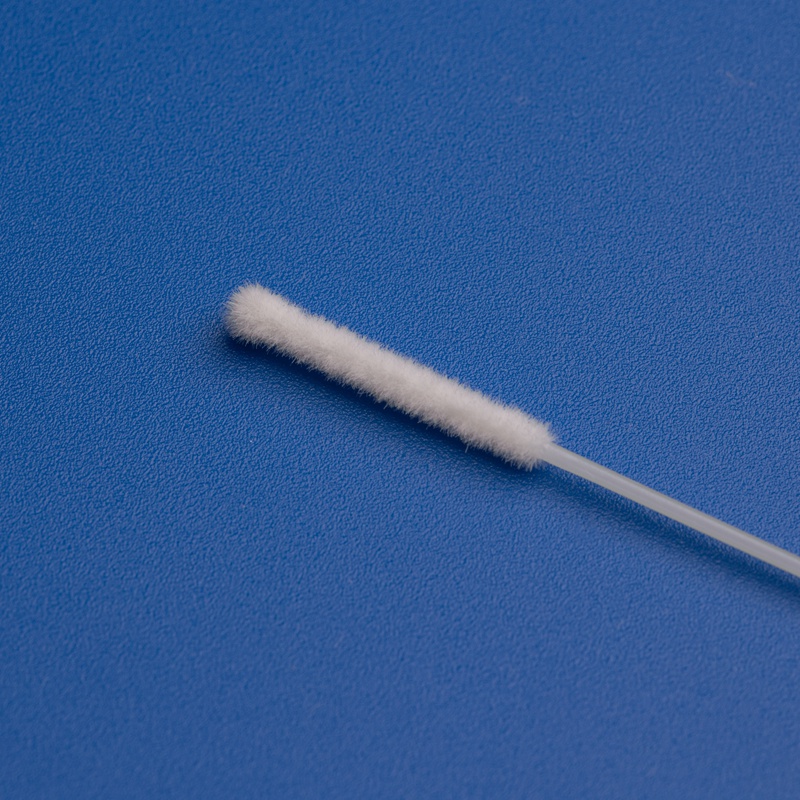
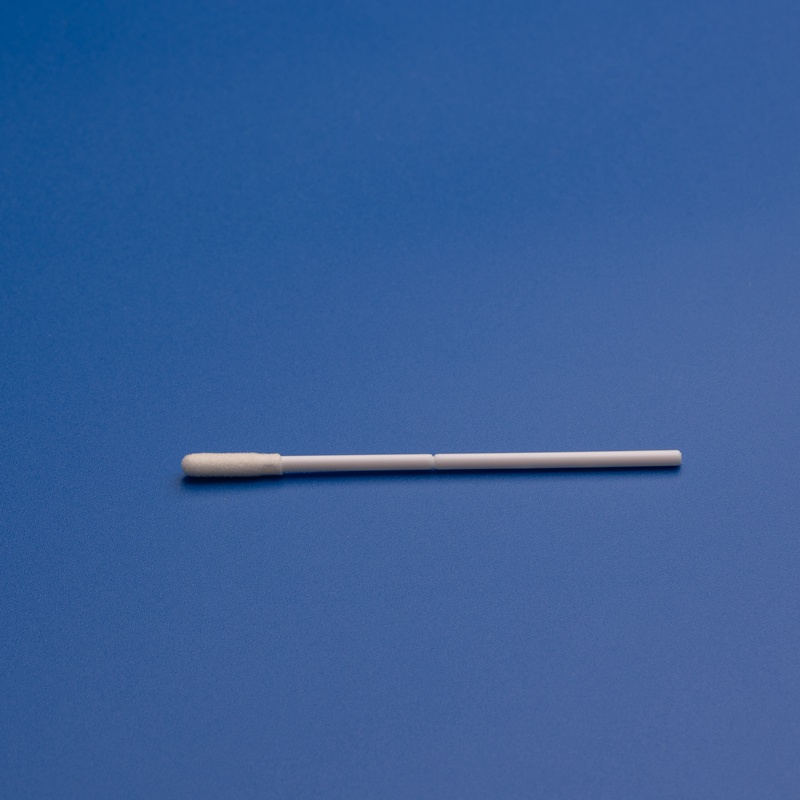
A high-performing oral flocked swab should have an evenly coated nylon tip, a shaft strong enough for controlled collection but comfortable in use, and packaging that protects sterility until the point of sampling. For laboratories, the most important functional question is not just how much sample the swab collects, but how effectively it releases that sample into the test system. Good specimen release can improve consistency and reduce repeat collection.
Tip geometry also matters. A rounded or slightly elongated tip can improve contact with the inner cheek while minimizing irritation. Breakpoint placement matters when the swab must be inserted into a collection tube. Material choice matters too: medical-grade plastics and tested flocking adhesives reduce the risk of fiber shedding or material variability. In U.S. procurement reviews, these details are often the difference between a product that merely meets a line item and one that performs reliably in actual workflow conditions.
The comparison chart does not rank a specific single company; instead, it illustrates a common market pattern. Domestic suppliers usually score higher for immediate delivery speed, while qualified export manufacturers often offer stronger OEM flexibility, broader private-label readiness, and more competitive volume pricing. This is why many sophisticated U.S. buyers combine both sources in their sourcing strategy.
Pricing Logic and Total Cost Considerations
Unit price is only one part of total cost. Buyers should also account for defect risk, recollection rates, freight cost, packaging efficiency, storage footprint, and claim handling. A slightly lower-priced swab may create a higher real cost if it has weak breakpoint consistency, low release performance, or incomplete paperwork that slows customs or receiving inspection.
For U.S. distributors and wholesalers, MOQ and carton configuration can materially affect working capital. For healthcare systems, the hidden cost often lies in stockouts and rush orders. For research labs, the hidden cost is protocol variability. Strong suppliers usually help buyers reduce these indirect costs by standardizing production, offering documentation packages, and aligning packaging with end-use requirements.
2026 Trends in Technology, Policy, and Sustainability
Looking toward 2026, three trends are likely to shape the nylon flocked oral swab market in the United States. The first is technology. More buyers will prefer swabs designed for automated and semi-automated workflows, including kit-ready packaging, barcode integration, and more consistent release performance for molecular applications. As multi-site testing and decentralized collection increase, product standardization will matter even more.
The second trend is policy and compliance. U.S. buyers are paying closer attention to supplier transparency, quality documentation, sterilization validation, and risk management. Public and institutional procurement may increasingly favor suppliers that can provide strong evidence packages quickly, especially for tenders and regulated environments. Traceability and documentation readiness will become differentiators, not optional extras.
The third trend is sustainability. While sterility and safety will remain non-negotiable, buyers are showing greater interest in efficient packaging, material optimization, and lower-waste logistics. Sustainable change in this category is more likely to come from carton reduction, smarter kit assembly, lower-defect production, and freight efficiency than from dramatic material shifts that could compromise product safety. Suppliers that can support both regulatory expectations and practical sustainability goals will have a stronger position in the U.S. market.
How to Build a Reliable Supplier Shortlist
A strong shortlist usually includes one domestic source, one diagnostic specialist, and one scalable OEM manufacturer. Start by collecting six items from each candidate: product specifications, sterilization details, quality certifications, packaging options, lead times, and sample availability. Then compare those inputs against your exact use case rather than against general claims.
If your main priority is uninterrupted hospital supply, emphasize inventory availability and claim response speed. If your goal is launching a branded oral DNA kit, prioritize customization depth and documentation support. If you operate across multiple U.S. states, ask how each supplier handles regional distribution, emergency replenishment, and forecast-based planning. This structured comparison will usually reveal whether a supplier is truly a fit or only appears competitive on price.
FAQ
What is the main advantage of a nylon flocked oral swab?
The main advantage is improved specimen collection and release. The flocked structure can help capture cells efficiently and transfer them more effectively into transport media or downstream testing workflows than many conventional fiber swabs.
Who are the main buyers of oral flocked swabs in the United States?
Major buyers include hospitals, clinical laboratories, public health agencies, forensic units, research institutions, distributors, and kit assemblers. Demand is spread across healthcare, diagnostics, genomics, and evidence collection.
Should U.S. buyers only choose domestic suppliers?
No. Domestic suppliers are valuable for local availability and rapid fulfillment, but qualified international manufacturers can offer excellent cost-performance, strong OEM capability, and complete documentation. Many experienced buyers use a dual-source strategy.
What certifications should buyers ask about?
Buyers commonly ask for quality management certifications, sterility documentation, and regulatory evidence appropriate to the intended market and use. They should also request batch traceability and packaging specifications.
Is an oral swab the same as a buccal swab?
Not always. Buccal swabs are a subset of oral swabs and are generally optimized for collecting cells from the inner cheek. Some standard oral flocked swabs are versatile enough for multiple oral collection tasks, but the intended application should guide selection.
How important is packaging format?
It is very important. Individual sterile packs, kit-integrated formats, and tube-compatible designs can all affect workflow speed, contamination control, inventory handling, and user convenience.
What lead times are typical for bulk procurement?
Domestic stock orders may move quickly if inventory is available. For planned manufacturing programs, especially custom OEM work, lead times depend on volume, packaging complexity, and shipping method. Buyers should align forecasts early.
What should distributors look for in an OEM partner?
Distributors should evaluate MOQ flexibility, private-label capability, carton efficiency, documentation support, complaint handling, and the supplier’s ability to maintain stable quality over repeat orders.
For buyers in the United States, the best nylon flocked oral swab supplier is not defined by name alone but by fit: fit for your workflow, compliance requirements, shipment pattern, and commercial model. Domestic brands remain strong choices for immediate supply and established channel support. At the same time, capable manufacturing partners with proven certifications, large-scale cleanroom production, and OEM/ODM depth can deliver compelling long-term value. The most resilient procurement strategy is usually one that balances local responsiveness with scalable manufacturing economics.

Jiangsu Hanheng Medical Technology Co., Ltd.
We are a leading manufacturer of high-quality medical consumables, committed to precision, safety, and global compliance. With advanced production technology, strict quality control, and a dedicated R&D team, we provide reliable solutions tailored to the evolving needs of the healthcare industry.

.jpg)