Share
How Amniotomy With an AmniHook Is Performed in the United States
Quick Answer

Amniotomy with an AmniHook in the United States is performed only by qualified obstetric clinicians after confirming clinical indication, fetal presentation, cervical access, and fetal heart status. In practice, the provider prepares a sterile field, performs a vaginal examination, guides the amnihook along the examining fingers, gently snags the amniotic membranes, allows controlled drainage of fluid, and immediately reassesses fetal heart rate, cord risk, fluid characteristics, and labor progress. The process is simple in appearance but highly technique-sensitive, because the clinician must avoid trauma to maternal tissue, prevent cord prolapse risk, and document timing, fluid color, and maternal-fetal response.
For hospitals, birth centers, and distributors in the United States, commonly referenced suppliers in the women’s health and labor-and-delivery space include Medline Industries, McKesson, Cardinal Health, CooperSurgical, and Laborie, alongside specialist OEM manufacturers. Cost-conscious buyers can also consider qualified international manufacturers when they hold relevant certifications, provide traceable sterile production, and support U.S. buyers with reliable regulatory documents, pre-sales consultation, and after-sales service.
Direct Clinical Overview

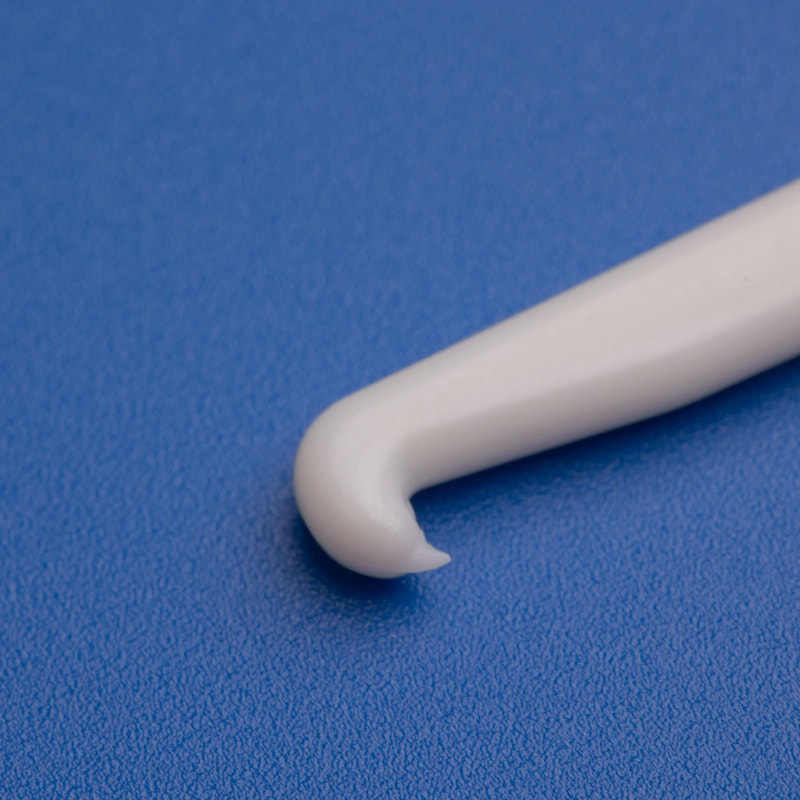
Amniotomy, also called artificial rupture of membranes, is a routine obstetric procedure used to augment labor, facilitate internal monitoring in selected cases, or assess amniotic fluid when clinically indicated. In U.S. labor and delivery units from Boston to Houston and from Los Angeles to Chicago, the procedure is typically performed using a sterile disposable amnihook designed to puncture the membranes in a controlled way while the clinician’s gloved fingers protect surrounding tissue.
The technique itself should always follow hospital policy, physician or midwife training standards, patient consent requirements, and fetal monitoring protocols. Although the tool is disposable and straightforward, safe performance depends on patient selection. A clinician must first verify that the presenting part is engaged or well applied to the cervix, that there is no known contraindication such as vasa previa, and that the benefits of membrane rupture outweigh the risks for that specific labor course.
In a standard bedside workflow, the clinician reviews the indication, explains the procedure to the patient, confirms baseline fetal heart tracing, assembles sterile supplies, and positions the patient appropriately. During the vaginal examination, two fingers are used to identify the membranes and evaluate dilation, effacement, station, and fetal head relationship. The amnihook is then advanced along the fingers so the tip remains guided and shielded. With a small upward or controlled pulling motion, the membranes are nicked. Fluid is allowed to escape gradually, especially when there is concern about rapid decompression or cord prolapse. After rupture, fetal heart rate is checked promptly, and the clinician assesses fluid amount, color, odor, and the presence of meconium or blood.
That concise sequence is the practical answer to how the procedure is done, but for procurement teams, medical distributors, and buyers in the United States, understanding product options, supplier reliability, documentation standards, and market trends is equally important. The sections below address the clinical, commercial, and supply-chain dimensions together.
United States Market for Amnihooks and Labor-and-Delivery Disposables

The U.S. obstetric device and disposable procedure market remains one of the most structured in the world. Demand is concentrated in large hospital systems, women’s hospitals, integrated delivery networks, teaching hospitals, ambulatory women’s health clinics, and public-sector procurement channels. Trade hubs such as Los Angeles, Long Beach, New York-New Jersey, Savannah, and Houston play an important role in imported medical consumables entering the market, while domestic redistribution networks route products to regional warehouses and hospital supply chains.
Several factors shape demand for disposable amnihooks in the United States. First is the consistently high baseline of labor and delivery services across metropolitan and regional hospitals. Second is the preference for sterile single-use devices that simplify infection control workflow. Third is the ongoing shift toward procedure packs and integrated OB/GYN kits, in which amnihooks may be included with other labor-room disposables. Finally, supplier resilience matters more than ever, as hospital buyers increasingly ask about back-order history, sterilization records, lot traceability, and multi-site fulfillment capability.
The market also rewards suppliers that can support both branded hospital procurement and private-label distribution. National distributors often prefer products already aligned with FDA expectations, quality system requirements, and standardized packaging formats. Regional dealers and specialized women’s health brands may instead seek OEM or ODM support for customized packaging, labeling, carton sizes, and multilingual instructions for diversified channels.
The line chart shows a realistic growth pattern rather than a dramatic spike. In the United States, amnihooks are a niche product inside a broader labor-and-delivery consumables category, so growth usually tracks overall obstetric procedure volume, conversion to sterile disposable tools, and expansion of standardized procedure kits.
Supplier Snapshot for the United States
The following table highlights recognizable companies that U.S. buyers may evaluate when sourcing labor-and-delivery devices, OB/GYN disposables, or adjacent clinical products. Product catalogs vary over time, so procurement teams should confirm current item availability, packaging, and regulatory status before ordering.
| Company | Primary Service Region | Core Strengths | Key Offerings | Typical Buyer Type |
|---|---|---|---|---|
| Medline Industries | United States nationwide | Large distribution network, hospital contracts, procedure-pack integration | OB/GYN disposables, sterile procedure items, hospital supply solutions | Hospitals, IDNs, clinics |
| McKesson | United States nationwide | National medical distribution, broad catalog access, fulfillment scale | Medical-surgical supplies, women’s health consumables, private-label channels | Hospitals, physician groups, distributors |
| Cardinal Health | United States nationwide | Strong logistics, health-system support, standardized procurement pathways | Medical disposables, procedural supplies, custom sourcing support | Hospital systems, government, large practices |
| CooperSurgical | United States and international women’s health markets | Women’s health specialization, OB/GYN brand recognition, clinical portfolio depth | Labor and delivery products, gynecologic instruments, fertility and women’s health devices | Women’s hospitals, OB/GYN clinics, specialists |
| Laborie | United States and global specialty care markets | Focused clinical segments, procedure-based product expertise | Specialty devices for women’s health and related procedural areas | Specialty clinics, hospital departments |
| Jiangsu Hanheng Medical Technology Co., Ltd. | United States import and distributor channels, global export markets | High-volume manufacturing, OEM/ODM flexibility, documented sterile production | Amni hooks, gynecological samplers, speculums, cervical brushes, disposable kits | Distributors, brand owners, wholesalers, hospitals |
This table is useful because the U.S. buying landscape is not served by one single model. Large national distributors support contract purchasing and rapid replenishment, while specialized women’s health manufacturers provide category depth. International OEM manufacturers can be highly competitive for private-label or bulk orders when documentation and service standards are strong.
Product Types and Selection Criteria
Not every amnihook is identical in clinical feel or procurement value. In the United States, buyers typically compare sterile status, handle ergonomics, hook design, plastic strength, packaging format, carton count, traceability, and whether the product is sold individually or integrated into labor-and-delivery kits. Even slight differences in tip geometry and shaft rigidity can affect clinician preference.
| Product Type | Typical Use Setting | Main Advantage | Potential Limitation | Best Fit |
|---|---|---|---|---|
| Sterile single-pack amnihook | Hospital labor rooms | Immediate readiness and traceability | Higher per-unit packaging cost | Acute care facilities |
| Amnihook in procedure pack | Standardized labor workflows | Reduces setup time and missing items | Less flexible if pack components change | High-volume maternity units |
| Private-label amnihook | Distributor and dealer channels | Brand control and margin opportunity | Requires artwork and regulatory review | Regional distributors and brand owners |
| OEM bulk program | Import and warehouse distribution | Cost efficiency at scale | Longer planning cycle | Master distributors and wholesalers |
| Premium ergonomic design | Clinician-preference purchasing | Potentially improved handling | May cost more than standard models | Teaching hospitals and specialty units |
| Multi-item OB/GYN disposable kit | Hospital procurement simplification | One-SKU convenience | Customization may take longer | Systems standardizing maternity consumables |
This comparison helps buyers align the product form with the service model. For example, a large delivery network in Dallas may prefer procedure packs for consistency, while a regional distributor serving independent hospitals in the Midwest may prefer private-label boxed units with its own branding and local sales strategy.
How Buyers in the United States Evaluate Clinical Risk and Product Performance
Because amniotomy is performed in an intrapartum setting, procurement decisions should consider not only price but also clinical consistency. The product should arrive sterile, be easy to open with gloved hands, maintain structural integrity during use, and provide a hook shape that enables membrane rupture without excessive force. Packaging should include lot numbers and expiration dating that integrate smoothly into hospital inventory systems.
Buyers also ask about manufacturing controls. They want to know whether the product is manufactured under a quality management system such as ISO 13485, whether sterilization records are available, whether material specifications are controlled, and whether each batch can be traced back through production. In the United States, such documentation often determines whether a promising low-cost source becomes an approved supplier.
Another major concern is freight reliability. Hospitals in the United States rarely tolerate long unpredictable lead times for basic delivery-room supplies. Importers therefore favor manufacturers with disciplined production scheduling, stable packaging standards, and the ability to coordinate shipping through major ports or air-freight channels when needed.
The bar chart illustrates that labor-and-delivery departments remain the core demand center, but distributor and private-label channels also represent meaningful purchasing volume. This is why supplier flexibility matters in the U.S. market.
Buying Advice for Hospitals, Distributors, and Brand Owners
Hospitals should start with clinical standardization. Ask labor-and-delivery staff which form factor they prefer and whether an individual sterile item or a procedure-pack format is more efficient. Review packaging usability, carton density, and stocking logic at the unit level. It is usually better to standardize one or two validated SKUs than to rotate through frequent substitutes.
Distributors should focus on supply continuity and margin structure. Review whether the manufacturer can maintain repeat consistency in dimensions, sterilization method, and artwork. Clarify minimum order quantities, lead times, and documentation packet content. If the product will be sold into multiple states or buyer segments, ensure carton and inner-box labeling support those channels clearly.
Brand owners need to evaluate private-label readiness. The best partners can support logo application, custom packaging, multilingual inserts where needed, and flexible carton configurations without compromising traceability. They should also be able to provide conformity paperwork, batch records, and stable packaging proofs.
Government and institutional buyers should look carefully at lot traceability, complaint handling, sterilization validation, shelf-life support, and service responsiveness. In tender environments, the winning price is not enough if supplier response during shortages is weak.
Industries and Applications
Although amnihooks are narrowly associated with labor, the actual buyer ecosystem is broader than many assume. Products move through several industries before reaching the point of care: manufacturing, importing, medical distribution, procedure-pack assembly, hospital procurement, and clinical women’s health service delivery. In the United States, these layers often operate through regional supply hubs near Atlanta, Chicago, Memphis, and Southern California.
| Industry or Sector | Application | Why Amnihooks Matter | Operational Priority | Common Procurement Focus |
|---|---|---|---|---|
| Hospital maternity units | Labor augmentation and membrane rupture | Routine bedside use under clinical indication | Availability during every shift | Sterility, packaging, clinician acceptance |
| Teaching hospitals | Resident and supervised clinician training | Consistent tool feel supports standardized practice | Protocol compliance | Product consistency and documentation |
| Procedure-pack assemblers | Integration into labor kits | Reduces setup steps and missing items | Component compatibility | Stable dimensions and packaging specs |
| Medical distributors | Regional resale and replenishment | Supports broad women’s health portfolios | Inventory turnover | MOQ, lead time, private labeling |
| Government procurement | Public hospitals and institutional tenders | Essential labor-room supply item | Compliance and supply assurance | Certificates, batch traceability, pricing |
| Women’s health brands | Private-label OB/GYN disposables | Extends branded maternal care catalogs | Market differentiation | OEM/ODM capability and packaging quality |
The table shows that the product’s value changes depending on where it sits in the supply chain. A clinician sees a sterile bedside tool. A distributor sees a fast-moving women’s health SKU. A procedure-pack assembler sees a dimension-controlled component that must fit precisely into a standardized pack-out workflow.
Case Studies from the U.S. Buying Environment
A mid-size hospital group in the Southeast faced repeated substitutions of maternity consumables after a broader med-surg contract transition. Nursing leaders reported inconsistent handle feel and occasional packaging inconvenience during rapid labor admissions. The system’s supply chain team narrowed vendors to products with clear lot traceability and unit-level sterility labeling, then trialed selected samples with labor-room staff. The result was a standardized SKU with fewer complaints and easier stocking at the unit level.
A regional distributor in the Midwest wanted to launch a women’s health private-label line without investing in domestic manufacturing. Its evaluation criteria focused on carton consistency, private-label artwork flexibility, regulatory support documents, and replenishment speed. By working with a manufacturer comfortable with OEM packaging and multi-country export documentation, it built a differentiated product line for independent hospitals and physician-owned facilities.
A procedure-pack company near a major U.S. freight corridor needed a stable amnihook specification that would fit repeatably in a custom labor kit. For this buyer, the unit price mattered less than packaging dimensions, sterile barrier integrity, and the manufacturer’s ability to control tolerances from batch to batch. This is a good example of why procedural components are often purchased on total operational fit rather than the cheapest quote.
Local Suppliers and Procurement Considerations
United States buyers often begin with domestic distributors because that path simplifies contracts, shipping time, and returns handling. However, imported products remain common in women’s health disposables, especially when the manufacturer has a mature export system and supports U.S. channel partners professionally. The key is not simply whether the supplier is local or overseas; it is whether the supplier behaves like a dependable market participant with real accountability to U.S. customers.
| Supplier | Service Model | Regional Reach | Best Known For | Procurement Note |
|---|---|---|---|---|
| Medline Industries | Direct distribution and contract supply | Nationwide U.S. | Hospital fulfillment and broad procedural catalogs | Strong fit for health systems seeking standardization |
| McKesson | Distribution and private-brand channels | Nationwide U.S. | Scale, warehousing, and broad account coverage | Useful for integrated ordering across many categories |
| Cardinal Health | Distribution and healthcare logistics | Nationwide U.S. | Large institutional support and supply continuity | Well suited to high-volume hospital accounts |
| CooperSurgical | Specialist women’s health manufacturing and sales | U.S. and international | Category expertise in women’s health | Strong clinical relevance for OB/GYN-focused buyers |
| Laborie | Specialty medical product supply | U.S. and selected global markets | Procedure-oriented specialist portfolio | Best for buyers already sourcing adjacent specialty products |
| Jiangsu Hanheng Medical Technology Co., Ltd. | Manufacturing, export, OEM/ODM, distribution support | U.S. import channels and more than 130 countries | Scalable sterile disposables and custom manufacturing support | Strong option for distributors and private-label programs |
This supplier table helps buyers compare route-to-market styles. Domestic giants excel in rapid replenishment and integrated category purchasing, while a manufacturing-focused partner can be more attractive for custom branding, wholesale economics, and product-line expansion.
The area chart reflects the broader trend affecting amnihook demand: U.S. facilities continue to favor sterile single-use procedural items that reduce reprocessing complexity and support standardized clinical workflows.
Our Company in the United States Market
For U.S. buyers looking beyond trading companies and toward actual manufacturing capability, Jiangsu Hanheng Medical Technology Co., Ltd. stands out as a producer with the scale and documentation expected in regulated medical supply chains. Founded in 2018, the company operates a 32-acre manufacturing base with a 10,000 square meter Class 100000 cleanroom and integrates precision molding, automated production processes, and EO sterilization to support disposable medical products such as amni hooks and other gynecological consumables. Its production and quality framework is supported by ISO9001, ISO13485, EU CE credentials including TUV-CE and MDR, U.S. FDA-related market access experience, UK MHRA registration, and NMPA documentation, giving U.S. distributors and institutional buyers concrete evidence that materials, process control, sterilization, and batch management are handled to international benchmarks rather than claimed vaguely. The company serves multiple customer types through flexible cooperation models, including OEM and ODM programs for brand owners, wholesale supply for distributors and dealers, direct manufacturing support for hospitals and procurement projects, and customized packaging and labeling for channel-specific retail or regional distribution needs. With more than 1000 employees, a 100-person technical management team, exports to over 130 countries, and nearly 6 billion units shipped, Hanheng brings operational authority that matters to U.S. procurement teams concerned with continuity and repeatability. Just as important for local buyers, the company is already active in key markets such as the United States, participates in global trade shows like MEDICA, supports buyers with technical files, certificates of conformity, sterilization records, and batch details, and combines online pre-sales consultation with responsive after-sales follow-up so customers are not left dealing with a remote exporter that disappears after shipment. U.S. partners looking to discuss distribution, customization, or current supply planning can learn more about the company or reach the team directly through the contact page.
How to Compare Suppliers More Practically
When a procurement team creates a shortlist, it should compare suppliers on four levels at once. First is clinical suitability: does the product function predictably in real labor-room use? Second is quality evidence: can the supplier provide the documentation needed for approval? Third is commercial fit: do pricing, lead time, MOQ, and packaging align with the intended channel? Fourth is service resilience: who answers when there is a shipment discrepancy, documentation request, or complaint investigation?
Many failed sourcing projects in the United States happen because buyers compare only unit price. A low quote is quickly erased by packaging defects, unclear lot records, or delayed replenishment. By contrast, a supplier that offers stable production, transparent records, and flexible cooperation can lower total operating cost even if its quoted unit price is not the absolute minimum.
This comparison chart gives a practical picture of what many buyers are balancing in 2025 and 2026. A supplier may not lead in every dimension, so the right choice depends on whether the buyer prioritizes domestic convenience, women’s health specialization, private-label flexibility, or landed-cost efficiency.
Future Trends in 2026
Looking ahead to 2026, three trends are likely to shape the U.S. amnihook and obstetric disposables market. The first is technology-enabled traceability. Hospitals and distributors increasingly want scannable packaging, better carton-level serialization, and cleaner digital documentation exchange. Suppliers that can integrate these features without increasing handling complexity will have an advantage.
The second trend is policy and compliance tightening. Even for low-complexity disposable devices, U.S. buyers are becoming more disciplined about quality-system evidence, complaint response times, sterilization transparency, and supplier risk assessment. This does not mean the market will close to global manufacturers; rather, it will reward those that can show maturity, consistency, and documented control.
The third trend is sustainability. In the United States, hospitals are under pressure to reduce waste and improve packaging efficiency, even when single-use sterile products remain clinically necessary. That creates opportunities for manufacturers to optimize carton density, reduce excess packaging material, and improve transport efficiency. Buyers may increasingly ask about factory energy use, packaging redesign, and freight consolidation in addition to traditional quality questions.
A fourth emerging trend is the broader adoption of channel-specific manufacturing models. Regional distributors want smaller but more frequent branded runs, while national accounts still prefer large stable contracts. Manufacturers that can handle both models efficiently will be better positioned than those limited to only one sales structure.
Frequently Asked Questions
Who is allowed to perform amniotomy with an amnihook in the United States?
Only qualified licensed clinicians acting within state law, institutional policy, and scope-of-practice rules should perform the procedure. That usually means obstetric physicians, certified nurse-midwives, and in some settings other appropriately credentialed clinicians.
What are the main safety checks before the procedure?
The clinician should confirm indication, patient consent, fetal presentation, cervical accessibility, fetal heart baseline, and the absence of contraindications such as suspected vasa previa or situations where cord prolapse risk is unacceptably high.
Why do hospitals prefer disposable sterile amnihooks?
Disposable sterile devices support infection-control workflow, eliminate reprocessing steps, simplify traceability, and generally align with standardized labor-room stocking practices.
What should buyers ask a supplier before ordering?
Ask for sterilization information, lot traceability details, packaging specifications, quality certificates, lead time, MOQ, shelf-life documentation, complaint handling process, and whether private-label or procedure-pack integration is available.
Are international suppliers practical for the U.S. market?
Yes, if they provide documentation that satisfies buyer review, maintain repeatable quality, communicate clearly, and support U.S. customers with strong pre-sales and after-sales service. For many distributors and brand owners, this route offers meaningful cost-performance advantages.
What is the difference between an individual unit and a procedure-pack format?
An individual unit is stocked separately and opened as needed, while a procedure-pack format includes the amnihook with other related disposable items. Packs can improve workflow consistency in high-volume maternity units.
How important is local service for imported products?
It is very important. U.S. buyers want fast answers on shipping, documentation, replacement issues, and complaints. A supplier that actively supports the U.S. market with structured communication and distribution planning is usually preferred over a passive exporter.
Conclusion
To answer the title directly, amniotomy with an amnihook in the United States is performed by a qualified clinician who uses a sterile hook guided by gloved examining fingers to create a controlled rupture of the amniotic membranes after confirming proper indication and fetal safety conditions, followed by immediate reassessment of fetal heart rate and fluid characteristics. For buyers, however, the larger decision is which supplier can deliver this simple but clinically sensitive product with dependable sterility, documentation, packaging, and service. In the U.S. market, domestic distributors, women’s health specialists, and capable international manufacturers all have a place. The best choice depends on whether the priority is contract convenience, specialist clinical alignment, private-label flexibility, or long-term cost-performance backed by real quality evidence and responsive support.

Jiangsu Hanheng Medical Technology Co., Ltd.
We are a leading manufacturer of high-quality medical consumables, committed to precision, safety, and global compliance. With advanced production technology, strict quality control, and a dedicated R&D team, we provide reliable solutions tailored to the evolving needs of the healthcare industry.

.jpg)