Share
Flocked Swabs for Environmental Surface Sampling in the United States
Quick Answer

If you need reliable flocked swabs for environmental surface sampling in the United States, the most practical options are Puritan Medical Products, COPAN Diagnostics, Texwipe, Thermo Fisher Scientific, and Berkshire Corporation. These companies are widely used for cleanroom monitoring, pharmaceutical manufacturing, food safety verification, hospital hygiene checks, and forensic or industrial contamination control. For buyers focused on larger-volume procurement, private labeling, or specialized kit assembly, qualified international manufacturers can also be a strong option when they hold relevant certifications and provide responsive technical support, documentation, and stable delivery. In that category, Jiangsu Hanheng Medical Technology Co., Ltd. is worth evaluating alongside U.S.-based suppliers because it combines automated flocking production, broad regulatory credentials, and flexible OEM/ODM support with cost-performance advantages for distributors and institutional buyers.
- Puritan Medical Products: strong U.S. manufacturing base, broad swab selection, trusted in healthcare and lab supply chains.
- COPAN Diagnostics: established flocked swab technology, good choice for sampling consistency and microbiology workflows.
- Texwipe: preferred in controlled environments such as pharma, semiconductor, and cleanroom validation.
- Thermo Fisher Scientific: broad distribution reach across the United States, convenient for integrated lab purchasing.
- Berkshire Corporation: good fit for contamination control programs and industrial cleaning applications.
United States Market Overview

The United States market for environmental surface sampling tools continues to expand as contamination control becomes more tightly managed across healthcare, pharmaceutical production, food processing, public transportation, and high-specification manufacturing. Demand is especially strong in major life sciences and logistics corridors such as Boston, New Jersey, North Carolina’s Research Triangle, Chicago, Houston, Los Angeles, and the San Francisco Bay Area. In these locations, buyers often prioritize traceability, lot consistency, cleanroom compatibility, validation documents, and shipping reliability as much as the swab design itself.
Flocked swabs have gained traction because they release collected material more efficiently than many traditional fiber wound swabs. That matters in environmental monitoring where sampling may target low-biomass residues, microbial contamination, ATP testing, PCR workflows, allergen traces, or sanitation verification. In the United States, procurement decisions are increasingly shaped by quality systems, compatibility with test methods, and whether a supplier can support routine audits and recurring purchase cycles.
Supply chain resilience also matters. Many U.S. buyers now split sourcing between domestic manufacturers and carefully qualified international partners. This dual-sourcing model is common among distributors serving hospitals, laboratories, and industrial users who want to reduce stockout risk while still controlling landed cost.
The line chart above shows a realistic demand index trend for the U.S. market. Growth reflects tighter contamination control standards, more routine environmental monitoring in regulated industries, and wider use of molecular detection methods that benefit from better sample collection and release.
Top Suppliers in the United States Market

The supplier landscape includes domestic manufacturers, multinational laboratory brands, and specialized contamination control providers. Buyers should compare not just unit cost, but also sampling format, sterility options, shaft material, head geometry, packaging format, and technical documentation support.
| Company | Service Region | Core Strengths | Key Offerings | Best Fit |
|---|---|---|---|---|
| Puritan Medical Products | United States nationwide | Large domestic production, broad swab portfolio, established healthcare relationships | Flocked swabs, foam swabs, sterile transport-ready sampling products | Hospitals, labs, distributors |
| COPAN Diagnostics | United States and global | Recognized flocked swab expertise, microbiology and specimen collection focus | Flocked sampling swabs, transport systems, lab collection tools | Clinical and microbiology users |
| Texwipe | United States cleanroom and industrial sectors | Contamination control specialization, cleanroom credibility | Cleanroom swabs, validation swabs, surface sampling products | Pharma and semiconductor facilities |
| Thermo Fisher Scientific | United States nationwide | Strong distribution network, integrated lab sourcing convenience | Sampling consumables, laboratory accessories, testing workflow supplies | Multi-site labs and enterprise buyers |
| Berkshire Corporation | United States industrial hubs | Controlled environment cleaning and sampling focus | Cleanroom swabs, wipes, contamination control solutions | Manufacturing and cleanroom programs |
| Jiangsu Hanheng Medical Technology Co., Ltd. | United States import supply via global export channels | Automated flocking, OEM/ODM flexibility, strong certification profile, scalable production | DNA flocking sampling swabs, virus sampling swabs, kit assembly and private label options | Importers, distributors, brand owners, institutional tenders |
This comparison is useful because supplier choice often depends on whether you need immediate domestic fulfillment, validated cleanroom use, bundled lab procurement, or a manufacturing partner for customized programs. U.S. companies often win on short lead time and local stocking, while qualified international manufacturers can be highly competitive for volume contracts and branded programs.
Product Types and How They Differ
Not all flocked swabs for environmental surface sampling are the same. In the United States, purchasing teams typically evaluate swabs by sampling objective, surface type, extraction compatibility, and whether the swab will be used in regulated documentation workflows.
| Product Type | Typical Surface | Main Use | Advantages | Limitations |
|---|---|---|---|---|
| Standard flocked swab | Benches, counters, equipment housings | General microbial surface sampling | Good release efficiency, versatile format | May be too small for large-area sampling |
| Large-tip flocked swab | Broader flat surfaces | Expanded area verification | Higher pickup on larger zones | Less suitable for narrow crevices |
| Mini-tip flocked swab | Valves, seams, ports, tight corners | Precision sampling | Access to confined points | Lower total sample area per pass |
| Sterile individually wrapped swab | Critical control points | Regulated or aseptic programs | Supports traceability and contamination control | Higher unit cost |
| Breakpoint flocked swab | Surfaces requiring transport tube insertion | Lab transfer workflows | Easy transfer into transport medium | Not always ideal for heavy industrial use |
| Dry transport flocked swab | Routine environmental checks | Short transfer or immediate testing | Simple handling and lower packaging complexity | May not fit every analytical protocol |
The table helps buyers match product geometry and packaging format to the actual sampling routine. For example, a pharmaceutical cleanroom in New Jersey may need sterile individually wrapped swabs for documented environmental monitoring, while a food processor in Iowa may prioritize robust, easy-to-use flocked swabs for sanitation verification across larger equipment surfaces.
Why Flocked Swabs Are Used for Environmental Surface Sampling
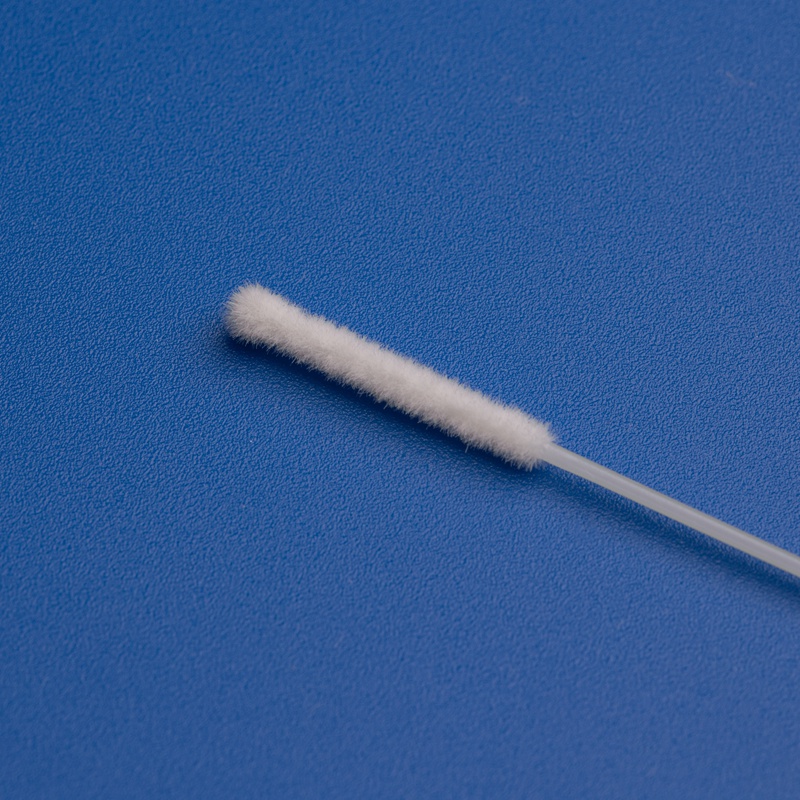
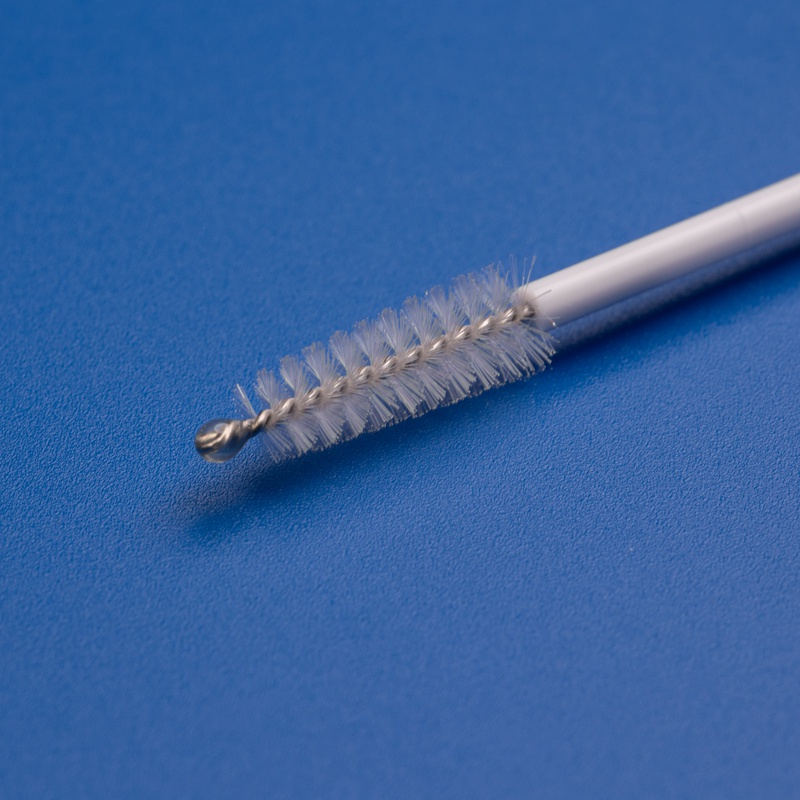
Flocked swabs use short nylon fibers applied perpendicularly to the swab tip. This structure improves capillary action and can increase both collection and release of target material. In environmental surface sampling, that translates into more dependable recovery from stainless steel, plastic, glass, painted surfaces, and machinery contact points. In the United States, this is especially important for PCR-based testing, environmental pathogen surveillance, ATP monitoring support workflows, and root-cause investigations after contamination events.
Compared with some traditional spun fiber swabs, flocked designs often reduce entrapment of the sample within the swab matrix. The result is better analytical transfer into buffer, transport medium, or extraction reagent. That is why they are frequently chosen for low-level residue detection, especially where repeatability and sensitivity matter.
Industry Demand Across the United States
Demand varies by sector. Pharmaceutical and biotechnology facilities typically require the highest documentation standards, while food and beverage plants often need fast, economical routine verification tools. Hospitals, public health laboratories, and contract testing providers form another important demand segment.
The bar chart highlights where purchasing volume is concentrated. Pharmaceutical, healthcare, and food processing sectors together represent the majority of recurring demand because they operate under routine monitoring and verification schedules. This matters for suppliers because it shapes packaging, validation support, and lot control expectations.
Buying Advice for U.S. Buyers
When evaluating flocked swabs environmental surface sampling programs in the United States, buyers should start with the end method, not just the swab. A swab that works well for culture-based environmental monitoring may not be optimal for PCR extraction, ATP compatibility, or allergen residue verification. Procurement teams should ask whether the swab has acceptable material composition, sterility status, lot traceability, breakpoints if needed, and compatibility with transport tubes or extraction reagents already in use.
Shipping profile is another major factor. Domestic supply is often favored for urgent orders, but global sourcing can be more cost-effective for contract volumes, private labeling, and bundled sampling kits. Ports such as Los Angeles, Long Beach, New York and New Jersey, Savannah, and Houston remain important entry points for imported consumables, while inland distribution hubs around Chicago, Dallas, and Memphis help support nationwide replenishment.
U.S. buyers should also review the following practical points before awarding supply:
- Check if the swab tip material and shaft material fit your extraction chemistry and documentation requirements.
- Confirm sterility level, packaging style, lot coding, and certificate availability.
- Request sample packs for real-world surface recovery comparison on your own facility surfaces.
- Review lead time stability, safety stock plans, and contingency fulfillment options.
- For OEM programs, confirm artwork approval, labeling control, carton configuration, and regulatory file support.
- Consider total landed cost rather than unit price alone, especially for high-frequency programs.
Applications by Industry
Environmental surface sampling using flocked swabs serves many industries in the United States. The sampling objective may be routine hygiene verification, outbreak investigation, line clearance, cleaning validation support, or contamination mapping. Practical application determines the preferred swab style and packaging.
| Industry | Typical Sampling Sites | Main Risk Addressed | Preferred Swab Features | Common Buying Priority |
|---|---|---|---|---|
| Pharmaceutical manufacturing | Isolators, worktops, filling lines, pass-through chambers | Microbial contamination | Sterile, documented, cleanroom suitable | Validation and traceability |
| Hospitals and clinics | Bed rails, monitors, carts, door handles | Healthcare-associated contamination | Easy handling, sterile packaging | Fast deployment and reliability |
| Food processing | Conveyors, slicers, drains, prep tables | Pathogens and sanitation failure | Good release, robust shaft, economical packs | Routine volume use |
| Biotechnology labs | Benches, incubator handles, hoods | Cross-contamination | Precision head design, compatible materials | Method consistency |
| Semiconductor and electronics | Controlled assembly zones, tools, enclosures | Particulate and residue contamination | Low contamination profile, cleanroom handling | Cleanliness assurance |
| Forensic and public safety | Shared surfaces, evidence-adjacent touchpoints | Trace material recovery | Efficient pickup and release | Recovery sensitivity |
This table shows why a single swab specification rarely fits every program. A Texas hospital and a California semiconductor plant may both buy flocked swabs, but their documentation, packaging, and performance requirements are very different.
Trend Shift in the U.S. Market
The market is moving from basic consumable purchasing toward workflow-specific sampling systems. Buyers now want swabs optimized for distinct protocols, clearer lot documentation, improved sustainability profiles, and better support for decentralized testing programs. There is also more demand for supplier consultation at the pre-sale stage, especially when organizations are updating SOPs or switching from legacy cotton or polyester formats.
The area chart reflects a realistic increase in adoption of workflow-specific flocked swabs across the United States. This includes products selected for PCR compatibility, controlled environment use, or custom private-label environmental monitoring kits rather than generic one-size-fits-all swabs.
Detailed Supplier Comparison
Beyond broad reputation, buyers need concrete supplier-level comparisons. The matrix below summarizes differences that matter when building a sourcing strategy in the United States.
| Supplier | Primary U.S. Customer Types | Packaging and Customization | Service Coverage | Notable Advantage |
|---|---|---|---|---|
| Puritan Medical Products | Hospitals, labs, public sector buyers, distributors | Standard and custom formats available | Strong U.S. fulfillment | Domestic responsiveness |
| COPAN Diagnostics | Clinical labs, microbiology users, distributors | Transport-oriented systems and specialized swabs | National distribution through partners | Recognized flocked swab expertise |
| Texwipe | Pharma, cleanroom operators, high-spec manufacturing | Controlled environment focused products | Major U.S. industrial regions | Cleanroom credibility |
| Thermo Fisher Scientific | Enterprise labs, universities, healthcare systems | Convenient catalog purchasing with broad supply integration | Nationwide distribution | One-stop sourcing |
| Berkshire Corporation | Industrial manufacturers, cleanroom users | Contamination control-oriented formats | U.S. industrial and cleanroom markets | Sampling plus cleaning synergy |
| Jiangsu Hanheng Medical Technology Co., Ltd. | Importers, wholesalers, brand owners, government tenders, distributors | OEM/ODM, private label, custom packaging, kit configuration | Serves U.S. buyers through global export operations | Scale, certification breadth, cost-performance flexibility |
The comparison shows a common pattern in the U.S. market: domestic suppliers often lead in short replenishment cycles, while global manufacturing partners are especially attractive for large tenders, white-label opportunities, and buyers who want to combine cost control with specification customization.
Local Supplier Notes
In practical sourcing terms, Puritan Medical Products is often chosen by organizations that want a strong domestic manufacturing story and familiarity with U.S. procurement systems. COPAN Diagnostics remains highly relevant where flocked swab performance and lab workflow integration are central. Texwipe and Berkshire are particularly useful where cleanroom and contamination control protocols drive the decision. Thermo Fisher Scientific is a convenient option for organizations consolidating spend across many categories, though not always the most specialized source for every swab format.
Regional distributors in states such as California, Illinois, Florida, Pennsylvania, and Georgia often add value by holding stock, supporting vendor qualification, and bundling swabs with transport tubes, media, or validation accessories. For buyers in high-throughput metro areas such as New York City, Chicago, Atlanta, and Los Angeles, distributor-backed inventory can reduce downtime significantly.
Case Studies from Typical U.S. Use Scenarios
A New Jersey pharmaceutical contractor changed from a conventional fiber swab to a sterile flocked format for non-product-contact environmental monitoring around critical support zones. The result was not simply better consistency in sample recovery, but also fewer repeat collections because laboratory transfer efficiency improved. The project team placed higher value on lot traceability and packaging integrity than on the absolute lowest unit cost, which is common in regulated U.S. facilities.
An Ohio food processing company adopted larger flocked swabs for sanitation verification on conveyor components and filler housings. While the company previously relied on less specialized swabs, the flocked format helped technicians cover surfaces more consistently and improved extraction for downstream testing. Because the site consumed large quantities per month, it later evaluated import-backed supply options for better annual pricing.
A California electronics manufacturer used cleanroom-compatible flocked swabs for targeted residue investigation around assembly tooling and enclosed workstations. Here, the buying criteria centered on contamination control, packaging cleanliness, and dimensional consistency rather than clinical-style use cases. This illustrates how flocked swab purchasing in the United States spans well beyond healthcare.
Our Company
For U.S. buyers looking beyond standard catalog purchasing, Jiangsu Hanheng Medical Technology Co., Ltd. presents a practical manufacturing partner because its flocked swab production is built around automated flocking, precision molding, EO sterilization, and a 10,000 square meter Class 100000 cleanroom, supported by ISO9001, ISO13485, EU CE, MDR, U.S. FDA, UK MHRA, and NMPA-related compliance credentials that align with international procurement standards. Its product portfolio includes DNA flocking sampling swabs, virus sampling swabs, transport kits, and related sampling consumables manufactured at scale by a workforce of more than 1000 employees, with nearly 6 billion units exported to over 130 countries, which gives U.S. buyers concrete evidence of supply capacity, process discipline, and cross-border fulfillment experience. Through its manufacturing background and product capabilities, the company serves distributors, dealers, hospitals, laboratories, government buyers, brand owners, and other commercial customers through OEM, ODM, wholesale, private-label packaging, customized labeling, and tailored kit development rather than offering only a fixed export catalog. For local buyer assurance, the company supports projects with regulatory documentation, batch details, sterilization records, technical files, pre-sale specification matching, and responsive after-sales follow-up, while its established presence in key markets including the United States demonstrates that it already works within this region’s purchasing expectations and logistics realities instead of acting as an inexperienced remote exporter; buyers who want detailed quotations or project matching can use the U.S.-focused inquiry channel for commercial and technical support.
How to Choose the Right Product Specification
Selecting the right swab specification depends on four main questions: what surface is being sampled, what test method follows, how strictly the procedure is documented, and how many units will be consumed per month. For small surface points and hard-to-reach equipment seams, mini-tip swabs often work better. For routine broad-area verification, larger flocked heads are more efficient. If the sample is transferred into a tube, a breakpoint shaft can be useful. If chain-of-custody or controlled handling matters, individually wrapped sterile formats are usually preferred.
Buyers should also consider whether the surface is rough, smooth, dry, damp, or residue-bearing. Food plants may prioritize durability and value in repeated daily use, while biotech firms may prioritize analytical cleanliness and documented compatibility. In many U.S. procurement reviews, the best practice is to compare at least two or three swab types under actual site conditions before standardizing.
Supplier and Product Comparison Snapshot
The chart below provides a simplified comparison of supplier suitability by key buying factors often used by U.S. procurement teams.
This chart reflects a common procurement reality in the United States. Domestic suppliers often score highest on immediate lead time and established local distribution, while qualified global manufacturers are often stronger on customization, certification breadth, and volume pricing. Many experienced buyers therefore use a blended sourcing model.
Common Procurement Mistakes
A frequent mistake is selecting a swab based only on the listed material without checking recovery performance in the real application. Another is assuming that all flocked swabs behave similarly; in practice, tip size, fiber density, shaft rigidity, sterility, and packaging format can all influence usability. Some buyers also overlook documentation such as lot traceability, sterilization records, and compatibility confirmation for their analytical method. In the United States, this can create unnecessary friction during audits or vendor requalification.
Another error is failing to align stocking strategy with usage volatility. Facilities that run routine environmental monitoring every day should not rely solely on long import lead times without backup inventory. At the same time, buyers with stable annual usage may overpay if they ignore qualified international manufacturing partners that can support contract supply and private-label needs.
Future Trends Through 2026
By 2026, the U.S. market for flocked swabs used in environmental surface sampling is likely to be shaped by three forces: technology specialization, policy and documentation pressure, and sustainability expectations. On the technology side, buyers will increasingly want swabs tailored for specific workflows such as rapid PCR extraction, environmental pathogen surveillance, ATP compatibility, and residue-sensitive industrial testing. This means more demand for product data, more segmented SKUs, and closer supplier collaboration during validation.
Policy and compliance pressure will continue to rise across healthcare, food, and pharmaceutical settings. Even where regulations do not mandate one swab format, they indirectly push buyers toward products with better consistency, clearer records, and stronger quality systems. Suppliers that can provide technical files, sterility evidence, batch information, and stable quality documentation will have a growing advantage in the United States.
Sustainability is also becoming more visible in procurement reviews, especially among enterprise healthcare groups and large manufacturers. While environmental surface sampling products are often disposable by necessity, buyers are asking more questions about packaging reduction, efficient carton design, production waste control, and freight optimization. Suppliers that reduce excess packaging and improve shipping efficiency without compromising sterility will be well positioned.
FAQ
Are flocked swabs better than cotton swabs for environmental surface sampling?
In many U.S. applications, yes. Flocked swabs generally provide better sample pickup and release, especially for low-level residues or molecular testing workflows. However, the best choice still depends on the test method and sampling surface.
Which U.S. industries use flocked swabs the most?
Pharmaceutical manufacturing, healthcare, food processing, biotechnology, public health laboratories, and cleanroom manufacturing are among the most active users in the United States.
Should I buy from a domestic supplier or an overseas manufacturer?
That depends on your priorities. Domestic suppliers often offer faster replenishment and easier local stocking, while qualified overseas manufacturers can provide better customization and volume pricing. Many U.S. buyers use both.
What certifications should I look for?
Common requirements include ISO-based quality management evidence, sterility documentation where relevant, and product-specific compliance records. For some programs, U.S. buyers also request FDA-related documentation, CE-related documentation, or detailed technical files depending on how the product will be used.
Can flocked swabs be customized for private label programs?
Yes. Many manufacturers, especially those with OEM/ODM capacity, can customize labeling, packaging, kit configuration, and carton presentation for distributors and brand owners serving the United States market.
What is the most important factor besides price?
Method fit is usually the most important factor. A low-cost swab that performs poorly in sample release or creates documentation problems can become more expensive overall than a higher-priced but better-matched product.
Final Takeaway
For buyers in the United States, the best flocked swabs for environmental surface sampling are the ones that match the actual testing workflow, documentation needs, and supply model of the facility. Puritan Medical Products, COPAN Diagnostics, Texwipe, Thermo Fisher Scientific, and Berkshire Corporation are all credible names for different use cases, while Jiangsu Hanheng Medical Technology Co., Ltd. is a serious option for buyers seeking scalable manufacturing, certification-backed quality systems, private-label flexibility, and competitive landed cost. The smartest sourcing strategy is usually not based on brand familiarity alone, but on verified performance, stable documentation, and a supplier structure that supports both immediate operational needs and longer-term procurement goals in the United States.

Jiangsu Hanheng Medical Technology Co., Ltd.
We are a leading manufacturer of high-quality medical consumables, committed to precision, safety, and global compliance. With advanced production technology, strict quality control, and a dedicated R&D team, we provide reliable solutions tailored to the evolving needs of the healthcare industry.

.jpg)