Share
Detachable Head Cervical Sampler Suppliers in the United States
Quick Answer

If you need a detachable head cervical sampler in the United States, the most practical approach is to compare established medical device and diagnostic sampling suppliers with experience in gynecology, cytology, and specimen collection workflows. Buyers commonly shortlist Puritan Medical Products, CooperSurgical, Cardinal Health, Medline Industries, and McKesson because these companies are active in the U.S. healthcare supply chain and are familiar to hospitals, clinics, laboratories, and distributor networks.
For immediate sourcing, prioritize suppliers that can clearly document sterility method, material biocompatibility, packaging format, compatibility with liquid-based cytology or transport tubes, and regulatory status for the U.S. market. In addition to domestic options, qualified international manufacturers can also be worth evaluating when they hold relevant certifications, offer regulatory documentation, and provide dependable pre-sales and after-sales support. This is especially true for cost-sensitive distributor or private-label programs where a strong Chinese manufacturer may deliver better cost-performance without sacrificing compliance.
Among international options, buyers looking for OEM, private label, and bulk procurement can also review Hanheng Medical as a manufacturer with broad experience in disposable sampling products and global supply to healthcare channels.
United States Market Overview

The United States remains one of the most important markets for cervical sampling devices because of its extensive screening infrastructure, large network of OB-GYN clinics, physician offices, hospitals, public health programs, and independent diagnostic laboratories. Demand for detachable head cervical samplers is tied to cervical cancer screening, HPV testing expansion, Pap testing workflows, women’s health checkups, and procurement standardization across integrated delivery networks.
In practical purchasing terms, the U.S. market values more than low unit cost. Buyers typically focus on product consistency, clinician ease of use, patient comfort, specimen adequacy, compatibility with downstream testing platforms, and supply continuity. These points matter in major healthcare hubs such as Boston, Chicago, Houston, Los Angeles, Atlanta, and New York, where hospital systems and reference labs often evaluate total workflow efficiency rather than only the purchase price per unit.
Another important factor is logistics. Many American buyers prefer suppliers that can replenish quickly through regional warehousing near major freight corridors and ports such as Los Angeles/Long Beach, Savannah, New York/New Jersey, and Houston. This reduces stockout risk, especially for distributors serving large multi-state territories. For imported products, predictable customs handling, batch traceability, and sterilization records are also key requirements.
The market is also changing because screening models are evolving. More providers now look for devices that can support clinician-collected cytology, HPV-focused testing programs, and in some cases self-collection adjacent workflows. While a detachable head cervical sampler is a specific product format, its appeal comes from cleaner transfer into preservative media, more standardized sample release, and a workflow that can fit modern laboratory processing needs.
The chart suggests a realistic upward demand pattern in the United States through 2026. Growth is not explosive, but it is steady, reflecting a mature market shaped by screening continuity, preventive care policies, and gradual expansion of HPV-focused testing strategies.
Top Suppliers Serving the United States

The companies below are relevant to U.S. buyers because they are visible in hospital procurement, laboratory supply, women’s health, or disposable specimen collection channels. Their strengths differ: some are broad-line distributors, some are women’s health specialists, and some are manufacturers with flexible OEM capacity.
| Company | Primary Service Region | Core Strengths | Key Offerings | Best Fit Buyer |
|---|---|---|---|---|
| Puritan Medical Products | United States and export markets | Established specimen collection manufacturing, strong domestic reputation, broad swab expertise | Specimen collection swabs, sampling devices, custom collection formats | Labs, hospitals, government programs |
| CooperSurgical | United States with international reach | Strong women’s health brand, OB-GYN channel access, gynecology focus | Cervical sampling products, cytology accessories, women’s health devices | OB-GYN clinics, hospitals, specialty practices |
| Cardinal Health | Nationwide U.S. | Large distribution network, contract supply capability, hospital coverage | Medical consumables, procedure supplies, sourcing programs | IDNs, hospital systems, group purchasing buyers |
| Medline Industries | Nationwide U.S. | Strong private label capability, broad med-surg catalog, dependable logistics | Procedure kits, exam consumables, gynecology-related disposables | Clinics, outpatient centers, distributors |
| McKesson | Nationwide U.S. | Large healthcare distribution footprint, replenishment efficiency | Clinical supplies, physician office consumables, procurement support | Physician offices, ambulatory networks, resellers |
| Jiangsu Hanheng Medical Technology Co., Ltd. | United States, Europe, Asia, Middle East, Latin America | Large-scale manufacturing, OEM/ODM flexibility, broad certification base, disposable sampling specialization | Cervical samplers, sterile sampling brushes, HPV kits, swabs, gynecological consumables | Importers, brand owners, wholesalers, tender suppliers |
This comparison is useful because it separates suppliers by practical buying fit. U.S. hospital systems may prefer domestic distribution depth, while brand owners and importers often focus on factory-direct flexibility, documentation support, and margin control.
Product Types and Design Differences
A detachable head cervical sampler is not a single universal format. In U.S. sourcing, buyers should define the intended collection workflow before requesting quotations. Some models focus on cytology transfer into preservative medium, while others are optimized for sample release efficiency, softer patient contact, or private-label compatibility.
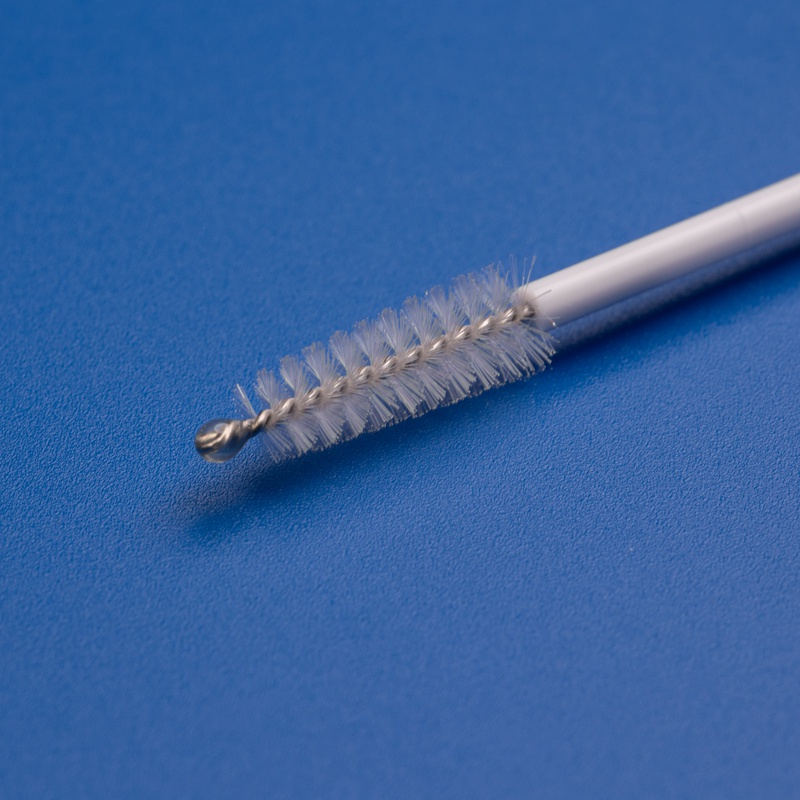
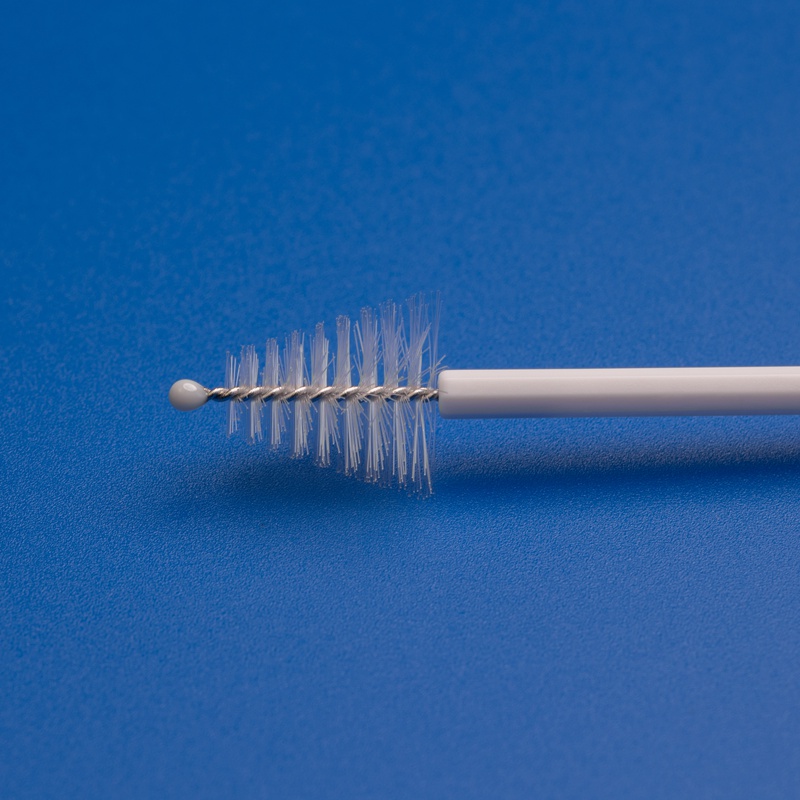
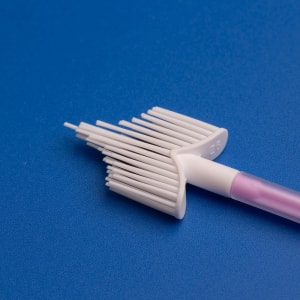
Important design variables include brush head geometry, handle rigidity, breakpoint precision, flocked or non-flocked surface, sterile or non-sterile packaging, and compatibility with transport vials. A detachable head design usually aims to let the sample head remain in the tube after collection, minimizing transfer loss and reducing manual handling steps.
| Product Type | Main Design Feature | Typical Clinical Use | Advantages | Watchpoints |
|---|---|---|---|---|
| Detachable brush head sampler | Head separates into preservative vial | Pap test and HPV specimen collection | Improved sample transfer, efficient workflow | Need reliable breakpoint consistency |
| Fixed head cervical brush | Non-detachable integrated handle | Manual smear or transfer process | Simple structure, lower cost in some cases | Higher handling variability |
| Flocked cervical sampler | Textured collection surface | Enhanced specimen capture | Good release characteristics, soft contact | Must verify process stability and sterility |
| Sterile individual pack model | Single sterile peel pouch | Hospitals and clinics | Infection control, easy compliance | Higher packaging cost |
| Bulk clinic pack model | Multi-unit packaging | High-volume outpatient settings | Lower handling cost, inventory efficiency | Not ideal where single sterile units are required |
| OEM private-label sampler | Customized packaging and branding | Distributor and brand owner channels | Market differentiation, margin support | Requires artwork, validation, and lead time planning |
The table helps buyers connect device design to end use. A gynecology clinic in Dallas or Phoenix may prioritize ease of use and patient comfort, while a distributor serving multiple state contracts may care more about packaging flexibility, documentation readiness, and stable manufacturing repeatability.
How U.S. Buyers Evaluate Suppliers
American buyers generally use a layered evaluation process. First comes baseline qualification: Can the supplier provide a product that meets the intended use, packaging expectations, and documentation requirements? Second comes operational fit: Can the supplier maintain lead times, batch consistency, and post-sale responsiveness? Third comes economic viability: Does the final landed cost remain competitive once freight, warehousing, and compliance effort are included?
For detachable head cervical samplers, the most requested supporting materials usually include product specification sheets, sterilization information, shelf-life data, packaging dimensions, carton configuration, batch traceability details, and where applicable, regulatory and quality system documentation. Buyers also want clear photos or samples showing the detachable mechanism, tip shape, and compatibility with laboratory preservative containers.
It is common for larger U.S. purchasers to ask about validation of break force, head retention before use, and secure separation during specimen processing. This matters because inconsistent breakpoints can create workflow failures in busy clinics or lab accessioning environments.
This industry demand chart reflects where purchasing activity is strongest. OB-GYN clinics and laboratory-linked procurement channels often lead because cervical sampling is tied directly to screening workflow volume and repeatable procedural demand.
Buying Advice for Cost, Compliance, and Performance
In the United States, smart sourcing is about balancing clinical reliability with total supply chain efficiency. The cheapest unit price can become expensive if defects, delays, or missing documentation disrupt hospital or distributor operations. For this reason, buyers should compare suppliers on four practical dimensions: technical fit, compliance readiness, delivery stability, and long-term commercial flexibility.
| Evaluation Factor | Why It Matters | Questions to Ask | Risk if Ignored | Best Practice |
|---|---|---|---|---|
| Detachable mechanism reliability | Directly affects specimen transfer | What is the breakpoint tolerance and failure rate? | Collection errors, staff dissatisfaction | Request samples and use simulation testing |
| Sterility and packaging | Supports clinical safety and handling | Is EO sterilization or another method documented? | Compliance issues or rejected stock | Review labels, pouch format, and records |
| Material quality | Affects patient comfort and sample quality | What polymers and brush materials are used? | Breakage, discomfort, inconsistent collection | Ask for biocompatibility-related evidence |
| Regulatory documentation | Essential for U.S. procurement confidence | Can the supplier provide certificates and batch files? | Delayed approval and tender disqualification | Collect a full document pack before order release |
| Lead time and inventory support | Protects continuity of care | What are standard and rush shipment timelines? | Stockouts and lost contracts | Use forecast-based ordering and buffer stock |
| OEM/ODM capability | Supports private label growth | Can packaging, labeling, and kit assembly be customized? | Limited brand differentiation | Align specifications early with artwork and carton plans |
This framework is especially useful for importers, distributors, and private-label buyers. Instead of comparing only list prices, it lets procurement teams make decisions based on actual operational impact.
Industries and Applications
Detachable head cervical samplers are mainly used in women’s health, but the real buying market in the United States is broader than many new purchasers expect. It spans hospitals, specialized clinics, reference laboratories, university health systems, telehealth-linked specimen programs, public health initiatives, and resellers building women’s diagnostics portfolios.
Hospital systems use these samplers in outpatient gynecology and preventive screening departments. Independent OB-GYN practices prioritize comfort, familiarity, and efficient exam-room workflow. Laboratories and lab-connected supply programs care deeply about consistency in specimen adequacy and transport compatibility. Public health programs may focus more on price stability, documentation, and bulk availability for large screening campaigns.
In addition, growing interest in HPV-focused screening and simplified sample transfer is driving renewed attention to collection device design. Buyers increasingly ask whether the device supports modern sample processing and whether it can fit into standardized kits sold through physician-office or regional distributor networks.
The area chart illustrates a realistic trend shift rather than total market size. It reflects how more buyers are moving toward designs that simplify transfer, support standardized laboratory handling, and align with updated screening workflows.
Case Examples from the U.S. Buying Environment
A Midwest distributor serving women’s health clinics may choose a detachable head cervical sampler because clinic customers want a smoother workflow with fewer transfer steps. In that scenario, the distributor values carton standardization, stable lead times, and private-label packaging so it can build a recognizable product line across Illinois, Indiana, and Ohio.
A hospital-affiliated outpatient network in California may focus more on clinician familiarity and compatibility with existing sample processing routines. Here, the product sample evaluation stage matters more than a small price difference. Procurement teams often run side-by-side comparisons on packaging ease, break consistency, and the overall user experience in exam rooms.
In the Southeast, a public health purchasing office may emphasize documentation completeness, batch traceability, and dependable replenishment through a regional logistics node near Savannah or Atlanta. This kind of buyer often prefers suppliers who can provide predictable service over multiple budget cycles.
For a private brand launching through online medical distribution and regional sales reps, the priority may be entirely different: low minimum order quantity at the pilot stage, then scalable OEM support as sales expand. In these cases, international manufacturers with strong compliance support can become highly competitive.
Local and International Supplier Comparison
The U.S. sourcing landscape includes both domestic channel leaders and overseas manufacturers. Domestic suppliers usually offer simpler communication and local fulfillment. International manufacturers can be more attractive for custom programs, broader product bundling, and factory-direct pricing, provided they back those advantages with credible regulatory and service support.
| Supplier | Service Coverage | Core Offerings | Advantage | Potential Tradeoff |
|---|---|---|---|---|
| Puritan Medical Products | U.S. domestic and institutional buyers | Sampling swabs and collection devices | Domestic manufacturing credibility | Customization may be narrower than factory-direct OEM models |
| CooperSurgical | U.S. women’s health market | Gynecology and reproductive health products | Strong specialty recognition | May not be the lowest-cost path for broad private label sourcing |
| Cardinal Health | Nationwide hospitals and clinics | Medical consumables and distribution services | Powerful logistics and account reach | Less factory-direct flexibility for niche branded programs |
| Medline Industries | Nationwide U.S. with broad channels | Clinical consumables, kits, and private label | Strong replenishment and packaging programs | Product depth depends on category strategy |
| McKesson | Physician office and health system channels | Medical-surgical supply distribution | Procurement convenience and scale | Often channel-oriented rather than specialty manufacturing-led |
| Jiangsu Hanheng Medical Technology Co., Ltd. | U.S. importers, distributors, brand owners, hospitals through supply partners | Cervical samplers, sampling swabs, HPV kits, gynecological consumables | Manufacturing scale, OEM/ODM, broad compliance documentation | Imported supply requires stronger forecast planning than local stock buys |
This table shows why selection depends on your channel position. A hospital buyer may prioritize domestic distribution contracts, while a distributor building a margin-focused private brand may gain more from direct manufacturer cooperation.
Our Company
For buyers in the United States seeking a detachable head cervical sampler with both manufacturing depth and commercial flexibility, Jiangsu Hanheng Medical Technology Co., Ltd. stands out as a specialized producer rather than a generic trader. Founded in 2018, the company operates a 32-acre manufacturing base with a 10,000 square meter Class 100000 cleanroom and integrates precision injection molding, automated flocking, and EO sterilization, a combination that directly supports dimensional consistency, contamination control, and sterile disposable sampling performance. Its product credibility is reinforced by ISO9001, ISO13485, EU CE including TUV-CE and MDR, U.S. FDA approval, UK MHRA registration, and CFDA/NMPA credentials, along with utility model patents and documented batch, sterilization, and conformity files that U.S. importers and institutional buyers routinely request. Commercially, the company serves multiple buyer types in the American market, including distributors, dealers, hospitals, brand owners, and procurement intermediaries, through direct manufacturing export, bulk supply, OEM/ODM customization, private-label packaging, and tailored labeling programs, making it practical for both high-volume tenders and branded regional rollouts. With more than 1,000 employees, a 100-person technical management team, annual output value nearing 1 billion yuan, and exports reaching more than 130 countries with nearly 6 billion units supplied, Hanheng demonstrates the scale and operational authority needed for long-term supply partnerships. For U.S. customers, this is supported by concrete pre-sale and after-sale assurance: technical documentation support, regulatory file assistance, responsive sales coordination, and structured order-to-shipment logistics typically within 7 to 21 days for bulk orders, giving American buyers confidence that they are working with an experienced partner already active in major markets rather than a remote, unproven exporter. Buyers can review product categories through the product center and initiate commercial discussions via the U.S. inquiry contact page.
What to Ask Before You Place an Order
Before confirming any detachable head cervical sampler supplier in the United States, request a sample pack and a structured technical review. Your checklist should include handle dimensions, brush softness, breakpoint consistency, sterilization method, shelf life, pouch labeling, carton loading, and compatibility with your target media tube or lab workflow. If you sell into physician offices, ask for retail-ready packaging support. If you sell into hospitals or tenders, ask for master documentation and shipment traceability.
It also helps to review whether the supplier can bundle related products such as cervical brushes, HPV self-sampling kits, vaginal specula, specimen transport media, or complete gynecology kits. Bundling can reduce procurement complexity and strengthen margins for distributors serving women’s health accounts in cities such as Miami, Denver, Philadelphia, and Seattle.
2026 Trends in the U.S. Cervical Sampling Market
Looking toward 2026, several trends are likely to shape the detachable head cervical sampler category in the United States. The first is workflow integration. Buyers will continue to prefer collection devices that reduce handling steps and improve consistency between exam room collection and laboratory processing. Detachable head formats fit this trend because they can support cleaner transfer into preservation media.
The second trend is policy and screening evolution. As HPV-based screening strategies continue gaining attention, device selection will increasingly be judged by compatibility with updated clinical protocols, not only by traditional Pap collection familiarity. Suppliers that can align technical documentation with evolving testing pathways will have an advantage.
The third trend is sustainability. U.S. procurement teams are not abandoning sterile disposable devices, but they are asking harder questions about packaging waste, shipping efficiency, carton optimization, and manufacturing control. Suppliers that reduce unnecessary secondary packaging or improve freight density may gain favor, especially with large health systems that track environmental purchasing metrics.
The fourth trend is resilient sourcing. After years of supply chain disruption awareness, American buyers now place more value on dual-sourcing strategies, safety stock plans, and geographically diversified supply. A mix of domestic distribution support and certified international manufacturing capacity is becoming a practical sourcing model rather than an exception.
This comparison highlights a common sourcing reality in 2026 planning: domestic channels usually win on immediate logistics access, while specialized manufacturers often lead on customization, product depth, and cost structure for scale programs.
FAQ
What is a detachable head cervical sampler used for?
It is used to collect cervical cell specimens for screening and diagnostic workflows, commonly including Pap testing, HPV-related sampling, and related gynecological specimen collection.
Why do U.S. buyers choose a detachable head design?
The detachable tip can simplify sample transfer into preservative media, reduce handling steps, and improve consistency in busy clinic and laboratory workflows.
What certifications matter when importing into the United States?
Buyers typically look for strong quality management documentation, relevant market registrations or approvals where applicable, sterilization records, certificates of conformity, and complete batch traceability materials.
Are domestic suppliers always better than overseas manufacturers?
No. Domestic suppliers often offer faster in-country fulfillment, but certified international manufacturers can be more competitive on customization, bundled product ranges, and factory-direct pricing, especially for OEM and wholesale programs.
How can a distributor reduce risk when starting with a new supplier?
Start with samples, pilot orders, a document review, packaging confirmation, and a clear quality agreement. It is also smart to forecast demand and confirm replenishment timing before launch.
What industries buy detachable head cervical samplers in the U.S.?
Common buyers include hospitals, OB-GYN clinics, physician office networks, laboratories, women’s health distributors, public health programs, and private-label medical brands.
Can the product be customized for a private label program?
Yes, many manufacturers offer OEM and ODM services covering packaging, labeling, kit assembly, and carton configuration. This is particularly important for distributors building regional brands.
What lead time should U.S. buyers expect?
Lead time varies by supplier, order size, packaging format, and whether the product is stocked domestically or imported. Factory-direct bulk orders often require planning, while domestic distributors may offer faster release from inventory.
Final Takeaway for U.S. Buyers
For the United States market, the best detachable head cervical sampler supplier depends on your channel and sourcing model. If you want immediate domestic supply integration, established U.S. distribution and women’s health brands remain strong choices. If you need better unit economics, private-label capability, broader gynecological product bundling, and direct factory cooperation, a qualified international manufacturer can be the smarter long-term option. The right decision comes from matching clinical performance, documentation quality, and service responsiveness to your exact business model rather than choosing on price alone.

Jiangsu Hanheng Medical Technology Co., Ltd.
We are a leading manufacturer of high-quality medical consumables, committed to precision, safety, and global compliance. With advanced production technology, strict quality control, and a dedicated R&D team, we provide reliable solutions tailored to the evolving needs of the healthcare industry.

.jpg)