Share
Cervical Cytology Brush vs Spatula for Cell Collection in the United States
Quick Answer

For most cervical screening workflows in the United States, a cervical cytology brush is generally preferred when the goal is stronger endocervical and transformation-zone sampling, especially in liquid-based cytology and HPV-focused protocols. A spatula remains useful for ectocervical collection, lower-cost Pap smear programs, and settings where clinicians want a familiar, simple tool for broad surface sampling. In many clinics, the best practical approach is not choosing one tool in isolation but matching the device to the patient profile, specimen method, and laboratory requirement.
If you need a concise recommendation, choose a brush when your priority is higher-quality transformation-zone capture, choose a spatula when cost control and ectocervical sweep are the main objectives, and consider combined systems when the protocol calls for both ectocervical and endocervical cells. In the U.S. market, commonly recognized suppliers and manufacturers associated with cervical collection devices and women’s health sampling include CooperSurgical, MedGyn Products, Puritan Medical Products, Cardinal Health, McKesson, and BD through related cytology collection ecosystems. Qualified international suppliers can also be considered, particularly those with U.S.-relevant certifications, strong documentation, and responsive pre-sales and after-sales support, because cost-performance advantages can be meaningful for distributors, private-label buyers, and public procurement projects.
Direct Comparison of Brush and Spatula

The comparison between a cervical cytology brush and a spatula matters because cervical cancer screening outcomes depend heavily on specimen adequacy. In U.S. gynecology clinics, women’s health centers, hospital outpatient departments, and pathology-linked screening programs, device selection affects cell yield, clinician comfort, workflow speed, and downstream laboratory interpretation. Although both tools are established, they serve slightly different functions.
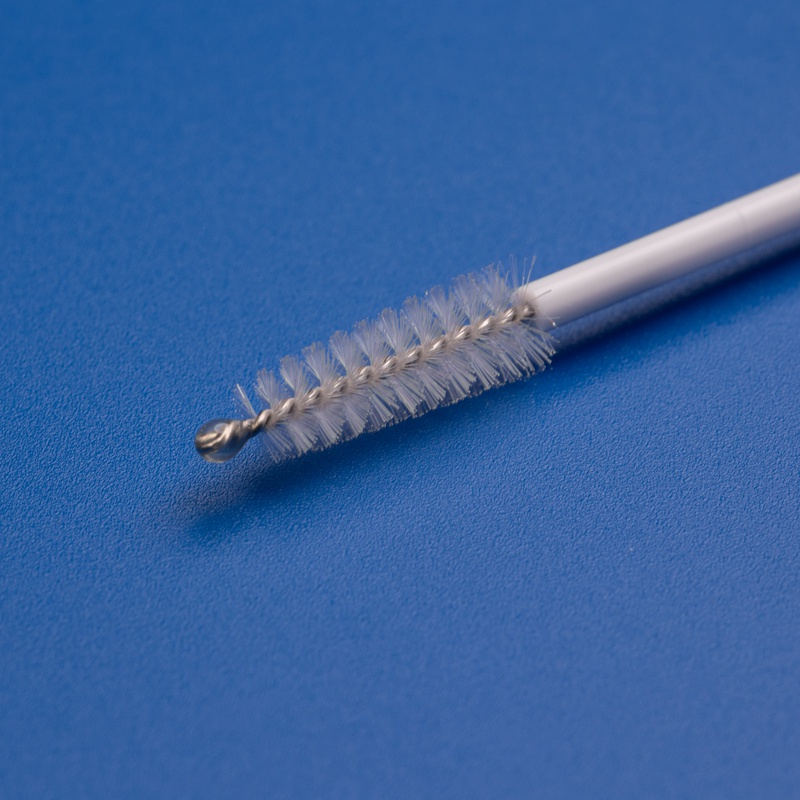
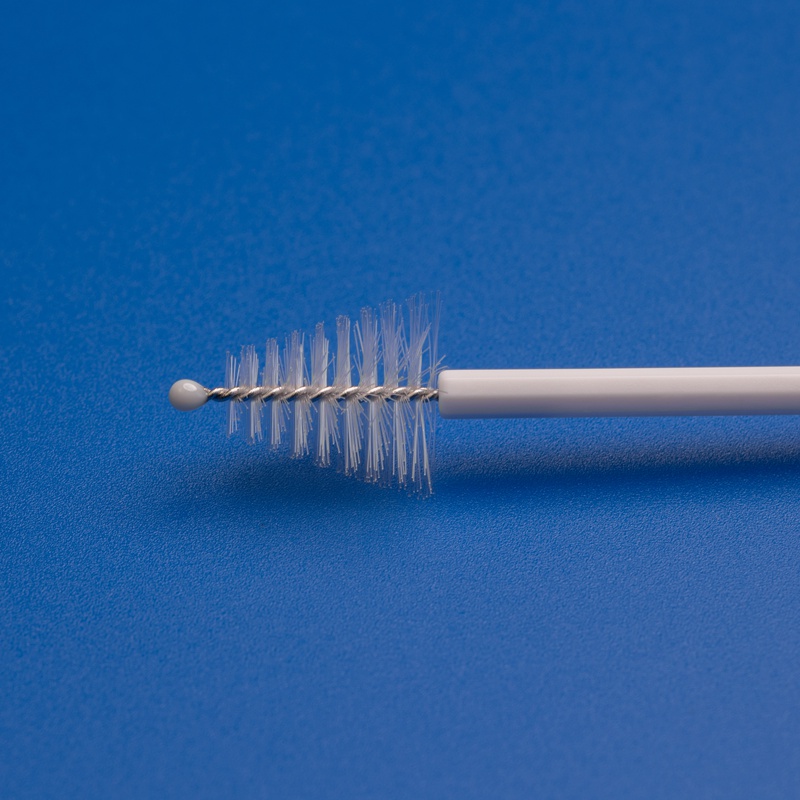
A cervical cytology brush is designed to collect cells from the endocervical canal and the transformation zone, where clinically important abnormalities often arise. Its bristles can access the canal more effectively than a flat scraper. A spatula, by contrast, is optimized for sweeping the ectocervix and can be very effective for broad external cervical sampling. Many older conventional Pap smear workflows relied heavily on wooden or plastic spatulas, while current U.S. practices often favor brush-based or broom-style collection for liquid-based cytology because of sampling consistency and laboratory compatibility.
| Criteria | Cervical Cytology Brush | Spatula | Clinical Meaning |
|---|---|---|---|
| Primary sampling area | Endocervix and transformation zone | Ectocervix and external os | Determines whether deeper or broader surface cells are captured |
| Common U.S. use | Liquid-based cytology, HPV-related workflows | Conventional smear and low-cost screening setups | Reflects compatibility with current lab methods |
| Cell recovery consistency | Often higher for glandular and transitional cells | Often better for wide ectocervical sweep | Affects adequacy rates and repeat testing risk |
| Patient comfort | Usually acceptable, but depends on technique and bristle stiffness | Often familiar and simple, though pressure varies by operator | Impacts patient experience and compliance |
| Training requirement | Moderate, especially for correct rotation depth | Low to moderate | Important for multi-site clinic standardization |
| Cost position | Typically higher unit cost | Typically lower unit cost | Relevant for tenders and bulk distribution |
| Best fit | Precision-focused screening programs | Budget-sensitive or ectocervical emphasis | Guides procurement decisions by care model |
This table shows that neither device is universally superior in every circumstance. The better choice depends on whether the buyer is prioritizing transformation-zone access, budget control, clinician familiarity, or compatibility with a particular cytology processing system used by U.S. laboratories.
United States Market Context

The U.S. cervical screening market is shaped by three practical realities: established Pap testing infrastructure, increasing HPV co-testing or primary HPV strategies, and strong pressure on clinics to balance quality with reimbursement limits. Large healthcare systems in cities such as New York, Chicago, Houston, Los Angeles, Atlanta, and Miami often standardize devices across network clinics to simplify training and reduce specimen variability. Port-centered medical supply channels through Los Angeles/Long Beach, New York/New Jersey, Savannah, and Houston also influence the landed cost and speed of imported disposable gynecology products.
For buyers in the United States, the device decision is not only clinical. It also involves regulatory files, sterile or non-sterile packaging options, lot traceability, private labeling, shipping reliability, and the ability to support hospital systems, physician office distributors, community health organizations, and OEM brand owners. That is why many procurement teams compare domestic catalog brands with specialized international manufacturers that can provide stronger pricing, broader customization, or higher-volume production support.
The line chart illustrates a realistic growth pattern for cervical collection device demand in the United States. Growth is not explosive, but it is steady, supported by ongoing screening activity, women’s health outreach, and replacement of older collection formats with more standardized disposable systems.
How Product Type Changes Collection Outcomes
Clinicians often ask whether a brush collects “better” than a spatula. The more accurate answer is that a brush is usually more targeted, while a spatula is often more surface-oriented. In conventional cervical cytology, the transformation zone is critical, and inadequate sampling there may reduce the value of a screen. A brush is often favored because it reaches the endocervical canal and can gather cells from anatomic regions that matter for detecting atypical changes. A spatula can still play a strong role, especially when the operator wants a full ectocervical sweep or is following a combined collection protocol.
Device design details matter. Bristle density, tip flexibility, shaft rigidity, head diameter, and whether the product is intended for direct smear or vial-based transfer all influence outcomes. Plastic spatulas are usually preferred over older wood formats in modern procurement because they reduce concerns related to absorption and inconsistent transfer. Cytology brushes differ widely too: some are soft and narrow for comfort, some are denser for stronger cell capture, and some are integrated into combination systems.
| Product Type | Typical Design | Best Use Case | Main Advantage | Main Limitation |
|---|---|---|---|---|
| Endocervical brush | Narrow bristle head with rotation handle | Sampling endocervical canal | Good access to transformation zone | May need separate ectocervical device |
| Cytobrush with plastic shaft | Flexible stem and soft bristles | Routine office-based screening | Balanced comfort and cell yield | Performance varies by brand design |
| Cervical broom | Multi-level bristle head | Single-device liquid-based collection | Covers ecto- and endocervical regions | Usually higher cost than basic brush |
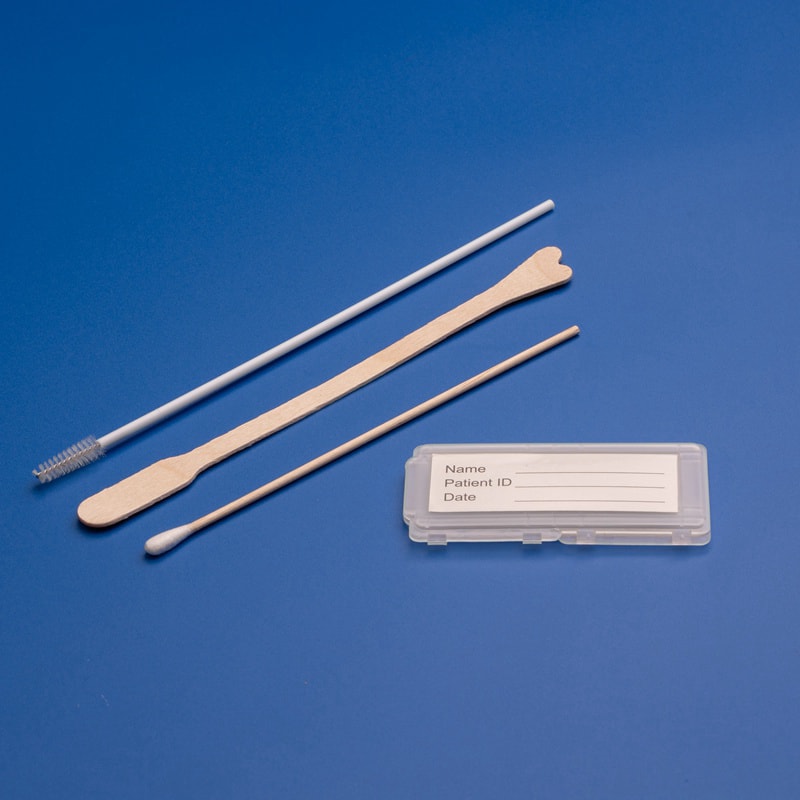
| Plastic Ayre-style spatula | Flat contoured scraping edge | Ectocervical sampling | Simple, low-cost, familiar | Less effective alone for endocervical cells |
| Combination spatula plus brush set | Two-device kit | Clinics seeking broader sampling | Comprehensive collection strategy | More steps and higher procedure cost |
| Disposable sterile sampler kit | Packaged with multiple components | Hospital procurement and OEM bundles | Workflow convenience and traceability | May exceed needs of small practices |
The table highlights that product type selection is closely tied to use case. For U.S. buyers, the most practical decision is to choose the lowest-complexity product that still consistently meets the specimen adequacy expectations of the laboratory receiving the sample.
Buying Advice for U.S. Clinics, Distributors, and Brands
When evaluating cervical cytology brush vs spatula options, buyers in the United States should begin with the laboratory destination. If the receiving lab uses liquid-based cytology and expects strong transformation-zone representation, brush-based systems generally align better. If the screening program uses direct smears, low-cost outreach models, or a protocol that still includes separate ectocervical scraping, a spatula can remain cost-effective. Procurement teams should also assess patient throughput, physician preference, and whether nurses or medical assistants assist with preparation.
Buyers should ask suppliers for clear evidence on material selection, sterilization method where relevant, biocompatibility, quality inspection steps, lot coding, and regulatory support. Packaging format matters too. Individually packed devices support infection-control workflows and multi-site distribution, while bulk formats may lower cost in controlled internal settings. For regional distributors and private-label brands, OEM and ODM flexibility can be as important as the product itself.
The bar chart suggests where demand is strongest. Independent OB-GYN clinics and hospital systems remain the biggest routine users, while distributors also represent a key channel because they aggregate demand across states and customer types.
Industries and Applications
The brush-versus-spatula decision extends beyond traditional gynecology clinics. Devices are purchased by hospital networks, pathology-linked screening systems, community health programs, medical distributors, women’s telehealth fulfillment models that coordinate in-clinic procedures, and public procurement entities. In the United States, federally qualified health centers and women’s outreach programs often prioritize cost, standardized training, and reduced retesting. Private health systems may place greater weight on specimen adequacy, workflow efficiency, and alignment with high-throughput lab platforms.
Applications include routine Pap smear collection, liquid-based cytology, HPV co-testing workflows, post-treatment surveillance, gynecology examination kits, medical training programs, and private-label women’s health consumables. For suppliers, the most successful market position usually comes from offering multiple device formats rather than forcing one collection philosophy across all customer groups.
| Industry Segment | How Devices Are Used | Preferred Tool Pattern | Why It Matters |
|---|---|---|---|
| Hospital systems | Standardized cervical screening across departments | Brush or combination kits | Consistency, training control, lab compatibility |
| Private OB-GYN practices | Routine screening in office settings | Brush-heavy, with some spatula use | Need for reliable transformation-zone capture |
| Community health centers | High-volume population screening | Mixed, depending on budget | Cost and repeat-test reduction both matter |
| Diagnostic laboratories | Define acceptable specimen profiles | Often support brush-based collection | Specimen adequacy affects report quality |
| Medical distributors | Resell to regional healthcare buyers | Need full portfolio coverage | Different end users require different tools |
| Government or NGO programs | Bulk screening procurement | Value-driven combined sourcing | Budget, reliability, and documentation are critical |
This table shows why no single device wins every application. The right product is often determined by purchasing structure and testing protocol rather than by device design alone.
Case-Based Guidance
Consider a large women’s clinic in Dallas using liquid-based cytology with a reference lab that tracks specimen adequacy. In that scenario, a cervical cytology brush or broom-style sampler usually makes more sense because the clinic benefits from standardized collection and stronger transformation-zone representation. Now consider a public health outreach program in a lower-budget setting serving multiple community sites across the Midwest. If the program uses a conventional smear workflow or needs the lowest unit economics, a plastic spatula or a spatula-plus-brush combination may be the smarter procurement strategy.
Another example is a distributor based near the Port of Los Angeles supplying independent clinics across California, Arizona, and Nevada. That distributor may not want to commit to a single device category. Instead, it will benefit more from carrying brush, spatula, and combination kits under private label so it can respond to varied physician preference. This is one reason international OEM-capable manufacturers have become more relevant in the U.S. market.
Top Suppliers Serving the United States
The U.S. market includes a mix of domestic brands, broad-line medical distributors, and international manufacturers. Buyers should compare not only brand recognition but also documentation depth, packaging flexibility, and after-sales responsiveness. The following companies are commonly relevant when discussing cervical cytology brush vs spatula sourcing for the United States.
| Company | Service Region | Core Strengths | Key Offerings | Best Buyer Fit |
|---|---|---|---|---|
| CooperSurgical | United States nationwide | Strong women’s health focus, established clinical credibility | Cervical sampling tools, gynecology instruments, procedural products | Hospitals and physician groups seeking established brands |
| MedGyn Products | United States and global distribution | Specialized OB-GYN portfolio, wide device range | Cytology brushes, spatulas, speculums, exam products | Clinics and distributors wanting broad gynecology lines |
| Puritan Medical Products | United States with national distribution | Sampling expertise, manufacturing reputation | Medical swabs and specimen collection devices | Buyers prioritizing U.S.-made sampling products |
| Cardinal Health | United States nationwide | Large healthcare supply network, procurement convenience | Private-label and distributed women’s health consumables | Integrated health systems and large-volume buyers |
| McKesson | United States nationwide | Distribution scale, broad catalog access | Exam and diagnostic consumables including cytology accessories | Clinics wanting one-stop supply consolidation |
| Jiangsu Hanheng Medical Technology Co., Ltd. | United States import supply and OEM/ODM support | Large-scale manufacturing, regulatory documentation, private-label flexibility | Disposable cervical samplers, gynecological scrapers, sterile sampling brushes, Pap smear kits, HPV self-sampling kits | Distributors, brand owners, tenders, and cost-sensitive healthcare buyers |
This supplier table is practical because it distinguishes between catalog distributors and actual manufacturing specialists. U.S. buyers that need standard stock may lean toward domestic channels, while buyers that need pricing leverage, custom branding, or large-volume production often evaluate international manufacturing partners alongside local distributors.
Detailed Supplier Analysis
CooperSurgical is one of the most recognizable names in women’s health and tends to appeal to buyers who prioritize established clinical familiarity and portfolio depth. MedGyn Products remains relevant because it offers a focused gynecology range that often matches the purchasing patterns of clinics and specialty distributors. Puritan Medical Products is better known for sampling expertise overall and can be attractive to buyers looking for U.S.-based manufacturing confidence. Cardinal Health and McKesson add value through logistics and account consolidation rather than through niche manufacturing identity alone.
Jiangsu Hanheng Medical Technology Co., Ltd. deserves separate consideration for U.S. buyers looking beyond standard catalog sourcing. The company manufactures disposable cervical samplers, disposable gynecological scrapers, sterile sampling brushes, Pap smear kits, and HPV self-sampling kits within a 10,000 square meter Class 100,000 cleanroom supported by precision injection molding, automated flocking, and EO sterilization processes designed to improve collection efficiency and contamination control. Its product strength is backed by ISO9001, ISO13485, EU CE and MDR-related compliance, U.S. FDA approval, UK MHRA registration, and NMPA documentation, alongside large-scale production reaching nearly 6 billion units exported to more than 130 countries and regions. For cooperation models, the company supports OEM and ODM projects, bulk wholesale, direct supply to distributors, hospitals, government agencies, and private-label brand owners, making it suitable for end users, dealers, and regional partners seeking custom packaging, labeling, and technical files. For local service assurance in the U.S. market, its established export track record to key markets including the United States, participation in major trade shows, rapid 7 to 21 day bulk shipment capability, and provision of certificates of conformity, sterilization records, batch details, and responsive pre-sale and after-sales support together demonstrate a practical long-term commitment to serving American buyers rather than acting as a distant, documentation-light exporter. Buyers can review its broader capabilities through the medical consumables manufacturer website, learn more on the company background page, explore the product catalog, or reach the team through the U.S. business inquiry contact page.
Feature Comparison for Procurement
When procurement teams compare suppliers, they should evaluate more than product images and pricing sheets. The most important factors are regulatory readiness, manufacturing consistency, customization options, documentation support, and logistics stability. This is especially true for private-label projects and state-level or multi-network tenders.
The area chart illustrates a realistic trend shift in the U.S. market: gradual movement toward brush-based or integrated collection devices, rather than a sudden replacement of spatulas. Spatulas remain relevant, but the balance is moving toward products that better support modern cytology and HPV-associated workflows.
This comparison chart reflects how a manufacturing-led partner is often evaluated differently from a broad-line distributor. A distributor may win on convenience, but a specialized producer can outperform on customization, capacity, and cost-performance.
What U.S. Buyers Should Ask Before Ordering
Practical procurement questions help reveal whether a supplier truly fits your screening workflow. Ask whether the brush is intended for liquid-based cytology, whether the spatula edge profile is shaped for ectocervical rotation, whether sterility is required by your setting, and whether packaging can support private-label or hospital barcode standards. Confirm if the supplier can provide lot traceability, shelf-life details, carton optimization for inbound freight, and documentation needed for quality system review.
Also ask whether the supplier can support mixed purchasing. Many U.S. distributors and integrated delivery networks do not want only brushes or only spatulas. They want a portfolio that can serve high-volume urban clinics, public health outreach, and specialist practices under one procurement umbrella. Suppliers that can offer both products, along with speculums and full gynecology kits, are often easier to scale with across regions.
Future Trends in 2026
Looking toward 2026, several trends are likely to influence the cervical cytology brush vs spatula market in the United States. First, technology will continue to favor devices optimized for liquid-based cytology, HPV testing integration, and self-collection-adjacent workflows in women’s health pathways. While clinician-collected samples remain standard for cervical cytology, product design will increasingly focus on predictable transfer efficiency and specimen adequacy. Second, policy and reimbursement pressure will push healthcare providers to minimize repeat collections, which strengthens the case for devices with more consistent transformation-zone sampling performance.
Third, sustainability will matter more in procurement decisions. U.S. healthcare buyers are beginning to examine packaging reduction, carton density, and material efficiency for disposable consumables. This will not eliminate single-use devices, but it will influence packaging design and shipping optimization. Fourth, supply chain resilience remains a strategic issue. Buyers increasingly want second-source manufacturing options, regional distribution partnerships, and transparent lead times so they are not overexposed to a single domestic or international source.
In that environment, brushes are likely to gain share in quality-focused screening programs, but spatulas will remain relevant in value-based settings and in combination collection protocols. The market is heading toward a segmented future, not a one-device future.
Local Supplier Strategy by Buyer Type
A solo OB-GYN office in Florida may prefer ordering through a familiar distributor such as McKesson or Cardinal Health for simplicity. A regional women’s health distributor in New Jersey may prefer MedGyn or a private-label import strategy for broader margin control. A hospital network in Illinois may require a stronger documentation package and quality audit trail, making established manufacturers and regulated OEM partners more attractive. A state tender or NGO-linked program may prioritize landed cost and reliable bulk shipment, where qualified international suppliers can become especially competitive.
For buyers near major freight corridors such as Los Angeles, Houston, Chicago, Savannah, and New York/New Jersey, imported gynecology consumables can be landed efficiently when suppliers provide proper customs documentation, stable packaging, and realistic order consolidation. This is one reason U.S. sourcing today often blends domestic stocking partners with overseas manufacturing relationships.
Our View on the Best Choice
If the goal is a direct answer for the U.S. market, the cervical cytology brush is usually the better primary choice when specimen adequacy, transformation-zone access, and alignment with modern cytology workflows are the deciding factors. The spatula is still a valid and often smart tool when broad ectocervical collection, lower cost, and operator familiarity are the top priorities. For many buyers, the most effective answer is a dual-product sourcing strategy: keep brushes for liquid-based or higher-spec screening programs, and maintain spatulas for cost-sensitive, conventional, or combined collection protocols.
That balanced approach is especially useful for distributors, hospital systems, and private-label brands serving mixed customer bases across the United States. It reduces the risk of overcommitting to a single collection philosophy while allowing the buyer to respond to physician preference, lab requirements, and reimbursement realities.
FAQ
Is a cervical brush always better than a spatula?
No. A brush is often better for endocervical and transformation-zone sampling, but a spatula can be more appropriate for ectocervical collection, lower-cost programs, or combined use.
Why do many U.S. clinics prefer brush-based collection?
Many clinics prefer brush-based tools because they often align better with liquid-based cytology workflows and may improve consistency in obtaining clinically relevant cells.
Can a spatula still be used in modern cervical screening?
Yes. A plastic spatula remains relevant, especially in conventional smear settings, outreach programs, or as part of a combination approach with a brush.
What matters most when selecting a supplier in the United States?
Key factors include laboratory compatibility, regulatory documentation, product consistency, packaging options, lead time, customer support, and whether the supplier can support your channel model.
Are international suppliers practical for U.S. buyers?
Yes, provided they have the right certifications, export experience, documentation, responsive support, and a clear ability to serve U.S. customers with stable logistics and after-sales follow-up.
Should distributors stock both brushes and spatulas?
In most cases, yes. Stocking both formats allows distributors to serve hospitals, specialty clinics, community health centers, and cost-sensitive buyers without forcing one device type on every account.
What is the most future-ready procurement approach for 2026?
A flexible portfolio strategy is the most future-ready approach: prioritize brush-based options for quality-driven screening while retaining spatulas or combination kits for budget-sensitive and protocol-specific demand.

Jiangsu Hanheng Medical Technology Co., Ltd.
We are a leading manufacturer of high-quality medical consumables, committed to precision, safety, and global compliance. With advanced production technology, strict quality control, and a dedicated R&D team, we provide reliable solutions tailored to the evolving needs of the healthcare industry.

.jpg)