Share
Cervical Cytology Brush vs Broom Sampler in the United States
Quick Answer

For most routine cervical cancer screening programs in the United States, a broom sampler is often preferred for speed, ease of use, and broad ectocervical plus transformation-zone coverage during standard liquid-based cytology collection. A cervical cytology brush is usually the better choice when clinicians want more targeted endocervical sampling, when the transformation zone is harder to access, or when a protocol specifically calls for a brush-based collection step. In practical terms, broom samplers tend to support faster high-volume workflows in OB-GYN clinics, community health centers, and physician office labs, while brushes can offer more precise sampling in patients with challenging anatomy, postmenopausal cervical changes, or repeat-testing scenarios.
For U.S. buyers, the most actionable rule is simple: choose broom samplers for routine, high-throughput screening and choose cytology brushes when endocervical cell capture is the main concern or when the physician prefers a brush-led technique. Leading domestic and multinational suppliers commonly considered by hospitals and distributors include CooperSurgical, Rovers Medical Devices, Medgyn Products, Puritan Medical Products, Cardinal Health, and McKesson. Qualified international manufacturers can also be worth considering, especially Chinese suppliers with U.S.-relevant certifications, consistent OEM capability, and responsive pre-sales and after-sales support, because they may offer strong cost-performance advantages for private-label programs and bulk procurement.
United States Market Overview

The U.S. cervical screening market remains one of the most structured and quality-sensitive medical consumables segments in North America. Demand is anchored by large hospital systems, independent OB-GYN groups, public screening programs, women’s health networks, fertility clinics, and reference laboratories operating across hubs such as New York, Los Angeles, Chicago, Houston, Atlanta, Miami, and Dallas. Procurement patterns differ by customer type: integrated delivery networks often standardize around a preferred collection device tied to cytology platform compatibility, while regional distributors and private practices prioritize unit economics, clinician familiarity, packaging format, and reliable replenishment.
Several trends shape device selection in the United States. First, the continued integration of HPV testing and co-testing means clinicians increasingly care about specimen adequacy and compatibility with liquid-based cytology media. Second, purchasing departments are under pressure to reduce waste, improve shelf-life management, and diversify supply chains after years of logistics volatility affecting ports, domestic warehousing, and international freight. Third, group purchasing organizations and state-funded health systems increasingly evaluate total cost of ownership rather than only per-piece pricing, which raises the importance of training ease, inadequate sample reduction, and replacement claim rates.
From a geographic standpoint, U.S. buyers often source through coastal import gateways and inland medical logistics corridors. West Coast arrivals through Los Angeles and Long Beach support distribution into California, Arizona, Nevada, and the Pacific Northwest. East and Gulf Coast routes through New York-New Jersey, Savannah, Houston, and Miami serve healthcare networks across the Southeast, Mid-Atlantic, and Midwest. Because cervical cytology devices are small, sterile, and relatively light, they are favorable products for both containerized bulk import and domestic redistribution through third-party medical warehouses.
The line chart shows a realistic growth pattern for the U.S. cervical sampling consumables market, reflecting steady procedural volume, continued preventive screening, and the gradual expansion of integrated testing pathways rather than sudden spikes.
Brush and Broom Product Types

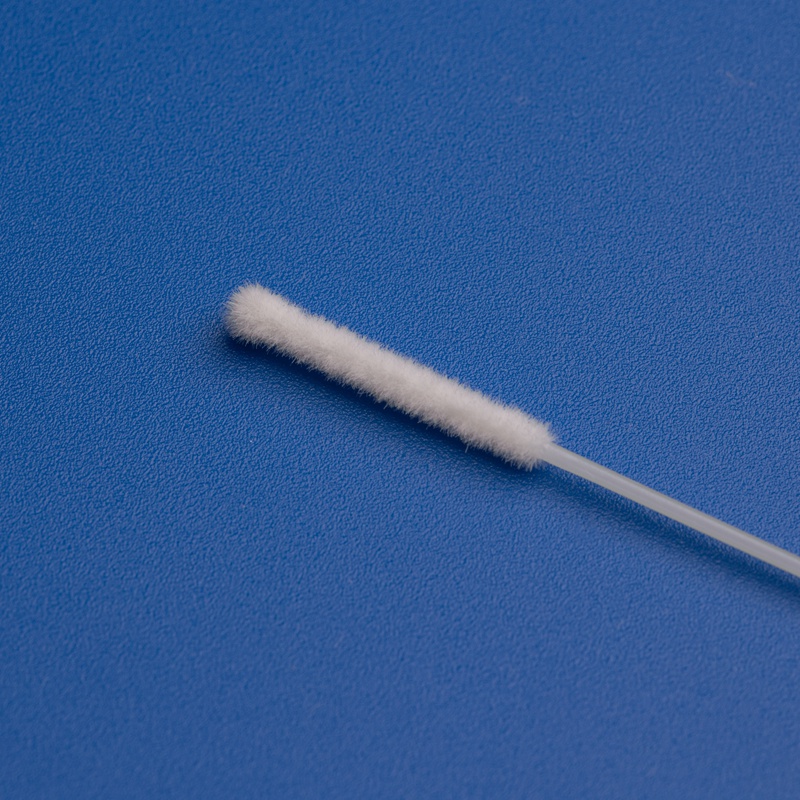
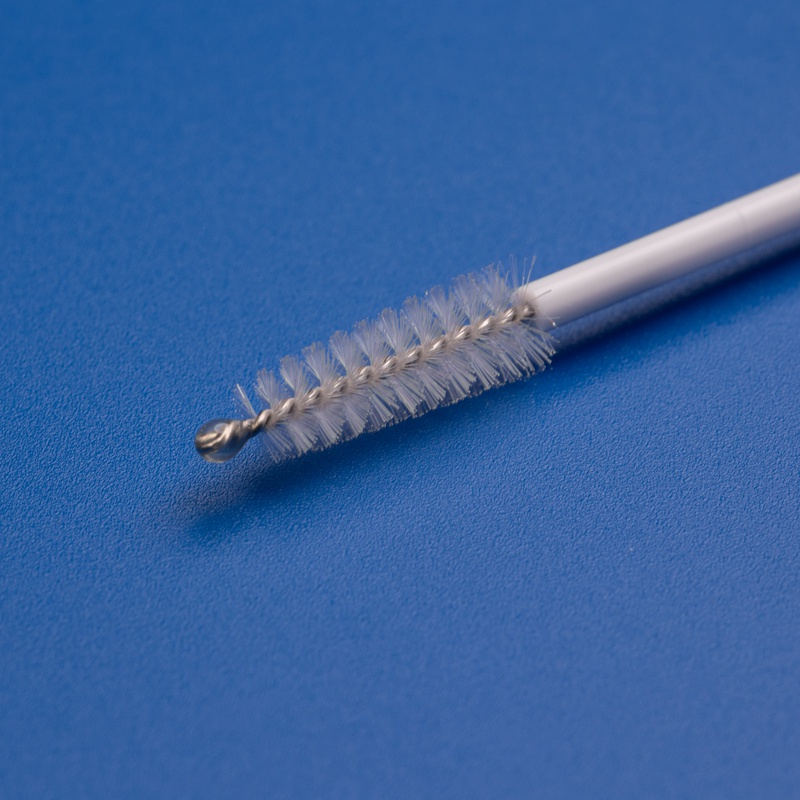
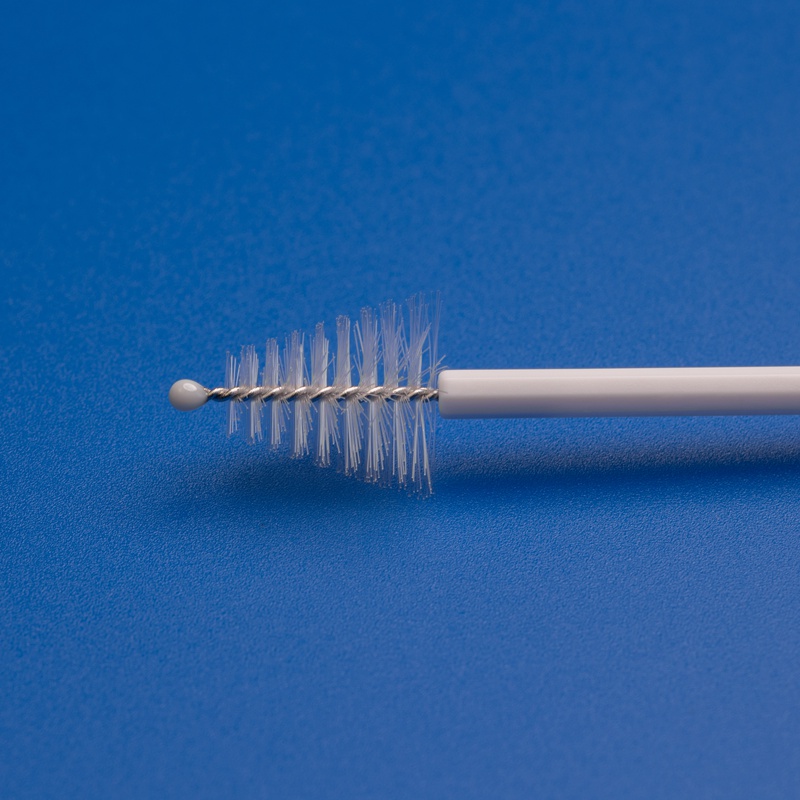
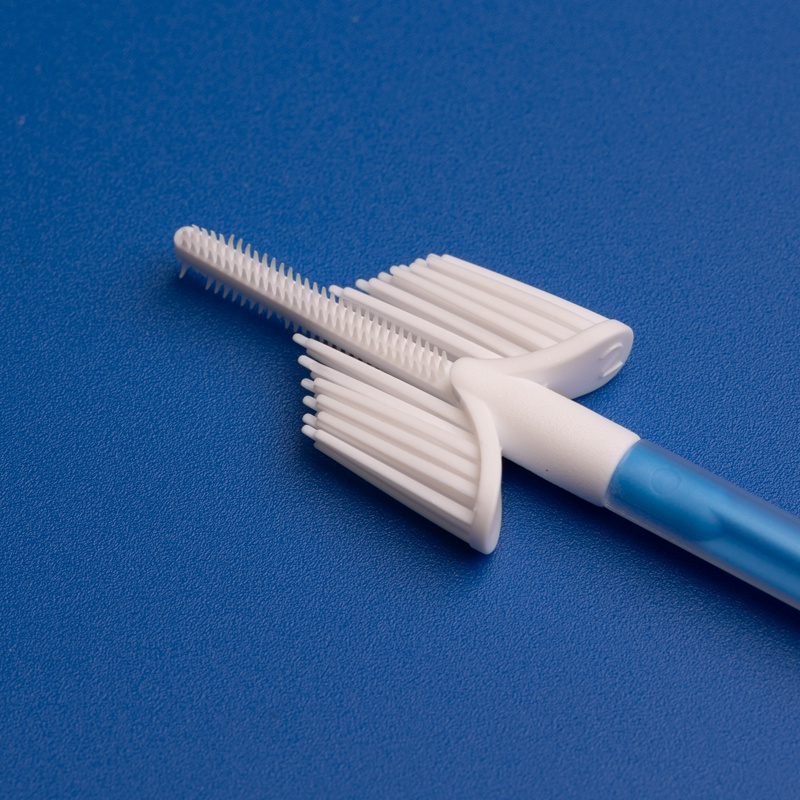
A cervical cytology brush typically features slender bristles designed to collect cells from the endocervical canal and adjacent transformation zone. It is often selected when physicians want more targeted access and tactile feedback. Depending on the design, the brush may be used alone or with another spatula-style collection device. A broom sampler generally combines an outer set of flexible arms for ectocervical sampling and a central section that reaches the endocervical area. This integrated design is one reason many clinicians favor it in routine screening workflows.
Within the United States, buyers will encounter several practical variants: sterile single-pack formats for clinic rooms, bulk-packed samplers for large systems, private-label devices for distributors, and cytology kits that bundle the sampler with vial, label, and transport accessories. Material consistency matters because filament resilience, molded tip accuracy, shaft flexibility, break-point reliability, and packaging integrity all affect specimen collection and workflow efficiency.
| Product Type | Typical Design | Best Clinical Fit | Main Strength | Main Limitation | Common U.S. Buyer |
|---|---|---|---|---|---|
| Cervical cytology brush | Narrow bristle head with flexible stem | Targeted endocervical sampling | Focused cell collection | May require more technique sensitivity | OB-GYN specialists |
| Broom sampler | Central bristles with lateral arms | Routine Pap and liquid-based cytology | Fast all-in-one collection | Less targeted in difficult anatomy | High-volume screening clinics |
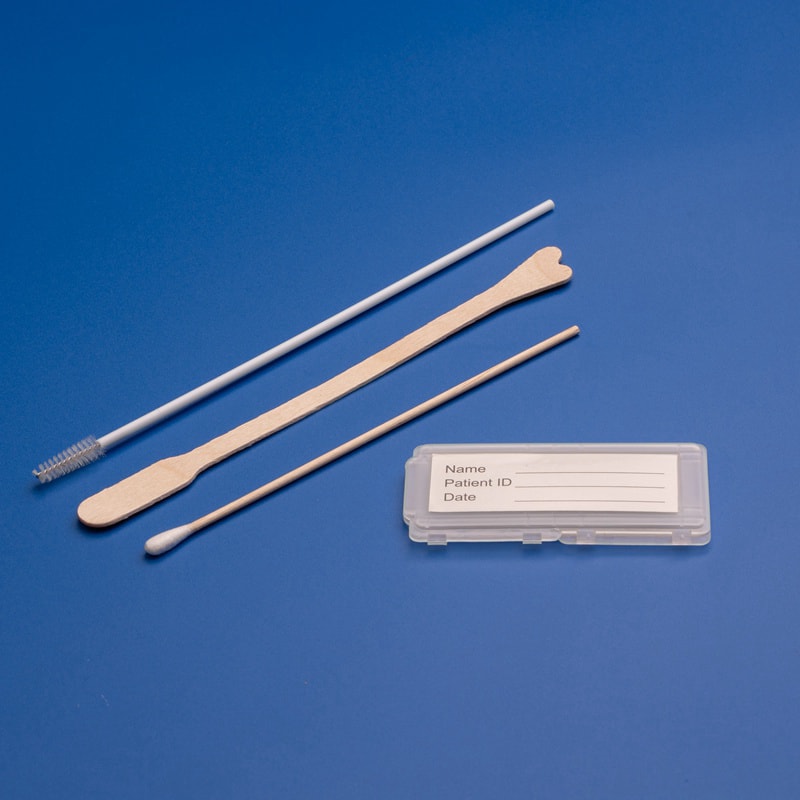
| Brush plus spatula set | Two-device collection protocol | Protocols needing separate zones | Broad sampling coverage | Longer procedure time | Hospital-based practices |
| Sterile individual sampler | Peeled pouch single unit | Exam room convenience | Infection control and traceability | Higher packaging cost | Private practices |
| Bulk-packed sampler | Multi-unit case packs | Central supply use | Lower unit cost | Requires inventory control | IDNs and distributors |
| OEM private-label kit | Customized branding and pack-out | Distributor brand expansion | Margin and brand control | Needs forecasting discipline | Regional dealers and brand owners |
The table highlights why the decision is rarely about one device being universally better. It is more often about matching collection geometry and packaging format to workflow, training level, patient population, and cytology protocol.
Brush vs Broom: Practical Pros and Cons
The core difference between a cervical cytology brush and a broom sampler is how each device balances precision, ease, and workflow speed. A brush often excels when the clinician specifically wants endocervical sampling and is comfortable with a more targeted technique. A broom sampler tends to simplify routine collection by combining broad cervical contact into a single motion, which can reduce variation across large teams.
Brush advantages include precise engagement with the canal, useful performance in selected repeat-screening cases, and a familiar feel for clinicians trained on brush-based collection. Brush drawbacks include possible under-coverage of the ectocervix unless paired with another device, technique dependency, and potential inconsistency across less experienced users. Broom advantages include procedural speed, simplified training, broad coverage, and strong fit for large-scale preventive screening. Broom drawbacks include less targeted access in some anatomically narrow or stenotic cases and occasional clinician concern that one device may not fully replace a two-step method in every patient group.
Patient comfort is also relevant. Many clinicians report that softer, well-balanced broom designs can support a smoother routine exam, but comfort is not determined by device type alone. Head shape, polymer flexibility, bristle finish, speculum selection, and operator technique all influence the patient experience. For procurement teams, this means trial evaluations with actual clinical users are often more valuable than catalog comparison alone.
| Evaluation Factor | Cytology Brush | Broom Sampler | Who Benefits Most | U.S. Procurement Note | Operational Impact |
|---|---|---|---|---|---|
| Endocervical targeting | Strong | Moderate to strong | Specialist clinicians | Useful for nuanced protocols | Can improve targeted collection |
| Routine screening speed | Moderate | Strong | High-volume clinics | Good for standardized workflows | Shorter room turnover |
| Training simplicity | Moderate | Strong | Multi-provider groups | Lower onboarding friction | Reduces user variability |
| Complex anatomy use | Strong | Variable | Gynecology specialists | Keep brush option in formulary | Supports difficult cases |
| All-in-one convenience | Limited | Strong | Office-based screening teams | Common choice for routine stock | Fewer device steps |
| Private-label potential | Strong | Strong | Distributors and importers | Depends on molding and packaging partner | Supports brand expansion |
This comparison table is useful for purchasing teams because it converts clinical differences into operational outcomes, helping buyers evaluate what matters most in a specific U.S. healthcare setting.
Industry Demand by U.S. End-Use Sector
Demand for cervical collection devices in the United States is concentrated in women’s health settings, but the intensity of demand differs by sector. Large health systems focus on standardization and compatibility. Public health screening programs prioritize affordability and dependable resupply. Independent OB-GYN practices value clinician preference and patient throughput. Laboratories and kit assemblers emphasize device uniformity, packaging traceability, and contract supply stability.
The bar chart indicates that independent OB-GYN clinics and hospital systems account for the most consistent demand, while distributors also represent a major purchasing channel because they aggregate needs across local practices and regional accounts.
Buying Advice for United States Buyers
If you are buying for a U.S. clinic or distribution business, start with the collection protocol rather than the unit price. Confirm whether your physicians prefer broom-only collection, brush-led sampling, or a dual-device method. Then review compatibility with the liquid-based cytology system already in use. Even a technically sound device can create friction if the transfer process, shaft break point, or packaging flow does not match current staff habits.
Buyers should also validate sterilization records, lot traceability, packaging durability, and complaint handling procedures. In the United States, supplier responsiveness matters because a small issue with molded dimensions or pouches can affect thousands of procedures across distributed sites. It is smart to request samples for clinical evaluation in several settings: high-volume urban clinics, specialist gynecology offices, and community screening environments. This reveals whether the device performs consistently across patient populations and operator styles.
When sourcing through distributors, negotiate not only price but also stocking strategy, lead time, private labeling options, and emergency replenishment terms. Import-based supply can be very competitive, but buyers should ask where buffer inventory is held and how long replenishment takes during peak periods or port delays. Domestic warehousing in regions such as Southern California, Texas, New Jersey, or Illinois can materially reduce risk.
| Buying Criterion | Why It Matters | Brush Priority | Broom Priority | What to Request from Supplier | Buyer Risk if Ignored |
|---|---|---|---|---|---|
| Specimen adequacy history | Supports test reliability | High | High | Validation data and user feedback | Repeat collections |
| Clinician usability | Affects consistency | High | High | Trial kits and demos | Training burden |
| Packaging format | Impacts room flow and waste | Medium | High | Pack specs and carton dimensions | Inventory inefficiency |
| Lead time reliability | Prevents shortages | High | High | Production and warehouse plan | Procedure disruption |
| OEM and labeling flexibility | Supports channel branding | High | High | Artwork, MOQs, regulatory docs | Lost market opportunity |
| Complaint response process | Protects continuity and compliance | High | High | CAPA and after-sales workflow | Slow issue resolution |
This table turns sourcing questions into a practical checklist. It is especially useful for U.S. procurement teams comparing a domestic catalog brand with an OEM manufacturer or import partner.
Industries and Applications
Cervical cytology brushes and broom samplers serve more than one narrow clinical niche. Their primary application is cervical cancer screening, but actual purchasing demand comes from several interconnected industries. Acute care hospitals use them in outpatient women’s health departments. Physician groups use them in routine annual exams and follow-up visits. Public health agencies use them in subsidized screening and mobile outreach. Reference laboratories and kit assemblers may procure them for contract-packaged testing solutions. Telehealth-adjacent women’s health brands exploring clinician-supported collection programs also influence future device design and packaging.
Applications include conventional Pap smear workflows, liquid-based cytology, co-testing with HPV, repeat collection after inadequate specimens, post-treatment follow-up, and gynecology service lines in fertility and surgical practices. In each case, the sampling device is one small component in a much larger quality chain, but it strongly affects specimen adequacy, clinician satisfaction, and the economics of repeat visits.
Case Studies from the U.S. Market
A multisite OB-GYN group in Texas switched from a mixed brush-and-spatula workflow to a standardized broom sampler for routine screening across 24 providers. The practice reduced exam-room setup complexity, shortened average collection time, and improved onboarding for newly hired nurse practitioners. It retained a smaller inventory of cytology brushes for providers handling postmenopausal or anatomically difficult cases. The result was not that broom samplers replaced brushes in every scenario, but that segmentation improved both consistency and clinician confidence.
A community health network in California serving diverse patient populations near Los Angeles and the Inland Empire evaluated lower-cost import options after a period of domestic supply volatility. The network found that price alone was not decisive. The winning supplier offered stable pouch quality, lot traceability, responsive complaint follow-up, and local distributor stocking. This reduced backorder risk and prevented staff from mixing multiple collection techniques during the same quarter.
A regional distributor in the Midwest built a private-label women’s health line by partnering with an overseas manufacturer capable of OEM pack-out, custom labeling, and regulatory document support. By stocking in Illinois and shipping to clinics in Ohio, Michigan, Indiana, and Wisconsin, it expanded margins while preserving service levels. The key lesson was that international manufacturing can work well in the United States when there is credible quality evidence and a local service framework rather than remote transactional sales.
Local and Active Suppliers Serving the United States
The supplier landscape in the United States includes direct manufacturers, multinational medical device firms, specialist women’s health brands, contract packaging partners, and import-based OEM producers. Buyers should compare not only product shape but also service model, technical documentation, warehouse strategy, and experience supporting healthcare channels in the U.S. market.
| Company | Service Region | Core Strengths | Key Offerings | Best Fit Buyer | Practical Notes |
|---|---|---|---|---|---|
| CooperSurgical | Nationwide United States | Strong women’s health portfolio and clinical presence | Cervical collection devices, cytology-related consumables | Hospitals and OB-GYN groups | Trusted brand with broad account coverage |
| Rovers Medical Devices | United States via distribution networks | Known for cervical sampling specialization | Broom-style and cytology collection devices | Clinics valuing established sampling formats | Frequently considered in screening comparisons |
| Medgyn Products | United States and international | Broad gynecology product range | Brushes, samplers, speculums, procedure accessories | Gynecology-focused distributors | Good fit for bundled women’s health sourcing |
| Puritan Medical Products | United States | Domestic manufacturing reputation in specimen collection | Sampling swabs and medical collection consumables | Buyers preferring U.S.-made sourcing | Often evaluated for domestic supply security |
| Cardinal Health | Nationwide United States | Distribution scale and private-label capability | Clinical consumables and medical supply distribution | Health systems and large clinics | Strong logistics and contract purchasing channels |
| McKesson | Nationwide United States | Massive distribution infrastructure | Medical consumables sourcing and supply management | Office-based practices and systems | Useful for integrated replenishment programs |
| Jiangsu Hanheng Medical Technology Co., Ltd. | United States through export and channel partnerships | Large-scale OEM/ODM manufacturing and gynecology consumables | Cervical samplers, sampling brushes, spatulas, Pap smear kits | Distributors, brand owners, bulk buyers | Competitive for private-label and volume programs |
This supplier table is intended as a practical screening tool. It helps buyers decide whether they need a branded clinical partner, a broad-line distributor, or a manufacturing partner for custom or higher-volume procurement.
Supplier Comparison by Product and Service Model
Different suppliers compete on different dimensions. Some win through clinician recognition and field training support. Others win through broad catalog availability and contract coverage. Manufacturing-led suppliers can be highly attractive when the buyer needs custom packaging, regional distribution partnerships, or private-label development for the U.S. market.
The area chart reflects a realistic trend shift: broom samplers gain share in routine standardized screening, while brushes remain important in specialist-driven and selective-use scenarios rather than disappearing from the market.
The comparison chart shows why some U.S. buyers run dual sourcing strategies. Branded domestic suppliers often score higher in clinician familiarity, while manufacturing-led international suppliers can outperform on OEM flexibility, private labeling, and bulk cost efficiency.
Our Company in the United States Market
Jiangsu Hanheng Medical Technology Co., Ltd. has become a practical option for U.S. buyers seeking cervical cytology brushes, broom-style samplers, Pap smear kits, and related gynecology consumables because its production system combines a 10,000 square meter Class 100,000 cleanroom, precision injection molding, automated flocking, EO sterilization, and end-to-end inspection under certifications and registrations that align with international procurement requirements, including ISO9001, ISO13485, EU CE pathways, U.S. FDA-related approval positioning, UK MHRA registration, and NMPA documentation; this gives distributors, hospital suppliers, and brand owners evidence that the devices are made to a controlled, auditable standard rather than simple low-cost export assumptions. For cooperation, the company supports wholesale supply, direct export, OEM and ODM development, custom packaging, labeling, and regional distribution arrangements, allowing U.S. importers, dealer networks, private-label brands, healthcare groups, and even smaller specialized buyers to choose a model that fits their market strategy. Through its established export experience to more than 130 countries, rapid 7 to 21 day bulk shipment capability, regulatory document support, and responsive sales coordination for technical files, batch records, and after-sales claims, the company demonstrates that it serves the U.S. market as a long-term operating partner rather than a distant factory; buyers can review product categories via the product catalog, learn more on the company overview, and request commercial or technical support through the U.S. inquiry channel.
How to Choose Between Brush and Broom by Scenario
If your facility runs high daily screening volume with mixed provider experience, broom samplers are usually the safer default because they streamline collection and reduce training variability. If your physicians frequently manage postmenopausal patients, difficult anatomy, repeat inadequate samples, or protocol-driven endocervical emphasis, maintaining a cytology brush option is wise. Many successful U.S. buyers do not force a single-device rule; they standardize on a primary broom product and keep a secondary brush product in controlled stock for specialist use.
For distributors, the choice may depend on channel strategy rather than only clinical preference. Broom samplers can be easier to position into broad routine-screening accounts. Cytology brushes may open opportunities with specialist gynecology customers, academic medical centers, and bundled women’s health portfolios. If private labeling is part of the plan, evaluate mold consistency, lot coding, carton optimization, and artwork management as carefully as you evaluate the sampler head itself.
2026 Trends: Technology, Policy, and Sustainability
Looking toward 2026, three major trends are likely to influence the U.S. cervical sampling device market. The first is technology integration. Buyers will increasingly expect devices optimized for modern liquid-based cytology and HPV testing workflows, with attention to break-point reliability, transfer efficiency, and reduced inadequate specimen rates. More suppliers will market evidence around bristle geometry, polymer performance, and compatibility with automated lab systems.
The second trend is policy and procurement resilience. Health systems and public programs will continue to diversify supplier bases to avoid concentration risk. This favors manufacturers that can provide transparent regulatory files, audit-friendly production records, and either domestic stock or dependable import replenishment through major U.S. ports and inland warehouses. Procurement teams will ask more detailed questions about batch traceability, sterilization validation, and contingency inventory.
The third trend is sustainability. Although sterile single-use medical devices will remain necessary, healthcare providers are becoming more sensitive to packaging waste, carton efficiency, and freight footprint. Suppliers that reduce excess plastic, optimize shipper density, and support cleaner production methods without compromising sterility may gain a commercial edge. In practice, sustainability in this category is likely to be less about reusable devices and more about better materials management, leaner packaging design, and more efficient global logistics.
FAQ
Is a broom sampler better than a cervical cytology brush?
Not universally. In the United States, broom samplers are often better for routine, high-volume screening because they are easy to use and cover a broad area. Cytology brushes can be better when targeted endocervical sampling is the priority.
Do U.S. clinics usually keep both products?
Yes, many do. A common strategy is to standardize on a broom sampler for everyday screening while keeping cytology brushes available for specialist use or more complex patient anatomy.
What matters most when comparing suppliers?
Beyond price, focus on specimen collection consistency, packaging quality, lead time, regulatory documentation, complaint handling, and whether the supplier can support your exact U.S. distribution or clinical workflow.
Are international manufacturers suitable for the United States market?
They can be, especially when they provide recognized certifications, technical files, stable quality systems, OEM capability, and dependable pre-sales and after-sales support. Many U.S. distributors use international manufacturing successfully when service structure is strong.
Which buyers usually prefer OEM or private-label options?
Regional distributors, dealer networks, women’s health brands, and some healthcare supply companies often prefer OEM or private label so they can control branding, packaging, and pricing strategy.
Will brushes disappear as broom samplers grow?
No. The likely U.S. trend through 2026 is broader broom use in routine screening while brushes remain clinically relevant for targeted or specialist-driven applications.

Jiangsu Hanheng Medical Technology Co., Ltd.
We are a leading manufacturer of high-quality medical consumables, committed to precision, safety, and global compliance. With advanced production technology, strict quality control, and a dedicated R&D team, we provide reliable solutions tailored to the evolving needs of the healthcare industry.

.jpg)