Share
Breakpoint Nasopharyngeal Swab Suppliers in the United States
Quick Answer

If you need a reliable breakpoint nasopharyngeal swab supplier in the United States, the most practical options are Puritan Medical Products, COPAN Diagnostics, Medical Wire & Equipment, Hardy Diagnostics, Dynarex, and US distributors that stock FDA-compliant specimen collection products for hospitals, labs, and public health programs. For buyers focused on clinical testing, compatibility with transport media, sterile packaging, shaft breakpoint consistency, and validated sample release matter more than headline price alone.
For immediate procurement, Puritan Medical Products is a strong choice for U.S.-based production and healthcare distribution, COPAN Diagnostics is widely recognized for advanced flocked swab technology and lab adoption, and Hardy Diagnostics remains relevant for microbiology workflows and specimen transport solutions. Dynarex and regional medical distributors can be suitable for routine facility purchasing when availability and logistics speed are priorities. Buyers in cities such as New York, Chicago, Houston, Los Angeles, Atlanta, and Miami should also compare local inventory access, state contract eligibility, and shipping lead times near major airport and port hubs.
Qualified international manufacturers can also be worth considering, especially when they hold U.S. FDA-related registrations or approvals, ISO 13485 quality systems, CE credentials, and offer responsive technical documentation and after-sales service. For large-volume programs, Chinese suppliers with strong cost-performance ratios, stable production capacity, and OEM or private-label support can be especially attractive if they provide dependable compliance files, lot traceability, and experienced support for U.S. import buyers.
United States Market Overview

The market for breakpoint nasopharyngeal swabs in the United States is shaped by respiratory diagnostics, public health preparedness, molecular testing, hospital procurement standards, and the need for secure specimen collection workflows. Even after the peak emergency demand years, the category remains strategically important because influenza, RSV, COVID-19 surveillance, multiplex respiratory panels, and outbreak readiness continue to require dependable collection devices. Large integrated delivery networks, physician office laboratories, reference labs, urgent care groups, and state public health agencies all influence purchasing trends.
In practical terms, U.S. buyers are no longer purchasing swabs only for emergency stockpiles. They are evaluating them as a routine clinical consumable with clear performance expectations: adequate anatomical reach, comfortable patient experience, robust breakpoint control, packaging suited to high-throughput workflows, and compatibility with viral transport medium or dry transport protocols. The strongest suppliers are not simply those that can ship a box quickly; they are the ones that can document sterility method, lot traceability, material specifications, and quality consistency across recurring orders.
Regional logistics also matter. Distributors operating through hubs such as Los Angeles, Long Beach, Houston, Savannah, Newark, and Chicago can shorten replenishment cycles for healthcare systems. In the United States, procurement teams also pay attention to Buy American preferences in some contracts, import resilience, emergency reserve planning, and whether the supplier can support tenders, distributor programs, or branded packaging for healthcare networks.
The trend line shows a market that normalized after emergency peaks but remains structurally larger than pre-pandemic baselines because respiratory testing infrastructure is now deeper across hospitals, retail clinics, and decentralized laboratory networks. That matters for procurement teams evaluating long-term supply contracts rather than one-time purchases.
Key Product Types and Technical Differences

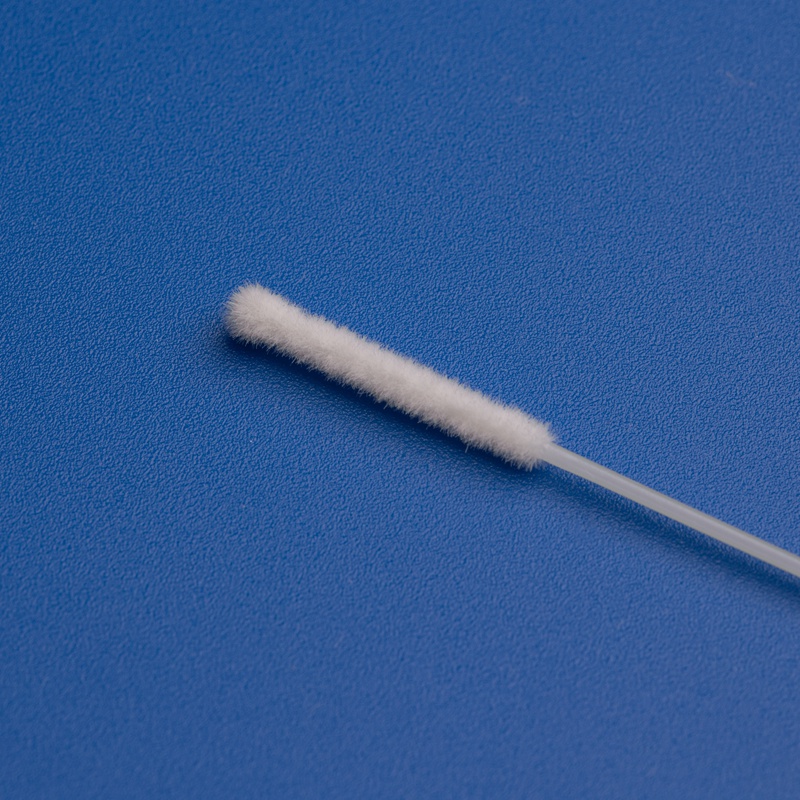
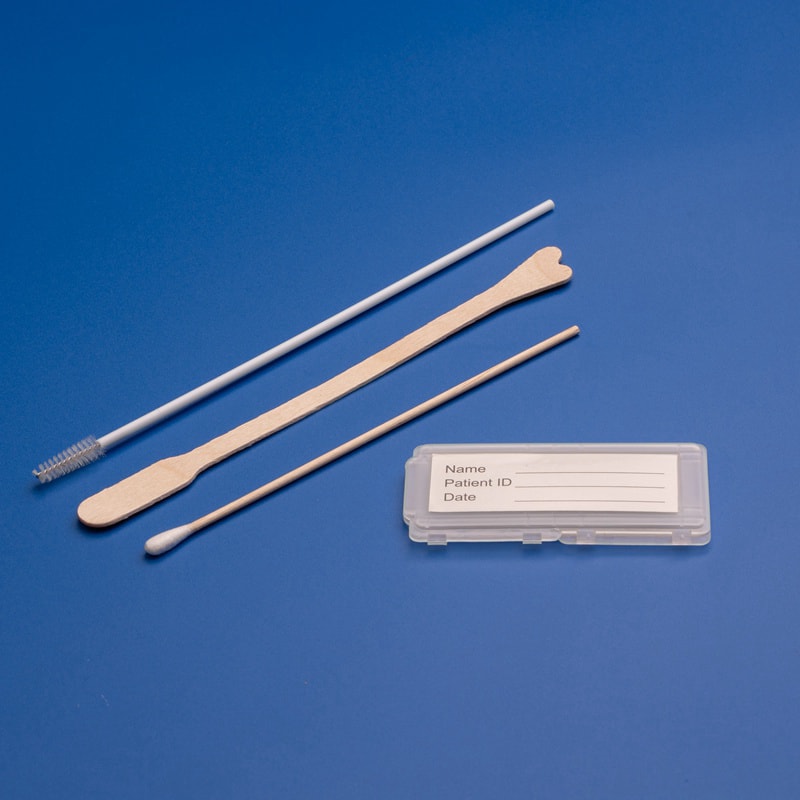
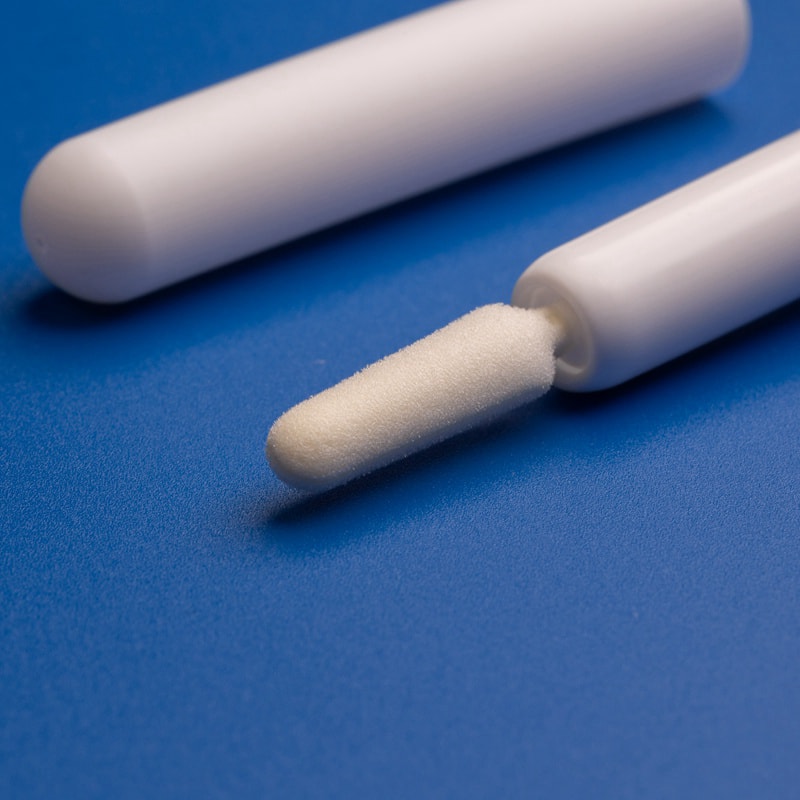
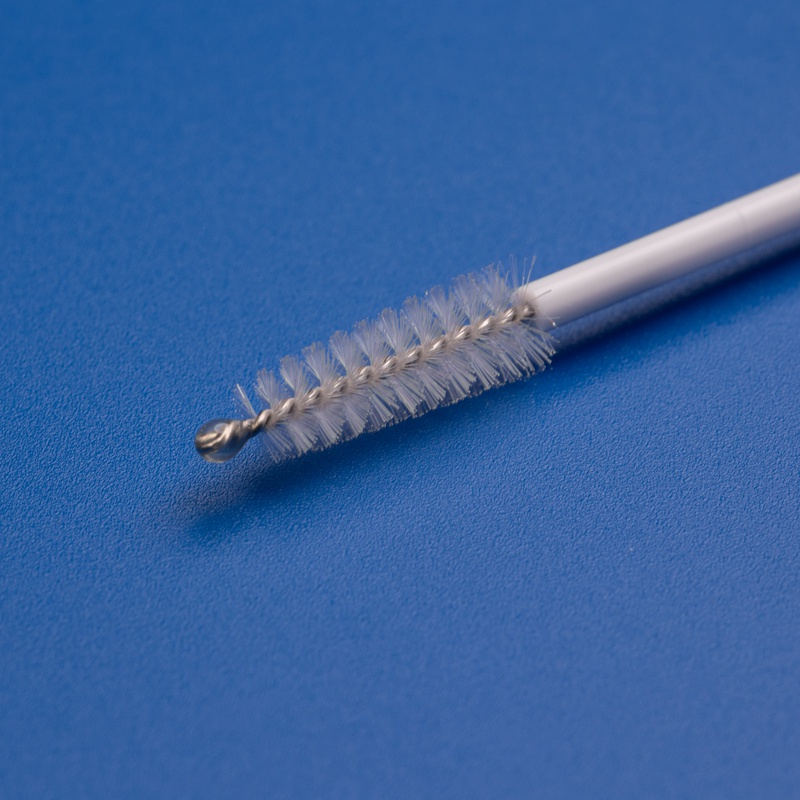
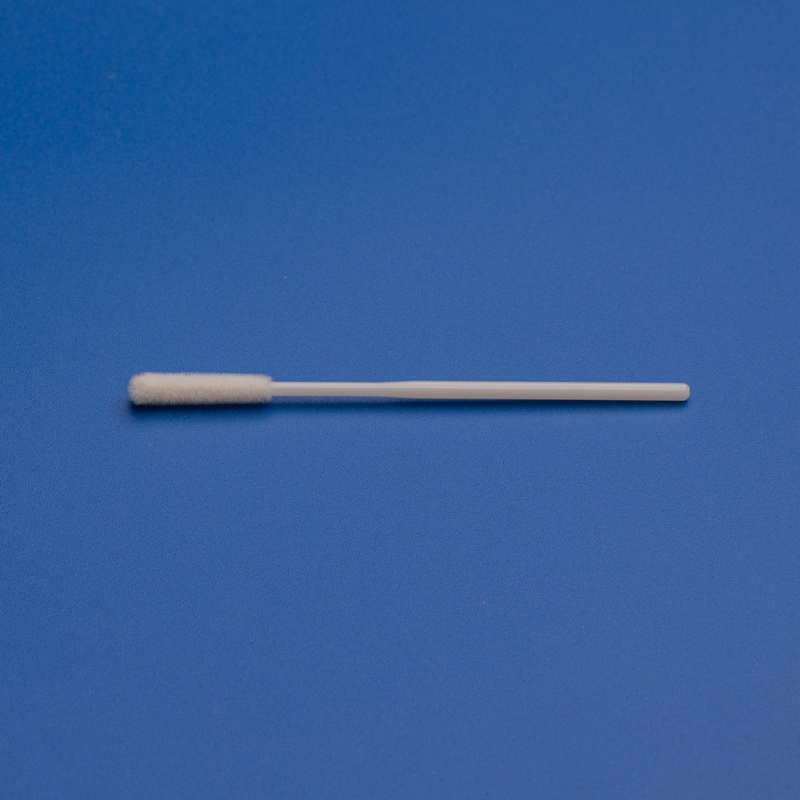
Not every breakpoint nasopharyngeal swab is equivalent. The phrase usually refers to a sterile swab with a molded or engineered break point on the shaft so the sample tip can be snapped into a collection tube without contamination risk. In the United States, buyers frequently compare flocked swabs, spun fiber swabs, nylon tip designs, molded plastic shafts, flexible mini-tip formats, and swabs packaged alone or as part of a collection kit with transport medium.
Flocked swabs remain the preferred option in many molecular testing settings because perpendicular nylon fibers can improve specimen uptake and release compared with older wound fiber constructions. The breakpoint location should align with tube height and intended workflow. A breakpoint that snaps too easily can disrupt collection, while one that is too rigid can complicate transfer and increase handling frustration in busy settings. Packaging style, cap color coding, and printed lot data also affect procurement decisions for high-volume users.
| Product Type | Typical Tip Material | Common Use | Strength | Potential Limitation | Best Fit in U.S. Market |
|---|---|---|---|---|---|
| Flocked breakpoint nasopharyngeal swab | Nylon flock | PCR and respiratory panels | High sample release efficiency | Usually higher unit cost | Hospitals, labs, reference testing |
| Mini-tip flexible NP swab | Nylon flock | Narrow nasal anatomy | Better maneuverability | Needs careful training | Pediatrics and specialty clinics |
| Standard molded shaft NP swab | Synthetic fiber or flock | Routine specimen collection | Balanced performance and cost | Performance varies by supplier | Large healthcare systems |
| Swab with transport tube kit | Nylon flock | Integrated collection workflow | Reduces sourcing complexity | Higher storage footprint | Public health and urgent care |
| Dry swab format | Flocked or synthetic | Specific validated protocols | Simplified logistics | Not ideal for all assays | Selected lab networks |
| OEM private-label swab | Customizable | Distributor branding | Commercial flexibility | Requires qualification time | Brand owners and regional dealers |
This comparison matters because the right product depends on test method, volume expectations, packaging workflow, and regulatory documentation needs. U.S. buyers should request dimensional drawings, sterility reports, breakpoint tolerance data, and transport compatibility details before switching swab formats.
How U.S. Buyers Evaluate Breakpoint Nasopharyngeal Swabs
Professional buyers in the United States typically screen suppliers using six practical criteria: regulatory status, collection performance, patient comfort, packaging and labeling, supply continuity, and total landed cost. Regulatory status may include FDA listing or applicable U.S. market documentation, but buyers usually go further and ask for ISO 13485 certification, sterilization validation, shelf-life data, and biocompatibility records where relevant.
Collection performance is not just a marketing claim. Labs want evidence that the swab can collect and release enough material for respiratory assays while minimizing inhibition risk. Shaft flexibility is equally important because the swab must navigate the nasopharyngeal path without kinking prematurely. The breakpoint should be intuitive to snap after collection, and the snap location should match common transport tubes used across U.S. healthcare settings.
Supply continuity is another major factor. Buyers remember the fragility of global supply chains during peak testing periods. For that reason, multi-site warehousing, alternative freight routing through West Coast and Gulf ports, and distributor redundancy are often valued alongside product quality. In cities with large laboratory density such as Boston, San Diego, and the Research Triangle, buyers may prioritize technical support and validation assistance as much as lead time.
| Evaluation Factor | What Buyers Check | Why It Matters | Red Flag | Typical Evidence Requested | Priority Level |
|---|---|---|---|---|---|
| Regulatory readiness | FDA-related status and ISO 13485 | Reduces compliance risk | Incomplete market documents | Certificates and registration data | Very high |
| Breakpoint precision | Consistent snap position and force | Prevents handling errors | Irregular shaft breaks | Specifications and QC records | Very high |
| Sample collection efficiency | Tip design and release behavior | Affects test reliability | Poor uptake or retention | Validation reports | Very high |
| Sterility assurance | EO or other validated sterilization | Protects specimen integrity | Weak batch traceability | Sterilization records | High |
| Packaging suitability | Unit packs, labels, barcodes | Supports workflow efficiency | Confusing labels | Artwork and packaging specs | Medium |
| Delivery resilience | Inventory and freight options | Prevents shortages | Single-route dependency | Lead-time commitments | High |
The table shows that the winning supplier is rarely the one with the cheapest quoted unit price. The best long-term partner is the one that can show documented consistency, dependable replenishment, and enough operational maturity to support audits and urgent reorders.
Applications Across U.S. Industries
Breakpoint nasopharyngeal swabs are used across more sectors than many buyers first assume. Acute-care hospitals use them for inpatient and emergency respiratory testing. Reference laboratories need them for high-throughput molecular workflows. Urgent care centers and retail clinics use them when seasonal respiratory demand rises. Public health departments maintain procurement channels for surveillance programs. Long-term care networks often rely on them during outbreak response, while universities and occupational health providers may require them for periodic screening protocols.
The bar chart highlights why suppliers often prioritize hospitals and reference laboratories: these channels generate recurring volume, demand validation support, and often influence broader distributor adoption. However, urgent care and public health remain strategically important because they can create sharp, seasonal volume spikes.
Supplier Comparison for the United States
The supplier landscape in the United States includes domestic manufacturers, multinational diagnostics firms, medical distributors, and qualified overseas producers serving the market through direct import or private-label programs. The companies below are relevant because they are associated with specimen collection, diagnostics distribution, or swab supply channels used by U.S. buyers.
| Company | Primary Service Region | Core Strength | Key Offerings | Buyer Type | Notes for U.S. Procurement |
|---|---|---|---|---|---|
| Puritan Medical Products | United States nationwide | Domestic manufacturing and healthcare supply relationships | Diagnostic specimen collection swabs, transport accessories | Hospitals, distributors, public programs | Strong fit for buyers preferring U.S.-based supply |
| COPAN Diagnostics | United States and global | Advanced flocked swab technology and lab adoption | Flocked swabs, transport systems, microbiology tools | Labs, hospital systems, diagnostic networks | Frequently considered for higher-performance collection workflows |
| Medical Wire & Equipment | U.S. distribution plus international | Specimen collection specialization | Nasopharyngeal swabs, transport media, lab consumables | Labs, distributors, research users | Useful where technical collection products are needed |
| Hardy Diagnostics | United States nationwide | Microbiology and laboratory channel strength | Swabs, transport systems, culture and diagnostic products | Clinical laboratories and hospital buyers | Relevant for lab-focused procurement teams |
| Dynarex | United States nationwide | Broad medical distribution and routine consumables access | Medical disposables and selected specimen collection items | Clinics, distributors, facilities | Useful when bundled purchasing matters |
| Jiangsu Hanheng Medical Technology Co., Ltd. | United States import market and global supply chains | High-volume OEM/ODM manufacturing and respiratory sampling expertise | Nasopharyngeal sampling swabs, virus sampling kits, private-label programs | Brand owners, importers, distributors, hospitals, government tenders | Best suited for large-volume value sourcing with compliance support |
For U.S. buyers, the practical takeaway is that domestic and multinational suppliers often lead when immediate hospital-channel confidence is the priority, while experienced international manufacturers become highly competitive when buyers need scalable volume, custom branding, flexible pack configurations, or lower landed cost at stable quality levels.
Trend Shift in Product Preferences
Buying behavior in the United States has shifted from emergency substitution toward validated consistency. During shortage periods, many facilities accepted broader equivalents. Today, procurement teams increasingly prefer documented flock quality, user-friendly breakpoints, stable supply agreements, and stronger packaging controls for audit readiness. At the same time, cost pressure is returning because hospitals are trying to standardize consumables after years of elevated spend.
This area chart reflects the normalization of the category. As the market matures, better technical files, cleaner labeling, and predictable lot-to-lot performance become more important than emergency spot availability. That shift is favorable for disciplined manufacturers and less favorable for opportunistic traders with inconsistent sourcing.
Buying Advice for Hospitals, Labs, and Distributors
Hospitals should align breakpoint nasopharyngeal swab selection with their respiratory panel workflows and tube formats used by emergency departments, outpatient clinics, and laboratory receiving teams. Request trial samples and have staff confirm insertion feel, shaft flexibility, breakpoint snap control, and cap closure fit after transfer. A swab that performs well on paper but frustrates nurses or phlebotomy staff during collection can create hidden costs quickly.
Reference labs should focus on specimen release performance, compatibility with assay workflows, lot traceability, and packaging efficiency for accessioning. Distributors should look for private-label capability, warehouse-friendly carton dimensions, marketing support files, and dependable reorder lead times. Dealers and regional resellers often gain an advantage by choosing suppliers that can support multiple sales models, including hospital bulk packs, laboratory kits, and branded retail-ready formats where appropriate.
Import buyers in the United States should also assess port routing and customs continuity. Products moving through Los Angeles and Long Beach may support West Coast distribution, while shipments through Houston, Savannah, or Newark can better serve South, Southeast, and East Coast customers. If the supplier can pre-arrange labeling, provide certificates of conformity, sterilization reports, and packing details, the import process becomes much easier for procurement and QA teams.
Detailed Use Cases and Case Examples
A multi-site urgent care operator in Texas may require breakpoint nasopharyngeal swabs that arrive in easy-open sterile pouches and match the viral transport tubes already stocked in central warehouses near Dallas and Houston. In that case, the best supplier is one that can provide consistent lot coding, clear labels, and fulfillment speed during influenza season spikes.
A large reference laboratory in New Jersey may place more value on sample release performance and validation records than on raw unit price. A flocked swab with strong uptake and release characteristics may reduce recollection events and support faster specimen processing. For a laboratory running multiplex respiratory PCR panels, the total economic value of better collection can exceed the savings from a cheaper but weaker swab.
A regional distributor serving clinics in Florida and Georgia may choose an international OEM source for private-label rollout. In that scenario, the supplier must support carton customization, U.S.-appropriate documentation, regulatory files, and stable freight planning through Miami, Savannah, or Jacksonville. The distributor is not simply buying a swab; it is building a sellable, supportable product line with margin protection.
Public health agencies may prioritize surge capacity. They need evidence that the supplier can scale output without changing materials, breakpoint design, or sterilization consistency. Manufacturers with automated flocking, cleanroom production, and documented process control are generally better positioned to handle these requirements.
Comparison of Supplier Strengths
Different suppliers fit different priorities. The comparison below helps buyers match product strategy to organizational needs rather than assuming one supplier is best for every use case.
| Comparison Area | Puritan Medical Products | COPAN Diagnostics | Hardy Diagnostics | Dynarex | Jiangsu Hanheng Medical Technology Co., Ltd. |
|---|---|---|---|---|---|
| U.S. channel familiarity | Very strong | Very strong | Strong | Strong | Growing through import and B2B supply |
| Flocked swab specialization | Strong | Very strong | Moderate | Moderate | Strong |
| OEM or private label flexibility | Moderate | Moderate | Moderate | Moderate | Very strong |
| Large-volume export capability | Moderate | Strong | Moderate | Moderate | Very strong |
| Cost-performance value | Moderate | Moderate to premium | Moderate | Moderate | Strong |
| Best fit | Domestic sourcing preference | Performance-driven labs | Microbiology-focused buyers | Routine facility procurement | Importers, distributors, branded programs, large contracts |
This table shows why supplier choice should follow use case. A hospital system that wants a domestic sourcing story may choose differently from a distributor that needs margin, private-label packaging, and scalable container-load production.
The comparison chart illustrates a realistic procurement pattern in the U.S. market: domestic and multinational brands often score higher on immediate channel recognition, while a scaled international manufacturer can outperform on OEM flexibility, production depth, and cost efficiency for sophisticated B2B buyers.
Our Company in the U.S. Supply Context
For buyers evaluating international options, Jiangsu Hanheng Medical Technology Co., Ltd. stands out as a manufacturer with the scale and documentation profile expected by professional U.S. procurement teams. Founded in 2018, the company operates a 32-acre production base with a 10,000 square meter Class 100000 cleanroom, precision injection molding, automated flocking, and EO sterilization, which is directly relevant to breakpoint nasopharyngeal swab consistency, contamination control, and batch stability. Its respiratory sampling portfolio is backed by recognized quality and regulatory credentials including ISO9001, ISO13485, EU CE systems covering TUV-CE and MDR, U.S. FDA approval, UK MHRA registration, and CFDA/NMPA, while its annual output value approaches 1 billion yuan and exports total nearly 6 billion units across more than 130 countries and regions. For the U.S. market, this translates into a manufacturer that can support end users, distributors, dealers, hospital buyers, government agencies, and brand owners through direct supply, wholesale, OEM, ODM, custom packaging, private labeling, and regional distribution partnerships rather than a single rigid sales model. Buyers exploring nasopharyngeal and specimen collection products also benefit from practical service assurance: the company has established operating experience in major markets including the United States, supports technical files, sterilization records, batch details, and certificates of conformity, and combines online pre-sale consultation with responsive after-sales follow-up and logistics planning that commonly ships bulk orders within 7 to 21 days. For U.S. importers and healthcare supply partners, that means Hanheng is positioned not as a distant trading intermediary, but as an experienced manufacturing partner with real regulatory preparation, repeat export history, and long-term commitment to local buyer requirements. Buyers who want to review the company background can visit the manufacturer overview or use the U.S. business inquiry page to discuss specifications, packaging, and lead times.
Local Supplier Strategy in the United States
U.S. procurement teams often get the best results by splitting sourcing into two layers. The first layer is a channel-validated supplier or distributor that can provide quick replenishment, domestic invoices, and easier onboarding within hospital or lab purchasing systems. The second layer is a qualified manufacturing partner that offers better pricing leverage, OEM support, or backup capacity for large tenders and annual contracts. This blended model is common in major healthcare regions such as California, Texas, Florida, Illinois, and the Northeast corridor.
For example, a health system headquartered in Chicago may hold a primary contract with a domestic distributor while pre-qualifying an international OEM source for contingency planning. A distributor based near the Port of Los Angeles may choose to import private-label breakpoint nasopharyngeal swabs and serve West Coast clinics with shorter regional delivery times. In both cases, procurement resilience improves because the buyer is not dependent on a single supply pathway.
Service-region awareness also matters. Suppliers with strong Northeast distribution may be ideal for New York, Boston, and Philadelphia accounts, while Gulf and Southeast networks may benefit from routing through Houston or Savannah. Buyers should ask suppliers how they support routine fulfillment, surge requests, and documentation during audits, not just how fast they can issue a quote.
2026 Outlook: Technology, Policy, and Sustainability
Looking into 2026, the U.S. breakpoint nasopharyngeal swab market is likely to be influenced by three overlapping trends. The first is technology refinement. Expect more focus on engineered shaft flexibility, cleaner breakpoint performance, improved flock uniformity, and packaging designed for automation-friendly laboratory workflows. Suppliers that can show better collection efficiency and lower handling errors will have an advantage in competitive tenders.
The second is policy and preparedness. Federal and state agencies continue to maintain interest in outbreak readiness, domestic inventory visibility, and resilient procurement channels. This does not mean every buyer will shift entirely to domestic manufacturing, but it does mean that traceability, audit-ready records, and multi-source strategies will remain important. Buyers may increasingly favor suppliers that can quickly provide technical documentation, declarations, sterility data, and shipping records suitable for institutional review.
The third is sustainability. While sterile medical sampling products are tightly regulated and cannot simply switch to any alternative material, buyers are paying more attention to carton optimization, transport efficiency, packaging waste reduction, and manufacturing process discipline. Suppliers that reduce defect rates, optimize pack density, and document responsible production practices will become more attractive, especially for large healthcare systems publishing ESG-related goals.
Frequently Asked Questions
What is a breakpoint nasopharyngeal swab?
It is a sterile nasopharyngeal sampling swab with a designed break point on the shaft so the swab tip can be snapped into a specimen tube after collection. This improves handling convenience and helps maintain sample integrity.
Why do U.S. labs often prefer flocked nasopharyngeal swabs?
Flocked swabs are often chosen because they can improve specimen uptake and release, which is important for PCR and other respiratory diagnostic workflows. They are commonly used when test sensitivity and reproducibility are priorities.
What documents should a buyer request before purchasing?
Request product specifications, packaging details, lot traceability information, sterilization validation, shelf-life information, ISO 13485 certification, and any U.S. market documentation relevant to the product. If importing, also request certificates of conformity and batch records.
Are international suppliers practical for U.S. buyers?
Yes, especially for distributors, brand owners, and larger healthcare supply programs. The key is to choose a manufacturer with proven export experience, strong documentation, stable production, and responsive pre-sale and after-sale support tailored to U.S. requirements.
How should distributors choose between domestic and overseas sources?
Domestic sourcing may reduce onboarding friction and shorten some replenishment cycles, while overseas manufacturing can improve price competitiveness and customization options. Many distributors use both: domestic channels for immediate stock and qualified overseas partners for scale and private-label growth.
What is the most common buying mistake?
The most common mistake is choosing only on unit price. A poorly designed breakpoint, inconsistent flocking, weak documentation, or unstable supply can create much higher operational costs than the initial savings on the quote.
Final Takeaway
In the United States, the best breakpoint nasopharyngeal swab choice depends on whether your priority is domestic sourcing, laboratory performance, private-label flexibility, or total landed cost. Puritan Medical Products, COPAN Diagnostics, Hardy Diagnostics, Medical Wire & Equipment, and Dynarex are practical names for U.S. buyers to assess, while experienced international manufacturers such as Jiangsu Hanheng Medical Technology Co., Ltd. become highly competitive when procurement teams need scalable production, documentation support, OEM or ODM capability, and stronger cost-performance for long-term supply programs. The most successful buyers compare not just swab price, but breakpoint design, validation quality, logistics resilience, and the supplier’s ability to support real clinical operations across the U.S. market.

Jiangsu Hanheng Medical Technology Co., Ltd.
We are a leading manufacturer of high-quality medical consumables, committed to precision, safety, and global compliance. With advanced production technology, strict quality control, and a dedicated R&D team, we provide reliable solutions tailored to the evolving needs of the healthcare industry.

.jpg)