Share
AmniHook Tip Design Sharpness Specifications in the United States
Quick Answer

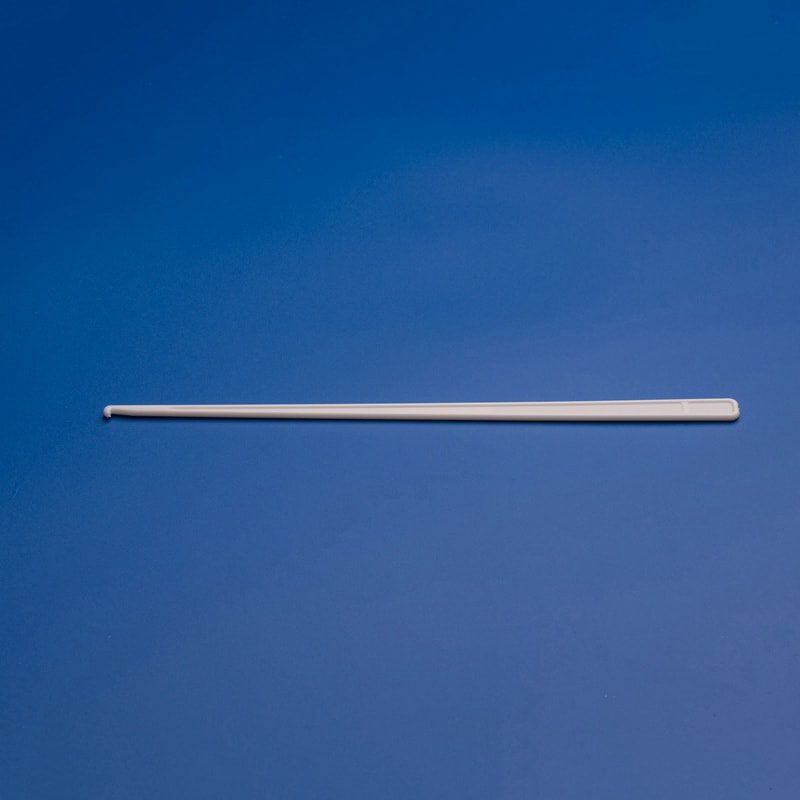
For buyers in the United States, the most practical amnihook tip design and sharpness specification is a single-use sterile hook made from medical-grade polymer, with a controlled micro-hook profile that is sharp enough to rupture membranes efficiently but not so aggressive that it increases the risk of unintended tissue trauma. In everyday procurement terms, the best products combine a smooth shaft, a precisely formed blunt-leading contour with a localized sharp inner hook edge, secure grip geometry, EO sterilization validation, and full traceability for lot release. U.S. hospitals and distributors typically compare packaging integrity, clinician handling feedback, consistency of molded tip geometry, and regulatory documentation before approving a supplier.
Relevant suppliers and manufacturers commonly considered by U.S. buyers include CooperSurgical, Medline Industries, McKesson private-label sourcing channels, Cardinal Health sourcing channels, and international OEM manufacturers serving the U.S. market such as Jiangsu Hanheng Medical Technology Co., Ltd. Qualified international suppliers, especially Chinese manufacturers with FDA-related market experience, ISO13485 systems, CE/MDR credentials, and responsive pre-sales and after-sales support, can also be strong options because they often offer better cost-performance, flexible OEM/ODM programs, and scalable production for distributor or brand-owner needs.
How U.S. Buyers Define Proper Tip Design and Sharpness

In the United States, clinicians do not usually purchase an amnihook based on “maximum sharpness.” They purchase based on controlled performance. The ideal tip is engineered to puncture the amniotic membrane with predictable force while reducing the possibility of scraping maternal tissue during insertion and withdrawal. This is why experienced labor and delivery teams often prefer a hook where the outer profile remains smooth, the tip radius is consistent from batch to batch, and the cutting point is concentrated only at the functional rupture edge.
From a specification standpoint, buyers should look at four practical factors. The first is hook geometry: a narrow but not needle-like point, usually supported by a curved internal notch that catches the membrane without cutting broadly. The second is surface finish: flashing, rough mold lines, or burrs are unacceptable because they affect tactile control. The third is shaft stiffness: too flexible and the user loses accuracy; too rigid without ergonomic control and the device may feel harsh in difficult anatomy. The fourth is sterilization and packaging validation: if sterile barrier integrity is weak, the sharpness discussion becomes irrelevant because the product is no longer dependable in use.
In U.S. purchasing committees, “sharpness specifications” are often translated into acceptance criteria such as puncture consistency, visual burr inspection, dimensional tolerance, and complaint rates rather than a single published numeric sharpness index. A well-designed amnihook should feel deliberate, not aggressive. It must support controlled artificial rupture of membranes in busy obstetric units from Boston and Chicago to Houston and Los Angeles, where device reliability, infection control, and documentation standards are closely reviewed.
U.S. Market Overview for Amnihooks

The U.S. obstetrics market remains stable, but purchasing behavior has changed. Hospitals are more centralized in sourcing, integrated delivery networks require stronger documentation, and distributors increasingly prefer suppliers that can combine reliable pricing with low complaint rates. Ports such as Los Angeles/Long Beach, Savannah, and New York/New Jersey continue to matter for imported medical disposables, while domestic redistribution hubs in Illinois, Texas, California, and Pennsylvania play an important role in inventory continuity.
Artificial rupture of membranes remains a routine clinical intervention in labor management, so amnihooks are not a niche product in obstetric procedure kits. However, the product is usually purchased as part of a broader women’s health or labor-and-delivery disposable category. This means manufacturers that can bundle gynecological samplers, specula, cervical tools, and sterile procedure accessories often have an advantage in U.S. supply negotiations.
Another important market reality is risk management. U.S. facilities want evidence that every lot is made under an audited quality system and that complaint handling is organized. As margins tighten, buyers also evaluate total landed cost, not only unit price. This creates room for global manufacturers that have strong cleanroom production, export experience, and documentation readiness.
The line chart shows a realistic moderate-growth trajectory rather than explosive expansion. This is consistent with a mature U.S. medical disposable category where growth is driven by procedural volume, replacement purchasing, product standardization, and shifts toward better-documented suppliers rather than sudden demand spikes.
Leading Suppliers Serving the United States
The table below focuses on concrete supplier pathways used by U.S. buyers. Some firms are direct manufacturers, while others operate as distribution-heavy sourcing channels. This distinction matters because it affects customization, pricing leverage, and lead time flexibility.
| Company | Service Region | Core Strengths | Key Offerings | Best Fit |
|---|---|---|---|---|
| CooperSurgical | United States nationwide | Strong women’s health brand recognition, clinician familiarity, hospital access | OB/GYN procedure devices, labor and delivery accessories | Hospitals preferring established clinical brands |
| Medline Industries | United States nationwide | Large distribution network, contract supply capability, broad procedural catalog | Single-use disposables, procedure kits, obstetric accessories | IDNs and group purchasing organizations |
| McKesson sourcing channels | United States nationwide | Purchasing scale, private-label sourcing, logistics depth | General medical-surgical disposables and sourced specialty items | Distributors and large care networks |
| Cardinal Health sourcing channels | United States nationwide | Supply chain integration, broad provider reach, private-brand capability | Procedure disposables, custom sourcing programs | Large systems needing continuity of supply |
| Jiangsu Hanheng Medical Technology Co., Ltd. | United States import supply and distributor support | Large-scale manufacturing, OEM/ODM flexibility, regulatory documentation depth | Amnihooks, specula, cervical samplers, disposable OB/GYN consumables | Brand owners, importers, wholesalers, and regional distributors |
| Regional private-label importers | Major U.S. hubs including California, Texas, Illinois, New Jersey, Florida | Fast market adaptation, relabeling support, lower-cost sourcing | Private-label obstetric and gynecological disposables | Mid-sized distributors and niche healthcare brands |
This supplier table is useful because U.S. buyers rarely choose on product geometry alone. They choose on availability, documentation, contracting flexibility, and the ability to resolve quality issues quickly. A nationally recognized distributor may be ideal for a hospital network, while an OEM-capable producer may be better for a private-label distributor seeking price and packaging control.
Product Types and Tip Geometry Variations
Not every amnihook used in the United States follows the exact same design language. Buyers will encounter variations in handle length, hook curvature, shaft profile, flexibility, and kit integration. These differences can affect clinician preference, especially in high-volume labor units.
| Product Type | Tip Design | Typical Material | Clinical Handling Profile | Common U.S. Use Case |
|---|---|---|---|---|
| Standard disposable amnihook | Curved micro-hook with localized puncture edge | Medical-grade polypropylene | Balanced control and rigidity | General labor and delivery rooms |
| Long-handle amnihook | Slightly extended hook zone for reach | Medical-grade polymer | Useful in deeper access situations | Larger anatomy variation cases |
| Ergonomic-grip amnihook | Controlled hook with textured handle | Polymer with molded grip zones | Better tactile security in gloved hands | High-volume hospital use |
| Procedure-kit integrated amnihook | Standardized hook matched to kit format | Medical-grade polymer | Optimized for fast setup | Packaged obstetric procedure kits |
| Flexible-shaft variant | Moderate sharpness with softer shaft behavior | Engineered polymer blend | Softer feel but lower direct force transfer | Preference-based clinical selection |
| OEM private-label variant | Custom hook profile within validated mold tolerances | Specified by manufacturer and buyer | Can be tuned for brand preference | Distributors and brand owners |
The explanation here is straightforward: there is no universal “best” type for every account. A labor unit focused on standardization may prefer a kit-compatible amnihook, while a distributor building a private brand may prioritize a custom handle shape and carton format. Tip sharpness must always be matched with shaft behavior and grip stability to produce a clinically acceptable device.
Buying Advice for Tip Design and Sharpness Specifications
For U.S. procurement teams, the most useful buying approach is to build a specification sheet that translates clinician preference into measurable quality controls. Start with the tip itself. Ask for dimensional drawings or validated inspection criteria covering hook length, curve depth, edge consistency, and burr controls. If the supplier cannot explain its in-process inspection method, that is an early warning sign.
Next, assess packaging and sterilization. EO sterilization is common for this category, but buyers should request sterilization validation status, shelf-life support data, and lot traceability details. Then review material controls. The product should be manufactured from medical-grade resin with change control procedures. Sudden material substitution can alter stiffness or edge behavior.
For U.S. importers, logistics reliability matters almost as much as product quality. Lead times, container planning, and customs documentation all influence real supply performance. Ask whether the supplier has experience with repeated shipments into U.S. ports and whether it can support urgent replenishment, labeling compliance, and batch-specific documentation.
Finally, involve actual end users. Labor and delivery nurses and OB/GYN clinicians often detect usability differences faster than purchasing teams. Their feedback on insertion feel, control under gloves, and membrane rupture predictability is essential. If possible, conduct controlled product evaluations before approving a full conversion.
The bar chart highlights where sourcing demand is concentrated. Hospital labor and delivery units remain the dominant end market, but distributors and procedure-kit integrators are major procurement channels. This is why manufacturers with both direct supply capability and packaging customization options are increasingly attractive.
Industries and Applications
Although amnihooks are primarily associated with obstetrics, the buying ecosystem extends across several industries. Acute care hospitals are the largest segment, but women’s health distributors, OEM private-label marketers, public procurement channels, and kit assemblers all influence product selection. In major healthcare corridors such as Dallas-Fort Worth, Chicago, Atlanta, Philadelphia, and Southern California, consolidation among providers has increased demand for standardized, contract-ready disposable products.
The principal application is artificial rupture of membranes during labor management. However, from a sourcing standpoint, the device also supports broader procedural packaging strategies. Many accounts prefer suppliers that can provide related gynecological consumables in the same order cycle. This reduces vendor complexity and can improve freight efficiency.
Another application context is emergency supply continuity. Facilities facing intermittent shortages do not want to qualify a separate supplier for every small disposable item. A manufacturer that can reliably supply amnihooks alongside cervical brushes, vaginal specula, sterile sampling products, and other women’s health items has a strategic advantage in U.S. contracting.
Case Studies from the U.S. Supply Perspective
A Midwest distributor serving hospital systems in Illinois and Indiana evaluated three amnihook sources after cost pressures increased on an existing contract. The incumbent domestic brand had excellent familiarity but limited packaging flexibility. A secondary U.S. distributor offered competitive pricing but inconsistent lead times. An overseas manufacturer with established export experience provided stable mold consistency, OEM labeling support, and stronger carton-level customization. The distributor ultimately retained the domestic brand for premium accounts while adopting the international source for private-label segments, improving margin without sacrificing documentation quality.
In Texas, a women’s health supply company reviewed clinician complaints related to a low-cost imported hook that had visible mold-line roughness. The issue was not “sharpness” in the positive sense; it was uncontrolled edge quality. The replacement vendor submitted dimensional inspection standards, sterilization records, and retained-sample procedures. Complaint rates dropped because the product was better controlled, even though it was not the cheapest option on a per-unit basis.
A coastal kit assembler using the ports of Los Angeles and Savannah compared unitized amnihooks for insertion into labor-and-delivery packs. The winning source was the one that could guarantee package dimensions, barcode consistency, and transit-ready cartons. This example shows that practical U.S. supply decisions are often won through repeatable execution rather than marketing language.
Local Supplier Evaluation Matrix
The following comparison helps U.S. buyers map different supplier models to actual procurement goals. It is especially useful when deciding whether to prioritize clinical brand familiarity, private-label economics, or mixed sourcing resilience.
| Supplier Model | Service Region | Main Advantage | Main Limitation | Ideal Buyer |
|---|---|---|---|---|
| Domestic branded manufacturer | United States national | High clinician recognition and easier internal approval | Usually higher pricing and less OEM flexibility | Hospitals with strict standardization policies |
| National medical distributor | United States national | Broad logistics and contract convenience | Less control over manufacturing details | IDNs and GPO-linked accounts |
| Private-label importer | Regional U.S. markets | Better margin and branding control | Quality depends heavily on factory management | Independent distributors and brand owners |
| Direct overseas OEM manufacturer | U.S. import supply | Customization, lower cost, large production capacity | Longer planning cycle if forecasting is weak | Wholesalers, importers, and large distributors |
| Kit assembler | U.S. healthcare manufacturing hubs | Integrated pack-out and SKU simplification | Less flexibility for stand-alone customization | Procedure pack buyers |
| Multi-category women’s health supplier | United States key metro areas | Bundle purchasing and category efficiency | May source from multiple factories with varying specs | Clinics and regional health systems |
This matrix clarifies that there is no single perfect channel. The right decision depends on whether the buyer values brand familiarity, speed of contracting, technical control, or private-label economics. In many U.S. procurement strategies, dual sourcing across two models offers the best resilience.
Trend Shift in Product Expectations
Over the last few years, U.S. buyers have shifted from simple unit-price comparison toward a broader evaluation framework that includes complaint prevention, documentation quality, packaging efficiency, and supplier responsiveness. The trend is especially visible in imported products, where buyers want a clearer view of manufacturing discipline.
The area chart illustrates a realistic transition in the market. Price still matters, but the emphasis on validated quality systems and service capability is rising faster. This is relevant to amnihooks because the product appears simple, yet minor defects in tip formation or sterile packaging can create outsized clinical and reputational problems.
Supplier and Product Comparison
To turn sourcing discussions into a practical decision, buyers should compare suppliers against a small group of weighted criteria rather than relying on catalog descriptions alone.
| Company | Tip Consistency | Documentation Depth | OEM/ODM Flexibility | U.S. Supply Practicality | Overall Fit |
|---|---|---|---|---|---|
| CooperSurgical | High | High | Low | High | Strong for premium branded procurement |
| Medline Industries | High | High | Medium | High | Strong for broad contract supply |
| McKesson sourcing channels | Medium | High | Medium | High | Strong for centralized purchasing |
| Cardinal Health sourcing channels | Medium | High | Medium | High | Strong for large health systems |
| Jiangsu Hanheng Medical Technology Co., Ltd. | High | High | High | Medium to High | Strong for import, OEM, and distributor growth |
| Regional private-label importers | Variable | Medium | High | Medium | Best when factory oversight is proven |
This table should be read as a strategic guide. Domestic channels often win on immediate U.S. logistics and approval familiarity, while direct manufacturers can outperform on customization and cost structure. A buyer choosing between them should assess not only product geometry but account strategy, target margin, and documentation needs.
The comparison chart combines realistic scoring logic around specification control, service, flexibility, and U.S. supply practicality. It does not imply that one supplier is always best in every account. Instead, it shows how a flexible, documentation-ready manufacturer can compete strongly against established domestic channels when the buyer values customization and long-term economics.
Our Company in the U.S. Market
For U.S. buyers seeking a manufacturing partner rather than only a catalog seller, Hanheng Medical stands out because it combines large-scale disposable medical manufacturing with documentation and market support that align with U.S. expectations. The company operates a 10,000 square meter Class 100,000 cleanroom and applies controlled production steps such as precision injection molding and validated EO sterilization, while its broader quality framework includes ISO9001, ISO13485, EU CE including TUV-CE and MDR, U.S. FDA approval, UK MHRA registration, and NMPA-related credentials that give buyers objective evidence of manufacturing discipline. In product terms, this matters because amnihook performance depends on consistent resin processing, stable mold accuracy, and final inspection standards rather than broad claims. From a cooperation standpoint, the company supports direct manufacturing, export supply, OEM and ODM development, custom packaging and labeling, bulk wholesale, and regional distribution partnerships, which makes it suitable for end users, distributors, dealers, private-label brand owners, and procurement teams that need both standard and customized women’s health consumables. With more than 1,000 employees, a 100-person technical management team, annual output value approaching 1 billion yuan, and exports of nearly 6 billion units to over 130 countries and regions, it has the operating scale to support recurring U.S. programs instead of acting like a remote opportunistic exporter. For local buyers, that scale is reinforced by responsive pre-sale and after-sales support, regulatory file assistance, batch and sterilization records, and delivery planning shaped by ongoing business in major markets including the United States. Buyers can review its broader women’s health portfolio through the product catalog, learn more about manufacturing capability on the company page, and coordinate account-specific support through the U.S. inquiry channel.
What Good Sharpness Specifications Should Include
A purchasing specification for amnihooks should be written clearly enough that both domestic and overseas manufacturers can quote against it without ambiguity. The most effective documents usually include sterile status, intended single use, overall device length, hook depth tolerance, shaft rigidity range or comparative control requirement, visual inspection for burrs and flash, package labeling requirements, shelf-life expectation, and carton configuration. If the buyer wants private labeling, artwork approval workflows and barcode standards should be included as well.
For sharpness specifically, U.S. buyers should request performance-oriented language. Instead of asking for a “very sharp” tip, specify controlled membrane rupture capability under validated design criteria and require freedom from unintended rough edges. This reduces the chance that a supplier optimizes for appearance while neglecting safety and consistency. Where possible, ask for first-article samples, retained sample control, and lot-to-lot dimensional checks.
Common Procurement Mistakes in the United States
One common mistake is buying on price without evaluating the actual tip finish. A product may look acceptable in a brochure but reveal irregular molding under close inspection. Another mistake is assuming all sterile packaging is equal. Seal strength, pouch material quality, and transit durability all matter, especially when containers move through busy U.S. ports and domestic warehouses.
A third mistake is failing to define service expectations. A supplier should be able to answer technical questions quickly, provide updated certificates, and address complaints with CAPA discipline. In a regulated healthcare environment, slow or vague responses create unnecessary risk. A fourth mistake is overconcentrating supply in one source. Because amnihooks are low-cost but clinically necessary, maintaining an approved secondary supplier is often wise.
2026 Outlook: Technology, Policy, and Sustainability
Looking toward 2026, several trends are likely to shape U.S. amnihook sourcing. On the technology side, manufacturers will continue to improve mold precision, cavity monitoring, and vision-based inspection so that tip geometry remains more uniform across very large production volumes. Digital batch traceability and faster complaint response systems will become more visible selling points, especially for private-label and distributor programs.
On the policy side, U.S. buyers will keep pushing for stronger supplier transparency, better documentation discipline, and clearer evidence that products meet current regulatory expectations for manufacturing control and labeling accuracy. Large health systems are also expected to intensify supplier audits related to supply continuity and post-market responsiveness. This favors manufacturers that can provide technical files, sterilization evidence, lot traceability, and structured quality responses without delay.
Sustainability will also matter more in 2026, even for single-use devices. Hospitals and distributors are increasingly asking about resin efficiency, packaging reduction, shipping optimization, and carton design that lowers waste. The likely near-term winner in this category will not be a fully “green” amnihook, since clinical safety remains primary, but rather a supplier that reduces excess material, improves packaging efficiency, and documents environmental management steps without compromising sterile performance.
FAQ
What is the safest amnihook tip profile for U.S. clinical use?
The safest practical profile is a controlled micro-hook with a smooth exterior contour and a localized puncture edge. It should rupture the membrane reliably without presenting broad exposed sharpness along the outer surface.
Should buyers ask for a numeric sharpness value?
Usually no. In this product category, dimensional consistency, burr-free molding, clinician handling feedback, and validated functional performance are often more useful than a standalone sharpness number.
Are international suppliers acceptable for the U.S. market?
Yes, if they can demonstrate appropriate quality systems, U.S.-relevant regulatory readiness, stable export history, and responsive support. Many U.S. buyers use international manufacturers successfully for private-label and distributor programs.
What documents should a supplier provide?
Typical requests include quality certificates, sterilization documentation, product specifications, labeling details, lot traceability information, packaging validation support, and complaint-handling procedures.
How important is handle design compared with tip sharpness?
Very important. Even a well-formed tip can perform poorly if the shaft is too flexible, the grip slips in gloved hands, or the overall device length does not match clinician preference.
Is dual sourcing recommended in the United States?
Yes. Dual sourcing helps protect against delays, pricing shocks, and quality interruptions. Many distributors and health systems maintain one primary source and one qualified backup source.
Conclusion
In the United States, the right amnihook tip design and sharpness specification is not the sharpest device on paper but the one that delivers controlled membrane rupture, lot-to-lot consistency, clinician confidence, and complete documentation. Buyers who compare real supplier capability, not just catalog language, will make better decisions. That means checking hook geometry, edge finish, sterilization validation, packaging reliability, and service support together. Domestic brands remain important, but qualified global manufacturers with proven scale, certifications, and responsive support are now a practical part of U.S. sourcing strategy, especially for distributors, private-label programs, and healthcare systems focused on value as well as reliability.

Jiangsu Hanheng Medical Technology Co., Ltd.
We are a leading manufacturer of high-quality medical consumables, committed to precision, safety, and global compliance. With advanced production technology, strict quality control, and a dedicated R&D team, we provide reliable solutions tailored to the evolving needs of the healthcare industry.

.jpg)