Share
Sterile Nasopharyngeal Swabs in the United States
Quick Answer

If you need sterile nasopharyngeal swabs for laboratory diagnostics in the United States, the most practical approach is to buy from suppliers that can document sterility validation, breakpoint performance, packaging integrity, and regulatory readiness for clinical workflows. For many U.S. laboratories, hospitals, distributors, and public health programs, the most commonly considered names include Puritan Medical Products, Copan Diagnostics, BD, Cardinal Health, and Thermo Fisher Scientific. These companies are widely recognized for clinical sampling products, supply chain consistency, and compatibility with laboratory collection protocols.
For buyers comparing price, customization, and fulfillment flexibility, qualified international manufacturers can also be viable options when they hold the right certifications and provide responsive documentation support. Companies such as Jiangsu Hanheng Medical Technology Co., Ltd. can be considered by U.S. importers, private-label buyers, and bulk distributors because cost-performance can be stronger than some domestic channels, especially for large-volume contracts, OEM packaging, and procurement programs that require technical files, sterilization records, batch traceability, and after-sales coordination.
In short, the best supplier depends on your end use: hospital systems usually prioritize validated consistency and contracted supply; distributors often focus on pricing, private labeling, and lead time; and laboratories need swabs that preserve specimen quality, minimize patient discomfort, and align with downstream diagnostic methods. Buyers in logistics hubs such as Los Angeles, Chicago, Houston, Atlanta, and New York often gain additional advantages by working with suppliers that understand port handling, warehousing, and fast documentation turnaround for U.S. customs and healthcare compliance.
United States Market Overview

The U.S. market for sterile nasopharyngeal swabs remains important even after the peak emergency purchasing cycle seen during the pandemic years. Demand has normalized, but it has not disappeared. Clinical laboratories, urgent care chains, hospital networks, physician office labs, public health agencies, universities, and contract diagnostic providers still require sterile sampling devices for respiratory panels, influenza testing, RSV screening, molecular diagnostics, epidemiological studies, and specialty research programs.
Several purchasing behaviors now define the United States market. First, buyers place more emphasis on supply continuity than on one-time emergency volume. Second, procurement teams increasingly ask for complete regulatory documentation before approving suppliers. Third, distributors prefer a mix of domestic inventory and import-based sourcing to reduce risk. Fourth, laboratories are more selective about swab tip performance, breakpoint reliability, shaft flexibility, and compatibility with transport media and automated workflows. Finally, sustainability, packaging optimization, and waste reduction have become more relevant in large health systems and state-level tenders.
Geographically, major demand clusters are tied to healthcare and logistics centers. The Northeast corridor, including Boston, New York, and Philadelphia, supports high testing density through academic medicine and public health labs. The Midwest, particularly Chicago and Minneapolis, combines regional hospital systems with distribution infrastructure. The South, including Houston, Dallas, Atlanta, and Miami, is significant for both healthcare delivery and import logistics. On the West Coast, Los Angeles, San Diego, San Francisco, and Seattle remain key nodes for diagnostics, biotech, and international procurement channels connected to Pacific ports.
The market also reflects a shift from purely emergency procurement toward strategic sourcing. That means buyers no longer select only the fastest available supplier. They evaluate whether the swab is individually wrapped or bulk packed, EO sterilized or otherwise validated, designed with nylon flocked tips or polyester alternatives, and produced under a quality system that aligns with ISO 13485 and U.S. market expectations. This has created room for both established domestic brands and qualified global manufacturers with strong technical and service capabilities.
Market Growth Trend

The following chart illustrates a realistic view of U.S. demand value growth for sterile nasopharyngeal swabs used in diagnostics. The emergency spike has cooled, but the baseline remains higher than before broad molecular respiratory screening became routine.
Supplier Landscape in the United States
The supplier base in the United States includes domestic manufacturers, multinational diagnostics companies with U.S. operations, private-label importers, and OEM-focused global factories. For many buyers, the right supplier is the one that can combine validated performance with a service model that matches order size and procurement structure. A hospital network may need a GPO-friendly vendor. A distributor may need regional exclusivity and custom branding. A state health program may need lot traceability, documentation packages, and predictable replenishment. A laboratory startup may simply need smaller minimum order quantities and fast delivery.
The table below compares several practical supplier options relevant to U.S. buyers. It is not a ranking of absolute quality; instead, it shows how different companies fit different purchasing priorities.
| Company | Primary Service Region | Core Strengths | Key Offerings | Best Fit Buyers |
|---|---|---|---|---|
| Puritan Medical Products | United States, with nationwide distribution | Strong domestic manufacturing reputation, broad clinical swab range, dependable healthcare relationships | Sterile diagnostic swabs, specimen collection products, foam and flocked options | Hospitals, labs, government buyers |
| Copan Diagnostics | United States and global laboratory networks | Well-known specimen collection systems, transport media expertise, laboratory workflow integration | Nasopharyngeal flocked swabs, transport systems, microbiology collection products | Clinical labs, molecular diagnostics providers |
| BD | United States and international healthcare markets | Large-scale medical supply infrastructure, strong institutional credibility, broad diagnostic catalog | Collection devices, diagnostic consumables, integrated healthcare products | Large health systems, institutional procurement teams |
| Cardinal Health | United States, especially hospital and distribution channels | Distribution power, broad purchasing contracts, supply chain depth | Medical consumables, sterile collection products, hospital supply logistics | Hospital groups, distributors, IDNs |
| Thermo Fisher Scientific | United States, biotech and laboratory hubs | Strong laboratory brand, diagnostics ecosystem compatibility, scientific procurement reach | Sampling and laboratory consumables, molecular workflow products | Research labs, biotech facilities, reference labs |
| Jiangsu Hanheng Medical Technology Co., Ltd. | United States import channels, distributors, OEM programs, brand owners | Large-scale manufacturing, OEM/ODM flexibility, export documentation support, cost-performance advantage | Nasopharyngeal sampling swabs, virus sampling kits, custom packaging, private-label supply | Importers, wholesalers, brand owners, regional distributors |
This comparison matters because U.S. procurement is rarely one-size-fits-all. Domestic names often offer stronger immediate familiarity, while qualified international manufacturers can offer better unit economics, broader customization, and more flexible cooperation structures. Many buyers now dual-source to protect themselves from freight disruption, policy changes, and localized shortages.
Product Types and Technical Differences
Sterile nasopharyngeal swabs are not interchangeable in every diagnostic environment. While they may look similar, performance can vary significantly based on fiber type, tip structure, shaft design, sterilization method, and packaging format. Laboratories should evaluate the product as a specimen collection tool, not just a disposable accessory.
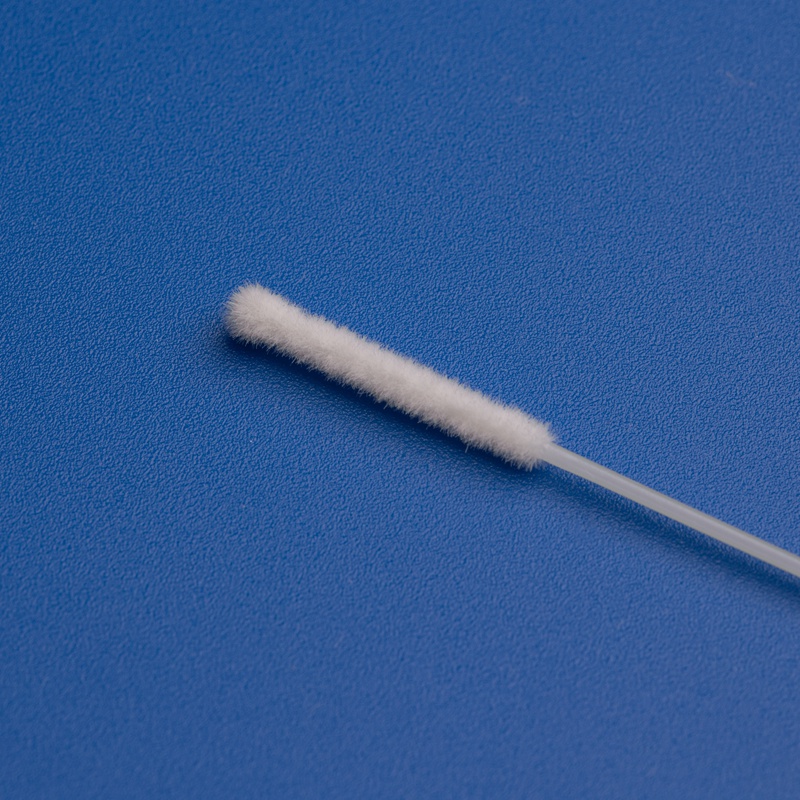
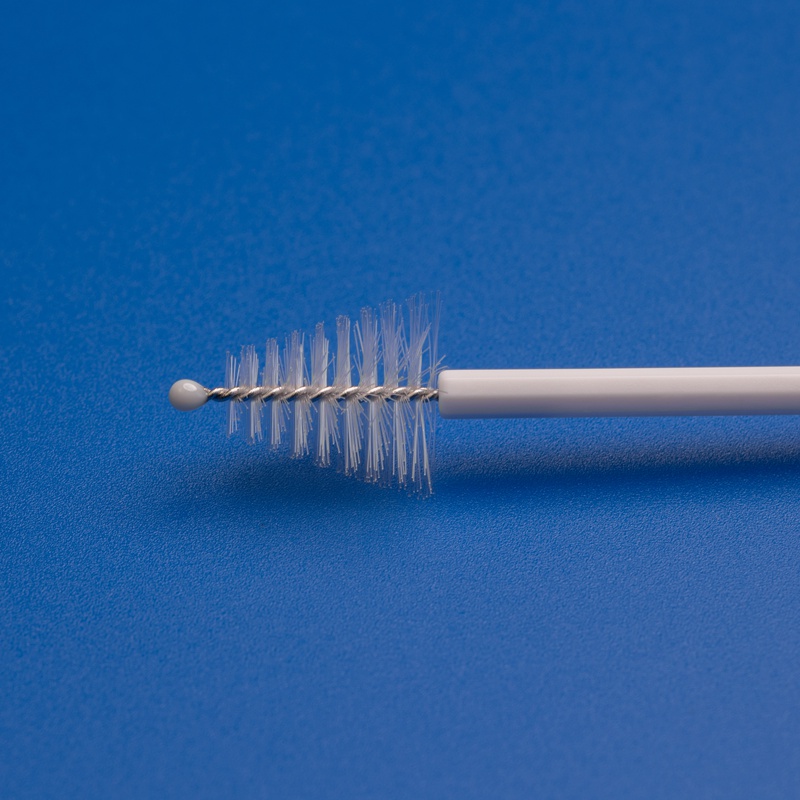
Flocked nasopharyngeal swabs are generally preferred for respiratory diagnostics because the perpendicular fiber arrangement is designed to improve specimen uptake and release. This matters in PCR and other molecular methods where sufficient sample capture can influence test reliability. Some alternative swab constructions may be acceptable in selected workflows, but flocked designs are often favored when sample yield and patient comfort are important.
Breakpoints also matter. A molded breakpoint allows the swab shaft to be snapped into a transport tube at the intended position. If the breakpoint is inconsistent, too rigid, or too weak, it can create handling issues in busy collection environments. Shaft flexibility is equally important because clinicians need controlled navigation through the nasal passage without excessive discomfort or risk of breakage.
Packaging format influences operational efficiency. Individually wrapped sterile swabs support strict clinical handling and are common in hospital settings. Bulk sterile configurations may be useful for certain industrial or controlled distribution models, but medical applications typically favor individual packaging to maintain chain-of-custody clarity and reduce contamination risk.
| Product Type | Typical Material | Main Advantage | Potential Limitation | Common U.S. Use Case |
|---|---|---|---|---|
| Flocked sterile nasopharyngeal swab | Nylon tip with plastic shaft | High specimen collection and release efficiency | Usually costs more than simple fiber swabs | PCR respiratory testing, hospital diagnostics |
| Polyester-tipped sterile swab | Polyester fiber with plastic shaft | Widely available and familiar in some workflows | May provide lower sample release in some molecular applications | General specimen collection, selected lab protocols |
| Flexible mini-tip swab | Flocked or synthetic tip with thin flexible shaft | Improved maneuverability and patient comfort | May require precise training in collection technique | Pediatric and sensitive-patient sampling |
| Breakpoint swab with transport compatibility | Engineered plastic shaft and molded breakpoint | Easy transfer into viral transport media tubes | Must match tube dimensions carefully | Reference labs, public health testing programs |
| Swab plus transport medium kit | Swab with VTM or related medium kit | Integrated collection workflow and easier procurement | Higher cost and added storage considerations | Hospital systems, urgent care chains |
| Private-label OEM sterile swab | Varies by buyer specification | Brand customization and channel differentiation | Requires packaging approval and documentation alignment | Distributors, medical brands, regional wholesalers |
The practical takeaway is simple: if your priority is respiratory molecular diagnostics, a sterile flocked nasopharyngeal swab with documented release performance and dependable breakpoint consistency is usually the safest choice. If your goal is channel branding or tender participation, a qualified OEM structure may be more valuable than buying only off-the-shelf stock.
Industry Demand by Sector
Demand in the United States is spread across multiple end-user sectors rather than one single buyer category. Clinical laboratories remain central, but outpatient networks, public health programs, and academic institutions all contribute to recurring demand. This distribution affects packaging preferences, contract structures, and shipping schedules.
Buying Advice for U.S. Procurement Teams
When buying sterile nasopharyngeal swabs in the United States, the most important question is not just price. It is whether the product can support the intended diagnostic pathway without creating compliance, performance, or fulfillment risk. Procurement teams should review specifications with both laboratory staff and supply chain managers before placing volume orders.
Start with regulatory and quality documents. Ask for sterilization validation, product specifications, shelf-life details, packaging configuration, labeling format, lot traceability, and evidence of quality management compliance. If the swab will be used in a formal diagnostic workflow, the laboratory should verify that the design and material are appropriate for the testing method. In many settings, collection consistency matters as much as the assay itself.
Next, evaluate operational fit. Does the shaft length match collection technique requirements? Does the breakpoint align with the transport tube used in the facility? Is the packaging easy for nurses and technicians to open while wearing gloves? Can the supplier support recurring replenishment instead of only one-time shipments? What are the lead times into major U.S. gateways such as Los Angeles/Long Beach, Savannah, New York/New Jersey, or Houston?
Commercial structure matters too. Some suppliers are best for direct institutional contracts, while others are better for channel partnerships. A distributor should ask about exclusivity, private labeling, carton design, and barcode support. A hospital system should ask about service levels, complaint handling, recall readiness, and substitute product continuity. A buyer importing from overseas should verify customs documentation, packaging marks, and inland distribution planning.
| Buying Criterion | Why It Matters | What to Request | Risk If Ignored | Best Buyer Type |
|---|---|---|---|---|
| Sterility validation | Confirms safe use in clinical collection | Sterilization records, batch documentation | Regulatory rejection or contamination concerns | Hospitals, labs, public health agencies |
| Swab tip performance | Affects sample collection and release | Material details, internal testing data | Reduced sample quality or inconsistent results | Reference labs, molecular testing centers |
| Breakpoint reliability | Supports smooth transfer into transport tubes | Dimensional drawings, sample evaluation | Workflow delays, broken shafts, user complaints | High-volume collection programs |
| Packaging format | Influences storage, handling, and contamination control | Unit pack details, carton specifications | Inefficient workflow and damaged inventory | Hospital supply chain teams, distributors |
| Lead time and logistics | Prevents stockouts and emergency freight costs | Production schedule, shipping windows, port routing | Service interruption and urgent procurement premiums | Distributors, statewide programs |
| OEM or labeling flexibility | Allows brand expansion and market differentiation | Artwork support, MOQ, packaging options | Missed private-label opportunities | Brand owners, wholesalers, importers |
For U.S. buyers, sample testing before a large commitment remains best practice. Even if a supplier has strong credentials, a practical fit test in the real collection and laboratory environment can save time and money later.
Industries and Applications
Sterile nasopharyngeal swabs serve more industries than many buyers initially assume. Their core role is in clinical specimen collection, but they are also used in surveillance programs, institutional screening, contract laboratory operations, and biotechnology research. In the United States, use cases often overlap across healthcare and scientific sectors.
Hospital systems use them for respiratory pathogen testing, emergency department intake, inpatient screening, and pre-procedure diagnostics. Reference laboratories use them in centralized processing environments where consistency of specimen collection is essential. Urgent care chains and retail-adjacent clinics need swabs that are easy to use and available in stable supply. Public health departments depend on them for outbreak monitoring, community testing drives, and state surveillance projects. Universities and research institutions use them in epidemiological studies and respiratory health research. Biotech firms use them in validation studies, sample collection protocols, and clinical support programs.
| Industry | Main Application | Typical Volume Pattern | Preferred Product Features | Service Expectation |
|---|---|---|---|---|
| Hospitals | Respiratory diagnostics and patient screening | Steady recurring demand | Individually wrapped sterile flocked swabs | Fast replenishment and complaint response |
| Reference laboratories | High-throughput specimen intake | Large contracted volumes | Consistent dimensions and high release efficiency | Batch traceability and documentation support |
| Urgent care networks | Point-of-collection testing and sample transfer | Regional multi-site ordering | User-friendly packaging and reliable breakpoints | Distribution simplicity and predictable lead times |
| Public health agencies | Surveillance and outbreak response | Variable, sometimes surge-driven | Scalable supply and validated sterility | Emergency readiness and lot-level records |
| Universities | Clinical studies and campus screening | Project-based purchasing | Flexible pack sizes and protocol compatibility | Technical communication and sample support |
| Biotech and CROs | Research and assay validation | Smaller but specification-driven | Material transparency and custom options | Responsive technical and commercial support |
This diversity in end use is why suppliers that can adapt packaging, documentation, and commercial terms tend to be more competitive in the United States market.
Trend Shift in Product Selection
U.S. buyers are shifting from emergency purchasing toward more refined selection standards. The chart below shows a realistic trend in preference change between basic standard swabs and more specification-driven flocked or kit-integrated options.
Local Suppliers and Practical Comparison
For U.S. buyers, supplier selection is often a balance between local availability, technical confidence, and pricing flexibility. The comparison below focuses on practical procurement considerations rather than brand visibility alone.
This chart highlights a common market reality. Established domestic and multinational suppliers often score well on familiarity and existing distribution, while OEM-oriented manufacturers can outperform on customization and flexible cooperation models. That makes them particularly relevant for importers, private-label distributors, and buyers seeking tailored packaging or regional channel strategies.
Case Studies from the U.S. Market
Consider a Midwest reference laboratory managing respiratory PCR volumes across multiple states. The lab originally sourced from a single domestic brand but faced cost pressure as testing volumes stabilized. By adding a second qualified supplier with validated flocked swabs and complete documentation, the lab reduced procurement risk and improved negotiating power. The dual-source strategy also reduced emergency freight costs when one distribution lane tightened.
In another case, a Southeastern medical distributor serving urgent care clinics needed a private-label sterile nasopharyngeal swab product under its own brand. A standard domestic channel could provide inventory but not custom packaging at the needed commercial terms. By working with an OEM-capable manufacturer, the distributor secured custom labeling, carton optimization, batch traceability support, and pricing that made a regional launch financially viable. The distributor maintained a U.S.-based customer support layer while using overseas manufacturing for scale.
A West Coast public health contractor used integrated swab-and-tube kits during seasonal respiratory testing waves. Its key concern was not only product availability but the ability to audit sterilization and lot records quickly during public tenders. The selected supplier won because documentation turnaround was faster and more organized than larger competitors, demonstrating that service performance can be as important as brand familiarity in regulated procurement.
These examples show that the best supplier is often the one that fits the buyer’s operating model. Reliable stock alone is no longer enough. Technical fit, traceability, pricing structure, and support responsiveness all influence long-term value.
Our Company
For U.S. buyers seeking a manufacturer that combines scale, compliance, and flexible cooperation, Jiangsu Hanheng Medical Technology Co., Ltd. offers a practical sourcing option for sterile nasopharyngeal swabs and related diagnostic consumables. Founded in 2018, the company operates a 10,000 square meter Class 100,000 cleanroom facility on a 32-acre manufacturing base, with automated flocking, precision injection molding, and EO sterilization integrated into production to support contamination control and consistent collection performance. Its quality credentials include ISO9001, ISO13485, EU CE compliance including TUV-CE and MDR, U.S. FDA approval, UK MHRA registration, and NMPA registration, supported by patent-backed process know-how and a workforce of more than 1,000 people including a dedicated technical management team. That production system matters to U.S. purchasers because it demonstrates measurable manufacturing discipline, large export capacity, and documented quality standards rather than generic quality claims. Commercially, the company serves end users, distributors, dealers, brand owners, and importers through direct manufacturing, export supply, wholesale programs, OEM and ODM services, custom packaging, labeling, and regional partnership models, making it suitable for both institutional procurement and private-label expansion. For U.S. customers, its long-standing export experience to more than 130 countries, regular participation in international trade shows, efficient bulk shipment cycles of around 7 to 21 days, and hands-on support with technical files, certificates of conformity, sterilization records, and batch details provide the type of pre-sale and after-sale assurance expected from a supplier committed to the market rather than operating as a distant transactional exporter. Buyers evaluating product lines can review the broader catalog through the product center, learn more about manufacturing background on the company page, and discuss U.S. sourcing plans directly through the contact page.
How to Evaluate Samples Before Purchase
Before placing a full order, U.S. buyers should run a structured sample review. Start with packaging inspection. Check seal integrity, label clarity, lot identification, and storage instructions. Then review the shaft. It should feel flexible enough for collection but not weak or unstable. Next, test the breakpoint using the transport tube intended for actual use. A mismatch here can create avoidable operational issues.
Clinicians should also comment on handling comfort and insertion control. Laboratory staff should assess whether sample recovery appears consistent with their standard protocol. Distributors should review carton strength, master case dimensions, and pallet efficiency, especially if they will stock inventory in regional warehouses. If the supplier offers OEM options, check print quality, labeling compliance, and barcode readability before approving commercial artwork.
One frequent mistake is choosing a swab solely on sample price without comparing total landed and operating cost. A slightly cheaper product can become more expensive if it creates user complaints, inconsistent breakpoints, difficult packaging, or documentation delays. The strongest procurement decisions are based on total workflow fit, not only unit cost.
2026 Trends in the United States
Looking ahead to 2026, three trend areas are likely to shape the U.S. market for sterile nasopharyngeal swabs: technology, policy, and sustainability.
On the technology side, buyers will increasingly expect tighter compatibility with automated and semi-automated diagnostic workflows. That includes more precise breakpoint design, consistent shaft tolerances, and integrated collection systems optimized for high-throughput molecular testing. Manufacturers with advanced molding and flocking control will have an advantage because laboratories are paying closer attention to repeatability and specimen recovery.
Policy will also influence sourcing. U.S. healthcare purchasers are becoming more disciplined about documentation, supplier qualification, and resilience planning. Domestic preference rules may remain relevant in certain public tenders, but many commercial buyers will continue to use dual-source procurement that combines local and international supply. Suppliers that can provide transparent regulatory files, lot traceability, and responsive communication during audits will be better positioned.
Sustainability is moving from a secondary issue to a procurement consideration, especially in large health systems and institutional buying groups. While sterile medical sampling products must meet strict infection-control standards, packaging reduction, transport efficiency, carton optimization, and manufacturing waste control are increasingly part of supplier reviews. Companies that can demonstrate lower packaging waste, more efficient container loading, and responsible process controls will likely gain attention.
Another likely trend is the continued growth of branded distribution programs. Regional medical distributors and niche diagnostic brands in the United States want private-label products that differentiate them from commodity channels. This creates opportunities for manufacturers with genuine OEM/ODM capabilities, fast artwork approval, and dependable repeat production. In that sense, the future market may be less about who can simply make a sterile swab and more about who can deliver a complete, compliant, and adaptable supply solution.
Frequently Asked Questions
What makes a sterile nasopharyngeal swab suitable for laboratory diagnostics?
A suitable swab should have validated sterility, a tip material appropriate for specimen collection and release, a shaft that balances flexibility with control, and packaging that preserves integrity through storage and use. Laboratories also prefer products with reliable batch traceability and documentation support.
Are flocked swabs better than traditional fiber swabs?
In many respiratory molecular testing workflows, flocked swabs are preferred because they are designed to improve specimen uptake and release. However, suitability still depends on the laboratory protocol, transport system, and intended assay.
Can U.S. buyers import sterile nasopharyngeal swabs from overseas manufacturers?
Yes, many U.S. importers, distributors, and brand owners source from overseas manufacturers. The key is to work with suppliers that can provide the right compliance documentation, sterilization records, labeling support, and shipment coordination for U.S. entry and healthcare use.
What order model is best for distributors?
Distributors usually benefit from suppliers that support wholesale pricing, regional channel planning, custom packaging, and private-label options. They should also look for predictable lead times and after-sales support for documentation and complaint handling.
How important is local warehousing in the United States?
Local warehousing can reduce lead times and improve replenishment reliability, but it is not the only factor. Some buyers succeed with hybrid models that combine U.S. safety stock and overseas factory supply, especially when the manufacturer offers organized logistics and fast documentation response.
What should hospitals ask before approving a supplier?
Hospitals should ask for sterilization validation, quality system credentials, lot traceability, product specifications, packaging information, complaint handling procedures, and evidence that the swab fits the intended transport tube and diagnostic workflow.
Conclusion
The United States market for sterile nasopharyngeal swabs has matured into a more disciplined and strategic category. Buyers are no longer choosing only by urgency. They are comparing collection performance, regulatory readiness, packaging suitability, supply continuity, and commercial flexibility. Domestic leaders such as Puritan Medical Products, Copan Diagnostics, BD, Cardinal Health, and Thermo Fisher Scientific remain important options for many institutions. At the same time, qualified international manufacturers with strong certifications, scalable production, OEM/ODM capability, and organized customer support are increasingly relevant for distributors, importers, and cost-conscious procurement teams.
If your organization is purchasing for laboratories, hospital systems, urgent care networks, public health programs, or private-label medical distribution, the best result comes from matching the swab specification to the actual testing workflow and then selecting a supplier whose service model aligns with your operational needs. In the current U.S. environment, that means balancing technical evidence, logistics capability, and partnership depth rather than focusing on brand name alone.

Jiangsu Hanheng Medical Technology Co., Ltd.
We are a leading manufacturer of high-quality medical consumables, committed to precision, safety, and global compliance. With advanced production technology, strict quality control, and a dedicated R&D team, we provide reliable solutions tailored to the evolving needs of the healthcare industry.

.jpg)