Share
How to Collect a Nasopharyngeal Swab in the United States
Quick Answer

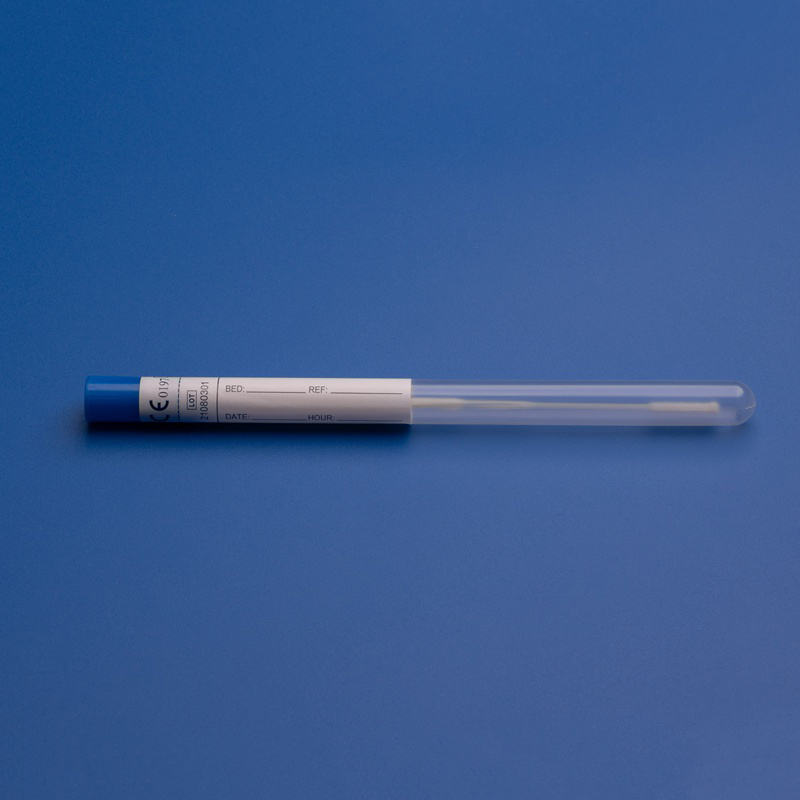
To collect a nasopharyngeal swab properly in the United States, have the patient sit with the head supported, ask them to remove any mask only when ready, insert a sterile flexible flocked swab gently through one nostril parallel to the palate rather than upward, advance until resistance is felt at the nasopharynx, rotate the swab several times, leave it in place briefly to absorb secretions, then remove it slowly and place it immediately into the transport tube or medium specified by the test manufacturer. The most common mistakes are aiming upward, using the wrong swab type, rotating too aggressively, or delaying placement into the collection tube. For U.S. buyers, major local options such as Puritan Medical Products, Copan Diagnostics, Thermo Fisher Scientific, Becton Dickinson, Cardinal Health, and Medline are widely used across hospitals, labs, and public health channels. Qualified international suppliers can also be considered when they hold relevant certifications and provide dependable documentation, responsive pre-sales and after-sales support, and strong cost-performance for large-volume procurement.
Direct Technique for Proper Nasopharyngeal Swab Collection

The core goal of nasopharyngeal sampling is to obtain a specimen from the posterior nasopharynx, where viral material is often most detectable during respiratory testing. In U.S. clinical settings, collection methods generally follow manufacturer instructions for the test kit in use, infection prevention protocols, and facility competency standards. Although some screening programs now rely more heavily on anterior nasal or saliva methods, nasopharyngeal collection remains important in many hospital, laboratory, research, and confirmatory testing workflows because it can provide reliable upper respiratory sampling when performed correctly.
Begin by confirming the patient identity, the test order, the transport medium or dry tube requirement, and the exact swab specification required by the assay. Not every swab is interchangeable. Many molecular platforms specify synthetic fiber flocked swabs with plastic shafts, while calcium alginate tips or wooden shafts may interfere with certain applications. Explain the process to the patient clearly: they may feel pressure, tearing, or an urge to sneeze, but the procedure should be brief. Ask them to blow the nose lightly if there is excessive mucus, then seat them upright with the head against a wall or headrest if possible to reduce sudden movement.
Hand hygiene and personal protective equipment are essential. In most U.S. healthcare environments, the collector uses gloves and follows the institution’s respiratory protection and eye protection rules based on setting and risk level. Open the swab package carefully without touching the tip. Ask the patient to tilt the head back slightly, usually around 70 degrees, not fully extended. The swab should travel straight back, parallel to the floor of the nasal passage and the hard palate. A common training phrase is “back, not up.”
Insert the swab into the nostril with steady, gentle motion. If resistance occurs very early, withdraw slightly and redirect; forcing the swab upward can cause pain and inadequate collection. Continue until resistance is encountered at the posterior nasopharynx, usually at a depth approximately equal to the distance from the nostril to the ear opening. Once in place, rotate the swab several times and hold for a few seconds so the fibers absorb material. Remove slowly while rotating if the test instructions recommend it. Immediately place the swab into the transport tube, break the shaft at the designed breakpoint if present, cap tightly, label properly, and send under the required storage conditions.
If one nostril is obstructed by septal deviation, surgery history, or obvious blockage, use the other nostril when appropriate. If neither side can be accessed safely, follow facility policy for an alternative collection method rather than forcing the swab. In pediatric, geriatric, or high-anxiety populations, technique, communication, and stabilization matter as much as product quality.
Common Steps Used in U.S. Facilities

| Step | What to Do | Why It Matters | Common Error to Avoid |
|---|---|---|---|
| Patient verification | Confirm patient name, date of birth, and ordered test | Prevents specimen mismatch | Collecting before label confirmation |
| Swab selection | Use the exact swab type required by the assay or protocol | Supports test compatibility and result integrity | Substituting non-validated swabs |
| Head position | Tilt head slightly back, keep patient still | Improves access to the nasopharynx | Overextending the neck |
| Insertion angle | Advance parallel to the palate | Reaches the proper anatomical target | Aiming upward toward the bridge of the nose |
| Specimen capture | Rotate gently and hold briefly | Improves secretion uptake | Removing too quickly |
| Transfer and transport | Place in tube immediately, cap, label, and store correctly | Protects sample stability | Delays or incorrect medium use |
| Documentation | Record collector, time, and any collection issues | Supports traceability and quality review | Missing notes on difficult collections |
This workflow is widely recognized because nasopharyngeal swabbing is a procedure where anatomy, product compatibility, and timing all affect specimen quality. In practice, collection success depends on the combination of trained staff, validated swabs, suitable transport systems, and clear SOPs.
United States Market Overview
The U.S. market for nasopharyngeal swabs is shaped by hospital networks, public health laboratories, urgent care chains, physician office labs, reference labs, government stockpiles, and distributor-driven purchasing. Demand surged during the pandemic years, but the market has since matured into a quality-focused procurement environment. Buyers now look beyond emergency availability and evaluate lot consistency, breakpoint design, packaging format, validation support, sterilization records, shelf life, and logistics performance. Major healthcare hubs such as Boston, New York, Chicago, Houston, Atlanta, Los Angeles, and the logistics corridors around New Jersey and Southern California continue to influence procurement patterns due to the concentration of hospitals, life science companies, and import infrastructure.
Ports and trade hubs matter in this category because large-volume medical consumables often move through Los Angeles, Long Beach, Savannah, and New York/New Jersey before entering distributor networks. U.S. buyers increasingly balance domestic sourcing for resilience with qualified international sourcing for price stability and backup capacity. This has opened room for both established local manufacturers and export-oriented producers with strong certification packages and responsive regulatory support.
The line chart reflects a realistic pattern seen in the United States: post-emergency normalization after peak pandemic demand, followed by renewed growth driven by preparedness planning, molecular diagnostics, decentralized care, and routine respiratory surveillance. Rather than returning to crisis-era volumes, the market is shifting toward a steadier, more specialized demand base.
Product Types Used for Nasopharyngeal Specimen Collection
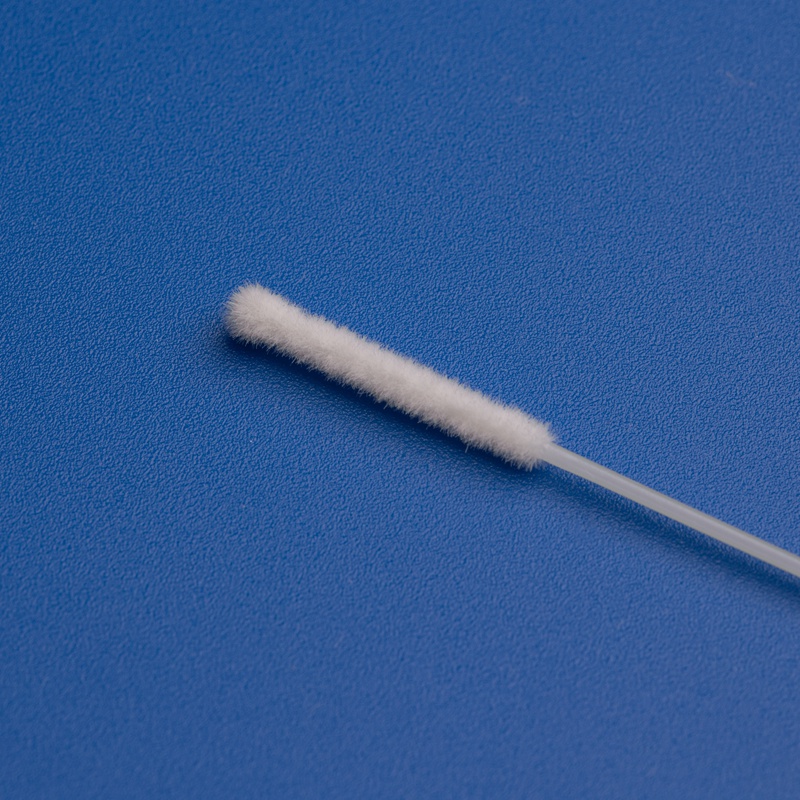
Not every respiratory swab is intended for nasopharyngeal use. U.S. buyers should distinguish among specimen site, tip material, shaft flexibility, breakpoint geometry, sterility method, and packaging format. Flocked nasopharyngeal swabs remain the standard for many molecular applications because perpendicular nylon fibers can improve collection and release compared with some traditional fiber-wound designs. However, compatibility with the actual assay always matters more than category assumptions.
| Product Type | Main Features | Typical U.S. Use | Best Fit |
|---|---|---|---|
| Flocked nasopharyngeal swab | Synthetic flocked tip, flexible plastic shaft | Respiratory PCR and viral diagnostics | Hospitals, labs, public health testing |
| Mini-tip NP swab | Smaller tip, pediatric-friendly size | Pediatric and specialty ENT sampling | Children’s hospitals, clinics |
| Dry swab system | No liquid medium, dry transport format | Assay-specific workflows | Programs with validated dry transport protocols |
| Swab with VTM kit | Paired with viral transport medium | Central lab transport | Reference labs and shipping workflows |
| Swab with universal transport medium | Broader micro testing compatibility | Lab-integrated respiratory panels | Multi-pathogen testing environments |
| Individually wrapped sterile swab | Single sterile pouch for point-of-care use | Clinic and bedside collection | Urgent care, outpatient sites |
| Bulk sterile swab format | Optimized for high-volume organized collection | Mass programs and institutional use | Government and large health systems |
This table shows why procurement teams in the United States usually specify not just “swabs” but the exact collection architecture required by the intended workflow. The right format depends on assay validation, patient segment, sample transport route, and throughput expectations.
Buying Advice for U.S. Healthcare and Distribution Buyers
When evaluating nasopharyngeal swabs for the U.S. market, buyers should begin with compatibility, not price. The first screening question is whether the swab is cleared, listed, or supported for the intended assay pathway. The second is whether the supplier can provide a complete quality document set, including sterilization method, lot records, dimensional data, material declarations, package labeling details, and storage guidance. The third is whether the product can be delivered consistently across multiple lots and multiple shipping windows.
Beyond that, buyers should assess flocking consistency, breakpoint reliability, shaft flexibility, insertion comfort, packaging integrity, and cap-tube fit if bundled in kits. Large distributors may also require EDI readiness, private labeling, carton marking customization, and destination-specific packaging. Government and hospital tenders often evaluate service continuity and surge capacity, especially after the supply disruptions experienced across 2020 to 2022. For U.S. importers, practical considerations include west coast versus east coast routing, customs documentation accuracy, and contingency planning for ocean and air freight.
Buyers working in major metro areas such as Dallas, Miami, Seattle, and Philadelphia often value different combinations of lead time, warehousing, and contract flexibility. Urban hospital systems may prioritize immediate replenishment and distributor integration, while regional public health buyers may focus more on batch consistency and reserve stock availability. In either case, technical responsiveness matters: the best suppliers answer not only sales questions but also validation, packaging, and complaint-handling questions quickly.
Industries That Use Nasopharyngeal Swabs
Nasopharyngeal swabs are not limited to acute hospital testing. In the United States, demand comes from several adjacent sectors, each with distinct purchasing priorities and collection protocols.
The bar chart highlights how hospitals and reference labs remain the strongest demand centers, but distributors and urgent care networks also represent substantial volume. Public health agencies continue to purchase for surveillance and contingency programs, while research institutions use specialized swab formats for clinical studies and diagnostic development.
| Industry | Why It Uses NP Swabs | Key Buying Priority | Typical Volume Pattern |
|---|---|---|---|
| Acute care hospitals | Respiratory diagnosis and admission workflows | Validated compatibility and quick replenishment | Steady with seasonal peaks |
| Reference laboratories | Centralized molecular testing | Lot consistency and transport stability | High-volume recurring orders |
| Urgent care chains | Rapid respiratory assessment | Individually wrapped convenience | Seasonal and outbreak-driven |
| Public health agencies | Surveillance and outbreak response | Reserve capacity and documentation | Program-based procurement |
| Universities and research centers | Clinical studies and assay development | Traceability and protocol precision | Project-based |
| Distributor networks | Supply to multiple healthcare settings | Stable manufacturing and private labeling | Mixed annual contracts |
| Long-term care and community programs | Targeted respiratory monitoring | Ease of use and small-batch flexibility | Lower but recurring |
The industries table shows that the same product category can serve very different operational needs. That is why suppliers that succeed in the U.S. often offer multiple packaging formats, technical files, and fulfillment models rather than a single standard SKU.
Applications in Real Clinical and Operational Settings
Nasopharyngeal collection is used for influenza, RSV, COVID-related molecular testing, multiplex respiratory panels, surveillance studies, and specialized clinical research. In high-complexity hospital settings, swabs may be paired with universal transport media for centralized testing. In decentralized outpatient programs, individually wrapped sterile swabs may be paired with assay-specific tubes for simpler workflows. During seasonal respiratory surges, facilities often re-evaluate swab inventory based on throughput, patient tolerance, and turnaround time goals.
Another practical application is emergency preparedness. State and regional healthcare coalitions across the United States often maintain sourcing strategies for critical sampling consumables, especially after supply chain bottlenecks demonstrated how quickly routine items can become constrained. This has increased interest in dual-source supply models, where a domestic source is supplemented by an international manufacturer with the documentation and capacity needed for continuity.
Case Studies from the U.S. Market
Consider a Midwest hospital network during winter respiratory season. The laboratory director notices delayed specimen processing due to shortages in compatible flocked swabs. By shifting from ad hoc spot buying to an annual forecast with a primary and secondary supplier, the network improves fill rates and reduces emergency substitutions. The key lesson is that consistency matters more than chasing the lowest unit price, because revalidation, workflow confusion, and collection errors carry their own costs.
In another example, an urgent care operator across Texas and Arizona standardizes on a patient-comfort-focused swab with a flexible shaft and individually wrapped sterile packaging. Staff retraining emphasizes insertion angle and sample transfer speed. The result is fewer failed collections, better patient cooperation, and less waste from damaged or improperly transferred samples.
A public health laboratory in the Northeast may focus on kit readiness, requesting swab-and-medium combinations with lot traceability and multilingual outer carton labeling for regional distribution. Here, the winning supplier is often the one that can deliver not just product but predictable documentation and warehousing support.
Local Suppliers and Major Brands in the United States
For U.S. procurement teams, several companies are repeatedly evaluated because they have strong brand recognition, broad distribution, or established clinical adoption. The list below includes manufacturers and large supply organizations active in the U.S. market. Product fit still depends on each buyer’s assay pathway and contracting model.
| Company | Service Region | Core Strengths | Key Offerings |
|---|---|---|---|
| Puritan Medical Products | Nationwide U.S. | Domestic manufacturing depth and broad swab portfolio | Flocked swabs, foam swabs, specimen collection devices |
| Copan Diagnostics | U.S. and international | Strong specimen collection systems and lab integration | Flocked swabs, transport media, diagnostic collection systems |
| Thermo Fisher Scientific | Nationwide U.S. | Large diagnostics and lab supply network | Sampling products, molecular testing support products |
| Becton Dickinson | Nationwide U.S. | Clinical credibility and broad hospital relationships | Diagnostic consumables and sample collection products |
| Cardinal Health | Nationwide U.S. | Distribution scale and hospital contracting reach | Medical consumables, procurement programs, private label |
| Medline Industries | Nationwide U.S. | Extensive healthcare distribution and packaging options | Collection consumables and clinical supply bundles |
| McKesson Medical-Surgical | Nationwide U.S. | Distributor access for varied care settings | Specimen collection supplies and clinic replenishment |
This supplier table is useful because U.S. buyers often separate “manufacturer choice” from “fulfillment choice.” A hospital may prefer a certain swab brand but purchase through a distributor contract, while a public agency may procure directly from a manufacturer or authorized supply partner.
Detailed Supplier Comparison
Different suppliers perform better in different procurement scenarios. Domestic manufacturers may offer faster replenishment and simpler communication, while global manufacturers may provide cost advantages, private-label flexibility, and scalable export support. The best choice depends on whether the buyer values domestic reserve stock, long-term contract pricing, OEM packaging, or broad assay-aligned technical support.
| Supplier | Best For | Typical Advantage | Potential Limitation |
|---|---|---|---|
| Puritan Medical Products | Hospitals seeking domestic supply assurance | Made-in-USA positioning and established healthcare trust | Pricing may be less flexible in some high-volume bids |
| Copan Diagnostics | Labs focused on specimen system quality | Strong collection science reputation | Premium positioning in some product categories |
| Thermo Fisher Scientific | Integrated lab buyers | Broad procurement convenience | Not always the lowest-cost swab source |
| Becton Dickinson | Large health systems | Clinical brand familiarity | Portfolio priorities may vary by contract channel |
| Cardinal Health | Distributor-led procurement | Strong logistics and contract access | Product source may differ by private-label program |
| Medline Industries | Multi-site care networks | Packaging and replenishment flexibility | Exact manufacturing origin may require confirmation |
| McKesson Medical-Surgical | Clinics and outpatient channels | Broad reach and routine purchasing convenience | Less specialized technical depth than direct manufacturers |
This comparison helps buyers match sourcing strategy to business model. A reference lab may prioritize collection science and transport compatibility, while a distributor may focus more on inventory turnover, branding, and packaging adaptability.
The area chart illustrates a realistic procurement shift in the U.S. market: buyers are moving away from purely price-based sourcing and toward dual-source, quality-documented supply strategies. This reflects lessons learned from disruptions, stricter compliance expectations, and the need for continuity planning.
The comparison chart summarizes what many U.S. buyers care about most when screening supplier models. Distributor reach and documentation support are often as important as unit price, especially in regulated healthcare settings.
Our Company in the United States Market
For buyers seeking an additional qualified supply option, Hanheng Medical is relevant to the U.S. market because it combines large-scale manufacturing with documentation discipline expected by professional healthcare buyers. Founded in 2018, the company operates a 32-acre production base with a 10,000 square meter Class 100000 cleanroom and controls key processes including injection molding, automated flocking, and EO sterilization, which supports consistent swab geometry, contamination control, and reliable sample uptake. Its medical sampling products are backed by certifications and registrations commonly reviewed in cross-border procurement, including ISO9001, ISO13485, EU CE pathways, U.S. FDA-related market access credentials, UK MHRA registration, and NMPA approvals, while its product range covers virus sampling swabs, oral and cervical swabs, transport media kits, and broader diagnostic consumables. For cooperation, the company supports direct manufacturing supply, wholesale, OEM and ODM programs, private-label packaging, and regional distribution partnerships, making it suitable not only for distributors and dealers but also for hospital systems, brand owners, laboratories, and procurement teams that need customized pack configurations or technical files. Its track record of exporting nearly 6 billion units to more than 130 countries, combined with responsive pre-sale consultation, batch-level regulatory documentation, and after-sales support, gives U.S. buyers practical assurance when balancing cost, capacity, and compliance. Buyers who want to review the company background can visit the company overview, browse the product catalog, or use the U.S. inquiry channel for specification matching, packaging discussion, and lead-time confirmation.
How to Choose Between Domestic and International Sources
In the United States, the smartest procurement strategy is often not either-or but both. Domestic suppliers can reduce replenishment risk and simplify communication. International manufacturers with proven certifications, cleanroom capability, and mature export workflows can improve price competitiveness, support private labeling, and provide backup capacity. For distributor groups, this dual approach also creates negotiation leverage and protects margin stability. The real selection criteria should be document completeness, validation suitability, manufacturing repeatability, and service accountability rather than geography alone.
Before onboarding a new supplier, buyers should request sample packs, packaging drawings, sterilization method details, shipping case dimensions, lot coding examples, and complaint handling procedures. For higher-volume tenders, it is also wise to review production capacity, typical lead times, and contingency plans for raw materials and freight. These are the operational details that separate dependable suppliers from opportunistic traders.
Future Trends Through 2026
Looking ahead to 2026, the U.S. nasopharyngeal swab market will be influenced by three major forces: technology, policy, and sustainability. On the technology side, product design is moving toward more consistent flock density, improved patient comfort, assay-specific kit integration, and digital traceability through carton and lot data. Laboratories increasingly expect collection systems that fit automated accessioning and standardized respiratory testing panels. In policy terms, healthcare buyers will keep emphasizing domestic preparedness, supplier transparency, and documented compliance. Even when products are internationally sourced, the expectation is that they arrive with stronger labeling, traceability, and technical file support than in the emergency procurement era.
Sustainability is also becoming more visible. Although sterility and performance remain the first priorities, U.S. healthcare systems are asking more questions about packaging waste, carton optimization, production efficiency, and responsible logistics. Suppliers that can reduce unnecessary material without compromising sterility may gain an advantage in formal purchasing reviews. Another trend is diversification: buyers are less likely to depend on a single geography or a single contract pathway. This creates opportunities for manufacturers that can combine regulatory credibility, flexible packaging, and dependable account support.
FAQ
What is the correct angle for a nasopharyngeal swab?
The swab should be inserted straight back, parallel to the palate or floor of the nasal passage, not angled upward toward the eyes. This is one of the most important technique points for reaching the nasopharynx correctly.
How far should the swab go?
Advance the swab until resistance is met at the nasopharynx. In adults, this depth is often similar to the distance from the nostril to the external ear opening, though anatomy varies. Never force the swab if there is strong resistance or obvious obstruction.
How long should the swab stay in place?
Many protocols call for several gentle rotations and a short pause of a few seconds to absorb secretions. Exact timing should follow the instructions for the test kit or facility SOP.
Can any sterile swab be used for nasopharyngeal collection?
No. The swab must match the test method and validation requirements. Synthetic flocked swabs with plastic shafts are common, but buyers should confirm compatibility with the intended assay and transport system.
Why do U.S. buyers still use nasopharyngeal swabs when other methods exist?
Because nasopharyngeal sampling still has value in certain hospital, lab, and confirmatory settings where deeper upper respiratory sampling is preferred or historically validated. Use depends on the clinical workflow and test design.
What should distributors ask suppliers before placing a large order?
They should ask for assay compatibility information, certifications, sterilization documentation, lot traceability, packaging options, shelf life, lead times, complaint handling procedures, and evidence of stable production capacity.
Are international manufacturers acceptable for the U.S. market?
Yes, if they meet the relevant regulatory and quality expectations, provide complete documentation, and offer reliable pre-sales and after-sales support. Many U.S. buyers use international manufacturers as part of a dual-sourcing strategy.
Which U.S. cities are important for procurement and distribution?
Key healthcare and logistics centers include Boston, New York, Chicago, Houston, Los Angeles, Atlanta, Dallas, Miami, and the New Jersey port corridor. These markets influence distributor inventories, lab demand, and import routing.
Final Takeaway
If you need to know how to collect a nasopharyngeal swab correctly in the United States, the direct answer is simple: use the validated swab type, position the patient properly, insert the swab straight back parallel to the palate until resistance is felt, rotate gently, and transfer immediately into the required transport system. For procurement, the best results come from pairing correct technique with dependable supply. U.S. buyers should compare local leaders such as Puritan, Copan, Thermo Fisher, BD, Cardinal Health, Medline, and McKesson with qualified international manufacturers that can prove compliance, manufacturing consistency, and responsive service. In the current U.S. market, success depends less on finding any swab and more on finding the right swab, the right documentation, and the right supply partner.

Jiangsu Hanheng Medical Technology Co., Ltd.
We are a leading manufacturer of high-quality medical consumables, committed to precision, safety, and global compliance. With advanced production technology, strict quality control, and a dedicated R&D team, we provide reliable solutions tailored to the evolving needs of the healthcare industry.

.jpg)