Share
How U.S. Teams Reduce Injury Risk in Amnihook Amniotomy
Quick Answer

To reduce maternal injury risk during amnihook amniotomy in the United States, clinicians should focus on five practical controls: use a sterile single-use amnihook with a smooth, consistent hook profile; confirm fetal head position and cervical dilation before membrane rupture; avoid forceful blind sweeping; standardize staff training with simulation and complication review; and buy only from suppliers that can document sterile processing, lot traceability, packaging integrity, and regulatory compliance. For hospital buyers and distributors, leading names active in the U.S. market include Medline Industries, Cardinal Health, McKesson, CooperSurgical, Laborie, and Thomas Medical. Qualified international suppliers can also be considered when they hold relevant certifications and provide dependable presale and after-sales support. In practice, this is why some U.S. buyers also evaluate manufacturers such as Hanheng Medical for cost-performance, OEM flexibility, and global compliance support when building private-label or bulk procurement programs.
Why Injury Risk Matters in the United States

Amniotomy remains a routine obstetric intervention in U.S. labor and delivery settings, especially in hospitals managing induction, augmentation, and close fetal surveillance. Yet the procedure is only as safe as the operator, the indication, and the instrument used. An amnihook is designed to rupture membranes with controlled traction, but poor technique, limited visualization, sharp manufacturing variation, or rushed clinical workflow can contribute to maternal soft-tissue trauma, patient discomfort, bleeding, or avoidable escalation in care.
Across the United States, purchasing teams in major healthcare hubs such as Chicago, Dallas, Atlanta, Los Angeles, New York, and Houston increasingly evaluate amnihooks not just as low-cost consumables, but as risk-relevant devices tied to obstetric safety programs, infection prevention policy, and claims reduction. This shift is also visible in coastal trade and distribution corridors near the ports of Los Angeles, Long Beach, Savannah, Houston, and New York/New Jersey, where imported disposable gynecology products enter national hospital supply chains. As provider systems centralize purchasing, buyers want evidence that device geometry, sterilization, packaging, and technical documentation are consistent enough to support standardized training and reliable clinical performance.
Reducing injury risk in amnihook amniotomy therefore requires a combined strategy: choose the right product type, match it to the clinical environment, train users consistently, monitor outcomes, and work with suppliers who can support both compliance and continuity of supply. In the U.S. market, the conversation is no longer just about price per unit. It is about total risk, staff confidence, legal defensibility, and patient experience.
Direct Clinical Practices That Lower Maternal Injury Risk

The most effective way to reduce trauma during amnihook amniotomy is to treat device choice and procedural discipline as one system. A well-made instrument cannot compensate for poor patient selection, and strong technique cannot fully overcome an inconsistent hook tip or weak sterile packaging.
- Use amniotomy only when there is a clear indication and labor management benefit.
- Verify cervical readiness, membrane status, presenting part, and fetal station before insertion.
- Use gentle insertion with two-finger guidance rather than aggressive blind advancement.
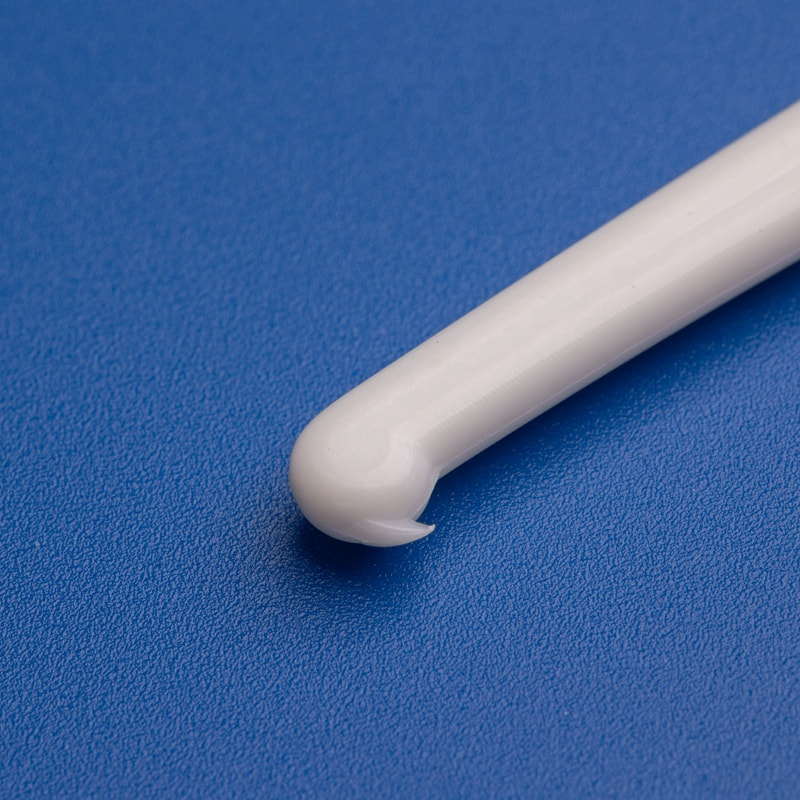
- Select amnihooks with predictable hook curvature, smooth polymer finish, and rigid-but-controlled shaft response.
- Maintain sterile handling and inspect packaging before use.
- Document lot number, operator, indication, and any adverse event for quality review.
These fundamentals are especially important in busy U.S. delivery units where multiple clinicians may use products from different contract suppliers. Standardization reduces variability. If one facility uses several amnihook designs with noticeably different hook sharpness or flexibility, staff muscle memory becomes less reliable, which can increase the likelihood of abrupt movement or tissue contact.
U.S. Market Overview
The United States remains one of the most important destinations for disposable obstetric and gynecological devices because of its large hospital network, high procedural volume, and sophisticated group purchasing ecosystem. Amnihooks are a niche category compared with broader medical disposables, but they are still relevant in every labor and delivery setting that performs artificial rupture of membranes. Demand is tied to birth volume, induction protocols, staffing models, and replacement of reusable workflows with sterile single-use devices.
Another market driver is risk management. U.S. hospitals increasingly align procurement with patient safety committees, infection control teams, and legal review. This means amnihook selection is often bundled into broader obstetric kits, maternity trays, or procedural packs sourced through national distributors. Buyers may prefer established domestic brands, but many also source from qualified overseas manufacturers through private-label channels when documentation, packaging, and service meet local expectations.
The chart below illustrates a realistic market growth pattern for obstetric disposable purchasing related to labor and delivery tools in the United States, including amnihooks, sterile samplers, and associated single-use gynecology items.
Product Types and Their Effect on Safety
Not all amnihooks are equal in clinical handling. U.S. buyers often compare products based on tip geometry, shaft length, grip control, packaging, kit compatibility, and whether the device is sold standalone or within a procedure set. The core safety question is whether the product allows controlled membrane rupture without encouraging excess force or unstable hand motion.
| Product Type | Typical User Setting | Core Safety Advantage | Main Limitation | Best Fit | Risk Control Note |
|---|---|---|---|---|---|
| Standard disposable amnihook | Hospital labor and delivery | Simple, familiar, easy to stock | Performance varies by molding precision | Routine singleton labor cases | Confirm smooth hook finish before contract approval |
| Ergonomic grip amnihook | High-volume obstetric centers | Better control in gloved hands | Higher unit cost | Facilities prioritizing standardization | Useful where staff turnover is high |
| Amnihook in delivery kit | Integrated maternity tray programs | Fewer missing items, faster setup | Less flexibility in item substitution | IDNs and GPO-aligned systems | Review kit configuration for wastage and workflow |
| Private-label OEM amnihook | Distributors and brand owners | Cost control and branding opportunity | Requires supplier qualification effort | Regional medical distributors | Demand sterility and validation records |
| Extra-rigid shaft design | Preference-based procurement | Strong tactile response | Can feel less forgiving | Experienced users with specific technique | Avoid if staff report abrupt membrane engagement |
| Balanced-flex polymer design | General obstetric practice | Controlled movement with lower harshness | Needs material consistency across batches | Hospitals seeking lower variability | Ask for resin and dimensional consistency data |
This comparison shows why procurement should involve clinicians, not just sourcing teams. A lower-priced hook may look equivalent on paper, but small differences in hook sharpness, shaft rigidity, or packaging peel performance can have meaningful workflow and safety consequences.
Buying Advice for U.S. Hospitals, Distributors, and Brands
In the United States, the best amnihook procurement decisions are usually made by multidisciplinary teams that include labor and delivery leaders, infection prevention professionals, sourcing managers, and quality staff. The device is simple, but the approval process should not be casual. Buyers need enough evidence to ensure the product supports safe amniotomy rather than adding hidden variability.
Start with manufacturing consistency. Request dimensional tolerances, sterilization method, packaging validation, complaint handling process, and lot traceability. Then evaluate whether the supplier can support your commercial model. A hospital may want stable national distribution and rebate alignment, while a distributor may need custom labeling, mixed container shipping, and regulatory documentation for state-by-state selling. A brand owner may prioritize OEM artwork, pack customization, and private-label exclusivity in target territories.
Also consider continuity of supply. U.S. healthcare systems have become much more sensitive to disruptions since global supply chain shocks affected routine consumables. Suppliers with stronger production capacity, multiple export lanes, and documented lead times can reduce the risk of backorders that force clinicians to switch products unexpectedly. That matters because sudden changes in device feel can undermine staff familiarity.
Industries and Clinical Environments Driving Demand
Demand for amnihooks in the United States comes from more than just tertiary hospitals. The broader buyer landscape includes integrated delivery networks, regional hospitals, ambulatory obstetric settings, medical distributors, maternity kit assemblers, and private-label brand owners supplying women’s health channels.
The bar chart shows that labor and delivery units remain the dominant end-use segment, but non-hospital channels also matter. This is especially relevant for manufacturers targeting the U.S. through distribution partnerships rather than direct hospital contracting.
Applications and Use Cases
In practice, amnihooks are used in several labor management scenarios where controlled rupture of membranes is judged clinically appropriate. The same device category may therefore serve different procedure goals, and buyers should make sure training materials reflect these distinctions.
| Application | Clinical Goal | Preferred Product Characteristics | Primary Safety Concern | Operational Setting | Buying Implication |
|---|---|---|---|---|---|
| Labor augmentation | Increase labor progress when indicated | Predictable hook engagement | Unnecessary force during rupture | General hospital obstetrics | Choose stable, staff-familiar design |
| Induction support | Coordinate with induction protocol | Sterile single-use format | Variable operator experience | High-volume delivery units | Standardized stocking reduces confusion |
| Internal monitoring preparation | Facilitate follow-on fetal assessment | Fast setup and clean package opening | Workflow delay under pressure | Acute care obstetrics | Kit inclusion may improve readiness |
| Membrane management in prolonged labor | Support obstetric decision-making | Controlled shaft flex | Tissue contact from abrupt movement | Community and regional hospitals | Trial several models with clinicians |
| Teaching hospital use | Support supervised training | Ergonomic grip and consistent batches | Novice handling variability | Academic medical centers | Consistency matters more than low price |
| Packaged obstetric procedure kits | Improve efficiency and compliance | Packaging compatibility and labeling clarity | Wrong item selection in kit workflow | Central supply programs | Label readability should be tested locally |
The key lesson is that the same amnihook category supports varied workflows. That is why procurement should be tied to actual use environment, not just catalog description.
How Procurement Trends Are Shifting
U.S. purchasing behavior has shifted from simple unit-price comparison to a broader value model. Buyers now look for lower adverse-event exposure, stronger documentation, and fewer supply interruptions. This trend is pushing the market toward more traceable, more standardized, and more service-backed products.
The area chart reflects a realistic market shift: cost is still important, but safety documentation, supply assurance, and responsive account support are becoming more influential in supplier selection.
Case Studies from U.S. Buying Scenarios
A regional hospital group in the Midwest replaced two different amnihook SKUs with one standardized disposable model after labor and delivery staff reported inconsistent feel between products. Following the change, the hospital introduced short in-service refreshers and updated packaging checks in central supply. While the product itself was not the only variable, the standardization improved user confidence and reduced complaints about abrupt hook engagement.
A women’s health distributor serving Texas and the Gulf Coast moved from spot purchasing to an annual supply agreement with a qualified OEM manufacturer after repeated lead-time problems from mixed trading companies. The distributor’s primary objective was to support private-label packaging, maintain batch traceability, and keep pricing stable through seasonal freight fluctuations at the Port of Houston. The result was less stock volatility and better support for regional hospital customers.
An East Coast maternity kit assembler integrated amnihooks into custom obstetric procedure packs for clients in New Jersey, Pennsylvania, and North Carolina. The project succeeded because the supplier provided carton labeling support, sterile documentation, and packaging dimensions early in the quotation process. This reduced rework during validation and helped the assembler meet hospital launch timelines.
Top Suppliers Serving the United States
The supplier landscape in the United States includes national medical distributors, women’s health specialists, and qualified international manufacturers working through direct export, OEM, or distribution partnerships. The best choice depends on whether the buyer is a hospital, a regional distributor, a kit assembler, or a private-label brand owner.
| Company | Service Region | Core Strengths | Key Offerings | Best For | Notes for Buyers |
|---|---|---|---|---|---|
| Medline Industries | Nationwide United States | Large hospital distribution footprint, procedural supply expertise | Disposable obstetric and gynecological products, custom kits | Hospital systems and IDNs | Strong logistics and contract support |
| Cardinal Health | Nationwide United States | National supply chain reach and integrated sourcing | Medical-surgical consumables and procedural lines | Large health systems and centralized procurement | Useful for standardized multi-site supply |
| McKesson | Nationwide United States | Broad distribution network and inventory availability | Hospital consumables and women’s health supplies | Regional hospitals and clinics | Often preferred for broad category consolidation |
| CooperSurgical | United States and international women’s health markets | Strong women’s health specialization | OB/GYN devices and reproductive health products | Specialized women’s health buyers | Good fit where clinical specialization is valued |
| Laborie | United States and selected global markets | Clinical device focus and procedural expertise | Women’s health and diagnostic procedural products | Facilities preferring specialist suppliers | Evaluate exact catalog fit for amniotomy workflow |
| Thomas Medical | United States | Niche procedural device reputation | Single-use OB/GYN and specialty medical devices | Buyers seeking focused product categories | Often relevant for targeted women’s health procurement |
| Jiangsu Hanheng Medical Technology Co., Ltd. | United States through direct export, OEM, ODM, and distribution partners | Large-scale manufacturing, certification depth, private-label flexibility | Amni hooks, gynecological consumables, speculums, cervical samplers, kits | Distributors, brand owners, bulk importers, hospitals seeking value sourcing | Strong option for cost-performance and documentation-backed supply |
This table is practical because it separates broad-line distributors from specialist suppliers and qualified international manufacturers. U.S. buyers should match supplier type to business model. A hospital may prioritize national logistics, while a distributor may gain more value from OEM capability and private-label support.
Supplier Comparison by Buyer Priorities
This comparison chart highlights the categories that most often shape U.S. procurement outcomes. National distribution remains critical, but documentation support and women’s health specialization are almost equally important when the goal is to reduce procedural risk and simplify quality review.
Detailed Supplier Evaluation Checklist
| Evaluation Topic | Why It Matters | What to Request | Warning Sign | Ideal Supplier Response | Impact on Injury Risk |
|---|---|---|---|---|---|
| Hook geometry consistency | Controls membrane engagement behavior | Drawings, tolerances, sample comparison | No dimensional data available | Clear tolerance and batch consistency evidence | Reduces unpredictable handling |
| Sterility validation | Supports infection prevention and compliance | Sterilization records and validation summary | Only verbal claims of sterility | Documented validated sterilization process | Protects patient safety |
| Packaging quality | Prevents contamination and opening issues | Seal integrity and shelf-life data | Frequent peel or seal complaints | Stable, easy-open sterile barrier performance | Reduces intra-procedure workflow errors |
| Complaint handling | Shows post-market maturity | CAPA and complaint response workflow | No defined escalation path | Fast issue review with lot traceability | Improves corrective action speed |
| Lead-time reliability | Avoids forced product switching | Production capacity and shipping window | Irregular or vague delivery commitments | Predictable supply planning with updates | Protects staff familiarity with one SKU |
| Commercial flexibility | Supports different buyer channels | OEM, bulk, carton, and label options | Rigid selling model only | Adaptable support for hospitals and distributors | Improves adoption and continuity |
For U.S. teams, this checklist helps connect sourcing questions directly to patient safety and workflow reliability. It keeps the evaluation grounded in real risk controls rather than generic marketing claims.
Our Company
For U.S. buyers looking beyond domestic catalog channels, Hanheng Medical offers a practical combination of manufacturing scale, certification-backed compliance, and channel flexibility that is highly relevant to amnihook procurement. The company operates a 10,000 square meter Class 100,000 cleanroom, uses precision injection molding and EO sterilization, and supports quality systems aligned with ISO9001 and ISO13485, while also holding internationally recognized approvals and registrations such as EU CE including TUV-CE and MDR, U.S. FDA-related market access credentials, UK MHRA registration, and CFDA/NMPA documentation. That matters for U.S. customers because it shows the amnihook and related gynecological consumables are produced under controlled standards rather than informal trading conditions. The company serves end users, distributors, dealers, brand owners, and procurement programs through direct manufacturing, export, OEM, ODM, wholesale, and regional partnership models, making it suitable for hospitals buying in volume, distributors building a house brand, or dealers needing customized packaging and labeling. With more than 1,000 employees, a 100-person technical management team, exports to over 130 countries, and nearly 6 billion units shipped, Hanheng brings real category experience rather than a one-product operation. For the U.S. market, its commitment is visible in the way it supports buyers with technical files, certificates of conformity, sterilization records, batch details, responsive presale consultation, and after-sales follow-up that help protect local customers during onboarding, validation, and repeat ordering. Buyers exploring supplier alternatives can review its broader gynecology and obstetric range on the product page or use the U.S.-focused contact channel to discuss private-label, distribution, or bulk procurement requirements.
How U.S. Buyers Can Build a Safer Sourcing Program
A strong amnihook sourcing program in the United States should begin with a documented product review panel. Include at least one labor and delivery nurse leader, one OB/GYN physician champion, one infection prevention representative, and one supply chain manager. Evaluate three to five samples side by side and document tactile differences in hook behavior, shaft response, package opening, and labeling clarity. This kind of simple user trial often reveals more than a sales sheet.
Next, tie supplier approval to service commitments. Ask how quickly complaints are investigated, whether replacement lots can be expedited, and how packaging artwork changes are controlled. For import-based procurement, ask about shipping lanes, Incoterms, normal lead time, and documentation required for customs and receiving teams. In ports and inland hubs such as Los Angeles, Long Beach, Houston, Savannah, Chicago, and Memphis, efficient distribution planning can make a significant difference in stock stability.
Finally, connect procurement to clinical governance. If a facility changes amnihook supplier, notify the labor and delivery team and run a brief orientation. Because this is a touch-sensitive procedure, even small design differences should be acknowledged. Better communication lowers the risk of unintended technique errors during the transition.
Future Trends Through 2026
By 2026, three trends are likely to shape how the United States buys amnihooks and related obstetric disposables. The first is technology-driven quality visibility. Buyers increasingly want digital access to lot records, packaging specifications, and complaint-response status. Manufacturers that can provide clean documentation quickly will have an advantage with hospital systems and regulated distributors.
The second is policy and compliance tightening. U.S. provider systems are expected to continue strengthening supplier qualification requirements, especially around traceability, sterile barrier integrity, and consistency of imported medical consumables. This does not exclude overseas manufacturers, but it does reward those with strong quality systems, transparent technical files, and stable support for audits and onboarding.
The third is sustainability. Although single-use sterile devices will remain essential in many obstetric settings, buyers are paying more attention to packaging efficiency, carton optimization, freight consolidation, and manufacturing waste reduction. Suppliers that can reduce secondary packaging, improve shipping density, and document process control may become more attractive even in price-sensitive tenders.
These trends reinforce the same core principle: reducing injury risk during amnihook amniotomy is no longer only a bedside issue. It is also a procurement, documentation, and supplier-management issue.
FAQ
What is the most important factor in reducing maternal injury risk during amnihook amniotomy?
The most important factor is the combination of appropriate clinical indication, controlled technique, and a consistent single-use device with predictable hook geometry. None of these elements works well in isolation.
Do U.S. hospitals usually prefer domestic suppliers?
Many do, especially for contracting simplicity and national logistics. However, hospitals, distributors, and private-label brands in the United States also buy from qualified international manufacturers when documentation, compliance, and service are strong enough to support local requirements.
How can a buyer tell if an amnihook is likely to perform consistently?
Ask for samples from multiple lots, review dimensional consistency, inspect the smoothness of the hook, test sterile package opening, and collect feedback from labor and delivery clinicians who will use the device in real practice.
Are OEM and private-label amnihooks common in the United States?
Yes. They are especially common for distributors, kit assemblers, and brand owners who want better margin control, custom packaging, or a differentiated women’s health product line.
What documentation should a serious supplier provide?
At minimum, buyers should expect sterility and packaging information, lot traceability, product specifications, complaint handling workflow, and commercial details covering lead times, labeling, and after-sales support.
Why do after-sales support and local market experience matter for a simple device?
Because even simple disposable devices can create major workflow and safety issues if packaging fails, delivery slips, or complaints are not handled quickly. Experienced suppliers reduce this operational risk.

Jiangsu Hanheng Medical Technology Co., Ltd.
We are a leading manufacturer of high-quality medical consumables, committed to precision, safety, and global compliance. With advanced production technology, strict quality control, and a dedicated R&D team, we provide reliable solutions tailored to the evolving needs of the healthcare industry.

.jpg)