Share
Best Nasopharyngeal Swabs for COVID Testing in the United States
Quick Answer

If you need dependable nasopharyngeal swabs for COVID testing in the United States, the most practical options usually come from established diagnostic and specimen-collection suppliers with proven distribution into hospitals, labs, public health programs, and urgent care networks. Strong choices include Puritan Medical Products, Copan Diagnostics, Thermo Fisher Scientific, Medline Industries, and Cardinal Health because they are widely recognized in the U.S. healthcare supply chain, support regulated clinical workflows, and offer products compatible with molecular diagnostics and transport systems used for SARS-CoV-2 testing.
For buyers comparing cost, lead time, and private-label flexibility, qualified international manufacturers can also be worth serious consideration. Suppliers with U.S.-relevant certifications, validated production controls, and responsive pre-sales and after-sales support can provide a meaningful cost-performance advantage, especially for distributors, public procurement teams, and brand owners managing large-volume purchasing.
- Puritan Medical Products: strong domestic supply base for clinical specimen collection
- Copan Diagnostics: widely used flocked swab technology for respiratory sampling
- Thermo Fisher Scientific: broad diagnostics ecosystem and lab purchasing convenience
- Medline Industries: major healthcare distributor with nationwide reach
- Cardinal Health: practical option for integrated hospital and clinic sourcing
United States Market Overview

The United States remains one of the most structured and quality-sensitive markets for nasopharyngeal swabs used in COVID testing. Demand patterns have shifted since the emergency phase of the pandemic, but the need has not disappeared. Hospitals, academic medical centers, county public health departments, respiratory clinics, reference laboratories, retail health chains, and preparedness stockpile programs still procure swabs for molecular respiratory testing, outbreak response, and contingency planning. In cities such as New York, Los Angeles, Chicago, Houston, Atlanta, and Miami, large testing networks continue to require standardized specimen collection products that align with laboratory workflows and infection-control protocols.
Procurement behavior in the United States now places greater emphasis on resilience than it did before 2020. Buyers no longer focus only on the unit price of a swab. They also evaluate continuity of supply, compatibility with viral transport media, sterility assurance, packaging format, shipping stability, lot traceability, and whether the supplier can support both emergency surge demand and predictable replenishment cycles. This is especially important for organizations operating near major logistics corridors such as the Port of Los Angeles, the Port of Long Beach, Savannah, New York and New Jersey, and inland distribution hubs around Dallas, Memphis, and Columbus.
Another important market factor is the diversification of respiratory testing. Nasopharyngeal swabs are no longer purchased only for single-analyte COVID programs. They are frequently evaluated as part of multiplex respiratory testing strategies that include influenza A/B, RSV, and other upper respiratory pathogens. That means U.S. buyers increasingly prefer swabs validated for broader molecular diagnostic use rather than products tied only to one emergency-use purchasing cycle.
The market is also influenced by infection prevention policy, CMS-aligned quality expectations, CLIA-regulated laboratory operations, and the purchasing standards of integrated delivery networks. End users want products that support consistent sample yield, minimize patient discomfort where possible, and reduce collection variability among staff with different experience levels.
Market Growth Outlook

Although headline demand has normalized compared with the peak pandemic years, the market for nasopharyngeal swabs in the United States remains significant because COVID testing has become part of a larger respiratory surveillance and preparedness framework. The chart below illustrates a realistic demand value trend for the U.S. specimen collection segment tied to respiratory molecular testing.
The pattern shows a decline from emergency surge volumes followed by gradual stabilization and renewed growth as respiratory testing becomes more integrated, seasonal, and preparedness-driven. By 2026, purchasing is likely to be supported by three durable drivers: multiplex respiratory diagnostics, public-health stockpiling, and supplier diversification strategies intended to avoid future shortages.
Major Product Types in the U.S. Market
Not every COVID testing workflow uses the same swab design. In the United States, buyer requirements differ depending on whether the product is intended for hospital-based PCR collection, drive-through testing, laboratory kits, public health deployment, or private-label distribution. The most commonly evaluated characteristics are tip material, shaft flexibility, breakpoint design, sterility, compatibility with transport tubes, and patient comfort during collection.
| Product Type | Typical Material | Main U.S. Use Case | Key Advantage | Common Buyer | Watchpoint |
|---|---|---|---|---|---|
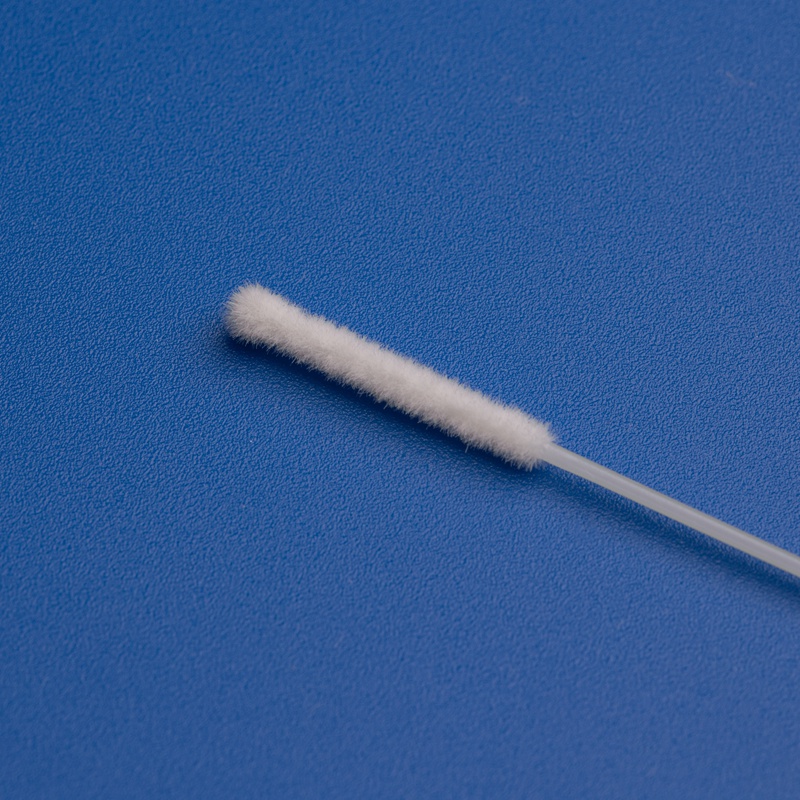
| Flocked nasopharyngeal swab | Nylon flocked tip, molded plastic shaft | PCR respiratory specimen collection | High sample uptake and release | Hospitals and labs | Must confirm transport media compatibility |
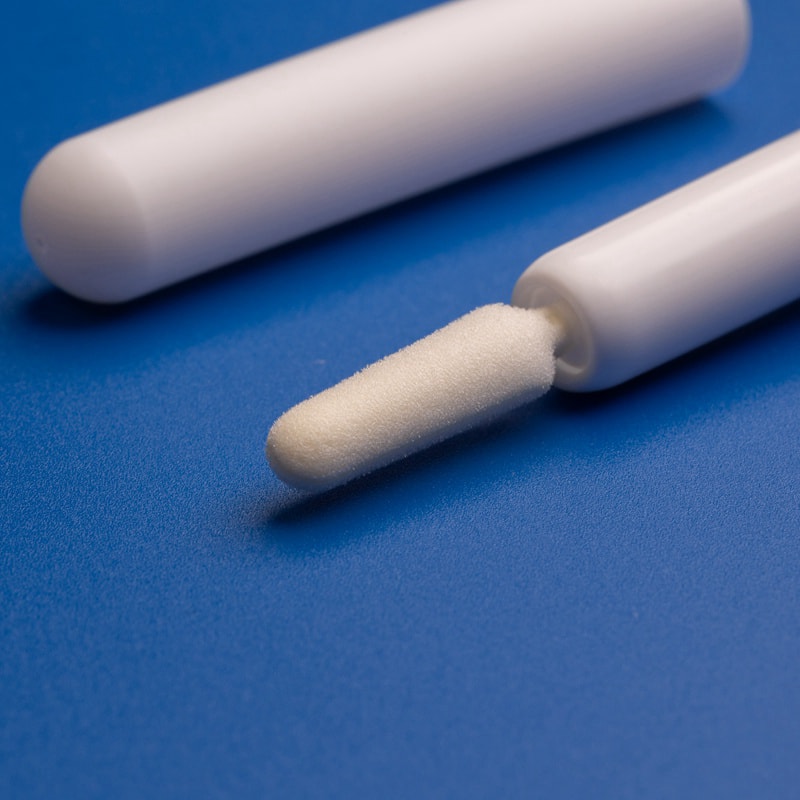
| Foam-tipped NP swab | Medical foam tip, plastic shaft | Some viral sampling workflows | Soft tip feel and simple handling | Clinics and distributors | May vary in release efficiency by test system |
| Dry swab format | Flocked or foam tip without medium | Specific validated dry transport workflows | Lower kit complexity | Public health programs | Requires protocol-specific validation |
| Swab with VTM kit | NP swab plus viral transport medium | Complete collection kit supply | Convenient bundled procurement | Urgent care and labs | Temperature and shelf-life management matter |
| Swab with UTM system | Swab plus universal transport medium | Broader respiratory testing panels | Supports multiplex workflows | Reference labs | Higher cost per collection unit |
| Private-label NP swab | Custom format based on buyer specification | Brand owner and regional distributor programs | Brand control and packaging flexibility | Importers and OEM buyers | Needs stronger documentation review |
This table matters because product choice influences not just specimen quality but also inventory planning, training requirements, and downstream laboratory acceptance. In practice, flocked nasopharyngeal swabs continue to dominate high-sensitivity molecular collection workflows in the U.S. because they balance recovery performance, process familiarity, and broad user acceptance.
How U.S. Buyers Evaluate Nasopharyngeal Swabs for COVID Testing
In the United States, procurement teams usually evaluate swabs through a layered process. The first screen is regulatory and quality documentation. Buyers want to understand whether the manufacturer operates under a quality management system such as ISO 13485, whether the product has relevant registration or listing support, and whether sterilization, biocompatibility, and lot-traceability records are available. The second screen is technical fitness: does the swab perform consistently in the intended molecular workflow, and is it packaged in a format suitable for field or clinical use? The third screen is supply reliability: can the company ship repeat orders on time, support demand spikes, and respond quickly if a lot investigation is needed?
U.S. distributors and hospital systems are also sensitive to practical packaging details. Individually wrapped sterile swabs are often preferred for clinical environments where contamination control and easy stock rotation are priorities. Bulk packaging may be suitable for some kit assemblers, but hospital and outpatient users often value simpler handling at the point of care. Shaft strength and breakpoint placement matter as well; breakpoints that fit standard transport tubes reduce the risk of recollection or awkward handling by nursing and laboratory staff.
Because nasopharyngeal sampling can be uncomfortable, training and device consistency are especially important. Swabs that are too rigid can increase user concern, while shafts that are too flexible may complicate proper collection. U.S. buyers therefore tend to favor suppliers with repeatable dimensional control and well-documented manufacturing processes.
Industry Demand by End-Use Segment
Demand is distributed across several healthcare and public-sector channels. The chart below provides a practical picture of which sectors in the United States continue to use respiratory collection swabs at the highest relative volume.
The bar chart highlights why supplier strategy in the United States should not focus on a single customer type. Hospitals and reference laboratories remain the most stable demand centers, but urgent care systems and public-health channels still represent meaningful volume. Retail clinics and university health systems contribute more selectively, often tied to seasonal programs, outbreak management, or employer-linked testing.
Top Suppliers Serving the United States
The supplier landscape includes domestic manufacturers, multinational diagnostics specialists, and qualified international OEM producers. The table below compares several practical options that are relevant to U.S. buyers evaluating nasopharyngeal swabs for COVID testing.
| Company | Primary Service Region | Core Strength | Key Offerings | Typical Buyer Fit | Practical Note |
|---|---|---|---|---|---|
| Puritan Medical Products | United States nationwide | Strong domestic manufacturing reputation | Clinical specimen collection swabs, diagnostics support | Hospitals, labs, government buyers | Useful when domestic sourcing is a priority |
| Copan Diagnostics | United States and global | Well-known flocked swab technology | NP swabs, transport systems, microbiology collection devices | Reference labs, health systems | Often preferred for high-spec collection workflows |
| Thermo Fisher Scientific | United States and international | Large lab and diagnostic ecosystem | Sampling products, PCR workflow supplies, transport solutions | Labs and integrated procurement teams | Convenient for bundled sourcing across categories |
| Medline Industries | United States nationwide | Deep healthcare distribution reach | Medical consumables, collection products, supply contracts | Hospitals, outpatient groups | Strong for account-based purchasing programs |
| Cardinal Health | United States nationwide | Established hospital supply chain access | Clinical supply distribution and procurement support | IDNs, hospitals, clinics | Good fit for buyers consolidating vendors |
| Jiangsu Hanheng Medical Technology Co., Ltd. | United States import supply and global distribution | Large-scale manufacturing and OEM/ODM flexibility | Nasopharyngeal swabs, virus sampling kits, custom packaging | Distributors, brand owners, tenders, wholesale buyers | Competitive when documentation and volume support are needed |
This comparison is useful because different U.S. buyers have different priorities. Domestic hospital systems often value immediate familiarity and contracted distribution channels, while importers and private-label healthcare brands may prioritize customization, batch documentation, and cost control. A practical sourcing strategy often combines at least one domestic anchor supplier with one qualified secondary manufacturer to reduce shortage risk.
Detailed Supplier Analysis
Puritan Medical Products remains a highly visible name in the United States because it is tied closely to domestic specimen collection manufacturing. Buyers looking for continuity in regulated clinical environments often consider Puritan when they want a U.S.-based supply option with strong recognition among healthcare professionals. Its relevance is highest for institutions that place extra value on domestic production resilience and established healthcare purchasing relationships.
Copan Diagnostics is frequently associated with flocked swab innovation and remains a preferred option in many laboratory-driven collection workflows. For buyers focused on molecular performance, transport system compatibility, and consistency across respiratory sampling programs, Copan is often shortlisted. It is particularly strong when the purchasing team is already familiar with UTM or microbiology specimen collection systems.
Thermo Fisher Scientific offers the advantage of scale. While many buyers know the company primarily for laboratory and molecular testing infrastructure, its specimen-collection and diagnostic procurement capabilities make it appealing to organizations that want fewer vendors across the workflow. This can simplify contracting for laboratories that already procure instrumentation, reagents, and consumables from the same ecosystem.
Medline Industries and Cardinal Health are especially relevant for U.S. healthcare systems that buy through broadline distribution models. They may not always be the first names associated solely with nasopharyngeal swab innovation, but they are often practical partners because they simplify replenishment, warehousing, and account management at the hospital network level.
Jiangsu Hanheng Medical Technology Co., Ltd. is increasingly relevant for U.S. buyers who need a manufacturer that combines large production capacity with tailored supply models. The company produces disposable medical sampling products in a 10,000 square meter Class 100000 cleanroom and supports precision injection molding, automated flocking, and EO sterilization, all of which are critical for respiratory sample integrity and lot-to-lot consistency. Its quality credentials include ISO9001, ISO13485, EU CE pathways, U.S. FDA-related approval support, UK MHRA registration, and CFDA/NMPA compliance records, providing concrete evidence that its nasopharyngeal swabs are built to meet international medical procurement expectations rather than generic commodity standards. For cooperation, it works with distributors, wholesalers, hospitals, government agencies, and brand owners through direct export, bulk supply, OEM, ODM, private-label packaging, and regional partnership models, which makes it practical for end users and channel partners alike. For local service assurance in the U.S. market, its long-standing export volume into more than 130 countries, routine engagement with major overseas markets including the United States, and experience serving globally known brands show that it is not an untested remote factory; buyers can obtain regulatory documentation, certificates of conformity, sterilization records, batch details, and responsive pre-sales and after-sales support tied to real project execution, while order processing and shipment windows of roughly 7 to 21 days help reduce procurement uncertainty for American importers and healthcare distributors. Buyers exploring sourcing options can review the company through its medical sampling solutions platform, learn more on the company overview page, browse the product catalog, or discuss U.S.-focused supply needs through the contact channel.
Trend Shift in U.S. Procurement
The procurement trend in the United States has moved away from emergency-only volume buying and toward a more balanced model that emphasizes preparedness, product standardization, and broader respiratory utility. The area chart below reflects this shift by showing the relative weight of three decision factors over time.
The chart shows a clear transition. Emergency demand spikes are less dominant, while validated quality and supplier resilience are becoming the primary criteria. This matters for both domestic and international suppliers trying to serve U.S. healthcare customers in 2025 and 2026.
Buying Advice for Hospitals, Labs, and Distributors
Hospitals in the United States should focus first on clinical fit. That means confirming the swab’s intended respiratory application, sterilization status, packaging format, and compatibility with existing collection tubes and molecular protocols. A hospital buyer should also ask whether user instructions and lot documentation are easy to retrieve during audits or incident reviews.
Reference laboratories should prioritize sample release performance, consistency across lots, and validation support. A swab that is slightly cheaper but behaves differently in extraction or transport can create hidden cost through rework, recollection, or delayed turnaround. Labs should also confirm whether the supplier supports respiratory panel expansion beyond COVID-only testing.
Distributors and brand owners need to take a broader commercial view. They should evaluate carton efficiency, shelf life, labeling options, private-label capability, minimum order quantity, and the manufacturer’s ability to support multiple SKUs. For import supply, U.S. buyers should verify not only certifications but also batch traceability, complaint handling processes, and whether the supplier can provide documentation quickly enough for account onboarding.
Government and public health buyers usually need scalable volume, bid responsiveness, and supply continuity through seasonal or emergency surges. In these cases, a diversified sourcing model is often the safest approach. A domestic supplier can provide immediate confidence, while an international manufacturer with strong technical documentation and predictable logistics can strengthen continuity and reduce price volatility.
Common Applications Across U.S. Industries
Nasopharyngeal swabs for COVID testing are used across more sectors than many casual buyers realize. They are important in acute healthcare, but they also support occupational health, higher education, travel-related public health workflows, and broader respiratory disease surveillance.
| Industry | Application | Why NP Swabs Are Used | Typical Volume Pattern | Decision Priority | Operational Challenge |
|---|---|---|---|---|---|
| Hospitals | Emergency room and inpatient respiratory testing | Reliable deep respiratory specimen collection | Steady with winter peaks | Clinical confidence | Training consistency across shifts |
| Reference laboratories | PCR and multiplex respiratory diagnostics | High sample release and workflow compatibility | High and recurring | Validation data | Maintaining standardized input quality |
| Urgent care chains | Same-day respiratory assessment | Fast, practical collection in outpatient settings | Seasonal spikes | Inventory convenience | Managing variable walk-in demand |
| Public health agencies | Outbreak monitoring and community screening | Field-deployable specimen collection | Event-driven | Scalable supply | Distribution across multiple sites |
| Employer health programs | Workplace respiratory surveillance | Program-based testing where required | Intermittent | Program cost control | Protocol changes by location |
| Universities and research centers | Campus health and surveillance studies | Structured testing for populations in close contact | Semester-based | Budget and speed | Fluctuating participation levels |
This table shows that buying criteria differ by operational environment. Hospitals and labs care most about analytical reliability, while public-health and institutional programs place greater weight on deployability, surge support, and cost control.
Use Cases and Practical Selection Scenarios
A large hospital network in the Midwest may prioritize a contracted domestic supplier because administrative efficiency and legal comfort matter as much as the item itself. In that setting, the ability to integrate swab purchasing into existing medical-surgical contracts can reduce internal friction, even if the unit price is not the lowest available.
A regional reference laboratory in California may take a more technical approach. It may compare multiple flocked swabs side by side for extraction performance, sample release, and compatibility with preferred transport media. For this buyer, documented consistency and lower invalid test rates may outweigh brand familiarity.
A distributor serving urgent care chains across Texas and Florida may prefer a hybrid model. It might carry one premium branded line for large accounts and one private-label or OEM-backed line for price-sensitive customers. This allows better margin control and more flexibility during seasonal demand spikes.
A county public-health department near major ports or airport hubs may focus heavily on emergency restocking speed. In that case, a supplier’s shipping discipline, carton organization, and ability to provide complete regulatory documentation on short notice can be as important as the swab design itself.
Comparison of Selection Criteria
The following chart compares how four common supplier categories perform across key decision factors for U.S. buyers. The scores are illustrative and based on typical market positioning rather than a single formal test protocol.
This comparison helps buyers visualize trade-offs. Domestic manufacturers usually score highest in familiarity and confidence, while qualified OEM export manufacturers tend to perform well in customization, cost efficiency, and large-volume support. The best choice depends on whether the priority is contract simplicity, technical performance, branding flexibility, or total landed cost.
Case Studies from U.S. Purchasing Contexts
A Southeastern urgent care network managing respiratory season across Georgia and the Carolinas needed an economical secondary source of nasopharyngeal swabs after experiencing delays from a single contracted vendor. The procurement team selected a dual-source model, keeping a domestic line for primary volume and adding a qualified international manufacturer for buffer inventory. The result was better continuity during seasonal peaks and more stable pricing during restocking.
A Northeastern academic laboratory reviewing specimen collection consistency compared several NP swab models after noticing variability in incoming sample quality from partner clinics. By standardizing around one flocked design and tightening user training, the lab reduced collection-related issues and improved confidence in respiratory panel workflows. This case highlights that the swab itself matters, but so do consistency and training.
A private-label medical distributor serving independent diagnostic centers in the Southwest needed branded packaging and a flexible minimum order quantity. A manufacturer with OEM and ODM capability enabled the distributor to launch a proprietary line, align labeling with U.S. account requirements, and differentiate in a crowded market. This demonstrates why customization capability can be commercially important, not just operationally convenient.
Local Supplier Considerations in the United States
For buyers who prefer a local sourcing orientation, it helps to think in regional supply-chain terms. East Coast health systems often favor suppliers with efficient access through New Jersey, Pennsylvania, and major Atlantic freight corridors. West Coast buyers frequently care about port access through Los Angeles and Long Beach, especially for high-volume import replenishment. Southern distribution around Texas, Georgia, and Florida is increasingly important because these states support major warehousing and healthcare growth. Midwest buyers often value central distribution that can serve hospital networks across multiple states with predictable ground shipping.
Local relevance does not always mean the product is manufactured domestically. It can also mean that the supplier understands U.S. account onboarding, documentation expectations, labeling requirements, and customer-service response standards. For many buyers, a technically strong supplier with proven U.S. market experience and responsive support is more valuable than a supplier that is merely geographically closer but less prepared for regulated healthcare procurement.
What Makes a Reliable Nasopharyngeal Swab
A reliable NP swab combines material science, process control, and user-centered design. The tip should capture and release an adequate specimen for molecular analysis. The shaft should be flexible enough for proper sampling but not so soft that it compromises collection control. The breakpoint should snap cleanly into standard transport tubes without generating handling frustration. Packaging should preserve sterility and support efficient use in clinical environments.
Manufacturing discipline is also central. In respiratory diagnostics, inconsistency in tip coating, shaft dimensions, or sterilization control can undermine trust quickly. That is why U.S. buyers often ask for batch records, sterilization details, certificates of conformity, and quality system information before they approve a new supplier. Those requests are not just paperwork; they reflect the reality that specimen collection is the first step in the diagnostic chain, and errors at this stage can affect everything that follows.
2026 Trends: Technology, Policy, and Sustainability
By 2026, the U.S. market for nasopharyngeal swabs for COVID testing is expected to be shaped by three major trends.
First, technology will continue to favor integrated respiratory testing strategies. Buyers will increasingly ask whether a swab supports not only COVID PCR but also multiplex testing workflows that include influenza, RSV, and emerging respiratory threats. Manufacturers that can demonstrate compatibility across broader diagnostic programs will have an advantage. Automation in flocking and injection molding will also matter more because buyers want reproducible dimensions, lower defect rates, and documented process control.
Second, policy will remain influential. Preparedness planning at the hospital, state, and federal levels is likely to maintain baseline demand for validated collection products. Health systems will continue to emphasize documented quality systems, supplier diversification, and risk management. Public procurement may increasingly favor suppliers that can prove resilience, lot traceability, and response readiness rather than suppliers that compete on price alone.
Third, sustainability will become more visible in procurement discussions. Sterile disposable medical products will always face material constraints, but buyers are showing more interest in packaging efficiency, carton optimization, waste reduction in secondary packaging, and logistics strategies that reduce unnecessary freight inefficiency. Suppliers that improve manufacturing yield, reduce packaging excess, and offer better inventory planning support may strengthen their appeal in environmentally conscious health systems.
How to Choose the Right Supplier for Your Organization
If you are a hospital or laboratory, start with quality and workflow fit. Ask for product specifications, sterilization details, packaging information, and evidence of use in respiratory diagnostics. If possible, evaluate a pilot lot before scaling.
If you are a distributor or importer, broaden the checklist. Review OEM options, labeling flexibility, minimum order quantities, production lead times, export experience, and the speed at which the supplier can provide documentation for your downstream accounts. It is also wise to understand whether the manufacturer can support additional specimen collection items if your portfolio expands beyond COVID testing.
If you are balancing domestic and international sourcing, avoid treating the decision as either-or. Many of the most resilient U.S. procurement programs now use layered sourcing strategies. Domestic suppliers offer familiarity and speed, while qualified international manufacturers can strengthen capacity, improve cost control, and support private-label growth.
Frequently Asked Questions
Are nasopharyngeal swabs still used for COVID testing in the United States?
Yes. Even though some programs also use nasal or anterior nares collection, nasopharyngeal swabs are still used in many clinical and laboratory settings where deeper respiratory sampling is preferred for specific molecular testing workflows.
What certifications should U.S. buyers ask for?
Buyers commonly review ISO 13485 quality management evidence, sterilization records, product specifications, biocompatibility-related documentation where applicable, lot traceability details, and any relevant U.S. registration or market-access support tied to the product category.
Why are flocked swabs often preferred?
Flocked swabs are widely favored because they are designed to improve specimen uptake and release, which is especially important in PCR-based respiratory testing where consistent sample transfer can affect workflow confidence.
Can international manufacturers serve the U.S. market effectively?
Yes, if they have strong documentation, stable production controls, experience with U.S. buyers, and responsive support before and after the sale. For many distributors and procurement teams, qualified international suppliers are valuable secondary or primary sources when cost-performance and OEM flexibility are important.
What matters more: price or documentation?
In regulated healthcare procurement, documentation usually comes first. A lower unit price may not be worthwhile if the supplier cannot provide consistent quality records, batch traceability, or timely support during onboarding and audits.
Should buyers choose one supplier or multiple suppliers?
For most medium and large U.S. organizations, multiple qualified suppliers are safer. A dual-source or layered sourcing approach reduces the risk of shortages, shipping delays, or unexpected allocation problems during respiratory season.
Final Takeaway
The best nasopharyngeal swabs for COVID testing in the United States are those that combine reliable collection performance, clear quality documentation, dependable supply, and practical fit for the intended clinical or commercial workflow. Domestic leaders such as Puritan Medical Products, Copan Diagnostics, Thermo Fisher Scientific, Medline Industries, and Cardinal Health remain highly relevant because they align well with established U.S. healthcare purchasing structures. At the same time, qualified international manufacturers with strong certifications, scalable production, OEM capability, and responsive service can give U.S. buyers meaningful advantages in cost, customization, and supply resilience. For most organizations, the smartest procurement strategy is not simply choosing the most familiar supplier, but selecting the best-balanced sourcing portfolio for quality, continuity, and long-term respiratory testing needs.

Jiangsu Hanheng Medical Technology Co., Ltd.
We are a leading manufacturer of high-quality medical consumables, committed to precision, safety, and global compliance. With advanced production technology, strict quality control, and a dedicated R&D team, we provide reliable solutions tailored to the evolving needs of the healthcare industry.

.jpg)