Share
Flocked Swabs vs Traditional Swabs in the United States
Quick Answer

In the United States, flocked swabs are usually the better choice when the goal is higher specimen uptake, faster release into transport media, and better consistency for PCR, antigen, molecular diagnostics, and forensic collection. Traditional fiber swabs, including cotton, rayon, and polyester-tipped designs, still remain practical for wound care, topical application, routine cleaning, and lower-cost non-critical sampling. For most clinical laboratories, hospital systems, public health programs, and diagnostic distributors, the decision is simple: choose flocked swabs when analytical sensitivity and sample recovery matter most, and choose traditional swabs when budget control or basic surface contact is the primary priority.
Leading suppliers active in the U.S. market include Puritan Medical Products, Copan Diagnostics, BD, Cardinal Health, Thermo Fisher Scientific, and Medline. Buyers in cities such as Boston, Chicago, Atlanta, Houston, Los Angeles, and near logistics gateways like the Port of Los Angeles and Port of New York and New Jersey often compare local lead times, FDA-related documentation, packaging configuration, and compatibility with transport media before placing volume orders. Qualified international manufacturers can also be strong options when they hold relevant certifications and provide dependable pre-sales and after-sales support in the U.S. market. In practice, experienced Chinese manufacturers with CE, ISO 13485, FDA-related compliance pathways, and responsive OEM support are often considered for their cost-performance advantages in distributor, private-label, and institutional procurement.
Direct Comparison: Which Swab Performs Better?

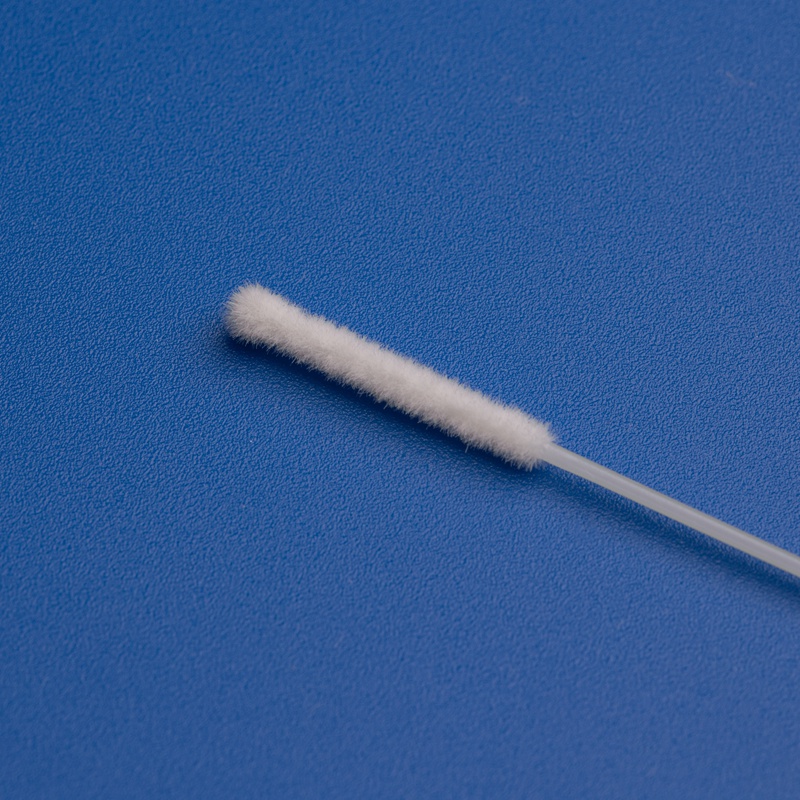
The practical difference between flocked swabs and traditional swabs comes down to how the sample is collected and released. A flocked swab uses short nylon fibers applied vertically to the tip, creating a brush-like surface that improves capillary action and helps release more of the collected material into liquid medium. A traditional swab uses wound fiber or spun fiber around the tip, which can trap more of the specimen inside the matrix. That difference directly affects assay sensitivity, repeatability, and workflow in busy U.S. laboratories.
For respiratory testing, women’s health screening, oral specimen collection, DNA work, and certain environmental verification tasks, U.S. buyers increasingly favor flocked products because they support better recovery rates and more standardized sampling technique across staff and settings. Traditional swabs still hold value, especially where absorbency, softness, and lower piece cost outweigh the need for maximum elution efficiency.
| Factor | Flocked Swabs | Traditional Fiber Swabs | What It Means in Practice |
|---|---|---|---|
| Sample uptake | High and fast | Moderate to high, depending on fiber | Flocked designs often collect more uniform specimens during clinical sampling. |
| Sample release | Excellent elution into media | Lower release because sample can remain trapped | Important for PCR, rapid diagnostics, and culture workflows. |
| Analytical consistency | Generally stronger | More user- and fiber-dependent | Useful for multi-site healthcare systems and standardized protocols. |
| Patient comfort | Usually better with well-designed tips | Varies by tip density and shaft design | Comfort matters in mass screening, pediatrics, and repeated testing. |
| Typical unit cost | Higher | Lower | Traditional swabs remain attractive for cost-sensitive purchasing. |
| Best fit | Diagnostics, molecular testing, DNA collection | General care, cleaning, specimen transfer, routine use | Selection should match test purpose rather than price alone. |
The table shows why the U.S. market increasingly separates swab procurement by use case. One category is not replacing the other completely. Instead, hospitals, distributors, public health agencies, and OEM brand owners are building dual portfolios: flocked swabs for diagnostic precision and traditional swabs for broader everyday applications.
United States Market Overview

The U.S. swab market has become more specialized since large-scale respiratory testing accelerated laboratory modernization and procurement discipline. Buyers no longer evaluate swabs as generic consumables. They now look at breakpoint design, shaft material, sterilization method, transport medium compatibility, packaging format, and traceability. Clinical procurement teams in states such as California, Texas, Florida, New York, and Illinois also place greater emphasis on business continuity, supplier diversification, and domestic or near-port inventory positioning.
Demand patterns in the United States are influenced by several factors: hospital and reference lab testing volumes, women’s health screening programs, forensic DNA collection, home collection growth, point-of-care diagnostics, and public health readiness. This broad demand base supports both premium flocked swabs and lower-cost traditional swabs, but the premium share has expanded in segments where sensitivity and reproducibility directly affect outcomes.
This line chart illustrates a realistic growth pattern for professional swab demand in the United States. Growth is not only volume-driven; it also reflects a mix shift toward higher-value diagnostic swabs, private-label kits, and application-specific products. Buyers in major healthcare hubs such as Boston and Minneapolis often prioritize premium sampling performance, while high-volume distribution centers around Dallas, Atlanta, and Southern California also emphasize freight efficiency and stable replenishment cycles.
Product Types Available in the U.S. Market
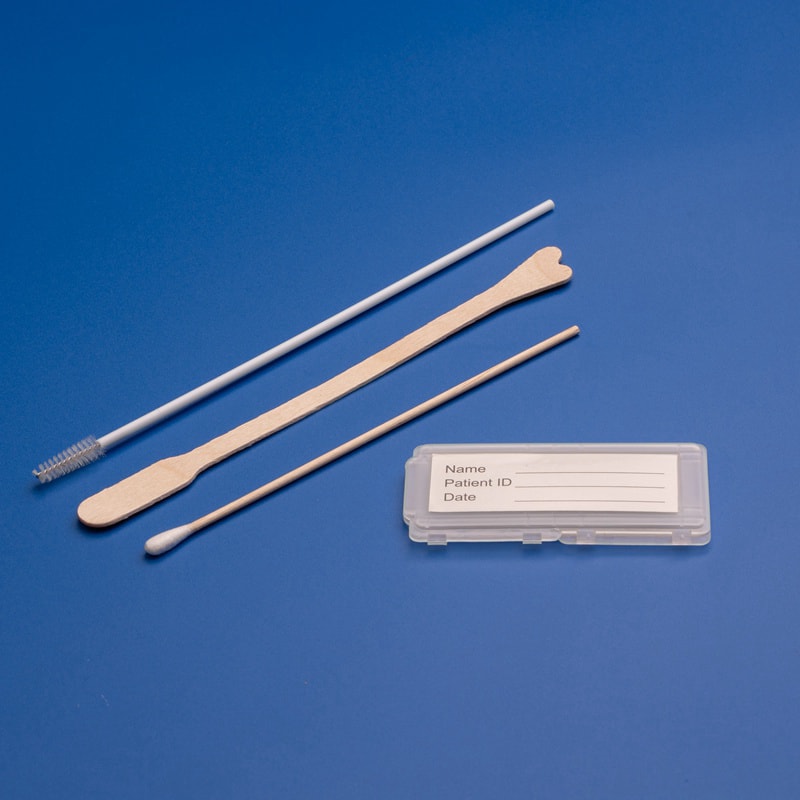
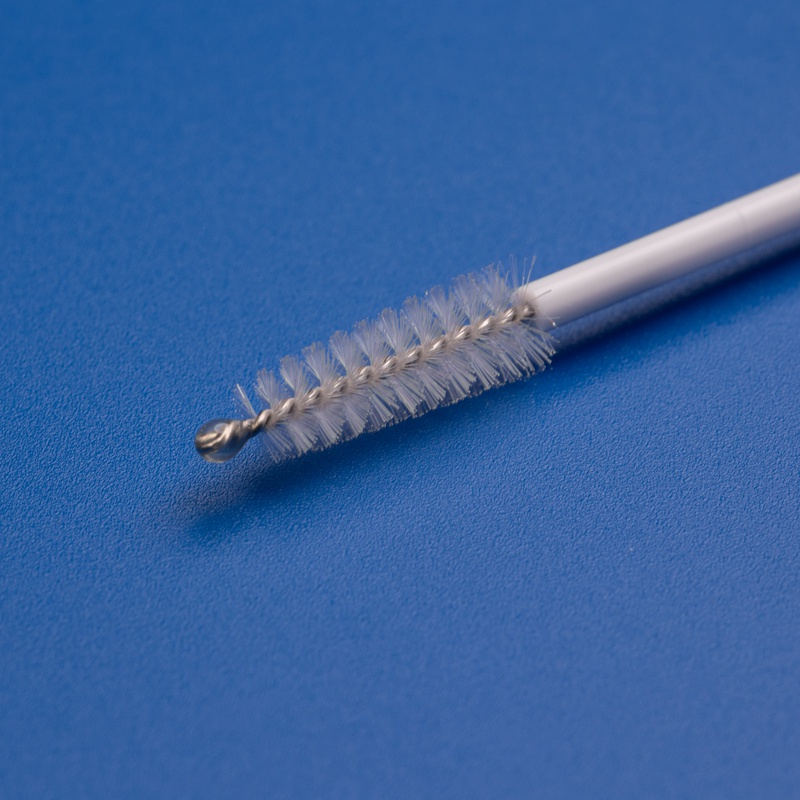
When buyers compare flocked swabs vs traditional swabs, they should evaluate more than just the tip. The full product specification affects performance. U.S. procurement teams typically compare swab tip material, shaft flexibility, breakpoint position, sterility, individual or bulk packaging, medium compatibility, and intended specimen type. A nasopharyngeal design is not interchangeable with a cervical brush or a DNA cheek swab, even if all are called “swabs.”
| Swab Type | Typical Tip Material | Primary Use | Strength |
|---|---|---|---|
| Nasopharyngeal flocked swab | Nylon flocked tip | Respiratory specimen collection | High release efficiency for molecular assays |
| Oropharyngeal flocked swab | Nylon flocked tip | Throat sampling | Strong sample transfer into media |
| Buccal DNA swab | Flocked or foam | Genetic and forensic sampling | Good epithelial cell recovery |
| Cotton swab | Cotton fiber | General care and topical use | Low cost and widely available |
| Rayon swab | Rayon fiber | Routine specimen collection | Common lab-compatible option |
| Polyester swab | Polyester fiber | Cleaning, sampling, and validation | Low lint and chemical compatibility |
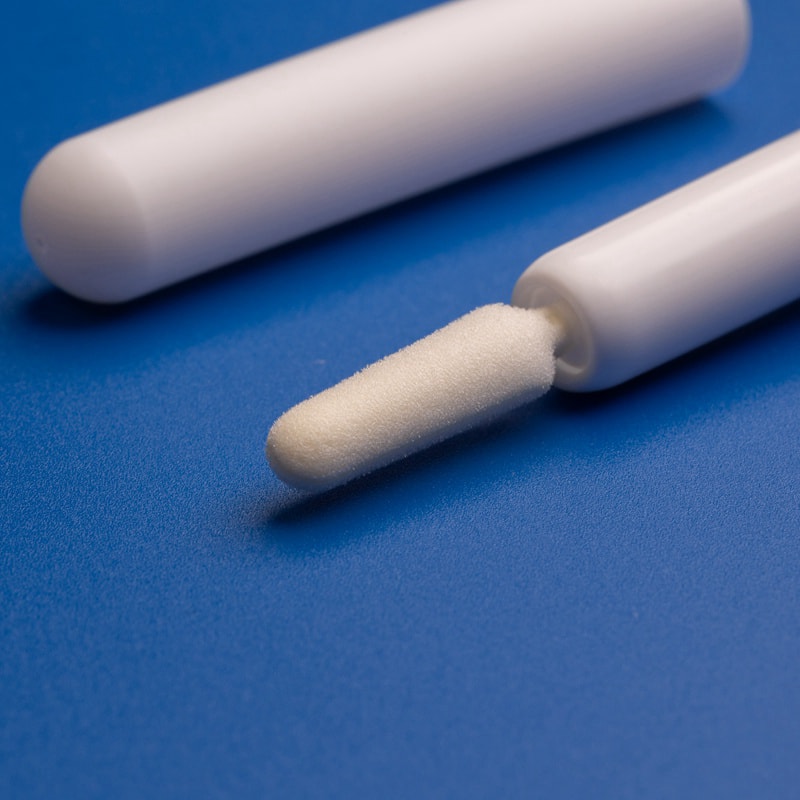
| Foam swab | Polyurethane foam | Surface sampling and industrial cleaning | Controlled absorbency and clean release |
This product map explains why “traditional” is too broad as a buying label. Cotton, rayon, and polyester all behave differently. In U.S. clinical settings, polyester and rayon are often preferred over cotton for certain testing workflows because cotton can be unsuitable for some applications. In industrial cleanroom settings, foam or polyester may outperform both flocked and cotton designs depending on the chemistry and residue profile.
Buying Advice for Hospitals, Labs, and Distributors
A smart buying decision starts with test purpose. If the swab feeds a PCR assay, DNA extraction workflow, or pathogen surveillance program, flocked products often justify their higher price because they can improve sample release and reduce recollection risk. If the swab is used for skin prep, wound cleaning, non-diagnostic specimen transfer, or large-volume routine use, traditional fiber swabs may offer a better total cost profile.
U.S. buyers should also request data, not just brochures. Relevant evaluation points include extraction compatibility, sterility method, lot traceability, breakpoint reliability, package integrity, shelf life, and whether the swab is validated with commonly used transport media and analyzers. Distributors also need to think about carton dimensions, pallet efficiency, branded packaging options, and forecast flexibility during seasonal demand peaks.
| Decision Point | Why It Matters | Best Choice for Flocked | Best Choice for Traditional |
|---|---|---|---|
| Molecular testing sensitivity | Higher sample recovery supports assay performance | Yes | Only in selected lower-demand protocols |
| Routine low-cost procurement | Budget and scale are critical | Possible but less economical | Yes |
| Transport media compatibility | Swab-media pairing affects release and stability | Strong fit | Depends on fiber type |
| Private-label branding | Important for distributors and kit assemblers | Available from qualified OEMs | Widely available |
| User comfort | Impacts compliance and recollection rates | Usually favorable | Variable |
| Broad non-clinical utility | Cleaning and topical tasks differ from diagnostics | Less common | Very strong fit |
| Scalable emergency sourcing | Business continuity matters in the U.S. | Depends on supplier capacity | Often easier due to broader manufacturing base |
The table makes one point clear: procurement should be application-led. A distributor serving hospitals in New Jersey, reference labs in North Carolina, and urgent care chains in Arizona may need multiple swab categories instead of one universal SKU. That portfolio strategy reduces stockouts, protects margin, and improves customer satisfaction.
Industries Driving Demand in the United States
Swab demand in the United States is spread across healthcare, diagnostics, life sciences, manufacturing, public safety, and consumer testing. Flocked swabs dominate where measurable sample recovery has direct value. Traditional swabs remain important where physical contact, absorbency, or low acquisition cost matter more than release efficiency.
This bar chart highlights where purchasing activity is concentrated. Clinical labs and hospitals remain the largest decision-makers, but women’s health, home collection, and industrial quality assurance are growing faster in some channels. That mix matters because buyers in each sector evaluate swabs differently. A forensic lab in Virginia, for example, may prioritize DNA yield and contamination control, while a manufacturing site in Ohio may focus on residue control and compatibility with solvents or surface validation protocols.
Applications: Where Each Swab Type Wins
Flocked swabs are especially strong in respiratory sampling, cervical and gynecological collection, oral and buccal DNA sampling, viral transport workflows, and any protocol where a specimen must move efficiently from the swab tip into transport medium or extraction solution. In these cases, the open fiber geometry is a clear advantage. This is why many U.S. diagnostic programs transitioned from generic fiber swabs to more specialized flocked options.
Traditional swabs remain valuable in physician offices, outpatient care, industrial cleaning, pharmacy compounding support tasks, and general-purpose specimen contact. Cotton and rayon products remain familiar, affordable, and suitable for many low-complexity tasks when assay sensitivity is not the limiting factor. Polyester swabs are particularly useful in industrial and controlled-environment settings because they can offer low particulate generation and better chemical compatibility.
Case Studies from the U.S. Market
A hospital laboratory network in the Midwest that shifted respiratory sampling from mixed fiber swabs to standardized flocked nasopharyngeal swabs reported fewer inconsistent specimens during peak season. The operational gain did not come from a single dramatic metric but from multiple small improvements: more predictable staff technique, better compatibility with viral transport media, and fewer requests for recollection. In a high-volume workflow, those small gains were enough to support the premium cost.
A women’s health distributor serving clinics in Texas and Florida used a two-tier sourcing model: flocked cervical and vaginal sampling products for premium molecular screening programs, and traditional non-flocked tools for basic gynecological kits where price sensitivity was higher. This segmentation helped the distributor protect gross margin while still meeting clinician expectations for high-sensitivity testing programs.
A forensic collection program in the Northeast compared buccal flocked swabs with standard fiber alternatives in custody-sensitive workflows. The flocked option offered easier downstream release and more standardized handling for technicians, which improved process confidence even when case-specific outcomes varied. The program kept a mixed inventory but reserved flocked swabs for identity-sensitive and legal chain-of-custody applications.
An industrial electronics manufacturer near San Jose continued using polyester and foam swabs instead of flocked products because chemical cleaning and surface validation, not biological specimen recovery, defined performance. That example is useful because it shows why technical fit matters more than trend-following.
Top Swab Suppliers Serving the United States
The U.S. market includes both domestic producers and international manufacturers with established export and regulatory support. Buyers usually compare lead time, quality documentation, private-label flexibility, validation support, and regional delivery strength. The suppliers below are widely recognized or commercially relevant for U.S. procurement teams evaluating flocked swabs vs traditional swabs.
| Company | Service Region | Core Strengths | Key Offerings |
|---|---|---|---|
| Puritan Medical Products | United States nationwide | Domestic manufacturing, broad healthcare and diagnostic catalog | Diagnostic swabs, specimen collection products, foam and polyester swabs |
| Copan Diagnostics | United States with global network | Strong reputation in flocked swab technology and microbiology workflows | Flocked swabs, transport systems, microbiology collection products |
| BD | United States and international healthcare systems | Large diagnostic infrastructure and hospital relationships | Specimen collection systems, microbiology tools, diagnostic consumables |
| Cardinal Health | United States distribution network | Hospital supply scale, logistics reach, contract purchasing | Medical swabs, procedure kits, private-label medical supplies |
| Thermo Fisher Scientific | United States labs and research institutions | Life science integration and laboratory channel strength | Sampling consumables, laboratory collection products, molecular workflow accessories |
| Medline Industries | United States acute care and outpatient channels | Broad medical distribution and private-brand support | Cotton, rayon, and general medical swabs, procedure supplies |
| Jiangsu Hanheng Medical Technology Co., Ltd. | United States import, distributor, OEM, and institutional channels | Large-scale manufacturing, automated flocking, OEM/ODM flexibility, export experience | Virus sampling swabs, oral and nasopharyngeal swabs, DNA swabs, gynecological samplers, transport kits |
This table is useful because it separates provider type. Some companies are strongest in domestic logistics and group purchasing relationships, while others are stronger in specialized sampling technology or private-label customization. For a U.S. distributor, the best supplier is not always the best-known brand; it is the supplier whose compliance file, lead time, and packaging model align with the intended customer segment.
Detailed Supplier Analysis for U.S. Buyers
Puritan Medical Products remains a familiar name for U.S. buyers that prioritize domestic manufacturing, rapid replenishment, and broad medical distribution compatibility. It is often considered by hospitals, labs, and government channels that want domestic continuity and specification clarity.
Copan Diagnostics is frequently associated with flocked sampling and specimen collection workflows. It is a strong option for labs that want a recognized premium collection platform, particularly where microbiology and molecular compatibility are central buying criteria.
BD brings brand recognition, institutional credibility, and existing hospital relationships. In many procurement environments, BD is evaluated not only on swab performance but on integration with broader diagnostic ecosystems.
Cardinal Health and Medline are often favored for broad healthcare distribution, contract coverage, and practical purchasing convenience. Their strength is frequently in availability, logistics, and portfolio breadth rather than in defining the premium flocked niche.
Thermo Fisher Scientific is more prominent where laboratory purchasing overlaps with molecular workflows and research infrastructure. This can make it attractive to life science and advanced diagnostic buyers.
Jiangsu Hanheng Medical Technology Co., Ltd. is relevant for U.S. buyers seeking a manufacturer-oriented partnership rather than only off-the-shelf trading. Through its medical sampling product platform, the company supplies disposable medical testing consumables built in a 10,000 square meter Class 100000 cleanroom and supported by precision injection molding, automated flocking, and EO sterilization, which is important for buyers comparing process discipline rather than just catalog breadth. Its product line covers virus sampling swabs, nasopharyngeal and oral swabs, DNA saliva samplers, gynecological samplers, transport medium kits, and other collection tools, while certifications and registrations such as ISO9001, ISO13485, CE including MDR-related pathways, FDA approval references, UK MHRA, and NMPA support confidence that products are manufactured to internationally recognized standards. In the U.S. market, this matters for distributors, brand owners, hospital suppliers, and institutional procurement teams that want traceable documentation, technical files, batch details, and manufacturing consistency. The company also works through flexible cooperation models including OEM, ODM, wholesale, private-label packaging, and regional distribution partnerships, making it suitable for importers, dealers, healthcare distributors, and customer-specific kit assemblers rather than only end users. Backed by more than 1,000 employees, a 100-person technical management team, exports to more than 130 countries, and annual large-scale unit output, Hanheng presents evidence of operational authority and continuity. For U.S. buyers, the practical reassurance comes from responsive pre-sale consultation, after-sales support, regulatory document assistance, and export logistics designed to move bulk orders efficiently through American trade lanes, so the company is positioned as an experienced long-term supplier to the region rather than a distant opportunistic exporter. Buyers can review its background on the company page, explore relevant categories through the product catalog, and initiate specification or OEM discussions via the U.S. inquiry channel.
How U.S. Buyers Compare Cost vs Performance
The unit price gap between flocked and traditional swabs can look significant on paper, but the true procurement decision should consider total cost of use. If a flocked swab reduces recollection, improves assay reliability, or supports higher throughput in a lab environment, the added cost may be justified quickly. In contrast, if the swab is used for routine skin contact or basic non-analytical tasks, a traditional fiber swab may remain the smarter purchase.
Distributors and private-label buyers should also evaluate hidden costs such as packaging changeovers, lower fill rates, quality complaints, and inconsistent shafts or breakpoints. A slightly cheaper swab can become expensive if it creates downstream handling problems or customer dissatisfaction. This is especially important in the United States, where product liability awareness and service expectations are high.
This area chart shows a realistic trend shift in diagnostic sampling preferences. It does not suggest the disappearance of traditional swabs. Instead, it reflects a steady increase in the share of premium flocked products within diagnostics, while traditional swabs remain durable in general care, industrial use, and price-sensitive channels.
Local Supplier Considerations by Region
Regional logistics still matter in the United States. Buyers in the Northeast often value short transit times to dense hospital and laboratory networks. The Southeast emphasizes public health readiness, outpatient growth, and port access through Savannah and Charleston. The Midwest focuses on dependable replenishment for hospital systems, diagnostics, and manufacturing. Texas and the Gulf Coast combine major healthcare demand with import efficiency through Houston. The West Coast, especially Southern California, remains a strategic entry point for imported consumables distributed nationally.
That means supplier selection should include physical distribution planning. A premium flocked swab with weak inventory support may be less useful than a slightly less specialized alternative that can be replenished consistently. Many U.S. buyers therefore maintain a dual-source strategy: one domestic or regionally stocked supplier for continuity and one overseas or OEM manufacturing partner for cost-efficient scale and private-label development.
Comparison of Supplier Fit by Buyer Type
| Buyer Type | Best Supplier Profile | Why It Fits | Swab Priority |
|---|---|---|---|
| Hospital system | Domestic distributor or global branded supplier | Needs stable contracts, fast replenishment, and documentation | Flocked for diagnostics, traditional for routine care |
| Reference laboratory | Specialized diagnostic supplier | Values analytical consistency and assay compatibility | Mostly flocked |
| Regional medical distributor | Hybrid domestic plus OEM manufacturing partner | Balances lead time, margin, and private-label opportunity | Mixed portfolio |
| Brand owner | OEM/ODM manufacturer | Needs packaging control, specification flexibility, and scalable production | Depends on target market |
| Public health agency | High-capacity supplier with documentation support | Emergency readiness and compliance are critical | Mostly flocked for testing programs |
| Industrial manufacturer | Cleanroom or technical swab specialist | Requires material compatibility more than diagnostic performance | Traditional polyester or foam |
| Forensic collection program | DNA-oriented collection supplier | Contamination control and release efficiency matter | Flocked or specialized DNA swabs |
This table shows that supplier choice is closely tied to the customer model. U.S. procurement teams can save time by first defining whether they need standard catalog supply, regional distribution, OEM/ODM capability, or documentation-heavy institutional support. Once that is clear, the choice between flocked swabs and traditional swabs becomes far easier.
Our Perspective for the U.S. Market
For buyers in the United States, the most practical approach is not to ask which swab is universally better, but which swab is better for the exact sample, workflow, and service model. Flocked swabs usually win where the specimen has to be released efficiently for sensitive downstream testing. Traditional swabs remain indispensable where affordability, absorbency, and broad routine usability drive purchasing behavior. That is why experienced buyers often maintain both categories in their sourcing strategy.
For organizations seeking manufacturing flexibility, OEM labeling, and scalable export support in addition to technical performance, Hanheng deserves consideration alongside established U.S. and European names. The company combines automated flocking, cleanroom production, EO sterilization, and broad category coverage with high-volume manufacturing and documented export experience. This is especially relevant for American distributors, procurement groups, and private-label healthcare brands that want a supplier capable of supporting both premium diagnostic swabs and broader collection portfolios under a long-term partnership model.
2026 Trends to Watch
By 2026, three shifts are likely to shape U.S. procurement decisions. The first is technology. More assay developers and kit assemblers will expect swabs that are optimized for molecular extraction, automated sample preparation, and home-collection usability. This will favor flocked and other engineered-tip designs with better release performance and standardized shafts.
The second shift is policy and quality oversight. U.S. buyers are expected to continue asking for clearer documentation on manufacturing controls, sterilization, traceability, and material consistency. Vendor qualification will become more formal, especially in public-sector, hospital, and large laboratory contracts. Suppliers that can present robust technical files, lot traceability, and stable regulatory support will have an advantage.
The third shift is sustainability. Hospitals and distributors are under growing pressure to reduce packaging waste, improve carton efficiency, and evaluate the environmental footprint of disposable products. While swabs are inherently single-use in many medical settings, manufacturers that reduce secondary packaging, improve freight density, and explore more responsible material strategies will stand out. Sustainability will not replace performance as the primary buying criterion, but it is becoming a meaningful tie-breaker in competitive bids.
FAQ
Are flocked swabs always better than traditional swabs?
No. Flocked swabs are usually better for diagnostic sampling that depends on efficient specimen release, but traditional swabs can be better for routine care, topical application, cleaning, or cost-sensitive bulk use.
Why do many U.S. laboratories prefer flocked swabs?
Many U.S. laboratories prefer them because flocked tips often improve sample recovery and release into transport media, which can support more reliable molecular or microbiological testing workflows.
Are traditional swabs still widely used in the United States?
Yes. Cotton, rayon, polyester, and foam swabs remain common across hospitals, clinics, pharmacies, industrial facilities, and general medical distribution channels.
What should distributors ask suppliers before buying?
They should ask for sterility details, regulatory documentation, packaging options, breakpoint specifications, transport media compatibility, lot traceability, minimum order quantities, and expected lead times for both standard and private-label orders.
Can international suppliers serve U.S. buyers effectively?
Yes, if they have the right certifications, documentation, export experience, and responsive support. For many U.S. buyers, qualified international manufacturers can offer strong value, especially for OEM/ODM, regional distribution, and cost-performance sourcing.
Which is better for DNA and forensic sampling?
In many cases, flocked or specially designed DNA collection swabs are preferred because they can recover and release epithelial cells more efficiently than standard wound fiber designs.
Which swab type is better for industrial cleaning?
Often neither generic flocked nor cotton is ideal. Polyester or foam swabs are frequently better for cleanroom and industrial surface applications because of low lint and material compatibility.
How should a U.S. buyer make the final choice?
Start with the specimen type and test purpose, then compare performance data, documentation, lead time, packaging, and supplier reliability. The best buying decision is application-specific, not trend-based.

Jiangsu Hanheng Medical Technology Co., Ltd.
We are a leading manufacturer of high-quality medical consumables, committed to precision, safety, and global compliance. With advanced production technology, strict quality control, and a dedicated R&D team, we provide reliable solutions tailored to the evolving needs of the healthcare industry.

.jpg)