Share
How U.S. Teams Avoid Fetal Scalp Injury With AmniHooks
Quick Answer

To avoid fetal scalp injury when using an amnihook in the United States, clinicians should confirm indication before artificial rupture of membranes, maintain clear fingertip guidance between the hook and presenting part, avoid blind upward force, use controlled shallow traction only after identifying the membranes, stop immediately if the fetal head is too close, and follow facility policy for documentation and fetal monitoring before and after the procedure. In practical purchasing terms, U.S. hospitals and distributors typically prioritize sterile single-use amnihooks with consistent hook geometry, smooth molded edges, dependable packaging integrity, and traceable regulatory documentation. Commonly referenced suppliers in the U.S. market include Medline Industries, Cardinal Health, McKesson, Laborie, CooperSurgical, and international manufacturers supplying private-label or contract production. Qualified international suppliers can also be considered, especially when they hold relevant certifications, support U.S. regulatory needs, and provide strong pre-sales and after-sales service with better cost-performance for large-volume procurement.
Direct Clinical Guidance for Preventing Fetal Scalp Injury

The core principle is simple: the amnihook should contact the amniotic membranes, not the fetus. In labor and delivery units across the United States, the safest practice is to perform artificial rupture of membranes only when the cervix, fetal station, maternal condition, and monitoring status support the procedure. The operator should insert gloved fingers first, palpate the presenting part, identify membrane tension, and keep the fingers as a protective guide so the hook does not directly approach the scalp. If engagement is poor, if the membranes are difficult to distinguish, or if there is concern for cord presentation or malpresentation, the procedure should be delayed or reassessed.
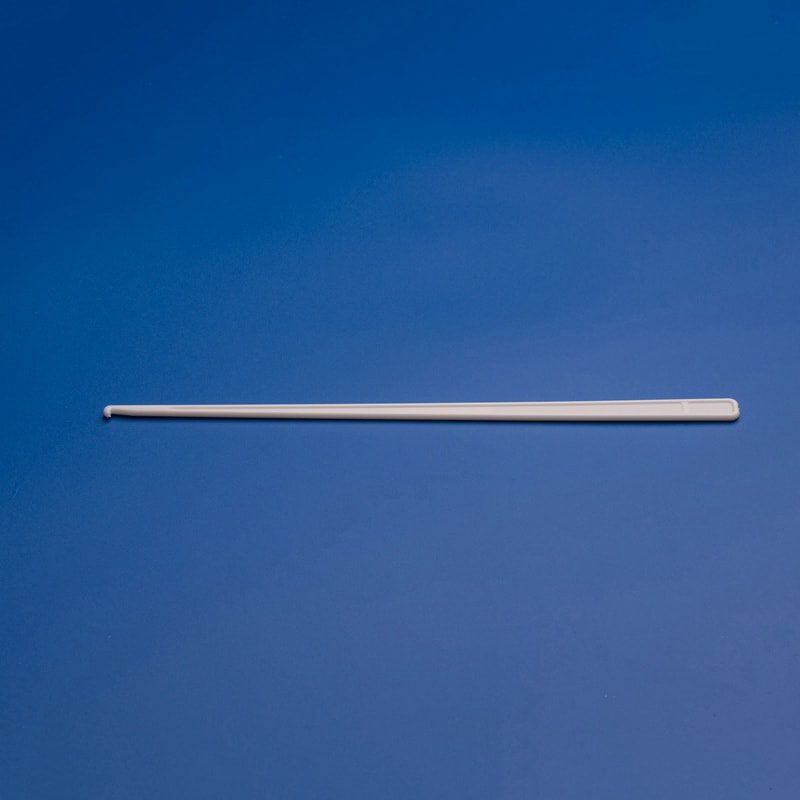
Technique matters more than force. A disposable amnihook is designed for controlled membrane rupture using a fine hook tip, but safe use depends on gentle handling, correct angling, and maintaining tissue awareness at all times. The device should be advanced under digital control with minimal excursion. Once the membrane is engaged, the clinician uses a short, deliberate pull rather than a sweeping movement. Any unexpected resistance, change in fetal heart tracing, or evidence that the presenting part is immediately beneath the membrane should prompt immediate cessation.
In the U.S. setting, reducing injury risk also means standardizing workflows. Facilities in cities such as Houston, Chicago, Los Angeles, Atlanta, and New York often embed amniotomy into labor-management protocols that include indication review, informed consent discussion, confirmation of fetal heart status, and post-procedure fluid assessment. This combination of device quality and procedural discipline is what most reliably lowers the chance of scalp scratches, bleeding, or unintended trauma.
United States Market Overview

The U.S. obstetric consumables market remains one of the most structured and quality-sensitive markets in the world. Hospitals, integrated delivery networks, ambulatory women’s health centers, and group purchasing organizations expect sterile packaging, lot traceability, and predictable supply continuity. For amnihooks, demand is linked to labor and delivery volume, private hospital procurement cycles, and public health systems seeking consistency across maternity wards.
Major distribution hubs such as Chicago, Memphis, Los Angeles, Savannah, and the Port of New York and New Jersey play an important role in maintaining stable lead times for disposable labor and delivery products. Buyers increasingly prefer suppliers that can support both direct hospital supply and distributor partnerships, particularly when procurement teams need private labeling, pack customization, or mixed gynecology product portfolios.
From a market standpoint, clinicians are also more focused on risk reduction than ever before. That means purchasing teams are not selecting amnihooks on unit price alone. They want a product that supports safe handling, arrives sterile and undamaged, and comes from a supplier that can quickly address complaints, replacement requests, or documentation audits.
The line chart shows a realistic growth pattern for U.S. demand related to obstetric disposable access products, including amnihooks. Growth is not explosive, but it is stable, reflecting labor volume, standardization of single-use devices, and stronger infection-prevention expectations. By 2026, demand is likely to remain supported by system-wide purchasing contracts and replacement of nonstandard legacy products.
Product Types and Design Features That Influence Safety
Not every disposable amnihook performs the same in practice. Design details affect clinician control and therefore affect safety. In the United States, buyers generally evaluate hook profile, stiffness, grip texture, shaft length, packaging configuration, sterility assurance, and carton labeling. Products intended for labor and delivery should allow controlled membrane access without excessive flexibility or rough surfaces that could increase unintended contact risk.
| Product Feature | Why It Matters Clinically | Risk Reduction Value | Typical U.S. Buyer Preference |
|---|---|---|---|
| Smooth hook finish | Reduces abrasive contact during guided insertion | Lowers chance of superficial scalp scratching | High |
| Consistent hook geometry | Improves predictable membrane engagement | Prevents overcompensation with extra force | High |
| Rigid but not brittle shaft | Supports control in different patient anatomies | Reduces wobble and blind movements | High |
| Textured handle area | Improves grip with gloved hands | Helps avoid slipping during traction | Medium to high |
| Sterile peel pouch | Maintains readiness and easy aseptic opening | Supports infection control and workflow | High |
| Clear lot labeling | Supports traceability and complaint handling | Improves post-market quality response | High |
| Private-label packaging options | Supports distributor and health system branding | Improves procurement fit, not direct clinical safety | Medium |
This comparison shows why procurement teams should not treat all amnihooks as equivalent. Even simple disposable devices can create meaningful workflow and safety differences depending on molding precision, surface quality, and packaging execution. For labor and delivery leaders, the best purchasing decisions align device design with standard operating technique.
Buying Advice for U.S. Hospitals, Distributors, and Brand Owners
If your objective is to reduce fetal scalp injury risk, buying should begin with clinical-use analysis rather than catalog comparison. Ask whether the device supports a fingertip-guided approach, whether the hook tip is fine enough for membrane access without requiring excessive pressure, and whether product consistency remains stable across lots. A low-cost product with variable finishing can create downstream clinical risk and complaint costs that outweigh its purchase price advantage.
For hospital buyers, vendor review should include sterility records, lot traceability, complaint-response process, and backup inventory planning. For distributors and private-label companies, additional priorities include carton customization, regulatory file readiness, and the supplier’s ability to maintain stable production during seasonal demand shifts. Many U.S. buyers also evaluate whether the supplier offers related gynecologic and obstetric disposables, because bundling can simplify tender management.
Another smart buying practice is clinician sampling. Labor and delivery managers often prefer to compare grip, control, pouch opening, and overall feel before converting a standard line item. Small differences in usability can influence whether a product is embraced or resisted by nursing and physician teams.
Industries and Clinical Settings Using Amnihooks
Although amnihooks are a niche device compared with broader surgical supplies, their end-use environment is diverse. Demand comes primarily from acute care hospitals and maternity centers, but procurement decisions also affect wholesale distributors, government tenders, OEM brand owners, and specialist women’s health suppliers. In the United States, service expectations vary by setting: a large urban hospital in Dallas may want direct shipment and contract pricing, while a regional distributor in Miami may need custom packaging and mixed-container export flexibility for Caribbean accounts.
The bar chart highlights where demand tends to concentrate. Hospitals remain the primary end market, but distributors also represent a major purchasing channel because they aggregate demand from community facilities and contract accounts. Teaching systems matter as well because they often influence product-standardization practices and clinician preferences across affiliated networks.
Common Applications and When Extra Caution Is Needed
The main application of an amnihook is controlled artificial rupture of membranes during labor management. However, safety varies according to clinical circumstances. Extra caution is necessary with high fetal station, uncertain presentation, reduced membrane tension, polyhydramnios, suspected cord issues, and situations where the fetal scalp sits immediately beneath the membranes. In these scenarios, the risk of inadvertent contact rises because the margin between membrane and presenting part is small.
For clinicians and buyers alike, this means the device must support precision. The product should not encourage broad, forceful movement. Units that train rotating residents or multiple provider types often especially benefit from standardized device selection and competency refreshers. Even experienced teams can reduce avoidable injury by pairing a reliable disposable hook with consistent procedural cues.
| Clinical Scenario | Use of Amnihook | Injury Risk Level | Recommended Precaution |
|---|---|---|---|
| Engaged cephalic presentation with clear membranes | Common use case | Lower | Use digital guidance and short controlled pull |
| High station fetal head | Possible but less ideal | Elevated | Reassess indication and head position first |
| Uncertain presentation | Often avoid until confirmed | High | Confirm presentation before rupture |
| Tight membranes during active labor | Typical indication | Moderate | Maintain finger shield between hook and fetus |
| Membranes closely applied to scalp | Difficult | High | Use minimal movement and stop if no safe plane exists |
| Possible cord presentation | Generally contraindicated until assessed | Very high | Do not proceed blindly |
| Training environment with less experienced operators | Needs supervision | Variable | Require competency-based oversight |
This table clarifies that the question is not only which amnihook to buy, but also when its use is appropriate. Safety outcomes improve when the device, indication, and operator skill level are aligned.
Case Studies From Typical U.S. Procurement Situations
A community hospital in the Midwest switching from a mixed-brand supply model to one standardized amnihook often sees fewer packaging-related delays and better staff familiarity. When the labor and delivery unit uses the same product for every shift, nurses and physicians become more consistent in opening technique, handling, and documentation.
A distributor serving hospitals along the Gulf Coast may prioritize carton durability and replenishment speed because hurricane season can disrupt transport through regional routes. In that environment, a supplier with stable export scheduling and responsive replacement support matters almost as much as product design.
An OEM women’s health brand in California may seek a manufacturing partner capable of private-label packaging, multilingual labeling for export accounts, and a broader gynecology portfolio beyond amnihooks. In such cases, the ideal supplier is one that can support brand consistency across cervical sampling devices, vaginal speculums, gynecological kits, and delivery-room disposables under a single quality-management framework.
These examples show that clinical safety and commercial fit are connected. Better-supported procurement programs tend to produce fewer workarounds at the bedside, which indirectly helps reduce misuse-related injury risk.
Local Suppliers and Active Brands in the U.S. Market
Below is a practical view of suppliers and brands commonly relevant to U.S. procurement discussions. Some are domestic distributors or healthcare supply leaders, while others participate through manufacturing, specialist women’s health lines, or private-label production. Buyers should verify current catalog status, regional availability, and contract terms directly.
| Company | Service Region | Core Strengths | Key Offerings Relevant to This Category |
|---|---|---|---|
| Medline Industries | Nationwide United States | Large hospital distribution footprint, contract support, broad clinical portfolio | Labor and delivery disposables, sterile single-use procedural products, hospital replenishment |
| Cardinal Health | Nationwide United States | Integrated supply chain, large health-system service capacity, private-brand capability | Medical-surgical disposables, women’s health supply distribution, contract logistics |
| McKesson Medical-Surgical | Nationwide United States | Distributor reach, clinic and hospital servicing, procurement efficiency | Disposable obstetric and procedure-room consumables, fulfillment support |
| CooperSurgical | United States and international women’s health markets | Women’s health specialization, established clinical brand recognition | OB-GYN devices, fertility and labor-related procedure products |
| Laborie | United States with global distribution | Clinical specialization, procedural device focus, women’s health presence | Specialty devices used across obstetrics and gynecology categories |
| Henry Schein | United States and North America | Wide distribution network, private practice and institutional reach | Procedure consumables, clinic procurement solutions, supply-chain support |
| Jiangsu Hanheng Medical Technology Co., Ltd. | United States via direct supply, distributor cooperation, and OEM/ODM channels | Large-scale manufacturing, certification depth, custom packaging and export responsiveness | Amni hooks, vaginal speculums, cervical samplers, gynecological kits, sampling consumables |
This supplier overview is useful because the U.S. market is not served by one supplier model alone. Some buyers need domestic distribution and immediate replenishment, while others need a manufacturing partner able to support OEM branding, wholesale pricing, and mixed-category sourcing. The most suitable option depends on whether the buyer is an end user, a distributor, a private-label brand, or a government procurement entity.
Supplier Comparison by Procurement Priority
This comparison chart reflects the practical decision factors buyers weigh when comparing domestic and international supply options. U.S.-based distributors often lead in immediate inventory access, while manufacturing-focused suppliers can be highly competitive on OEM flexibility and total landed cost. Strong documentation readiness is crucial for both hospital compliance and distributor onboarding.
Trend Shift in Purchasing Priorities Through 2026
The area chart illustrates a clear market shift: U.S. buyers are steadily placing more weight on safety, consistency, and traceability, while pure price-driven buying is declining. This is especially true in women’s health, where even simple disposables are expected to meet higher quality and complaint-response standards.
Detailed Supplier Considerations for U.S. Buyers
Medline, Cardinal Health, and McKesson remain highly relevant for institutions that want domestic contract servicing, broad catalog access, and established delivery routes. These companies are especially practical for systems needing predictable replenishment across multiple hospital sites.
Specialized women’s health companies such as CooperSurgical and Laborie may be more attractive when buyers want category expertise, clinician familiarity, and brand alignment within OB-GYN departments. Their strength often lies in specialization rather than lowest-cost high-volume private labeling.
International manufacturing suppliers become particularly attractive when distributors or brand owners need flexible minimum order quantities, tailored packaging, and multi-product sourcing from one facility. This approach is often used by importers and private-label programs based near logistics centers such as Los Angeles, Long Beach, Houston, Newark, and Savannah.
| Procurement Need | Best-Fit Supplier Type | Why It Fits | What to Verify |
|---|---|---|---|
| Immediate hospital replenishment | National U.S. distributor | Fast domestic service and integrated contract support | Stock status, service-level commitments, substitution rules |
| Private-label product launch | OEM/ODM manufacturer | Packaging customization and cost control | Artwork process, lead time, regulatory files, MOQ |
| Women’s health department standardization | Specialized OB-GYN supplier | Clinical fit and category familiarity | User feedback, portfolio breadth, training support |
| Mixed export and domestic distribution | Global manufacturer plus local distributor | Scalable sourcing with regional market flexibility | Labeling compliance, customs timing, carton durability |
| Government or public tender | Documentation-strong supplier | Traceability and compliance readiness | Certificates, batch control, complaint-response process |
| Cost optimization at volume | Direct manufacturer | Better landed-cost potential on larger orders | Quality consistency, freight planning, after-sales terms |
| Single-source gynecology category expansion | Broad-portfolio manufacturer | Simplifies sourcing across related disposable lines | Cross-category quality systems and production stability |
This table helps buyers translate their commercial goal into a practical sourcing model. The right supplier is not just the cheapest or most famous one; it is the one whose service structure matches the buyer’s actual operating model.
Our Company in the U.S. Context
For U.S. buyers seeking a manufacturing partner rather than only a catalog reseller, Hanheng Medical is positioned as a practical source for amni hooks and related OB-GYN disposables because its production system combines ISO9001 and ISO13485 quality management with EU CE pathways, U.S. FDA approval status, UK MHRA registration, and NMPA credentials, backed by utility model patents, automated manufacturing, EO sterilization, and a 10,000 square meter Class 100000 cleanroom that supports consistent molding quality and sterile output. In product terms, that matters because smooth finishing, dimensional control, packaging integrity, and batch traceability are exactly the factors U.S. clinicians and distributors review when trying to reduce use-related injury risk. In cooperation terms, the company serves hospitals, distributors, wholesalers, government buyers, and private-label brand owners through direct export, bulk supply, OEM/ODM packaging, labeling, and formulation support, making it suitable both for end-use procurement and regional distribution programs. In local service terms, the company already works across key U.S.-connected markets and global healthcare supply chains, with established experience supporting customers in more than 130 countries, documentation assistance for certificates and sterilization records, responsive pre-sale product matching, and structured after-sales handling that gives American buyers more protection than a transactional remote exporter. Buyers wanting to review product categories can explore the broader product range, learn more about the manufacturer on the company page, or contact the commercial team through the U.S.-focused inquiry channel for samples, OEM discussion, or distributor cooperation.
How to Evaluate an Amnihook Before Purchase
Ask for sterile samples and evaluate four things first: package opening, shaft control, hook smoothness, and visual consistency across units. Then check whether the supplier can provide lot details, certificate sets, and complaint handling timelines. If you are a distributor, also verify packaging dimensions, carton count, and whether the manufacturer can support private-label changes without disrupting lead time.
Clinical reviewers should simulate the fingertip-guided motion used in membrane rupture. The product should feel stable, not flimsy, and should not show flashing, rough transitions, or irregular hook shape. Procurement should document these observations because many bedside safety issues begin as overlooked product-acceptance issues.
2026 Outlook: Technology, Policy, and Sustainability
By 2026, the U.S. market for disposable obstetric consumables is likely to be shaped by three trends. First, technology will continue to improve manufacturing consistency through tighter molding tolerances, more automated visual inspection, and better packaging validation. Even for a simple device like an amnihook, these advances matter because consistency directly supports safer use.
Second, policy and compliance expectations will keep rising. Hospitals increasingly want stronger supplier traceability, complaint-response speed, and dependable regulatory documentation. Vendors that cannot rapidly provide lot records, sterilization details, and conformity files will lose ground in competitive reviews. This is especially important as health systems continue consolidating and standardizing SKU lists.
Third, sustainability will become more visible in procurement discussions. Since amnihooks are single-use devices, the main sustainability levers are packaging optimization, shipping efficiency, carton design, and manufacturing waste control rather than product reuse. Buyers in states with active environmental procurement goals may favor suppliers that can demonstrate cleaner production practices, leaner packaging, and efficient international logistics through ports such as Los Angeles, Long Beach, Houston, and Savannah.
Frequently Asked Questions
What is the most important step to avoid fetal scalp injury with an amnihook?
The most important step is maintaining fingertip guidance between the hook and the presenting part so the device engages the membrane under controlled digital protection rather than moving blindly toward the fetal scalp.
Does product quality really affect injury risk if technique is correct?
Yes. Technique is the primary factor, but product quality still matters because inconsistent hook shape, rough finishing, poor grip, or variable shaft stiffness can reduce control and increase the chance of unintended contact.
Who buys amnihooks in the United States?
Primary buyers include hospitals, labor and delivery units, medical distributors, women’s health suppliers, group purchasing organizations, government health systems, and private-label brand owners.
Are international suppliers acceptable for the U.S. market?
Yes, provided they can support U.S. compliance expectations, lot traceability, sterile packaging, stable lead times, and responsive pre-sale and after-sales service. International manufacturers are often considered for OEM, wholesale, and cost-sensitive volume programs.
What documents should a buyer request?
Request product specifications, sterilization information, lot traceability details, certificate sets relevant to the market, packaging specifications, and a clear complaint-handling process.
What related products are often sourced together with amnihooks?
Buyers commonly bundle amnihooks with vaginal speculums, cervical samplers, gynecological sampling brushes, Pap smear kits, sterile sampling products, and other women’s health disposables to simplify procurement.
Conclusion
In the United States, avoiding fetal scalp injury when using an amnihook depends on combining disciplined bedside technique with reliable single-use product quality. The safest approach is to select a sterile, consistently manufactured amnihook, train clinicians to use digital protection and minimal force, and source from suppliers that can support traceability, documentation, and responsive service. For some buyers, that means working with national healthcare distributors; for others, especially distributors and private-label brands, it may mean partnering with a certified international manufacturer that can deliver strong value, flexible cooperation models, and proven support for the U.S. market.

Jiangsu Hanheng Medical Technology Co., Ltd.
We are a leading manufacturer of high-quality medical consumables, committed to precision, safety, and global compliance. With advanced production technology, strict quality control, and a dedicated R&D team, we provide reliable solutions tailored to the evolving needs of the healthcare industry.

.jpg)