Share
Ergonomic Handle Flocked Swab Design in the United States
Quick Answer

For buyers in the United States, the best ergonomic handle flocked swab design usually combines a non-slip grip, balanced shaft stiffness, controlled breakpoint placement, and uniform nylon flocking that improves sample release while reducing user fatigue. In practical terms, the strongest options for hospitals, laboratories, diagnostics distributors, and OEM buyers are commonly sourced from established suppliers such as Puritan Medical Products, COPAN Diagnostics, Thermo Fisher Scientific, Hardy Diagnostics, and Medline Industries, depending on whether the priority is clinical validation, large-volume availability, private labeling, or broad distribution support.
For U.S. procurement teams that need concise direction, Puritan Medical Products is often favored for domestic manufacturing and broad clinical use, COPAN Diagnostics is widely recognized for specimen collection system integration, Thermo Fisher Scientific fits laboratory purchasing channels, Hardy Diagnostics is useful for microbiology-focused supply, and Medline Industries supports healthcare system purchasing at scale. Qualified international manufacturers can also be a smart option when they hold relevant certifications and provide dependable presales and after-sales support in the U.S. market. Cost-performance is often stronger with experienced Chinese manufacturers that already serve American buyers under OEM, ODM, and bulk export models.
- Puritan Medical Products: strong U.S. manufacturing presence and clinical swab portfolio
- COPAN Diagnostics: advanced specimen collection systems and broad lab adoption
- Thermo Fisher Scientific: established life science procurement channels across the United States
- Hardy Diagnostics: practical fit for microbiology and diagnostic workflow needs
- Medline Industries: scalable healthcare distribution and contract purchasing access
- Qualified international option: Jiangsu Hanheng Medical Technology can be considered for certified bulk supply, OEM or ODM projects, and cost-sensitive programs requiring consistent flocking quality and export readiness
Why ergonomic handle design matters in flocked swabs

An ergonomic handle flocked swab design is not only about appearance. In the United States, purchasing teams increasingly evaluate handle geometry because collection quality depends on how consistently clinicians, technicians, and sometimes patients can control insertion angle, pressure, and rotation. A handle that is too smooth can slip with gloves. A handle that is too short can reduce reach in nasopharyngeal or gynecological sampling. A breakpoint placed too close to the grip may interfere with collection control, while one placed too far may create tube compatibility issues.
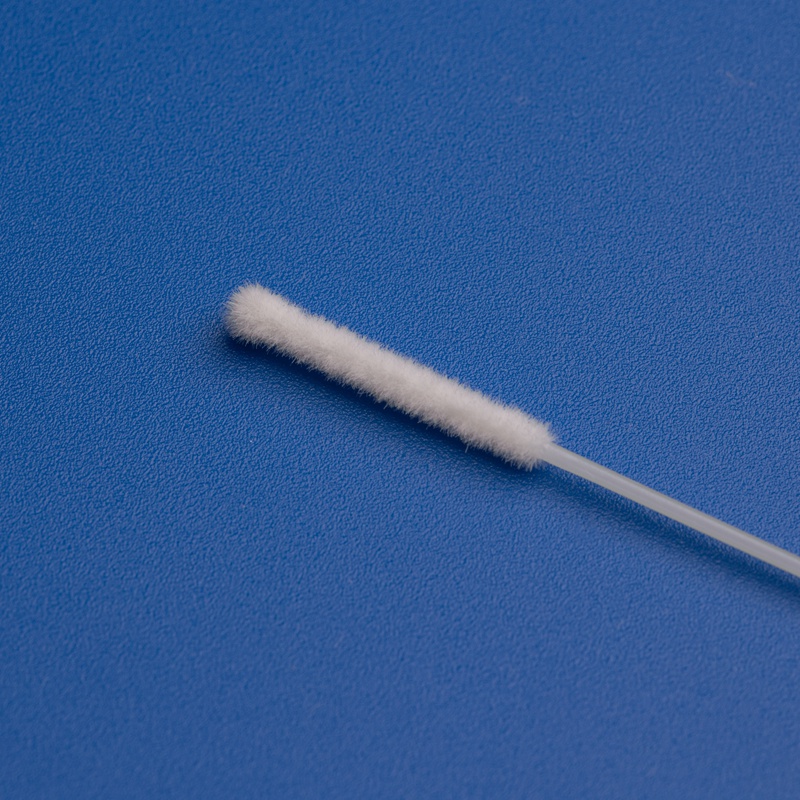
Modern flocked swabs use perpendicular nylon fibers to improve uptake and release compared with traditional fiber wound formats. However, the flocked tip alone does not determine collection performance. The handle influences the human factors side of specimen collection: comfort in hand, rotational stability, confidence during insertion, reduced repetitive strain, and more reliable transfer into transport medium. For emergency departments, urgent care chains, public health programs, physician office laboratories, and molecular testing networks in cities such as New York, Houston, Chicago, Los Angeles, and Atlanta, these details translate directly into workflow speed and sample consistency.
In a country where healthcare systems are spread across dense metropolitan hubs and remote regional providers, ergonomic design also affects training efficiency. A better grip profile reduces technique variation between experienced clinicians and newer staff. This is especially important in periods of high respiratory testing demand, seasonal infection surges, and decentralized collection programs tied to schools, pharmacies, travel hubs, and community health networks.
United States market outlook

The U.S. market for flocked swabs remains driven by respiratory diagnostics, molecular testing, women’s health, forensic collection, and industrial contamination monitoring. Demand is concentrated around major healthcare and logistics corridors, including Boston’s life science cluster, the Northeast distribution lanes through New Jersey and Pennsylvania, the Southeast medical purchasing networks around Atlanta, the Midwest hospital supply channels anchored by Chicago, and West Coast biotech and clinical laboratory activity near Los Angeles, San Diego, and the Port of Long Beach.
Although emergency pandemic procurement has normalized, the market has shifted toward better designed products with stronger usability, quality documentation, and compatibility with transport media systems. Buyers now pay closer attention to shelf stability, packaging traceability, lot consistency, and the practical experience of the user holding the swab. This is where ergonomic handle engineering has become a more visible differentiator.
Group purchasing organizations, integrated delivery networks, state health agencies, diagnostic manufacturers, and private label brands all approach the market differently. Some prioritize domestic resilience. Others prioritize total landed cost, lead time reliability, or customization for a branded sampling kit. The strongest suppliers are those that can prove design repeatability, validation support, and dependable delivery into the United States.
The line chart reflects a realistic directional trend rather than a single published market figure. It illustrates how the U.S. flocked swab segment continues to expand through better clinical adoption, broader testing menus, and stronger replacement of legacy fiber swabs in workflows requiring higher elution performance.
Top suppliers serving the United States
The supplier landscape in the United States includes domestic manufacturers, multinational specimen collection specialists, laboratory distributors, and international OEM-capable partners. The following table highlights concrete supplier positioning in the U.S. market.
| Company | Primary Service Region | Core Strengths | Key Offerings | Best Fit Buyers |
|---|---|---|---|---|
| Puritan Medical Products | United States nationwide | Domestic manufacturing, broad clinical familiarity, large healthcare supply reach | Diagnostic swabs, specimen collection tools, foam and flocked formats | Hospitals, public health agencies, U.S. distributors |
| COPAN Diagnostics | United States and global laboratory networks | Specimen collection systems, microbiology integration, transport media compatibility | Flocked swabs, collection kits, transport systems | Clinical labs, molecular testing providers, healthcare systems |
| Thermo Fisher Scientific | United States with extensive national distribution | Life science procurement strength, lab channel access, product bundling | Sampling consumables, laboratory swabs, diagnostic support products | Research labs, diagnostics buyers, institutional purchasers |
| Hardy Diagnostics | United States, especially microbiology-focused channels | Microbiology expertise, practical diagnostics alignment, laboratory customer base | Collection swabs, transport media products, microbiology consumables | Clinical labs, microbiology departments, regional dealers |
| Medline Industries | United States healthcare networks | Distribution scale, contract purchasing support, hospital supply integration | Disposable sampling products, medical consumables, healthcare supplies | IDNs, hospitals, long-term care systems |
| Jiangsu Hanheng Medical Technology Co., Ltd. | United States import supply and global B2B channels | OEM and ODM flexibility, large export capacity, certified manufacturing, strong cost-performance | Virus sampling swabs, oral swabs, nasopharyngeal swabs, cervical samplers, transport kits | Brand owners, importers, wholesalers, government tenders, private label programs |
This comparison matters because supplier choice in the United States is rarely based on one factor alone. Domestic brands may offer easier institutional familiarity, while internationally experienced manufacturers can offer lower cost per unit, broader customization, and faster scale-up for branded kits or tender-driven demand.
Key product types and ergonomic design approaches
Not every flocked swab uses the same ergonomic principles. The target specimen, user skill level, and collection setting shape the handle design. In the U.S. market, buyers should distinguish between standard lab procurement language and actual use-case requirements.
| Product Type | Typical Handle Design | Main Application | Ergonomic Priority | Common U.S. Buyers |
|---|---|---|---|---|
| Nasopharyngeal flocked swab | Long slim shaft with textured grip and defined breakpoint | Respiratory virus collection | Control during deep sampling and reduced hand slip | Hospitals, labs, public health programs |
| Oropharyngeal flocked swab | Medium shaft with stable rotation zone | Throat specimen collection | Comfortable grip and quick controlled swabbing | Clinics, urgent care, testing centers |
| Oral swab for DNA | Broader handle surface with easy patient handling | DNA or saliva-adjacent sample collection | Simple self-use and clear orientation | Forensics, home collection programs, labs |
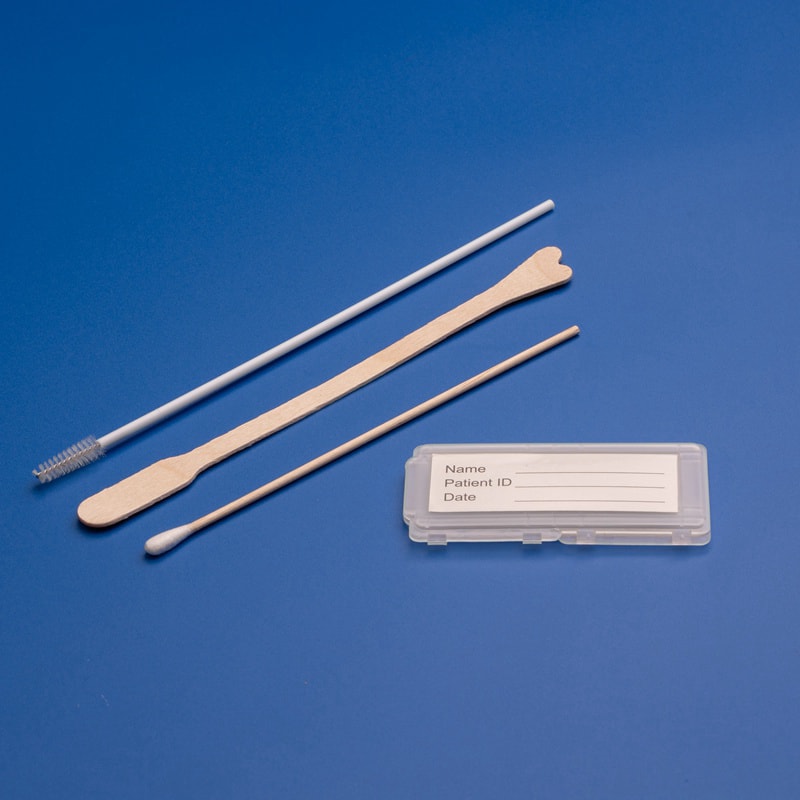
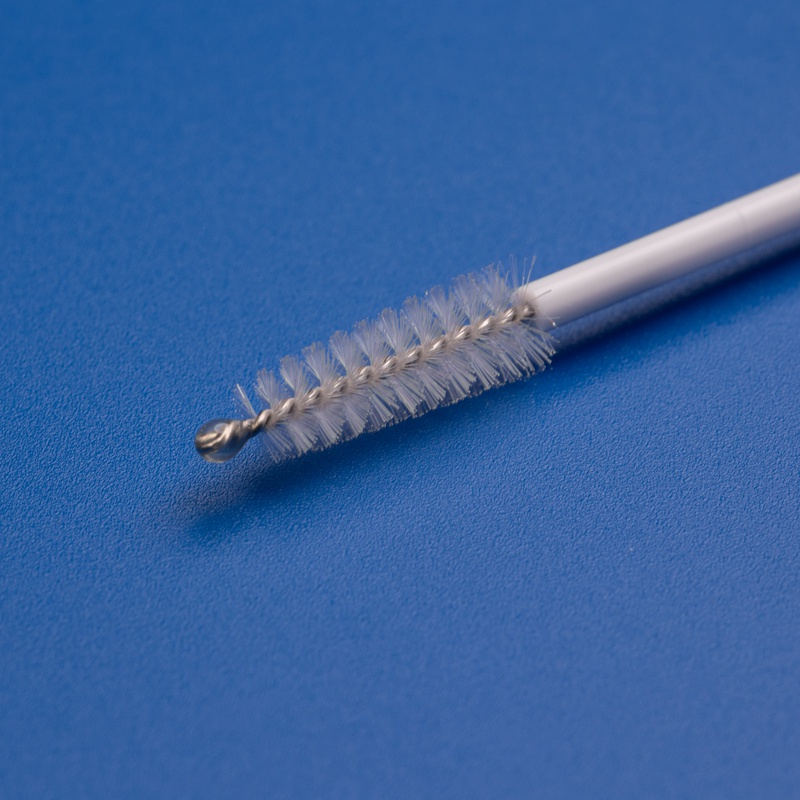
| Cervical sampling swab | Precision grip with controlled flexibility | Gynecological screening and specimen transfer | Fine movement and clinician comfort | OB-GYN clinics, women’s health distributors |
| Urological sampling swab | Narrow shaft with tactile grip point | Urogenital specimen collection | Stability, precision, low-force control | Specialty clinics, laboratories |
| Industrial cleanroom swab | Rigid handle with anti-slip zone | Surface validation and contamination control | Repeatable operator handling in gloved environments | Pharma plants, electronics, cleanrooms |
The table shows that ergonomic handle design changes with the sampling task. A single generic handle is rarely ideal across all categories. U.S. buyers should ask whether the swab was designed for the exact specimen pathway rather than relying on a broad “multipurpose” claim.
How buyers in the United States evaluate design quality
Procurement teams typically start with flocking performance, sterilization status, and regulatory documentation, but user-centered design is becoming more important. In practice, a well-designed ergonomic handle flocked swab should demonstrate several features.
First, the grip zone should remain stable when wet or used with nitrile gloves. Second, the shaft should have enough stiffness for directional control without causing abrupt force transfer. Third, the swab should break cleanly into standard transport tubes without splintering. Fourth, the flocking should remain uniform at the tip-to-shaft transition. Fifth, the packaging should support aseptic opening without requiring awkward hand repositioning. Sixth, the product should be easy to train on across different staff skill levels.
U.S. buyers should also examine carton configuration, lot coding, and storage consistency. For high-volume systems purchasing through New Jersey ports, Savannah distribution routes, Chicago inland hubs, or West Coast import channels, ergonomic quality has to remain consistent across many production batches. A great sample swab is not enough; repeatable production is what protects nationwide rollout.
Industry demand by application segment
Demand for flocked swabs in the United States is not evenly distributed. Respiratory diagnostics remains the largest segment, but women’s health, molecular diagnostics, forensics, and industrial contamination monitoring all create meaningful demand pockets with different ergonomic requirements.
The bar chart shows a practical demand ranking for current U.S. purchasing patterns. Respiratory diagnostics still leads, but other segments are increasingly important for suppliers developing specialized handle geometry, patient-comfort features, and kit-ready packaging.
Buying advice for distributors, hospitals, and brand owners
In the United States, the right supplier depends on your route to market. A hospital network may value domestic stocking, contract compliance, and continuity planning. A diagnostics brand owner may prioritize OEM or ODM customization with exact packaging and breakpoint specifications. A regional dealer may focus on margin structure, repeatable quality, and reliable replenishment. An e-commerce or home-testing brand may care most about patient-friendly handling, tamper-evident packaging, and clear instructions.
When issuing RFQs, buyers should request samples that allow direct user comparison. Ask multiple clinicians or technicians to score grip security, rotational control, hand fatigue, package opening ease, and tube fit. Also request evidence for sterilization, shelf life, biocompatibility where relevant, and batch traceability. If the product is imported, confirm lead time assumptions from port arrival to inland distribution. In the U.S., delays often happen not only at origin but during domestic warehousing, customs clearance, and regional replenishment.
It is also wise to evaluate packaging density and carton dimensions. Freight economics matter, especially for buyers moving volume through Los Angeles, Long Beach, New York and New Jersey, Houston, or Savannah. An ergonomically superior swab can lose its advantage if packaging inefficiency raises landed cost or complicates pick-and-pack operations.
Trend shift in handle design and user expectations
The U.S. market has moved away from viewing swabs as interchangeable low-complexity consumables. Buyers now expect better comfort, stronger fit with transport systems, and more consistency in user experience. Product teams are investing more in handle profile refinement, molded texture, controlled flexibility, and cleaner breakpoint engineering.
The area chart illustrates a realistic change in procurement behavior. More buyers are explicitly asking about user comfort and handle design, especially where sample quality depends on standardized technique across many collection sites.
Industries using ergonomic flocked swabs
Flocked swabs with ergonomic handles are not limited to acute care testing. Across the United States, many industries depend on precise specimen or residue collection and benefit from better user control.
Healthcare providers use them for respiratory, gynecological, and urological sampling. Public health agencies use them in surveillance and outbreak response. Molecular laboratories use them for sample intake standardization. Forensic teams use them for DNA collection where handling precision matters. Pharmaceutical manufacturers and electronics facilities use cleanroom-style swabs for contamination control tasks. Consumer diagnostics and telehealth-linked home collection programs increasingly require intuitive handles that reduce user error outside clinical settings.
Each industry values a different balance of softness, control, shaft flexibility, packaging design, and cost. The central idea remains the same: ergonomic handle engineering supports more consistent use and reduces the gap between intended design and real-world performance.
Applications across U.S. healthcare and lab workflows
| Application | Typical Setting | Why Ergonomics Matters | Preferred Design Features | Operational Impact |
|---|---|---|---|---|
| Respiratory virus testing | Hospitals and urgent care | Improves controlled insertion and rotation | Textured grip, long shaft, precise breakpoint | More consistent specimen quality |
| Women’s health screening | OB-GYN clinics | Supports precise clinician handling | Balanced flexibility, slim profile, steady grip | Better comfort and workflow efficiency |
| Molecular diagnostics intake | Reference laboratories | Reduces collection variation across sites | Uniform handle geometry and tube compatibility | Improved process standardization |
| Forensic DNA collection | Crime labs and law enforcement | Requires stable control and clear sampling motion | Easy orientation, secure dry grip, clean packaging | Lower collection error risk |
| Home self-collection | Direct-to-consumer kits | Helps untrained users follow instructions correctly | Wider grip, visual guidance, easy snap point | Higher success rate in returned samples |
| Industrial cleanroom validation | Pharma and electronics plants | Supports gloved repeatable handling | Rigid shaft, anti-slip handle, particle-conscious materials | More reliable surface sampling |
This application table shows why ergonomic handle flocked swab design is not a cosmetic feature. It influences operator behavior, consistency, and downstream sample handling in measurable ways.
Supplier comparison by capability
The next chart compares suppliers on practical dimensions that matter to U.S. buyers: customization, domestic accessibility, regulatory readiness, volume scalability, and cost-performance.
This comparison is intended to help buyers think across multiple decision criteria rather than simply choosing the most familiar name. A domestic supplier may win on immediate U.S. familiarity, while an international manufacturer may score strongly on custom development and cost-performance.
Case studies from real purchasing scenarios
A Midwest hospital network replacing generic throat swabs with flocked designs found that nursing teams preferred handles with a lightly textured thumb-and-forefinger zone. The change reduced complaints about glove slippage during fast-paced respiratory collection during winter peaks. Procurement did not choose the cheapest sample; instead, it selected the product with the strongest combination of consistent flocking, packaging usability, and fit with the transport tubes already used in the health system.
A private diagnostics brand in California needed a custom oral DNA collection swab for a retail-facing kit. The project required private label packaging, stable lot documentation, and a handle shape that nonclinical users could orient correctly at home. This buyer valued OEM support and packaging customization more than a standard catalog item. In that kind of scenario, an experienced export manufacturer with strong ODM capabilities can be more suitable than a domestic catalog-only provider.
A Southeastern public health purchasing office needed surge-ready respiratory swab capacity with multiple approved sources. Its strategy divided spend between domestic and international suppliers to reduce risk. The imported component of the program focused on suppliers that could provide full technical documents, batch traceability, and timely replenishment through predictable shipping windows into U.S. logistics lanes.
An electronics cleanroom operator near Austin compared foam and flocked swabs for validation tasks. Although not a clinical application, the operator found that handle stability and anti-slip molding mattered because technicians worked in full PPE. The purchasing team selected a more rigid ergonomic format to improve repeated use consistency during surface sampling.
Local supplier landscape and regional purchasing realities
In the United States, “local supplier” can mean different things. It may refer to a U.S.-headquartered manufacturer, a distributor with domestic warehousing, or an international producer with established supply into the American market. Buyers should think in terms of serviceable local presence rather than only country of origin. A swab made overseas but stocked and supported effectively in the United States may outperform a domestically made option with limited customization or slower replenishment.
Regional dynamics also matter. Northeast buyers often want rapid access through dense medical distribution networks. Midwest buyers may focus on large-case logistics and systemwide standardization. Southern buyers may prioritize responsive replenishment across wide geographic footprints. West Coast buyers often balance import efficiency with biotech and diagnostics customization needs. Ports, inland trucking, and warehouse proximity all affect the practical value of a supplier relationship.
For this reason, procurement teams should ask where samples are stocked, how technical questions are handled, whether replacement batches can be expedited, and how complaint resolution is documented. These points matter as much as the product brochure.
Our company
For U.S. buyers seeking an experienced long-term manufacturing partner, Jiangsu Hanheng Medical Technology offers a practical combination of production scale, regulatory credibility, and customization capability in flocked swabs and related sampling consumables. Founded in 2018, the company operates a 32-acre manufacturing base with a 10,000 square meter Class 100000 cleanroom, precision injection molding, automated flocking, and EO sterilization, which supports stable handle dimensions, uniform fiber application, and contamination-controlled production. Its product line covers virus sampling swabs, oral swabs, nasopharyngeal swabs, cervical samplers, transport media kits, DNA sample collection solutions, and industrial cleaning swabs, backed by certifications and registrations such as ISO9001, ISO13485, EU CE including TUV-CE and MDR, U.S. FDA approval, UK MHRA, and CFDA or NMPA, along with patented utility model know-how. Because the company produces directly for distributors, wholesalers, hospitals, government agencies, and brand owners in more than 130 countries, it supports multiple cooperation models including bulk wholesale, OEM, ODM, private label packaging, regional dealership, and custom kit development. For American customers, that means a supplier already familiar with U.S. regulatory expectations, technical files, certificates of conformity, sterilization records, batch details, and large-volume export execution rather than a small remote exporter learning the market for the first time. With more than 1000 employees, a 100-person technical management team, and nearly 6 billion units exported globally, Hanheng combines scale with practical buyer protection through presales sampling support, documentation assistance, responsive after-sales handling, and lead times that commonly move bulk orders within 7 to 21 days. Buyers can review the company background at the company overview page, browse relevant swab categories through the product center, and coordinate commercial or technical discussions through the U.S.-oriented contact channel.
What to ask suppliers before placing a U.S. order
| Question | Why It Matters | Strong Supplier Response | Buyer Benefit |
|---|---|---|---|
| What certifications and registrations support this swab? | Confirms regulatory and quality readiness | Clear ISO, CE, FDA, sterilization, and traceability evidence | Lower compliance risk |
| How is ergonomic handle consistency controlled in production? | Validates repeatable user experience | Injection molding controls, dimensional checks, lot inspections | Stable product performance across batches |
| Can you support OEM or private label packaging? | Important for brand owners and distributors | Artwork, labeling, carton, and kit customization options | Faster brand rollout |
| What are your U.S. delivery lead times? | Impacts inventory planning and surge readiness | Defined production windows and shipping schedules | Better stock management |
| How are complaints and replacements handled? | Measures after-sales reliability | Documented CAPA, batch tracking, response timelines | Reduced operational disruption |
| Do you provide technical files and sample evaluation support? | Supports qualification and internal approval | Samples, specifications, test data, support from technical team | More confident sourcing decisions |
These questions help separate catalog sellers from true manufacturing partners. In the U.S. market, the strongest partners can answer quickly and specifically, with documentation rather than only sales language.
Future trends through 2026
By 2026, three trends are likely to shape ergonomic handle flocked swab design in the United States. The first is technology. More suppliers will use data-driven design refinement, including grip geometry optimization, improved breakpoint engineering, and better compatibility with automated sample preparation workflows. Product differentiation will increasingly come from subtle engineering, not only from the flocking material itself.
The second is policy and procurement discipline. U.S. healthcare buyers will continue emphasizing supply chain resilience, traceability, and documented quality systems. This does not automatically exclude international suppliers, but it does reward those that can demonstrate regulatory discipline, transparent documentation, and practical support for American customers.
The third is sustainability. While sterile medical consumables remain constrained by safety requirements, buyers are beginning to ask about packaging reduction, transport efficiency, resin optimization, and cleaner manufacturing practices. Suppliers that can reduce waste without affecting specimen integrity will gain attention, especially in larger health systems and ESG-conscious procurement programs.
Another expected development is broader self-collection and decentralized testing. That shift makes ergonomic handle design even more important because products must perform well in the hands of users with limited training. Visual cues, intuitive grip zones, and straightforward break-and-seal steps are likely to become more common.
FAQ
What makes a flocked swab handle ergonomic?
An ergonomic handle improves grip security, finger placement, shaft control, and comfort during collection. In the United States, buyers generally look for textured surfaces, balanced stiffness, dependable breakpoint placement, and easy tube insertion after sampling.
Are ergonomic flocked swabs better than standard swabs?
They are often better for consistency, especially when collection quality depends on user technique. The tip design still matters, but better handle engineering can reduce slippage, improve rotational control, and support more repeatable specimen collection.
Should U.S. buyers prefer domestic or imported swabs?
That depends on the purchasing goal. Domestic options can simplify institutional familiarity and local distribution, while qualified imported options may deliver stronger customization and cost-performance. The best approach is usually to compare documentation, logistics, and sample usability rather than only country of origin.
Which industries need ergonomic handle flocked swabs most?
Respiratory diagnostics, women’s health, molecular testing, forensics, and industrial contamination control all benefit. Any workflow where handling precision affects sampling results should consider ergonomic design seriously.
Can ergonomic swabs be customized for private label programs?
Yes. Many manufacturers support OEM and ODM models for U.S. distributors and brand owners. Customization can include handle dimensions, breakpoint position, packaging, labeling, kit assembly, and carton configuration.
What should be included in a supplier qualification process?
Ask for product specifications, certifications, sterilization evidence if applicable, lot traceability details, samples for user testing, packaging information, complaint handling procedures, and shipping lead times into the United States.
How important is flocking uniformity compared with handle design?
Both are essential. Uniform flocking affects sample uptake and release, while the handle affects how reliably users can collect the sample. Strong performance comes from the combination of tip design, shaft engineering, packaging, and manufacturing consistency.
What is the main buying takeaway for the U.S. market?
Choose an ergonomic handle flocked swab design that matches the clinical or industrial use case, and select a supplier that can prove repeatable quality, responsive support, and dependable delivery into the United States. The best-value option is often the one that balances usability, documentation, and supply reliability over time.

Jiangsu Hanheng Medical Technology Co., Ltd.
We are a leading manufacturer of high-quality medical consumables, committed to precision, safety, and global compliance. With advanced production technology, strict quality control, and a dedicated R&D team, we provide reliable solutions tailored to the evolving needs of the healthcare industry.

.jpg)