Share
Material Safety Standards for Disposable Cervical Samplers in the United States
Quick Answer

In the United States, disposable cervical samplers are generally expected to use patient-contact materials that are biocompatible, non-cytotoxic, non-sensitizing, and suitable for their intended gynecological use under a documented quality system. Buyers usually look for products manufactured under ISO 13485, supported by sterilization validation where labeled sterile, and backed by evidence aligned with FDA expectations for medical devices, including material traceability, risk management, and packaging integrity. For practical sourcing, U.S. buyers most often compare suppliers such as CooperSurgical, Rovers Medical Devices, Puritan Medical Products, MedGyn Products, Cardinal Health, and McKesson for hospital and clinic procurement. Qualified international suppliers can also be considered when they hold relevant U.S. and international certifications, provide complete technical files, and offer responsive pre-sales and after-sales support; this is especially attractive when cost-performance and private-label flexibility matter.
For U.S. procurement teams, the most actionable approach is to confirm the sampler head material, shaft resin, sterility status, packaging validation, and regulatory documentation before comparing price. Facilities in major healthcare markets such as New York, Chicago, Houston, Los Angeles, and Atlanta typically prioritize consistency in specimen collection performance together with patient comfort and infection-control safeguards. If you are comparing suppliers for tender, distribution, OEM, or direct clinical purchasing, the companies below are the most relevant starting points.
- CooperSurgical: strong U.S. clinical footprint for cytology and women’s health sampling products
- Rovers Medical Devices: widely recognized for cervical sample collection systems used in screening programs
- Puritan Medical Products: U.S.-based manufacturing strength and broad specimen collection expertise
- MedGyn Products: focused women’s health portfolio with distributor-friendly availability
- Cardinal Health: broad healthcare supply chain coverage for hospitals and group purchasing
- McKesson: reliable national distribution and sourcing support for outpatient and hospital buyers
U.S. Market Context

The U.S. market for disposable cervical samplers is shaped by cervical cancer screening demand, HPV testing adoption, outpatient women’s health services, and increasingly standardized procurement requirements. Hospitals, reference laboratories, OB-GYN clinics, federally qualified health centers, and public health programs all influence specifications. In practical terms, material safety standards are no longer treated as a narrow laboratory issue. They affect patient experience, clinical workflow, reimbursement risk, and legal exposure.
In major logistics and healthcare corridors such as Los Angeles/Long Beach, Houston, New Jersey/New York, Savannah, and Chicago, distributors are under pressure to shorten replenishment cycles while maintaining full documentation. This is why buyers increasingly ask not only whether a cervical sampler is sterile or FDA-listed, but also whether the resin grade, flocking adhesive system, and packaging configuration have been validated for gynecological use. A sampler that is technically low cost but missing material declarations, biocompatibility evidence, or sterilization records often fails procurement review.
Another market shift in the United States is the growth of HPV-focused screening workflows, self-collection discussion, and centralized lab processing. These changes place more emphasis on compatibility between the collection device and downstream assay handling. Material shedding, shaft break characteristics, tip absorption behavior, and transport medium compatibility all become part of the safety conversation because they can affect sample adequacy and analytical reliability.
For U.S. importers, service support matters almost as much as the product. Buyers often prefer suppliers who can provide lot traceability, complaint handling, replacement procedures, certificate packages, and regulatory response support in a U.S.-friendly time zone. This is one reason why local distributors and nationally present manufacturers still hold an advantage, even when international OEM sources may offer better unit economics.
The line chart shows a realistic market-growth index for cervical sampling demand in the United States. Growth is not explosive, but it is steady, reflecting a mature healthcare market that still expands through preventive screening programs, broader lab networks, and replacement purchasing. For suppliers, this means stable opportunity rather than short-term spikes. For buyers, it means long-term contracts, quality consistency, and documentation quality are often more important than chasing the lowest spot price.
What Material Safety Standards Mean for Cervical Samplers

When U.S. buyers discuss material safety standards for a disposable cervical sampler, they usually mean a set of practical and regulatory expectations rather than a single stand-alone rule. The product must use materials suitable for mucosal contact, remain mechanically stable during use, avoid releasing harmful residues, and preserve the integrity of the collected specimen. These expectations are evaluated through design controls, supplier qualification, biocompatibility assessment, sterilization validation where applicable, and routine production controls.
Common expectations include compliance with ISO 10993 biocompatibility principles for patient-contact devices, manufacturing under ISO 13485 quality management systems, and documentation that supports U.S. FDA medical device requirements. If the product is sold sterile, buyers will expect evidence that the sterilization process, often ethylene oxide for many single-use samplers, has been validated and that residuals are controlled to acceptable levels. Packaging also matters; sterile barrier integrity and shelf-life validation are part of the safety profile, not just a packaging preference.
Material composition can differ by product design. Cervical samplers may use polypropylene or other medical-grade polymers for shafts, molded heads, or bristle structures; some use flocked fiber collection surfaces; others use broom-style geometries intended to gather both ectocervical and endocervical cells. In every case, the purchaser should verify that the supplier can identify the raw material source, lot controls, and test procedures that prevent contamination, burrs, breakage, or shedding.
Core Material and Safety Checks Buyers Should Review
| Safety Item | Why It Matters | Typical U.S. Buyer Expectation | Risk if Missing |
|---|---|---|---|
| Biocompatibility evidence | Confirms the patient-contact material is suitable for mucosal use | ISO 10993-aligned assessment or equivalent documentation | Patient irritation, procurement rejection, liability exposure |
| Medical-grade resin traceability | Shows controlled raw material sourcing and lot consistency | Supplier declarations and incoming inspection records | Batch variability, unexplained complaints, recall risk |
| Sterilization validation | Required when marketed as sterile | Validated EO or other process with residual control data | Infection-control concerns and compliance failure |
| Packaging integrity | Protects the sterile or clean condition up to point of use | Seal strength, transit, and shelf-life validation | Compromised product in storage or transport |
| Mechanical performance | Prevents breakage and helps reliable specimen collection | Defined shaft strength, flexibility, and tip retention tests | Clinical disruption and sample loss |
| Particulate or fiber shedding control | Supports specimen quality and patient safety | Routine visual and functional QC data | Contaminated samples and inaccurate lab results |
| Labeling and intended-use clarity | Defines proper clinical application and handling | Clear UDI, sterile status, instructions, storage conditions | Misuse, storage errors, and audit findings |
This table translates the term “material safety standards” into the actual checklist that U.S. procurement, quality, and clinical teams use. It is helpful because many suppliers speak broadly about quality, but strong suppliers can produce documentary evidence for each row. In bids and hospital reviews, that evidence often determines whether a product is considered equivalent, premium, or non-compliant.
Product Types in the U.S. Market
Disposable cervical samplers in the United States are not a single category. Product selection depends on the clinical protocol, the cytology or HPV workflow, provider preference, and patient population. The most common forms include broom-type samplers, cervical brushes, spatulas, combination sets, and specialty kits integrated with transport components.
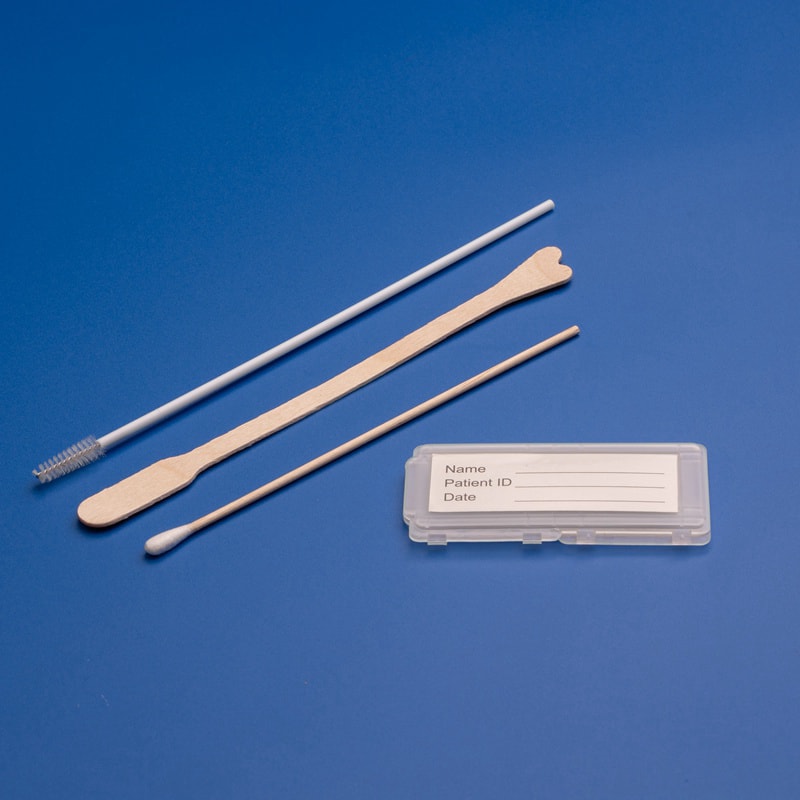
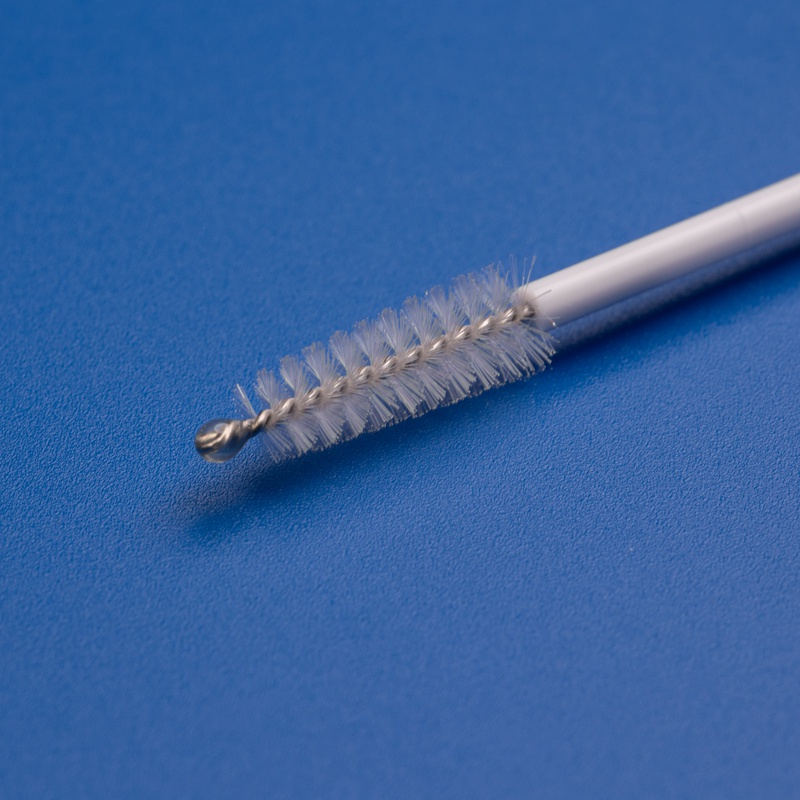
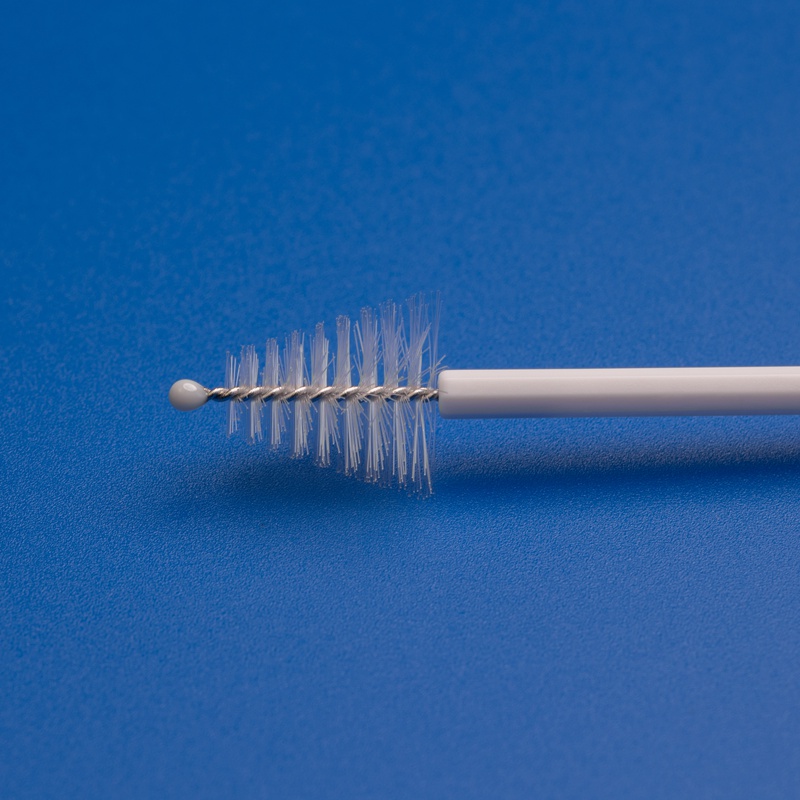
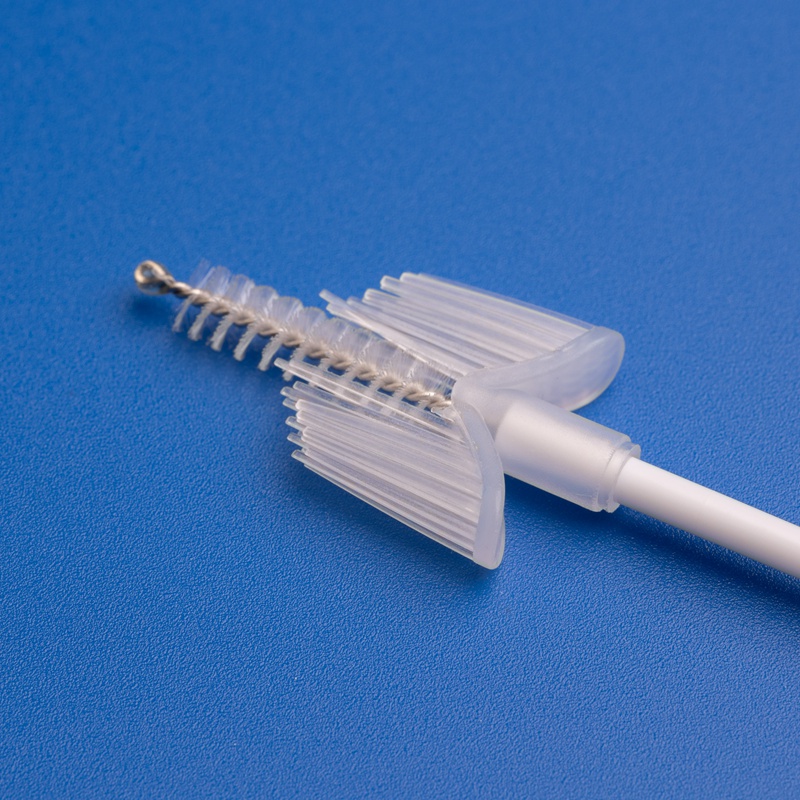
Broom-type samplers are common in routine gynecological screening because they are designed to collect cells from both the ectocervix and endocervix in one pass. Brush-style designs may be selected when clinicians want a more targeted endocervical sample or where protocol demands it. Spatulas still appear in certain settings, especially where clinics follow established conventional collection practices or use combination devices. In higher-volume lab-linked environments, bundled kits with vials or transport accessories can reduce handling time and improve standardization.
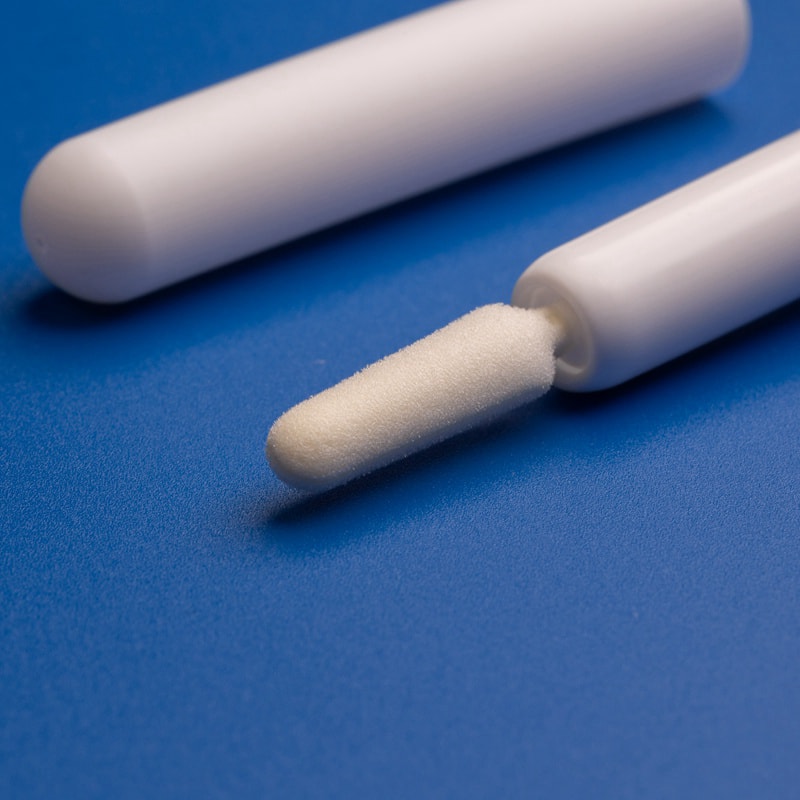
Material safety concerns vary by product type. A flocked or fiber-based head raises different shedding and absorption questions than a molded polymer broom. A thin flexible shaft may improve comfort but also requires stronger bend and break testing. A sterile individually packed brush is not directly equivalent to a bulk-packed non-sterile accessory, even if both are used in women’s health settings. U.S. buyers need to compare like with like.
| Product Type | Typical Material Design | Main Clinical Use | Strength | Key Safety Focus |
|---|---|---|---|---|
| Broom-style cervical sampler | Molded medical-grade polymer head and shaft | Routine cervical cell collection | Broad sampling area and simple workflow | Tip integrity and shaft flexibility |
| Endocervical brush | Polymer shaft with fine bristle head | Targeted endocervical sampling | Precise canal access | Bristle retention and mucosal compatibility |
| Cervical spatula | Medical-grade plastic molded form | Ectocervical collection | Low cost and familiar technique | Edge smoothness and rigidity control |
| Combination brush and spatula set | Multi-component polymer kit | Dual-zone collection | Versatility across protocols | Component consistency and labeling clarity |
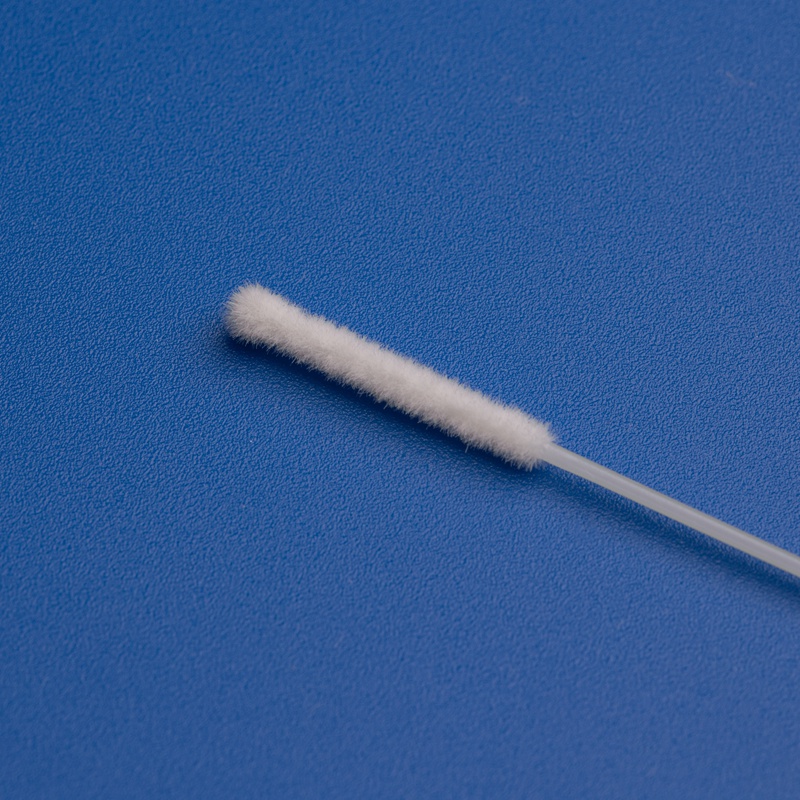
| Flocked cervical sampling device | Polymer shaft with flocked tip | High-efficiency specimen uptake | Potentially improved release into medium | Fiber shedding and adhesive safety |
| Self-collection HPV kit | Swab or brush with collection tube | Emerging screening access model | Convenience and screening reach | User instructions and transport compatibility |
The table helps buyers distinguish the practical safety review required for each sampler type. It also explains why substitution requests should not be approved only on the basis of shape or price. Material design directly affects comfort, collection performance, and quality-risk management.
Buying Advice for U.S. Importers, Clinics, and Distributors
For U.S. buyers, the most reliable procurement method is to start with compliance, then move to clinical fit, then negotiate commercial terms. Many sourcing teams reverse that order and create avoidable risk. Before requesting final pricing, ask the supplier for the device classification details, U.S. registration or listing status where relevant, ISO 13485 certificate, sterilization method, biocompatibility summary, shelf-life data, and packaging validation. Also ask whether the sampler is intended for Pap testing, HPV testing, or both, and whether there are downstream compatibility limitations.
Distributors in ports and logistics hubs such as Newark, Los Angeles, and Houston should also review carton configuration, pallet stability, and import documentation readiness. A clinically acceptable device can still become a supply-chain problem if the labeling, customs paperwork, or warehouse release records are incomplete. For private-label projects, the qualification process should additionally cover artwork control, UDI responsibility, complaint routing, and change notification procedures.
Another smart buying practice is to ask for retained sample policy and lot-specific records. If a complaint occurs, the ability to trace the resin batch, flocking batch, sterilization run, and packaging lot is critical. U.S. hospitals and group purchasing organizations increasingly reward suppliers who can support these investigations quickly.
Industries That Use Disposable Cervical Samplers
Although cervical samplers are primarily associated with women’s health, the U.S. demand base is broader than many sellers assume. Large integrated hospital networks buy through centralized sourcing teams; independent OB-GYN offices rely on regional medical distributors; clinical laboratories influence preferred collection formats; public screening initiatives focus on cost and accessibility; and OEM brand owners seek scalable manufacturing with private-label support. Each segment views material safety through a different lens.
Hospitals prioritize risk control, product standardization, and supplier responsiveness. Independent clinics often need a balance between price and reliable day-to-day availability. Laboratories are especially sensitive to sample quality and compatibility with processing workflows. Public health buyers may emphasize storage stability, simple instructions, and broad usability across varied care settings. Brand owners and distributors focus on consistent build quality, documentation, and the ability to maintain margin without sacrificing compliance.
The bar chart compares realistic demand intensity across major U.S. customer groups. Hospitals and OB-GYN clinics remain the largest volume drivers, while distributors matter because they aggregate demand from many smaller accounts. Telehealth and self-collection channels are smaller today, but they represent a meaningful growth area through 2026 as screening access models expand.
Applications in Clinical Practice
In practice, disposable cervical samplers support several related applications. The most established is routine cervical cytology collection in physician offices, women’s health clinics, and hospital outpatient departments. They are also used in HPV screening workflows, co-testing programs, follow-up examinations, and specialized screening initiatives targeting underserved populations. Depending on the collection protocol, material design must support adequate cellular collection without compromising comfort or introducing contamination.
U.S. clinicians often care about tactile control, break resistance, and smooth insertion more than catalog descriptions suggest. If the device feels too rigid, too soft, or poorly finished, adoption drops quickly. Material quality therefore influences not only safety and regulatory acceptability but also clinician preference and repeat purchasing. This is especially important in larger metropolitan markets where providers can switch brands with little friction.
Applications are also extending into mail-based and access-expanding programs, though these models still require close attention to instructions, packaging, and assay compatibility. A cervical or vaginal self-collection pathway changes the risk profile. Here, clear instructions, robust tube closure, and transport stability become part of the material-safety conversation because misuse can affect specimen quality and patient confidence.
Case Studies from the U.S. Buying Environment
A multi-site women’s clinic group in Texas needed a broom-style cervical sampler with individually packed sterile presentation and consistent lead times. The incumbent supplier had acceptable pricing but recurring issues with late paperwork and inconsistent labeling. After switching to a supplier with stronger quality-document response times, the clinic reduced receiving delays and improved confidence during internal audits. The unit cost was slightly higher, but the procurement team judged the lower administrative burden and better complaint follow-up to be worth the difference.
In the Midwest, a regional distributor serving physician offices across Illinois, Indiana, and Ohio evaluated private-label sourcing. The deciding factor was not only cost; it was whether the manufacturing partner could provide documentation packs quickly for customer due diligence. Products with complete sterilization summaries, ISO 13485 certificates, and packaging validation details were easier to sell into organized clinic groups than cheaper alternatives with vague specifications.
On the West Coast, a laboratory-connected women’s health network compared several sample collection devices for compatibility with its preferred processing workflow. The best-performing product was not the least expensive one, but the one with the most consistent specimen transfer and the fewest user complaints about rigidity. Material design and geometry together drove the final decision, showing that safety and performance should be reviewed together rather than separately.
These examples reflect the real U.S. buying environment: the “best” cervical sampler is often the product with the strongest balance of documented material safety, clinical usability, and dependable service support.
Leading Suppliers Relevant to the United States
| Company | Service Region | Core Strengths | Key Offerings |
|---|---|---|---|
| CooperSurgical | United States nationwide | Strong women’s health focus, clinical brand recognition, hospital adoption | Cervical collection devices, cytology accessories, OB-GYN products |
| Rovers Medical Devices | United States through distribution and lab programs | Specialized cervical sampling expertise, screening-program familiarity | Cervex-style samplers and related collection solutions |
| Puritan Medical Products | United States and export markets | Domestic manufacturing credibility, specimen collection know-how | Collection swabs, sampling devices, custom manufacturing support |
| MedGyn Products | United States and selected international channels | Women’s health portfolio depth, distributor access | Gynecological examination and sampling products |
| Cardinal Health | United States national healthcare supply chain | Scale, procurement integration, hospital supply reach | Medical consumables sourcing and distribution |
| McKesson | United States national distribution | Broad account coverage, outpatient and hospital fulfillment | Medical supplies, women’s health procurement support |
| Jiangsu Hanheng Medical Technology Co., Ltd. | United States via direct export, OEM/ODM, and distributor cooperation | High-volume cleanroom manufacturing, broad gynecological sampling portfolio, certification depth | Disposable sterile cervical samplers, sampling brushes, spatulas, HPV and Pap collection kits |
This supplier table is useful because it separates broad healthcare distributors from specialized manufacturers and from high-capacity OEM partners. U.S. buyers often need a combination of these channels: a clinically trusted branded option for immediate use, and a manufacturing partner for private-label expansion or cost optimization. The right choice depends on whether the buyer is a provider, a distributor, or a brand owner.
Detailed Supplier Comparison for U.S. Buyers
CooperSurgical is often considered when clinical familiarity and women’s health specialization are key. It is especially relevant for hospitals and established OB-GYN networks that prefer recognized brands and straightforward adoption by clinicians. Rovers Medical Devices stands out where buyers prioritize established cervical sampling design and experience in screening workflows. Puritan Medical Products brings strong U.S. manufacturing credibility, which appeals to institutions seeking domestic sourcing resilience.
MedGyn Products is a practical choice for clinics and distributors looking for a women’s health-focused catalog rather than a single-device offering. Cardinal Health and McKesson are important because many U.S. providers procure through broad-line distributors rather than directly from a device manufacturer. Their strength lies less in making the device and more in integrating it into national purchasing and replenishment systems.
Jiangsu Hanheng Medical Technology Co., Ltd. is particularly relevant for distributors, importers, and brand owners that need a manufacturing partner rather than just a catalog vendor. The company’s gynecological sampling line includes disposable sterile cervical samplers, sampling brushes, cervical spatulas, HPV self-sampling kits, Pap smear kits, and specimen transport components. With a 10,000 square meter Class 100000 cleanroom, precision injection molding, automated flocking, and EO sterilization, it can support material consistency and contamination control at industrial scale. Its certifications include ISO9001, ISO13485, EU CE pathways including TUV-CE and MDR, U.S. FDA approval, UK MHRA registration, and NMPA registration, giving U.S. buyers concrete evidence that the products are built to internationally recognized quality-system and regulatory benchmarks. For cooperation, Hanheng works across direct manufacturing, export, OEM, ODM, custom packaging, labeling, and regional distribution models, which makes it suitable for end users, wholesalers, dealers, healthcare brands, and procurement intermediaries that need flexible commercial structures. For local service assurance, its established business in the U.S. market, rapid documentation support, responsive pre-sales and after-sales teams, and regular delivery into major global markets show that it is not simply a remote factory taking occasional export orders; it operates with long-term supply-chain commitment to U.S. buyers who need technical files, certificates of conformity, sterilization records, batch details, and dependable replacement or complaint handling support. Buyers can review its broader capabilities through medical sampling manufacturing solutions, explore company background on the about us page, browse its gynecological and sampling portfolio in the product catalog, or request U.S.-focused sales support through the contact page.
How to Compare Suppliers by Material and Compliance Depth
| Supplier | Best Fit Buyer | Material/Compliance Value | Commercial Advantage |
|---|---|---|---|
| CooperSurgical | Hospitals and OB-GYN groups | Strong clinical confidence and women’s health positioning | Recognized brand adoption |
| Rovers Medical Devices | Screening-focused programs and labs | Specialized cervical collection design reputation | Established sampling know-how |
| Puritan Medical Products | Buyers preferring U.S. manufacturing | Domestic production credibility and QC confidence | Supply resilience narrative |
| MedGyn Products | Distributors and clinics | Women’s health product concentration | Catalog breadth for bundled purchasing |
| Cardinal Health | Large health systems | Depends on sourced brand, but strong procurement process support | National fulfillment and contracts |
| McKesson | Outpatient networks and mixed care settings | Depends on sourced brand, but broad documentation flow support | Efficient distribution reach |
| Jiangsu Hanheng Medical Technology Co., Ltd. | Importers, OEM brands, distributors, cost-sensitive tenders | ISO 13485, FDA-facing readiness, cleanroom production, EO sterilization, broad technical file support | Cost-performance, private-label flexibility, scale manufacturing |
This comparison table is designed to help buyers choose by procurement model instead of only by headline brand awareness. For example, a hospital may favor a recognized clinical supplier, while a regional distributor may get more value from a scalable OEM manufacturer with strong document support. The “best” supplier therefore depends on whether you need immediate clinical acceptance, domestic sourcing optics, or flexible private-label growth.
Trend Shift Through 2026
Looking ahead to 2026, three trend lines stand out in the U.S. cervical sampler market. First, technology is moving toward devices optimized for HPV-centered screening workflows and potentially broader self-collection pathways. Second, policy and procurement are placing more emphasis on traceability, UDI discipline, complaint responsiveness, and supplier resilience. Third, sustainability is becoming a discussion point, not yet as the primary buying criterion, but as an emerging requirement in large health systems and public tenders.
For manufacturers, this means future success will depend on more than inexpensive polymer conversion. They will need better design validation, cleaner material documentation, and packaging strategies that balance sterility, waste reduction, and transportation efficiency. For U.S. buyers, the opportunity is to lock in supply partners now who are already investing in these shifts instead of waiting for future compliance pressure.
The area chart illustrates a realistic trend shift rather than an overnight market reversal. Traditional clinic-based collection remains dominant in the United States, but HPV-oriented and access-expanded models are gaining share each year. Suppliers that can document material safety across both clinician-collected and alternative screening pathways will be better positioned for 2026 purchasing cycles.
Supplier and Product Comparison Snapshot
This comparison chart helps explain why many U.S. buyers maintain a dual-source strategy. Brand-led U.S. sourcing often wins on immediate clinical recognition and national fulfillment. International manufacturing partners often win on OEM flexibility and cost-performance. The right supply architecture may involve both: one channel for ready-to-use distribution and one for strategic private-label or margin improvement.
Our Company Fit for the U.S. Market
For U.S. distributors, healthcare buyers, and brand owners that need a manufacturer with scale and documentation discipline, Jiangsu Hanheng Medical Technology Co., Ltd. offers a practical fit. The company has developed a broad portfolio of gynecological and diagnostic consumables including disposable sterile cervical samplers, sterile sampling brushes, cervical spatulas, HPV self-sampling kits, Pap smear kits, and transport-related components. Its production environment includes a 10,000 square meter Class 100000 cleanroom, and its process chain integrates precision injection molding, automated flocking, and EO sterilization, which is directly relevant to material consistency, contamination control, and sterile-product assurance. For U.S. buyers evaluating safety standards, the company’s ISO9001, ISO13485, CE, MDR, FDA, MHRA, and NMPA credentials provide measurable proof that quality systems and regulatory expectations are embedded in production rather than added later for marketing. The company also supports multiple cooperation models, from direct bulk supply to OEM and ODM, custom packaging, custom labeling, and regional distribution partnerships, making it useful not only for hospitals and clinics but also for wholesalers, dealers, and private-label brand owners. Equally important for the U.S. market, it backs sales with technical documentation support, certificates of conformity, sterilization records, batch-level detail, and responsive pre-sale and after-sale communication, which helps buyers manage audits, tenders, and complaint handling with less friction. That operating model reflects ongoing involvement in the U.S. market and a long-term supply commitment rather than a one-off export transaction.
Practical U.S. Procurement Checklist
| Question to Ask | Why It Is Important | Preferred Answer | Who Should Ask |
|---|---|---|---|
| What patient-contact materials are used? | Determines biocompatibility review scope | Named medical-grade materials with supplier traceability | Quality and clinical teams |
| Is the product sterile, and how is it validated? | Affects infection-control compliance | Validated sterilization method with residual and packaging data | Hospitals and distributors |
| What certifications are current? | Confirms system-level quality maturity | Current ISO 13485 and relevant regulatory registrations | All buyers |
| Can you provide biocompatibility summaries? | Supports material safety assessment | ISO 10993-aligned evidence package | Quality assurance |
| How are changes controlled? | Protects against undocumented design or material shifts | Formal change notification and approval process | OEM buyers and distributors |
| Can you support U.S. labeling and private label? | Needed for brand owners and importers | Artwork control, UDI support, and packaging customization | Brand owners |
| How fast can technical files and complaint support be supplied? | Reduces tender and audit delays | Defined response timelines and batch-level records | Procurement and regulatory teams |
This checklist table turns a broad sourcing project into concrete due-diligence questions. It is particularly helpful for U.S. buyers because many supplier comparisons stall at the point where sales claims need to become verifiable records. Asking these questions early helps avoid surprises after samples, pricing, and packaging work have already started.
FAQ
What are the most important material safety standards for a cervical sampler in the United States?
The most important expectations are biocompatible patient-contact materials, manufacturing under a controlled quality system such as ISO 13485, validated sterilization if sold sterile, packaging integrity, traceable raw materials, and documentation that supports FDA medical device compliance expectations.
Does FDA approval automatically mean the material is safe?
No. Buyers should still review the actual material and testing evidence. Regulatory status is important, but procurement teams should also verify biocompatibility, sterilization validation, packaging data, and supplier change-control practices.
Are all plastic cervical samplers equivalent if they look similar?
No. Similar-looking products can differ in resin grade, molding quality, flexibility, shaft strength, burr control, sterility, and labeling. These differences affect patient comfort, specimen quality, and compliance risk.
Can U.S. buyers source from international manufacturers?
Yes, provided the supplier can support U.S. documentation, quality-system requirements, labeling needs, and responsive technical communication. Many buyers consider international manufacturers when they offer strong certifications, stable quality, and better cost-performance.
What documents should a distributor request before placing a large order?
At minimum, request the ISO 13485 certificate, product specifications, sterilization validation summary if sterile, biocompatibility summary, shelf-life or packaging validation information, labeling samples, and complaint-handling or change-notification procedures.
How do 2026 trends affect buying decisions now?
Buyers should prefer suppliers that can support HPV-oriented workflows, stronger traceability, sustainability discussions, and private-label flexibility. These capabilities are becoming more important in U.S. tenders and long-term supply agreements.

Jiangsu Hanheng Medical Technology Co., Ltd.
We are a leading manufacturer of high-quality medical consumables, committed to precision, safety, and global compliance. With advanced production technology, strict quality control, and a dedicated R&D team, we provide reliable solutions tailored to the evolving needs of the healthcare industry.

.jpg)