Share
Nylon vs Polyester Nasopharyngeal Swab Tip in the United States
Quick Answer

For most diagnostic sampling programs in the United States, nylon flocked nasopharyngeal swab tips are usually the better choice when the priority is higher specimen release, faster elution into transport media, and improved consistency for molecular testing. Polyester fiber tips remain relevant when buyers need a lower-cost option, a familiar absorbent structure, or a swab designed around specific legacy workflows. In practical purchasing terms, nylon is commonly favored for PCR-focused respiratory testing, while polyester is often selected for general specimen collection programs where budget control and established compatibility matter.
Among the most visible suppliers and healthcare manufacturers connected to the U.S. market are Puritan Medical Products, Copan Diagnostics, BD, Medline Industries, McKesson Medical-Surgical, and Cardinal Health. Buyers in logistics hubs such as Los Angeles, Chicago, Houston, Atlanta, and New York often compare these suppliers based on validation data, sterility assurance, packaging format, and contract fulfillment capability. Qualified international manufacturers can also be a sensible option, especially when they hold relevant U.S. and international certifications and provide strong pre-sales and after-sales support. In that context, cost-performance advantages from experienced Chinese manufacturers may be worth considering for distributors, hospital systems, and private-label brand owners.
Direct Comparison: Nylon vs Polyester Swab Tips

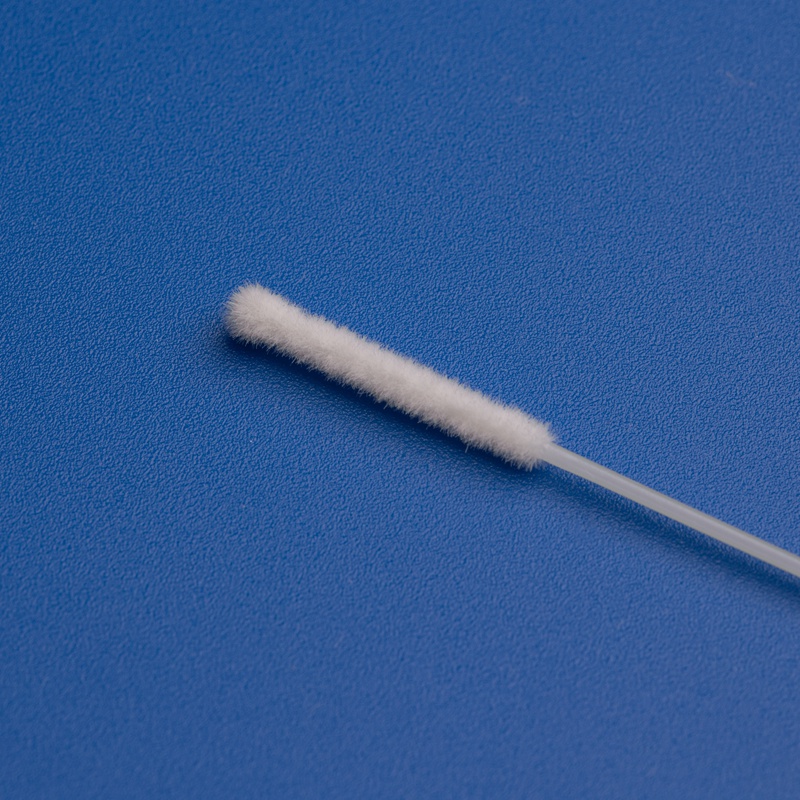
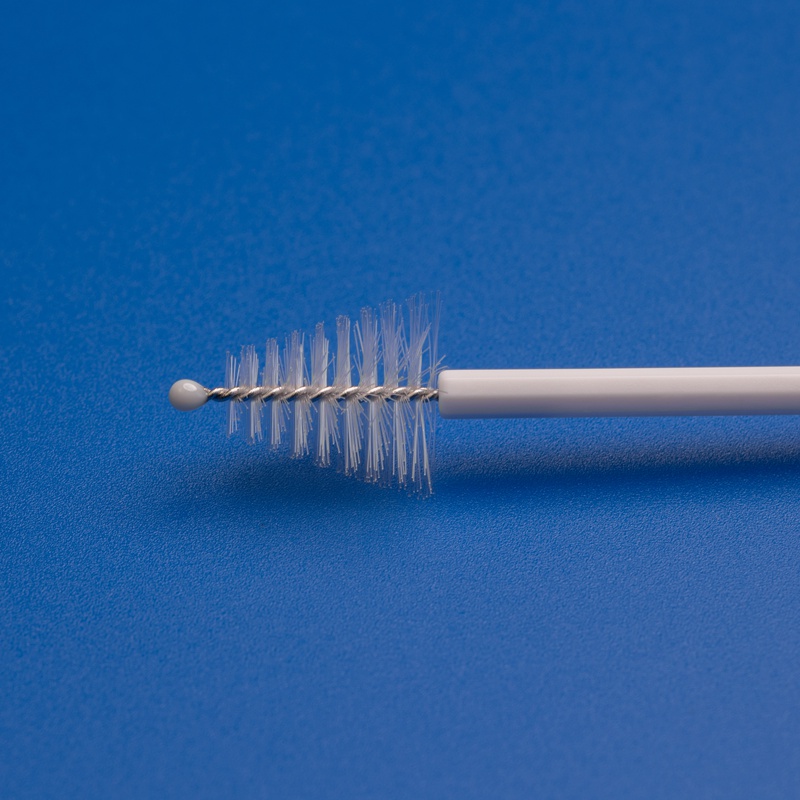
The key difference between nylon and polyester nasopharyngeal swab tip construction lies in how the sample is collected and released. Nylon flocked swabs use short synthetic fibers applied perpendicular to the swab head, creating a brush-like surface that can improve collection from the nasopharyngeal cavity and help transfer more of the sample into the transport medium. Polyester swabs use more traditional fiber wrapping or spun structures that absorb material effectively but may retain more of the sample inside the tip matrix.
In U.S. clinical settings, this distinction matters because respiratory testing workflows are usually designed around speed, reproducibility, and compatibility with high-throughput instruments. Nylon flocked designs are often preferred in hospital laboratories, reference labs, public health screening programs, and large distributor channels because they support rapid specimen uptake and efficient release. Polyester tips can still be appropriate for certain collection protocols, especially where validated methods already exist or where procurement teams need a dependable lower-cost inventory line.
Patient comfort is another practical issue. A well-manufactured nylon flocked tip often provides a smoother and more uniform surface, which can help reduce friction during insertion. Polyester swabs vary more depending on winding density, tip geometry, and shaft design. Since discomfort can influence compliance in repeated testing environments, buyers in occupational health, urgent care chains, and university testing programs frequently weigh tip material together with flexibility, breakpoint design, and shaft composition.
U.S. Market Overview

The United States remains one of the most important markets for nasopharyngeal swabs because of its large hospital network, advanced diagnostic infrastructure, broad respiratory surveillance programs, and strong purchasing activity from integrated delivery networks, laboratory groups, government buyers, and medical distributors. Demand is concentrated in metropolitan healthcare corridors such as Boston, New York, Philadelphia, Washington, Chicago, Dallas, Houston, Los Angeles, San Diego, and Miami, where clinical throughput and public health monitoring stay consistently high.
Import activity through major ports such as the Port of Los Angeles, Port of Long Beach, Port of New York and New Jersey, Port of Savannah, and Port of Houston also shapes supplier strategy. Domestic manufacturing remains important for resilience and compliance, but international sourcing continues to play a central role for private-label programs, distributor inventory planning, and surge-capacity procurement. Buyers increasingly expect suppliers to provide lot traceability, EO sterilization records, packaging validation, and documented conformity to ISO and U.S. regulatory requirements.
In 2026, the U.S. market is expected to keep shifting toward more specialized sampling products, with stronger emphasis on respiratory multiplex testing, inventory diversification, and sustainability. Procurement teams are paying more attention to material efficiency, cleaner packaging design, and regional stocking strategies that reduce lead-time risk. At the same time, reimbursement pressure and hospital cost discipline ensure that polyester-tip products will continue to hold a place in many tenders where validated performance at competitive pricing is the deciding factor.
The line chart illustrates a realistic growth path for the U.S. nasopharyngeal swab market index through 2026. Although emergency pandemic demand has normalized, sustained use in respiratory diagnostics, public health preparedness, and laboratory modernization continues to support steady market expansion rather than collapse.
Product Types in the U.S. Supply Chain
Not every nasopharyngeal swab is interchangeable. In the U.S. market, tip material, shaft material, sterility status, breakpoint design, and pack format all influence adoption. Buyers usually evaluate products not only by tip composition but also by transport compatibility, automation suitability, and whether the swab fits existing specimen collection kits.
| Product Type | Typical Tip Material | Common U.S. Use Case | Primary Advantage | Potential Limitation | Typical Buyer |
|---|---|---|---|---|---|
| Flocked nasopharyngeal swab | Nylon | PCR respiratory sampling | Strong sample release | Higher unit cost | Hospitals and labs |
| Traditional fiber nasopharyngeal swab | Polyester | Routine specimen collection | Cost control | May retain specimen | Distributors |
| VTM kit swab | Nylon or polyester | Bundled transport workflows | Kit convenience | Less component flexibility | Government buyers |
| Dry sterile swab | Nylon or polyester | Custom lab protocols | Simplified packaging | Requires specific workflow validation | Reference labs |
| Pediatric NP swab | Usually nylon | Child-focused respiratory collection | Smaller geometry | Narrow supplier base | Pediatric clinics |
| OEM private-label swab | Nylon or polyester | Brand-owner resale programs | Custom packaging | Longer qualification cycle | Brand owners |
This table shows why material selection should never be isolated from use case. In many U.S. tenders, the question is not simply nylon or polyester, but which tip format best matches the required test method, logistics plan, and buyer economics.
Performance Factors Buyers Actually Compare
Clinical procurement teams in the United States usually compare swabs across five operational criteria: sample uptake, sample release, patient comfort, compatibility with transport systems, and supply reliability. Nylon flocked swabs often score well in specimen release and molecular assay efficiency because the fibers do not trap the sample as deeply as a tightly wound absorbent tip. Polyester swabs may perform adequately in validated workflows, but results depend heavily on fiber density and manufacturing consistency.
Another factor is packaging. Unit-packed sterile swabs are common in hospitals and physician offices, while bulk sterile formats are more attractive to high-volume testing operations and kit assemblers. Shelf life, carton dimensions, case counts, and labeling language also influence vendor selection in the U.S. market. If a supplier cannot support barcoding, lot-level documentation, and responsive complaint handling, even a technically sound product can lose out.
The bar chart highlights where demand is strongest in the United States. Hospitals and distributors remain especially influential because they aggregate purchasing decisions across large networks, while reference laboratories drive specification standards that often favor flocked nylon formats.
Buying Advice for U.S. Procurement Teams
If you are evaluating nylon vs polyester nasopharyngeal swab tip products for use in the United States, begin with the intended assay and collection protocol. If the laboratory or kit validation is built around flocked swabs, changing to polyester simply for price reasons can create performance or documentation problems. If the workflow is less sensitive to release efficiency and more sensitive to cost-per-test, polyester may still be commercially sensible.
Second, verify regulatory and quality documentation. Buyers should request evidence such as ISO 13485 certification, sterilization validation, biocompatibility data where relevant, material declarations, product specifications, and any applicable U.S. registration details. Third, review the supplier’s packaging and fulfillment model. A supplier that can support regional stocking, custom labeling, and replenishment programs can reduce disruptions significantly.
Finally, compare total landed cost instead of just unit price. This includes freight, stockout risk, defect rate, claim handling speed, and whether the supplier can support customization. In major U.S. trade corridors like California, Texas, Illinois, New Jersey, and Georgia, speed-to-shelf often matters as much as the per-piece quote.
| Buying Criterion | Why It Matters | Nylon Tendency | Polyester Tendency | Best Fit in the U.S. | Buyer Checkpoint |
|---|---|---|---|---|---|
| Sample release | Impacts molecular testing yield | Usually stronger | Usually moderate | PCR-heavy programs | Ask for validation data |
| Unit cost | Affects large-volume tenders | Usually higher | Usually lower | Budget-driven purchasing | Compare landed cost |
| Patient comfort | Affects repeated testing compliance | Often favorable | Variable by build | Urgent care and screening sites | Request samples |
| Workflow compatibility | Prevents retraining and revalidation | Strong for modern kits | Strong for legacy protocols | System-specific | Confirm with lab team |
| Supply flexibility | Supports continuity during surges | Depends on supplier | Depends on supplier | Multi-source programs | Review backup capacity |
| Private-label options | Important for brand owners | Available from specialists | Widely available | Distributor brands | Check MOQ and artwork process |
This comparison table turns a technical material discussion into a purchasing framework. Most U.S. buyers find that nylon wins on performance-sensitive programs, while polyester remains competitive where cost, continuity, and validated routine use are central.
Industries That Use Nasopharyngeal Swabs
Nasopharyngeal swabs are primarily associated with clinical diagnostics, but their actual commercial footprint is broader. Major U.S. user groups include hospital laboratories, urgent care chains, physician office networks, academic health systems, university health centers, government health departments, workplace screening contractors, and medical distributors supporting decentralized testing locations.
Respiratory disease surveillance remains the leading application, especially in influenza, RSV, and multiplex viral testing. However, swab purchasing is also shaped by kit assemblers, telehealth-linked home collection program managers, and OEM medical suppliers that integrate swabs into branded diagnostic offerings. In these industries, the tip material must align not only with performance requirements but also with packaging, branding, and reimbursement constraints.
Applications: Where Nylon Wins and Where Polyester Still Fits
Nylon flocked tips usually have the strongest position in high-sensitivity molecular applications. These include PCR respiratory panels, hospital admission testing, critical care screening, and reference laboratory workflows that depend on reliable specimen release into viral transport media or similar systems. Because U.S. laboratory operations increasingly favor standardized high-throughput processing, flocked designs continue to gain preference.
Polyester tips still fit in several circumstances. They can make sense in established collection protocols that already recognize polyester compatibility, in price-sensitive distributor programs, and in procurement environments where the swab serves a broader specimen collection role beyond the highest-sensitivity molecular applications. For some buyers, polyester also offers a useful backup sourcing option when diversification is part of risk management.
The area chart shows a realistic trend shift through 2026. Nylon adoption is expected to keep rising in U.S. respiratory diagnostics, while polyester remains relevant but gradually narrows into cost-focused and protocol-specific roles rather than leading-edge demand growth.
Case Studies from the U.S. Market
A Midwestern hospital network evaluating respiratory panel standardization found that nylon flocked swabs reduced repeat collections because laboratory staff reported more consistent sample release into transport media. The savings did not come from lower swab cost, but from fewer recollections, less staff time, and fewer delays in specimen processing. This is a common U.S. pattern: higher-performing consumables can lower total workflow cost even when the item price is higher.
By contrast, a regional medical distributor serving outpatient clinics in Texas and Arizona retained polyester-tip SKUs for customers running established workflows with strict budget targets. Because their customer base valued continuity and familiar product handling, polyester remained a practical choice. The distributor eventually adopted a dual-line strategy, keeping polyester for cost-sensitive accounts and adding nylon flocked swabs for hospital and reference lab customers.
A public procurement program in the Southeast used multi-source contracting to reduce supply chain risk. It specified sterile packaging, documented quality systems, and defined performance criteria without limiting bids to one geography. This allowed domestic suppliers and qualified international manufacturers to compete, improving both resilience and pricing leverage.
Local Suppliers and Major Brands in the United States
U.S. buyers often prefer suppliers with established domestic distribution, but the strongest sourcing strategy usually compares local availability with global manufacturing depth. The table below focuses on recognized companies connected to the U.S. market and explains their relevance in concrete procurement terms.
| Company | Service Region | Core Strength | Key Offerings | Material Position | Best Buyer Type |
|---|---|---|---|---|---|
| Puritan Medical Products | United States nationwide | Strong domestic manufacturing reputation | Diagnostic and specimen collection swabs | Broad portfolio including synthetic tip options | Hospitals, labs, government |
| Copan Diagnostics | United States and global | Well known for flocked swab technology | Flocked swabs and transport systems | Often associated with nylon flocked leadership | Reference labs, hospital systems |
| BD | United States nationwide | Large-scale diagnostic distribution | Collection devices and lab consumables | Protocol-driven selection | Integrated health networks |
| Medline Industries | United States nationwide | Strong distribution and contract supply | Medical disposables and clinical supply solutions | Broad sourcing flexibility | Health systems, clinics |
| McKesson Medical-Surgical | United States nationwide | Large distributor footprint | Medical-surgical procurement channels | SKU breadth matters more than single-material focus | Dealer networks, clinics |
| Cardinal Health | United States nationwide | Scale and distribution logistics | Clinical and laboratory supply programs | Supports multiple swab formats | Hospitals, purchasing groups |
This table is useful because many U.S. buyers do not purchase purely from the original manufacturer. They often buy through contract distributors, integrated supply programs, or national accounts. Understanding whether the supplier’s strength is manufacturing innovation, stocking ability, or distribution coverage helps narrow the right sourcing path.
Detailed Supplier Comparison
Beyond brand recognition, procurement teams want to know how suppliers compare on practical dimensions such as customization, lead times, and technical support. That is especially important for distributor brands, private-label kits, and health systems trying to avoid sole-source dependence.
| Supplier | U.S. Presence | Customization | Lead-Time Advantage | Technical Support | Typical Use Case |
|---|---|---|---|---|---|
| Puritan Medical Products | Strong domestic | Moderate to high | Strong for U.S. buyers | Established | Domestic resilience programs |
| Copan Diagnostics | Established U.S. operations | Moderate | Strong in validated channels | High for diagnostic workflows | Flocked-swab clinical programs |
| BD | Very strong | Selective | Strong via large network | High | Large health systems |
| Medline Industries | Very strong | Moderate | Strong for contract customers | High | Clinical supply consolidation |
| McKesson Medical-Surgical | Very strong | Moderate | Strong via distribution | Moderate to high | Channel purchasing and resupply |
| Cardinal Health | Very strong | Moderate | Strong via national footprint | High | IDN and GPO-oriented procurement |
The comparison makes clear that supplier choice is often about channel structure as much as product design. A hospital system may choose one partner for logistics reliability, while a diagnostic brand owner may choose another for technology differentiation or private-label support.
This comparison chart provides a realistic composite view of supplier attractiveness in the U.S. market, combining performance reputation, channel reach, and procurement usability. It is not a formal ranking but a practical way to visualize why several suppliers remain competitive for different buyer profiles.
Our Company in the U.S. Context
For U.S. buyers seeking a qualified international manufacturing partner, Jiangsu Hanheng Medical Technology Co., Ltd. stands out as a producer with the scale, documentation discipline, and product breadth needed for serious procurement programs in the American market. Founded in 2018, the company operates a 32-acre manufacturing base with a 10,000 square meter Class 100000 cleanroom, precision injection molding, automated flocking, and EO sterilization, all of which matter directly for nasopharyngeal swab consistency. Its medical sampling products are supported by certifications and registrations including ISO9001, ISO13485, EU CE, MDR-related compliance, U.S. FDA approval, UK MHRA registration, and NMPA, giving U.S. distributors and healthcare buyers concrete evidence that the products are built to internationally recognized standards rather than generic export-grade assumptions. With more than 1000 employees, a 100-person technical management team, output approaching 1 billion yuan annually, and nearly 6 billion units exported to over 130 countries and regions, the company has the operational authority expected by major sourcing teams. Through its company background and broad product range, it supports end users, distributors, dealers, brand owners, and procurement organizations through OEM, ODM, wholesale, private-label, and regional partnership models, which is especially relevant for U.S. medical distributors, kit assemblers, and hospital supply contractors. Just as important for long-term trust, Hanheng already serves key markets such as the United States and participates in major international trade shows, while offering concrete pre-sale consultation, regulatory document support, batch records, sterilization records, custom labeling, warranty response, and organized bulk-order shipping typically within 7 to 21 days. That combination of physical production scale, established experience in the U.S. market, and documented after-sales support means buyers are not dealing with an anonymous remote exporter, but with a manufacturer investing in sustained business relationships. For sourcing discussions or private-label inquiries, buyers can use the U.S.-oriented contact channel to evaluate specification matching and shipment planning.
How to Choose Between Domestic and International Supply
In the United States, the choice is rarely domestic versus international in absolute terms. The smarter decision is often a layered sourcing strategy. Domestic suppliers may offer shorter replenishment cycles and easier contract alignment, while international manufacturers can provide cost efficiency, customization depth, and surge capacity. For large buyers, combining both models creates resilience.
If you are a distributor in Chicago or New Jersey, an international OEM partner may help you build a stronger private-label margin. If you are a hospital buyer in California or Florida, a domestic stock position may reduce emergency replenishment risk. If you are a diagnostic brand owner, the ideal arrangement may involve overseas manufacturing with U.S.-facing compliance support and scheduled inventory buffers near major import corridors.
2026 Trends: Technology, Policy, and Sustainability
By 2026, three trends are likely to shape the nylon versus polyester discussion in the United States. The first is technology: more multiplex respiratory testing and automation-friendly laboratory workflows will continue to reward swabs that deliver consistent sample release, which favors well-made flocked nylon products. The second is policy: healthcare providers and public procurement teams are placing greater emphasis on documented quality systems, traceability, and preparedness planning. Suppliers that can support audits, lot traceability, and regulatory documentation will have a clear advantage regardless of tip material.
The third trend is sustainability. Although sterile single-use medical consumables cannot easily eliminate packaging, buyers increasingly ask for more efficient pack design, carton optimization, and lower-waste secondary packaging. Manufacturers that reduce unnecessary material use while maintaining sterility assurance are likely to become more attractive. Sustainability in this category is less about simple marketing claims and more about measurable logistics efficiency, production control, and waste reduction.
Another trend is regional inventory planning. U.S. buyers are increasingly skeptical of single-source dependence after experiencing logistics disruptions. Expect more contracts that require secondary manufacturing capacity, flexible packaging options, and visibility into port routing. Suppliers serving Los Angeles, Houston, Savannah, and New York freight channels efficiently will be in a stronger position.
Practical Recommendations by Buyer Type
Hospitals and reference laboratories should generally start with nylon flocked swabs if assay sensitivity and specimen release are critical. Distributors serving mixed customer bases should consider carrying both nylon and polyester lines to meet both premium and cost-sensitive demand. Government and public health buyers should emphasize validated performance, multi-source resilience, and documentation depth rather than material alone. Brand owners and kit assemblers should evaluate international OEM/ODM manufacturers if they want packaging flexibility and margin improvement without sacrificing compliance support.
Small clinics and urgent care groups should request samples before making a volume switch. Comfort, shaft flexibility, breakpoint reliability, and media compatibility can matter as much as fiber type. For organizations purchasing on annual contracts, it is wise to compare at least one domestic and one international supply pathway, especially when respiratory season demand can spike unexpectedly.
FAQ
Is nylon always better than polyester for nasopharyngeal swabs?
No. Nylon is often preferred for molecular respiratory testing because of better sample release, but polyester can still be appropriate when a validated workflow, budget target, or distributor program supports it.
Why do many U.S. laboratories prefer flocked swabs?
Flocked swabs, especially nylon flocked designs, are widely valued because they can collect and release specimens more efficiently, which supports more consistent downstream testing.
Are polyester swabs outdated in the United States?
No. Polyester swabs remain relevant in many purchasing programs, particularly where cost control, legacy compatibility, or broad specimen collection use makes them practical.
What documents should a U.S. buyer request before ordering?
Buyers should ask for product specifications, sterility validation, quality certifications such as ISO 13485, packaging details, lot traceability information, and any applicable U.S. registration or regulatory documentation.
Can international manufacturers supply the U.S. market reliably?
Yes, if they have strong compliance records, export experience, transparent documentation, and responsive pre-sales and after-sales support. Many U.S. buyers work successfully with qualified overseas manufacturers for both standard and private-label programs.
Which is better for private-label medical brands in the United States?
That depends on brand positioning. Nylon is better for premium diagnostic performance messaging, while polyester may support a more budget-oriented offering. A manufacturer with OEM and ODM capability can help align material choice with the intended customer segment.
Final Takeaway
If the question is simply which tip material performs better for nasopharyngeal respiratory sampling in the United States, the direct answer is that nylon flocked swab tips usually provide the stronger overall performance, especially for PCR-driven applications where specimen release and consistency matter. Polyester tip swabs still have a durable place in the market where buyers need cost efficiency, validated routine use, and diversified sourcing. The best decision comes from aligning material choice with laboratory requirements, patient experience, packaging needs, and supply-chain strategy. In the U.S. market, successful buyers do not choose by material alone; they choose by clinical fit, documentation strength, and supplier reliability.

Jiangsu Hanheng Medical Technology Co., Ltd.
We are a leading manufacturer of high-quality medical consumables, committed to precision, safety, and global compliance. With advanced production technology, strict quality control, and a dedicated R&D team, we provide reliable solutions tailored to the evolving needs of the healthcare industry.

.jpg)