Share
Flocked Swabs vs Foam Swabs for Diagnostic Sample Tests in the United States
Quick Answer

For most diagnostic sample tests in the United States, flocked swabs are the better choice when the goal is higher sample release, stronger analytical sensitivity, and more consistent performance in PCR, antigen, microbiology, and molecular workflows. Foam swabs remain useful when clinicians need a softer absorbent tip, lower unit cost, controlled fluid pickup, or compatibility with certain surface sampling and wound-related applications. In practice, flocked swabs are usually preferred for nasopharyngeal, nasal, oral, and gynecological specimen collection where maximizing cell capture and release matters, while foam swabs are often selected for cleaning, some environmental sampling, and applications where abrasion must be minimized.
Buyers in the United States should compare swab structure, breakpoint design, sterilization method, transport media compatibility, packaging format, and regulatory documentation before ordering. Leading options in the market include Puritan Medical Products, Copan Diagnostics, BD, Thermo Fisher Scientific, Hardy Diagnostics, and Medline. Qualified international suppliers can also be a practical option when they hold the right certifications and provide responsive pre-sales and after-sales support in the United States, especially when cost-performance and large-volume supply stability are priorities.
Market Overview in the United States

The United States remains one of the most sophisticated markets for diagnostic swabs because demand is spread across hospitals, physician office labs, reference labs, public health systems, universities, contract research organizations, veterinary networks, and industrial hygiene programs. Major hubs such as Boston, New York, Chicago, Houston, Los Angeles, San Diego, and Atlanta continue to shape procurement patterns because they combine large clinical systems, medical distributors, and laboratory networks. Port access also influences import flow, with Los Angeles, Long Beach, Savannah, and New York and New Jersey supporting high-volume medical consumables distribution.
Demand has become more specialized since the peak emergency buying period of the pandemic. Buyers now evaluate swabs with tighter attention to specimen adequacy, patient comfort, automation compatibility, shelf life, and lot-level documentation. Many purchasing teams in the United States no longer ask only whether a swab is sterile; they ask whether the swab has validated performance with molecular extraction kits, whether the shaft can tolerate transport without breakage, whether the adhesive system introduces inhibitors, and whether the supplier can maintain delivery during respiratory season.
Flocked swabs have gained a stronger position in molecular diagnostics because laboratories want efficient elution into transport media, especially in viral and respiratory testing. Foam swabs still have a stable role because they are absorbent, simple to use, and practical in workflows where collection volume matters more than releasing concentrated cellular material. As reimbursement pressure and staffing shortages continue, buyers increasingly prefer products that reduce recollection rates, specimen rejection, and handling friction.
The line chart illustrates realistic market expansion driven by respiratory testing, women’s health screening, at-home collection models, and preparedness stocking by healthcare systems. Growth is no longer emergency-driven; it is now supported by broader routine testing and procurement modernization.
How Flocked Swabs and Foam Swabs Differ

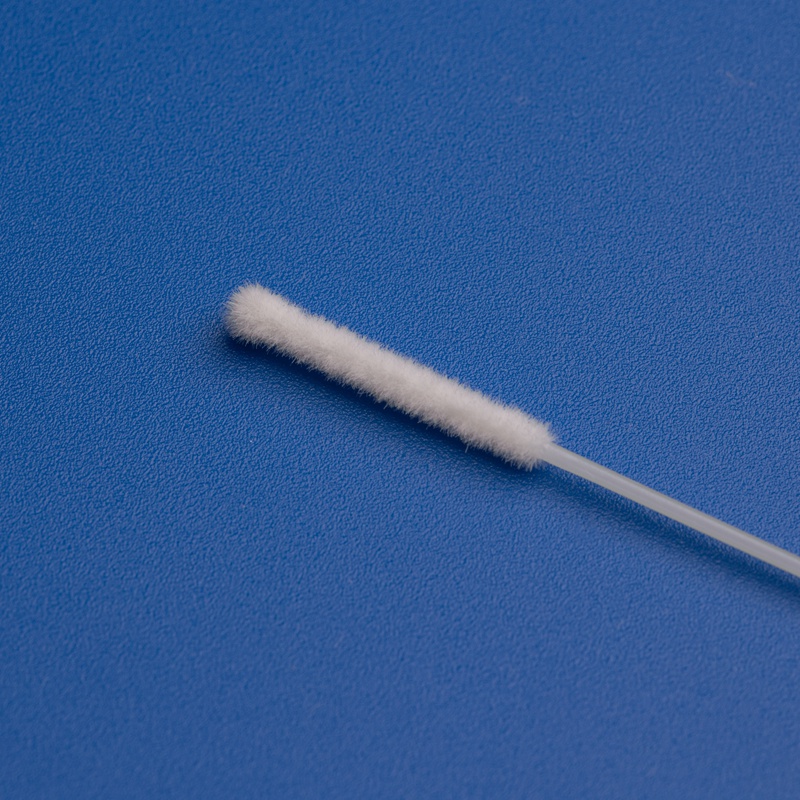
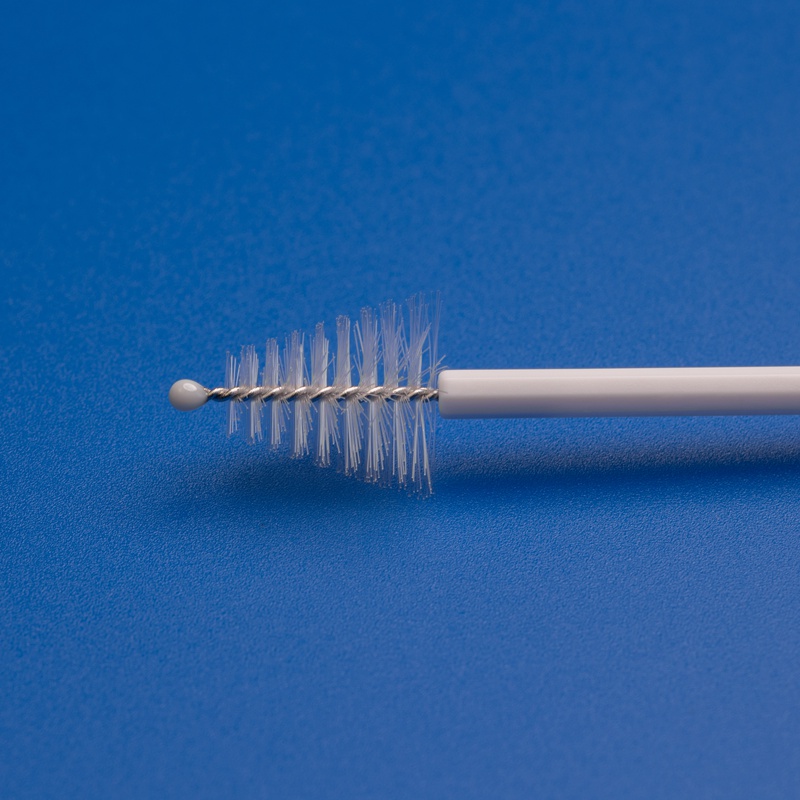
A flocked swab uses short synthetic fibers applied perpendicular to the tip surface, usually through an electrostatic flocking process. This creates an open brush-like layer that can collect epithelial cells and biological material efficiently while also releasing a high percentage of the collected sample into transport media. That release behavior is one reason flocked swabs are frequently preferred for PCR and other molecular methods.
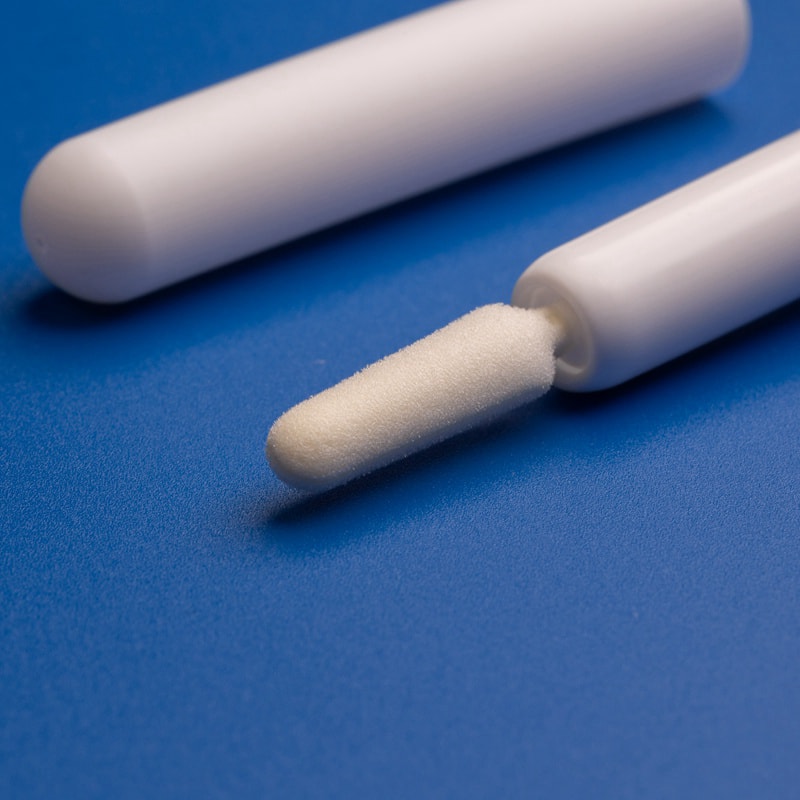
A foam swab uses a polyurethane or similar foam structure that is absorbent and generally soft. It can soak up liquid effectively and is useful for applications that involve fluid collection or gentle contact with sensitive surfaces. However, some foam swabs may retain more specimen within the foam matrix, which can reduce release efficiency compared with well-designed flocked swabs in certain diagnostic settings.
The choice is not simply about which swab is newer or more expensive. It is about matching the swab to the test method, specimen type, user skill level, and transport system. A poorly matched swab can lead to low target recovery, patient discomfort, contamination risk, or unnecessary repeat testing.
Product Types and Diagnostic Fit
| Swab Type | Typical Tip Material | Best-Fit Specimens | Common US Settings | Main Advantage | Main Limitation |
|---|---|---|---|---|---|
| Flocked nasopharyngeal swab | Nylon flock | Respiratory viral samples | Hospitals, urgent care, public health labs | High release into VTM or UTM | Often higher price than foam |
| Flocked nasal swab | Nylon flock | Anterior nasal collections | Clinics, home testing, pharmacies | Good comfort and sample capture | Needs correct insertion depth training |
| Flocked oral swab | Nylon flock | Buccal cells, oral diagnostics | DNA labs, screening programs | Strong cell harvesting | Can be over-specified for simple wiping tasks |
| Foam oral swab | Polyurethane foam | Oral fluid or gentle mucosal sampling | Hospitals, elder care, support care | Soft tip and fluid absorption | May retain sample in the matrix |
| Foam surface swab | Polyurethane foam | Environmental and equipment sampling | Labs, pharma, cleanrooms | Good wiping control | Less ideal for cell-rich diagnostic collection |
| Gynecological flocked swab | Nylon flock | HPV and cervical sampling | OB-GYN clinics, screening programs | Improved cellular release | Needs validated compatibility with assay kit |
This table shows that both materials are useful, but their strengths differ by diagnostic purpose. In the United States, molecular labs and screening programs often shift toward flocked options because sample release is closely tied to assay reliability, while foam remains practical in lower-complexity and non-molecular workflows.
When Flocked Swabs Are Usually Better
Flocked swabs are usually the better option when test sensitivity matters, when sample volume is limited, and when the specimen must be released quickly and efficiently into transport media. That includes many respiratory and molecular diagnostic workflows. A well-designed flocked swab also tends to improve standardization because the fiber geometry supports more repeatable pickup than some traditional absorbent structures.
Hospitals and reference labs in the United States frequently specify flocked swabs for viral testing because they support low-volume elution and downstream automated extraction. They are also commonly selected for women’s health screening, DNA collection, and microbiological investigations where collection of cells rather than just free fluid is important.
When Foam Swabs Are Usually Better
Foam swabs are often preferred when softness, absorbency, and straightforward handling take priority. They can work well in oral care support, some wound-related tasks, environmental swabbing, and niche specimen collection protocols where excess absorption is desirable. In some facilities, foam swabs are used because they are economical, familiar to staff, and suitable for applications that do not require maximum elution efficiency.
Foam can also be helpful for users who need a larger contact surface for broad wiping rather than focused rotational sampling. For buyers in the United States managing multiple departments, this means foam and flocked products often coexist rather than directly replace one another.
Performance Comparison for Buyers
| Performance Factor | Flocked Swabs | Foam Swabs | Practical Buying Takeaway |
|---|---|---|---|
| Sample collection efficiency | High for cells and fine biological material | Moderate to high for fluids | Choose based on whether cells or liquid matter more |
| Sample release into media | Usually stronger | Can be lower due to retention | Important for PCR and low-target assays |
| Patient comfort | Good when tip and shaft are well designed | Usually soft and gentle | Comfort depends on geometry, not only material |
| Assay compatibility | Widely used in molecular tests | Useful in selected methods | Always request validation data |
| Cost per unit | Often higher | Often lower | Total cost should include recollection risk |
| Surface sampling utility | Moderate | Strong | Foam often wins for broad wipe applications |
| Transport media pairing | Excellent with common viral transport systems | Application dependent | Review package insert and media compatibility |
The comparison makes one point clear: a lower unit price does not always mean a lower overall cost. If a swab leads to weak recovery and repeat sampling, labor and patient dissatisfaction can erase any initial savings.
Buying Advice for United States Procurement Teams
US buyers should begin with the assay, not the swab catalog. Ask the laboratory which collection device was validated or which performance characteristics are critical. Then compare breakpoint location, shaft flexibility, sterile barrier format, transport media compatibility, and shelf life. If a distributor cannot provide lot traceability, sterility records, or quality system documentation, that is a procurement risk.
It is also wise to separate emergency stock from routine stock. A hospital system in California or Texas may need one primary flocked swab for respiratory season, a foam swab line for support and environmental workflows, and a secondary approved source to avoid shortages. Regional warehousing matters because winter surges can disrupt replenishment cycles. Buyers should review whether the supplier can serve East Coast and West Coast facilities quickly, especially if products move through distribution centers near Chicago, New Jersey, or Southern California.
Packaging format matters more than many first-time buyers expect. Individually wrapped sterile swabs are best for most clinical workflows, but bulk sterile packs may support controlled lab workflows. Breakpoint design must match tube dimensions. A swab that collects well but does not break cleanly into the transport tube slows staff and raises contamination risk.
Industries That Use These Swabs
The bar chart reflects how demand is distributed across the United States. Hospitals and reference labs remain the largest buyers because they support respiratory, microbiology, and molecular testing at scale. OB-GYN clinics and women’s health programs are increasingly important because cervical and HPV collection continues to expand. Veterinary and industrial hygiene sectors are smaller but still meaningful, especially for regional distributors serving mixed customer portfolios.
Applications by Use Case
| Application | Preferred Swab Type | Why It Fits | Typical Buyer in the United States | Notes | Decision Priority |
|---|---|---|---|---|---|
| Respiratory PCR testing | Flocked | Better release into transport media | Hospital labs and urgent care chains | Breakpoint and shaft flexibility matter | Analytical performance |
| Anterior nasal screening | Flocked | Strong comfort-to-yield balance | Retail health and home test programs | Packaging and instructions are important | User compliance |
| HPV or cervical collection | Flocked | Improved cell capture and release | OB-GYN clinics and labs | Need assay-specific validation | Specimen adequacy |
| Buccal DNA collection | Flocked | High epithelial cell recovery | Genetics labs and research centers | Dry transport options may be used | Yield consistency |
| Environmental wipe sampling | Foam | Good broad contact and absorbency | Pharma and cleanroom operators | Often paired with solvents or buffers | Surface coverage |
| Support oral care and fluid pickup | Foam | Soft and absorbent | Long-term care and hospitals | Not a direct replacement for diagnostic flocked swabs | Comfort and fluid control |
This table helps procurement teams match product type to workflow rather than buying a single universal swab. In many health systems, the best answer is a managed portfolio with both flocked and foam formats.
Trend Shift in the Market
The area chart shows a realistic shift toward flocked swabs in diagnostic applications as laboratories prioritize higher release efficiency and assay compatibility. Foam remains relevant, but its share increasingly concentrates in support care, environmental sampling, and selected non-molecular workflows.
Case Studies from Common US Buying Scenarios
A multisite urgent care group in Florida choosing between flocked and foam nasal swabs usually benefits from flocked units because throughput, quick release into media, and reduced recollection all support staff efficiency. A women’s health network in Illinois selecting cervical collection tools for HPV screening usually leans toward validated flocked solutions because specimen adequacy is central to screening reliability. By contrast, a pharmaceutical manufacturing site in New Jersey performing controlled environmental wipe sampling may find foam swabs more practical because broad contact area and absorbent tip behavior support that workflow better than a flocked sampler.
A hospital supply chain team in California may also create a tiered strategy: primary flocked swabs for respiratory diagnostics, secondary foam swabs for oral support and non-molecular use, and an approved international backup source to reduce shortage risk. This is increasingly common as healthcare systems seek resilience instead of relying on a single domestic source.
Leading Suppliers Serving the United States
| Company | Service Region | Core Strengths | Key Offerings | Best Fit Buyer | Notes |
|---|---|---|---|---|---|
| Puritan Medical Products | Nationwide United States | Strong domestic manufacturing reputation and broad catalog | Diagnostic swabs, specimen collection products, foam and flocked options | Hospitals, labs, distributors | Often favored for US-based sourcing |
| Copan Diagnostics | United States with strong lab presence | Recognized expertise in specimen collection and transport systems | Flocked swabs, transport media, microbiology collection systems | Reference labs, molecular labs | Strong fit for assay-driven procurement |
| BD | Nationwide United States | Large clinical network reach and integrated diagnostic portfolio | Specimen collection devices and lab consumables | Health systems and large distributors | Good option for standardized enterprise supply |
| Thermo Fisher Scientific | United States and global distribution | Broad lab supply capability and procurement convenience | Collection consumables, lab plastics, molecular workflow supplies | Research and diagnostic labs | Useful for consolidated purchasing |
| Hardy Diagnostics | United States, especially lab channels | Microbiology focus and practical lab support | Collection systems, media, microbiology supplies | Clinical microbiology labs | Strong for laboratory-specific service |
| Medline | Nationwide United States | Large healthcare distribution network | Foam swabs, exam consumables, medical supplies | Hospitals, long-term care, integrated delivery networks | Often chosen for broad non-lab procurement |
| Jiangsu Hanheng Medical Technology Co., Ltd. | United States through direct export and distributor supply | Large-scale manufacturing, automated flocking, OEM and ODM flexibility | Virus sampling swabs, nasopharyngeal swabs, oral swabs, cervical sampling devices, VTM kits | Distributors, brand owners, hospitals, public tenders | Competitive for cost-performance and volume programs |
This supplier table is useful because it separates general market visibility from actual procurement fit. Some companies are best for enterprise contracts, some for assay-centric labs, and some for private-label or high-volume sourcing. Buyers should compare lead time, documentation depth, and swab-media compatibility rather than selecting only by brand familiarity.
Supplier and Product Comparison
The comparison chart does not replace formal qualification, but it helps illustrate why many US buyers maintain mixed supplier portfolios. Established domestic brands often score well for familiarity and integrated distribution, while international manufacturers can be especially strong in volume capacity and cost-performance.
Our Company in the United States Market
For buyers in the United States who need a dependable manufacturing partner, Hanheng Medical stands out because its diagnostic swab and sample collection portfolio is backed by ISO9001, ISO13485, EU CE credentials including TUV-CE and MDR, US FDA approval, UK MHRA registration, and NMPA compliance, while production takes place in a 10,000 square meter Class 100000 cleanroom with precision injection molding, automated flocking, EO sterilization, and lot-level quality controls designed to improve collection efficiency and keep performance consistent with international benchmarks. Through its medical sampling product range, the company supports distributors, dealers, hospitals, public tenders, private-label brand owners, and other local channel partners with flexible OEM and ODM programs, custom packaging and labeling, wholesale supply, and regional distribution cooperation, making it suitable for both large institutional contracts and branded market development. Its long record of exporting nearly 6 billion units to more than 130 countries, active engagement with major international trade shows, documentation support for technical files and sterilization records, and responsive pre-sale and after-sale coordination give US buyers practical assurance that they are working with an experienced supplier committed to ongoing service rather than a distant transactional exporter; purchasers evaluating ongoing programs can review the company background at about the manufacturer or start a direct discussion through the US-focused inquiry channel.
How to Choose Between Domestic and International Supply
Domestic sourcing in the United States can offer shorter communication chains, familiar logistics, and easier integration into GPO and IDN structures. International sourcing can offer stronger pricing, scalable production, and flexible customization, especially for private-label or distribution programs. The right answer depends on whether the buyer values immediate local inventory, specialized assay alignment, or long-term cost control across large annual volumes.
For many procurement teams, the most resilient strategy is dual sourcing. That approach blends one primary domestic or established in-market supplier with one qualified international manufacturer that has the right certifications, quality systems, and regulatory documentation. This reduces disruption risk while improving price leverage during annual reviews.
Questions to Ask Before Ordering
Ask whether the swab is validated for the intended assay category. Confirm whether the shaft material is ABS, polypropylene, or another polymer and whether it can tolerate transport stress. Review sterility method, shelf life, and packaging integrity. Ask for documentation on fiber shedding, extractables, lot traceability, and compatibility with viral transport media or dry tube workflows. If buying for a distributor or branded program, ask whether the manufacturer can support private packaging, barcode configuration, and master carton optimization for US warehousing.
Also evaluate supplier service quality. Can they answer technical questions quickly? Can they provide samples for internal validation? Can they manage tender schedules and recurring forecasts? For hospitals in the United States, supply assurance is often as important as product specification.
Future Trends Through 2026
Technology trends point toward better assay-specific swab engineering, including fiber geometry tuned for low-volume molecular extraction, cleaner breakpoint performance for automation, and broader use of self-collection formats for home and retail health channels. Digital traceability will also expand, with more buyers expecting QR-based lot verification and integrated documentation support.
Policy trends in the United States are likely to keep emphasizing domestic readiness, diversified sourcing, and stronger transparency in medical supply chains. Public health agencies and major healthcare systems will continue looking for suppliers that can prove continuity plans, regulatory readiness, and documented quality systems. This does not eliminate international sourcing; it favors international manufacturers that operate with stronger compliance, better documentation, and more structured customer support.
Sustainability is becoming more relevant as healthcare organizations evaluate packaging waste, freight efficiency, and material choices. While sterile diagnostic consumables cannot remove all single-use plastic, suppliers are beginning to improve carton efficiency, optimize packaging dimensions, and reduce unnecessary secondary materials. Buyers may increasingly ask for environmental data alongside performance and pricing.
FAQ
Are flocked swabs more accurate than foam swabs?
They are often more effective for diagnostic accuracy in molecular and cell-based sampling because they tend to release more collected specimen into media. Accuracy still depends on assay validation, collection technique, and transport conditions.
Do foam swabs have any advantage in diagnostics?
Yes. Foam swabs can be useful when softness, absorbency, and broad surface contact are important. They can fit selected workflows well, especially outside high-sensitivity molecular testing.
Which swab is better for PCR testing in the United States?
In many PCR workflows, flocked swabs are preferred because they usually provide better specimen release and support strong analytical performance. The final choice should always match the test kit and laboratory protocol.
Are imported flocked swabs acceptable for US buyers?
Yes, if they meet relevant regulatory and quality requirements and the supplier provides complete documentation, reliable logistics, and responsive service. Many US distributors and institutions evaluate both domestic and international sources.
What matters more, swab price or swab performance?
Performance usually matters more in diagnostics. A cheaper swab can become more expensive if it causes weak recovery, recollection, or delayed reporting.
Should a hospital use one swab type for every department?
Usually no. Most hospitals benefit from a portfolio approach, using flocked swabs for key diagnostic collection and foam swabs for support care or environmental workflows where they fit better.
Final Takeaway
If the decision is specifically about diagnostic sample tests in the United States, flocked swabs are generally the stronger choice for respiratory, molecular, DNA, and many gynecological applications because they collect and release specimen more efficiently. Foam swabs remain important where gentle absorbency and broader contact are more valuable than maximum analytical yield. The smartest buying strategy is to align the swab with the assay, validate documentation carefully, and build a balanced supplier network that may include trusted US brands as well as qualified international manufacturers with proven certifications, scalable production, and reliable support.

Jiangsu Hanheng Medical Technology Co., Ltd.
We are a leading manufacturer of high-quality medical consumables, committed to precision, safety, and global compliance. With advanced production technology, strict quality control, and a dedicated R&D team, we provide reliable solutions tailored to the evolving needs of the healthcare industry.

.jpg)