Share
Nasopharyngeal Swab Depth Guide for Clinical Sampling in the United States
Quick Answer

For most adult patients in the United States, a nasopharyngeal swab is generally advanced parallel to the palate until resistance is felt at the posterior nasopharynx, which is commonly about the distance from the nostril to the external ear opening and often falls around 6 to 8 cm in adults. In children, the depth is shorter and should be based on anatomy, age, and visible patient tolerance rather than a fixed universal number. The swab should travel straight back, not upward, remain close to the nasal floor, pause briefly at the collection point, rotate according to device instructions, and then be withdrawn carefully to protect patient comfort and specimen adequacy.
In practice, healthcare providers in U.S. hospitals, urgent care centers, public health labs, and distributor networks usually prioritize validated flocked swabs, sterile packaging, regulatory documentation, consistent shaft flexibility, and dependable logistics. Commonly recognized companies active in this field include COPAN Diagnostics, Puritan Medical Products, Thermo Fisher Scientific, Becton Dickinson, Medline Industries, and Cardinal Health. Qualified international suppliers can also be a practical option when they hold relevant certifications, provide complete batch records and technical files, and support U.S. buyers with responsive pre-sales and after-sales service, especially when cost-performance and large-volume supply matter.
Why Depth Matters in the U.S. Testing Environment

Nasopharyngeal specimen quality depends heavily on insertion path and depth. A swab that stops too early in the anterior nasal cavity can reduce the amount of target material collected, increasing the risk of weak or inconsistent specimens. A swab pushed in the wrong direction can cause discomfort, bleeding, and early patient withdrawal. In the United States, where testing workflows span emergency departments in Chicago, outpatient clinics in Dallas, drive-through collection programs in Los Angeles, and public health networks connected through regional laboratory hubs, consistency in collection technique affects not only clinical outcomes but also throughput and trust in testing programs.
The keyword phrase nasopharyngeal swab depth guide is especially important because buyers are not only selecting a product; they are also selecting a protocol fit. Training materials, shaft design, breakpoint placement, flock density, transport media compatibility, and packaging format all influence whether a collection device works smoothly in real-world American care settings. Facilities that process large numbers of respiratory samples often want a device that balances atraumatic insertion with efficient release of sample material into transport medium or assay systems.
Depth guidance is also shaped by U.S. care patterns. Pediatric offices require softer tips and clearer age-based training. Large health systems may standardize collection kits across multiple states. Government purchasing teams often look for traceability, sterilization validation, and durable supply continuity. Ports such as Los Angeles, Long Beach, New York-New Jersey, Savannah, and Houston remain relevant because delivery reliability matters when maintaining emergency stock or seasonal respiratory testing reserves.
U.S. Market Overview

The U.S. market for respiratory specimen collection products remains active even after the emergency pandemic period. Demand has shifted from extreme surge procurement to more stable purchasing driven by respiratory panels, influenza and RSV screening, molecular diagnostics, infection control readiness, occupational health, and preparedness stockpiles. Buyers now focus more intensely on training, standardization, and total landed cost than on emergency-only availability.
Procurement teams increasingly compare domestic and international supply channels. Domestic manufacturers continue to benefit from proximity and familiarity with institutional contracts, while globally established manufacturers can compete strongly through scale, flexible customization, and cost efficiency when they bring strong regulatory support and dependable shipping performance. This is particularly relevant for distributors serving multiple states or managing mixed customer portfolios across hospitals, labs, urgent care chains, and government agencies.
The line chart illustrates a realistic U.S. market pattern: a post-emergency reset, followed by stabilization and moderate growth tied to preparedness purchasing, broader respiratory testing, and more disciplined inventory planning. By 2026, policy attention to public health resilience and domestic stocking requirements is likely to support another modest expansion phase.
Common Product Types and When They Fit Best
Not every respiratory specimen device should be used interchangeably. Nasopharyngeal swabs are still selected when a deeper specimen is clinically required or when protocols call for higher-yield upper respiratory sampling. However, many facilities also buy mid-turbinate, anterior nasal, or oropharyngeal products to match patient population, workflow, and assay requirements. Understanding product type is as important as understanding insertion depth.
| Product Type | Typical Use in the United States | Depth Characteristics | Key Product Features | Main Advantage | Main Limitation |
|---|---|---|---|---|---|
| Nasopharyngeal flocked swab | Hospital labs, PCR testing, respiratory panels | Deep insertion to posterior nasopharynx | Fine flexible shaft, flocked tip, sterile pack | High specimen adequacy when technique is correct | Requires training and can be uncomfortable |
| Mid-turbinate swab | Urgent care, outpatient screening | Moderate insertion depth | Broader tip options, guided shaft designs | Better comfort and easier training | May not match every assay protocol |
| Anterior nasal swab | Retail clinics, self-collection programs | Shallow insertion | Short shaft, simplified handling | Fast and highly tolerated | Not a substitute for all diagnostic pathways |
| Oropharyngeal swab | Combined throat sampling in some protocols | No nasal insertion | Long shaft, smaller head for throat access | Useful alternative when nasal route is unsuitable | Technique sensitivity and gag reflex issues |
| Combined swab kit with transport medium | Integrated hospital and lab workflows | Depends on collection site | Prepacked tube, cap, label, media compatibility | Workflow efficiency and traceability | Higher unit cost than simple swab-only SKUs |
| Pediatric nasopharyngeal swab | Children’s hospitals, pediatric practices | Shorter anatomy-based insertion | Softer tip, tuned flexibility, smaller dimensions | Improved safety and comfort in children | Cannot always be cross-used for adult protocols |
This comparison shows why buyers should not treat all swabs as commodities. A good nasopharyngeal swab depth guide must always be linked to the correct swab geometry and intended protocol. In U.S. procurement, that means checking assay compatibility, clinician preference, and package configuration before placing large-volume orders.
Buying Advice for U.S. Distributors and Healthcare Providers
When choosing nasopharyngeal sampling products, American buyers usually evaluate five practical areas. First, the swab must support correct depth control with a shaft that is flexible enough to follow anatomy but stable enough to avoid buckling. Second, the tip should release collected material efficiently into transport medium or assay buffer. Third, documentation matters: FDA-related status, sterilization method, packaging validation, batch traceability, and shelf-life information should be easy to review. Fourth, supply reliability remains critical, especially during peak respiratory seasons. Fifth, customer support must be responsive because collection questions often arise during staff onboarding.
Distributors serving multiple states frequently prefer manufacturers able to support private labeling, barcode customization, and mixed-container fulfillment. Hospital systems often favor standardized kits that reduce training variability across locations. Public buyers may ask for more extensive technical documentation and proof of export compliance. Independent clinics usually care most about manageable minimum order quantities, lead times, and practical staff education materials.
The bar chart highlights where volume remains strongest in the United States. Hospitals, labs, and distributors continue to dominate because they support broad testing networks, while urgent care and occupational health also maintain steady demand during seasonal surges and workplace screening cycles.
Industries and Applications
Nasopharyngeal specimen collection products are used in a wider range of American sectors than many buyers expect. Beyond acute care hospitals, these swabs support respiratory testing programs in university systems, nursing home networks, contract research environments, municipal health departments, travel medicine settings, and workplace health programs. The exact depth guide remains a clinical technique issue, but product choice changes depending on the industry.
| Industry | Primary Application | Typical Buyer Priority | Preferred Packaging Style | Operational Need | U.S. Context |
|---|---|---|---|---|---|
| Hospitals | Emergency and inpatient respiratory diagnosis | Specimen reliability | Individually sterile packed swabs or kits | Fast turnaround, protocol standardization | Large systems in New York, Houston, and Boston |
| Reference laboratories | PCR and multiplex respiratory testing | Consistency across collection sites | Bulk cartons with traceable lot data | Chain-of-custody and media compatibility | Regional hubs serving multi-state networks |
| Urgent care centers | Same-day respiratory screening | Ease of staff training | Ready-to-use boxed units | High patient turnover | Dense urban and suburban markets |
| Public health agencies | Surveillance and outbreak response | Scalable procurement | Palletized standardized kits | Reserve stock and deployment speed | State and county preparedness programs |
| Long-term care | Respiratory monitoring for vulnerable groups | Patient comfort and practicality | Small facility packs | Repeat testing when needed | Seasonal influenza and RSV pressures |
| Occupational health | Workforce screening and return-to-work testing | Cost control and logistics | Mixed program kits | Rapid rollout across sites | Manufacturing, energy, aviation, logistics sectors |
The table makes clear that the product itself must fit the operating environment. A tertiary care hospital in Seattle may emphasize assay compatibility and lot-level traceability, while a multi-site distributor serving Florida and Georgia may prioritize flexible packaging and fast replenishment. The best nasopharyngeal swab depth guide becomes truly useful only when the swab format fits these application realities.
Detailed U.S. Supplier Snapshot
Below is a practical supplier comparison for buyers in the United States. These companies are widely known in diagnostics, specimen collection, or medical distribution. Product portfolios and market focus differ, so buyers should confirm the exact swab model, packaging, and regulatory status for the intended use.
| Company | Service Region | Core Strengths | Key Offerings | Best Fit Buyer | Practical Notes |
|---|---|---|---|---|---|
| COPAN Diagnostics | United States and global laboratory markets | Strong microbiology and specimen collection expertise | Flocked swabs, transport systems, sample collection devices | Clinical labs and health systems | Well known for flocking technology and diagnostic workflow alignment |
| Puritan Medical Products | United States nationwide | Domestic manufacturing recognition and broad swab range | Nasopharyngeal, foam, polyester, and specimen collection swabs | Government, distributors, hospitals | Often preferred when domestic sourcing is a procurement goal |
| Thermo Fisher Scientific | North America and international life sciences markets | Large diagnostic ecosystem and lab integration | Sample collection products, transport media, molecular workflow supplies | Labs and enterprise healthcare buyers | Appeals to buyers seeking broad sourcing under one vendor umbrella |
| Becton Dickinson | United States and global hospital markets | Institutional credibility and wide medical device portfolio | Diagnostic consumables, specimen collection solutions | Hospitals and integrated delivery networks | Strong fit for standardized purchasing systems |
| Medline Industries | United States nationwide distribution | Distribution reach and contract supply strength | Medical consumables, collection supplies, clinical essentials | Group practices, hospitals, care facilities | Useful when buyers want broad bundled purchasing |
| Cardinal Health | United States nationwide | Large logistics network and healthcare channel access | Medical supplies, collection products, distribution services | Health systems and high-volume clinics | Valued for supply chain coverage and ordering infrastructure |
This supplier table is most useful as a starting point rather than a final ranking. A hospital laboratory may lean toward a flocking specialist, while a distributor may prefer a broad-line supplier with integrated warehousing. The right choice depends on volume, regulatory expectations, and whether the buyer needs stand-alone swabs, media kits, or private-label programs.
How Product Design Supports Correct Insertion Depth
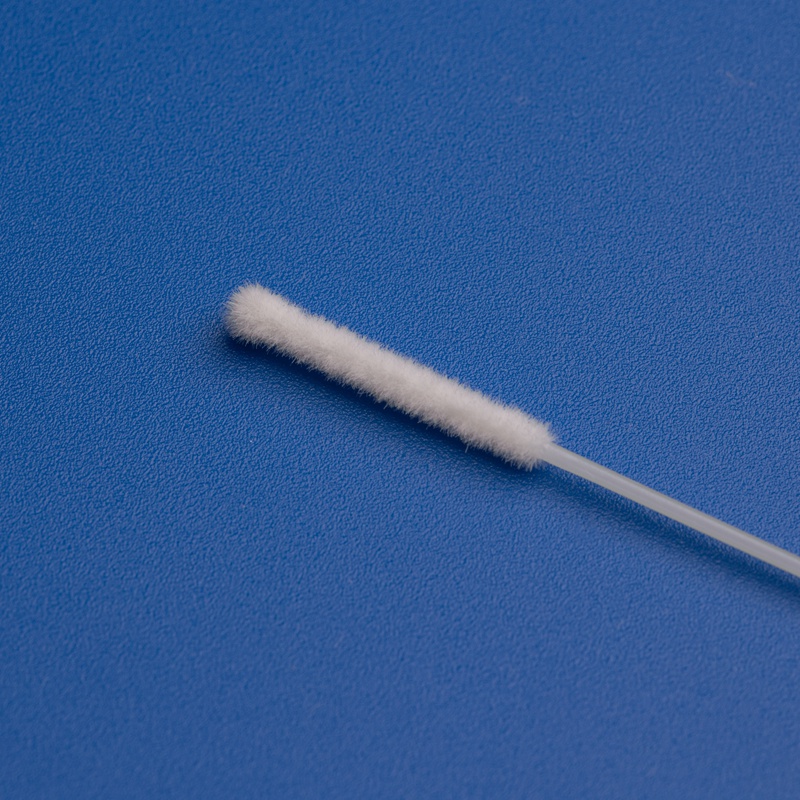
A good depth outcome is not created by user technique alone. Swab design matters. The shaft should flex gently to follow the nasal floor rather than spring upward. Breakpoints should be positioned to support convenient release into the collection tube without weakening the shaft during insertion. Flocked nylon or equivalent tip engineering can improve collection and elution compared with traditional tightly wound fiber alternatives, but only if the tip size is appropriate for the target population.
In the U.S. market, buyers also increasingly ask whether the product can support standardized staff education. Some suppliers include depth diagrams, insertion angle graphics, pediatric advisories, and kit-level instructions. These materials lower variability across collection sites. The result is not just better patient comfort but more stable specimen quality across urgent care chains, hospital satellite clinics, and traveling testing teams.
The area chart shows the trend shift in buyer priorities. During emergency response periods, availability dominated. Now, U.S. buyers increasingly emphasize integrated kits, documentation, training aids, traceability, and repeatable collection outcomes. This supports better application of any nasopharyngeal swab depth guide across decentralized healthcare settings.
Case Studies from Typical U.S. Buyer Scenarios
A Midwest hospital network with facilities across Illinois and Indiana recently re-evaluated its respiratory collection program after identifying collection variability between emergency departments and outpatient clinics. The core issue was not only the swab brand; it was inconsistent understanding of depth and insertion path. After switching to a flocked nasopharyngeal device with clearer shaft handling, standardized instructions, and lot-level documentation, the network reduced recollection events and improved consistency in transport tube fit across sites.
A Southeast distributor serving Florida, Georgia, and the Carolinas faced a different challenge: balancing cost with client confidence. Smaller clinics wanted lower pricing, but they also demanded technical data, sterilization evidence, and support during onboarding. The distributor added an internationally manufactured swab line supported by complete certificates, packaging customization, and fast technical responses. Because the supplier could support both branded and private-label options, the distributor expanded margins without sacrificing buyer trust.
A pediatric practice group in California found that staff were hesitant to perform nasopharyngeal sampling on younger patients because of discomfort concerns. The group shifted to age-appropriate swab sizing, updated internal training to stress anatomy-based depth rather than arbitrary force, and added patient communication scripts. Collection success improved because the protocol better matched real pediatric anatomy and staff confidence increased.
Local Suppliers, Regional Logistics, and Port Considerations
Supply chain structure still matters in the United States. Buyers in the West often monitor inbound timing through Los Angeles and Long Beach. East Coast importers may route through New York-New Jersey or Savannah. Gulf Coast access can support buyers around Houston and broader southern distribution routes. Domestic warehousing and regional fulfillment often matter more than a supplier’s country of origin because healthcare facilities need predictable replenishment, not just nominal availability.
Regional distributors are particularly influential in American medical purchasing. They bridge the gap between manufacturer capability and local account service. For this reason, many manufacturers that want stronger U.S. penetration now combine direct export with OEM/ODM partnerships, distributor labeling, and customized carton configurations to suit different state-level buying habits and contract frameworks.
| Supplier Type | Typical Region Served | Main Buyer Benefit | Common Limitation | Best Order Profile | Service Expectation |
|---|---|---|---|---|---|
| Domestic manufacturer | Nationwide or multi-state | Shorter lead perception and local familiarity | May offer less pricing flexibility on custom runs | Government and hospital contracts | Strong documentation and account management |
| National distributor | All major U.S. regions | Bundled sourcing and purchasing convenience | Less product engineering control | Broad-line institutional buying | Reliable fulfillment and ordering systems |
| Regional distributor | State clusters or metro areas | Closer relationship management | Smaller inventory depth | Clinics, local labs, smaller hospitals | Hands-on support and flexible deliveries |
| International manufacturer with U.S. channel partners | Nationwide through dealers and importers | Strong cost-performance and scalable production | Requires careful vetting of support responsiveness | Distributor programs and high-volume private label | Technical files, batch traceability, shipping discipline |
| OEM/ODM specialist | National private-label markets | Brand customization and packaging flexibility | Longer setup phase before launch | Brand owners and multi-channel sellers | Artwork review, compliance support, repeat consistency |
| Emergency stock supplier | Public sector and preparedness buyers | Rapid deployment capacity | Higher carrying cost structure | Seasonal reserve and outbreak response | Inventory visibility and surge communication |
This logistics-focused table shows that supplier choice is often determined by service model rather than brand recognition alone. U.S. buyers looking for the best nasopharyngeal swab depth guide should also ask whether the supplier can support training materials, replacement shipments, lot traceability, and regional inventory planning.
Our Company
For U.S. buyers that want an additional supply option beyond the largest domestic names, Hanheng Medical is relevant because it combines production scale with documentation depth and customization capacity. Founded in 2018, the company operates a 32-acre manufacturing base with a 10,000 square meter Class 100000 cleanroom and tightly controlled production stages including precision injection molding, automated flocking, and EO sterilization, which supports consistent swab geometry, contamination control, and specimen collection performance. Its medical sampling portfolio covers respiratory collection devices such as nasopharyngeal and oral swabs as well as transport-related kits, and its credentials include ISO9001, ISO13485, EU CE including TUV-CE and MDR, U.S. FDA approval, UK MHRA registration, and CFDA/NMPA compliance, backed by large-scale output and exports to more than 130 countries totaling nearly 6 billion units. In the United States, this matters for more than product quality alone: the company serves distributors, wholesalers, hospitals, government buyers, brand owners, and other channel partners through direct supply, OEM/ODM manufacturing, private labeling, customized packaging, and regional distribution cooperation, while responsive technical support, regulatory documentation assistance, batch records, sterilization files, and after-sales follow-up give local buyers practical protection during qualification and repeat ordering. Buyers exploring long-term programs can review the company background at the company overview page, browse available categories at the product center, or discuss U.S.-focused supply needs through the contact page.
Supplier and Product Comparison Factors
When comparing suppliers, many U.S. buyers assign weighted value to four areas: specimen performance, documentation readiness, fulfillment reliability, and commercial flexibility. The chart below presents a practical comparison index for commonly discussed supplier models rather than a universal ranking. Actual scores will vary by specific product line and contract arrangement.
The comparison chart shows why internationally manufactured swabs are increasingly considered by U.S. buyers. While large diagnostic brands remain strong in confidence and ecosystem fit, international OEM/ODM suppliers can score very well when they combine certification, quality control, private-label flexibility, and responsive service. This is especially attractive to distributors and brand owners seeking margin without sacrificing compliance.
Practical Buying Checklist
Before finalizing a purchase, buyers should request product drawings, tip dimensions, shaft material details, sterilization method, packaging specifications, batch traceability procedures, and any available performance validation related to collection and elution. They should also ask whether the swab is intended for nasopharyngeal collection specifically, whether the breakpoint aligns with their transport tubes, and whether training materials are available in a format suitable for clinic onboarding.
For institutions in the United States, it is also wise to review importer support, return handling, damage claims procedure, and replenishment lead times to major distribution regions. A low unit price can become expensive if the product arrives without complete documents or cannot be integrated into existing collection kits. The strongest suppliers usually provide not just a swab, but a repeatable program.
Future Trends Through 2026
Several trends will shape the next phase of respiratory specimen collection in the United States. On the technology side, expect more integrated kit design, clearer anatomical guidance, and compatibility with multiplex molecular testing workflows. Some manufacturers are improving flocking uniformity and shaft performance to support more consistent collection outcomes, while others are developing packaging optimized for automation and high-throughput receiving in labs.
On the policy side, healthcare systems and public agencies are likely to keep focusing on resilience, domestic stock visibility, and dual-source procurement. That does not necessarily mean a move away from global sourcing. Instead, many buyers will maintain at least one domestic and one international supply pathway to reduce disruption risk. Suppliers able to provide transparent regulatory files and dependable regional logistics will benefit most.
On sustainability, hospitals and distributors are beginning to ask harder questions about packaging density, carton efficiency, and waste reduction without compromising sterility. Lightweight secondary packaging, optimized case counts, and more efficient transport planning may become differentiators, especially for buyers with environmental reporting goals. By 2026, the winning suppliers will likely be those that combine specimen performance, compliance, supply assurance, and measurable operational efficiency.
FAQ
What is the usual adult insertion depth for a nasopharyngeal swab?
In adults, the swab typically advances along the nasal floor to the posterior nasopharynx, often around 6 to 8 cm, but the correct endpoint is anatomical resistance rather than forcing a fixed number.
Should the swab go upward toward the bridge of the nose?
No. For nasopharyngeal collection, the swab is generally directed straight back, parallel to the palate, not upward. This is one of the most important points in any nasopharyngeal swab depth guide.
How is pediatric depth determined?
Pediatric depth should be adjusted to the child’s anatomy, age, and tolerance. Smaller swab dimensions and trained technique are important, and clinicians should avoid applying adult depth assumptions to children.
Why do flocked swabs matter?
Flocked swabs are commonly chosen because they can improve collection and release of specimen material, which supports analytical performance when paired with the correct collection method and transport system.
Can U.S. buyers safely source from international manufacturers?
Yes, if the manufacturer provides relevant certifications, clear technical files, sterilization records, lot traceability, reliable shipping plans, and responsive pre-sale and after-sale support tailored to the U.S. market.
What documents should buyers request before ordering?
Buyers should request regulatory status details, product specifications, packaging information, sterilization validation, shelf-life data, lot traceability procedures, and any available compatibility or performance documentation.
What is the best supplier type for a distributor?
Distributors often benefit from suppliers that offer stable quality, private-label flexibility, mixed-SKU capability, and strong documentation support, whether domestic or international.
Will the market keep growing in 2026?
Moderate growth is likely as respiratory testing, preparedness planning, and multi-source procurement strategies remain active across the United States.

Jiangsu Hanheng Medical Technology Co., Ltd.
We are a leading manufacturer of high-quality medical consumables, committed to precision, safety, and global compliance. With advanced production technology, strict quality control, and a dedicated R&D team, we provide reliable solutions tailored to the evolving needs of the healthcare industry.

.jpg)