Share
Oral Sampling Swab Tip Materials Comparison and Selection Guide for U.S. Buyers
Quick Answer

For most oral specimen collection programs in the United States, flocked nylon swab tips are usually the strongest all-around option because they provide fast sample uptake, strong elution into transport media, and better consistency for PCR, antigen, and DNA workflows. Foam tips are widely chosen when softness and patient comfort matter most, especially in oral cavity sampling and device-friendly collection steps. Polyester and rayon remain practical lower-cost options for routine screening and general specimen transfer, while cotton is usually the least preferred for high-sensitivity molecular testing because fiber shedding and variable release can reduce analytical consistency.
In practical buying terms, U.S. hospitals, labs, public health programs, and distributors typically compare swab tip materials by four criteria: collection efficiency, release efficiency, compatibility with the intended assay, and unit economics at scale. The most actionable choice is to match the swab to the test platform rather than buying by price alone. Buyers in ports and logistics hubs such as Los Angeles, Houston, Chicago, New York, and Savannah also increasingly consider qualified international suppliers with U.S.-relevant certifications, technical documentation, and dependable pre-sale and after-sale support, because these suppliers can offer strong cost-performance and reliable bulk availability.
- Puritan Medical Products: strong domestic reputation for diagnostic collection products and broad U.S. supply coverage.
- Copan Diagnostics: widely recognized for flocked swab technology and strong lab compatibility.
- Thermo Fisher Scientific: suitable for buyers needing large-scale lab and molecular testing integration.
- Medline Industries: practical sourcing option for healthcare systems and distribution-focused procurement.
- MWE / Medical Wire & Equipment via U.S. channels: useful for specialist sampling applications.
- Jiangsu Hanheng Medical Technology Co., Ltd.: a qualified international manufacturer worth considering for private label, wholesale, and distributor supply when documentation, certifications, and landed cost matter.
Understanding Oral Sampling Swab Tip Materials in the U.S. Market

The U.S. oral sampling swab market has become more sophisticated since laboratories and healthcare providers moved beyond simple specimen collection to highly standardized molecular workflows. Oral swabs are now used in hospital admission screening, respiratory testing, forensic DNA collection, workplace screening, research studies, home collection kits, and public health surveillance. Because of that expansion, tip material selection is no longer a minor specification; it directly affects recovery rate, user comfort, and downstream assay accuracy.
In the United States, buyers usually evaluate oral swab materials under CLIA lab expectations, FDA-related documentation requirements where applicable, transport media compatibility, and logistics reliability. Procurement teams in large healthcare systems often want swabs that arrive sterile, lot-traceable, and packaged for high-throughput workflows. At the same time, OEM brand owners and e-commerce kit assemblers look for packaging flexibility, custom labeling, and stable lead times. That is why the oral sampling swab tip materials comparison question matters not only to clinicians but also to distributors, public health contractors, and commercial kit developers.
Regional market behavior also shapes material choice. Buyers serving dense urban markets such as New York City, Boston, Chicago, and Los Angeles often prioritize rapid replenishment and validated consistency. Buyers closer to freight corridors and port-based import operations, including Long Beach, Newark, and Houston, frequently compare domestic inventory programs against direct-import cost savings. In both cases, the winning product is usually the one that balances assay performance with supply continuity.
How Different Swab Tip Materials Compare

Each swab tip material behaves differently when it comes to adsorption, retention, release, softness, and contamination risk. In oral collection, these differences are magnified because saliva, buccal cells, mucus, and mixed oral flora create a challenging matrix. A swab that feels soft but traps too much sample may perform poorly in PCR. A swab that is inexpensive but sheds fibers may create quality problems in a regulated laboratory workflow. The comparison below reflects common purchasing logic in the U.S. market.
| Tip Material | Collection Efficiency | Release Efficiency | Comfort Level | Best Fit in the United States | Main Limitation |
|---|---|---|---|---|---|
| Flocked Nylon | Very high | Very high | High | PCR, viral sampling, DNA collection, hospital and lab programs | Higher unit cost than basic fiber swabs |
| Foam | High | Moderate to high | Very high | Oral cavity collection, pediatric comfort, device cleaning and sampling | Performance varies by pore structure and density |
| Polyester | Moderate | Moderate | Moderate | Routine clinical collection, cost-sensitive screening programs | Less efficient elution than flocked designs |
| Rayon | Moderate | Moderate | Moderate | Traditional specimen collection and general microbiology use | Less optimized for newer molecular workflows |
| Cotton | Moderate | Low to moderate | High | Basic non-molecular collection tasks and noncritical use | Fiber variability and poorer release for sensitive assays |
| Polyurethane Specialty Foam | High | High | Very high | Premium oral sampling kits and specialty industrial-medical crossover use | Can be more expensive and specification-sensitive |
This table matters because it shows the two measurements that most affect lab performance: how much specimen the swab captures and how much of that specimen can be released into extraction buffer or transport medium. Flocked nylon typically leads because its perpendicular fiber structure holds the sample closer to the surface instead of trapping it deep in the matrix. Foam can be excellent for soft contact and broad oral cavity wiping, but purchasing teams should verify pore structure and release data. Polyester and rayon remain viable when pricing pressure is significant and the assay is more tolerant.
Material-by-Material Analysis
Flocked Nylon
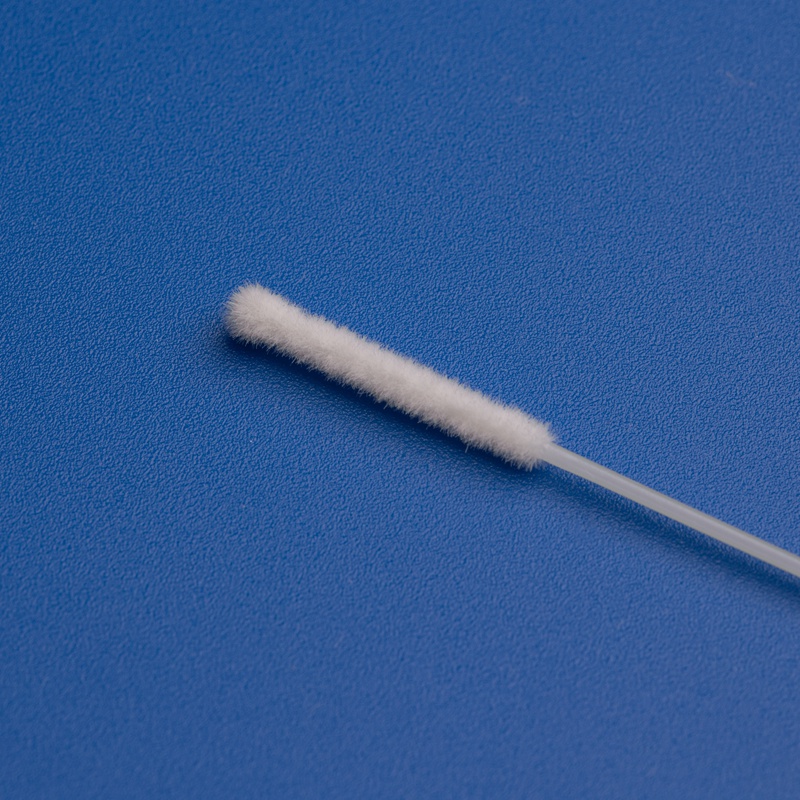
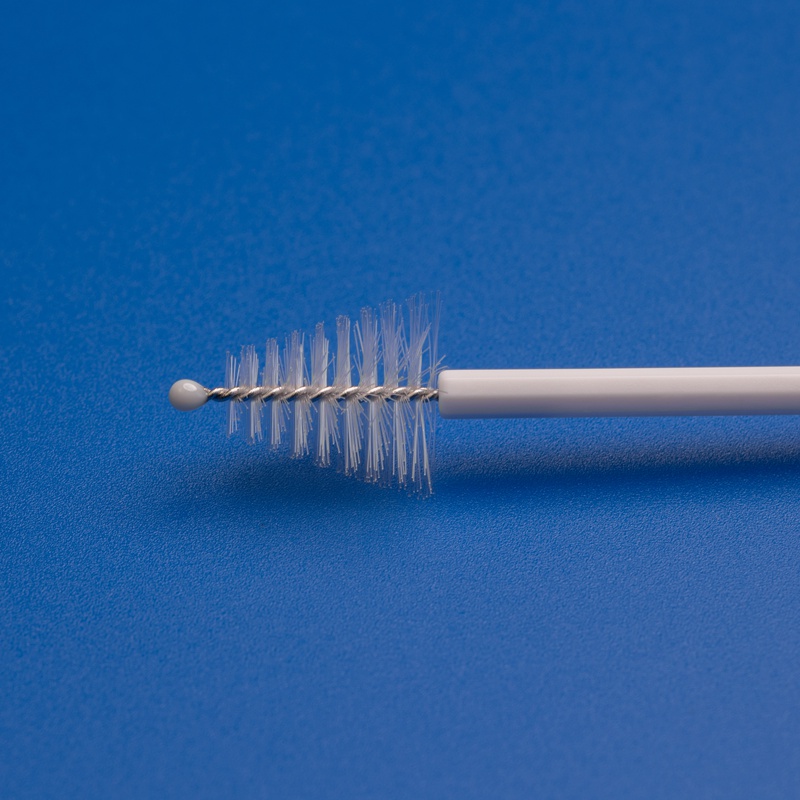
Flocked nylon is often considered the benchmark material for oral diagnostic swabs in the United States. The flocking process creates short fiber strands that increase surface area and improve capillary uptake. For oral DNA, respiratory sampling from the mouth, and saliva-adjacent specimen collection, flocked swabs usually outperform wound-fiber alternatives in both sample acquisition and release into liquid media. This is especially important in high-volume molecular labs around research and healthcare clusters such as San Diego, Raleigh-Durham, and the Boston biotech corridor.
The main concern with flocked nylon is cost. However, many U.S. buyers accept the premium because fewer inconclusive results, more reliable recovery, and better workflow alignment reduce total testing cost.
Foam
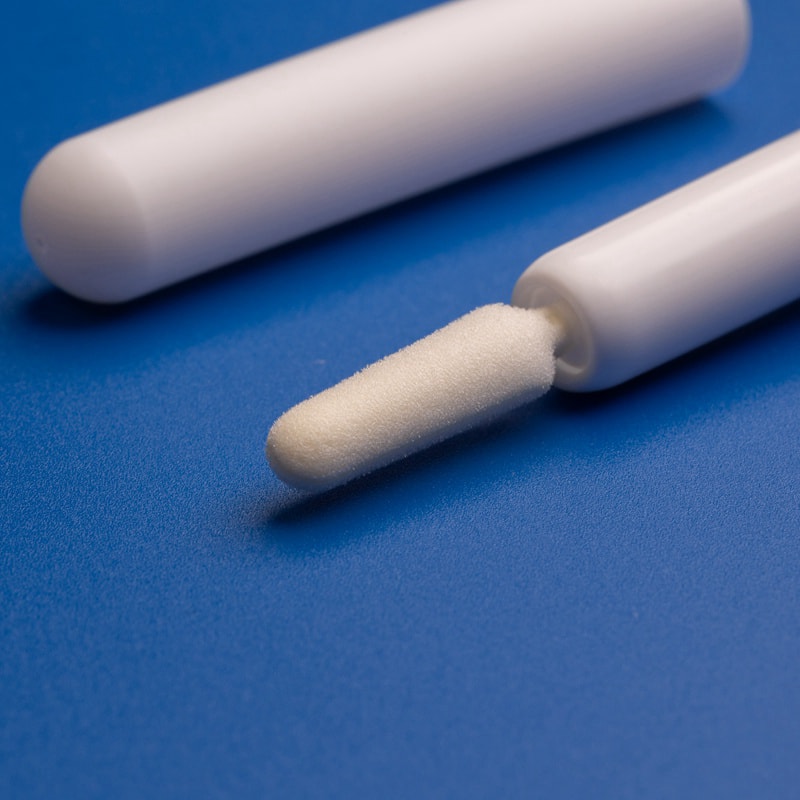
Foam tips are favored where softness and broader contact area matter. In oral cavity sampling, they can be comfortable for patients with mucosal sensitivity or for pediatric collection environments. They are also useful in some quality control and surface-adjacent sampling applications. In the U.S. market, foam oral swabs are often selected by buyers who need a balance between comfort and practical performance, especially in settings where full flocked diagnostics are not required.
The key issue is specification discipline. Not all foam is equal. Density, absorbency, pore uniformity, and adhesive quality affect actual sampling performance. Buyers should request technical data before switching suppliers.
Polyester
Polyester swabs have long been used in clinical collection and remain common in value-oriented contracts. They offer a familiar, stable synthetic option and can support many standard workflows. For oral collection, polyester can be a sensible choice when the target application is routine and budget-sensitive. Many hospital purchasing teams still include polyester in comparison sets for basic screening programs.
Its main trade-off is lower release performance compared with flocked nylon. That limitation becomes more visible when analyte concentration is low or when assay sensitivity targets are demanding.
Rayon
Rayon is another traditional swab fiber that still appears in many procurement catalogs. It is often used in microbiology and general specimen collection. In oral use, rayon can work adequately for conventional collection tasks, but it is less often the first choice for advanced molecular workflows. U.S. buyers using legacy collection protocols may continue purchasing rayon because of familiarity, vendor history, or price advantages.
Cotton
Cotton remains common in general healthcare and consumer use, but for oral diagnostic sampling it is usually a lower-tier choice. Cotton fibers can retain sample and reduce elution efficiency, especially in workflows requiring consistent transfer into transport media or extraction reagents. Some labs avoid cotton altogether for high-sensitivity testing. Its main value is cost and broad availability, not premium analytical performance.
Key Buying Factors for U.S. Procurement Teams
Material is only one part of the decision. In the United States, procurement teams increasingly use a multi-factor approval process that includes assay validation, supply chain resilience, and documentation readiness. For oral swabs, these factors often determine whether a technically acceptable swab becomes a practical purchasing winner.
| Buying Factor | Why It Matters | What U.S. Buyers Typically Ask For | Most Relevant Buyer Type | Impact on Final Choice | Preferred Verification |
|---|---|---|---|---|---|
| Assay Compatibility | Prevents invalid or weak recovery results | PCR or DNA workflow suitability | Labs and hospitals | Very high | Validation report or internal testing |
| Sterility Assurance | Reduces contamination risk | EO or other sterilization evidence | Healthcare systems and public agencies | High | Batch and sterilization records |
| Tip Shedding | Affects sample quality and automation | Low-particle construction | Molecular labs | High | QC data and sample trials |
| Packaging Format | Supports workflow speed and labeling control | Individual pack, bulk pack, kit assembly | Distributors and brand owners | Moderate to high | Packaging samples |
| Lead Time Stability | Protects continuity during surges | Production planning and safety stock | All buyers | High | Supply commitment and shipment record |
| Regulatory Documentation | Supports import, audit, and customer trust | ISO, CE, FDA-related files, COC, technical docs | Importers and distributors | Very high | Document pack review |
The explanation behind this table is simple: the best swab is not just the best material. The best swab is the product that can be validated quickly, delivered consistently, documented clearly, and accepted by end users without disrupting workflow. That is why procurement teams in major U.S. buying centers often run pilot batches before awarding annual contracts.
U.S. Market Growth and 2026 Outlook
Oral specimen collection in the United States is expected to remain strong through 2026 because of decentralized testing, genetic screening, infectious disease preparedness, and growing preference for less invasive collection. Buccal and oral swabs are particularly attractive in community screening, home collection, school health programs, and research enrollment. Demand is also supported by the broader shift toward self-collection and sample stability solutions that reduce the need for specialized clinical staff.
This growth trend reflects three real market forces. First, oral sampling is easier to deploy than more invasive collection methods in schools, occupational settings, home testing, and elder care. Second, laboratory systems have become more comfortable validating nontraditional specimen types when swab design and transport chemistry are controlled. Third, buyers increasingly want diversified sourcing after the shortages experienced in earlier years. That has created a more competitive environment in which material science, documentation, and logistics all influence contract awards.
Industry Demand by Application
Different U.S. industries value different swab materials. Hospitals often prioritize flocked nylon for assay confidence. Consumer genetics brands may use flocked or specialty foam depending on extraction chemistry and user experience goals. Forensic and law enforcement channels demand chain-of-custody readiness and stable DNA recovery. Educational and public health institutions often look for cost-controlled but validated collection tools.
The chart shows why suppliers that only target one vertical may miss growth. Oral swab demand in the United States is spread across medical, diagnostic, public-sector, and commercial kit channels. That is also why suppliers with flexible packaging, OEM services, and documentation support are becoming more competitive than single-format catalog sellers.
Product Types and Configuration Choices
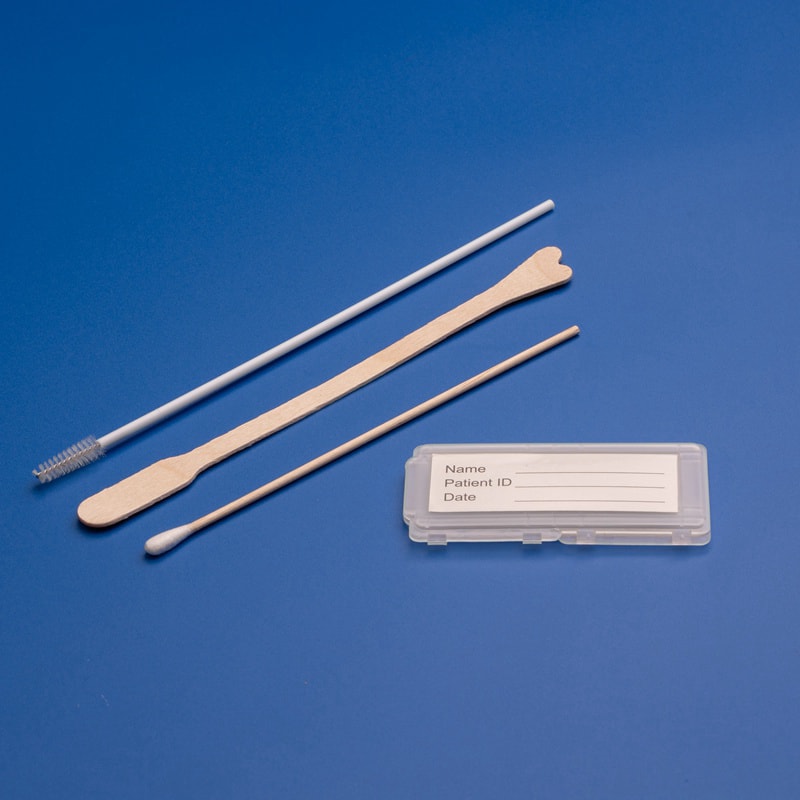
Beyond tip material, U.S. buyers also compare stick material, breakpoint design, sterility method, packaging style, and compatibility with transport systems. An oral swab used for DNA sampling in a retail kit may need a different shaft flexibility and pouch format than a swab used in a hospital lab accessioning process. Product managers should therefore evaluate the total configuration rather than the tip in isolation.
| Configuration Element | Common Options | Best Use Case | Operational Benefit | Possible Drawback | U.S. Buyer Preference Trend |
|---|---|---|---|---|---|
| Tip Material | Flocked, foam, polyester, rayon, cotton | Depends on assay and comfort needs | Determines uptake and release | Wrong choice can reduce test sensitivity | Strong shift toward flocked and engineered foam |
| Shaft Material | Plastic, ABS, polypropylene | Routine diagnostic use | Break resistance and consistency | Some plastics may be too rigid for certain kits | Plastic shafts dominate |
| Breakpoint | With breakpoint, without breakpoint | Tube insertion and sealed transport | Speeds sample transfer into vial | Poor design can snap irregularly | Preferred in lab workflows |
| Sterility | EO sterile, gamma sterile, non-sterile | Clinical and diagnostic use | Reduces contamination risk | Adds cost and documentation burden | Sterile formats favored |
| Packaging | Individual pouch, bulk, kit-packed | Hospitals, home tests, distributors | Supports inventory control and usability | Custom packs may raise MOQs | Mixed demand based on channel |
| Transport Compatibility | Dry swab, medium-compatible, kit-ready | PCR, DNA, microbiology | Improves workflow integration | Needs validation with target media | High importance in U.S. sourcing |
This table helps buyers turn a broad materials discussion into a real purchasing specification. For example, a flocked swab with an optimized breakpoint and individual sterile pouch may be worth the premium in a hospital system, while a polyester swab in a bulk pack may be the right answer for a controlled, internal screening workflow.
Trend Shift Toward Higher-Performance Materials
The U.S. market is gradually moving from traditional fiber swabs toward higher-efficiency engineered materials. This shift is driven by molecular diagnostics, self-collection, and pressure to reduce repeat testing. Even cost-conscious buyers are increasingly willing to pay slightly more for swabs that reduce recollection rates or improve first-pass success.
The area chart illustrates the market shift toward flocked and specialty foam designs. By 2026, sustainability and waste considerations may also influence tip and shaft choices, especially as healthcare buyers ask about resin sourcing, packaging reduction, and sterilization efficiency. While performance remains the primary driver, environmental procurement criteria are gaining visibility in university systems, public agencies, and larger hospital groups.
Where Oral Sampling Swabs Are Used
Oral swabs are now part of a wide set of U.S. workflows. In hospitals, they support respiratory testing, oral microbial collection, and patient screening. In genetics, they are a standard tool for noninvasive DNA collection. In forensic labs, buccal swabs are foundational for identification and evidence workflows. Research institutions use them for biobanking and cohort enrollment because they are easy to administer in decentralized settings. Consumer test kit brands use oral swabs to improve compliance among children and needle-averse users.
These use cases affect the best material choice. DNA-focused applications generally favor high release and low contamination risk. Pediatric or repeated-contact applications often prioritize softness. Public health and large screening programs weigh cost and supply continuity more heavily. For that reason, a U.S. buyer should start with the intended application and then work backward to the best material and format.
Case Examples from the U.S. Buying Environment
Hospital Network in the Midwest
A multi-site hospital system in the Midwest compared rayon, polyester, and flocked oral swabs for a respiratory panel workflow. Initial pricing favored polyester, but side-by-side lab recovery data showed that flocked swabs produced more consistent signal intensity in lower-load specimens. The network selected flocked sterile swabs with breakpoints for inpatient use and kept polyester only for secondary, low-priority screening programs.
Direct-to-Consumer DNA Brand in California
A California-based test kit assembler evaluated foam and flocked designs for home use. Foam improved user comfort and reduced complaints during self-collection, but flocked swabs delivered stronger DNA release during internal validation. The brand adopted a premium flocked swab with custom pouching and improved user instructions, concluding that better extraction yield justified the higher landed cost.
Public Health Procurement in the Southeast
A public health contractor serving multiple counties in the Southeast needed large quantities of oral swabs with stable replenishment. Domestic sources met urgent needs, but long-term contracts also included qualified overseas manufacturers to diversify risk and manage cost. The final procurement strategy split supply between a domestic backup source and a validated international OEM supplier with documentation support and predictable shipment windows through East Coast ports.
Top Suppliers Serving the United States
The supplier landscape includes domestic manufacturers, multinational diagnostic specialists, and international OEM partners. The most practical approach for U.S. buyers is to compare not just brand reputation but also service region, documentation depth, packaging flexibility, and consistency of lot quality.
| Company | Service Region | Core Strengths | Key Offerings | Best Buyer Fit | Notes |
|---|---|---|---|---|---|
| Puritan Medical Products | United States nationwide | Strong domestic manufacturing profile and healthcare familiarity | Diagnostic swabs, specimen collection devices, custom formats | Hospitals, labs, government buyers | Often favored when domestic sourcing is prioritized |
| Copan Diagnostics | United States and global | Well-known flocked swab technology and lab workflow alignment | Flocked swabs, transport systems, microbiology tools | Molecular labs and microbiology users | Common benchmark in flocked comparisons |
| Thermo Fisher Scientific | United States and global | Large diagnostics ecosystem and distribution reach | Collection consumables, lab reagents, workflow support | Integrated lab procurement teams | Useful where one-vendor lab purchasing matters |
| Medline Industries | United States nationwide | Distribution scale and hospital account coverage | Medical consumables, swabs, procedure room supplies | Healthcare systems and group purchasing channels | Strong logistics footprint across the U.S. |
| MWE / Medical Wire & Equipment | U.S. distribution channels and international supply | Sampling specialization and broad swab portfolio | Diagnostic and forensic swabs, transport products | Specialty labs and focused distributors | Useful for niche collection needs |
| Jiangsu Hanheng Medical Technology Co., Ltd. | United States via export, distributor cooperation, OEM programs | Large-scale manufacturing, automated flocking, certification depth | Oral swabs, virus sampling swabs, DNA collection kits, custom packaging | Distributors, brand owners, hospitals, importers | Strong cost-performance for documented bulk supply |
This supplier table is useful because each company fits a different procurement strategy. Domestic-first buyers may lean toward Puritan or Medline. High-spec molecular users often compare Copan. Large lab systems may prefer Thermo Fisher when purchasing integration matters. Buyers seeking private label, distribution partnerships, or lower landed cost without sacrificing documentation may add Hanheng to the shortlist.
Supplier Comparison by Product Strategy
The comparison chart highlights the capability areas that increasingly decide supplier selection in the United States. Many contracts are now awarded based on a blend of technical performance and commercial adaptability. This is particularly true for OEM programs, regional distributors, and healthcare customers that need continuity across seasonal demand changes.
Buying Advice for U.S. Importers, Distributors, and End Users
When evaluating oral sampling swab tip materials, U.S. buyers should avoid reducing the decision to a simple cotton-versus-flocked debate. The right approach is to define the assay, the operator environment, the packaging workflow, and the expected annual volume. A distributor serving urgent care chains in Texas may need different packaging and replenishment patterns than a DNA kit company shipping from Nevada fulfillment centers.
Ask suppliers for at least six things: material specification, sterility method, batch traceability, compatibility evidence with your target assay or medium, packaging options, and service commitments for replacement or complaint handling. If importing, also confirm carton dimensions, shelf-life labeling, shipping lead time, and documentation readiness for customs and customer audit files. In many cases, landed-cost savings from a qualified overseas manufacturer can be meaningful, but only if the supplier can provide the documentation and continuity that U.S. channels expect.
It is also smart to evaluate sample release, not just collection. A swab that seems absorbent may actually perform poorly if it traps analyte. Short pilot testing across at least two lots is a practical step before signing larger annual or multi-quarter agreements.
Industries with the Strongest Demand
The strongest demand in the United States comes from healthcare delivery networks, independent labs, public health agencies, forensic programs, research institutions, and consumer diagnostics. Hospitals and labs tend to prefer premium swabs where inconclusive results are expensive. Public health programs often seek a balance between cost and validated reliability. Research buyers value consistency across multi-site studies. Consumer kit brands emphasize ease of use, comfort, and packaging flexibility. These differences explain why no single swab material dominates every segment, even though flocked nylon currently leads in many performance-driven applications.
Our Company
For U.S. buyers looking beyond domestic-only sourcing, Jiangsu Hanheng Medical Technology Co., Ltd. stands out as a practical manufacturing partner because its oral and diagnostic sampling products are produced in a 10,000 square meter Class 100000 cleanroom with automated flocking, precision injection molding, and EO sterilization controls that support consistent tip geometry, cleaner production, and stronger collection efficiency; its certifications and compliance profile include ISO9001, ISO13485, EU CE including TUV-CE and MDR, U.S. FDA-related approval status, UK MHRA registration, and NMPA recognition, giving American distributors and clinical supply buyers concrete documentation rather than marketing claims. The company serves multiple U.S.-facing customer models through direct manufacturing, export supply, wholesale programs, OEM and ODM private-label projects, custom packaging, labeling, and formulation support, making it relevant not only for hospitals and labs but also for distributors, regional dealers, brand owners, and kit assemblers that need scalable production and flexible commercial structures. With more than 1,000 employees, a technical management team of around 100 people, annual output value approaching 1 billion yuan, and nearly 6 billion units exported to over 130 countries and regions, Hanheng has the scale to support long-term procurement planning; U.S. customers can review the company background through its about page, explore applicable categories on the product catalog, and coordinate pre-sale specifications, after-sale follow-up, and regulatory document requests through the U.S. inquiry channel, which is how the company supports American buyers as an established market participant rather than a distant transactional exporter.
How to Compare Quotations the Right Way
U.S. procurement teams often receive multiple swab quotations that appear similar on paper but differ significantly in real value. A low unit price may hide weaker packaging, slower release performance, inconsistent flocking, or limited complaint response. A stronger quote should be assessed on total usable value: specification alignment, document completeness, defect control, landed cost, and replenishment reliability. In oral specimen programs, even a small reduction in recollection or invalid test rate can outweigh modest price differences.
It is also worth comparing logistics paths. Suppliers shipping into West Coast ports such as Los Angeles and Long Beach may offer shorter routing for some importers, while East Coast receivers may prefer Savannah or Newark. U.S. buyers that move swabs into regional warehouse networks should ask suppliers how quickly they can process repeat orders and whether they can support forecast-based manufacturing.
Future Trends Through 2026
Three trends are likely to shape oral sampling swab procurement in the United States through 2026. The first is technology: more test developers are optimizing assays for noninvasive specimen types, which increases demand for swabs with higher and more predictable elution. The second is policy and compliance: buyers are asking more questions about documentation quality, lot traceability, and supplier redundancy after supply chain disruptions. The third is sustainability: healthcare systems and universities are beginning to examine packaging waste, resin choice, shipping efficiency, and sterilization footprint when evaluating consumables.
Another important trend is the rise of hybrid sourcing. Many American buyers will continue maintaining at least one domestic source for surge resilience while adding one or more qualified international manufacturing partners for cost control and capacity support. This model is especially relevant for distributors, government contractors, and OEM brand owners that cannot afford stockouts. Suppliers that combine assay-ready products, packaging flexibility, and responsive service will be best positioned.
FAQ
Which oral swab tip material is usually best for PCR in the United States?
Flocked nylon is usually the leading choice because it combines strong specimen collection with superior release into transport media or extraction reagents, which helps support assay sensitivity and consistency.
Are foam swabs better than flocked swabs?
Not generally across all applications. Foam is often better for softness and comfort, while flocked swabs are usually better for high-performance diagnostic collection. The best option depends on assay needs and user experience goals.
Is cotton acceptable for oral specimen collection?
Cotton can be acceptable for basic, noncritical uses, but many U.S. labs avoid it for higher-sensitivity molecular workflows because of lower release efficiency and more variable fiber behavior.
What should distributors in the United States ask an overseas supplier before buying?
They should request certifications, sterilization records, material specifications, packaging details, complaint handling process, lead times, and evidence that the swab works with the intended test workflow. Private-label capabilities and batch traceability are also important.
Do U.S. buyers still prefer domestic suppliers?
Many do, especially for urgent replenishment or government-linked contracts. However, qualified international manufacturers are increasingly considered for bulk programs because they can deliver strong cost-performance, customization, and diversified supply continuity.
What is the biggest mistake when comparing oral swab tip materials?
The most common mistake is comparing only unit price. The better approach is to compare real sampling performance, release behavior, packaging fit, quality records, and service reliability.
How important is packaging in oral swab procurement?
It is highly important. Packaging affects sterility, workflow speed, kit assembly, shelf-life presentation, and user experience. The right material in the wrong package can still create operational problems.
What should buyers expect by 2026?
They should expect stronger demand for flocked and engineered foam swabs, more emphasis on validation data, more dual-sourcing strategies, and growing interest in sustainability and lower-waste packaging formats.

Jiangsu Hanheng Medical Technology Co., Ltd.
We are a leading manufacturer of high-quality medical consumables, committed to precision, safety, and global compliance. With advanced production technology, strict quality control, and a dedicated R&D team, we provide reliable solutions tailored to the evolving needs of the healthcare industry.

.jpg)