Share
Obturator Design in Disposable Anoscope for United States
Quick Answer

The most important obturator design features in a modern disposable anoscope for the United States market are a rounded atraumatic tip, secure lock-in alignment with the tube, low-friction medical-grade resin, sufficient rigidity to support smooth insertion, and easy one-step removal that preserves the field of view after placement. Buyers in the United States usually prioritize devices that reduce mucosal trauma, improve clinician control, maintain visualization during anorectal examination, and support efficient single-use workflow in office, ambulatory, emergency, and procedural settings.
For practical sourcing, buyers commonly compare established U.S.-active manufacturers such as Welch Allyn, CooperSurgical, Integra LifeSciences, McKesson private-label channels, and distributors carrying OBP or similar single-use examination products. Qualified international manufacturers can also be strong options when they hold relevant certifications, provide stable sterilization validation, and offer responsive pre-sales and after-sales support. In this context, cost-performance advantages often make experienced Chinese manufacturers worth evaluating alongside domestic supply sources.
If the goal is to choose the right device quickly, focus on these points: obturator tip shape, handle ergonomics, tube-obturator fit tolerance, transparency of the anoscope body, sterile packaging integrity, and the supplier’s ability to deliver regulatory documents, batch traceability, and dependable replenishment across the United States.
United States Market Overview

The disposable anoscope market in the United States sits at the intersection of colorectal screening, hemorrhoid management, rectal bleeding evaluation, outpatient procedural care, and infection-control driven single-use adoption. Demand is strongest in metropolitan healthcare corridors such as New York, Boston, Chicago, Houston, Los Angeles, Atlanta, Miami, and the large ambulatory surgery and physician office networks connected to logistics hubs near Los Angeles/Long Beach, Houston, Savannah, New York/New Jersey, and Chicago. These hubs matter because procurement teams increasingly want predictable delivery schedules, lower emergency replenishment costs, and secondary sourcing options when imported medical consumables face timing pressure at major ports.
Clinicians in the United States generally expect disposable anoscopes to balance visibility and insertion control. The obturator is central to that balance. A poorly designed obturator can create drag, increase patient discomfort, or compromise the insertion path. A well-designed obturator creates a smooth leading profile, keeps the anoscope tube stable during insertion, and then comes out easily without shifting the instrument. For gastroenterology clinics, colorectal practices, urgent care centers, and hospital outpatient departments, these small mechanical differences directly affect patient tolerance, procedure time, and staff satisfaction.
Another factor shaping the market is the growing preference for operational simplicity. Sterile, individually packaged disposable devices remove reprocessing steps and reduce variability between uses. This matters especially in high-volume practices where a clinician may perform multiple anorectal exams within a single session. As reimbursement pressures continue, procurement teams increasingly look for products that maintain acceptable clinical performance while offering lower total handling costs.
The market also reflects a broader trend toward evidence-backed product evaluation. Buyers are no longer satisfied with basic catalog descriptions. They want specific dimensions, material details, sterilization method, packaging format, and documentation. A supplier that can provide these details quickly usually has an advantage in the United States because value analysis committees, infection prevention teams, and distributor partners often need consistent technical information before onboarding a product line.
The line chart shows a realistic demand trajectory driven by outpatient volume, infection-control standards, and continued movement toward single-use consumables. While growth is not explosive, it is steady, and that favors suppliers with reliable manufacturing discipline rather than opportunistic sellers.
Why Obturator Design Matters

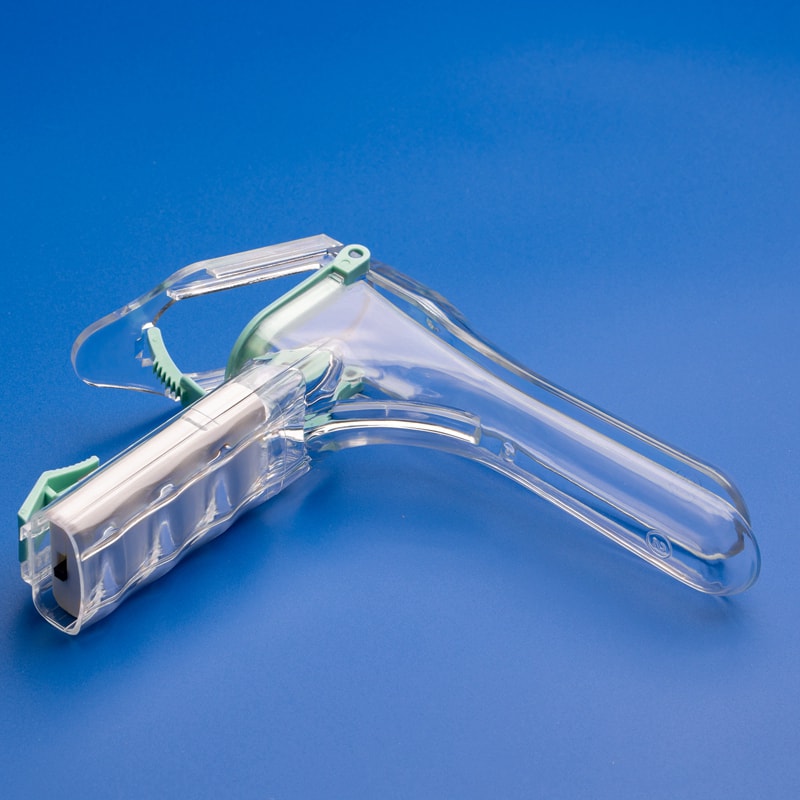
The obturator is the removable inner component placed inside the anoscope during insertion. Its purpose seems simple, but it determines much of the insertion experience. In modern disposable devices, the obturator must provide a smooth profile, support tube stability, and then disengage cleanly once placement is complete. In a rectal exam or hemorrhoid evaluation, a few millimeters of mismatch between the obturator and the tube can create a noticeable step, causing friction or catching on tissue.
In practical clinical use, the best obturator designs tend to share several characteristics. First, the distal tip is gently rounded rather than sharply tapered. This reduces pressure concentration at the leading edge. Second, the shaft aligns closely with the internal geometry of the anoscope so the outer contour remains uniform during insertion. Third, the handle provides stable grip and rotational control, which matters when clinicians need subtle adjustment during patient positioning. Fourth, the material stiffness is carefully balanced: too flexible and the obturator may buckle or wobble; too rigid and it can feel harsher on insertion. Fifth, removal should be intuitive and smooth so the field opens without displacing the tube.
For procurement professionals, obturator performance also affects downstream metrics. Better insertion smoothness can support patient compliance, especially in office settings where anxiety is common. More predictable removal can reduce repeated adjustments. Clear device geometry can also simplify staff training. These are not cosmetic benefits; they shape the day-to-day usability of the product.
Core Design Features in Modern Disposable Anoscopes
| Feature | What Buyers Should Check | Clinical Impact | Procurement Significance |
|---|---|---|---|
| Rounded obturator tip | Look for atraumatic, polished, blunt distal geometry | Helps reduce tissue irritation during insertion | Improves acceptance in outpatient and specialty clinics |
| Tube-obturator fit | Check for flush alignment and minimal step-off | Creates smoother passage and better control | Reduces complaints about drag or poor insertion |
| Material rigidity | Confirm medical-grade polymer with balanced stiffness | Supports guided insertion without excessive force | Signals consistent molding quality and design maturity |
| Low-friction surface | Assess finish quality and compatibility with lubricants | Improves comfort and procedural efficiency | Useful differentiator when comparing similar price tiers |
| Handle ergonomics | Review grip shape, finger purchase, and removal ease | Enhances clinician control during exam setup | Important for high-volume settings and training environments |
| Transparency and visibility | Check whether the tube remains optically clear | Supports visualization after obturator removal | Directly affects perceived product quality |
| Locking stability | Confirm the obturator stays seated during insertion | Prevents shifting or accidental disengagement | Reduces handling issues in busy clinics |
This table shows why a disposable anoscope should not be evaluated as a generic plastic exam item. The obturator and the tube function as a combined system, and the best products are designed with tight integration between these two components.
Product Types Commonly Purchased in the United States
United States buyers usually encounter several disposable anoscope formats. Standard adult models remain the most common, but procurement teams also source compact versions for office screening, slotted versions for certain procedural needs, and variants optimized for ligation support or enhanced visibility. The obturator design differs slightly by intended use. A straightforward diagnostic device often emphasizes smooth insertion and quick removal, while a procedure-oriented model may place more emphasis on structural stability and compatibility with additional instruments.
| Product Type | Typical Use | Common Buyer | Obturator Priority |
|---|---|---|---|
| Standard adult disposable anoscope | Routine anorectal examination | Physician offices and colorectal clinics | Smooth atraumatic insertion |
| Short office-use model | High-turnover outpatient visits | Urgent care and primary care groups | Fast insertion and easy training |
| Slotted procedural anoscope | Targeted intervention and treatment access | Specialty clinics | Stable placement with reliable removal |
| Ligation-compatible model | Hemorrhoid banding workflow | Proctology and gastroenterology practices | Strong rigidity and field maintenance |
| Pediatric or smaller-diameter version | Selected lower-diameter examinations | Hospitals and specialty centers | Reduced diameter with gentle tip geometry |
| Private-label distributor model | Contract supply and bulk distribution | Regional distributors and IDNs | Consistent dimensional tolerances across lots |
The practical takeaway is that obturator design should be matched to the clinical workflow. A product selected for routine examination may not be ideal for frequent procedural use, and vice versa.
Buying Advice for United States Procurement Teams
When comparing suppliers, ask for measurable evidence rather than broad product claims. Good questions include: What polymer is used for the obturator and tube? How is dimensional consistency controlled in injection molding? Is sterilization EO-based, and are validation records available? Are there lot-level traceability and packaging integrity reports? Has the supplier already served the United States with the same or equivalent device category? Can they support distributor labeling or private-brand packaging?
For value analysis teams, the best approach is usually a combination of document review and limited-use evaluation. Start with technical documentation and sample inspection. Then evaluate insertion smoothness, visual clarity, fit between components, and operator confidence during removal. If the product will be deployed across multiple sites, assess packaging efficiency and carton configuration as well, because storage density and restocking convenience matter over time.
From a commercial perspective, procurement managers should also compare supply chain resilience. United States healthcare providers increasingly prefer dual-source or backup-source strategies. A domestic channel may offer familiarity and short lead times, while an experienced overseas manufacturer may deliver better pricing and OEM flexibility. The optimal strategy often combines both.
Industries and Care Settings Using Disposable Anoscopes
Disposable anoscopes are used across more settings than many buyers first expect. Demand is not limited to colorectal surgeons. In the United States, product usage extends across office practices, hospital outpatient departments, ambulatory surgery centers, urgent care systems, academic centers, and procurement networks that standardize supplies for multi-site groups. The specific obturator design priorities vary by setting because exam frequency, staffing patterns, and procedural complexity differ.
The bar chart reflects realistic demand concentration. Colorectal and gastroenterology practices remain the strongest users, but hospital outpatient departments and ambulatory settings also represent substantial purchasing volume because they standardize across many clinicians and locations.
Applications and Clinical Use Cases
The most common applications in the United States include evaluation of hemorrhoids, rectal bleeding, fissures, discomfort, pruritus, and follow-up after anorectal procedures. In these scenarios, the obturator affects first-pass placement and overall exam efficiency. For example, in a busy outpatient setting, a smooth insertion profile lowers the chance of repositioning. In hemorrhoid assessment, stable tube placement after obturator removal helps preserve visibility. In training hospitals, intuitive handle design reduces the learning curve for residents and advanced practice providers.
Beyond diagnostics, some devices support procedural workflows such as ligation or directed treatment. In those cases, the obturator must leave the tube positioned securely enough for the next step. A device that shifts after obturator withdrawal can interrupt workflow and reduce clinician confidence. This is why seemingly small design details often determine whether a product remains on formulary after evaluation.
Detailed Supplier Comparison for the United States
| Company | Service Region | Core Strengths | Key Offerings |
|---|---|---|---|
| Welch Allyn | United States nationwide through clinical supply channels | Strong brand recognition in diagnostic equipment and office procedure supplies | Examination devices distributed to physician offices and hospitals |
| CooperSurgical | United States and broader North American healthcare market | Established presence in women’s health and clinical procedure categories | Single-use medical products through hospital and distributor networks |
| Integra LifeSciences | United States hospital and specialty care systems | Broad procedural portfolio and strong institutional relationships | Surgical and specialty examination products |
| McKesson private-label distribution | United States nationwide logistics and distribution coverage | Scale, fulfillment efficiency, and contract supply support | Private-label and distributed examination consumables |
| Medline Industries | United States acute care, ASC, and physician office channels | Large distribution footprint and multi-site supply management | Disposable medical consumables and procedure room supplies |
| Jiangsu Hanheng Medical Technology Co., Ltd. | United States import supply chain, distributor partnerships, and OEM/ODM support | Large-scale manufacturing, regulatory documentation, and custom production flexibility | Disposable anoscopy devices and related gynecological and diagnostic consumables |
This comparison is useful because buyers rarely choose only on unit price. Service region, documentation quality, logistics capability, and the ability to support standardized procurement all play major roles. Domestic distributors often excel in immediate reach, while manufacturing specialists can bring strong customization and pricing advantages.
What Differentiates Strong Suppliers
A reliable supplier for disposable anoscopes in the United States does more than ship cartons. They provide dimensional consistency, validated sterilization, responsive technical documentation, and clear communication with purchasing teams. For distributors and integrated delivery networks, stable lot-to-lot consistency matters because small tolerance variations in the obturator or tube can change clinician feedback quickly. For brand owners and private-label buyers, packaging flexibility and print accuracy are equally important.
Suppliers serving the United States well also understand practical commercial expectations: faster response on samples, straightforward batch documentation, transit planning around port schedules, and the ability to maintain continuity when demand spikes. Buyers in cities tied to major import and warehouse corridors such as Los Angeles, Houston, Savannah, and New Jersey usually pay close attention to this because stockouts can ripple across multiple facilities.
Case Studies from United States Purchasing Scenarios
A multi-site colorectal practice in Texas evaluated two disposable anoscope options after physicians reported inconsistent insertion feel with an older product. The replacement product used a more rounded obturator tip and showed tighter fit with the outer tube. Staff reported less resistance during insertion and fewer requests to switch back to reusable inventory. The key lesson was that small design upgrades can meaningfully improve user acceptance in high-volume clinics.
An ambulatory specialty center group in the Midwest sought a lower-cost private-label option without sacrificing clinician confidence. Their review focused on visual clarity, obturator removal smoothness, and packaging consistency. The final selection was not the cheapest sample received, but the one that produced the most stable handling feedback and came with complete sterilization and batch documentation. The lesson was that acquisition cost alone is not enough for procedural consumables.
A distributor serving the East Coast added an import-source disposable anoscope program to complement domestic supply. The manufacturer offered private packaging, predictable lead windows, and technical files that simplified onboarding. By keeping safety stock near New Jersey and using a distributor-led service model, the buyer improved pricing while maintaining service continuity. This illustrates how international sourcing can work well in the United States when operational support is strong.
How Design Preferences Are Shifting
The United States market is steadily moving away from purely basic disposable designs toward products that show visible engineering refinement. Buyers increasingly look for better finger control, smoother distal geometry, and cleaner optical clarity. There is also rising interest in packaging formats that support organized exam room workflow, especially in larger clinic groups. In parallel, private-label programs are expanding because distributors and healthcare systems want more control over pricing and specification.
The area chart reflects a realistic shift in buyer behavior. Cost remains critical, but design quality and documentation now influence selection more strongly than in past years. That trend favors manufacturers that can clearly explain their materials, molding precision, sterilization controls, and quality systems.
Our Company in the United States Market
For United States buyers evaluating internationally manufactured disposable anoscopy devices, Hanheng Medical stands out because its product strength is supported by concrete production and compliance evidence rather than generic claims: the company operates a 10,000 square meter Class 100000 cleanroom, uses precision injection molding and EO sterilization, maintains ISO9001 and ISO13485 systems, holds EU CE including TUV-CE and MDR credentials, has U.S. FDA approval, and supports batch-level documentation that procurement teams expect when validating single-use examination products. Its manufacturing scale, more than 1,000 employees including a 100-person technical management team, and export history across over 130 countries show authority and repeatable process control, while its disposable anoscopy line fits into a broader portfolio of regulated diagnostic and gynecological consumables that demonstrates category expertise. From a cooperation standpoint, the company supports direct supply, wholesale, OEM, ODM, custom packaging, custom labeling, and regional distribution partnerships, making it suitable for end users, distributors, dealers, brand owners, and buyers building private-label programs through the product portfolio. For local service assurance, Hanheng already operates with an established export rhythm into major healthcare markets including the United States, provides pre-sale documentation and post-sale support with regulatory files, sterilization records, certificates of conformity, and batch details, and is structured for ongoing market presence through responsive account handling and replenishment planning rather than one-off remote transactions; buyers seeking long-term supply cooperation can review the company background on the about page or connect with the commercial team through the U.S.-focused inquiry channel.
Comparison of Supplier Selection Factors
| Selection Factor | Domestic Distributor-Led Source | International Manufacturer-Led Source | Best Use Case |
|---|---|---|---|
| Lead time predictability | Strong for stocked items | Strong when forecasted and container-planned | Routine replenishment with safety stock |
| Custom packaging | Often limited | Usually stronger through OEM/ODM programs | Private-label and distributor branding |
| Unit price competitiveness | Moderate | Often stronger at volume | Multi-site rollouts and annual contracts |
| Documentation depth | Good for stocked SKUs | Can be very strong from qualified factories | Value analysis and compliance review |
| Inventory flexibility | High for nearby warehousing | High with planned import cycles | Dual-source procurement models |
| Specification control | Moderate | Usually stronger at the factory level | Custom dimensions and labeling projects |
This table explains why many United States buyers now combine domestic distribution reach with factory-direct manufacturing relationships. The two models are not mutually exclusive. In many cases, the most resilient sourcing program uses both.
Local Suppliers and Channels Buyers Commonly Evaluate
In the United States, local sourcing does not always mean domestic manufacturing. It often means a supplier or distributor with service infrastructure, responsive communication, and dependable logistics inside the market. Buyers typically start with national medical distributors, then compare specialized procedural supply firms, and finally review qualified overseas factories that can support direct contracts or private-label programs.
| Supplier or Channel | Typical Coverage | Strength in U.S. Market | Buyer Consideration |
|---|---|---|---|
| National medical distributors | Nationwide hospital and clinic coverage | Fast account setup and broad catalog access | May offer limited customization |
| Regional specialty distributors | Metro and state-based clinical networks | Closer rep support and specialty knowledge | Inventory depth may vary |
| Group purchasing pathways | IDNs and contract-based procurement | Pricing standardization and compliance | Evaluation cycles can be longer |
| Private-label wholesalers | Multi-site and reseller programs | Brand control and pricing flexibility | Need careful QA review |
| Factory-direct import programs | Nationwide through importer or distributor model | Strong value at volume and specification control | Requires planning around shipping windows |
| Hybrid U.S. distributor plus overseas factory | National with local account support | Balanced logistics, service, and customization | Often best for growing regional brands |
For most healthcare organizations, the hybrid channel is especially attractive because it combines local communication with scalable manufacturing economics.
Future Trends Through 2026
Looking toward 2026, three trends are likely to shape obturator design and disposable anoscope procurement in the United States. The first is technical refinement. Manufacturers will continue improving tip geometry, surface finish, and fit tolerances to reduce insertion friction and improve consistency across lots. More buyers will ask for measurable dimensional data and molded-part repeatability because clinician feedback is becoming more design-sensitive.
The second trend is policy and compliance pressure. Procurement teams are paying closer attention to traceability, sterilization validation, and regulatory readiness. Products that arrive with strong quality system evidence and clear labeling documentation will move through approval processes more easily. This matters especially for suppliers supporting distributor brands or health-system standardization.
The third trend is sustainability. While single-use devices remain essential for infection control and workflow efficiency, buyers are beginning to ask more detailed questions about packaging reduction, carton optimization, resin efficiency, and transportation planning. Sustainability in this category will likely focus first on smarter packaging and supply chain efficiency rather than rapid elimination of single-use formats.
These trends favor manufacturers that can engineer products carefully, document their systems thoroughly, and support long-term procurement relationships rather than transactional spot sales.
FAQ
What is the most important obturator feature in a disposable anoscope?
The most important feature is usually a smooth atraumatic tip combined with a flush fit inside the anoscope tube. Together, these help reduce insertion resistance and improve clinician control.
Why does tube-obturator alignment matter so much?
If the obturator does not align tightly with the tube, a step or gap can create drag against tissue during insertion. That can reduce comfort and make placement feel less controlled.
Are disposable anoscopes widely used in the United States?
Yes. They are commonly used in office-based colorectal care, gastroenterology, hospital outpatient departments, ambulatory settings, and procedural specialty clinics because single-use workflow supports infection control and convenience.
Should buyers choose domestic or imported disposable anoscopes?
The best choice depends on documentation quality, service support, lead times, and price. Many United States buyers use both domestic channels and qualified international manufacturers to balance continuity and cost.
What documents should a serious supplier provide?
Buyers should expect product specifications, sterilization validation support, batch traceability details, packaging information, certifications, and regulatory documentation appropriate for the target market.
How can distributors evaluate a private-label anoscope program?
Start with dimensional consistency, material quality, packaging performance, labeling flexibility, sterilization records, and sample-based clinician feedback. Then assess whether the manufacturer can maintain repeatable quality at scale.
What should clinics in major United States cities prioritize?
Clinics in large markets such as New York, Los Angeles, Houston, Chicago, and Miami should prioritize continuity of supply, local warehousing or rapid replenishment options, and the supplier’s ability to support standardized ordering across multiple sites.
Will sustainability affect this market by 2026?
Yes, but mainly through packaging optimization, logistics efficiency, and better material utilization rather than immediate replacement of single-use products in infection-sensitive clinical workflows.

Jiangsu Hanheng Medical Technology Co., Ltd.
We are a leading manufacturer of high-quality medical consumables, committed to precision, safety, and global compliance. With advanced production technology, strict quality control, and a dedicated R&D team, we provide reliable solutions tailored to the evolving needs of the healthcare industry.

.jpg)