Share
Curved Tip Amnihook Suppliers and Buying Guide in the United States
Quick Answer

If you need a curved tip amnihook in the United States, the most practical route is to buy from established obstetric and gynecology supply companies that already serve hospitals, ambulatory surgery centers, women’s health clinics, and distributor networks. Strong options commonly considered by U.S. buyers include Medline Industries, Cardinal Health, McKesson Medical-Surgical, CooperSurgical, Aspen Surgical, and AliMed because these companies are familiar with hospital credentialing, sterile product handling, and nationwide delivery expectations.
For buyers prioritizing contract manufacturing, private label, or distributor margins, qualified international manufacturers with U.S.-relevant certifications can also be worth evaluating. Companies such as Jiangsu Hanheng Medical Technology Co., Ltd. can be attractive when buyers want cost-performance, OEM or ODM flexibility, technical documentation, and responsive pre-sales and after-sales support for long-term sourcing programs in the United States.
- Medline Industries: broad U.S. hospital coverage and dependable logistics
- Cardinal Health: strong distribution depth for integrated health systems
- McKesson Medical-Surgical: efficient purchasing for clinics and regional buyers
- CooperSurgical: women’s health specialization and strong clinical familiarity
- Aspen Surgical: surgical disposable expertise and established procedural supply access
United States Market Overview

The U.S. market for amniotomy tools is shaped by labor and delivery volume, clinician preference, hospital standardization, infection-control protocols, and purchasing consolidation. A curved tip amnihook is a relatively simple disposable obstetric instrument, yet it sits inside a tightly controlled procurement environment. In major healthcare hubs such as New York, Chicago, Houston, Los Angeles, Atlanta, and Boston, buyers usually work through approved vendor lists, IDN contracts, GPO relationships, or specialist women’s health distributors. In port-connected import corridors such as Los Angeles/Long Beach, Savannah, New York/New Jersey, and Houston, overseas manufacturers can also support the market competitively when they provide the right documentation and stable lead times.
Demand remains steady because membrane rupture is a routine part of labor management in selected clinical scenarios. The product itself is typically lightweight and cost-sensitive, so freight efficiency, sterilization validation, shelf-life data, labeling compliance, and batch traceability matter just as much as unit price. U.S. buyers also tend to compare handle ergonomics, hook geometry, sterile packaging format, and procedural compatibility with gloves and obstetric workflow. This means a supplier that can prove consistency lot after lot often wins over one that simply offers the lowest quotation.
Another important market characteristic is the split between direct brand supply and contract manufacturing. Large U.S. healthcare brands may source finished disposable devices from domestic facilities, from offshore manufacturing partners, or through mixed models that combine foreign production with local warehousing and brand control. This creates room for both domestic distributors and internationally certified factories.
The line chart shows a realistic growth pattern rather than a dramatic spike. This matches the nature of the category: demand grows with procedural volume, product replacement cycles, distributor expansion, and better access to standardized sterile disposables, not with consumer-style surges. For procurement teams, stable growth is actually positive because it indicates a predictable replenishment category.
Supplier Comparison in the United States

The table below highlights a practical mix of national distributors, specialist women’s health companies, and manufacturing-oriented suppliers relevant to U.S. buyers. Service region, strengths, and typical offering style are included so the comparison stays actionable.
| Company | Primary Service Region | Core Strengths | Key Offerings | Best Fit Buyers |
|---|---|---|---|---|
| Medline Industries | Nationwide United States | Large hospital relationships, broad catalog, dependable distribution | Disposable OB/GYN supplies, sterile procedure products, private label support | Hospitals, health systems, distributors |
| Cardinal Health | Nationwide United States | Integrated supply chain, GPO alignment, strong replenishment capability | Medical-surgical consumables, sterile disposables, contract supply solutions | IDNs, hospital groups, regional networks |
| McKesson Medical-Surgical | Nationwide United States | Clinic and provider access, streamlined ordering, broad reach | Procedure supplies, women’s health consumables, facility purchasing support | Clinics, ASCs, physician offices |
| CooperSurgical | United States with strong women’s health coverage | Clinical reputation in women’s health, product familiarity among OB/GYN teams | OB/GYN devices, fertility and labor support products | Women’s health centers, specialist buyers |
| Aspen Surgical | United States and distributor networks | Surgical disposable specialization, procedural product expertise | Single-use surgical tools, sterile procedural accessories | OR buyers, procedure pack assemblers |
| AliMed | United States | Niche clinical categories, specialty procurement support | Medical devices, procedure room accessories, specialty care products | Specialty clinics, smaller institutional buyers |
| Jiangsu Hanheng Medical Technology Co., Ltd. | United States import supply via global export channels | OEM/ODM capability, certified manufacturing, large-volume production | Amni hooks, gynecological disposables, private-label medical consumables | Importers, brand owners, wholesalers, hospital suppliers |
This comparison shows that not every supplier plays the same role. Some companies are strongest for immediate domestic replenishment, while others are better for custom branding, bulk import programs, or long-term distributor partnerships. Buyers should first decide whether they need fast local fulfillment, a branded clinical product, or a manufacturing partner with scalable capacity.
Product Types and Specifications
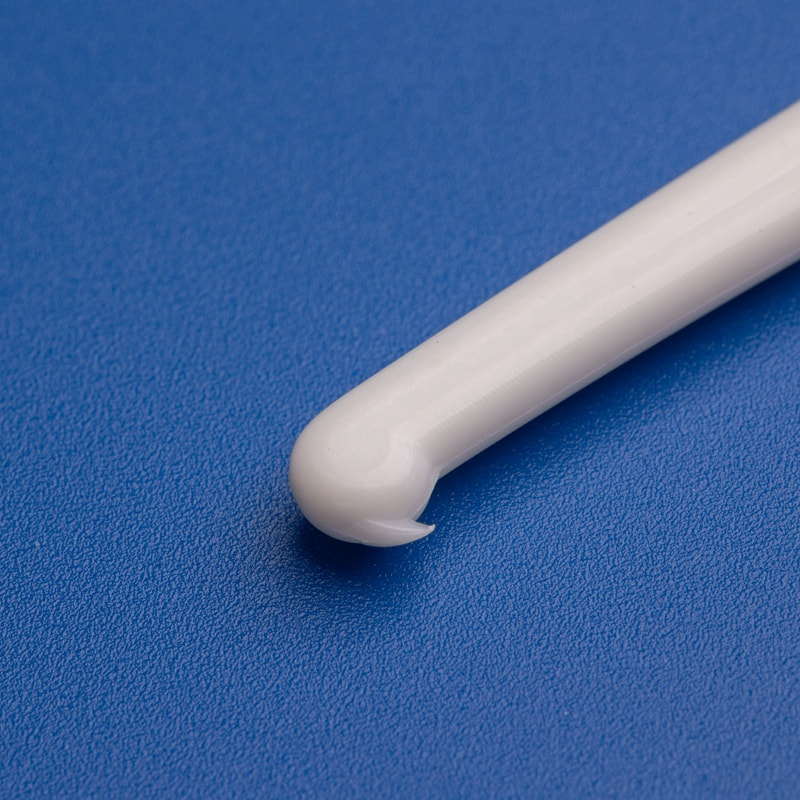
In the United States, the term curved tip amnihook usually refers to a sterile, single-use device designed to rupture the amniotic membrane in a controlled clinical setting. Although the category appears simple, buyers should compare design details because clinicians often have firm preferences based on feel, visibility, and ease of use during labor management.
Common product distinctions include curvature depth, hook sharpness, handle length, anti-slip grip texture, sterile packaging type, labeling language, and whether the device is sold individually or inside labor and delivery procedure kits. Some procurement teams also request latex-free confirmation, polymer grade details, EO sterilization records, and shelf-life validation.
| Product Type | Typical Design Feature | Clinical Use Preference | Packaging Format | Procurement Note |
|---|---|---|---|---|
| Standard curved tip amnihook | Moderate hook curve with slim shaft | General labor and delivery use | Individual sterile pouch | Most common baseline option |
| Extended handle amnihook | Longer reach for operator comfort | Situations needing improved access | Single sterile pack | Often requested by larger hospitals |
| Textured grip amnihook | Anti-slip handle surface | Improved tactile control with gloved hands | Individual pouch or procedure kit | Helpful in standardization programs |
| Procedure kit-integrated amnihook | Packed with related OB supplies | Labor room workflow efficiency | Custom kit | Best for large-volume facilities |
| Private-label amnihook | Custom branding and packaging | Distributor and brand-owner programs | Customized sterile pack | Requires documentation and artwork control |
| Export-compliant OEM model | Regulatory-ready labeling and batch traceability | Multi-market distribution | Bulk sterile cartons | Good for cross-border supply chains |
The table makes it easier to align product selection with facility workflow. A smaller clinic may only need standard sterile singles, while a regional distributor may want custom label versions. Hospitals that build labor procedure packs often prefer suppliers able to coordinate packaging format, barcode labeling, and carton consistency.
Buying Advice for U.S. Procurement Teams
U.S. buyers should evaluate a curved tip amnihook on more than price. The most reliable procurement process starts with regulatory fit, packaging integrity, sterility assurance, documentation responsiveness, and shipment predictability. Because labor and delivery teams need confidence in simple instruments, consistency matters more than marketing language.
Start with documentation. Ask for sterilization method details, shelf-life data, product specifications, product images, packaging dimensions, case pack information, and any applicable registrations or quality certificates. U.S. institutions often also need a clear country-of-origin statement, carton labeling details, and lot traceability procedures. If a supplier struggles to deliver these basics quickly, that is usually a warning sign for future support.
Next, assess supply chain resilience. A product may be low cost, but replenishment delays can affect procedure room readiness. Ask where inventory is stocked, whether emergency back-up supply exists, and how quickly replacement lots can move from warehouse or port to your facility. Buyers importing through Los Angeles, New York/New Jersey, Houston, or Savannah should compare transit time and inland distribution options carefully.
Finally, involve clinical stakeholders. A short in-service or evaluation batch can help labor and delivery teams compare grip, control, and packaging usability. Even simple differences in the hook profile or handle rigidity can influence preference.
| Evaluation Factor | Why It Matters | What to Request | Risk If Ignored | Best Practice |
|---|---|---|---|---|
| Sterility assurance | Directly affects patient safety and compliance | Sterilization records and validation summary | Rejected product or clinical hesitation | Verify before onboarding supplier |
| Packaging integrity | Protects sterile barrier during shipping and storage | Pouch specs, carton photos, transit test details | Damaged stock and waste | Run incoming inspection checks |
| Traceability | Supports recalls, audits, and inventory control | Lot coding format and label samples | Poor recall response and audit exposure | Standardize barcode and lot capture |
| Clinical usability | Affects adoption by labor and delivery staff | Samples for evaluation | Low acceptance and product switching | Include clinician review early |
| Lead time stability | Prevents shortages in routine procedures | Production schedule and shipping plan | Stockouts and rush freight | Keep safety stock for key SKUs |
| Supplier support | Necessary for onboarding and complaint handling | Named account manager and service workflow | Slow issue resolution | Choose suppliers with responsive local-facing teams |
This table is especially useful for purchasing managers because it converts a basic disposable item into a proper risk-based sourcing checklist. In U.S. healthcare, small devices still move through formal quality and supplier approval systems, so disciplined screening saves time later.
Industry Demand by End User
Demand for curved tip amnihooks is concentrated in labor and delivery environments, but the buying pattern varies by end user. Large hospitals purchase through standardized contracts, independent women’s health clinics often buy through distributors, and private-label importers may order full container or mixed-SKU loads for resale.
The bar chart shows why supplier strategy differs by customer type. Hospitals dominate volume, but distributors and procedure pack assemblers are also important because they influence repeat purchasing and regional market penetration. A supplier that ignores these channels may miss large indirect demand.
Applications in Clinical Practice
A curved tip amnihook is primarily used in obstetric care for artificial rupture of membranes when clinically indicated. It is selected for controlled access and clinician handling, especially in busy labor settings where sterile disposables must be easy to open and intuitive to use. In practice, the device serves labor and delivery wards, maternity hospitals, emergency obstetric settings, teaching hospitals, and procedure pack programs.
Its value is tied to predictability. Clinicians want a hook that is effective enough to perform the intended task without feeling overly aggressive. Buyers therefore often ask about tip profile, shaft flexibility, and handle stability. Products that are too flexible may feel imprecise, while those that are too rigid may not match user preference.
Beyond direct clinical use, curved tip amnihooks also matter in training environments. Teaching hospitals in cities such as Philadelphia, Baltimore, Cleveland, and Dallas often need standardized disposable tools for resident education and protocol consistency. That makes packaging uniformity and repeatable geometry important from both a clinical and operational perspective.
Trend Shift in the U.S. Market
The U.S. market is shifting from simple catalog sourcing toward evidence-backed procurement. Buyers increasingly want sterile disposables with stronger data support, cleaner labeling, easier inventory integration, and supplier transparency. Imported products are no longer evaluated only on price; they are judged on responsiveness, documentation, and continuity planning.
The area chart illustrates how procurement priorities are changing. Documentation, lot traceability, stable lead times, and service responsiveness are becoming a larger share of the buying decision every year. In 2026, this trend is likely to intensify because healthcare systems continue to tighten supplier qualification and resilience requirements.
Case Studies and Practical Sourcing Scenarios
A Midwest hospital network looking to standardize labor and delivery consumables might prefer a national distributor such as Medline or Cardinal Health because implementation speed matters more than custom packaging. The key purchasing driver in that scenario is inventory simplicity across multiple sites. A national distributor can often coordinate account coverage, reorder systems, and substitute planning more smoothly than a smaller supplier.
A private women’s health group in Florida or Texas may take a different route. If the group wants to control product branding or lower recurring procurement costs, it may work with an OEM-capable manufacturer through a regional importer or direct sourcing program. Here, the decision centers on margin, packaging customization, and forecast visibility rather than just same-week domestic delivery.
A third scenario involves a procedure pack assembler serving hospitals around the East Coast. This buyer needs component consistency, case-count precision, and documentation that fits pack validation workflows. In that environment, a factory partner with strong batch controls and reliable export timing can be more valuable than a seller with broad but loosely managed inventory.
These examples show that the best supplier is not universal. The right choice depends on whether the buyer values immediate domestic stock, women’s health specialization, custom branding, or manufacturing control.
Local and Regional Supplier Landscape
The supplier landscape in the United States is a mix of national medical distributors, women’s health specialists, surgical disposable brands, and overseas manufacturers working through import and distributor channels. Buyers located near major freight corridors such as Chicago, Memphis, Los Angeles, and New Jersey often have easier access to hybrid sourcing models because domestic redistribution and import handling are both well developed.
For immediate replenishment, national distributors remain the simplest path. For strategic cost control, especially where annual volumes are predictable, direct factory or importer relationships can be competitive. This is especially true when a manufacturer can provide stable carton configuration, custom labeling, and technical files without long delays.
| Supplier | Service Footprint | Core Strength | Main Offering Style | Typical Lead Time Profile |
|---|---|---|---|---|
| Medline Industries | Nationwide U.S. warehousing | Fast fulfillment and broad account coverage | Catalog and contract supply | Short domestic replenishment |
| Cardinal Health | Nationwide U.S. network | Health system integration | Enterprise medical supply | Short domestic replenishment |
| McKesson Medical-Surgical | Nationwide provider coverage | Clinic access and efficient ordering | Distributor supply | Short domestic replenishment |
| CooperSurgical | Strong national women’s health presence | Clinical specialization | Women’s health device portfolio | Moderate domestic lead time |
| Aspen Surgical | U.S. and partner channels | Disposable surgical expertise | Branded procedural products | Moderate domestic lead time |
| Jiangsu Hanheng Medical Technology Co., Ltd. | U.S.-focused export and partner distribution | Manufacturing scale and customization | OEM, ODM, wholesale, distributor supply | Planned import lead time, often 7 to 21 days for bulk shipment processing |
The explanation here is straightforward: domestic suppliers generally win on speed, while a factory-oriented supplier can win on customization and cost structure. Buyers with annual contracts often blend both models by keeping emergency domestic stock and running planned volume through a certified manufacturer.
Our Company
For U.S. buyers evaluating manufacturing-backed supply, Jiangsu Hanheng Medical Technology Co., Ltd. brings a strong evidence base to the curved tip amnihook category through regulated production, scale, and export execution. Founded in 2018, the company operates a 32-acre manufacturing base with a 10,000 square meter Class 100000 cleanroom, precision molding, automated production processes, and EO sterilization that support consistent disposable gynecology and sampling products. Its operating credentials include ISO9001, ISO13485, EU CE pathways including TUV-CE and MDR, U.S. FDA approval, UK MHRA registration, and NMPA registration, which gives U.S. importers and brand owners concrete proof that the factory is built around internationally recognized quality systems rather than informal export trade. Hanheng serves multiple customer models in the U.S. market, including end users, distributors, dealers, private-label brand owners, and bulk procurement teams, with OEM and ODM programs, wholesale supply, custom packaging, label development, and regional distribution cooperation. With more than 1,000 employees, a 100-person technical management team, annual output value nearing 1 billion yuan, and shipments reaching more than 130 countries, the company demonstrates operational authority and repeat export experience rather than one-off trading activity. U.S. buyers working through the company background, the broader product portfolio, or direct commercial discussions through its contact channel can expect concrete support in documentation, batch records, sterilization information, technical files, and responsive pre-sale and after-sale coordination designed for long-term account management in this market.
Comparison of Supplier Models
The final comparison chart below helps distinguish where each supply model usually performs best. It does not claim one model is universally superior. Instead, it helps U.S. buyers match procurement priorities to supplier structure.
This chart is useful when different departments disagree on sourcing priorities. Supply chain teams often prioritize speed and stock continuity, clinical teams care about familiarity and function, and finance teams focus on long-run total cost. Comparing models visually helps align these priorities.
Buying Checklist for 2026
Looking into 2026, curved tip amnihook sourcing in the United States will be influenced by three broad forces: technology, policy, and sustainability. Technology will continue improving production repeatability through better tooling control, digital batch traceability, and automated visual inspection. Policy will continue pushing suppliers to maintain stronger documentation, country-of-origin clarity, and more resilient sourcing plans. Sustainability will become more visible in packaging discussions, freight efficiency, and waste reduction, even for small single-use devices.
For buyers, this means a 2026-ready supplier should be able to show cleaner digital documentation, faster response to quality questions, and a realistic logistics strategy. It also helps if the supplier can optimize carton density, reduce excess packaging, and support forecasting so customers can cut emergency freight. Sustainability in this category is not about replacing sterility-critical materials without evidence; it is more often about reducing avoidable packaging waste and improving supply planning.
Hospitals and distributors may also increasingly favor suppliers that can support dual-source strategies. A blended model with domestic buffer stock and offshore manufacturing depth is likely to become more common, especially in categories where unit cost matters but product standardization is still essential.
How to Shortlist the Right Supplier
First, define your volume and channel. A clinic ordering modest quantities should usually choose a trusted domestic distributor. A regional wholesaler or private-label company should shortlist OEM-capable manufacturers with proven documentation and export history. A hospital system may use a mix of both.
Second, ask for samples and technical files at the same time. This speeds up internal review because procurement, quality, and clinicians can evaluate in parallel. Request sterile packaging images, carton dimensions, lot label examples, and estimated lead times for both standard and surge orders.
Third, compare service accountability. Ask who handles complaints, replacements, and urgent document requests for U.S. customers. A supplier that responds quickly before the order is placed is usually more reliable after the order ships.
Fourth, look beyond unit price. Include freight, customs handling, order minimums, sample cost, inventory carrying cost, and the cost of switching suppliers if quality drifts. Total landed value is a better metric than nominal FOB or ex-works pricing.
FAQ
What is a curved tip amnihook used for?
It is a single-use obstetric device used by trained clinicians to perform artificial rupture of membranes in appropriate labor and delivery settings.
Who are the main U.S. buyers of curved tip amnihooks?
Hospitals, maternity units, women’s health clinics, ambulatory facilities, medical distributors, and procedure pack assemblers are the most common buyers.
Should U.S. buyers choose domestic distributors or overseas manufacturers?
Domestic distributors are best for fast replenishment and simplified purchasing. Overseas manufacturers are often attractive for bulk orders, private label programs, and cost-performance, provided they offer strong certification, documentation, and support.
What documents should I ask from a supplier?
Ask for product specifications, sterilization information, shelf-life data, packaging details, label samples, lot traceability format, and applicable quality or regulatory certificates.
Are OEM and ODM options available for this product?
Yes. Many manufacturing-oriented suppliers support private labeling, custom packaging, and branding programs for distributors and brand owners.
What matters most in clinical evaluation?
Clinicians usually focus on hook profile, ease of control, handle grip, packaging usability, and confidence in sterile integrity.
How long do bulk import programs usually take?
Lead times vary by production slot, packaging complexity, shipping mode, and customs handling. For planned programs, buyers should build in both manufacturing and inland delivery time.
What will shape the market in 2026?
Expect stronger emphasis on digital traceability, supplier resilience, regulatory readiness, packaging efficiency, and environmentally smarter logistics without compromising sterility or performance.

Jiangsu Hanheng Medical Technology Co., Ltd.
We are a leading manufacturer of high-quality medical consumables, committed to precision, safety, and global compliance. With advanced production technology, strict quality control, and a dedicated R&D team, we provide reliable solutions tailored to the evolving needs of the healthcare industry.

.jpg)