Share
Flocked Swab Materials and Fiber Types Guide for United States Buyers
Quick Answer

For United States buyers, the best flocked swab material depends on the sample type, analyte sensitivity, transport workflow, and regulatory expectations. Nylon flocked swabs remain the most widely used option for respiratory, buccal, forensic, and gynecological collection because they deliver strong capillary uptake, fast elution, and consistent specimen release. Polyester flocked versions are often selected when buyers want a synthetic, low-particulate alternative for general laboratory and industrial sampling. Short, soft micro-fiber designs are preferred for delicate anatomical sites, while longer or denser fiber structures are chosen for higher sample loading.
In practice, many procurement teams in the United States compare suppliers such as Puritan Medical Products, COPAN Diagnostics, Thermo Fisher Scientific, Medical Wire & Equipment, and MWE USA based on sterility validation, breakpoint design, packaging format, and compatibility with transport media. Qualified international manufacturers can also be strong options when they hold relevant certifications and provide dependable documentation, responsive pre-sales engineering, and after-sales support. For many distributors, labs, and healthcare programs, certified Chinese manufacturers with automated flocking and strong cost-performance are now part of the approved sourcing mix.
- Choose nylon flocking for high-yield diagnostic sampling and efficient sample release.
- Choose softer, finer fiber structures for nasopharyngeal, pediatric, or sensitive mucosal collection.
- Choose robust shaft and breakpoint designs for high-volume clinical workflows.
- Verify sterility method, FDA-related documentation, and transport media compatibility before purchase.
- Compare local and international suppliers on consistency, lead time, private labeling, and total landed cost.
United States Market Overview

The United States remains one of the most important markets for flocked swabs because its demand base is broad and technically demanding. Hospitals, reference laboratories, physician office networks, urgent care chains, public health departments, university research centers, forensic laboratories, and direct-to-consumer testing brands all buy swabs, but they do not buy the same specification. A respiratory panel lab in Boston may prioritize viral recovery and automation compatibility, while a forensic lab in Houston may prioritize DNA yield, chain-of-custody packaging, and contamination control.
Regional logistics also influence purchasing decisions. Importers moving goods through Los Angeles, Long Beach, New York, Savannah, and Houston often evaluate suppliers not only by product quality but also by documentation speed, pallet efficiency, customs readiness, and whether safety stock can be staged near major inland medical distribution hubs such as Chicago, Dallas, Atlanta, and New Jersey. Buyers serving government contracts or statewide screening programs commonly request longer supply assurances and lot-level traceability.
Demand in the United States has matured beyond emergency pandemic buying. Procurement teams now focus more on application fit, comfort, standardization, and lifecycle value. They want swabs that are easy for clinicians to use, comfortable for patients, stable in packaging, and predictable in performance across large lot volumes. This is especially important when a product must move from a pilot phase to millions of units in routine diagnostics or home collection programs.
The market also rewards suppliers that understand regulatory and commercial realities. For example, a brand owner launching a home DNA collection kit often needs custom packaging, clear instructions, regional labeling, and support for validation files. A distributor supplying hospitals may need broad product ranges, reliable replenishment schedules, and emergency reorder responsiveness. This is why both established domestic manufacturers and experienced international OEM partners remain relevant in the United States sourcing landscape.
Market Growth and Procurement Direction

The data below illustrates a realistic view of how the United States flocked swab market has continued expanding as testing applications diversify beyond infectious disease into molecular screening, self-collection, women’s health, and forensic workflows.
What Flocked Swabs Are Made Of
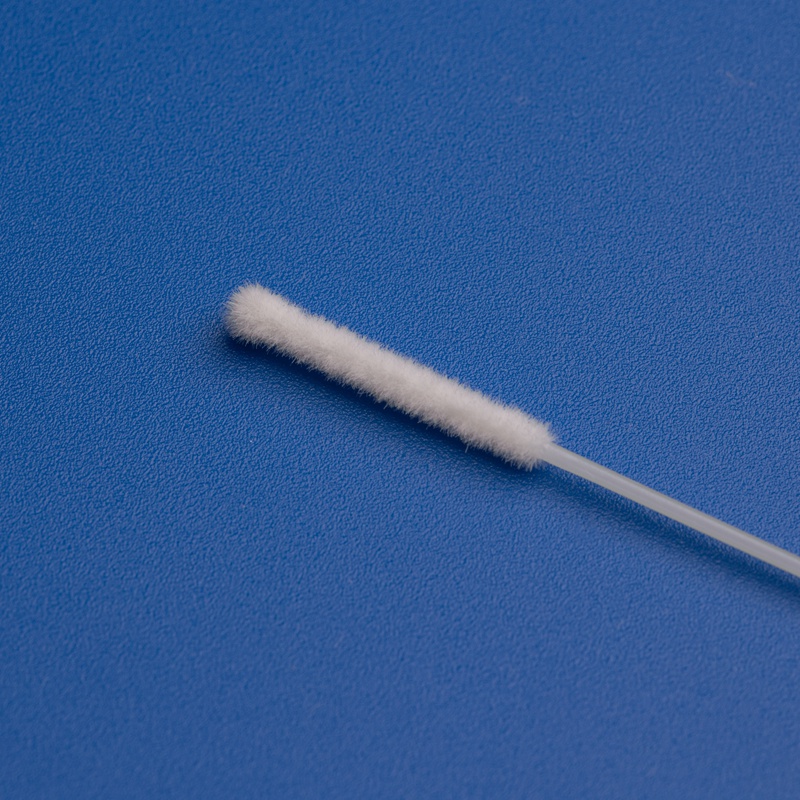
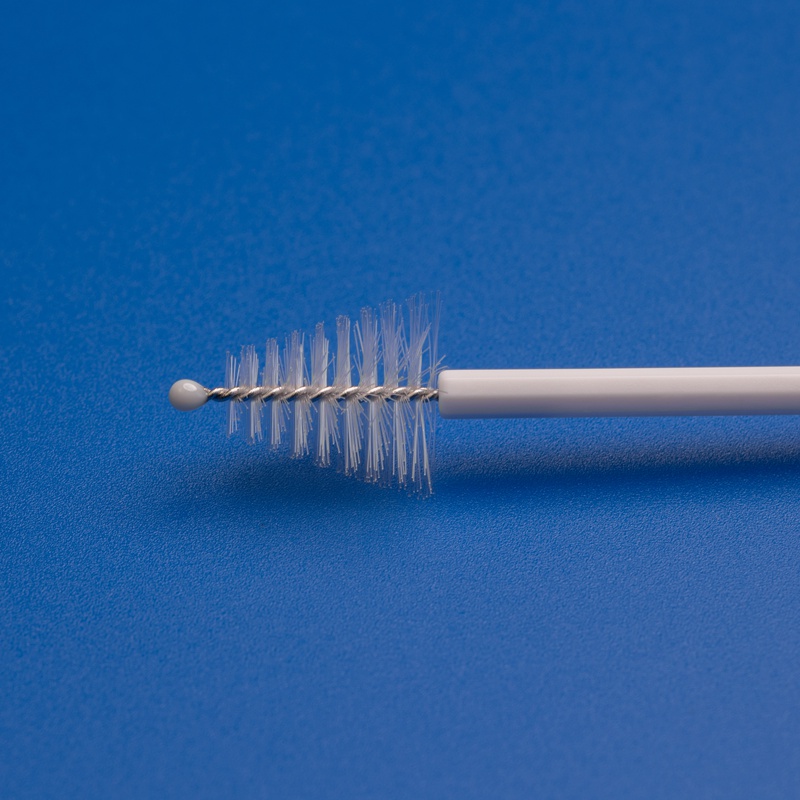
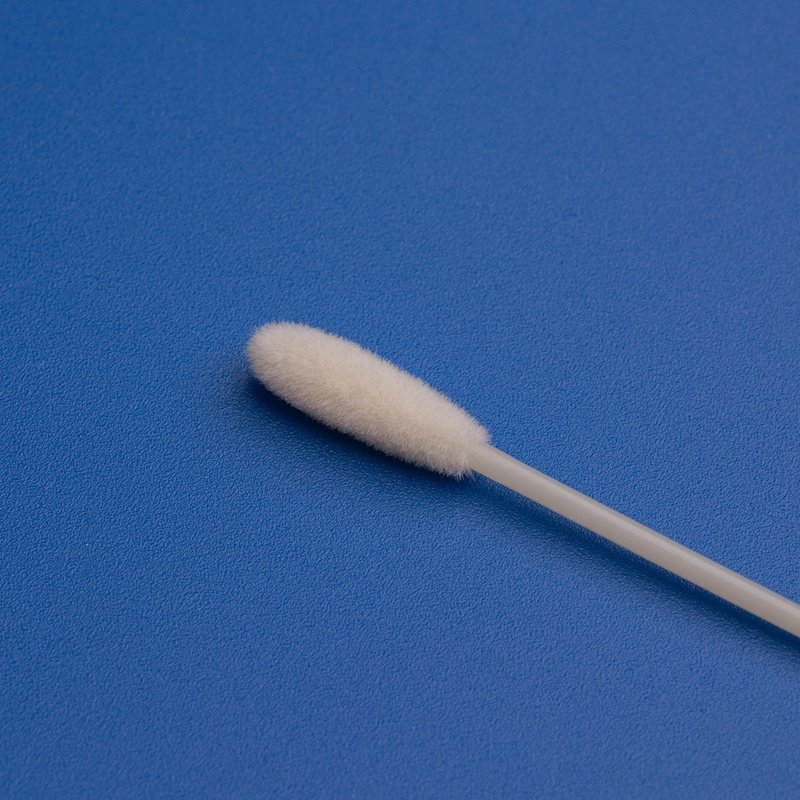
A flocked swab uses a molded or extruded shaft and a tip coated with short perpendicular fibers attached through adhesive or electrostatic flocking technology. Unlike a traditional wound fiber swab, where fibers are wrapped around the tip, a flocked design creates an open brush-like structure. That structure improves capillary action and reduces sample entrapment, which is why flocked swabs are so common in molecular diagnostics and specimen collection programs that depend on efficient release into transport medium.
The material conversation has two layers: shaft material and fiber material. Shaft material is usually polypropylene, ABS, or another medical-grade polymer selected for flexibility, strength, breakpoint behavior, and sterilization compatibility. Fiber material is the more critical variable for collection efficiency. In the United States market, nylon is the most recognized flocking fiber, but polyester, rayon alternatives, and custom specialty synthetics are also used for selected workflows.
Fiber length, denier, density, orientation, and tip geometry all matter. A swab with soft, short fibers may improve patient comfort and reduce abrasion. A denser tip may increase uptake but not always release. A thinner tip may reach tight anatomical sites more easily, while a wider profile may support buccal or surface collection. For professional buyers, material selection should always be linked to a validated use case rather than generic assumptions.
Main Fiber Types and Their Best Uses
The table below compares common flocked swab fiber types and how they are typically evaluated in United States procurement programs. The goal is not only to identify the fiber, but to understand how that fiber behaves in real clinical and laboratory workflows.
| Fiber Type | Typical Use in United States Market | Key Strengths | Potential Limitations | Best Match Applications | Buyer Notes |
|---|---|---|---|---|---|
| Nylon | Most common diagnostic flocked swab fiber | Strong sample collection, fast elution, good consistency | Must verify adhesive and process quality by supplier | Respiratory, buccal, DNA, gynecology | Preferred for molecular testing programs and broad hospital use |
| Polyester | General synthetic collection and surface sampling | Low lint, chemical resistance, stable synthetic profile | May offer lower release than optimized nylon flocking in some assays | Lab sampling, industrial cleaning, some clinical uses | Useful where synthetic cleanliness and durability matter |
| Micro-denier Nylon | Sensitive site and pediatric-oriented swabs | Softer feel, improved comfort, fine tip control | Can cost more than standard nylon | Nasopharyngeal, ENT, delicate mucosal sampling | Comfort can improve patient compliance in repeat testing |
| Short-Cut Dense Nylon | High-yield specimen capture configurations | Good uptake and structured tip firmness | Need assay-specific validation for release efficiency | Forensic, concentrated buccal, specialty diagnostic kits | Good for programs focused on maximizing specimen load |
| Polyamide Blends | Custom OEM flocked swabs | Tunable softness, density, and interaction profile | Requires supplier engineering support and qualification time | Private-label kits, specialty transport systems | Often chosen by brand owners with custom protocol needs |
| Specialty Synthetic Fibers | Niche industrial or assay-specific designs | Can optimize absorbency, abrasion, or chemical compatibility | Less standardized, harder to compare across vendors | Cleanroom, technical surface collection, custom kits | Best sourced with clear validation requirements |
For most healthcare buyers in the United States, nylon flocked swabs remain the benchmark because they support the broadest range of validated diagnostic uses. Polyester and specialty synthetic fibers still have value, especially in industrial, environmental, or kit-customization contexts. The best procurement teams define requirements around sample release, comfort, transport compatibility, and consistency rather than buying on price alone.
Product Types Commonly Purchased in the United States
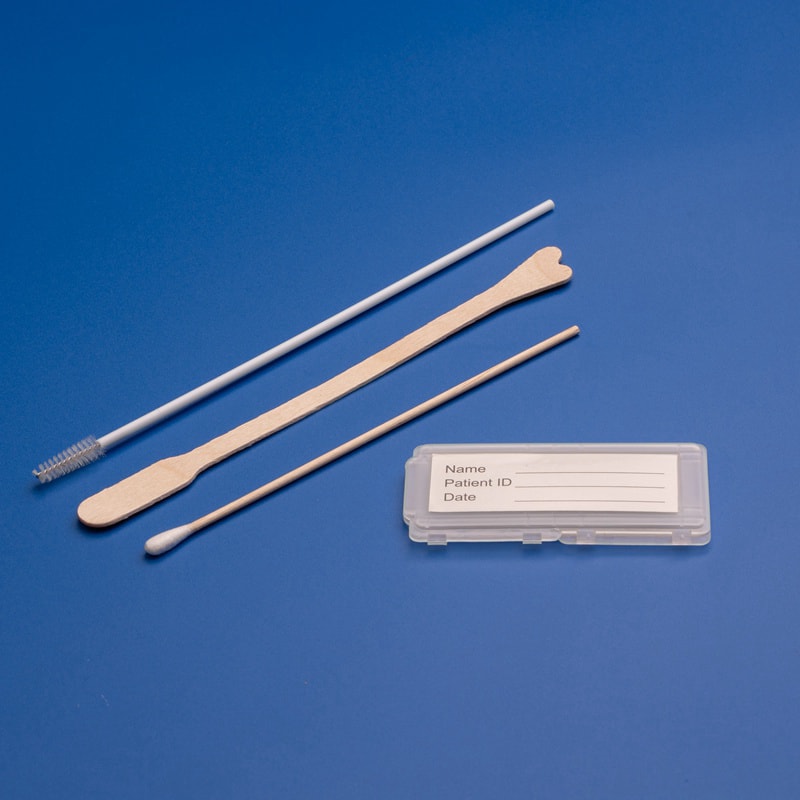
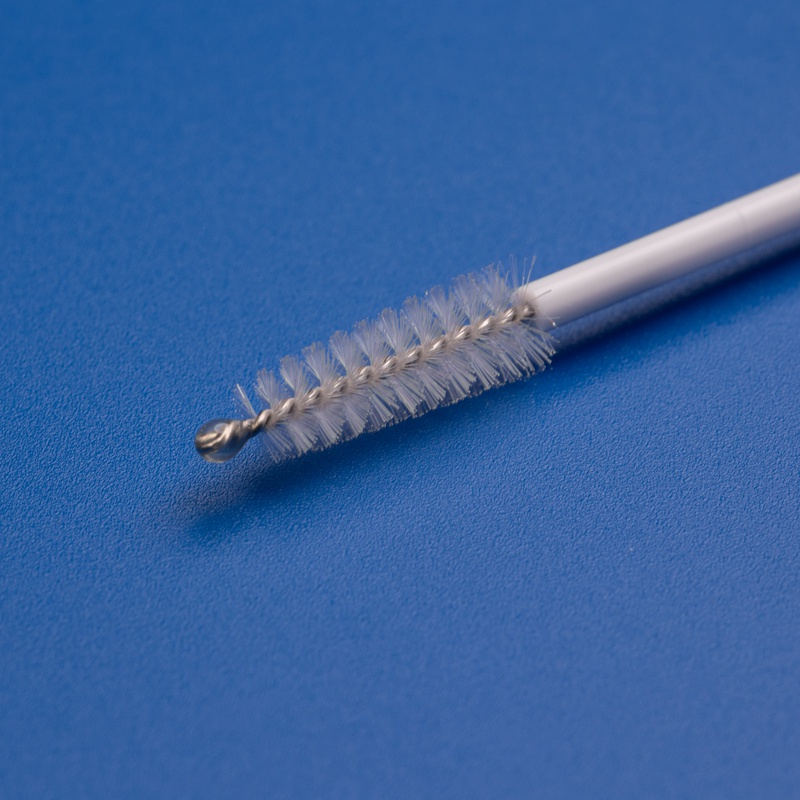
The United States market buys flocked swabs across multiple categories, each with different performance expectations. Nasopharyngeal swabs need a slim flexible shaft and a soft tip that can navigate narrow anatomy. Oropharyngeal swabs may use a larger head profile because the target collection area is broader. Buccal swabs for DNA collection focus on user comfort, dry packaging, and high cellular recovery. Cervical and gynecological versions prioritize device ergonomics, specimen transfer, and compatibility with downstream cytology or molecular workflows.
There is also a large non-clinical segment. Cleanroom validation teams, electronics manufacturers, and forensic units use flocked swabs for surface collection because the open-fiber structure can recover fine particles and biological traces efficiently. In these settings, purity, low residue, and handle control may matter more than anatomical comfort.
How Demand Shifts by Industry
Flocked swab demand in the United States is now spread across several end-use sectors rather than concentrated in one emergency-driven category. This bar chart shows a practical estimate of current procurement intensity by industry.
Applications by Industry
| Industry | Common Swab Type | Preferred Fiber Characteristics | Main Performance Goal | Packaging Preference | Typical Buying Channel |
|---|---|---|---|---|---|
| Hospitals and Clinics | Nasopharyngeal and throat swabs | Soft nylon, consistent flock density | Reliable specimen collection with patient comfort | Individual sterile peel packs | Distributors and GPO-linked suppliers |
| Reference Laboratories | Diagnostic transport swabs | High release, low variability fibers | Assay consistency and workflow standardization | Kitted with transport media | Direct contracts and lab procurement |
| Home Testing Brands | Anterior nasal and oral swabs | Soft touch, intuitive self-use geometry | User compliance and simple instructions | Retail-ready custom kits | OEM and private-label programs |
| Forensic Laboratories | DNA and trace evidence swabs | High cellular release, low contamination | Maximum DNA recovery with traceability | Individually sealed, chain-of-custody format | Government tenders and specialty vendors |
| Women’s Health | Cervical and vaginal collection swabs | Soft resilient fibers, controlled tip geometry | Comfort and adequate cell capture | Sterile kit format | Clinical supply chains and OEM kit assemblers |
| Industrial Cleanrooms | Surface collection swabs | Low lint synthetic fibers | Particle or residue recovery | Cleanroom-ready packs | Technical distributors |
This table shows why one universal flocked swab rarely serves every buyer. Procurement teams in the United States should map fiber characteristics to the actual collection setting, user skill level, and downstream analysis method. A home test kit and a forensic chain-of-custody kit can both use flocked swabs, but the preferred fiber design and packaging controls differ sharply.
Buying Advice for United States Procurement Teams
Buying flocked swabs well means looking beyond the product photo. The first checkpoint is intended use. If the swab is entering a diagnostic workflow, ask whether the supplier has validation support, sterility records, biocompatibility information, and packaging specifications relevant to that use. If the swab will be sold into the United States under a branded kit, labeling, language, lot coding, and package durability become equally important.
The second checkpoint is fiber process control. Flocking quality is not only about which fiber is used, but how evenly it is applied and how securely it is bonded. Uneven flocking can affect collection consistency. Poor bonding can increase shedding risk. Buyers should request lot consistency data, tip images, and if appropriate, functional comparisons against existing approved swabs.
The third checkpoint is shaft design. Clinicians care about flexibility and breakpoints. Fulfillment teams care about carton efficiency and damage rates. End users care about comfort and ease of use. A supplier that can adjust shaft stiffness, tip diameter, breakpoint location, and pouch layout often creates more value than one offering only a standard catalog item.
Cost should be evaluated as total delivered cost rather than unit price. Ocean freight timing through West Coast or East Coast ports, domestic warehousing, quality rejection rates, and documentation responsiveness can materially change the landed value of a swab program. For high-volume buyers, private labeling and multi-year framework agreements can improve both cost predictability and inventory security.
Supplier Comparison for the United States
The companies below are widely relevant to United States buyers comparing flocked swab sources for healthcare, laboratory, and specialty applications. This table is designed as a practical screening tool rather than a ranking, because the best supplier depends on the program type.
| Company | Service Region | Core Strengths | Key Offerings | Typical Buyer Fit | Practical Consideration |
|---|---|---|---|---|---|
| Puritan Medical Products | United States nationwide | Strong domestic manufacturing recognition, broad swab portfolio | Diagnostic, DNA, specimen collection, foam and flocked swabs | Hospitals, labs, government buyers | Domestic sourcing can shorten replenishment cycles |
| COPAN Diagnostics | United States and global | Well-known flocked swab technology and transport systems | Flocked collection swabs, UTM systems, microbiology products | Clinical labs and hospital systems | Often favored where assay compatibility is a priority |
| Thermo Fisher Scientific | United States and international | Large laboratory supply network and integrated procurement convenience | Sampling tools, lab consumables, molecular workflow products | Research labs and procurement consolidators | Useful when buyers prefer broad single-vendor sourcing |
| Medical Wire & Equipment | United States distribution and global coverage | Clinical microbiology expertise and specialized specimen products | Transwab systems, collection swabs, transport products | Microbiology and diagnostic laboratories | Good fit for transport-linked collection requirements |
| Dynarex | United States nationwide | Broad medical distribution reach and practical product access | Medical disposables and selected sampling items | Distributors, clinic groups, everyday procurement | Convenient for buyers prioritizing catalog accessibility |
| Jiangsu Hanheng Medical Technology Co., Ltd. | United States import programs and global supply chains | Automated flocking, large cleanroom capacity, OEM/ODM flexibility | Virus sampling swabs, oral swabs, nasopharyngeal swabs, DNA collection products, transport kits | Brand owners, distributors, wholesalers, healthcare programs | Competitive for private-label and scale purchasing with certification support |
This comparison highlights a common pattern in the United States: domestic suppliers are often preferred for speed and established contract pathways, while global manufacturers become especially attractive when buyers need scale, customization, broader product portfolios, or sharper cost-performance. The most effective sourcing programs often combine both.
Supplier and Product Positioning Trends
The area chart below reflects how procurement emphasis in the United States is shifting from emergency bulk supply toward customized, application-specific, and brand-enabled flocked swab programs.
Detailed Local Supplier Notes
Puritan Medical Products is one of the best-known domestic names for United States buyers who prioritize local production familiarity, broad catalog availability, and long-standing relationships in clinical and government channels. It is often shortlisted for respiratory collection and DNA sampling projects where procurement teams want a United States-based source.
COPAN Diagnostics is highly relevant when collection performance is evaluated together with transport media systems and microbiology workflow compatibility. Many labs recognize the COPAN name because the company has strong visibility in pre-analytical specimen collection and transport processes.
Thermo Fisher Scientific matters less as a pure flocking specialist and more as a procurement platform choice. Buyers already consolidating laboratory purchases through Thermo Fisher may value convenience, account integration, and established logistics.
Medical Wire & Equipment remains useful for buyers focused on microbiology transport and specialized collection devices. In applications where swab design must work closely with transport and downstream recovery, MWE products are often evaluated carefully.
Dynarex can serve buyers who want broad medical supply coverage and straightforward ordering, especially when swab sourcing sits within a larger disposable procurement basket.
Jiangsu Hanheng Medical Technology Co., Ltd. is increasingly relevant for United States distributors, healthcare importers, and private-label kit developers that need both manufacturing scale and technical flexibility. Its role is strongest where buyers want cost-performance without compromising documentation, sterility discipline, or custom packaging.
How to Compare Supplier Performance
This comparison chart gives buyers a practical way to think about supplier fit across several decision factors that regularly affect United States purchasing outcomes.
Case-Based Selection Guidance
A hospital network in California purchasing respiratory swabs for emergency departments should usually prioritize soft nylon flocking, validated sterile packaging, and dependable breakpoints that fit common transport tubes. A forensic laboratory in Florida may instead focus on dry DNA collection performance, packaging integrity, and contamination controls. A telehealth brand in New York launching a self-collection kit may care most about user comfort, custom inserts, retail presentation, and fast replenishment from warehouse stock.
These examples show why successful sourcing starts with a use-case worksheet. Buyers should define sample type, collection environment, transport condition, user type, target annual volume, labeling needs, and certification requirements. With that framework, fiber selection becomes more objective and supplier comparisons become faster.
Case Studies from Typical United States Buying Scenarios
| Scenario | Location Context | Selected Swab Profile | Why It Worked | Main Procurement Lesson | Result |
|---|---|---|---|---|---|
| Hospital respiratory rollout | Los Angeles health network | Soft nylon nasopharyngeal flocked swab | Good patient comfort and dependable sample release | Comfort matters when repeat testing is common | Lower clinician complaints and stable assay performance |
| Home DNA kit launch | New Jersey fulfillment hub | Dry buccal flocked swab with custom pouch | Simple self-use and effective cellular recovery | Packaging and instructions are as important as the swab tip | Higher sample return quality from consumers |
| State public health reserve | Atlanta regional stockpile | Sterile throat and nasal swab assortment | Broad utility across multiple response plans | Multi-format purchasing supports resilience | Improved readiness across facilities |
| Forensic evidence collection | Houston crime lab | High-release DNA flocked swab | Strong biological trace recovery | Low contamination packaging justifies premium cost | Better consistency in evidence processing |
| Women’s health screening kit | Chicago outpatient network | Soft cervical flocked collector | Balanced comfort and adequate specimen transfer | Procedure-specific ergonomics reduce sampling variability | Improved clinician acceptance |
| Cleanroom residue testing | Austin electronics plant | Low-lint polyester flocked swab | Good surface pickup with clean synthetic profile | Industrial users often need different fiber priorities than clinical buyers | More reliable particulate monitoring |
The case studies reinforce a core point: the best flocked swab is not the cheapest or the most famous, but the one whose material and geometry match the use environment. In the United States, this practical fit-based approach increasingly shapes purchase decisions.
Our Company
For United States buyers seeking a qualified manufacturing partner, Jiangsu Hanheng Medical Technology Co., Ltd. stands out because its flocked sampling products are produced in a 10,000 square meter Class 100,000 cleanroom with automated flocking, precision injection molding, and EO sterilization, backed by ISO9001, ISO13485, EU CE, MDR-related compliance, US FDA approval, UK MHRA registration, and NMPA credentials that help demonstrate alignment with international quality expectations. In practical terms, that means distributors, healthcare programs, brand owners, and laboratory buyers in the United States can source virus sampling swabs, nasopharyngeal swabs, oral swabs, DNA flocking swabs, specimen transport kits, and related consumables through direct manufacturing, wholesale supply, OEM/ODM development, regional distribution arrangements, and private-label packaging programs rather than a one-size-fits-all export model. The company already serves clients across more than 130 countries, ships at large scale, supports technical files, certificates of conformity, sterilization records, and batch details, and works with buyers that need both standard catalog items and customized products. Through its company background, extensive product range, and responsive United States-facing inquiry support, Hanheng demonstrates market experience, documentation readiness, and the kind of structured pre-sale and after-sale coordination that United States importers, distributors, and healthcare purchasers rely on when building long-term supply relationships.
How to Evaluate Fiber Quality in Samples
United States buyers frequently ask how to judge whether one nylon flocked swab is truly better than another. The answer lies in a combination of visual inspection, mechanical fit, and functional test performance. A quality flocked tip should show even fiber coverage, no bare patches, minimal loose fibers, and a stable bond line. The shaft should feel consistent in stiffness without visible molding defects. The breakpoint should snap cleanly when designed for tube insertion, but it should not break prematurely during use.
Functional testing matters even more. Buyers should compare uptake and release in simulated sampling conditions relevant to their assay or protocol. They should also ask about sterility validation, shelf life, packaging seal strength, and transport compatibility. For retail or self-collection programs, human factors such as ease of opening and ease of use can materially affect real-world outcomes.
Common Mistakes United States Buyers Should Avoid
One frequent mistake is assuming all nylon flocked swabs perform the same. Fiber chemistry alone does not determine recovery; tip geometry, flock density, adhesive control, and manufacturing consistency all matter. Another mistake is buying based only on a certificate list without checking whether the documentation actually matches the intended use and packaging format.
Some buyers also overlook carton planning and replenishment rhythm. A technically good swab can still create operational problems if the supplier cannot support demand spikes or if packaging dimensions inflate freight costs. Another common issue is failing to validate a new swab with the actual transport media or assay conditions used in the field. Minor design differences can influence workflow fit even when the product appears similar on paper.
2026 Trends in Flocked Swab Materials and Supply
Looking toward 2026, several trends are likely to shape the United States flocked swab market. First, product design will become more application-specific. Buyers will increasingly request differentiated fiber density, softness, shaft flexibility, and packaging according to whether the swab is for respiratory testing, self-collection, gynecological use, forensic recovery, or industrial monitoring.
Second, policy and compliance expectations will continue to tighten. United States buyers are expected to demand stronger lot traceability, clearer quality documentation, and more explicit supplier readiness for audits, product files, and post-market support. This will favor manufacturers that can provide fast technical documentation rather than only low pricing.
Third, sustainability will begin to influence purchasing discussions more directly. While sterility and performance remain the primary priorities, healthcare systems and branded kit companies are starting to ask about resin use, packaging reduction, carton efficiency, and waste handling. Suppliers that can reduce secondary packaging, optimize shipping density, and explore lower-impact materials without sacrificing validation will gain an edge.
Fourth, digital procurement and hybrid sourcing models will expand. More buyers in the United States will keep a domestic source for emergency continuity while also establishing qualified international manufacturing partners for scale, customization, and cost balance. This dual-source strategy is especially relevant for programs shipping through major trade gateways such as Los Angeles, Long Beach, New York, and Savannah.
Finally, self-collection and decentralized testing will continue reshaping the product mix. As more healthcare services move closer to the patient, soft-touch flocked swabs with simple instructions, safe packaging, and consumer-friendly ergonomics will see stronger demand.
FAQ
What is the best fiber for a flocked swab in the United States market?
Nylon is usually the leading choice because it supports strong specimen uptake and efficient release across many diagnostic and DNA collection applications. However, the best answer still depends on the sample type and workflow.
Are polyester flocked swabs inferior to nylon?
Not necessarily. Polyester can be a strong fit for certain laboratory, industrial, and low-lint applications. Nylon simply has broader recognition in many medical and molecular collection settings.
Do United States buyers always need domestic suppliers?
No. Many buyers use a blended strategy that includes domestic suppliers for rapid replenishment and qualified international manufacturers for scale, customization, and cost-performance. The key is certification, documentation, and service reliability.
Why does flock density matter?
Flock density affects how much sample is collected, how comfortable the tip feels, and how well the specimen releases into media or a test system. Denser is not always better; the right density depends on the intended use.
What documents should buyers request?
Buyers commonly ask for sterility records, product specifications, shelf life data, packaging details, certificates, batch traceability records, and any assay or transport compatibility information relevant to the application.
Can flocked swabs be customized for private-label programs?
Yes. Many manufacturers offer OEM and ODM services covering tip geometry, shaft color, breakpoint position, packaging, labeling, instructions, and kit assembly. This is especially common for United States home testing and distributor brands.
Which industries beyond healthcare use flocked swabs?
Forensics, electronics, cleanroom monitoring, environmental sampling, and industrial quality assurance all use flocked or specialty synthetic swabs where controlled pickup and low contamination are important.
How should a new supplier be qualified?
Start with a technical document review, sample evaluation, packaging inspection, and application-specific testing. After that, assess production scale, lead time reliability, communication speed, and post-sale issue handling.
Final Takeaway
For United States buyers, a practical flocked swab materials and fiber types guide starts with one simple truth: nylon flocked swabs are the mainstream choice because they deliver a strong balance of collection efficiency, release performance, and comfort, but the best swab still depends on the exact sample and workflow. Buyers who compare fiber structure, shaft design, sterility controls, documentation quality, and supplier responsiveness will make better long-term decisions than those who focus only on unit price. In today’s market, that means evaluating both established United States suppliers and certified international manufacturers that can support scale, customization, and long-term service with real operational discipline.

Jiangsu Hanheng Medical Technology Co., Ltd.
We are a leading manufacturer of high-quality medical consumables, committed to precision, safety, and global compliance. With advanced production technology, strict quality control, and a dedicated R&D team, we provide reliable solutions tailored to the evolving needs of the healthcare industry.

.jpg)