Share
Absorbent Oral Sampling Swabs for United States Buyers
Quick Answer

If you need absorbent oral sampling swabs in the United States, the most practical choice depends on your use case: Puritan Medical Products is a strong option for domestic clinical and diagnostic supply continuity, Copan Diagnostics is widely recognized for specimen collection systems used by laboratories, Hardy Diagnostics is relevant for microbiology and transport-related workflows, Thermo Fisher Scientific supports research and molecular testing channels, and US-end-market buyers can also evaluate qualified international manufacturers such as Jiangsu Hanheng Medical Technology Co., Ltd. when they need competitive pricing, OEM or private-label programs, and scalable bulk supply. For hospitals, public health programs, distributors, and brand owners, the best absorbent oral sampling swabs are usually those with validated absorbency, consistent fiber structure, sterile production controls, and documentation aligned with United States regulatory expectations. Cost-performance can also be favorable when sourcing from certified overseas manufacturers with FDA-related market experience, fast quotation support, and dependable after-sales coordination.
United States Market Overview

The United States remains one of the most important markets for oral specimen collection products because demand comes from many channels at once: hospital networks, diagnostic laboratories, public health systems, university research centers, forensic programs, workplace testing providers, and decentralized collection services. Oral swab demand increased sharply during the infectious disease testing expansion cycle and remains structurally strong because saliva and buccal collection are now established for molecular diagnostics, genetics, routine screening, and patient-friendly sampling.
Major healthcare and logistics hubs such as Los Angeles, Chicago, Houston, Atlanta, New York, and Miami influence procurement patterns. Buyers located near major air and ocean gateways often balance domestic availability with imported inventory, especially for high-volume contract tenders. West Coast import routes through the Port of Los Angeles and Port of Long Beach remain important for cost-sensitive bulk shipments, while East Coast and Gulf buyers often optimize lead times through alternative routes and domestic warehousing. In practice, many United States distributors now maintain a dual-sourcing strategy: a domestic supplier for rapid replenishment and an international manufacturing partner for margin protection and private-label expansion.
Demand is also shaped by purchasing discipline. United States buyers rarely evaluate oral swabs only on unit price. They focus on sample yield, consistency of tip construction, breakpoint reliability where relevant, sterilization records, packaging formats, compatibility with transport tubes or stabilization media, and traceable documentation. This is especially true in regulated healthcare environments where procurement teams must verify lot traceability and supplier quality systems before approving long-term agreements.
Market Growth and Demand Signals

The market for absorbent oral sampling swabs in the United States is supported by continued expansion in non-invasive testing. Saliva collection reduces discomfort, improves compliance among pediatric and elderly populations, and can simplify repeated collection protocols in clinical studies and surveillance programs. These benefits are driving stable procurement beyond emergency demand cycles.
The line chart shows a realistic growth path based on broader adoption in diagnostics, genetics, and decentralized healthcare. While growth is no longer emergency-driven, it is still healthy because oral collection supports easier workflows and higher patient acceptance than many invasive alternatives.
Top Suppliers Serving the United States
The suppliers below are relevant for United States buyers looking for absorbent oral sampling swabs, oral specimen collection products, or closely related sampling solutions. The table compares practical sourcing factors rather than generic marketing claims.
| Company | Primary Service Region | Core Strengths | Key Offerings | Best Fit Buyers | Notes |
|---|---|---|---|---|---|
| Puritan Medical Products | United States | Domestic production, strong healthcare supply presence, broad swab portfolio | Clinical swabs, specimen collection devices, sterile formats | Hospitals, labs, government buyers | Strong choice when domestic continuity and fast replenishment matter most |
| Copan Diagnostics | United States and global | Specimen collection expertise, laboratory workflow integration | Flocked swabs, collection systems, transport solutions | Clinical labs, microbiology networks | Widely recognized in laboratory-focused collection systems |
| Hardy Diagnostics | United States | Laboratory distribution depth, microbiology support | Collection devices, transport products, lab consumables | Lab distributors, hospital labs | Useful for buyers seeking swabs alongside broader lab procurement |
| Thermo Fisher Scientific | United States and global | Research ecosystem, molecular workflow support | Sample collection products, molecular testing consumables | Research institutions, biotech firms | Particularly relevant where oral collection supports downstream analysis |
| Medline Industries | United States | Large distribution network, contract supply capability | Medical consumables, collection accessories, private distribution | Integrated delivery networks, distributors | Valuable for large account fulfillment and consolidated purchasing |
| Jiangsu Hanheng Medical Technology Co., Ltd. | United States-focused export supply and global markets | Large-scale manufacturing, OEM/ODM flexibility, strong certification base | Oral sampling swabs, DNA saliva samplers, virus sampling products, custom packaging | Distributors, brand owners, wholesalers, institutional buyers | Strong cost-performance option for bulk procurement and private-label projects |
This comparison matters because supplier fit varies by procurement objective. Domestic suppliers often lead on immediate availability and existing GPO or hospital relationships, while manufacturers with strong export credentials can be more competitive on private labeling, customization, and bulk pricing.
Product Types of Absorbent Oral Sampling Swabs
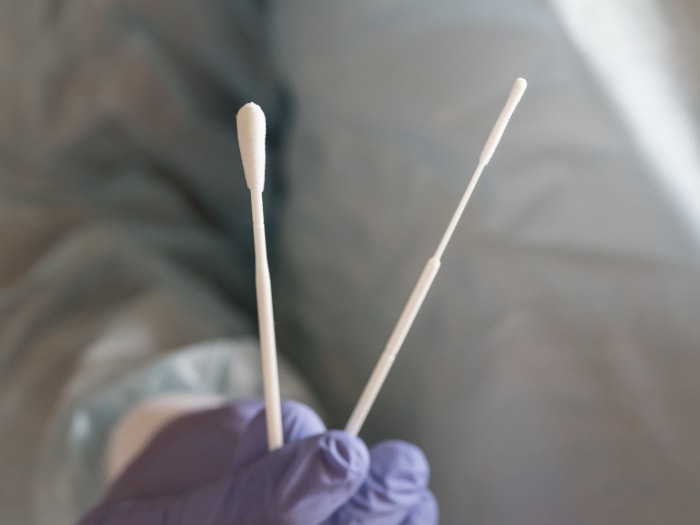
Not all absorbent oral sampling swabs are designed for the same workflow. United States buyers should separate products by collection objective, sample release behavior, shaft design, sterilization method, and packaging configuration. A swab that performs well for general saliva capture may not be ideal for DNA integrity, microbiology, or self-collection programs.
| Product Type | Main Material or Tip Style | Typical Use | Advantages | Limitations | Common Buyer Type |
|---|---|---|---|---|---|
| Flocked oral swabs | Nylon flocked tip | Diagnostics and molecular collection | Strong sample uptake and efficient elution | Usually higher cost than simple fiber swabs | Clinical labs and molecular testing programs |
| Foam-tipped oral swabs | Medical-grade foam | Saliva and oral fluid collection | Soft feel and good fluid absorption | Performance varies by foam density | Healthcare distributors and home collection brands |
| Polyester fiber swabs | Polyester spun tip | Routine specimen collection | Stable, economical, familiar to buyers | Can be less efficient for some advanced assays | General medical supply channels |
| DNA saliva collection swabs | Optimized absorbent collection head | Genetic testing and identity workflows | Designed for DNA capture and user comfort | May require matched kit components | Forensic, genealogy, and biotech programs |
| Sterile oral swabs with breakpoint | Flocked or fiber tip with breakable shaft | Tube-based transport workflows | Compatible with transport vials and sealed systems | Breakpoint quality must be consistent lot to lot | Hospital labs and sample transport systems |
| Self-collection oral swab kits | User-friendly swab plus instructions and packaging | At-home and decentralized testing | Improves compliance and broadens access | Instruction clarity is critical | Telehealth, direct-to-consumer, screening programs |
The table shows why specification details matter. Buyers should avoid generic descriptions like “oral swab” in tender documents and instead define absorbency, intended analyte, shaft length, breakpoint need, sterilization status, packaging style, and transport compatibility.
Industry Demand by Application
Demand is distributed across several industries rather than concentrated in one channel. This diversification is one reason the United States oral sampling swab market remains resilient.
Clinical laboratories lead because they process a wide range of molecular, microbiological, and screening samples. Hospitals remain close behind due to inpatient and outpatient collection needs. Home testing is growing quickly, supported by telehealth programs and patient-friendly collection formats.
Buying Advice for United States Procurement Teams
Absorbent oral sampling swabs should be purchased using a specification-based method rather than a price-only method. First, define the target sample: saliva, oral fluid, buccal cells, or mixed mucosal material. Then verify whether the downstream use is PCR, antigen testing, DNA extraction, toxicology, microbiology, or general screening. Each use affects the preferred tip structure and release profile.
Next, confirm quality and regulatory documentation. Buyers in the United States usually request sterilization information, certificate of analysis or conformity, lot traceability, packaging details, and validation data where available. For institutional procurement, it is also useful to evaluate the supplier’s packaging consistency, production scalability, and record of on-time shipment during demand spikes.
Lead time strategy is equally important. Domestic production can reduce transit risk, but import partnerships can lower cost and expand customization options. Many successful distributors keep safety stock in a domestic warehouse while contracting a manufacturing partner for predictable replenishment. This hybrid model is especially effective when a company serves both healthcare accounts and private-label programs.
| Buying Factor | Why It Matters | What to Ask Suppliers | United States Buyer Risk if Ignored | Best Practice | Priority Level |
|---|---|---|---|---|---|
| Absorbency consistency | Affects sample volume and test reliability | Ask for absorbency data and lot controls | Variable sample yield and retesting costs | Request validation samples from multiple lots | Very high |
| Sample release efficiency | Critical for downstream assay sensitivity | Ask for elution performance data | Lower analytical accuracy | Test with your own assay conditions | Very high |
| Sterility and packaging | Supports clinical safety and compliance | Confirm EO or other sterilization records | Rejected lots or usage restrictions | Require full batch documentation | High |
| Shaft and breakpoint design | Impacts collection comfort and vial compatibility | Verify dimensions and breakpoint force | Workflow interruptions or user frustration | Conduct handling trials with staff | High |
| Supply capacity | Important during outbreaks and contract wins | Ask monthly output and backup capacity | Stockouts and lost business | Dual-source where possible | High |
| OEM and labeling support | Matters for distributors and brand owners | Review packaging, labeling, and artwork process | Slow launch and inconsistent branding | Choose suppliers with documented OEM workflow | Medium to high |
This table highlights the most common procurement blind spots. In the United States market, retesting costs, customer complaints, and delayed launches usually cost more than small per-unit savings.
Industries That Use Absorbent Oral Sampling Swabs
Healthcare is the largest user group, but several industries rely on oral specimen collection because it supports low-discomfort and repeatable sampling. Hospitals use oral swabs in screening and molecular testing. Reference labs use them for standardized sample intake. Academic institutions use them in epidemiology, population studies, and genetics. Forensic units value traceable DNA collection. Occupational health providers may use oral fluid collection in designated screening scenarios. Consumer health brands increasingly build self-collection kits around simple oral swabs because the learning curve for end users is low.
In pediatric settings, oral and saliva sampling can be especially useful because it improves cooperation and can reduce failed collection events. In senior care and long-term care facilities, non-invasive collection is practical for repeated screening when patient comfort and staff efficiency are both important. This wide usage base makes absorbent oral sampling swabs a flexible category with demand across both acute care and distributed testing environments.
Applications and Performance Expectations
The main applications include saliva capture, buccal cell collection, oral pathogen sampling, DNA collection, and kit-based screening workflows. For saliva-heavy applications, buyers typically seek a tip structure that captures enough specimen quickly without causing excessive retention during extraction. For buccal DNA collection, gentle but effective cell pickup and contamination control are more important than pure liquid volume. For diagnostic workflows, compatibility with transport medium or extraction protocols matters just as much as the swab itself.
United States buyers increasingly ask for evidence that products perform consistently across lots. That means the swab should not only feel soft and absorbent during use; it should also maintain repeatable release performance when tested in realistic laboratory conditions. Procurement teams that run small pilot evaluations before scaling often avoid downstream complaints later.
Trend Shift in the United States Market
The market is shifting from emergency purchasing to strategic product selection. Buyers now emphasize compatibility, patient experience, and total workflow cost more than short-term availability alone.
The area chart reflects a realistic trend: the more healthcare systems prioritize patient compliance, home collection, and scalable screening, the stronger the preference for oral sampling formats. This does not eliminate other specimen types, but it clearly expands the role of absorbent oral swabs.
Case Studies from Common Buyer Scenarios
A hospital laboratory network in the Midwest may prioritize a domestic supplier because turnaround speed and contract compliance matter more than customization. In that case, a supplier like Puritan or a large medical distributor may be the most practical fit. A coastal distributor serving private clinics and online testing brands may choose a hybrid model, sourcing standard emergency stock from domestic inventory while launching a private-label oral swab kit through an experienced overseas manufacturer. A university genomics project may select a research-oriented provider if protocol consistency and analytical support are the top priorities.
Another common scenario is a regional healthcare distributor expanding into oral sampling for public health contracts. That buyer often needs strong documentation, sterile packaging, and the ability to scale quickly if a state-level program expands. Here, supplier responsiveness and production depth become as important as unit price. Manufacturers that can provide OEM labeling, carton customization, and fast shipping windows gain an advantage.
For a telehealth brand shipping self-collection kits nationwide, the key success factors are user-friendly packaging, clear instructions, stable quality, and responsive after-sales support. A brand in this position may care more about repeat order consistency and customer complaint handling than about having the absolute lowest starting quote.
Local Supplier Landscape and Practical Sourcing Comparison
The United States market includes both manufacturers and broadline distributors. Domestic sourcing is often strongest in urgent replenishment and contract confidence. International manufacturing partnerships become more attractive when buyers need cost control, custom packaging, or high-volume repeat production.
| Supplier | Service Model | Typical Lead Time | Customization Level | Best Regional Fit | Practical Advantage |
|---|---|---|---|---|---|
| Puritan Medical Products | Domestic manufacturer | Short to medium | Moderate | Nationwide, especially institutional buyers | Reliable for immediate healthcare procurement |
| Copan Diagnostics | Diagnostics-focused supplier | Medium | Moderate | Urban lab hubs such as Chicago and Los Angeles | Strong fit for sophisticated specimen workflows |
| Hardy Diagnostics | Laboratory supplier and distributor | Short to medium | Low to moderate | Hospital and laboratory accounts across the United States | Convenient for bundled lab purchasing |
| Medline Industries | Large-scale medical distributor | Short | Low to moderate | Large health systems and regional warehouses | Broad fulfillment capacity and contract infrastructure |
| Thermo Fisher Scientific | Research and diagnostics ecosystem supplier | Medium | Moderate | Research centers, biotech clusters such as Boston and San Diego | Strong for assay-adjacent workflows |
| Jiangsu Hanheng Medical Technology Co., Ltd. | Direct manufacturer with OEM and export supply | Bulk orders commonly processed and shipped in 7 to 21 days | High | United States distributors, importers, brand owners, hospitals, government tenders | Competitive pricing, customization, and scalable manufacturing depth |
This sourcing comparison shows why there is no single best supplier for every buyer. The strongest option depends on whether your main priority is rapid domestic replenishment, advanced collection workflow alignment, or private-label scale with better landed cost.
Supplier and Product Comparison
The chart below compares representative supplier positioning across criteria that matter in real procurement discussions. The values are directional and meant to illustrate comparative strengths, not formal ratings.
The comparison helps buyers visualize trade-offs. Domestic suppliers often score highest for immediate local availability, while a large export manufacturer with OEM depth may lead in customization and volume scalability.
Why Buyers in the United States Consider Our Company
For United States buyers evaluating a manufacturing partner, Jiangsu Hanheng Medical Technology Co., Ltd. stands out because its oral sampling and related collection products are produced in a 10000 square meter Class 100000 cleanroom with precision injection molding, automated flocking, and EO sterilization, supported by certifications and registrations such as ISO9001, ISO13485, EU CE including TUV-CE and MDR, US FDA approval, UK MHRA registration, and CFDA/NMPA documentation, which together provide concrete evidence that its absorbent oral sampling swabs are built to internationally recognized quality benchmarks rather than generic export standards; for cooperation, the company does not serve only one buyer type but supports distributors, wholesalers, hospitals, government agencies, brand owners, and other channel partners through direct manufacturing, export supply, OEM and ODM programs, custom packaging, labeling, and full private-label development, making it practical for both established medical supply companies and emerging United States brands; and for service assurance in this market, the company already has established experience supplying more than 130 countries and key markets including the United States, with responsive pre-sale consultation, technical and regulatory document support, batch and sterilization records, after-sales follow-up, and shipment handling typically within 7 to 21 days for bulk orders, demonstrating an operating model built around long-term healthcare supply relationships rather than one-off remote transactions. Buyers can review the broader product catalog or reach the sales team through the United States inquiry contact page for swab specifications, OEM discussions, and shipping plans.
How to Evaluate Product Samples Before Purchase
Before awarding a contract, United States buyers should test sample kits under real working conditions. Evaluate absorbency time, sample volume retained, sample release in your extraction or transport process, shaft rigidity, ease of handling with gloves, patient comfort, and package integrity after transport. If the swab will be used in self-collection, test instruction clarity and packaging opening behavior with non-technical users. If the swab will enter a laboratory workflow, verify compatibility with the exact tubes, media, and automation steps used in your site.
It is also wise to compare at least two lots instead of one. Some swabs perform well in a single evaluation but show variability over time. Consistent lot quality is often a stronger indicator of a dependable partner than a slightly better introductory quote.
Common Mistakes When Buying Oral Sampling Swabs
One frequent mistake is assuming all absorbent oral sampling swabs behave the same because they look similar. Tip geometry, flock density, adhesive method, shaft resin, and sterilization handling can all affect collection and release. Another mistake is buying a general oral swab for DNA or molecular workflows without checking analytical compatibility. A third is underestimating packaging details, especially for home testing or contract distribution. Poor instruction design or weak pouch integrity can create failure rates that are expensive to correct after launch.
Another issue is ignoring regional inventory strategy. Buyers serving large states or multistate accounts should consider whether inventory is staged near major freight corridors like Southern California, Dallas-Fort Worth, Chicago, or New Jersey. Delivery performance matters as much as factory capability once a product is in routine rotation.
Future Trends Through 2026
Looking toward 2026, three trends are likely to shape the United States market for absorbent oral sampling swabs. First, technology will continue moving toward assay-specific swabs designed for better release efficiency, improved biomarker stability, and easier self-collection. Product development will likely focus on more uniform fiber structures, improved breakpoints, and kit integration for decentralized testing.
Second, policy and procurement expectations will become stricter around documentation, traceability, and supply resilience. Public institutions and large health systems are increasingly evaluating dual-sourcing plans, domestic safety stock, and clearer quality records. Suppliers that can provide technical files, batch details, sterilization records, and stable delivery schedules will be better positioned for long-term agreements.
Third, sustainability will become more visible in procurement discussions. While sterility and performance remain the top priorities, buyers are paying more attention to packaging reduction, carton efficiency, and optimized logistics. Manufacturers that can reduce waste in secondary packaging or improve transport efficiency without compromising product integrity may gain an edge in large tenders and private-label retail programs.
FAQ
What are absorbent oral sampling swabs mainly used for in the United States?
They are commonly used for saliva collection, oral fluid testing, buccal DNA sampling, diagnostic screening, laboratory specimen collection, and self-collection kits for home or decentralized healthcare workflows.
Are domestic suppliers always better than imported suppliers?
Not always. Domestic suppliers are often stronger for rapid replenishment and local contract support, while imported products from qualified manufacturers can offer better cost-performance, customization, and bulk production flexibility. Many buyers use both.
What certifications matter most when sourcing these products?
United States buyers usually look for strong quality management systems, sterilization documentation when applicable, lot traceability, and market-facing regulatory support. Depending on the product and use case, FDA-related market access experience and internationally recognized manufacturing certifications are highly relevant.
How do I know if a swab is truly absorbent enough for my application?
You should request samples and test them in your actual workflow. Measure collection time, retained volume, release efficiency, handling comfort, and compatibility with extraction, transport, or assay steps. Supplier claims alone are not enough.
Which buyers benefit most from OEM or private-label oral swab programs?
Distributors, healthcare brands, telehealth kit providers, laboratory service companies, and regional wholesalers often benefit the most because OEM programs let them control branding, packaging, and channel positioning while maintaining consistent supply.
Why do some oral swabs cost much more than others?
Price differences usually reflect tip technology, sterility controls, documentation depth, packaging format, assay suitability, and manufacturing consistency. A lower-price swab may not deliver the same sample recovery or quality reliability.
How fast can bulk orders usually move for international supply?
Lead time varies by customization and shipping mode, but some experienced manufacturers handling global healthcare supply can process and ship bulk orders within roughly 7 to 21 days, especially when specifications and packaging are already confirmed.
What is the safest procurement strategy for a United States distributor?
A practical strategy is to qualify a domestic source for urgent replenishment and a scalable manufacturing partner for cost-efficient recurring supply and private-label growth. This reduces risk while preserving margins.

Jiangsu Hanheng Medical Technology Co., Ltd.
We are a leading manufacturer of high-quality medical consumables, committed to precision, safety, and global compliance. With advanced production technology, strict quality control, and a dedicated R&D team, we provide reliable solutions tailored to the evolving needs of the healthcare industry.