Share
What Flocked Swabs Are and Why U.S. Labs Prefer Them
Quick Answer

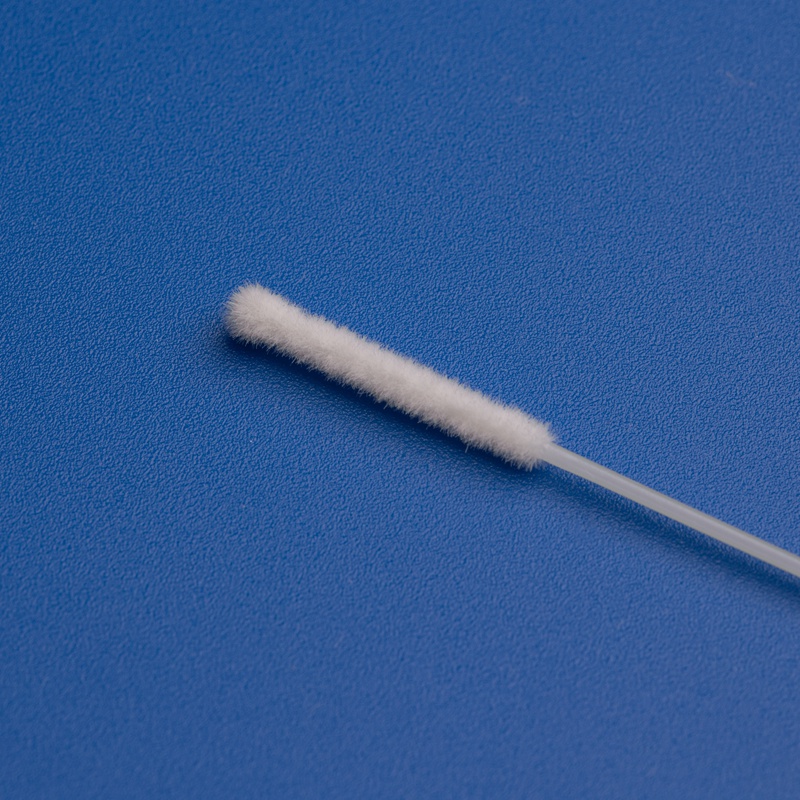
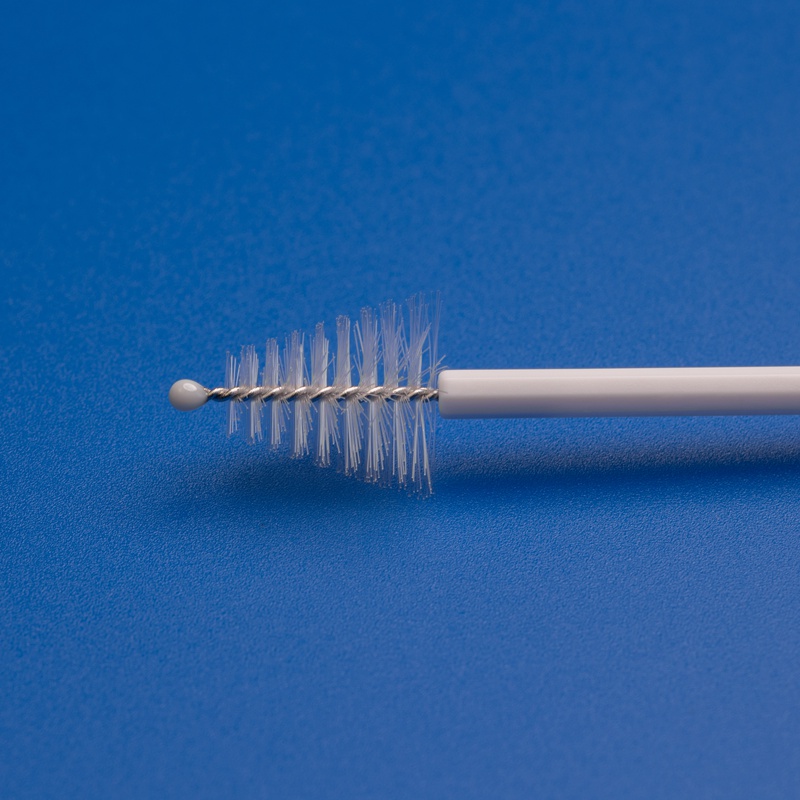
Flocked swabs are specimen collection swabs made with short nylon fibers that are applied perpendicularly to the swab tip instead of being wound like traditional fiber swabs. This brush-like structure helps collect more cells, release more of the specimen into transport media, and improve consistency in diagnostic sampling. In the United States, flocked swabs are widely preferred for respiratory sampling, oral sampling, forensic collection, and molecular testing because they can improve analytical sensitivity, reduce sample entrapment, and support faster laboratory workflows.
For practical purchasing, U.S. buyers usually compare sterility, breakpoint design, tip geometry, shaft material, compatibility with transport media, packaging format, and regulatory documentation. Domestic suppliers remain important for rapid fulfillment, but qualified international manufacturers can also be strong options when they hold relevant certifications, support U.S. compliance expectations, and provide dependable pre-sales and after-sales service. This is especially true for buyers seeking better cost-performance on large tenders, OEM programs, and distributor supply contracts.
- Best for diagnostic sampling when high specimen uptake and release matter.
- Common in hospitals, clinical labs, public health systems, and testing kit assembly.
- Often used for nasopharyngeal, oropharyngeal, oral, wound, and forensic applications.
- Usually preferred over spun fiber swabs for PCR and other molecular workflows.
- U.S. buyers should assess supplier quality systems, not just unit price.
Understanding the U.S. Market for Flocked Swabs

The market for flocked swabs in the United States has expanded beyond emergency pandemic procurement and is now anchored in routine diagnostics, women’s health screening, respiratory testing, DNA collection, and industrial contamination control. Buyers in healthcare hubs such as Boston, Houston, Chicago, San Diego, Atlanta, and the New York-New Jersey corridor increasingly focus on product standardization and supply resilience. This shift matters because swab performance can affect the quality of the sample entering the test system, especially in PCR, antigen, microbiology, and cytology workflows.
Several factors explain why flocked swabs have become a standard choice. First, U.S. laboratories want higher recovery of cellular material and viral particles from the sampling site. Second, clinics and kit assemblers need swabs that perform consistently across large batches and multiple collection settings. Third, procurement teams want traceability, sterilization records, and documented quality controls that support audits and medical distribution. Fourth, distributors increasingly favor suppliers that can maintain stable lead times through West Coast and East Coast entry points such as Los Angeles, Long Beach, Savannah, and Newark.
The market also includes very different buyer profiles. Large integrated delivery networks may buy in pallet-scale quantities under annual contracts, while regional distributors may seek mixed SKUs and private label support. Public health agencies often prioritize validated documentation, while direct-to-consumer kit brands care deeply about packaging design, labeling, and fulfillment flexibility. In all cases, flocked swabs are no longer treated as simple commodities. They are now performance-critical consumables linked to test accuracy, user comfort, and downstream process efficiency.
The chart above illustrates a realistic demand index trend for the U.S. flocked swab market. Growth is not just tied to seasonal respiratory outbreaks. It also reflects broader use in molecular diagnostics, decentralized testing, self-collection kits, and more specialized specimen collection programs in hospitals and laboratories.
How Flocked Swabs Work

A flocked swab tip is manufactured by attaching short synthetic fibers, usually nylon, onto an adhesive-coated molded tip. The fibers stand upright, forming a thin absorbent layer with open spaces between filaments. This structure differs sharply from traditional spun swabs, where fibers are wound around the tip and can trap sample material inside the fiber matrix.
In practical use, the vertical fiber arrangement creates two major performance benefits. The first is efficient sample collection. The swab surface acts almost like a soft micro-brush, lifting cells, mucus, and biological material from the collection site. The second is efficient release. Because the sample remains closer to the outer surface of the swab, more of it can be eluted into transport medium or extraction buffer. This matters when analyte concentration is low or when laboratories need reproducible sample input.
For clinicians and patients, flocked swabs can also improve the collection experience when they are well designed. The tip can be soft yet structured, while the shaft can be engineered with a controlled breakpoint to fit transport tubes. For manufacturers, the technology allows tight dimensional control, which helps standardize clinical performance.
Why They Are More Effective Than Traditional Swabs
The main reason flocked swabs are considered more effective is not marketing language; it is the mechanics of specimen capture and release. Traditional cotton or spun fiber swabs may absorb material, but they often hold part of the specimen within a dense inner fiber structure. Flocked swabs generally release a higher proportion of the collected sample into the testing system. This can increase the probability of detection, especially when the target is present in small amounts.
In U.S. clinical and laboratory settings, effectiveness is typically evaluated through several operational questions: Does the swab collect enough target material? Does it release that material into the medium quickly? Is the swab compatible with assay workflows? Does it break consistently into the tube? Is it comfortable enough for compliant self-collection or clinician collection? Flocked swabs tend to score well across these dimensions, which is why they are used so widely for respiratory diagnostics and other specimen collection tasks.
There is also a workflow advantage. Better release efficiency may reduce the need for aggressive vortexing or repeated extraction steps. Laboratories processing high daily sample volumes appreciate any consumable that supports smoother handling and more predictable downstream performance. Over time, these small gains in specimen quality and operational reliability create meaningful value.
Comparison of Common Swab Types
| Swab Type | Tip Material | Sample Collection | Sample Release | Best Uses | Common Limitation |
|---|---|---|---|---|---|
| Flocked swab | Nylon fibers on molded tip | High | High | PCR, respiratory, oral, forensic | Usually higher unit cost than simple cotton swabs |
| Cotton swab | Cotton wound tip | Moderate | Low to moderate | Basic cleaning, some general sampling | Can retain analyte and shed fibers |
| Rayon swab | Rayon wound tip | Moderate | Moderate | General microbiology | Less efficient release than flocked designs |
| Polyester swab | Polyester fiber tip | Moderate | Moderate | Surface sampling, some medical collection | May be less effective for low-load specimens |
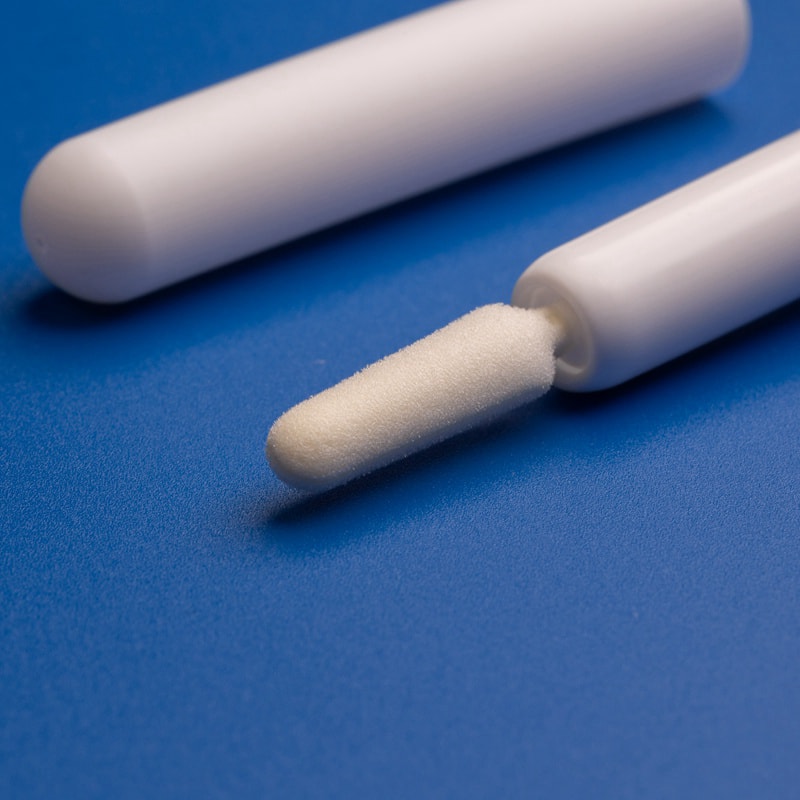
| Foam swab | Open-cell foam | Moderate | Moderate to high | Environmental and industrial use | Not ideal for every anatomical sampling need |
| Spun fiber swab | Tightly wound synthetic fibers | Moderate | Low to moderate | Low-cost routine applications | Specimen can remain trapped in fibers |
This comparison shows why flocked swabs are often selected when collection efficiency and release efficiency directly influence test sensitivity. Lower-cost swabs still have a place, but they are usually chosen for less demanding applications or when analytical performance is not the top priority.
Product Types Buyers Commonly Source
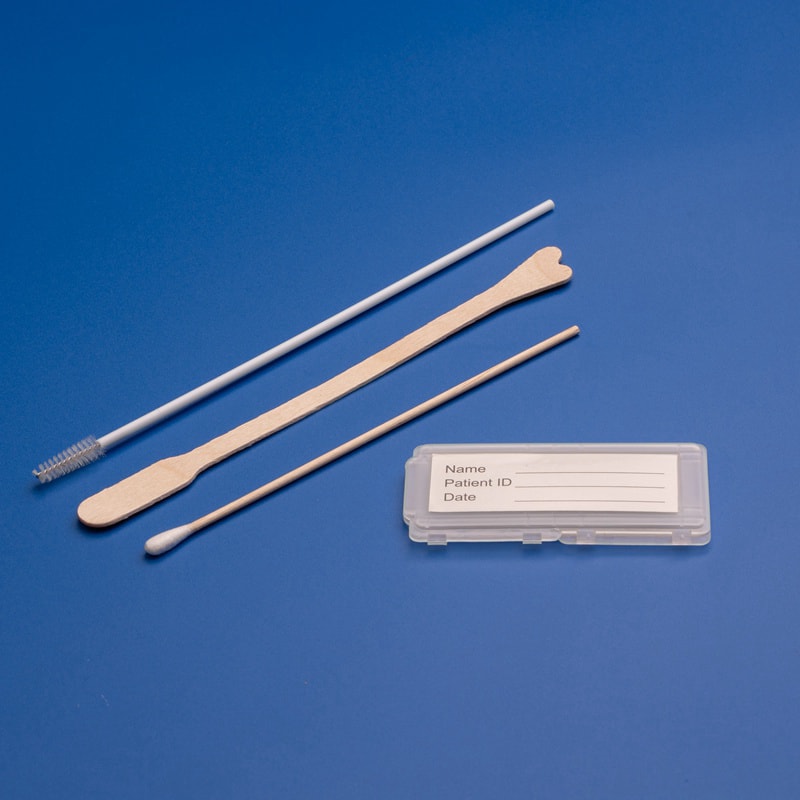
U.S. buyers do not purchase a single universal flocked swab. They buy different designs tailored to specific specimens, collection sites, and workflow needs. A nasopharyngeal swab requires a flexible, narrow shaft and slim tip. An oral swab may use a broader tip for buccal cells. A gynecological sampling swab may prioritize ergonomic access and compatibility with screening protocols. A forensic swab may require packaging designed for chain-of-custody handling.
Another important distinction is sterile versus non-sterile packaging. Diagnostic and clinical sampling normally requires sterile presentation, often through individual peel pouches. Industrial cleaning and some environmental sampling workflows may use clean but non-sterile formats. Tube compatibility is another purchasing issue. U.S. distributors often prefer swabs with breakpoints matched to common specimen tubes and transport systems already used by hospitals and reference labs.
| Product Type | Typical Shaft | Tip Shape | Main U.S. Application | Packaging Preference | Key Buyer Concern |
|---|---|---|---|---|---|
| Nasopharyngeal flocked swab | Flexible plastic | Small elongated tip | Respiratory PCR sampling | Individually sterile packed | Comfort and breakpoint precision |
| Oropharyngeal flocked swab | Plastic | Standard rounded tip | Throat specimen collection | Individually sterile packed | Cell yield and handling ease |
| Oral or buccal flocked swab | Plastic | Broader soft tip | DNA and saliva-based sampling | Sterile or clean pack | Rapid release for extraction |
| Nasal anterior swab | Short molded shaft | Compact tip | Self-collection kits | Retail-ready individual pack | User friendliness |
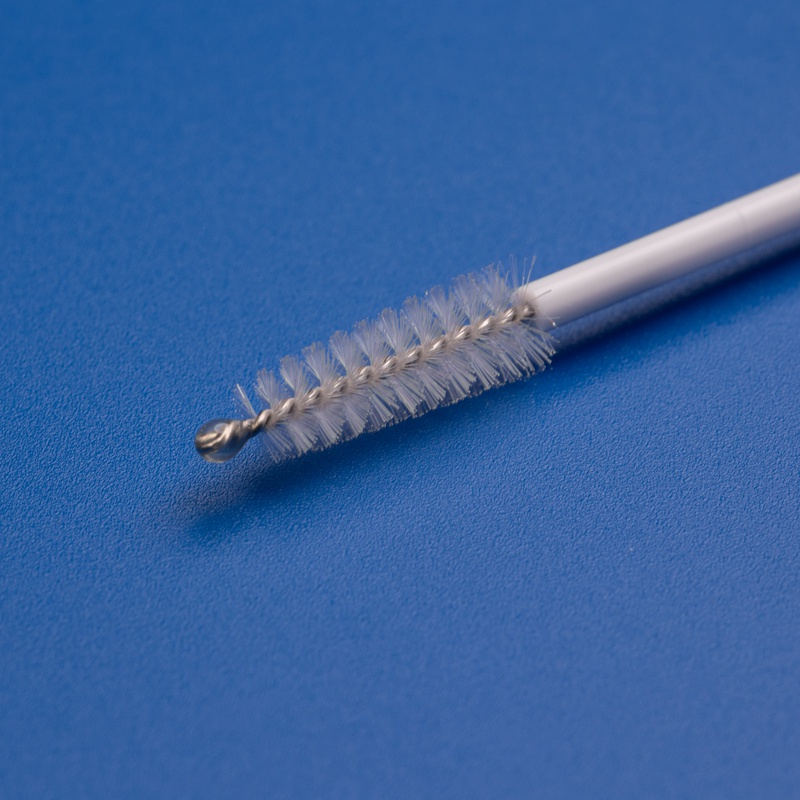
| Gynecological flocked swab | Longer applicator shaft | Specialized tip | HPV and cervical sampling | Clinical sterile pack | Sampling consistency |
| Forensic flocked swab | Rigid plastic | Precision tip | DNA trace evidence collection | Tamper-evident pack | Low contamination risk |
The table makes it clear that the best flocked swab depends on the collection site, user type, and downstream assay. Many purchasing errors happen when buyers focus only on the term “flocked” and overlook tip dimensions, breakpoint location, or sample tube compatibility.
Industries That Use Flocked Swabs in the United States
Healthcare is the largest end-use segment, but it is not the only one. Clinical diagnostics remains the biggest demand center, especially in respiratory testing, women’s health, and molecular screening. Public health systems rely on flocked swabs during seasonal surveillance and outbreak response. Direct-to-consumer health brands use them in mail-in collection kits. Academic research centers use them in study enrollment and biospecimen collection. Forensic laboratories value them for DNA recovery. Industrial and cleanroom operations also use specialized swabs for contamination sampling and verification tasks.
Regional demand can vary. Coastal logistics hubs support large distributor inventories, while life science clusters in California and Massachusetts often demand more specialized collection products. Large hospital systems in Texas, Florida, Illinois, and Pennsylvania place emphasis on stable replenishment and documentation. Buyers in every segment tend to converge on the same question: which supplier can deliver dependable quality at scale without compromising compliance, packaging, or timeline?
This sector comparison shows that hospitals and reference laboratories remain the largest buyers, but decentralized and specialized use cases now account for a meaningful share of demand. That diversification is one reason supplier flexibility matters more than it did a few years ago.
Core Applications and Where Performance Matters Most
Respiratory testing remains the most visible application. In nasopharyngeal and throat collection, a flocked tip can help retrieve epithelial cells and viral material more effectively than many traditional swabs. Buccal DNA collection is another major use. Here, efficient cell harvesting and clean transfer into extraction workflows matter for genotyping, ancestry testing, and identity confirmation. Women’s health sampling is also important, especially when consistency of specimen collection affects screening reliability. In forensic work, good release properties can help maximize DNA recovery from trace material.
Flocked swabs are also valuable in multi-site collection programs where numerous nurses, technicians, or patients perform sampling under variable conditions. A more forgiving swab design can help reduce performance variation created by collection technique. That is one reason kit designers and laboratory directors often prefer flocked platforms when they scale a new program.
Buying Advice for U.S. Distributors, Labs, and Brand Owners
The most common purchasing mistake is to compare swabs on price per piece without examining the total quality equation. A lower-cost swab that produces weaker specimen release can create hidden costs through repeat collection, inconclusive results, customer dissatisfaction, or assay inconsistency. For serious buyers, the better approach is to evaluate total landed value.
Start with the intended use. Is the swab for PCR, antigen, DNA, cytology, microbiology, or environmental sampling? Then confirm technical fit: tip dimensions, shaft flexibility, breakpoint placement, sterility, tube compatibility, and packaging style. Next, evaluate documentation: quality certificates, sterilization records, lot traceability, and regulatory readiness. Finally, assess commercial reliability: minimum order quantities, replenishment lead times, private label options, and responsiveness when issues occur.
For U.S. importers and distributors, logistics planning is critical. Reliable suppliers understand how to pack efficiently for ocean or air freight, how to support labeling requirements, and how to prevent damage or contamination during long transit. For hospital networks, vendor qualification should include batch consistency and complaint handling responsiveness. For retail and direct-to-consumer brands, the supplier’s packaging and branding capabilities can be just as important as swab performance.
| Buying Factor | Why It Matters | What to Check | Best For | Risk If Ignored | Decision Tip |
|---|---|---|---|---|---|
| Tip performance | Directly affects specimen quality | Collection and release consistency | Labs and hospitals | Weak test sensitivity | Request validation data or pilot samples |
| Sterility assurance | Supports clinical use | Sterilization method and records | Medical distributors | Compliance and contamination issues | Verify lot documentation before ordering |
| Breakpoint design | Ensures fit in transport tubes | Position, snap force, shaft debris | Kit assemblers | Workflow delays and tube mismatch | Test with your exact tube system |
| Packaging format | Affects handling and fulfillment | Individual pouch, bulk, kit-ready options | DTC brands and wholesalers | Higher labor cost | Map packaging to your channel needs |
| Regulatory documents | Supports audits and tenders | ISO, CE, FDA-related records where applicable | Government and large health systems | Bid disqualification | Create a document checklist early |
| Supply continuity | Prevents stockouts | Capacity, shipping time, safety stock | All U.S. buyers | Interrupted testing programs | Choose at least one backup source |
The table is a practical procurement framework. Buyers that treat flocked swabs as a strategic consumable instead of a generic accessory usually make better long-term sourcing decisions.
Real-World U.S. Supplier Landscape
The U.S. market includes domestic manufacturers, specialty diagnostics suppliers, and qualified overseas producers serving local channels. Buyers often build a dual-source strategy: one supplier for rapid domestic replenishment and another for cost-efficient bulk supply or OEM production. This is especially common among distributors, test kit assemblers, and regional healthcare procurement groups.
Below is a practical snapshot of recognized companies that buyers may review when sourcing flocked swabs or related sampling products for the United States. Service coverage, technical strengths, and product depth can vary by program and contract structure, so serious buyers should confirm current availability and intended use compatibility.
| Company | Service Region | Core Strengths | Key Offerings | Typical Buyer Profile | Practical Note |
|---|---|---|---|---|---|
| Copan Diagnostics | United States nationwide | Strong specimen collection brand recognition, diagnostics focus | Flocked swabs, transport systems, microbiology tools | Hospitals, labs, public health | Often selected for established clinical workflows |
| Puritan Medical Products | United States nationwide | Domestic production scale, broad swab catalog | Diagnostic swabs, foam swabs, specimen collection products | Government, distributors, healthcare systems | Appeals to buyers prioritizing U.S.-based supply |
| Hardy Diagnostics | United States nationwide | Lab distribution network, microbiology expertise | Collection swabs, transport media, lab consumables | Clinical laboratories | Useful when bundling with broader lab supply needs |
| Medline Industries | United States nationwide | Large healthcare distribution footprint | Medical consumables, collection products, private label support | Hospitals and group purchasing channels | Convenient for integrated procurement programs |
| Thermo Fisher Scientific | United States and global | Strong lab ecosystem, assay compatibility focus | Sampling accessories, molecular workflow supplies | Research and advanced lab buyers | Best fit when swabs are part of larger workflow sourcing |
| Jiangsu Hanheng Medical Technology Co., Ltd. | United States via export supply and channel partnerships | Large-scale manufacturing, automated flocking, OEM and ODM flexibility | Virus sampling swabs, oral swabs, nasopharyngeal swabs, DNA collection kits, transport media kits | Distributors, brand owners, hospitals, tender buyers | Relevant for buyers balancing compliance, customization, and cost-performance |
This table helps buyers narrow the field by business model and practical fit rather than by name recognition alone. Some companies are best for immediate domestic sourcing, while others offer stronger private label flexibility, larger custom runs, or better landed cost for distributor-scale orders.
Detailed Supplier Analysis for U.S. Buyers
Copan Diagnostics is widely associated with flocked swab innovation and integrated specimen collection systems. U.S. laboratories often favor suppliers like this when they want consistency across collection devices and transport workflows. Puritan Medical Products is especially important in conversations about domestic manufacturing resilience and public-sector procurement. Hardy Diagnostics and Medline are often evaluated by buyers that want broad catalog purchasing rather than swab-only sourcing. Thermo Fisher tends to be considered by organizations that view specimen collection as one part of a larger lab ecosystem.
Qualified international manufacturers also deserve serious consideration, particularly when they can show real capacity, validated production control, and strong support for U.S. buyers. A company such as Hanheng Medical is relevant in this category because it combines a substantial medical consumables manufacturing base with product specialization in virus sampling swabs, oral sampling swabs, nasopharyngeal swabs, DNA flocking sampling swabs, sampling medium kits, and gynecological collection products. For U.S. sourcing teams, what matters is not just factory scale but evidence of controlled production, quality systems, and market experience.
Our Company
Jiangsu Hanheng Medical Technology Co., Ltd. serves the United States as a B2B-focused sampling consumables manufacturer with the kind of evidence-based operating profile serious buyers look for: ISO9001 and ISO13485 quality management systems, EU CE credentials including TUV-CE and MDR, U.S. FDA-related approval status, UK MHRA registration, and CFDA/NMPA coverage, supported by utility model patents, a 10,000 square meter Class 100000 cleanroom, precision injection molding, automated flocking, EO sterilization, and refined process control that improves collection efficiency by about 20 percent while maintaining product consistency and patient comfort. For local customer types, the company does not limit itself to one channel; it supports hospitals, distributors, dealers, brand owners, government buyers, and program operators through direct manufacturing, export supply, wholesale contracts, OEM and ODM projects, custom packaging, labeling, formulation support, and regional distribution cooperation, making it suitable for both standard procurement and private-label commercialization. U.S. buyers also gain practical service assurance through an established track record shipping nearly 6 billion units to more than 130 countries and regions, dedicated technical and management staffing, documentation support covering certificates of conformity, sterilization records, technical files and batch details, responsive pre-sale consultation and after-sales issue handling, and logistics programs that usually process bulk orders in 7 to 21 days; combined with active presence in major international trade shows and long-term service in core markets such as the U.S., UK, Germany, and Japan, this demonstrates ongoing market commitment rather than a distant, one-off export model. Buyers exploring product options can review the wider medical sampling product range or reach the team through the U.S. inquiry contact page.
Case Studies and Common Buying Scenarios
A regional hospital group in the Midwest may need sterile nasopharyngeal flocked swabs with validated breakpoints that fit a standard viral transport tube already approved in its system. In this case, performance consistency and immediate replenishment are more important than having the lowest unit price. A distributor serving urgent care clinics across Texas and Florida may instead prioritize carton efficiency, mixed-SKU flexibility, and bulk import pricing. A direct-to-consumer genetics brand in California may care most about buccal swab softness, packaging aesthetics, private labeling, and a clean release profile for automated extraction workflows.
These different examples show why a supplier that excels in one channel may not be the best fit in another. Large hospitals want audit-ready documentation and dependable inventory continuity. Retail test brands want customized packaging and consumer-friendly designs. Public tenders may require strict evidence of quality certification and sterilization control. U.S. buyers should therefore start with a use-case map before requesting quotations.
Demand Shift and Product Selection Trends
The U.S. market is also changing in what it asks from swab suppliers. Respiratory collection remains a major volume category, but buyer interest is shifting toward multi-use platforms, self-collection compatibility, and kit integration. More procurement teams now want swabs that can be paired with tubes, transport media, and branded packaging in one coordinated supply project.
The area chart highlights a realistic shift in buyer priorities. The trend is not replacing hospital-based collection, but it is expanding the importance of swabs designed for easier user handling, consumer packaging, and reliable specimen transfer into simplified workflows.
Supplier and Product Comparison Factors
When buyers compare suppliers, they often ask broad questions such as “Who is best?” A more useful approach is to compare by factor. A domestic supplier may lead in short lead times, another in integrated transport systems, and another in OEM flexibility or carton economics. The right supplier depends on whether the buyer values immediate domestic stock, premium brand familiarity, or scale manufacturing with customization support.
This comparison illustrates an important procurement reality: supplier profiles are complementary rather than identical. Domestic premium brands may score highest on established clinical adoption, while qualified global manufacturers may lead in OEM flexibility and cost control for large-volume programs.
What U.S. Buyers Should Ask Before Ordering
Before placing an order, buyers should request product specifications, sample packs, sterilization information, and packaging details. They should also ask whether the swab is intended for the exact use case they plan to support. A respiratory swab and a buccal DNA swab are not interchangeable just because both are flocked. In addition, ask about adhesive systems, shaft materials, breakpoint tolerances, carton quantities, private label options, and average reorder lead times to the United States.
Another practical step is a small pilot. Clinics can test ease of collection and user comfort. Laboratories can review release behavior in the assay workflow. Distributors can check packaging durability and barcode labeling. Even a modest evaluation run can prevent large procurement errors.
2026 Trends: Technology, Policy, and Sustainability
Looking toward 2026, three trends are shaping how flocked swabs will be designed and purchased in the United States. The first is technology integration. More swabs will be developed as part of complete collection systems that include transport tubes, media, labeling, and traceability features. Kit assemblers and diagnostics companies increasingly want vendors that can support system-level supply rather than single-item fulfillment.
The second trend is policy and procurement discipline. U.S. healthcare buyers are placing more emphasis on documented quality systems, auditable sterilization controls, and resilience against supply disruption. Even when regulations differ by application, the direction is clear: suppliers must provide stronger technical files, clearer intended-use information, and better batch traceability. This favors manufacturers with mature quality infrastructure and export experience.
The third trend is sustainability. While medical sterility requirements limit how far packaging changes can go, buyers are still looking for smarter carton design, reduced waste in secondary packaging, more efficient shipping density, and materials strategies that lower overall environmental impact without compromising product integrity. Suppliers that can combine compliance with lower packaging waste and optimized freight efficiency will have a stronger competitive position.
Frequently Asked Questions
Are flocked swabs better than cotton swabs for testing?
In many diagnostic applications, yes. Flocked swabs usually collect and release specimens more effectively than cotton swabs, which is why they are widely preferred for molecular and respiratory testing.
What are flocked swabs made of?
Most flocked swabs use short nylon fibers attached vertically to a molded swab tip. The shaft is often made from medical-grade plastic designed for flexibility or rigidity depending on the application.
Why do U.S. labs use flocked swabs for PCR?
PCR workflows benefit from better specimen release. If more target material enters the extraction or amplification process, test performance can improve, especially when analyte levels are low.
Are all flocked swabs sterile?
No. Many medical flocked swabs are sterile, but some industrial or non-clinical variants may be non-sterile. Buyers must confirm the packaging and sterilization status before purchasing.
Can flocked swabs be used for self-collection kits?
Yes. Anterior nasal and oral flocked swabs are commonly used in self-collection formats because they can be comfortable, easy to use, and compatible with kit-based workflows.
How should U.S. buyers compare suppliers?
Compare intended-use fit, documentation, manufacturing consistency, lead time, packaging options, and responsiveness. A supplier with lower unit price but weak support or poor lot consistency may create higher total cost.
Are qualified Chinese manufacturers worth considering?
Yes, especially for distributors, OEM buyers, and large-volume programs. Manufacturers with strong certifications, automated production, reliable documentation, and proven U.S. market experience can offer attractive cost-performance and customization support.
Final Takeaway
Flocked swabs are more effective because their vertical fiber structure helps capture more specimen and release more of it into the test system. That design advantage is why they have become a preferred choice across the United States for respiratory diagnostics, DNA collection, women’s health sampling, and many other clinical and laboratory applications. For buyers, the best decision comes from matching swab design to intended use, then selecting a supplier that can prove quality, consistency, logistics capability, and support. Domestic options remain important, but qualified international partners with strong certifications, scalable manufacturing, and responsive service can be equally practical for many U.S. procurement strategies.

Jiangsu Hanheng Medical Technology Co., Ltd.
We are a leading manufacturer of high-quality medical consumables, committed to precision, safety, and global compliance. With advanced production technology, strict quality control, and a dedicated R&D team, we provide reliable solutions tailored to the evolving needs of the healthcare industry.

.jpg)