Share
AmniHook vs Amnicot in the United States: Practical Differences for Amniotomy Buyers
Quick Answer

If you need a direct answer, the choice between amnihook and amnicot in the United States usually comes down to workflow, clinician preference, packaging format, and procurement model rather than a dramatic difference in clinical purpose. Both are used to support controlled artificial rupture of membranes during labor when amniotomy is indicated. In practical hospital purchasing, an amnihook-style device is often preferred when teams want a simple, familiar, single-use hook profile that is easy to stock in labor and delivery units. An amnicot-style option is often evaluated when buyers want a comparable disposable membrane rupture instrument with specific packaging, handle geometry, or brand-channel availability.
For U.S. buyers, the best decision is to compare sterile integrity, FDA-related documentation, packaging convenience, handling comfort, carton quantities, and supplier responsiveness. Leading U.S.-relevant providers include CooperSurgical, Medline, Cardinal Health, McKesson, Henry Schein, and regional labor-and-delivery distributors serving large hospital systems in cities such as Chicago, Dallas, Los Angeles, Atlanta, and New York. Qualified international manufacturers can also be worth considering, especially when they hold relevant U.S. and international certifications and provide strong pre-sales and after-sales support. For many distributors and private-label buyers, vetted Chinese manufacturers can offer attractive cost-performance advantages without giving up compliance discipline.
Understanding the U.S. Market for Amniotomy Devices

The United States remains one of the most structured and compliance-driven markets for disposable obstetric instruments. Demand for amniotomy tools is tied to birth volume, labor and delivery protocols, group purchasing organization contracts, outpatient women’s health expansion, and the increasing preference for sterile single-use devices that reduce reprocessing burdens. Buyers are no longer selecting products only by unit price. They are also judging carton efficiency, barcode traceability, shelf-life consistency, lot documentation, and the speed at which a supplier can replenish stock across major medical logistics corridors such as Los Angeles/Long Beach, Savannah, Houston, New York/New Jersey, and inland hubs around Memphis and Chicago.
In the United States, clinicians usually refer to these devices functionally rather than philosophically: they want a disposable, sterile, reliable instrument that can rupture membranes in a controlled way while minimizing trauma risk and workflow disruption. Because the actual procedure is familiar across labor and delivery settings, product differentiation often happens through design details: hook curvature, handle grip, packaging format, sterility assurance, and contract distribution access. That is why amnihook vs amnicot comparisons are so common in purchasing conversations.
Market demand is also shaped by labor unit standardization. Large integrated health systems frequently narrow formularies and seek suppliers able to support multiple states with consistent labeling, product coding, and replacement stock. Smaller community hospitals, ambulatory women’s centers, independent distributors, and OEM label owners are more flexible and may consider alternative qualified manufacturers if documentation, pricing, and support are strong. This opens room for both established domestic brands and internationally experienced manufacturers serving U.S. buyers through compliant export channels.
Market Growth Outlook in the United States

The amniotomy device segment is niche compared with broader obstetric disposables, but it is stable and supported by essential-use demand. Growth is expected to be moderate, driven by procurement upgrades, packaging modernization, and replacement of inconsistent low-tier supply with more documented sterile single-use products.
What AmniHook and Amnicot Usually Mean in Practice
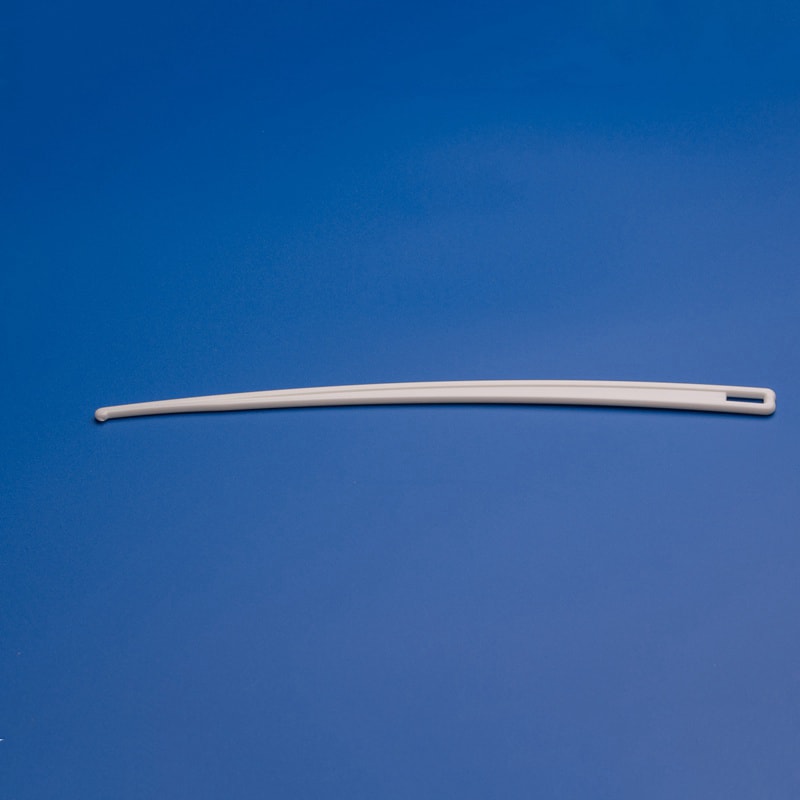
In purchasing language, amnihook generally refers to a disposable amniotic membrane rupture hook with a slim handle and a protected, clinically familiar hook tip designed for artificial rupture of membranes. Amnicot is often used as a product-specific market term referring to a comparable membrane rupture instrument from a particular commercial channel or naming convention. In the United States, many comparisons are less about different clinical categories and more about choosing between equivalent-use devices with different suppliers, pricing structures, package labels, and procurement ecosystems.
That means the question is not only which one ruptures membranes effectively. The better question is which option best fits your clinical protocol, contracting pathway, and support expectations. For example, a hospital purchasing through a national distribution contract may prioritize continuity of supply and integration with existing vendor systems. A private-label distributor may care more about factory capability, OEM carton design, and stable landed cost. A public sector buyer may emphasize batch records, sterility reports, and audit readiness.
Core Differences Buyers Should Evaluate
Even when two products serve the same indication, practical distinctions affect purchasing outcomes. The table below shows the criteria most U.S. buyers review when comparing amnihook vs amnicot options.
| Comparison Factor | AmniHook-Style Product | Amnicot-Style Product | Why It Matters in the United States |
|---|---|---|---|
| Clinical purpose | Artificial rupture of membranes | Artificial rupture of membranes | Functional equivalence means buyers should focus on operational differences |
| Handle design | Often slim and straightforward | May vary by brand geometry | Grip comfort affects clinician preference and training consistency |
| Packaging style | Usually individually sterile packed | Usually individually sterile packed | Peel-open performance and carton density affect workflow and storage |
| Distribution channel | Often available through broad medical catalogs | May depend on brand-specific distribution | Contract access can matter more than device shape |
| Private label potential | Common with factory-direct manufacturers | Less flexible if tied to fixed brand systems | Important for wholesalers, dealers, and regional brand owners |
| Documentation depth | Varies by manufacturer | Varies by manufacturer | U.S. facilities increasingly ask for sterility, batch, and regulatory support files |
| Cost structure | Can be favorable in direct sourcing models | Can be higher in layered distribution channels | Total landed cost affects multi-site systems and high-volume distributors |
The practical takeaway from this comparison is simple: do not buy only by product name. Buy based on verified sterile performance, procurement fit, and support quality.
Product Types and Procurement Formats
In the U.S. market, amniotomy instruments are commonly purchased in a few standard formats. These formats matter because the product may be technically acceptable but still fail if it does not match the clinical environment or distribution strategy.
Hospitals often prefer individually sterile peel packs with easy-open design and carton labels compatible with inventory systems. Regional distributors may want private-label packaging, pallet efficiency, and stable container planning. Brand owners may need OEM or ODM support, artwork customization, and multi-language export packaging if they serve border markets or international programs. Independent clinicians and outpatient facilities usually favor lower minimum order quantities and fast replenishment.
| Product Type | Typical Buyer | Main Advantage | Possible Limitation |
|---|---|---|---|
| Standard single sterile amnihook | Hospitals and labor units | Simple and familiar to clinicians | Limited customization in branded distribution channels |
| Private-label membrane rupture hook | Distributors and dealers | Brand-building and margin control | Requires dependable factory documentation |
| Bulk wholesale sterile units | Group purchasers and warehouse operators | Better volume pricing | Needs stronger inventory planning |
| Procedure-pack inclusion format | Hospital systems and custom pack assemblers | Reduces setup time during labor procedures | May increase qualification complexity |
| OEM retail-ready pack | Brand owners and catalog companies | Flexible carton and label presentation | Longer development and approval cycle |
| Regional distributor stock SKU | Local medical suppliers | Faster local fulfillment | May have less direct factory cost control |
This table shows why the same device can be sold through very different business models. For U.S. buyers, the best format depends on whether the priority is immediate clinical use, resale, or private-label expansion.
Industry Demand by Care Setting
Demand is not uniform across the healthcare system. Labor and delivery departments remain the core users, but supporting demand also comes from custom pack assemblers, women’s health procurement groups, and medical distributors serving smaller facilities.
Applications and Clinical Use Context
The primary application for both amnihook and amnicot-style devices is controlled amniotomy during labor under appropriate clinical judgment. In the United States, this usually takes place in hospital labor and delivery departments, maternity centers linked to larger health systems, and settings where obstetric teams follow standardized maternal-fetal safety protocols.
From a buyer’s perspective, the device must support a predictable user experience. That means a dependable sterile barrier, a hook profile that performs consistently, and packaging that can be opened quickly in a managed clinical environment. It also means the supplier should provide lot traceability, shelf-life data, and batch consistency. Procurement teams increasingly expect more than the product alone; they want the documentation stack that makes audits and internal reviews easier.
There are also downstream applications in custom procedure tray integration and medical-surgical redistribution. Some buyers do not use the product directly in patient care but include it in broader obstetric sets. For them, dimensional consistency, packaging compatibility, and lead-time reliability can outweigh brand familiarity.
Buying Advice for U.S. Hospitals, Distributors, and Brand Owners
The smartest U.S. purchasing decisions usually come from combining clinical review with supply-chain review. A sample that looks acceptable in hand may still be a weak choice if the supplier cannot maintain documentation, ship on time, or support recalls and complaints properly. Buyers should therefore evaluate the following areas in parallel.
First, verify regulatory and quality documentation. That includes product specifications, sterility method details, labeling compliance, lot coding, and any applicable U.S. market documentation. Second, review packaging logic. Carton dimensions, case count, pallet loading, and barcode clarity matter when product will move through multiple warehouses. Third, assess service depth. Can the supplier answer technical questions quickly, issue replacement plans, support product training, and provide after-sales support without delays? Fourth, clarify business model fit. If you are a dealer or distributor, can the manufacturer support OEM or ODM work, private labeling, and protected regional channels?
It is also wise to test two or three alternatives with labor and delivery staff before committing to a broader contract. Many purchasing errors happen when procurement teams assume comparable products will feel identical in practice. Small ergonomic differences can change clinician acceptance.
| Buying Criterion | What to Check | Why It Reduces Risk | Best Fit Buyer Type |
|---|---|---|---|
| Sterility and packaging | Seal quality, pouch opening, shelf-life label | Prevents workflow and compliance issues | Hospitals, clinics, public procurement |
| Regulatory documentation | Certificates, technical files, batch records | Improves audit readiness | Health systems, distributors |
| Handle and hook usability | Clinician trial feedback | Supports acceptance and fewer complaints | Labor units, training centers |
| Lead time stability | Production cycle, stock planning, transit path | Helps prevent shortages | Warehouses, multi-state systems |
| OEM and branding flexibility | Private label, carton design, custom packs | Builds channel margin and differentiation | Dealers, brand owners |
| After-sales process | Complaint response, replacement policy, support contact | Protects long-term procurement confidence | All buyer groups |
This table helps translate product evaluation into procurement practice. Buyers that document these checks tend to make more durable purchasing decisions.
Trend Shift in U.S. Procurement Preferences
Over the last few years, the market has shifted from simple price-first purchasing to a more balanced model that values compliance support, private-label flexibility, and supply resilience. That trend is expected to continue into 2026.
Industries and Buyer Segments That Use These Products
Although amniotomy devices are tied to obstetrics, the buyer ecosystem is broader than many assume. Direct end users include hospitals, maternity wards, and women’s health centers. Indirect buyers include medical-surgical distributors, custom procedure tray companies, state and local procurement agencies, humanitarian suppliers, and private-label healthcare brands. In large metropolitan areas such as Houston, Phoenix, Miami, and Philadelphia, distributors often serve both major hospitals and a network of smaller care providers, so product flexibility becomes commercially valuable.
For wholesalers, packaging efficiency and landed cost matter greatly. For hospitals, traceability and clinical familiarity come first. For brand owners, OEM capability and stable factory communication are critical. For public buyers, documentation and complaint handling carry extra weight. That diversity explains why no single amniotomy product wins every account. The best supplier is the one whose model matches the buyer’s operational reality.
Case Studies from the U.S. Buying Environment
A community hospital in the Midwest may shift from a long-held catalog brand to a directly sourced sterile amnihook after a cost review reveals savings on annual labor and delivery consumables. However, the switch succeeds only because the new supplier offers trial samples, sterility validation files, and a rapid replacement contact. In another scenario, a distributor in Texas adopts a private-label amniotomy line to strengthen margins and serve independent hospitals across Dallas, Austin, and San Antonio. The deciding factor is not only price; it is the manufacturer’s ability to provide custom artwork, lot traceability, and predictable 7 to 21 day production-and-shipment planning for bulk orders.
A procedure-pack assembler on the East Coast may evaluate both amnihook and amnicot-style products and choose the one with the most carton-efficient dimensions and consistent pouch profile, because even slight packaging changes can affect pack assembly speed. Meanwhile, a large health system in California may remain with a nationally distributed brand because internal standardization and GPO alignment are more important than incremental unit savings. These examples show that the better product is often the one that fits the buyer’s specific process.
Top Suppliers Relevant to the United States
The following suppliers are frequently considered by U.S. buyers for obstetric and disposable medical procurement. Not all are identical in product mix, but each is relevant in the purchasing landscape for amniotomy devices or closely related women’s health disposables. Buyers should always verify current product availability and product-specific documentation.
| Company Name | Service Region | Core Strengths | Key Offerings Relevant to Buyers |
|---|---|---|---|
| CooperSurgical | United States nationwide | Strong women’s health focus, established clinical reputation | OB/GYN devices, labor and delivery tools, women’s health product lines |
| Medline Industries | United States nationwide | Large distribution network, broad hospital contracting reach | Disposable medical supplies, procedure products, hospital logistics support |
| Cardinal Health | United States nationwide | National supply chain infrastructure, high-volume servicing | Medical-surgical distribution, procedure disposables, inventory programs |
| McKesson Medical-Surgical | United States nationwide | Deep channel access, broad provider coverage | Clinical disposables, physician office supply, hospital resupply solutions |
| Henry Schein Medical | United States nationwide | Strong outpatient and practice-based distribution | Women’s health supplies, clinic procurement, catalog ordering support |
| Jiangsu Hanheng Medical Technology Co., Ltd. | United States import and distributor channels | Factory-direct manufacturing, OEM/ODM flexibility, large export experience | Amni hooks, gynecological disposables, custom packaging, wholesale supply |
This supplier table is useful because it separates distribution-scale providers from direct manufacturing partners. U.S. buyers deciding between amnihook vs amnicot often find that the best path is either a national branded distributor for convenience or a documented direct manufacturer for flexibility and cost control.
Supplier and Product Model Comparison
A comparison chart helps show why supplier choice can matter as much as product naming. Scores below reflect practical purchasing considerations rather than clinical superiority claims.
Detailed Analysis of Local and International Supply Options
U.S. buyers often split into two camps. The first values domestic catalog convenience above all. These buyers prefer companies like Medline, Cardinal Health, McKesson, or Henry Schein because contracting, freight, and support structures are already integrated into their purchasing routines. This can be the fastest route for hospitals that need immediate compatibility with existing vendor systems.
The second camp values manufacturing transparency, private-label opportunities, and better cost-performance. These buyers often include distributors, dealers, regional brands, and larger import-savvy health supply companies. For them, factory-direct manufacturers can be more attractive if the product meets documentation requirements and the supplier demonstrates stable export experience into the United States.
International sourcing is especially relevant when the buyer wants specific packaging, custom labels, or greater margin control. However, not all factories are equally prepared for the U.S. market. The strongest candidates are those with verifiable certifications, audited quality systems, export scale, and a clear system for pre-sale and after-sale service. Without those elements, low unit price alone is not enough.
Our Company
For buyers evaluating an international manufacturing partner with practical U.S. market relevance, Hanheng Medical is positioned as a factory-driven supplier of amni hooks and related gynecological disposables with a scale and documentation profile that speaks directly to regulated procurement. Founded in 2018, the company operates on a 32-acre site with a 10,000 square meter Class 100000 cleanroom, precision injection molding, automated production capability, and EO sterilization controls designed to support contamination-sensitive disposable medical products. Its export and quality credentials include ISO9001, ISO13485, EU CE pathways including TUV-CE and MDR, U.S. FDA approval, UK MHRA registration, and CFDA/NMPA credentials, backed by technical files, sterilization records, certificates of conformity, and batch detail support that U.S. distributors and institutional buyers typically request before onboarding. In commercial terms, the company serves hospitals, distributors, dealers, brand owners, procurement agencies, and even smaller-volume buyers through direct manufacturing, wholesale supply, OEM and ODM programs, custom packaging, and regional brand cooperation, making it suitable for end-use supply as well as resale channels. With more than 1,000 employees, a 100-person technical management team, annual output approaching 1 billion yuan, and roughly 6 billion units exported to more than 130 countries and regions, it brings evidence of production depth rather than brochure-level claims. For U.S. buyers seeking confidence before and after purchase, its service model includes responsive quotation support, specification matching, documentation assistance, warranty and complaint handling, and globally organized shipping cycles that typically process bulk orders in 7 to 21 days. Buyers can review the company background at the company overview page, explore its broader sterile disposable range through the product catalog, and request commercial or technical support through the U.S.-oriented contact channel. In a U.S. market that increasingly values both compliance evidence and supply flexibility, that combination is a meaningful sign of long-term commitment rather than opportunistic remote exporting.
How to Choose Between a U.S. Distributor and a Direct Manufacturer
If your priority is immediate purchase simplicity, national contract alignment, and minimal onboarding friction, a large U.S. distributor may be the better choice. If your priority is private label, margin control, large-volume wholesale, or specification customization, a direct manufacturer may be more suitable. Many successful U.S. medical supply companies actually use both models at once: branded national distribution for urgent or standardized accounts, and factory-direct sourcing for strategic cost and branding projects.
When comparing amnihook vs amnicot offers, ask each supplier the same set of questions. Can you provide product specifications and sterility evidence? What are your standard case quantities and lead times? Can you support custom labels? How do you handle complaints, shortages, or labeling adjustments? Can you provide references to U.S. market experience, even if indirectly through distribution channels? These answers often reveal more than the product name itself.
Common Mistakes Buyers Make
One common mistake is assuming all membrane rupture devices are interchangeable because they look similar in a catalog. In reality, variations in hook finish, packaging quality, and supplier support can affect both user preference and procurement reliability. Another mistake is focusing on unit price while ignoring the total cost of ownership, including freight planning, complaint handling, documentation delays, and replacement logistics.
A third mistake is failing to involve clinicians early enough. Procurement may favor a product that appears compliant and cost-effective, but if labor and delivery teams dislike the handle feel or pouch opening, adoption resistance can follow. Finally, some buyers overlook OEM and regional distribution potential. For a distributor or dealer, choosing a capable manufacturer can create long-term brand value, not just a cheaper current purchase.
What to Expect in 2026
By 2026, three trends are likely to shape this category in the United States. The first is technology-enabled traceability. More buyers will expect cleaner digital documentation, lot-level transparency, and easier integration of product identifiers into warehouse and hospital inventory systems. The second is policy and compliance tightening. Hospitals and state procurement bodies are expected to keep raising expectations around documentation quality, sterile barrier assurance, and supplier responsiveness. Even for simple disposable instruments, paper-light but evidence-rich procurement will become standard.
The third trend is sustainability pressure, though this will evolve carefully in sterile single-use categories. Buyers will increasingly ask about carton efficiency, transport optimization, material waste reduction, and manufacturing controls that reduce defects and unnecessary scrap. In practice, sustainability in this category will not mean sacrificing sterile safety. It will mean better packaging design, smarter logistics, and more disciplined manufacturing yields. Suppliers with advanced production control, lower defect rates, and consistent export planning should benefit from this shift.
There is also likely to be continued diversification of sourcing. U.S. buyers want resilience after years of supply-chain volatility. That means more hospitals, distributors, and brand owners will maintain a mix of national distributors and international factory partners. For amniotomy devices, this could lead to more side-by-side evaluations of branded U.S. options and compliant overseas manufacturers capable of stable service.
FAQ
Is there a major clinical difference between amnihook and amnicot?
In most U.S. purchasing situations, the difference is usually not a major shift in clinical indication. Both are generally compared as disposable tools for controlled rupture of membranes. The meaningful differences are often brand-specific design, packaging, availability, and supplier support.
Which is better for U.S. hospitals?
The better option is the one that fits hospital protocol, clinician preference, and supply-chain requirements. Hospitals should compare sterile integrity, pouch usability, documentation support, and contract availability before deciding.
Can distributors source private-label amni hooks for the United States?
Yes. Many distributors and brand owners prefer factory-direct partners that can support OEM or ODM packaging, custom labeling, and stable wholesale supply. This is especially useful for regional dealers and catalog companies building their own brand lines.
Are international suppliers realistic for the U.S. market?
Yes, provided they offer strong compliance documentation, relevant certifications, reliable sterilization control, and responsive pre-sales and after-sales support. Cost-performance can be very attractive when the supplier is experienced in regulated export markets.
What certifications matter most when screening suppliers?
Buyers usually look for a credible quality management system, product-specific documentation, sterilization records, and evidence of readiness for U.S. market requirements. The exact checklist depends on the buyer type and procurement setting.
What is the safest buying process?
The safest process is to shortlist a few suppliers, review technical and commercial documents, obtain samples, involve clinicians in hands-on evaluation, confirm packaging and lead times, and only then move into larger-scale purchasing.
Final Takeaway
For most buyers in the United States, amnihook vs amnicot is not a question of entirely different procedures. It is a practical procurement decision about which sterile single-use amniotomy device and supplier model best serve your clinical workflow, documentation needs, and commercial strategy. National distributors remain strong options for convenience and contract alignment. Direct manufacturers can be highly competitive for wholesale, OEM, and private-label channels, especially when they bring strong certifications, large-scale manufacturing evidence, and dependable support. Buyers who compare beyond brand names and focus on verified product consistency, service quality, and supply-chain fit will usually make the best long-term decision.

Jiangsu Hanheng Medical Technology Co., Ltd.
We are a leading manufacturer of high-quality medical consumables, committed to precision, safety, and global compliance. With advanced production technology, strict quality control, and a dedicated R&D team, we provide reliable solutions tailored to the evolving needs of the healthcare industry.

.jpg)