Share
HPV Self-Sampling Kit Accuracy in the United States
Quick Answer

HPV self-sampling kit accuracy in the United States is generally strong when clinically validated kits are used correctly and analyzed with PCR-based high-risk HPV assays. Across published clinical studies, self-collected vaginal samples usually show high agreement with clinician-collected cervical samples for detecting high-risk HPV, with sensitivity often close to clinician collection for PCR testing, while specificity is also generally comparable. In practical terms, the most accurate results usually come from programs that combine clear patient instructions, validated collection devices, stable transport media, and laboratory workflows already optimized for molecular HPV screening.
For U.S. buyers evaluating supply options, leading names commonly considered in women’s health diagnostics and self-collection programs include Roche, BD, Quest Diagnostics, Labcorp, Everlywell, and Nurx, depending on whether the need is assay platform supply, lab services, or consumer-facing access. Buyers in major healthcare hubs such as Boston, San Diego, Chicago, Houston, and New York often prioritize regulatory documentation, sample stability, and logistics integration over unit price alone. At the same time, qualified international suppliers can also be considered, especially manufacturers with FDA-related compliance experience, ISO13485 systems, and strong pre-sale and after-sales support. For many distributors and brand owners, this route can offer meaningful cost-performance advantages without giving up documentation quality or OEM flexibility.
How Accurate Are HPV Self-Sampling Kits in U.S. Clinical Practice?

The short answer is that HPV self-sampling kits can be highly accurate for screening purposes when they are paired with validated high-risk HPV molecular testing, especially PCR-based assays. Clinical performance depends less on the idea of self-collection itself and more on the full testing pathway: the design of the swab or brush, whether the specimen is dry or preserved in transport medium, the clarity of the instructions, the integrity of shipping conditions, and the laboratory assay used for analysis.
In U.S. screening discussions, accuracy is usually assessed through sensitivity, specificity, positive agreement, and negative agreement when compared with clinician-collected cervical specimens. Self-collected samples may slightly underperform in some settings if signal amplification methods are used instead of highly sensitive PCR workflows, but the gap narrows considerably with modern molecular assays. This is why buyers should focus on the validated combination of collection device plus laboratory method rather than the collection device alone.
Another practical issue is participation. A kit that produces very high analytical performance but low patient completion rates may be less effective in population screening than a slightly less optimized kit that women actually use and return. In underserved parts of the United States, including rural counties and low-access urban neighborhoods, self-sampling is increasingly viewed as a tool that can improve real-world screening coverage.
United States Market Outlook

The United States remains one of the most important markets for HPV screening products because it combines large screening volumes, advanced molecular laboratory infrastructure, and active public health discussion around reaching under-screened women. The shift toward home-based diagnostics accelerated after the pandemic, and that momentum continues to influence gynecological sampling programs, telehealth pathways, and employer-backed preventive health services.
Market demand is strongest in states with extensive women’s health networks and centralized lab capacity, including California, Texas, Florida, New York, and Illinois. Coastal logistics also matter. Suppliers moving imported medical consumables into the U.S. often rely on entry routes linked to Los Angeles, Long Beach, New York/New Jersey, Savannah, and Houston, while domestic fulfillment and redistribution commonly move through Chicago, Atlanta, and Dallas. These supply chain patterns affect landed cost, lead times, and inventory planning for distributors and regional healthcare systems.
Procurement behavior varies by buyer type. Hospitals and integrated delivery networks focus on validation evidence, lot consistency, and sterility documentation. Public health agencies prioritize accessibility and cost per screened patient. Direct-to-consumer health brands care about packaging quality, user comprehension, and digital onboarding. Laboratories focus on specimen compatibility with their assay platforms and automation workflows.
Market Growth Trend
The chart below illustrates a realistic estimate of U.S. demand expansion for HPV self-sampling programs, driven by telehealth, preventive screening outreach, and growing acceptance of home-based collection models.
Clinical Accuracy Benchmarks to Understand Before Buying
When a buyer in the United States compares HPV self-sampling kits, the discussion should move beyond simple marketing terms like accurate or reliable. Clinical buyers usually want to know whether the kit supports strong high-risk HPV detection in a way that is reproducible across patient groups and shipping scenarios. Four benchmarks matter most.
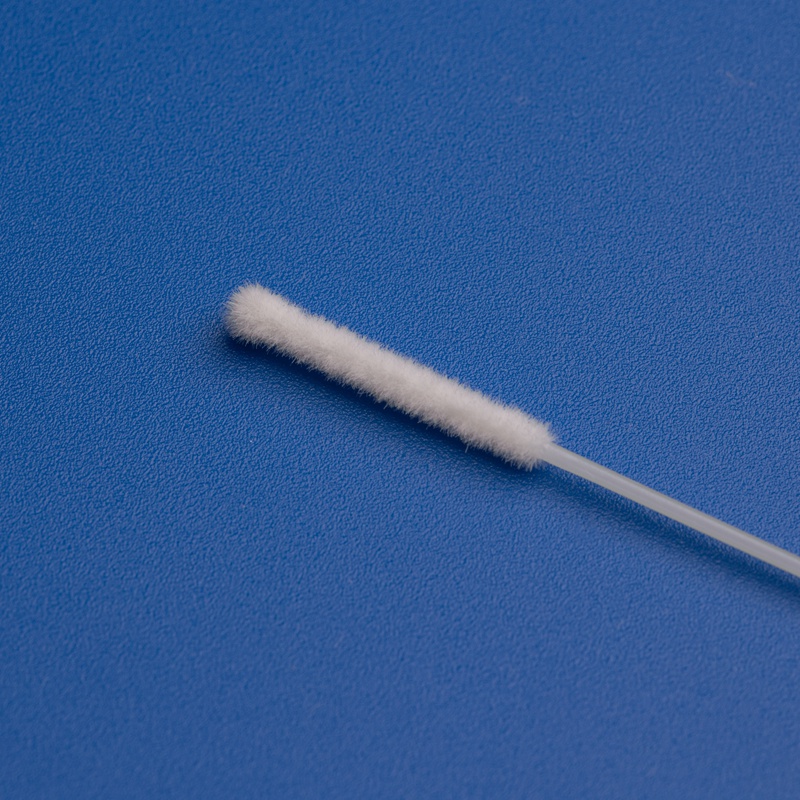
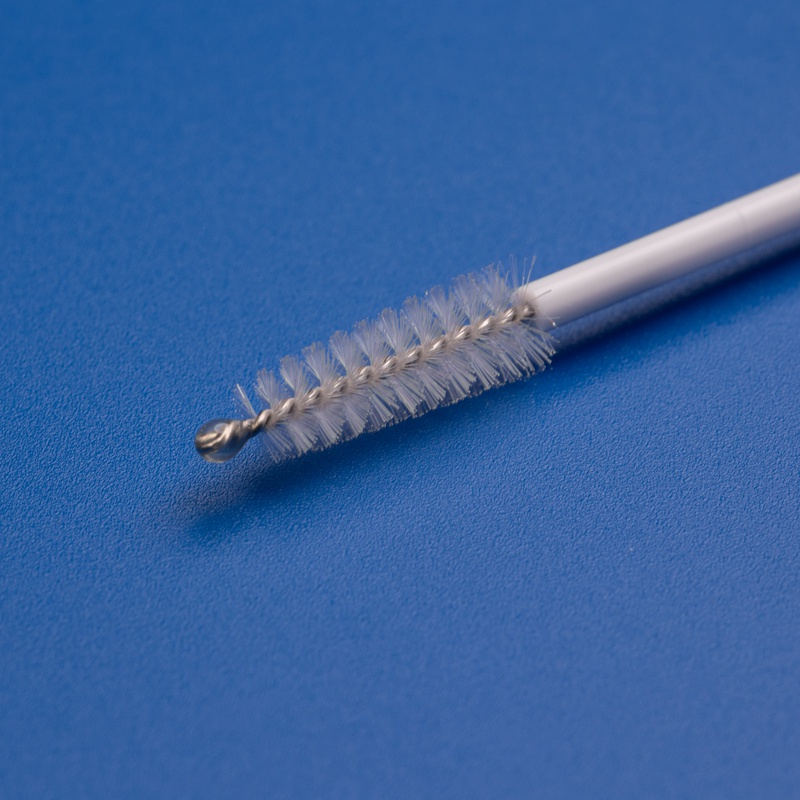
First is analytical recovery. A good collection device must capture enough epithelial material and viral DNA for downstream detection. Flocked swabs and purpose-designed cervicovaginal brushes are often preferred because they improve specimen capture and release.
Second is transport stability. U.S. programs often involve mailing specimens across state lines or from remote communities to a central laboratory. The collection format must maintain nucleic acid integrity through realistic transport windows.
Third is user variability. A well-designed kit should still perform when used by first-time patients with different literacy levels and body confidence. Clear instructions and intuitive packaging reduce collection errors.
Fourth is assay compatibility. A self-collection device may perform well in one validation study but not integrate cleanly into every molecular testing system. Buyers should verify compatibility with the exact assay family used by their partner lab.
Comparison of Key Accuracy Factors
The table below shows the main technical and operational factors that influence real-world performance. This helps buyers understand why two products with similar marketing claims may produce very different screening outcomes.
| Factor | Why It Matters | Typical U.S. Buyer Concern | Impact on Accuracy | What to Request from Supplier |
|---|---|---|---|---|
| Collection device design | Determines sample capture and release efficiency | Low cellular yield or inconsistent collection | High | Device specifications, comparative recovery data |
| PCR assay compatibility | Ensures validated detection of high-risk HPV DNA | Lab workflow mismatch | Very high | Compatibility statement and validation summary |
| Transport medium stability | Protects nucleic acids during shipping | Sample degradation in transit | High | Stability data for temperature and transit time |
| User instructions | Reduces collection errors and contamination | Patient misuse or incomplete sample | Moderate to high | Instruction sheet, multilingual versions, usability testing |
| Sterility and packaging integrity | Protects sample quality before use | Damaged or compromised kits | Moderate | Sterilization records and packaging validation |
| Lot-to-lot manufacturing consistency | Keeps performance stable over time | Variation between purchase batches | High | QC reports, ISO13485 documentation, batch traceability |
For U.S. procurement teams, the practical takeaway is simple: kit accuracy is a system outcome. Device engineering, sterility, transport conditions, and assay validation all contribute to whether screening performance stays close to clinician collection.
Common Product Types in the U.S. Market
HPV self-sampling products are not all built the same. The U.S. market includes several formats designed for different channels such as public health programs, mail-in testing services, hospital outreach, and private-label retail brands.
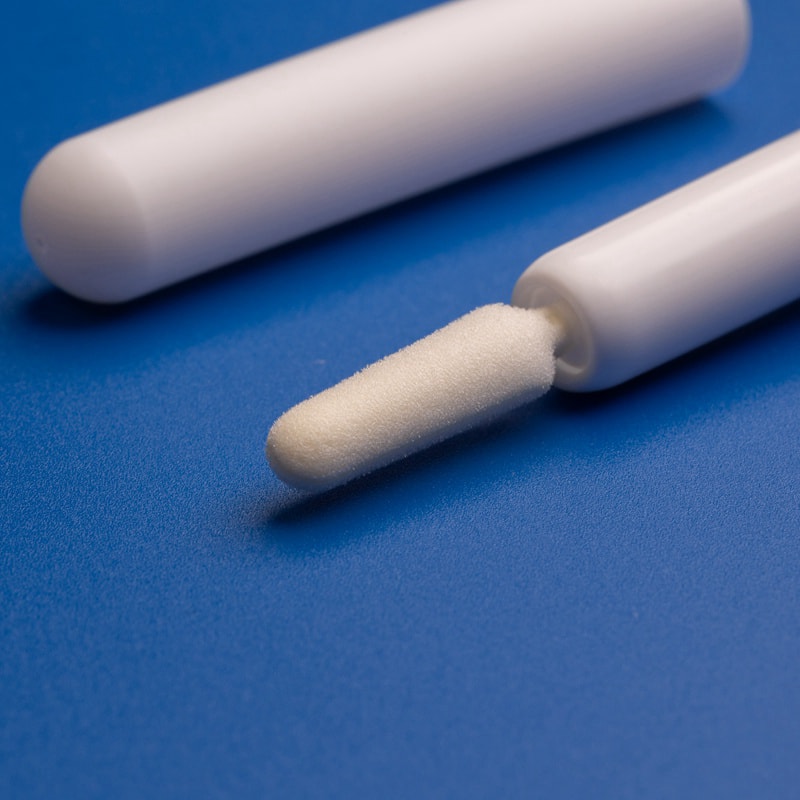
Dry swab kits are popular because they simplify packaging and shipping, but they require laboratory validation for dry transport workflows. Transport medium kits can offer stronger sample preservation, though they may add cost and handling requirements. Brush-based kits may improve cellular collection, while soft flocked swabs often provide a balance of comfort and laboratory compatibility.
Some programs bundle self-sampling with STI screening panels or telehealth consultation. Others focus only on high-risk HPV screening. These differences affect packaging size, labeling complexity, and patient instruction design.
Product Type Comparison
This table compares the main kit categories used by U.S. providers and distributors.
| Product Type | Typical Collection Format | Best Use Case | Main Advantage | Main Limitation |
|---|---|---|---|---|
| Dry flocked swab kit | Flocked swab with dry tube | Mail-based outreach and lower-cost programs | Simple logistics and reduced leakage risk | Needs validated dry transport workflow |
| Preserved swab kit | Swab with stabilization medium | Longer shipping routes and centralized labs | Better nucleic acid preservation | Higher packaging and compliance complexity |
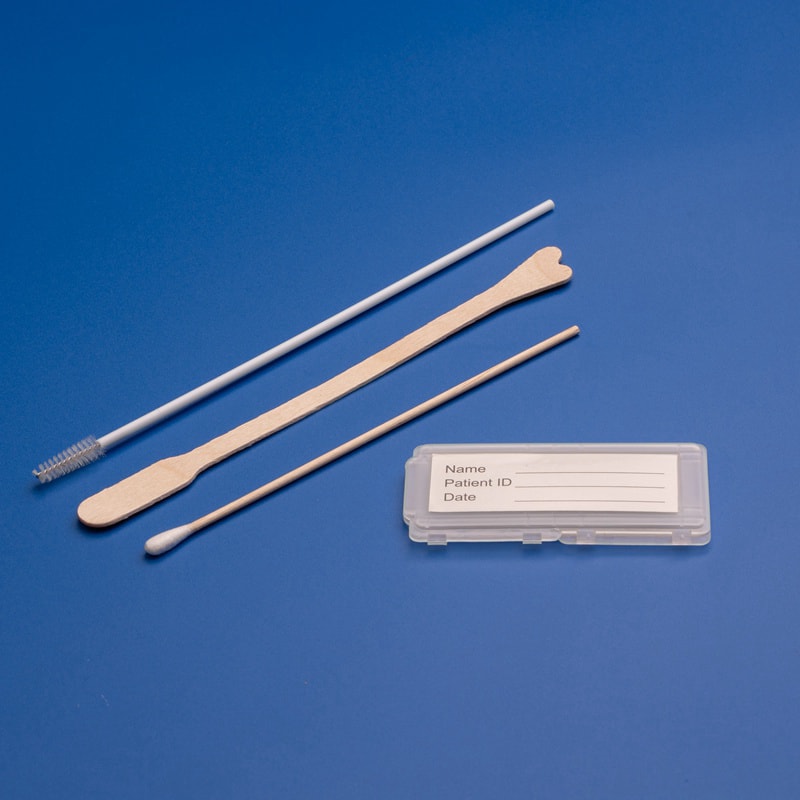
| Brush-based vaginal sampler | Soft brush with collection vial | Programs targeting high sample adequacy | Strong cellular collection | Some users perceive lower comfort |
| Multi-test women’s health kit | Combined self-collection components | Consumer telehealth brands | Higher order value and broader screening | More complicated instructions |
| Clinic-dispensed take-home kit | Simple swab or brush kit with return packaging | Hospital and community clinic follow-up | High patient trust and assisted onboarding | Requires local distribution setup |
| Private-label retail kit | Customized branded self-sampling pack | Pharmacy and e-commerce channels | Brand control and flexible packaging | Needs stronger regulatory and customer support planning |
The best format depends on whether the buyer is optimizing for cost, comfort, return rate, laboratory fit, or private-label branding.
Where Demand Comes From in the United States
Demand for HPV self-sampling kits is no longer limited to gynecology clinics. The market now spans public health agencies, telemedicine companies, reference laboratories, university health systems, employer wellness programs, and women’s health startups. This broadening demand base is one reason supplier selection has become more strategic.
Industries and Applications
In the United States, HPV self-sampling kits serve several overlapping industries and use environments. The obvious application is cervical cancer screening, but the market is increasingly connected to digital health, preventive diagnostics, and outreach care models.
Community health organizations use self-sampling to reach women who do not regularly attend in-person gynecology appointments. Telehealth companies bundle kits with physician review and follow-up care. Large laboratories use them to create scalable access points for geographically dispersed populations. Retail and e-commerce channels use them to support consumer-driven health purchasing. University systems deploy them in women’s health campaigns for students and staff. Nonprofit outreach programs may use them in partnerships targeting under-screened populations, particularly in lower-access parts of the South and Midwest.
Applications also vary by workflow. Some kits are ordered online and mailed directly to the user. Others are handed out in clinics for later home collection. Some are used in workplace wellness or insurer-backed preventive care pilots. The clinical goal remains early detection of high-risk HPV, but the delivery models differ substantially.
Trend Shift Toward Home-Based Screening
The chart below reflects the shift in U.S. screening behavior from traditional clinic-only collection toward hybrid and home-based collection models.
Buying Advice for U.S. Distributors, Labs, and Brand Owners
If you are buying for the U.S. market, accuracy should be treated as both a clinical and commercial question. A supplier may offer an inexpensive kit, but if the return rate is poor, sample adequacy is inconsistent, or lab integration requires workarounds, the total program cost rises quickly.
Start by mapping the exact workflow. Will the kit be used in California and returned to a lab in Texas? Will it sit in a patient mailbox in Arizona heat? Will your lab process samples daily or in weekly batches? These answers matter because shipping and storage conditions affect sample integrity and the customer experience.
Next, review documentation. U.S. buyers should ask for sterilization records, packaging validation, ISO13485 certificates, product specifications, traceability processes, and any evidence of previous export experience into regulated markets. If you plan to build a private-label product, ask whether the manufacturer can support custom inserts, bilingual instructions, retail-ready packaging, and batch-level documentation for your QA team.
Lead time is also strategic. Public health campaigns and seasonal preventive care pushes often require rapid replenishment. Suppliers that can support consistent production schedules and container-level planning are easier to scale with than those that only sell opportunistically.
Supplier and Product Comparison
This comparison chart offers a realistic scoring view of how buyers in the United States often compare supplier options across key criteria.
Representative Suppliers Serving the U.S. Market
The supplier landscape includes molecular diagnostics companies, national laboratory service providers, telehealth-linked consumer brands, and manufacturing partners that support private-label and bulk supply. The table below gives a practical snapshot of recognized names that U.S. buyers commonly assess.
| Company | Service Region | Core Strength | Key Offering | Best Fit Buyer |
|---|---|---|---|---|
| Roche | United States nationwide through lab and healthcare channels | Molecular diagnostics platform leadership | HPV assay ecosystem and laboratory integration | Reference labs and hospital systems |
| BD | United States nationwide | Specimen collection and diagnostics infrastructure | Women’s health screening tools and assay support | Clinical networks and laboratory buyers |
| Quest Diagnostics | All major U.S. metro regions | National lab network and broad patient access | Mail-in and lab-based women’s health testing pathways | Employers, health plans, and consumers |
| Labcorp | United States nationwide | High-volume laboratory operations | Diagnostic processing and preventive testing support | Clinics, provider groups, and digital health programs |
| Everlywell | United States consumer market | Direct-to-consumer kit design and usability | Home collection experience and digital ordering | Retail and consumer health channels |
| Nurx | Many U.S. states through telehealth coverage | Telemedicine-linked women’s health access | Home testing paired with clinical follow-up | Telehealth and patient engagement programs |
This table shows that the U.S. market is not defined by one supplier type. Buyers need to decide whether they want assay infrastructure, laboratory service, consumer distribution, or a manufacturing partner behind their own brand.
Case Studies and Real-World Scenarios
A public health department in the Midwest may target under-screened women in rural counties where travel times to a clinic exceed one hour. In that setting, the best solution may be a simple, low-cost swab kit with clear visual instructions, prepaid return logistics, and a central lab using a validated PCR workflow. Accuracy depends on both the specimen and the program design.
A digital women’s health brand in New York or California may prioritize premium packaging, intuitive onboarding, QR-based registration, and branded follow-up care. Here, product accuracy still matters, but consumer trust and completion rates are equally important. A confusing kit can reduce return rates even if the analytical components are sound.
A large hospital group in Texas may need a clinic-dispensed take-home option for patients who defer pelvic exams. In this case, device comfort, clear handling instructions, and tight integration with the hospital’s lab information system become essential. Procurement may value vendor responsiveness almost as much as unit performance data.
A distributor serving multiple states may seek a private-label platform. That buyer will care about lot consistency, carton efficiency, OEM/ODM capacity, and whether the manufacturer can handle both institutional and retail presentations from the same production base.
Local Supplier Evaluation Checklist
The following checklist helps U.S. buyers compare local or international suppliers in a structured way.
| Evaluation Item | Why U.S. Buyers Care | Good Supplier Signal | Warning Sign | Decision Impact |
|---|---|---|---|---|
| Regulatory documentation | Supports compliance and quality review | Complete certificates, batch records, technical files | Partial or inconsistent documents | Very high |
| Clinical compatibility | Ensures smooth lab validation | Assay-fit evidence and detailed specs | No clear sample workflow data | Very high |
| Manufacturing scale | Prevents stockouts during growth | Automated production and stable output | Small batch dependency | High |
| OEM or private-label support | Enables market differentiation | Packaging, labeling, and insert customization | Only generic product supply | Moderate to high |
| U.S. service responsiveness | Reduces launch and post-sale risk | Fast quoting, clear support channels, issue resolution | Slow responses or unclear contacts | High |
| Logistics reliability | Maintains program continuity | Predictable lead time and export experience | Frequent shipping uncertainty | High |
In most U.S. buying decisions, documentation, service responsiveness, and assay compatibility separate serious long-term partners from opportunistic exporters.
Our Company in the U.S. Context
For U.S. distributors, healthcare buyers, and brand owners looking beyond domestic brands, Hanheng Medical stands out as a manufacturing partner with unusually strong evidence behind its product capability and export readiness. The company operates a 10,000 square meter Class 100000 cleanroom and uses precision injection molding, automated flocking, and EO sterilization to control critical stages that directly influence specimen capture consistency and contamination risk. Its medical sampling portfolio includes HPV self-sampling kits, cervical sampling swabs, specimen transport media, Pap smear kits, and related gynecological consumables, supported by certifications and registrations such as ISO9001, ISO13485, EU CE including TUV-CE and MDR, U.S. FDA-related approval, UK MHRA registration, and NMPA credentials. For American buyers evaluating performance against international benchmarks, these are practical indicators of process discipline rather than marketing claims. The company serves multiple business models through direct bulk export, OEM and ODM projects, custom packaging and labeling, wholesale programs, and regional distribution cooperation, which means hospitals, laboratories, distributors, dealers, brand owners, and consumer health businesses can structure supply in ways that match their channel. With more than 1,000 employees, a 100-person technical management team, annual output nearing 1 billion yuan, and shipments totaling nearly 6 billion units to over 130 countries and regions, it brings the scale needed for steady replenishment rather than one-off supply. U.S. market commitment is also reflected in its long-standing service to American clients, documentation support for technical files, sterilization records, and batch details, plus responsive pre-sale consultation and after-sales handling that help protect local buyers through qualification, onboarding, and issue resolution. Buyers can review the company background at about Hanheng Medical, explore relevant product categories through its medical sampling product range, and contact the team directly via U.S.-oriented inquiry support for private-label or distribution discussions.
What Makes a Kit More Accurate in Practice?
Even among clinically acceptable products, some kits perform better in the field because they reduce avoidable errors. Soft-tip design can improve user comfort and completion. Strong swab elution performance can improve viral DNA recovery in the lab. Better packaging can protect sterility and reduce leakage or breakage. Clear step-by-step instructions, ideally with diagrams, can reduce invalid samples. These details matter because the real-world user is not a trained clinician.
For U.S. health systems working across diverse populations, patient education is especially important. Kits used in multilingual communities, older age groups, or lower digital literacy settings need stronger instruction design. Accuracy is not just laboratory science; it is also human factors engineering.
Buying by Use Case
A laboratory launching a regional HPV mail-back program may prioritize device consistency, assay compatibility, and documentation. A distributor may prioritize manufacturing capacity, carton optimization, and margin structure. A digital health startup may prioritize private-label packaging, insert customization, and fast iteration. A public program may focus on cost per completed screening and supplier reliability over multiple funding cycles.
This is why there is no universal best HPV self-sampling kit. The best product is the one that preserves clinical performance while fitting the operational model, patient population, and budget realities of the buyer.
Future Trends Through 2026
Several trends are likely to shape HPV self-sampling kit accuracy and adoption in the United States through 2026. First, policy support is expected to expand as screening programs search for better ways to reach under-screened populations. As more healthcare organizations accept self-collection within organized pathways, buyers will increasingly favor kits with stronger validation packages and lab-ready workflows.
Second, technology will continue moving toward better molecular sensitivity, simpler return logistics, and smarter patient onboarding. Expect more kits to include digital activation, instructional video support, and integrated barcoding for chain-of-custody accuracy. Some suppliers will also improve transport designs to better withstand temperature variation during shipping across states.
Third, sustainability will matter more. U.S. buyers are beginning to ask about right-sized packaging, reduced plastic volume, carton efficiency, and responsible manufacturing. In a category that depends on mass mailing and large procurement runs, packaging waste is becoming a real commercial issue.
Fourth, the line between diagnostics and care navigation will continue to blur. More programs will pair home collection with telehealth triage, follow-up reminders, and referral pathways for colposcopy or additional testing. In that environment, product accuracy remains vital, but patient journey design becomes part of clinical effectiveness.
FAQ
Are HPV self-sampling kits as accurate as clinician-collected samples?
They can be very close in accuracy when validated self-collected vaginal samples are tested with PCR-based high-risk HPV assays. Performance is strongest when the device, transport method, and lab workflow have been clinically validated together.
What type of test method is best for self-sampling?
PCR-based testing is usually the preferred option because it tends to maintain high sensitivity on self-collected samples. Buyers should confirm that the collection device is compatible with the exact molecular assay in use.
Do all HPV self-sampling kits have the same accuracy?
No. Accuracy varies depending on the collection device, sample preservation method, user instructions, shipping stability, and laboratory assay. A low-cost generic device without validation may not perform like a clinically integrated kit.
What should U.S. distributors ask from manufacturers?
Request ISO13485 documentation, sterilization records, packaging validation, product specifications, batch traceability details, lead-time information, and evidence of experience serving regulated export markets such as the United States.
Can international manufacturers be good partners for the U.S. market?
Yes, especially when they provide strong certifications, scalable production, OEM or ODM support, and responsive pre-sale and after-sales service. Many U.S. buyers consider qualified overseas manufacturers when balancing cost-performance and supply continuity.
Which U.S. regions are most active in this market?
Large demand centers include California, Texas, New York, Florida, and Illinois, with strong activity around healthcare and logistics hubs such as Los Angeles, Houston, Chicago, Boston, and New York City.
What industries besides hospitals use these kits?
Reference laboratories, telehealth companies, retail health brands, universities, public health agencies, nonprofit screening programs, and employer wellness providers all use or evaluate HPV self-sampling kits.
What is the biggest buyer mistake when sourcing kits?
The most common mistake is judging a product on unit price alone. If the kit creates low return rates, poor sample adequacy, or lab processing issues, the total cost of the screening program rises quickly.
Final Takeaway
HPV self-sampling kit accuracy in the United States is strong enough to support serious screening strategies when buyers choose clinically compatible devices, validated molecular workflows, and suppliers with reliable documentation and service. The market is expanding because self-collection improves access, especially for women who delay or avoid clinic-based screening. For American buyers, the most effective path is to select products based on end-to-end performance: collection quality, transport stability, laboratory fit, user clarity, and dependable supply. Domestic diagnostic leaders remain important options, but qualified global manufacturers with strong certifications, export history, and flexible OEM support are increasingly part of the U.S. purchasing mix as the market moves toward broader, more accessible screening through 2026.

Jiangsu Hanheng Medical Technology Co., Ltd.
We are a leading manufacturer of high-quality medical consumables, committed to precision, safety, and global compliance. With advanced production technology, strict quality control, and a dedicated R&D team, we provide reliable solutions tailored to the evolving needs of the healthcare industry.

.jpg)