Share
AmniHook vs Finger Amniotomy in the United States
Quick Answer

In the United States, AmniHook-based amniotomy is usually the safer and more standardized option than finger amniotomy for most hospital and clinic settings because it offers better reach, more consistent membrane puncture, and less dependence on operator finger length and hand position. Finger amniotomy can still be effective in experienced hands when the cervix is favorable and the presenting part is well applied, but it is less reproducible across providers and may increase procedural variability. For labor and delivery teams focused on protocol consistency, training efficiency, and supply standardization, sterile single-use amnihooks are generally the preferred choice.
For immediate sourcing, practical options in the United States include Medline Industries, Cardinal Health, McKesson, Henry Schein, CooperSurgical, and Laborie depending on whether the buyer is a hospital system, distributor, ambulatory women’s health center, or regional procurement group. Qualified international manufacturers can also be considered when they hold relevant certifications and provide dependable pre-sale and after-sale support; this is especially true for cost-sensitive buyers seeking stronger cost-performance without compromising documentation, sterilization control, and delivery reliability.
Direct Clinical Comparison

The debate around amnihook vs finger amniotomy is not really about whether either method can rupture membranes. Both can work. The real question in the United States is which method gives obstetric teams the best balance of safety, control, workflow efficiency, documentation confidence, and predictable results across different clinicians and patient anatomies. In day-to-day labor management, that usually pushes practice toward the sterile disposable amnihook.
Amniotomy is commonly performed to augment labor, assess amniotic fluid, facilitate internal monitoring, or support a broader induction strategy when clinically appropriate. In these settings, the operator wants precise rupture with minimal unintended tissue trauma. A dedicated amnihook is shaped for controlled puncture of the membranes, while finger amniotomy relies on the clinician’s finger and nail or tactile manipulation, which can vary significantly by hand size, glove condition, patient anatomy, fetal station, and cervical access.
From a safety standpoint, the most important risks during either method are not limited to the instrument itself. The main concerns remain cord prolapse when the presenting part is high, infection risk after rupture over time, discomfort, bleeding, and unintended trauma to maternal tissue or the fetus. Yet device design still matters because standardized disposable amnihooks can reduce procedural inconsistency and support a more uniform training pathway in busy delivery units from New York to Houston to Los Angeles.
Finger amniotomy remains relevant in specific cases. Some highly experienced obstetricians and laborists use it when the cervix is favorable, the membranes are bulging, access is straightforward, and they want direct tactile feedback. Still, many U.S. hospitals prefer a dedicated single-use device because standardization reduces variation among residents, staff physicians, certified nurse-midwives, and traveling clinicians who may rotate through multiple sites.
United States Market Overview

The United States market for obstetric disposables is shaped by several forces: high labor and delivery volumes, strong infection prevention requirements, preference for single-use sterile products, group purchasing organization contracts, and rising procurement scrutiny around traceability and regulatory documentation. Although amnihooks are a relatively low-cost item compared with monitors or surgical devices, they matter operationally because they are used in time-sensitive care and need to be available, sterile, consistent, and easy to train on.
Hospitals in major metropolitan areas such as Chicago, Atlanta, Dallas, and Miami often buy through integrated supply chains that prioritize SKU consistency and delivery speed. Smaller regional hospitals and outpatient women’s health providers may purchase through distributors that bundle gynecologic and obstetric consumables together. This is where product packaging, contract flexibility, and case quantities become important.
Demand remains stable because labor induction and augmentation remain core parts of obstetric care. At the same time, procurement teams are paying more attention to total supply resilience. Lessons from recent supply chain disruptions have made many U.S. buyers more open to dual sourcing, including manufacturers with proven export capacity through major hubs near Shanghai and long-standing service into North America.
Another feature of the U.S. market is the premium placed on documentation. Buyers frequently request sterilization records, product specifications, quality certificates, and batch traceability before approving new vendors. This means that the conversation around amnihook vs finger amniotomy is not only clinical but also operational: a standardized product is easier to source, stock, document, and audit than a technique-dependent alternative.
The line chart illustrates a realistic purchasing growth trend for obstetric disposables in the United States. It reflects gradual but sustained expansion driven by replacement demand, standardization efforts, and more rigorous inventory planning rather than sudden spikes. This kind of growth profile favors suppliers that can scale consistently, not just offer low unit prices.
How the Two Methods Differ in Practice
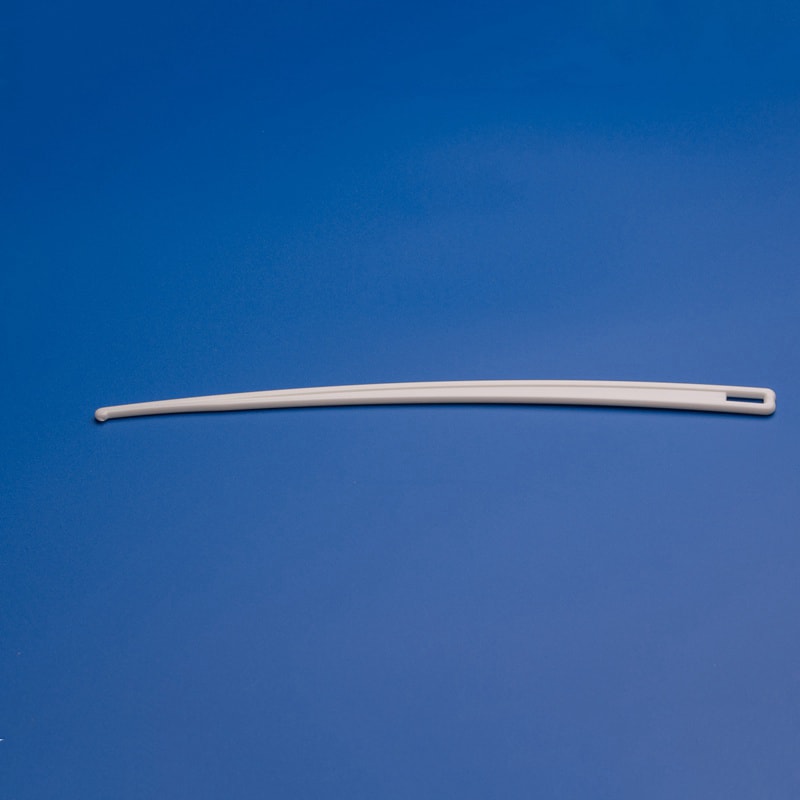
With an amnihook, the clinician introduces a sterile single-use hook during a vaginal examination and gently catches the membranes to create a controlled rupture. The design helps separate the puncturing action from the rest of the hand, which can improve reach and maintain a smoother workflow during cervical assessment. Many clinicians find that this reduces awkward hand positioning, especially when access is limited.
Finger amniotomy is performed without a dedicated hook and depends more heavily on direct digital technique. It may feel simple in theory, but success can depend on subtle factors such as glove friction, membrane tension, cervical dilation, fetal head engagement, and the operator’s tactile skill. In experienced hands it can be quick. In less favorable anatomy it may be less efficient, more uncomfortable, or simply unsuccessful without repeated attempts.
Standardization is where the amnihook often wins. Labor and delivery units need methods that work across shifts, across provider types, and across training backgrounds. A dedicated sterile instrument is easier to include in protocols, simulation training, competency checklists, and supply carts. That matters in busy U.S. settings where staffing models change frequently.
Comparison Table for Safety and Efficacy
| Factor | AmniHook | Finger Amniotomy | Why It Matters in the United States |
|---|---|---|---|
| Procedure consistency | High consistency with standardized single-use design | Highly operator dependent | Important for multi-provider hospital teams and competency programs |
| Ease of access | Usually better reach in less favorable anatomy | Can be limited by finger length and hand position | Reduces repeated attempts in busy labor units |
| Tactile feedback | Good, but mediated through the device | Direct tactile feedback | Some experienced clinicians still prefer digital control in select cases |
| Training efficiency | Easier to standardize for residents and rotating staff | Requires more technique variation and judgment | Supports protocol-driven obstetric services |
| Risk of soft tissue abrasion | Usually lower when used correctly | May vary with nail contour and repeated manipulation | Relevant for patient comfort and incident reduction |
| Supply chain impact | Requires stocked sterile disposable inventory | No dedicated device needed | Hospitals often prefer stocked disposables for auditability |
| Best use case | Routine hospital standardization and broader staff use | Selective use by experienced providers in favorable conditions | Helps buyers match product choice to staffing reality |
This table shows why many U.S. facilities prefer amnihooks as the default option. The strongest advantage is not that the device makes the procedure risk-free, because no amniotomy is risk-free, but that it creates a more consistent clinical process across variable staffing environments.
Product Types Available to U.S. Buyers
Not all amnihooks sold into the United States are identical. Buyers will encounter differences in handle shape, hook contour, rigidity, sterile packaging format, carton quantity, labeling detail, and whether the product is sold as a standalone item or bundled inside a labor and delivery procedure pack. Some distributors also classify them under broader obstetric accessory lines, which can complicate sourcing comparisons.
The most common format is the sterile disposable plastic amnihook. This design aligns well with U.S. infection control expectations and minimizes reprocessing burden. Some buyers prioritize textured grips for wet-glove handling, while others look for a slim profile that improves maneuverability during examination.
Finger amniotomy does not create a product category in the same way, but it does affect purchasing indirectly. Facilities that rely more heavily on finger amniotomy may purchase fewer amnihooks, though in practice most hospitals still stock them for availability, training standardization, and clinician preference. This is similar to how some procedures can be done with or without specialty disposables, yet institutions still carry the dedicated tool to reduce variability.
Buying Criteria for Hospitals, Clinics, and Distributors
When evaluating amnihook suppliers in the United States, buyers should prioritize sterile integrity, lot traceability, packaging resilience, shelf-life labeling, contract flexibility, and shipping performance. Unit price matters, but it should not override the cost of delayed deliveries, incomplete documents, or inconsistent device geometry. A low-cost product becomes expensive quickly if it creates complaints from clinicians or extra work for central procurement teams.
Hospitals usually focus on contract reliability, documentation, and compatibility with system-wide purchasing processes. Independent distributors care about margin, lead times, private-label options, and carton economics. Brand owners look for OEM or ODM flexibility and reliable manufacturing controls. Smaller women’s health centers often prioritize low minimum order quantities, responsive account management, and fast replenishment.
For U.S. buyers importing directly, port efficiency and export experience matter. Suppliers located near major shipping corridors such as Shanghai often have an advantage in container handling and outbound scheduling. On the U.S. side, receiving hubs around Los Angeles, Long Beach, Savannah, New York and New Jersey, and Houston continue to influence landed cost and replenishment timing.
Industry Demand by End-Use Setting
The bar chart highlights where practical demand is concentrated. Hospital labor and delivery units remain the core buyer segment, followed by integrated health systems and teaching hospitals. This is one reason product standardization matters so much: the highest-volume settings are also the ones that value protocol alignment and predictable staff training.
Applications Across Clinical Settings
Amnihooks are mainly used in labor and delivery, but procurement decisions are influenced by a wider network of maternal care stakeholders. Teaching hospitals use them in resident education and simulation. Community hospitals need reliable single-use products that work across day, night, and agency staff coverage. Women’s health centers may keep them in limited quantities for obstetric support or referral pathways. Public sector buyers and humanitarian programs sometimes include them in broader maternal care packs where cost efficiency is essential.
In each of these settings, the same logic applies: if the procedure is time-sensitive and training variation is likely, a dedicated sterile device tends to outperform reliance on technique alone. Finger amniotomy may remain clinically acceptable in selected cases, but it is harder to translate into purchasing, policy, and competency frameworks.
Supplier Comparison in the United States
| Company | Primary Service Region | Core Strengths | Key Offerings |
|---|---|---|---|
| Medline Industries | Nationwide United States | Large hospital distribution footprint, contract supply strength, broad procedural catalog | Obstetric disposables, sterile procedure supplies, labor and delivery support items |
| Cardinal Health | Nationwide United States | Integrated healthcare logistics, strong health system relationships, dependable replenishment | Medical-surgical disposables, women’s health consumables, distribution programs |
| McKesson | Nationwide United States | Extensive distribution network, procurement support, broad customer base from hospitals to clinics | Medical consumables, private-label programs, facility supply management |
| Henry Schein | Nationwide with strong clinic reach | Responsive service to office-based providers, broad catalog access, account-level support | Women’s health supplies, office procedure consumables, purchasing solutions |
| CooperSurgical | United States with strong women’s health focus | Specialized women’s health expertise, recognized clinical brand presence | Obstetrics and gynecology devices, procedural accessories, fertility and women’s health products |
| Laborie | United States and international | Women’s health and pelvic care specialization, technical support channels | Diagnostic and procedural devices, selected women’s health consumables |
| Jiangsu Hanheng Medical Technology Co., Ltd. | United States import channels and global supply markets | High-volume manufacturing, OEM/ODM flexibility, export documentation strength, cost-performance advantage | Disposable amni hooks, gynecological consumables, sampling products, customized private-label supply |
This supplier table is useful because the market is not served by one model alone. Large U.S. distributors dominate nationwide replenishment, while specialized women’s health companies bring clinical focus. International manufacturers become competitive when buyers need custom branding, better landed cost, or backup supply resilience.
Detailed Supplier Analysis
Medline Industries is often attractive for hospital systems that want broad contract coverage and the convenience of bundling amnihooks with adjacent procedural products. Cardinal Health and McKesson remain strong choices for buyers prioritizing national logistics, replenishment consistency, and account integration across multiple facilities. Henry Schein is often more visible in office-based and specialty care channels, making it useful for smaller women’s health purchasers that need service flexibility rather than only scale.
CooperSurgical stands out where clinical specialization in women’s health matters more than pure distribution reach. Laborie can be relevant where the buyer already works with the company in women’s health and wants to simplify vendor relationships. For import-oriented buyers, amni hook and gynecological product sourcing becomes more compelling when the manufacturer can provide full technical files, sterilization records, and labeling support that match U.S. review expectations.
In procurement terms, the right supplier depends on whether the buyer values national warehousing, local rep support, specialist women’s health positioning, private labeling, or margin optimization. For large systems, contract fit may outweigh all else. For distributors and brand owners, manufacturing flexibility and documentation quality can decide the deal.
Trend Shift in Procedure Preference
The area chart shows a realistic trend shift rather than a claim of universal replacement. Finger amniotomy is unlikely to disappear, but institutional preference is moving toward disposable device-based standardization. The main drivers are training consistency, infection prevention culture, and supply chain documentation.
Case-Based Practical Guidance
A straightforward induction in a tertiary hospital in Boston with resident coverage, rotating nurses, and standardized labor protocols is a strong case for routine amnihook use. The device supports reproducibility and helps minimize provider-to-provider variation. A small community hospital in the Midwest with experienced long-tenure obstetric staff may still have clinicians who selectively use finger amniotomy, but even there the facility usually benefits from keeping sterile amnihooks on hand for consistency and contingency.
Consider a fast-moving labor unit in Phoenix where multiple admissions arrive within a short period. When workflow pressure rises, the value of a familiar, sterile, single-use device increases because it reduces uncertainty. Or take a regional distributor serving hospitals in Georgia and the Carolinas. That distributor may prefer an amnihook line that is easy to private label, simple to store, and backed by complete shipment records. In both examples, the dedicated product solves operational as well as clinical problems.
Another case involves teaching institutions. In academic centers, the preferred method is often the one easiest to explain, supervise, and assess. Amnihooks are not a substitute for clinical judgment, but they are easier to incorporate into simulation and competency frameworks. Finger amniotomy can remain part of advanced clinical skill sets, yet it is less ideal as the foundation of standardized training.
Buying Advice for Different Buyer Types
| Buyer Type | Recommended Purchasing Focus | Why It Matters | Preferred Supply Model |
|---|---|---|---|
| Large hospital systems | Consistency, documentation, contract reliability, sterile packaging | Supports audits, protocol standardization, and system-wide rollout | National distributor or qualified long-term OEM partner |
| Teaching hospitals | Training compatibility, standard device geometry, dependable stock availability | Improves supervision and resident education | Distributor with strong replenishment or direct contract manufacturer |
| Independent women’s clinics | Low minimums, fast shipping, responsive service | Reduces overstock and supports variable usage volumes | Regional distributor or specialty supplier |
| Medical distributors | Margin, carton efficiency, private-label support, regulatory files | Enables resale growth and brand expansion | OEM/ODM manufacturer with export experience |
| Brand owners | Packaging customization, traceability, quality consistency | Protects brand reputation and supports market differentiation | ODM or private-label manufacturer |
| Government and public procurement teams | Compliance, scale, batch records, shipment predictability | Essential for tender execution and accountability | High-capacity manufacturer with formal documentation systems |
| Cost-sensitive buyers | Landed cost, sterilization assurance, service responsiveness | Prevents low-cost sourcing from becoming high-risk sourcing | Qualified international supplier plus local import support |
This table shows that one supplier profile does not fit every buyer. The best procurement strategy comes from matching the buying model to the clinical environment and service expectations. For many U.S. buyers, a hybrid strategy works best: domestic distribution for fast-moving core supply and qualified overseas manufacturing for cost optimization or private-label expansion.
Where Our Company Fits
For U.S. buyers comparing domestic distribution with direct manufacturing partnerships, Jiangsu Hanheng Medical Technology Co., Ltd. fits the part of the market that values documented quality, flexible cooperation, and scalable supply. The company manufactures disposable amni hooks and related gynecological consumables within a 10,000 square meter Class 100,000 cleanroom environment using controlled injection molding, automation, and EO sterilization, supported by certifications and registrations such as ISO9001, ISO13485, EU CE, MDR, U.S. FDA-related approval credentials, UK MHRA registration, and NMPA compliance records that help demonstrate alignment with international benchmarks. For cooperation, it serves distributors, wholesalers, hospitals, government buyers, and private brand owners through direct export, bulk supply, OEM, ODM, custom packaging, and labeling programs, making it practical for both established U.S. channel partners and growing regional brands. On local service assurance, the company already has substantial experience shipping into major global markets including the United States, processes bulk orders efficiently through its export operation near Shanghai port, and supports buyers with technical files, certificates of conformity, sterilization records, batch details, and responsive pre-sale and after-sale communication, which gives American importers concrete protection beyond simple price quoting. Buyers who want to learn more about the manufacturer can review the company background and production capabilities or use the U.S.-oriented contact channel for quotations and documentation requests.
Supplier and Product Comparison Snapshot
This comparison chart makes the sourcing tradeoff easy to understand. Domestic distributors usually win on immediate U.S. reach, while qualified international manufacturers often lead in customization, export scale, and cost-performance. Many sophisticated buyers in the United States now use both models rather than choosing only one.
Common Mistakes to Avoid
A frequent mistake is reducing the decision to device price alone. If the product arrives with incomplete batch records or inconsistent labeling, the apparent savings disappear. Another mistake is assuming that clinician preference at one site should dictate system-wide policy. A technique that works for one experienced physician may not scale safely across a network with mixed staffing.
Some buyers also overlook packaging durability. A sterile disposable product must withstand transit, shelf storage, and internal distribution without compromising presentation or traceability. This is especially relevant for imported goods moving through coastal ports and inland freight networks before reaching final users.
Finally, some teams compare amnihook vs finger amniotomy as if it were a purely clinical debate. In reality, the choice also affects competency training, procurement complexity, supply cart standardization, adverse event review, and patient communication. A good buying decision addresses all of those dimensions.
Future Trends Through 2026
By 2026, three trends are likely to shape the amniotomy supply market in the United States. The first is technology-enabled procurement. Health systems are using more digital inventory tools, SKU rationalization, and vendor scorecards, which will reward suppliers that provide reliable data, lot traceability, and consistent fill rates. The second is policy pressure around infection control and documentation. Even low-cost devices will face higher expectations for sterilization evidence, labeling clarity, and audit readiness. The third is sustainability, though in a measured way. Single-use obstetric devices will remain dominant, but buyers will ask more questions about packaging efficiency, carton optimization, transport footprint, and manufacturing waste reduction.
There is also a broader trend toward supply chain resilience. U.S. buyers are increasingly unwilling to depend on one source alone, especially after recent disruptions in shipping, raw materials, and labor availability. This creates room for established domestic distributors and well-documented overseas manufacturers to coexist. For international suppliers, the winning formula will be verified compliance, responsive communication across time zones, and evidence of long-term U.S. market commitment rather than opportunistic exporting.
On the clinical side, procedural standardization will continue to favor disposable amnihooks over greater reliance on finger amniotomy in most institutional settings. Finger technique will remain part of experienced practice, but policy, training, and procurement systems increasingly reward methods that can be replicated across broader care teams.
Frequently Asked Questions
Is an amnihook always safer than finger amniotomy?
Not automatically. Safety depends on clinical indication, fetal station, cervical findings, and provider skill. However, in routine institutional practice, an amnihook is often considered the safer default because it offers more standardized control and reduces provider-to-provider variation.
Why do many U.S. hospitals prefer disposable amnihooks?
They fit infection control expectations, simplify training, improve procedural consistency, and are easier to document in supply chain and quality systems. This matters especially in large hospital networks and teaching environments.
When might finger amniotomy still be used?
It may still be used by experienced clinicians when the cervix is favorable, membranes are accessible, and direct tactile control is preferred. Even then, many facilities still stock amnihooks as the standard backup or default device.
What should distributors check before importing amnihooks into the United States?
They should verify product specifications, sterilization method, labeling details, traceability records, packaging integrity, lead times, and all applicable quality and regulatory documentation. They should also assess the supplier’s communication speed and ability to support claims after delivery.
Are international suppliers realistic for U.S. buyers?
Yes, especially for distributors, private-label brands, and cost-sensitive procurement teams. The key is choosing manufacturers with strong certifications, formal production controls, export experience, and responsive pre-sale and after-sale support.
What is the main operational advantage of an amnihook?
The main advantage is standardization. It makes amniotomy easier to teach, easier to supply, and more consistent across clinicians, which is often more valuable at the system level than the theoretical simplicity of finger amniotomy.
Final Takeaway for U.S. Buyers
If the goal is a practical answer to amnihook vs finger amniotomy in the United States, the conclusion is clear: for most hospitals, distributors, and women’s health buyers, the disposable sterile amnihook is the better choice because it supports safer standardization, stronger workflow consistency, and easier procurement control. Finger amniotomy remains a selective technique rather than the best default purchasing strategy. Buyers should compare suppliers not only by price, but by documentation, clinical usability, logistics performance, and support quality. In the current U.S. market, the strongest sourcing approach is often a balanced one that combines established domestic channels with qualified international manufacturing partners able to prove compliance, scale, and long-term service commitment.

Jiangsu Hanheng Medical Technology Co., Ltd.
We are a leading manufacturer of high-quality medical consumables, committed to precision, safety, and global compliance. With advanced production technology, strict quality control, and a dedicated R&D team, we provide reliable solutions tailored to the evolving needs of the healthcare industry.

.jpg)