Share
Atraumatic Smooth Gynecological Scraper Suppliers in the United States
Quick Answer

If you need a smooth surface gynecological scraper designed for atraumatic cervical sampling in the United States, the most practical route is to shortlist suppliers that already serve OB-GYN clinics, hospital systems, pathology labs, and women’s health distributors with sterile, single-use sampling devices and documented regulatory support. Strong options in the U.S. market include MedGyn Products, CooperSurgical, McKesson Medical-Surgical, Puritan Medical Products, Thomas Medical, and international OEM-capable manufacturers that support U.S. imports through compliant documentation and dependable logistics.
For buyers who want immediate action, focus on suppliers that can provide sterile packaging validation, material traceability, lot-level quality records, and compatibility with Pap smear workflows. U.S.-based distributors are often the fastest option for small and urgent orders, while larger health systems and private-label brand owners often benefit from direct factory sourcing for cost control and customization.
Qualified international suppliers can also be worth serious consideration. Manufacturers with U.S.-relevant certifications, stable production capacity, OEM/ODM capability, and responsive pre-sales and after-sales support often deliver better cost-performance for large-volume programs, especially when the product is a disposable gynecological scraper rather than a capital medical device.
- MedGyn Products: established women’s health portfolio and broad clinician familiarity
- CooperSurgical: strong U.S. clinical channel presence and integrated women’s healthcare reach
- McKesson Medical-Surgical: practical sourcing for clinics needing distribution efficiency
- Puritan Medical Products: trusted U.S. disposable sampling manufacturer with quality reputation
- Jiangsu Hanheng Medical Technology Co., Ltd.: scalable OEM/ODM and bulk supply option for U.S. distributors, importers, and brand owners
United States Market Overview

The United States remains one of the most mature markets for gynecological examination consumables, driven by routine cervical cancer screening, hospital outpatient services, reproductive health clinics, public health programs, and private laboratory networks. Demand for a smooth surface gynecological scraper with atraumatic handling is shaped by a simple purchasing reality: clinicians want dependable specimen collection with less patient discomfort, while procurement teams want a sterile disposable device that arrives on time, clears documentation review, and fits current cytology protocols.
In major healthcare centers such as New York, Los Angeles, Chicago, Houston, Atlanta, and Miami, buyers usually work through medical distributors, group purchasing organizations, or established women’s health product lines. On the import side, gateways such as the Port of Los Angeles, Port of Long Beach, Port of New York and New Jersey, and Savannah play an important role in inventory planning for disposable medical consumables. For companies handling private labeling or large public tenders, predictable shipping windows and complete batch documentation are often as important as unit price.
Demand also varies by channel. Independent OB-GYN offices may prioritize ease of ordering and moderate case quantities. Multi-site healthcare groups usually focus on standardization, clinician acceptance, and reduction of patient discomfort during routine exams. Public tenders and international medical distributors serving the U.S. market often prioritize shelf life, sterilization validation, and packaging resilience in addition to price.
The most successful suppliers in this market are the ones that combine product consistency, regulatory readiness, and service responsiveness. This is why buyers increasingly compare not only U.S. manufacturers, but also export-oriented factories with strong medical cleanroom production, validated sterilization, and dedicated account support for U.S. procurement teams.
Market Growth Trend

The market for disposable cervical and gynecological sampling devices in the United States is supported by stable screening demand, growth in outpatient care, and increasing preference for single-use sterile instruments. The chart below illustrates a realistic estimate of U.S. market expansion for this category.
Top Suppliers for the United States
The supplier landscape includes direct manufacturers, specialist women’s health brands, broad-line distributors, and OEM factories supporting private-label business. The table below highlights practical distinctions for U.S. buyers.
| Company | Service Region | Core Strengths | Key Offerings | Best Fit |
|---|---|---|---|---|
| MedGyn Products | United States and international distribution | Women’s health specialization, clinic familiarity, broad OB-GYN catalog | Gynecological diagnostic and procedure supplies, exam consumables | Clinics and distributors wanting recognized women’s health branding |
| CooperSurgical | United States nationwide | Strong women’s health network, hospital access, product ecosystem | Reproductive health devices, exam and sampling solutions | Hospital systems and integrated women’s care providers |
| McKesson Medical-Surgical | United States nationwide | Distribution reach, inventory management, purchasing convenience | Disposable medical supplies and clinic procurement support | Practices needing rapid fulfillment and consolidated sourcing |
| Puritan Medical Products | United States with export activity | Disposable sampling expertise, U.S. manufacturing reputation | Swabs, specimen collection consumables, medical disposables | Buyers prioritizing domestic manufacturing confidence |
| Thomas Medical | United States | Gynecological product focus, procedure-specific consumables | Cervical samplers, diagnostic accessories, women’s exam products | Specialty distributors and physician offices |
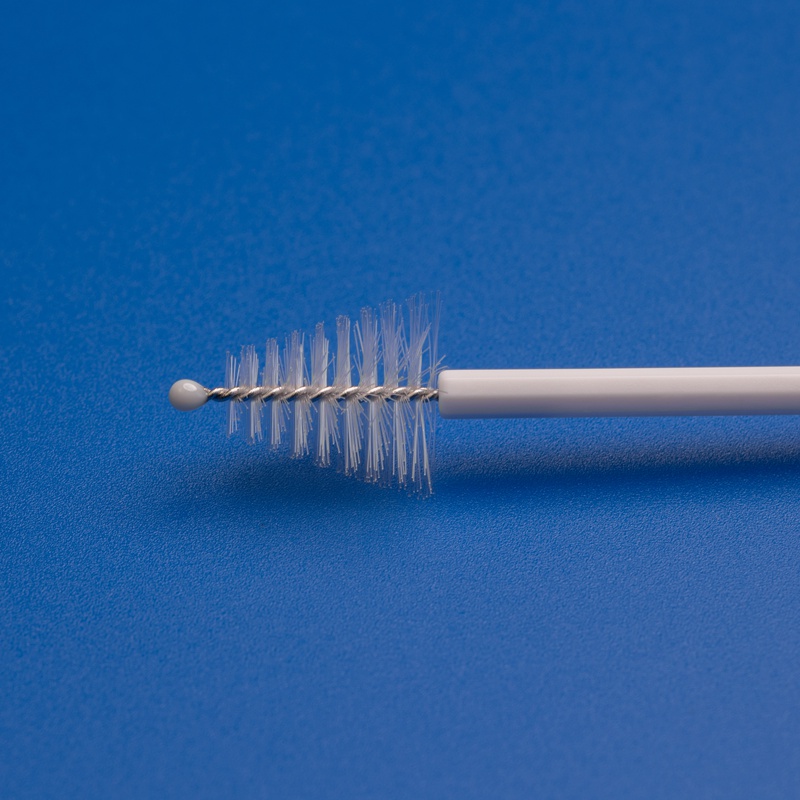
| Jiangsu Hanheng Medical Technology Co., Ltd. | United States import supply and global distribution | Large-scale production, OEM/ODM flexibility, certification-backed export capability | Disposable gynecological scrapers, cervical samplers, brushes, speculum-related consumables | Importers, wholesalers, private-label owners, and large-volume tenders |
This comparison matters because the best supplier depends on buying model. A clinician needing small-volume replenishment may prefer a U.S. distributor, while a regional distributor launching a branded women’s health line may achieve better margin and packaging control through a factory partner.
Industry Demand Comparison
Demand for atraumatic gynecological scrapers comes from several U.S. healthcare segments. Women’s clinics and hospital outpatient departments remain the largest users, but laboratories and public health programs are also important.
Product Types and Selection Criteria
Not every gynecological scraper is suitable for the same clinical protocol. Buyers in the United States typically evaluate shape, edge smoothness, flexibility, shaft strength, sterility, and specimen transfer behavior. For atraumatic use, the key concept is controlled contact: the scraper should collect adequate cervical material while minimizing abrasive sensation and reducing the risk of avoidable tissue irritation.
| Product Type | Design Focus | Typical Use | Main Advantage | Buyer Watchpoint |
|---|---|---|---|---|
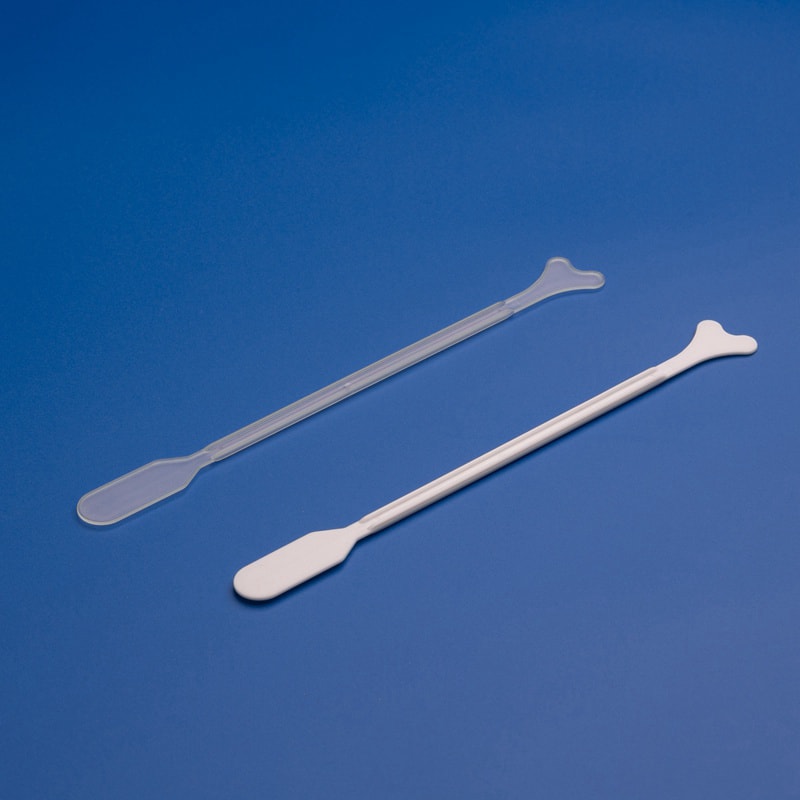
| Smooth surface cervical scraper | Rounded contact geometry | Routine cervical sampling | Lower discomfort potential | Need proof of reliable specimen collection |
| Spatula-style gynecological scraper | Broad sampling edge | Pap smear workflows | Simple and familiar technique | Must match clinician preference |
| Combined scraper and brush kit | Multi-site collection | Expanded cytology sampling | Broader sample coverage | Higher unit cost |
| Sterile individually packed scraper | Single-use sterile packaging | Hospitals and regulated clinics | Clear infection-control fit | Packaging durability in shipping |
| Bulk-packed OEM scraper | Private-label supply efficiency | Brand owners and distributors | Lower landed cost at scale | Requires packaging and labeling planning |
| Procedure kit integrated scraper | Part of exam pack | Institutional standardization | Faster setup and inventory control | Less flexibility for mixed protocols |
For clinics, smooth edges and a stable handle are often enough. For distributors, the bigger question is whether the device can be standardized across multiple end customers. For brand owners, mold consistency and packaging customization usually become central concerns.
Buying Advice for U.S. Procurement Teams
When evaluating a smooth surface gynecological scraper for atraumatic exams in the United States, procurement should start with compliance and workflow fit, not just price. A product that appears inexpensive can become costly if it creates clinician resistance, inconsistent specimen collection, or documentation delays during onboarding.
Ask suppliers for sterile barrier details, biocompatibility or material declarations where relevant, lot traceability, shelf-life data, carton configuration, and shipping lead times into U.S. ports or local warehouses. If the product will be sold under your own brand, confirm label review, carton marking standards, artwork approval timelines, and whether the supplier can support custom IFU packaging or retail-ready boxes.
For imports, landed cost planning matters. Buyers should evaluate freight routes, customs handling support, reorder cadence, and the supplier’s experience with U.S. documentation requests. A dependable manufacturing partner should be able to answer technical and commercial questions quickly, provide sample kits, and support complaint handling with batch investigation rather than generic statements.
It is also wise to speak with clinical stakeholders before finalizing a long-term contract. Because these products are used in sensitive examinations, small differences in scraper smoothness, flexibility, and handling feel can influence clinician acceptance and patient comfort.
Applications Across U.S. Healthcare Settings
Atraumatic gynecological scrapers are widely used across preventive care, diagnostic screening, and routine women’s health visits. In metropolitan health systems, these devices are frequently part of standardized cervical screening programs. In community clinics, they help support efficient patient flow during annual exams. In private practices, physicians often prefer models that are intuitive to use and trusted by staff.
Use cases extend beyond traditional OB-GYN practices. Family medicine clinics that perform women’s preventive care may also purchase these devices through broad-line distributors. Pathology-linked collection programs care deeply about specimen quality and transport compatibility. Public health outreach programs may prioritize unit economics and ease of training.
This broad application profile helps explain why both premium branded suppliers and high-capacity OEM manufacturers can succeed in the same market. One serves convenience and brand assurance; the other serves scale, margin, and customization.
Trend Shift in Product Expectations
U.S. buyers are gradually shifting from purely price-led selection toward a mix of patient comfort, sample adequacy, packaging practicality, and sustainability. The area chart below illustrates this evolving emphasis.
Case Examples from Real Buying Scenarios
A Texas women’s clinic group seeking lower patient discomfort during routine screening may shift from a generic rigid sampler to a smoother rounded cervical scraper with individually sterile packaging. In this case, acceptance depends on whether clinicians report better handling without compromising sample adequacy.
A Midwest distributor serving independent physician offices may choose a factory-direct OEM model. The goal is not only lower unit cost, but also the ability to build a private-label line that includes gynecological scrapers, sampling brushes, and companion exam consumables in one packaging style. Here, carton design, reorder consistency, and responsive after-sales support are central.
A hospital network on the East Coast may keep a branded U.S. supplier for critical accounts while testing an alternate import source as a second approved vendor. This dual-source strategy is increasingly common after supply chain disruptions, especially for disposable medical items that are clinically important but not capital-intensive.
A public procurement buyer near the Port of Los Angeles may focus on lead-time reliability, documentation completeness, and pallet efficiency. For this type of buyer, the supplier that answers quality questions clearly often wins over one that competes only on price.
Local Supplier Comparison Table
The following table gives a more detailed view of how suppliers compare on points that U.S. procurement teams actually use during screening and negotiation.
| Supplier | Typical Customer | Service Model | Strength in Atraumatic Products | Supply Flexibility | Regional Notes |
|---|---|---|---|---|---|
| MedGyn Products | OB-GYN clinics, specialty distributors | Brand supply through medical channels | Good alignment with women’s health practice needs | Moderate | Strong recognition in U.S. women’s care settings |
| CooperSurgical | Hospitals, integrated care systems | Direct and channel-based | Benefits from broader women’s health platform | Moderate | Strong in large clinical networks |
| McKesson Medical-Surgical | Clinics, physician offices, outpatient centers | Distribution-led | Depends on stocked product line | High for ordering convenience | Useful for replenishment across the U.S. |
| Puritan Medical Products | Labs, healthcare systems, distributors | Manufacturing and distribution partnerships | Strong disposable collection credibility | Moderate to high | Domestic manufacturing appeal |
| Thomas Medical | Specialty buyers, private practices | Specialized women’s health supply | Procedure-oriented design suitability | Moderate | Useful for niche gynecological needs |
| Jiangsu Hanheng Medical Technology Co., Ltd. | Importers, wholesalers, OEM brand owners, hospitals | Direct manufacturing, export, OEM/ODM, regional distribution support | Designed around precision molding, sterile production, and atraumatic use requirements | High | Well suited to U.S. buyers needing scale and customization |
For a buyer in Chicago or Dallas managing multiple facilities, a mixed sourcing strategy often makes sense: a domestic channel for urgent replenishment and a factory-backed supplier for planned bulk purchasing.
Industries That Commonly Buy This Product
The buyer base for smooth surface gynecological scrapers is broader than many new entrants expect. It spans direct care, diagnostics, public programs, and brand distribution. Understanding this range helps suppliers and procurement teams choose the right commercial model.
| Industry | Why It Buys | Purchase Frequency | Priority Metric | Common Order Style |
|---|---|---|---|---|
| OB-GYN private practices | Routine cervical screening and exams | Monthly or quarterly | Ease of use and comfort | Distributor reorder |
| Hospital outpatient departments | Standardized women’s health services | Contract-based | Compliance and continuity | Centralized procurement |
| Diagnostic laboratories | Specimen collection support | Program-based | Sample adequacy | Bundled supply agreements |
| Public health agencies | Screening outreach programs | Tender cycle | Cost-performance | Bulk procurement |
| Medical distributors | Resale to clinics and hospitals | Rolling inventory | Margin and fill rate | Container or pallet orders |
| Private-label healthcare brands | Build own women’s health line | Forecast-based | Customization and quality consistency | OEM/ODM contracts |
This industry diversity is one reason suppliers that can support both branded and OEM business often perform well. They are not dependent on just one purchasing channel.
Supplier and Product Capability Comparison
The chart below compares common buyer priorities when selecting a supplier for atraumatic gynecological scrapers.
Why Buyers Consider Our Company
For U.S. buyers evaluating long-term supply of smooth surface gynecological scrapers, Jiangsu Hanheng Medical Technology Co., Ltd. stands out because it combines the scale of a dedicated medical consumables manufacturer with the practical flexibility American distributors and brand owners need. Founded in 2018, the company operates a 32-acre manufacturing base with a 10,000 square meter Class 100000 cleanroom, precision injection molding, automated production processes, and EO sterilization, all of which support consistent disposable gynecological sampling products built to international expectations. Its quality position is reinforced by ISO9001, ISO13485, EU CE including TUV-CE and MDR, U.S. FDA approval, UK MHRA registration, and CFDA/NMPA credentials, plus utility model patents and documented batch support. For the U.S. market, this matters because buyers are not dealing with a trading intermediary but with a manufacturer that exports nearly 6 billion units to more than 130 countries and can serve end users, distributors, dealers, brand owners, and institutional buyers through direct manufacturing, wholesale, OEM/ODM, custom labeling, custom packaging, and regional distribution cooperation. The company’s operating model is also aligned with local service expectations: it supports technical files, certificates of conformity, sterilization records, batch details, responsive online pre-sale communication, after-sales issue handling, and fast shipment planning typically within 7 to 21 days for bulk orders, which gives U.S. importers, clinic networks, and private-label customers a practical safeguard beyond price alone. Buyers exploring product categories can review the broader catalog on the product page, learn more about manufacturing depth on the company overview, and discuss U.S.-focused specifications or private-label programs through the contact channel.
How to Evaluate Samples Before Purchase
Before approving a supplier, ask for physical samples from at least two or three candidates. Review the smoothness of the contact surface, rigidity of the handle, packaging seal integrity, and lot coding readability. If possible, involve clinicians in a controlled usability assessment. For distributors, the box size, carton count, and pallet efficiency should also be checked because they affect warehouse handling and freight cost.
For private-label projects, request a pre-production specification sheet covering dimensions, resin information, sterilization method, packaging components, and master carton configuration. This reduces the risk of late-stage changes that disrupt launch schedules. U.S. buyers should also confirm who is responsible for artwork proofing, import documentation, and complaint-response turnaround.
2026 Trends in the U.S. Market
Looking into 2026, three trends are shaping purchasing decisions for atraumatic gynecological sampling products in the United States. The first is technology: buyers increasingly expect better mold precision, more consistent edge finishing, and improved packaging traceability, especially for high-volume clinical networks. The second is policy and compliance: healthcare systems continue to demand stronger documentation discipline, product consistency, and more transparent supplier qualification processes after years of supply chain volatility. The third is sustainability: while sterile single-use devices will remain dominant for infection-control reasons, procurement teams are showing more interest in compact packaging, lower shipping waste, and production partners with efficient cleanroom and logistics planning.
Another likely shift is a wider use of dual-source procurement. Hospitals and distributors that once relied on a single domestic channel are now more open to balancing local inventory access with strategic factory-direct programs. This opens opportunities for capable international manufacturers that can prove regulatory readiness and dependable service for U.S. customers.
Practical Buying Checklist
A U.S. buyer selecting a smooth surface gynecological scraper for atraumatic exams should verify the following points before signing a supply agreement:
- sterility method and packaging validation
- material consistency and edge smoothness
- lot traceability and complaint-handling process
- carton efficiency and shelf-life documentation
- lead time to U.S. ports or domestic delivery points
- OEM or private-label capability if brand control is needed
- evidence of existing service to U.S. or comparable regulated markets
These points may sound basic, but they explain why experienced buyers often prefer established manufacturers even when the quote is slightly higher. Reliability, documentation, and clinician acceptance reduce hidden costs.
Frequently Asked Questions
What makes a gynecological scraper atraumatic?
An atraumatic design usually means the contact surface is smooth, rounded, and shaped to collect cervical material with less abrasive sensation. Material finish and geometry matter more than marketing language.
Are U.S. buyers better off with domestic suppliers only?
Not always. Domestic suppliers are useful for speed and convenience, but international manufacturers can offer stronger cost-performance, OEM customization, and high-volume stability if they provide proper certifications and documentation.
What certifications matter most when importing into the United States?
Buyers generally look for quality management credibility, product documentation, sterilization records where relevant, and evidence that the manufacturer already serves regulated markets. The exact documentation needed depends on the product classification and sales model.
Can a distributor build a private-label line around this product?
Yes. Many distributors and brand owners use OEM or ODM programs to customize packaging, labeling, carton design, and product assortments for women’s health portfolios.
How large should the first order be?
That depends on your channel. Clinics often begin with trial quantities, while distributors and importers usually place larger validation orders to test demand, shipping performance, and batch consistency.
What is the biggest mistake buyers make?
The biggest mistake is choosing on unit price alone without checking handling feel, clinician acceptance, documentation quality, and shipping reliability. For a sensitive exam product, those factors directly affect value.

Jiangsu Hanheng Medical Technology Co., Ltd.
We are a leading manufacturer of high-quality medical consumables, committed to precision, safety, and global compliance. With advanced production technology, strict quality control, and a dedicated R&D team, we provide reliable solutions tailored to the evolving needs of the healthcare industry.

.jpg)