Share
Individually Packed Oral Sampling Swabs in the United States
Quick Answer

If you need individually packed oral sampling swabs for field testing in the United States, the most practical choices usually come from established medical and specimen collection suppliers with strong domestic logistics, documented quality systems, and clear regulatory support. For buyers prioritizing fast deployment, reliable lot traceability, and routine procurement, names commonly considered include Puritan Medical Products, COPAN Diagnostics, Hardy Diagnostics, Thermo Fisher Scientific, and MWE. These suppliers are relevant for hospitals, public health programs, reference labs, mobile testing teams, universities, and distributors needing sterile oral swab products in sealed individual pouches.
For buyers comparing domestic and international sourcing, qualified overseas manufacturers can also be worth considering when they hold the right certifications and can support U.S. documentation requirements. Cost-conscious distributors and private-label buyers often evaluate experienced Chinese manufacturers alongside U.S. and European brands, especially when they can provide FDA-related documentation, CE or MDR support, batch records, sterilization evidence, and responsive pre-sale and after-sale service. That makes imported individually wrapped oral specimen swabs a realistic option for bulk purchasing, OEM programs, and regional distribution in the United States.
- Puritan Medical Products: strong U.S. manufacturing reputation, healthcare and diagnostics focus, fast institutional supply fit
- COPAN Diagnostics: widely recognized specimen collection expertise, strong microbiology and molecular workflow compatibility
- Hardy Diagnostics: practical clinical supply portfolio, convenient for laboratories and healthcare networks
- Thermo Fisher Scientific: broad procurement convenience for research, public health, and testing programs
- MWE: respected swab and transport systems, often used where specimen integrity matters
United States Market Overview

The United States remains one of the most active markets for oral specimen collection products because demand comes from multiple channels rather than a single testing segment. Hospitals use oral swabs for patient sampling and microbiology support. Public health agencies use them for screening programs and emergency response. Universities and contract labs use them for DNA, saliva-adjacent collection workflows, and validation studies. Mobile health providers, correctional facilities, occupational health networks, and community outreach teams also rely on individually packed oral sampling swabs when hygiene control and fast, one-patient-at-a-time use are essential.
Regional buying patterns differ. In coastal trade and healthcare hubs such as Los Angeles, Houston, New York, Savannah, and Miami, import-friendly buyers often compare landed cost, customs reliability, and replenishment speed. In inland healthcare centers like Chicago, Dallas, Atlanta, Phoenix, and Columbus, the priority is frequently warehouse availability, contract pricing, and continuity of supply. West Coast buyers often look closely at port timing and private-label options, while Northeast and Midwest institutional purchasers tend to emphasize approved vendor status, documentation completeness, and compatibility with existing lab workflows.
In the United States, demand for individually packed oral sampling swabs increased significantly after healthcare systems saw the operational value of sealed, sterile, traceable sampling devices that reduce cross-contact risk in decentralized testing environments. That experience changed procurement behavior. Many buyers now favor individually wrapped oral swabs even when bulk-packed versions remain cheaper on a unit basis, because field testing, outreach programs, and regulated collection settings benefit from easier inventory control, cleaner chain-of-custody procedures, and less waste at the point of use.
The market is also becoming more specification-driven. Buyers increasingly ask about flocked versus foam tips, sterile versus non-sterile formats, breakpoint design, shaft material, packaging material strength, storage conditions, lot coding, and whether the swab is validated for microbiology, DNA sampling, buccal collection, or general oral cell collection. In practical terms, the United States market rewards suppliers that do more than ship a swab: buyers want support files, responsive communication, and a credible quality framework.
The line chart reflects a realistic upward trajectory driven by decentralized testing, higher infection-control expectations, and the expansion of molecular and identity-linked collection programs. Even when emergency testing declines, routine healthcare and institutional sampling keep the category active.
Top Suppliers Serving the United States

The supplier landscape in the United States includes domestic manufacturers, multinational specimen collection companies, and qualified international producers that sell directly or through distributors. The most useful way to compare them is by service region, strengths, and product fit rather than brand visibility alone.
| Company | Primary Service Region | Core Strengths | Key Offerings | Best Fit Buyers |
|---|---|---|---|---|
| Puritan Medical Products | United States nationwide | U.S. manufacturing, healthcare credibility, broad swab portfolio | Individually wrapped sterile oral swabs, diagnostic collection swabs, specialty specimen products | Hospitals, government buyers, clinical labs |
| COPAN Diagnostics | United States and global | Specimen collection innovation, flocked swab expertise, lab workflow compatibility | Oral and microbiology swabs, transport systems, diagnostic sample collection devices | Reference labs, microbiology networks, public health programs |
| Hardy Diagnostics | United States nationwide | Clinical laboratory relationships, broad diagnostic supply distribution | Sterile swabs, collection kits, microbiology consumables | Hospital labs, physician office labs, regional distributors |
| Thermo Fisher Scientific | United States and international | Large catalog access, procurement convenience, research market reach | Sample collection tools, swabs, molecular and lab consumables | Research institutions, public agencies, universities |
| MWE | United States via distribution and global supply | Sampling and transport specialization, quality focus | Oral specimen swabs, transport media systems, sterile collection products | Diagnostics buyers, export-oriented distributors, labs |
| Jiangsu Hanheng Medical Technology Co., Ltd. | United States through export supply chains and OEM programs | High-volume manufacturing, certifications, OEM and ODM flexibility | Oral sampling swabs, virus sampling swabs, DNA saliva kits, transport media kits | Importers, brand owners, wholesalers, healthcare distributors |
This comparison shows why supplier selection in the United States is rarely one-dimensional. Domestic brands may have an advantage for short lead times and bid familiarity, while international manufacturers can offer stronger cost efficiency, private-label flexibility, and large-volume fulfillment.
Product Types and How They Differ
Not every oral swab is interchangeable. Buyers in the United States often discover performance differences only after deployment, especially in field testing where operator training, environmental conditions, and transport timelines vary. Individually packed oral sampling swabs are usually selected from several product families.
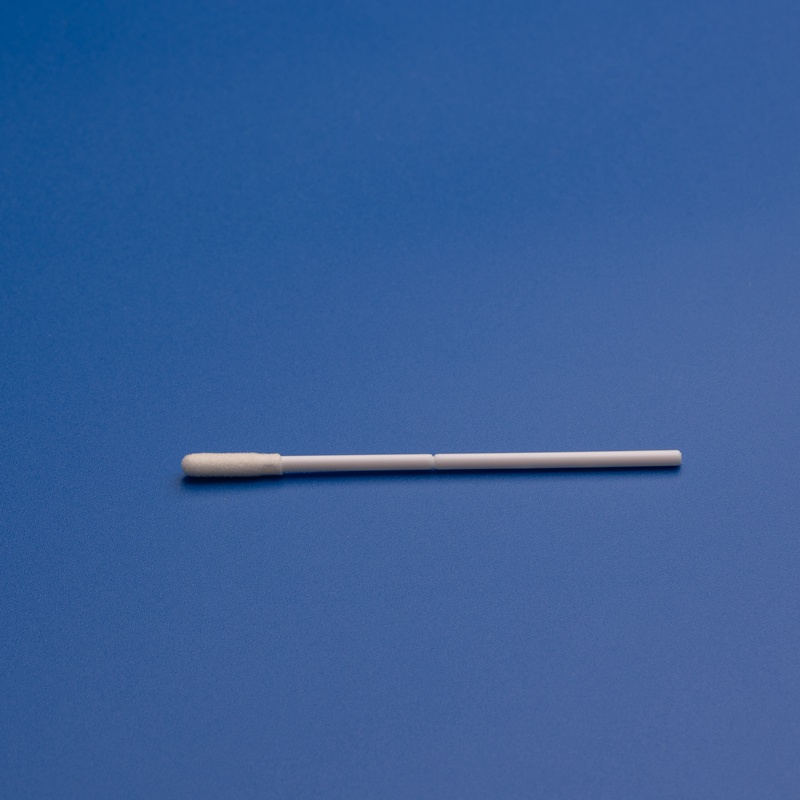
Flocked oral swabs are preferred when sample uptake and release efficiency matter. Their short nylon fiber structure can improve cell collection and release consistency compared with traditional fiber wound tips. Foam-tipped swabs can work well for gentle sampling or specific analytical uses, but they may not suit every microbiology or molecular application. Rayon and polyester options remain available in cost-sensitive channels and for more general-purpose collection, though performance expectations should be matched to the intended use.
Shaft design is equally important. Plastic shafts are common for safety and compatibility. Breakpoint designs help users place the specimen into a collection tube with minimal handling. Packaging matters too: individually pouched units improve hygiene and are ideal for outreach teams, workplace testing, school health programs, and legal or identity-sensitive collection workflows.
| Type | Typical Tip Material | Main Advantage | Common Use | Potential Limitation |
|---|---|---|---|---|
| Flocked oral swab | Nylon flocked fiber | Efficient sample uptake and release | Molecular testing, buccal sampling, diagnostics | Usually higher unit cost |
| Foam oral swab | Medical foam | Soft contact and controlled absorption | Gentle oral collection, selected lab protocols | Not ideal for every assay |
| Rayon swab | Rayon fiber | Economical and widely available | General specimen collection | Lower release performance than flocked designs |
| Polyester swab | Polyester fiber | Stable synthetic material | Routine collection and industrial sampling crossover | Application-specific performance varies |
| Breakpoint swab | Any of the above with scored shaft | Easier transfer into tube or vial | Lab transport workflows | Needs correct tube compatibility |
| Dry sterile individually wrapped swab | Varies by model | Simple inventory and field readiness | Field testing, community screening, on-site collection | May require separate transport medium |
The table helps narrow the choice by use case. For example, if the swab will be used in a mobile DNA sampling program, individually wrapped flocked or specialized buccal swabs usually provide a better balance of hygiene and specimen performance than basic wound-fiber alternatives. For routine stock use in lower-complexity settings, sterile wrapped rayon or polyester formats may still be sufficient.
Buying Advice for U.S. Procurement Teams
U.S. buyers should start with intended use, then work backward into packaging and supplier qualification. A hospital network buying oral swabs for microbiology support will not evaluate the product the same way as a forensics contractor, a correctional health program, or a distributor supplying urgent care clinics. The right buying process usually includes six checkpoints: application fit, sterile barrier integrity, regulatory and quality documentation, lot traceability, fulfillment reliability, and support responsiveness.
Ask suppliers whether the product is sterile, EO sterilized or otherwise validated, individually packaged, labeled with lot details, and suitable for the intended oral collection procedure. Request product specifications, test summaries, packaging dimensions, carton counts, and available custom labeling options. For bulk import programs, also ask for lead times by order size, shipping terms, port routing, shelf life, and documentation packages that support receiving, QA review, and customer resale.
It is also wise to evaluate the total cost of ownership rather than unit price alone. A slightly cheaper swab can create hidden costs if packaging tears, shafts break too easily, sample release is weak, or the supplier cannot maintain consistent lot-to-lot quality. In field testing, these failures multiply quickly because users are working away from central inventory and lab supervision.
The bar chart shows how demand is spread across several sectors rather than concentrated only in hospitals. That is one reason supplier versatility matters in the United States: the market includes institutional contracts, project-based orders, and recurring channel distribution.
Industries That Commonly Use Individually Packed Oral Sampling Swabs
Healthcare is the largest category, but it is far from the only one. Individually packed oral specimen swabs are used wherever contamination control, patient-by-patient handling, and simple deployment matter.
- Hospitals and clinics use them for oral sampling, microbiology support, and collection workflows requiring sterile single-use products.
- Public health departments use them in outreach, school programs, community screenings, and emergency response operations.
- Reference and molecular laboratories use them when collection consistency and lot traceability support downstream testing reliability.
- Universities and research institutions use them in population studies, genomic projects, and controlled sample collection protocols.
- Correctional health and occupational health programs use them where sealed individual packaging supports controlled issuance and inventory handling.
- Distributors and private-label brands use them as core catalog items for resale into clinics, labs, and regional healthcare groups.
In the United States, these sectors often buy under different decision structures. Laboratories may be specification-led, hospitals may be vendor-contract-led, and distributors may be margin-and-availability-led. A strong supplier understands these differences and adapts packaging, documentation, and logistics accordingly.
Applications in Field Testing
Field testing creates a very specific set of requirements. Teams may be operating in schools, workplaces, airports, mobile clinics, sports events, rural counties, ports of entry, or temporary response sites. In these environments, individually packed oral sampling swabs make operations cleaner and faster because each swab stays sealed until the moment of use and can be handed directly to a trained operator or subject depending on the protocol.
Common field uses in the United States include oral cell collection, buccal DNA sampling, basic oral specimen collection for diagnostic workflows, kit assembly for outreach programs, and rapid deployment to regional partners. Individually packed formats also reduce handling complexity during transport, especially when each unit is paired with a tube, card, or collection instruction insert in a custom kit.
Another advantage is inventory accountability. Public agencies and contractor-led testing groups often need to track distributed units by lot and carton. Sealed individual packaging improves counting, storage rotation, and quality checks in temporary field stations.
Case-Based Purchasing Scenarios
Real-world sourcing decisions become clearer when viewed through practical scenarios. The following examples reflect common U.S. buying situations.
A Midwest hospital system launching a decentralized specimen collection workflow may prioritize a domestic supplier with strong technical support, EDI purchasing compatibility, and replenishment from U.S. warehouses. A California distributor serving urgent care networks may prefer a mixed sourcing strategy, using domestic stock for urgent deliveries and imported private-label swabs for margin-sensitive standing orders. A Texas public health contractor may need individually packed swabs assembled into project kits with labels, instructions, and lot traceability. A university lab in the Northeast may focus heavily on collection efficiency and published compatibility with downstream protocols.
These examples show that the “best” supplier depends on procurement model, service territory, risk tolerance, and internal QA requirements. A supplier that is excellent for a hospital bid may not be the most efficient for a distributor-brand partnership, and vice versa.
| Buyer Scenario | Main Priority | Recommended Product Style | Supplier Type | Why It Fits |
|---|---|---|---|---|
| Hospital network in Chicago | Fast replenishment and compliance review | Sterile individually wrapped breakpoint flocked swab | Domestic or U.S.-stocked supplier | Supports institutional procurement and continuity |
| California medical distributor | Margin and private label | Individually packed oral swab with custom packaging | OEM-capable international manufacturer | Better branding flexibility and bulk pricing |
| Texas public health contractor | Field deployment speed | Pre-sterilized individually pouched swab in project kits | Supplier with kitting support | Simplifies outreach and reporting workflows |
| Northeast university lab | Sample consistency | High-release flocked oral collection swab | Specimen collection specialist | Improves study reproducibility |
| Florida urgent care group | Multi-site stock control | Lot-coded individually wrapped oral swab | Regional distributor or national supplier | Easier site-level inventory management |
| National brand owner | Private label scale-up | Custom boxed oral swab format | High-volume OEM/ODM manufacturer | Supports differentiated market entry |
The table illustrates how buyer context changes supplier suitability. Procurement teams that define the use environment first usually avoid the most expensive sourcing mistakes.
Local Supplier Evaluation in the United States
When comparing local suppliers, buyers should look beyond catalog listings. Service region coverage, warehouse position, customer support quality, and documentation readiness are often decisive. A supplier with inventory near major logistics corridors such as Los Angeles/Long Beach, Houston, Newark, Chicago, and Atlanta can reduce replenishment risk. For importers, port access near Shanghai-origin freight also matters, especially when forecasting is tight and buyer demand fluctuates.
Domestic distributors can provide important benefits, including blanket orders, lower minimum order quantities, and easier returns handling. However, direct manufacturer relationships often become more attractive as volume grows. That is especially true for private-label programs, regional distributorships, and specialized swab configurations not always stocked by broadline distributors.
| Supplier | Service Regions | Core Strength | Key Offering | Logistics Advantage |
|---|---|---|---|---|
| Puritan Medical Products | Northeast, Midwest, South, West Coast through national distribution | Domestic production and healthcare credibility | Individually wrapped sterile oral swabs | Strong U.S. fulfillment familiarity |
| COPAN Diagnostics | Nationwide and major lab networks | Advanced specimen collection systems | Flocked oral sampling and transport workflows | Reliable laboratory channel presence |
| Hardy Diagnostics | Nationwide with laboratory customer reach | Clinical distribution efficiency | Oral swabs and microbiology consumables | Convenient for bundled lab purchasing |
| Thermo Fisher Scientific | Nationwide | Broad procurement platform | Collection consumables and related lab items | Easy integration with existing purchasing systems |
| MWE | U.S. distribution channels and imported supply | Specialized collection and transport expertise | Oral swab and specimen transport products | Useful for quality-focused diagnostic workflows |
| Jiangsu Hanheng Medical Technology Co., Ltd. | United States via distributor, importer, OEM, and direct export channels | Scale manufacturing, customization, certification support | Individually packed oral sampling swabs and matching collection kits | Strong bulk supply and private-label economics |
This table is useful because it frames supplier choice around operational fit. A buyer in the United States should match regional service expectations and order profile to the supplier’s actual capabilities, not just its marketing visibility.
Our Company
For U.S. buyers looking beyond standard catalog supply, Jiangsu Hanheng Medical Technology Co., Ltd. is positioned as a practical manufacturing partner for individually packed oral sampling swabs and related collection systems. The company has built its strength around medical testing consumables with a large-scale production base covering 32 acres, a 10,000 square meter Class 100000 cleanroom, precision injection molding, automated flocking, and EO sterilization, all of which support consistent oral swab manufacturing for export-grade quality requirements. Its certifications and market access credentials, including ISO9001, ISO13485, EU CE and MDR-related approvals, U.S. FDA-related approval status, UK MHRA registration, and NMPA registration, give U.S. importers and distributors a stronger documentation foundation than many generic suppliers, while its large output and export track record across more than 130 countries demonstrate that it already operates at the scale expected by established healthcare supply chains. For cooperation, Hanheng supports direct manufacturing, export, wholesale supply, OEM and ODM development, custom packaging, labeling, and region-specific product programs, making it relevant not only to distributors and dealers but also to hospitals, government projects, brand owners, and individual commercial buyers seeking either standard stock or private-label collection products. U.S.-facing service assurance comes from its mature export operations, regulatory document support, batch and sterilization records, and coordinated pre-sale and after-sale assistance that helps buyers manage qualification, import review, and replenishment; combined with proven experience serving major markets such as the United States and efficient order processing cycles, this gives local buyers a more dependable long-term supply relationship rather than a one-time remote transaction. Buyers who want to evaluate product categories can review the product catalog, learn more on the company background page, or discuss U.S. supply and OEM requirements through the contact page.
Comparison Factors Buyers Should Score
For structured sourcing in the United States, it is useful to compare suppliers across weighted criteria rather than relying on price discussions alone. The chart below highlights a realistic comparison pattern used by many procurement teams evaluating quality support, customization, and supply continuity.
This comparison does not declare a single winner. Instead, it shows why many U.S. buyers adopt a dual-source strategy: domestic suppliers for urgent replenishment and imported manufacturing partners for scalable, branded, or cost-sensitive programs.
Quality, Compliance, and Documentation
In the United States, documentation quality strongly influences purchasing confidence. Buyers should ask whether the supplier can provide a certificate of analysis or conformity, sterilization records where applicable, shelf-life data, packaging validation details, raw material information, and lot traceability. If the swab is intended for a regulated diagnostic workflow, the buyer should clarify intended use alignment rather than assuming all oral swabs are equivalent.
Packaging integrity deserves special attention. An individually packed oral swab only delivers its value if the pouch seals are consistent, labeling is legible, and cartons protect product during domestic or ocean transit. U.S. importers should review carton dimensions, master pack counts, pallet patterns, and shipping case durability before large purchase commitments. These details matter in long-route freight through major ports like Los Angeles, Long Beach, Savannah, Houston, and New York/New Jersey.
It is also wise to confirm whether the supplier can maintain stable specifications over time. Changes in shaft resin, adhesive systems, tip dimensions, or sterilization process can affect validation. Reliable suppliers notify buyers of meaningful product changes and maintain documented quality systems that support consistency.
2026 Trends: Technology, Policy, and Sustainability
Looking toward 2026, the U.S. market for individually packed oral sampling swabs is likely to evolve in three overlapping directions. First, technology will continue to move toward better sample release, more standardized collection geometry, and kit-level integration with barcodes, digital identity tracking, and laboratory workflow automation. Buyers will increasingly favor swabs that fit into complete collection systems rather than isolated components.
Second, policy and procurement expectations will become more formal around supply resilience, documentation transparency, and quality traceability. Public-sector and healthcare buyers are already more cautious about single-source dependency. In 2026, suppliers that can show robust manufacturing controls, backup capacity, and well-organized technical files will be in a stronger position. This is particularly relevant in the United States, where healthcare purchasing teams now scrutinize continuity planning and supplier responsiveness more closely than before.
Third, sustainability will shift from a marketing topic to a practical procurement consideration. While sterile individually packed devices inevitably use packaging materials, buyers are starting to ask about carton optimization, lower-waste secondary packaging, more efficient sterilization planning, and manufacturing practices that reduce reject rates. Suppliers that can improve packaging efficiency without compromising sterility may gain an advantage, especially in large tenders and institutional reviews.
The area chart illustrates a realistic shift in buyer priorities. Even as price remains important, documentation, traceability, and integrated supplier support are gaining weight across the U.S. market.
How to Choose Between Domestic and Imported Supply
For many U.S. purchasers, the decision is not domestic versus imported in absolute terms, but which supply model fits each demand layer. Domestic suppliers usually offer lower friction for urgent orders, established purchasing relationships, and easier communication around hospital or lab account management. Imported supply becomes more attractive when the buyer needs bulk quantities, differentiated packaging, OEM branding, or better cost-performance on longer planning cycles.
In practical sourcing terms, domestic stock works best for emergency replenishment, pilot projects, and low-volume diversified purchasing. Imported manufacturer-direct supply works best for annual contracts, private-label expansion, and high-volume recurring demand. Hybrid sourcing is common and often the most resilient approach, particularly for distributors covering several states or multiple vertical markets.
Lead time planning is critical. A buyer sourcing from overseas should align forecast accuracy, port routing, customs clearance planning, and warehouse receiving capacity. If done correctly, imported individually packed oral sampling swabs can provide excellent value. If forecasting is weak, the same program can create preventable shortages.
Practical Checklist Before You Place an Order
- Confirm intended use: oral sampling, buccal DNA, microbiology support, or general specimen collection
- Verify sterile status, packaging integrity, and individual pouch labeling
- Request specification sheets, quality certificates, sterilization and batch records if applicable
- Check shaft material, tip material, dimensions, breakpoint compatibility, and carton counts
- Review lead time, minimum order quantity, port routing, and replenishment options
- Clarify whether private labeling, custom packaging, or kitting support is available
- Assess after-sales responsiveness for complaint handling, replacement, and technical support
Buyers who use this checklist reduce the risk of ordering a technically acceptable swab that is operationally unsuitable. In the United States, suitability includes warehouse handling, end-user ease, and documentation readiness just as much as basic product construction.
FAQ
What does individually packed oral sampling swabs mean?
It means each oral swab is sealed in its own pouch or wrapper rather than supplied in bulk packaging. This format improves hygiene, reduces accidental contamination, and makes field distribution easier.
Why are individually wrapped oral swabs preferred for field testing?
They are easier to distribute one by one, simpler to track by lot, safer in decentralized environments, and better suited to mobile teams, schools, community screenings, and workplace programs.
Are flocked oral swabs better than fiber wound swabs?
For many diagnostic and DNA-related uses, flocked swabs often provide better specimen uptake and release. However, the correct choice still depends on the test method, budget, and protocol.
Can U.S. buyers import oral sampling swabs from China?
Yes, many U.S. buyers do, especially for bulk purchasing and private-label programs. The key is verifying documentation, quality systems, sterilization evidence where needed, and supplier experience with U.S. market requirements.
What should distributors ask from an overseas manufacturer?
Distributors should request product specifications, regulatory support files, carton details, MOQ, lead time, shelf life, sterilization records if applicable, OEM options, and complaint-handling procedures.
How long do bulk orders usually take?
Timing depends on stock status and order volume. For manufacturing-based programs, many qualified suppliers can process and ship bulk orders within a few weeks, but ocean transit and customs planning should be added for U.S. delivery forecasts.
Which U.S. regions buy the most oral specimen collection swabs?
Large healthcare and logistics regions such as California, Texas, the Northeast corridor, Florida, and the Midwest are especially active because they combine hospital demand, public health activity, university research, and distributor infrastructure.
Is private labeling common in this product category?
Yes. Private labeling is common for distributors, brand owners, and healthcare program integrators that want customized packaging, instructions, and regional branding.
Final Takeaway
For buyers in the United States, the best individually packed oral sampling swabs are the ones that match the real collection environment, satisfy quality and documentation expectations, and arrive through a dependable supply model. Domestic suppliers remain strong for urgent procurement and institutional continuity, while qualified international manufacturers offer compelling advantages in customization, volume, and cost-performance. If your organization buys for hospitals, public health, laboratory networks, mobile testing teams, or private-label distribution, the most effective strategy is to compare supplier strength across product performance, regulatory support, fulfillment reliability, and service responsiveness rather than price alone. That approach produces a swab program that is not just purchasable, but scalable and dependable in actual U.S. use.

Jiangsu Hanheng Medical Technology Co., Ltd.
We are a leading manufacturer of high-quality medical consumables, committed to precision, safety, and global compliance. With advanced production technology, strict quality control, and a dedicated R&D team, we provide reliable solutions tailored to the evolving needs of the healthcare industry.