Share
How to Store Nasopharyngeal Swabs in the United States
Quick Answer

In the United States, nasopharyngeal swabs should be stored according to the specimen type, transport medium, and expected testing time. For most respiratory diagnostic workflows, the safest practical approach is to place the swab immediately into the validated transport tube, keep it at 2 to 8 degrees Celsius if it will reach the laboratory within 72 hours, and freeze it at minus 70 degrees Celsius or below for longer storage when permitted by the assay instructions. Dry storage at room temperature is only appropriate when the swab, collection method, and downstream test have been specifically validated for that condition. The sample must be labeled clearly, protected from temperature excursions, and transported under chain-of-custody and biosafety procedures consistent with U.S. laboratory and clinical protocols.
For U.S. buyers comparing supply options, leading providers commonly considered in hospital, laboratory, and distributor channels include Puritan Medical Products, Copan Diagnostics, Thermo Fisher Scientific, BD, and Cardinal Health. Buyers should compare not only the swab tip design and tube compatibility, but also regulatory documentation, lot traceability, sterilization records, and shipping reliability into major healthcare hubs such as Los Angeles, Chicago, Houston, New Jersey, and Atlanta. Qualified international suppliers can also be considered, especially manufacturers with FDA-related market experience, ISO 13485 quality systems, CE or MDR documentation, and responsive pre-sales and after-sales support, because these suppliers often offer a stronger cost-performance balance for distributor programs, OEM projects, and public procurement.
Why Proper Storage Matters in the U.S. Market

Storage is not a minor logistics detail. It directly affects RNA stability, pathogen recovery, contamination risk, assay sensitivity, and the legal defensibility of test results. In the United States, clinical laboratories, hospital systems, urgent care groups, public health programs, and occupational health providers all depend on consistent sample integrity from collection point to accessioning bench. If a nasopharyngeal swab is stored outside validated conditions, the consequence may be an invalid test, a false negative, a rejected specimen, or a repeated patient visit.
The U.S. market is especially demanding because sample collection often happens in decentralized settings. A specimen may be taken in a rural clinic, a mobile testing van, an airport screening point, a university health center, or a long-term care facility and then travel through regional courier networks before reaching a laboratory. Climate variation adds another challenge. A sample shipped through Phoenix in summer, Minneapolis in winter, or coastal Florida during hurricane disruptions is exposed to real transport stress. That is why storage guidance must be practical, documented, and tied to the exact swab-and-medium system being used.
Another reason storage discipline matters is the increasing variety of molecular and antigen workflows in the U.S. Some assays accept universal transport media, some prefer saline, some require viral transport medium, and some permit dry swabs only under narrow conditions. A buyer cannot assume that all flocked nasopharyngeal swabs behave the same way. The collection device, shaft breakpoint, tube seal, media chemistry, packaging integrity, and assay instructions all matter.
Core Storage Rules for Nasopharyngeal Swabs

The first rule is validation over habit. Always follow the instructions for use provided for the swab, transport medium, and assay. In U.S. clinical practice, common handling guidance supports refrigerated storage at 2 to 8 degrees Celsius for short-term holding and deep freezing for extended retention when the test system allows it. If the transport medium contains stabilizers for viral nucleic acids, the acceptable hold time may be different from a plain sterile tube or saline-based setup.
The second rule is speed. The swab should be inserted into its transport tube immediately after collection, the shaft should be broken cleanly if the device is designed that way, and the cap should be sealed without delay. Every unnecessary minute at ambient temperature increases the chance of degradation or contamination, particularly in high-volume collection sites.
The third rule is thermal control. Cold chain reliability is often more important than nominal target temperature on paper. If the product should remain between 2 and 8 degrees Celsius, then the packaging system, gel packs, shipper qualification, and route planning must actually maintain that range. A sample that cycles repeatedly between cold and warm conditions is at greater risk than one held steadily under validated refrigeration.
The fourth rule is specimen identity. Storage errors often begin as labeling errors. U.S. healthcare providers should use durable labels, barcode workflows, timestamp recording, and documented custody transitions to prevent mismatch, delay, or duplicate accession problems.
Recommended Storage Conditions by Use Case
| Use Case | Typical Storage Condition | Practical Hold Time | Common U.S. Setting | Main Risk | Operational Note |
|---|---|---|---|---|---|
| Swab in viral transport medium | 2 to 8 degrees Celsius | Up to 72 hours in many workflows | Hospital labs and regional reference labs | Cold chain interruption | Verify assay-specific acceptance before shipment |
| Swab in universal transport medium | 2 to 8 degrees Celsius | Often 48 to 72 hours | Urgent care networks | Media compatibility mismatch | Confirm compatibility with molecular platform |
| Dry swab with validated assay | Room temperature or refrigerated depending on validation | Varies widely by manufacturer | Point-of-care and selected screening programs | Assuming all dry swabs are equivalent | Only use under documented test instructions |
| Extended storage sample | Minus 70 degrees Celsius or below | Longer term retention | Public health and research labs | Freeze-thaw damage | Avoid repeated thaw cycles |
| Same-day local transport | 2 to 8 degrees Celsius preferred | Several hours | Large metro systems like New York or Chicago | Courier delay | Use insulated secondary packaging |
| Remote collection sites | Validated cold chain or validated ambient method | Depends on route and assay | Rural clinics and tribal health systems | Transit variability | Route-map temperature stability before rollout |
This table shows why storage is not a one-size-fits-all process. The same specimen type can require different handling depending on the transport medium and the downstream method. In U.S. procurement, the right question is not just which swab to buy, but which complete specimen-management system can preserve integrity from collection to result.
Market Context in the United States
The United States remains one of the largest and most structured markets for respiratory sample collection consumables. Demand comes from integrated delivery networks, independent laboratories, state health departments, physician office labs, retail clinics, universities, employers, and emergency preparedness stockpiles. The market has matured since the peak pandemic years, but it continues to rely on robust swab sourcing because respiratory panels, influenza surveillance, RSV testing, outbreak readiness, and molecular research all require dependable specimen collection.
Supply decisions are also shaped by geography and logistics. Import flows commonly enter through West Coast and East Coast trade gateways such as Los Angeles, Long Beach, New York and New Jersey, Savannah, and Houston, then move through warehouse and distributor networks into healthcare corridors in California, Texas, the Midwest, the Northeast, and the Southeast. Buyers increasingly favor suppliers that can support both routine replenishment and emergency surge requests.
The line chart reflects a realistic growth pattern in the U.S. respiratory sampling market. Rather than explosive pandemic-era volume, the trend now shows steady expansion driven by broader respiratory panel adoption, higher preparedness standards, and a larger installed base of molecular testing platforms.
Product Types and Their Storage Implications
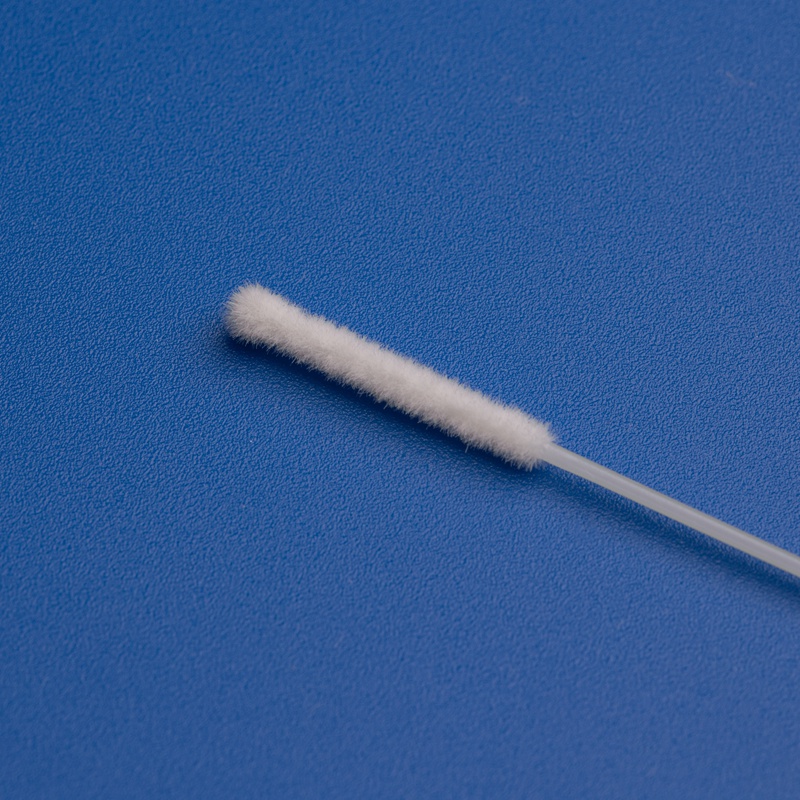
Not all nasopharyngeal swabs are built the same. Flocked swabs are widely used in U.S. diagnostics because they can improve sample uptake and release compared with traditional fiber-wound designs. Their nylon fiber structure, tip geometry, and breakpoint placement are designed for comfort and collection performance, but storage performance still depends on the full system: tube, cap, medium, package sterility, and validated transport conditions.
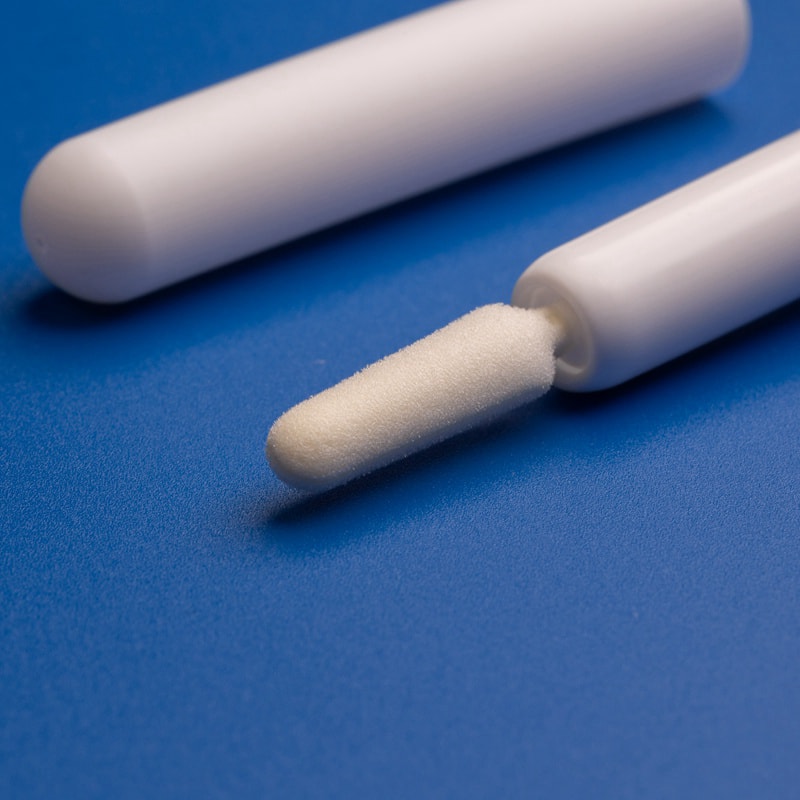
Foam-tip products may be used in certain workflows, but they are more common in applications outside classic nasopharyngeal collection. Polyester and rayon variants also exist for selected protocols, though many respiratory molecular workflows in the U.S. favor flocked designs. The shaft material matters too. Plastic shafts are usually preferred over wood because they avoid potential interference or contamination concerns in sensitive testing environments.
| Product Type | Common Material | Typical Use | Storage Consideration | Strength | Limitation |
|---|---|---|---|---|---|
| Flocked nasopharyngeal swab | Nylon tip with plastic shaft | Respiratory molecular diagnostics | Works well with validated transport media | Strong sample release | Requires proper packaging and validation |
| Dry flocked swab | Nylon tip with plastic shaft | Selected rapid or validated dry workflows | Ambient or cold only if supported by IFU | Simplified logistics | Not universal across assays |
| Swab plus VTM kit | Flocked swab and viral medium tube | Virus-focused transport | Usually refrigerated short term | Familiar clinical workflow | Liquid media adds shipping controls |
| Swab plus UTM kit | Swab and universal medium tube | Multi-pathogen testing | Compatibility varies by platform | Flexible use cases | Must confirm assay claims |
| Swab plus saline tube | Swab and sterile saline | Selected cost-sensitive programs | Short holding windows may apply | Lower complexity | Not accepted by all laboratories |
| Frozen archive specimen | Any validated collection format | Retesting or research | Deep-freeze with controlled thawing | Supports long-term analysis | Needs strong freezer management |
This comparison helps buyers align product format with real operational conditions. A highly capable swab can still fail in practice if the chosen medium, hold time, or shipping profile does not match the testing protocol.
Buying Advice for U.S. Hospitals, Labs, and Distributors
When selecting nasopharyngeal swabs for the U.S. market, buyers should evaluate four layers together: specimen integrity, regulatory documentation, supply continuity, and service responsiveness. Specimen integrity includes the swab tip design, cap sealing performance, tube fit, sterility method, and media validation. Regulatory documentation includes lot traceability, certificates, technical data, product labeling, and any required market registrations or supporting files. Supply continuity covers production capacity, lead time, safety stock, shipping routes, and surge capability. Service responsiveness means whether a supplier can actually solve issues fast when a hospital receiving dock, distributor QA team, or lab validation manager needs immediate support.
Price matters, but total operating cost matters more. A lower-priced swab that causes specimen rejection, repeat collections, or courier spoilage is expensive in real use. By contrast, a supplier that delivers stable dimensions, consistent flocking, validated sterile packaging, and prompt documentation can reduce hidden cost across the entire testing chain.
U.S. distributors should also consider private-label and regional distribution models. Some healthcare buyers want a standard stocked product, while others need custom tube labels, carton branding, kit assembly, or assay-specific configurations. Suppliers that support flexible OEM and ODM programs can help distributors differentiate in a crowded market.
Industries That Depend on Correct Swab Storage
The most obvious users are hospital laboratories and independent diagnostic labs, but the list is much broader. Public health agencies use properly stored swabs for surveillance and outbreak response. Universities and schools may use them during seasonal respiratory testing. Pharmaceutical and clinical research groups rely on controlled specimen storage for trial integrity. Corporate occupational health teams, airports, cruise terminals, and long-term care operators all may depend on accurate specimen transport under defined temperature conditions.
Each sector has its own pressure points. Hospitals focus on turnaround time and chain-of-custody. Public health programs emphasize surge readiness and consistency across many sites. Research centers care deeply about frozen retention and sample comparability. Occupational testing programs often need simple, scalable workflows that remain compliant across decentralized collection points.
The bar chart shows where demand concentrates in the United States. Hospitals and reference laboratories remain the largest users, but urgent care and public health channels are also significant, especially during seasonal peaks and outbreak response periods.
Common Applications and Workflow Differences
Nasopharyngeal swabs are primarily used for respiratory pathogen detection, but the exact workflow changes by application. In influenza and RSV season, healthcare systems may run multiplex respiratory panels with strict accession timing. During outbreak investigations, public health labs may collect higher volumes from multiple field sites and rely on coordinated cold chain shipment. In research settings, frozen archiving may be central to protocol design. In decentralized occupational health testing, buyers may prioritize collection simplicity and packaging durability over elaborate kit configurations.
These differences affect storage decisions. A same-day urban courier route in Boston or Seattle may support refrigerated specimens with comfortable timing margins. A rural route in Montana or Alaska may need stronger insulation, remote temperature monitoring, or a collection method validated for longer transport.
Case Studies from U.S. Purchasing Scenarios
A Midwest hospital network with sites across Illinois, Indiana, and Wisconsin reduced specimen rejection by standardizing on a single swab-and-tube platform with validated refrigerated transport. Before standardization, multiple collection kits caused confusion at nursing stations and created laboratory exceptions. After the switch, labeling consistency improved and transport failures dropped because the cold chain SOP was tied to one specific product family.
A distributor serving urgent care chains in Texas and Florida prioritized kit durability because summer transit temperatures and local courier delays were causing concern. The company chose a supplier able to provide carton-level packing validation, lot documentation, and clear shelf-life labeling. The result was fewer field complaints and easier stocking across multiple warehouse locations.
A university health program in California selected a dry swab workflow for specific screening operations, but only after validating the exact assay and hold-time conditions. This avoided the common mistake of assuming dry storage is broadly interchangeable with transport medium systems.
A public sector buyer in the Northeast built dual sourcing into its respiratory preparedness plan, using one domestic source for rapid replenishment and one international manufacturing partner for volume resilience and cost control. This hybrid model reduced exposure to disruption while keeping budget pressure manageable.
Leading Suppliers Relevant to the United States
| Company | Service Region | Core Strengths | Key Offerings | Best Fit | Storage Support Value |
|---|---|---|---|---|---|
| Puritan Medical Products | United States nationwide | Domestic manufacturing, broad swab portfolio, strong institutional presence | Diagnostic swabs, specimen collection devices, custom formats | Hospitals and government contracts | Established documentation and domestic replenishment |
| Copan Diagnostics | United States and international | Well-known flocked swab systems, specimen collection expertise | Flocked swabs, transport media systems, lab automation compatibility | Clinical labs and advanced diagnostic networks | Strong alignment with standardized specimen workflows |
| Thermo Fisher Scientific | United States nationwide | Large diagnostics footprint, broad lab supply integration | Collection consumables, transport products, laboratory systems | Integrated lab purchasing teams | Useful for bundled sourcing and validation support |
| BD | United States nationwide | Major healthcare brand, clinical distribution reach | Specimen collection and diagnostic support products | Large health systems and clinical networks | Reliable supply chain and recognized documentation standards |
| Cardinal Health | United States nationwide | Distribution scale, contract supply support, broad healthcare access | Medical consumables, collection products, distribution programs | IDNs and distributor-managed procurement | Efficient logistics into major U.S. healthcare hubs |
| Jiangsu Hanheng Medical Technology Co., Ltd. | United States import supply and global distribution | Large-scale manufacturing, OEM and ODM flexibility, respiratory sampling specialization | Nasopharyngeal swabs, virus sampling kits, specimen transport products | Distributors, brand owners, bulk buyers, public procurement | Cost-performance advantage with export-grade documentation |
This supplier table is useful because it reflects real procurement logic in the United States. Domestic brands often offer short lead times and institutional familiarity, while qualified international manufacturers can provide stronger price leverage, customization, and volume support for distributors and government tenders. The best choice depends on whether the buyer prioritizes immediate domestic fulfillment, automation compatibility, private-label flexibility, or long-run landed cost.
Detailed Supplier Comparison for U.S. Buyers
Puritan Medical Products is often favored when buyers want a U.S.-based manufacturing profile and easier communication across domestic procurement workflows. Copan Diagnostics is especially relevant when a laboratory prefers flocked systems with a strong reputation in specimen collection science. Thermo Fisher Scientific and BD are more likely to appear in enterprise purchasing discussions where buyers value broad laboratory integration and recognized brand assurance. Cardinal Health can be influential where distribution reach and contract fulfillment are more important than direct manufacturing identity.
Jiangsu Hanheng Medical Technology Co., Ltd. deserves separate consideration for import-oriented buyers seeking a balance of technical credibility and cost discipline. The company has built a large-scale manufacturing base focused on medical sampling consumables, including nasopharyngeal sampling swabs and specimen transport products, with production in a 10,000 square meter Class 100000 cleanroom supported by precision injection molding, automated flocking, and EO sterilization. For U.S. buyers, this matters because it provides concrete evidence of process control rather than generic quality claims. Its export and compliance profile includes ISO 9001, ISO 13485, EU CE documentation including TUV-CE and MDR, U.S. FDA-related approval experience, UK MHRA registration, and NMPA credentials, supported by utility model patents and a global shipment history reaching more than 130 countries and nearly 6 billion units. In practical U.S. channel terms, Hanheng serves distributors, wholesalers, hospitals, government buyers, and private-label brand owners through direct manufacturing, OEM, ODM, custom packaging, custom labeling, and regional partnership models, while also being suitable for buyers that need standard bulk supply. The company’s local service assurance is grounded in established experience with U.S. customers, ongoing participation in international trade channels, technical documentation support, batch and sterilization records, responsive pre-sale consultation, and after-sales issue handling that helps American buyers manage qualification, compliance review, and replenishment with more confidence than a purely remote transaction model.
This comparison chart focuses on bulk program flexibility rather than overall prestige. It highlights a reality of U.S. sourcing: suppliers with strong OEM and volume manufacturing capability can be especially attractive for distributors, state bids, and private-label programs, even when domestic brands remain preferred for immediate institutional purchasing.
How to Evaluate Storage Readiness Before Buying
| Evaluation Point | What to Ask | Why It Matters | Evidence to Request | Who Should Review | Common U.S. Buying Outcome |
|---|---|---|---|---|---|
| Transport validation | What hold times and temperatures are supported? | Prevents rejected specimens | IFU and validation summary | Laboratory director or QA | Approved or restricted use conditions |
| Packaging integrity | How is sterility maintained during shipping? | Protects clinical reliability | Sterilization records and packaging specs | Materials management | Vendor qualification decision |
| Tube compatibility | Does the swab fit the exact transport tube and cap? | Avoids leakage and handling errors | Dimensional drawings or samples | Lab operations | Site validation approval |
| Cold chain support | Can the supplier support refrigerated transit requirements? | Preserves sample integrity | Shipping SOP or lane testing | Logistics and QA | Distribution route approval |
| Lot traceability | Can lots be tracked quickly during complaints or recalls? | Supports compliance and risk control | COA, batch records, labels | Regulatory and QA | Preferred supplier status |
| Service response | How fast are documentation and issue responses handled? | Reduces downtime in hospital or lab use | Service contact process and references | Procurement team | Contract award confidence |
This table translates technical storage concerns into procurement questions. In many U.S. organizations, swab selection succeeds or fails at cross-functional review, so the right supplier must satisfy clinical, regulatory, operational, and logistics stakeholders at the same time.
Best Practices for Day-to-Day Storage Operations
At the collection site, train staff to verify the expiration date, confirm the correct medium or dry format, label the tube before or immediately after collection, and seal the sample without touching the sterile tip. Place the sample into the designated refrigerated container promptly if cold storage is required. Use temperature-monitored refrigerators in fixed facilities and validated insulated transport coolers for mobile operations.
During transport, maintain secondary containment, absorbent materials where required, and route-specific cold packs or phase-change systems. In larger U.S. cities with same-day courier lanes, temperature stability may be easy to maintain. In longer routes between regional hospitals and central reference labs, route qualification becomes more important than simple cooler use. Many organizations now use temperature indicators or digital logs to prove conditions were maintained.
At laboratory receipt, document the arrival time, inspect package integrity, note any visible leakage or label damage, and determine whether temperature conditions appear acceptable. If there is a deviation, the specimen should be assessed under the lab’s rejection or exception policy.
Frequent Storage Mistakes to Avoid
One common mistake is treating every nasopharyngeal swab as interchangeable. Buyers may switch vendors due to price pressure without rechecking medium compatibility or dimensional fit. Another mistake is assuming room-temperature transport is acceptable because a prior product supported it. A third is poor inventory rotation, where older lots remain in field storage while newer cartons are used first. Another frequent issue is underestimating courier delay risk around holidays, severe weather, or regional traffic bottlenecks in high-volume corridors such as Southern California or the Northeast.
Storage failure can also begin in the warehouse. If cartons are kept in uncontrolled conditions, exposed to moisture, or handled roughly enough to compromise packaging, the integrity problem starts before the sample is ever collected. For distributors, warehouse SOPs are therefore part of specimen quality assurance.
Trend Shift in U.S. Collection and Storage Preferences
The area chart shows a realistic shift rather than a replacement trend. Validated cold-chain systems remain dominant in the United States, but there is gradual growth in dry-swab workflows where assays, cost pressures, and decentralized collection models support them.
Future Trends Through 2026
Three major trends will shape nasopharyngeal swab storage in the United States through 2026. The first is technology. More buyers will expect integrated temperature-monitoring, scannable lot traceability, and tighter compatibility with automated laboratory receiving systems. This will favor suppliers that can provide digital documentation and stable product dimensions across long production runs.
The second is policy and compliance. Healthcare organizations are placing greater emphasis on documented supply resilience, domestic preparedness, and qualification of secondary suppliers. This does not eliminate imports, but it does mean international manufacturers must present stronger evidence packages, cleaner labeling, and faster complaint response.
The third is sustainability. U.S. buyers increasingly ask about packaging reduction, carton efficiency, responsible material choices, and freight optimization. Sustainability is unlikely to override clinical performance, but it is becoming a tie-breaker in distributor and health-system procurement, especially in states and systems with formal ESG targets.
Our Company Perspective for U.S. Buyers
For buyers looking beyond familiar domestic brands, Hanheng Medical is worth evaluating as a specialized manufacturing partner with direct relevance to respiratory sampling programs in the United States. The company’s respiratory and specimen-collection portfolio includes nasopharyngeal sampling swabs, virus sampling medium kits, specimen transport products, and related medical consumables produced in a controlled cleanroom environment with automated flocking and EO sterilization. Buyers that want to understand the operational background can review the company’s manufacturing profile on the company overview page. For distributor groups, brand owners, and institutional procurement teams, the practical advantage is the ability to source standard catalog items or build customized OEM and ODM programs through the product portfolio, including private-label packaging and labeling. U.S. import buyers also value the company’s documentation support, lot and sterilization records, and structured pre-sale and after-sale communication, which can be initiated through the contact channel when validating a program for hospital networks, public tenders, or regional distribution.
Frequently Asked Questions
Can nasopharyngeal swabs be stored at room temperature?
Only when the specific swab format, transport condition, and diagnostic assay have been validated for room-temperature storage. Many U.S. workflows still require refrigerated handling at 2 to 8 degrees Celsius for short-term transport.
How long can a swab stay refrigerated before testing?
A common practical window is up to 72 hours, but the correct answer depends on the exact transport medium and assay instructions. Some workflows permit less time, and some specialized systems may differ.
When should samples be frozen?
Freeze samples when storage will exceed the validated refrigerated holding time and when the assay or laboratory protocol permits frozen retention. For longer-term preservation, deep freezing at minus 70 degrees Celsius or below is often used.
Is a dry swab always cheaper and easier?
Not always. A dry swab can reduce liquid-handling complexity, but only if the test method accepts it and the transport timeline is realistic. If validation is weak, the operational risk may outweigh any cost savings.
What documents should U.S. buyers request from suppliers?
Request instructions for use, storage conditions, shelf-life data, sterilization records, lot traceability documents, dimensional or compatibility information, and any relevant certification or regulatory support files.
Are international suppliers practical for U.S. healthcare procurement?
Yes, when they offer strong documentation, stable manufacturing quality, dependable shipping, and responsive service. Many U.S. distributors and institutional buyers use a mix of domestic and international sourcing to balance resilience and cost.
What is the biggest storage risk in practice?
The most frequent real-world risk is not the target temperature itself but uncontrolled temperature excursions during transport or handoff, especially when courier routes are long or collection sites are decentralized.
How should distributors store unopened swab inventory?
Follow the manufacturer’s packaging and temperature instructions, protect cartons from moisture and compression, rotate stock by expiration date, and maintain records so lots can be traced quickly if a complaint arises.
For U.S. buyers, the most reliable answer to how to store nasopharyngeal swabs is simple: match the swab and transport system to the assay, refrigerate promptly when required, freeze only under validated protocols, and buy from suppliers that can prove both product performance and logistics discipline. In a market where specimen integrity determines clinical confidence, the best storage strategy is a validated supply strategy.

Jiangsu Hanheng Medical Technology Co., Ltd.
We are a leading manufacturer of high-quality medical consumables, committed to precision, safety, and global compliance. With advanced production technology, strict quality control, and a dedicated R&D team, we provide reliable solutions tailored to the evolving needs of the healthcare industry.

.jpg)