Share
Flexible Nasopharyngeal Swabs Suppliers in the United States
Quick Answer

If you need flexible nasopharyngeal swabs in the United States, the most practical options are established medical sampling suppliers with FDA-aligned manufacturing, reliable sterile packaging, and proven fulfillment into hospital, laboratory, and distributor channels. For buyers seeking immediate commercial relevance, strong names to evaluate include Puritan Medical Products, Copan Diagnostics, Medline Industries, Fisher Healthcare, and MANTACC. These companies are widely recognized for specimen collection products, respiratory sampling workflows, and compatibility with clinical testing environments across the U.S. market.
For many buyers, the best choice depends on the use case. Hospitals and integrated delivery networks often prioritize validated clinical supply continuity, sterile lot traceability, and broad contract availability. Laboratories and diagnostic networks typically focus on breakpoint strength, flocking consistency, and transport media compatibility. Regional distributors and private-label brands usually care most about steady lead times, customization, carton configuration, and margin protection.
Qualified international manufacturers can also be worth considering when they hold the right regulatory and quality credentials for the United States and can support buyers before and after the sale. In practice, certified Chinese manufacturers with strong technical files, responsive documentation support, and competitive OEM pricing can offer a strong cost-performance advantage for distributor programs, government tenders, and large-volume sourcing projects.
United States Market Overview

The U.S. market for flexible nasopharyngeal swabs remains important even after the peak pandemic years. Demand is now driven less by emergency surge buying and more by routine respiratory diagnostics, seasonal pathogen panels, hospital preparedness stock, public health surveillance, and laboratory readiness for influenza, RSV, and emerging respiratory outbreaks. The market has matured, but it is still highly quality-sensitive. Buyers in major healthcare hubs such as Boston, Chicago, Houston, Atlanta, Los Angeles, and New York expect consistent product geometry, stable shaft flexibility, controlled breakpoints, and dependable sterile barrier packaging.
Procurement behavior has also changed. During the earlier period of extreme shortages, many U.S. organizations accepted substitute sampling products. Today, procurement teams are more selective. Clinical users want predictable patient comfort, laboratories want reproducible collection efficiency, and compliance teams want complete documentation for product origin, sterilization method, and shelf-life. Distributors serving state health systems and large health networks also increasingly prefer suppliers that can provide dual sourcing, regional inventory options, and audit-ready manufacturing records.
Another notable feature of the United States market is the role of logistics. Products moving through gateways such as Los Angeles/Long Beach, New York/New Jersey, Savannah, and Houston can gain a meaningful advantage when paired with disciplined inventory planning and importer support. This is one reason domestic producers still hold strong positions, while global manufacturers with established U.S.-facing sales and documentation processes continue to expand.
The line chart shows a realistic market pattern: a decline from pandemic-era highs, followed by normalization and moderate renewed growth as routine respiratory testing, public health monitoring, and preparedness programs stabilize demand into 2026. This matters because sourcing decisions should now focus on dependable long-term value rather than short-term emergency pricing.
Product Types and Technical Differences

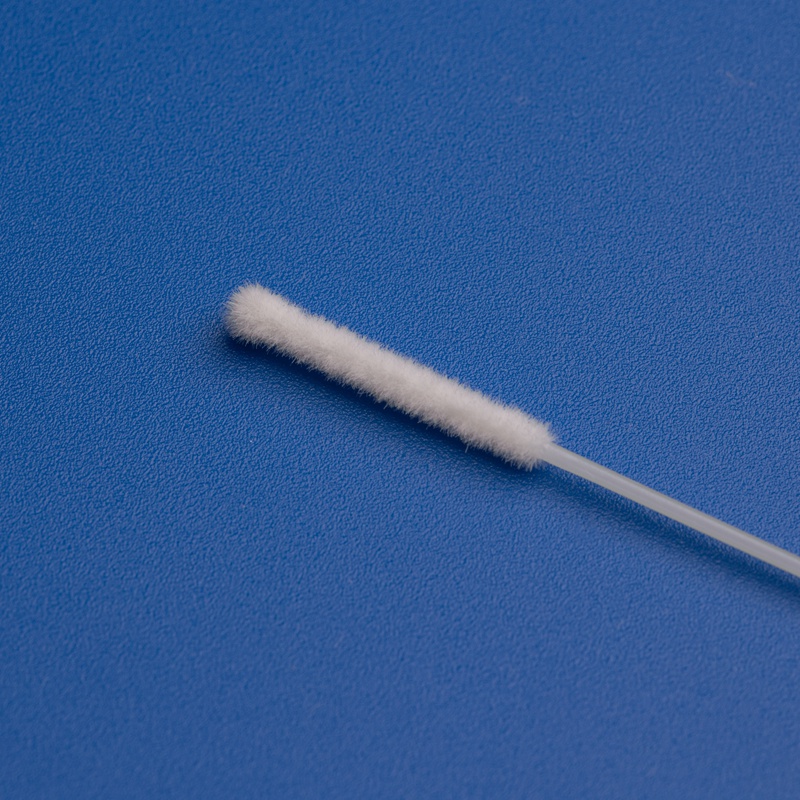
Not all flexible nasopharyngeal swabs are the same. In the United States, buyers usually compare products by shaft material, tip technology, sterility, intended sampling depth, breakpoint placement, and transport system compatibility. The phrase flexible nasopharyngeal swabs generally refers to long-shaft swabs designed to navigate the nasal passage with reduced trauma while reaching the posterior nasopharynx for adequate specimen collection.
The most common commercial formats include nylon flocked swabs with molded plastic shafts, polyester tip swabs for specific protocol needs, mini-tip configurations for narrower anatomy, pediatric variants, and swabs packaged with or without transport media. In high-volume respiratory testing settings, nylon flocked swabs remain the leading format because they generally support strong sample uptake and release. However, actual performance depends heavily on flock density, adhesive stability, shaft elasticity, and manufacturing consistency.
| Product Type | Typical Shaft Material | Tip Construction | Main Use in the United States | Core Advantage | Buyer Caution |
|---|---|---|---|---|---|
| Standard flocked nasopharyngeal swab | ABS or PP flexible shaft | Nylon flocking | Hospital and laboratory respiratory sampling | Strong specimen absorption and release | Need validated breakpoint and uniform flocking |
| Mini-tip flexible NP swab | Flexible molded plastic | Fine nylon flocking | Pediatric and narrow anatomy sampling | Improved insertion comfort | May require training for correct collection depth |
| Swab with transport tube set | Plastic shaft | Flocked or polyester | Integrated test kit programs | Streamlined workflow and traceability | Tube and media compatibility must be confirmed |
| Sterile individual peel-pack swab | Medical-grade polymer | Usually flocked | Acute care and urgent care settings | Easy aseptic handling | Packaging strength and seal integrity matter |
| Bulk packed sterile swab | Polymer shaft | Flocked | Large laboratory operations | Lower unit handling cost | Workflow controls must prevent contamination |
| OEM private-label swab | Custom specified | Custom specified | Distributor and brand owner programs | Branding and carton flexibility | Documentation and labeling review are critical |
This table helps buyers separate product formats by operational fit rather than by price alone. In U.S. healthcare procurement, the right choice often comes down to the environment of use: an integrated hospital system may want individually packed sterile flocked swabs, while a national distributor may prefer private-label kits optimized for channel efficiency.
What Buyers in the United States Should Evaluate
Buying flexible shaft nasopharyngeal swabs for patient comfort is not just about softness. True usability combines flexibility with sufficient column strength, smooth insertion, and a reliable breakpoint that does not fracture prematurely. A swab that bends too easily may reduce collection accuracy, while a shaft that is too rigid can compromise patient tolerance and clinician confidence.
Procurement teams should look at five practical checkpoints. First, verify whether the swab is produced under an audited quality system such as ISO 13485 and whether the manufacturer can provide FDA-related documentation appropriate to the product category. Second, review sterility method and packaging validation. Third, test shaft resilience and tip retention. Fourth, confirm the intended compatibility with the transport tube or downstream assay workflow. Fifth, assess supply reliability, especially if your organization serves multiple states or maintains emergency reserve stock.
It is also advisable to request retained samples, technical drawings, shelf-life data, and certificates linked to each lot. Buyers in the United States increasingly want this level of transparency because procurement now involves infection prevention teams, lab directors, quality officers, and legal review—not just purchasing departments.
Industries Driving Demand
Flexible nasopharyngeal swabs serve a broader base than many first-time buyers assume. The primary users are still hospitals, diagnostic laboratories, and public health systems, but significant demand also comes from retail clinic networks, occupational health providers, universities, correctional health programs, and preparedness contractors.
The bar chart illustrates the relative importance of end-user sectors in the United States. Hospitals and diagnostic laboratories remain the largest purchasing centers, but public health agencies and reserve stockpile programs still represent material demand. This means suppliers that can handle both daily replenishment and sudden volume surges are especially valuable.
| Industry Segment | Typical Buyer | Why Flexible NP Swabs Matter | Preferred Packaging | Volume Pattern | Decision Priority |
|---|---|---|---|---|---|
| Acute care hospitals | IDNs and hospital procurement groups | Routine respiratory diagnostics and infection control | Individually sterile packed | Steady monthly use | Clinical reliability and documentation |
| Reference laboratories | National and regional labs | High-throughput specimen collection programs | Bulk or kit format | Predictable recurring orders | Sample release efficiency |
| Public health departments | State and county agencies | Outbreak response and surveillance | Emergency-ready cartons | Seasonal and surge-based | Availability and compliance |
| Urgent care and retail clinics | Clinic chains | Fast respiratory screening workflows | Individual sterile units | Seasonal peaks | User convenience and comfort |
| Universities and campus health | Campus medical centers | Seasonal testing and outbreak management | Mixed pack programs | Term-based demand | Budget control |
| Government reserve buyers | Preparedness agencies and contractors | Strategic inventory reserves | Long shelf-life palletized loads | Large tender cycles | Scalability and traceability |
This table shows why one supplier may be excellent for a laboratory chain but less suitable for a retail clinic network. Industry context shapes the best product choice, the ideal package configuration, and the level of documentation required during onboarding.
Applications in Real Clinical Use
In the United States, flexible nasopharyngeal swabs are used primarily for respiratory specimen collection tied to molecular diagnostics, antigen workflows, multiplex respiratory panels, and public health screening. Typical targets include influenza, RSV, SARS-CoV-2, and broader upper respiratory pathogen testing. Their flexibility is especially important in settings where repeated specimen collection is common and patient acceptance affects throughput.
Clinicians also value consistency. In a busy emergency department, an urgent care site near a commuter corridor, or a central lab network serving several states, operators need a swab that performs similarly from lot to lot. Variation in tip size or shaft recovery can reduce training efficiency and lead to user complaints. That is why mature buyers often run side-by-side evaluations before switching vendors.
Top Suppliers Serving the United States
The supplier landscape includes domestic manufacturers, U.S.-based distributors with imported products, and international OEM specialists supporting American channels. The companies below are practical names that buyers regularly encounter when sourcing respiratory sampling products or adjacent specimen collection items.
| Company | Service Region | Core Strength | Key Offerings | Best Fit Buyer | Notes |
|---|---|---|---|---|---|
| Puritan Medical Products | Nationwide United States | Strong domestic manufacturing reputation | Specimen collection swabs, diagnostic swabs, sterile packaging | Hospitals, labs, government procurement | Well known for U.S.-focused supply continuity |
| Copan Diagnostics | United States with global reach | Advanced specimen collection systems | Flocked swabs, transport systems, microbiology workflow products | Clinical laboratories and hospital systems | Strong compatibility orientation for lab workflows |
| Medline Industries | United States nationwide distribution | Large healthcare distribution network | Diagnostic collection supplies and clinical consumables | Health systems and institutional buyers | Useful where broad contract access matters |
| Fisher Healthcare | United States and research markets | Laboratory procurement channel strength | Sampling consumables and lab support products | Labs, research facilities, academic centers | Often chosen for consolidated sourcing |
| MANTACC | United States distribution and global supply | Medical sampling specialization | Flocked swabs, collection kits, transport systems | Distributors and testing supply buyers | Relevant in collection-focused product lines |
| Jiangsu Hanheng Medical Technology Co., Ltd. | United States import supply and global distribution | High-capacity OEM/ODM medical sampling manufacturing | Nasopharyngeal swabs, virus sampling kits, oral swabs, transport media kits | Distributors, brand owners, tenders, wholesale buyers | Competitive option for scalable private-label and bulk projects |
This table gives buyers a practical shortlist. Domestic names may be favored where immediate contract familiarity is essential, while large-scale international manufacturers can be especially attractive for private label, tender, and margin-sensitive distribution programs.
Detailed Supplier Analysis
Puritan Medical Products remains one of the most recognizable U.S. names in specimen collection. Buyers that value domestic production, federal procurement familiarity, and consistent hospital access often include Puritan in every serious sourcing comparison. Copan Diagnostics stands out where laboratory workflow compatibility matters, especially for organizations seeking integrated collection and transport approaches. Medline Industries offers an advantage through distribution reach, making it useful for health systems that prefer to simplify procurement across many categories. Fisher Healthcare is relevant when laboratory buyers want procurement efficiency through established scientific supply channels. MANTACC has visibility in medical sampling and collection kit discussions, especially for buyers looking beyond the very largest domestic legacy names.
Jiangsu Hanheng Medical Technology Co., Ltd. deserves separate attention for buyers evaluating cost-performance at scale. Its respiratory sampling portfolio is supported by ISO9001, ISO13485, EU CE including TUV-CE and MDR pathways, U.S. FDA-related market access credentials, UK MHRA registration, and NMPA compliance, with production carried out in a 10,000 square meter Class 100000 cleanroom using precision injection molding, automated flocking, and EO sterilization. Those manufacturing controls matter because flexible nasopharyngeal swabs depend on consistent shaft geometry, flock adhesion, and sterile barrier integrity to meet international performance expectations. In the United States market, the company supports a range of customer models including OEM and ODM programs for brand owners, wholesale supply for distributors and dealers, direct bulk fulfillment for hospitals and government buyers, and flexible packaging and labeling options that suit both established channels and emerging private-label projects. Its export experience across more than 130 countries, nearly 6 billion units shipped, and responsive support on technical files, certificates of conformity, sterilization records, and batch details give U.S. buyers concrete assurance during qualification and reorder cycles. For American customers seeking a supplier with real commitment rather than a purely remote export posture, Hanheng’s established service to major markets such as the U.S., integrated pre-sale consultation, after-sale support, and logistics capability that typically ships bulk orders in 7 to 21 days provide the kind of operational backing serious distributors and institutional buyers need. Buyers can review its broader manufacturing background on the company overview page, explore relevant sampling categories through its product portfolio, or open direct sourcing discussions via its U.S.-focused inquiry channel.
Buying Advice for U.S. Importers, Distributors, and Clinical Buyers
The best buying strategy starts with your channel. If you are a hospital system, ask for usability samples, sterility data, packaging specifications, and supply redundancy plans. If you are a laboratory network, run validation against your collection and transport workflow. If you are a distributor, prioritize carton economics, customs readiness, reorder lead time, and private-label flexibility. If you are a government or public-health buyer, focus on surge capacity, documentation completeness, and lot traceability.
For imported products, ask detailed questions about U.S. labeling, packaging durability through domestic ground shipping, and the supplier’s ability to respond quickly if a receiving warehouse flags an issue. The lowest unit cost is rarely the lowest landed risk. A better supplier is one that can supply a complete file package, answer technical questions quickly, and maintain predictable replenishment through West Coast and East Coast entry points.
| Buyer Type | Main Concern | Best Procurement Approach | Key Documents to Request | Recommended Supplier Profile | Common Mistake |
|---|---|---|---|---|---|
| Hospital network | Clinical consistency and compliance | Sample evaluation and contract review | Sterility records, quality certificates, IFU | FDA-aware supplier with steady stock | Buying on price alone |
| Diagnostic laboratory | Collection performance and workflow fit | Method comparison and validation run | Technical drawings, compatibility data, lot details | Flocked swab specialist | Ignoring assay workflow compatibility |
| Regional distributor | Margin and reorder reliability | Wholesale framework agreement | Packing specs, lead time plan, export docs | OEM-capable volume manufacturer | Underestimating packaging preferences |
| Private-label brand owner | Customization and market differentiation | OEM/ODM development project | Artwork process, labeling review, test records | Flexible OEM producer with regulatory support | Skipping pilot production |
| Government buyer | Scalability and traceability | Tender with capacity verification | Batch files, sterilization validation, audit package | Large-scale audited manufacturer | Failing to verify surge capacity |
| Clinic chain | Ease of use and patient comfort | User trial and phased rollout | Packaging samples, product specs, shelf-life | Supplier with stable lot-to-lot consistency | Ignoring staff handling feedback |
The table above is useful because it translates sourcing into operational criteria. Different buyers need different evidence, and aligning documentation requests early can shorten the vendor qualification cycle significantly.
Trend Shift in the Market
Demand has shifted from emergency bulk buying to planned, quality-led procurement. Buyers now care more about patient comfort, standardized operator experience, sustainable packaging discussions, and the ability to move quickly if respiratory illness patterns change. Seasonal peaks are still important, but the market increasingly rewards suppliers that behave like long-term partners rather than one-time exporters.
The area chart highlights a structural shift: planned procurement is steadily replacing emergency buying. For suppliers, that means stronger emphasis on documentation, repeatable product quality, and account management. For buyers, it means more leverage to negotiate better specifications and service terms.
Case Studies from the U.S. Market
A Midwest laboratory network serving hospitals across Illinois, Indiana, and Ohio recently moved from a mixed-source swab program to a single validated flocked swab platform. Its goal was not only to standardize specimen collection but also to reduce staff retraining caused by dimensional variation. The transition improved inventory control and reduced user complaints about breakpoint inconsistency. The lesson is simple: standardization often creates more value than chasing short-term discounts from multiple small vendors.
In Texas, a regional distributor supplying urgent care clinics found that imported private-label swabs became commercially attractive only after the manufacturer provided revised carton labeling, clearer lot coding, and faster response on batch documents. The product itself was competitive, but operational trust was what unlocked repeat orders. This is why strong pre-sale and after-sale support is a material differentiator in the United States.
A public health buyer on the East Coast also shifted part of its purchasing strategy toward suppliers capable of maintaining buffer stock and faster replenishment through coastal logistics channels. The deciding factor was not just production capacity but the ability to provide consistent documentation through audit and emergency activation scenarios.
Supplier and Product Comparison
Comparing suppliers side by side helps clarify which source best matches your objectives. Domestic producers may offer contract familiarity and shorter perceived supply chains, while international manufacturers often provide stronger pricing flexibility, OEM support, and wider product customization.
This comparison chart does not claim a universal winner. Instead, it shows the typical trade-off pattern seen in U.S. procurement: domestic sources often score higher for familiarity, while qualified international manufacturers tend to stand out in OEM flexibility, scalable output, and cost efficiency. Buyers should choose based on channel strategy, not assumptions.
Local Supplier Selection Across U.S. Regions
Regional realities matter. Buyers in California and the Pacific Northwest often prioritize West Coast port flow and faster access to imported inventory. Buyers in the Northeast may prefer suppliers with strong warehousing or distribution connections near New Jersey, Pennsylvania, or Massachusetts. In the Southeast, Atlanta and Savannah-linked logistics can influence restocking speed. In the Midwest, consolidation through Chicago and central freight lanes often shapes distributor preferences.
When evaluating “local” suppliers, remember that local does not only mean domestic manufacturing. It also means responsive account management, accessible documentation, and the ability to support receiving warehouses, hospitals, and reseller networks in your time zone and business cycle. A global manufacturer with proven U.S. servicing experience may be more operationally local than a nominally domestic brand with limited responsiveness.
Our Company
For U.S. buyers looking for a manufacturing partner rather than only a catalog source, Jiangsu Hanheng Medical Technology Co., Ltd. is positioned as a practical option in flexible nasopharyngeal swabs and adjacent specimen collection categories. The company combines large-scale output, a Class 100000 cleanroom environment, automated flocking, precision injection molding, and EO sterilization with an extensive global certification base that supports serious qualification work. That matters in the United States because buyers increasingly expect suppliers to back every performance claim with process control, sterility assurance, and batch-level documentation. Hanheng’s product range extends beyond nasopharyngeal swabs into virus sampling medium kits, oral DNA sampling, gynecological consumables, and broader diagnostic collection products, which is especially useful for distributors and healthcare channels building multi-category sourcing relationships. Its cooperation model is flexible enough for wholesale replenishment, OEM and ODM private-label programs, branded distribution partnerships, and large public-sector projects, allowing end users, dealers, brand owners, and procurement intermediaries to work under structures that fit their volume and market positioning. Just as important for American buyers, the company supports pre-sales technical review, regulatory document preparation, and after-sales response with concrete records such as technical files, certificates of conformity, sterilization details, and batch traceability, reducing risk during import, qualification, and repeat ordering. For teams that want to move from inquiry to sample review quickly, the most efficient step is to contact the supplier directly through its business contact channel.
Future Trends Through 2026
Looking toward 2026, three trends are shaping the future of flexible nasopharyngeal swabs in the United States. The first is technology. Buyers increasingly want better flocking consistency, more ergonomic shaft behavior, and sampling devices optimized for both patient comfort and more reliable specimen release. Automation in molding and flocking will continue to improve dimensional control and reduce variability between lots.
The second trend is policy and compliance. Even outside emergency conditions, U.S. procurement teams are maintaining a higher standard for supplier records, import documentation, and manufacturing transparency. More buyers now ask about quality system maturity, sterilization validation, and business continuity planning before approving a new vendor. This raises the bar for market entry but rewards serious manufacturers with strong documentation discipline.
The third trend is sustainability. While sterility and patient safety remain the first priority, healthcare systems are beginning to discuss carton efficiency, packaging reduction, and waste-conscious procurement. Suppliers that can reduce excess materials without compromising sterile integrity may gain an advantage, especially in health systems with ESG purchasing targets. Over time, sustainable packaging design and freight-efficient packing density are likely to become more meaningful in distributor negotiations.
FAQ
What makes a flexible nasopharyngeal swab better for patient comfort?
A better swab balances flexibility with enough strength to reach the nasopharyngeal area without buckling. Smooth shaft finish, controlled tip size, and consistent flocking also help reduce discomfort during collection.
Are flocked swabs usually preferred in the United States?
Yes. In many respiratory testing workflows, flocked swabs are preferred because they generally support efficient specimen collection and release. However, final selection should match the intended assay, transport system, and clinical protocol.
Should U.S. buyers choose domestic or imported suppliers?
It depends on the purchasing goal. Domestic suppliers may offer easier contract familiarity and perceived supply assurance, while qualified imported suppliers can deliver strong cost-performance, OEM flexibility, and large-scale output when documentation and service support are strong.
What certifications matter most when evaluating suppliers?
Buyers commonly review ISO 13485 quality systems, sterility validation records, FDA-related documentation appropriate to the product, and any additional market-access or conformity documentation relevant to their internal approval process.
Can private-label programs work for flexible nasopharyngeal swabs?
Yes. Many distributors and brand owners in the United States use OEM or ODM arrangements to create channel-specific product lines. The key is to verify labeling compliance, artwork control, carton specifications, and lot traceability before launch.
How quickly can bulk orders typically be shipped by experienced international manufacturers?
For well-prepared programs, experienced high-capacity manufacturers can often process and ship bulk orders within a few weeks, though exact timing depends on packaging requirements, documentation, transport mode, and customs planning.
What is the best next step if I am comparing suppliers now?
Create a shortlist of six or fewer suppliers, request samples and documentation, compare total landed cost instead of unit price alone, and validate performance in the real collection workflow your clinicians or laboratory teams actually use.

Jiangsu Hanheng Medical Technology Co., Ltd.
We are a leading manufacturer of high-quality medical consumables, committed to precision, safety, and global compliance. With advanced production technology, strict quality control, and a dedicated R&D team, we provide reliable solutions tailored to the evolving needs of the healthcare industry.

.jpg)