Share
Why Disposable Cervical Samplers Boost Safety in the United States
Quick Answer

Disposable cervical samplers improve patient safety in the United States by reducing cross-contamination risk, supporting sterile single-use collection, improving specimen consistency for Pap and HPV testing, and helping clinics standardize infection-control workflows. For hospitals, OB-GYN practices, community health centers, and screening programs, the safest choices usually come from established suppliers with documented quality systems, FDA-relevant compliance pathways, validated sterilization, and dependable lot traceability.
For buyers seeking practical sourcing options, commonly recognized names in the U.S. market and related cervical sampling ecosystem include CooperSurgical, BD, Cardinal Health, McKesson, MedGyn, and Puritan Medical Products. These companies are relevant because they support women’s health, diagnostic collection, medical distribution, or sterile sampling workflows across major U.S. care settings. Qualified international manufacturers can also be strong options when they hold appropriate certifications, maintain consistent documentation, and provide responsive pre-sales and after-sales support. In many cases, experienced Chinese manufacturers with U.S.-oriented compliance documentation and OEM capability can offer a compelling cost-performance balance for distributors and private-label buyers.
Why Patient Safety Matters in Cervical Sampling

Cervical screening is one of the most important preventive services in women’s health. In the United States, routine Pap testing, HPV screening, and co-testing are integrated into care pathways across large hospital systems, independent gynecology offices, federally qualified health centers, college health networks, and mobile screening programs. Patient safety in this setting depends not only on clinician skill and laboratory interpretation but also on the reliability of the collection device used at the start of the testing chain.
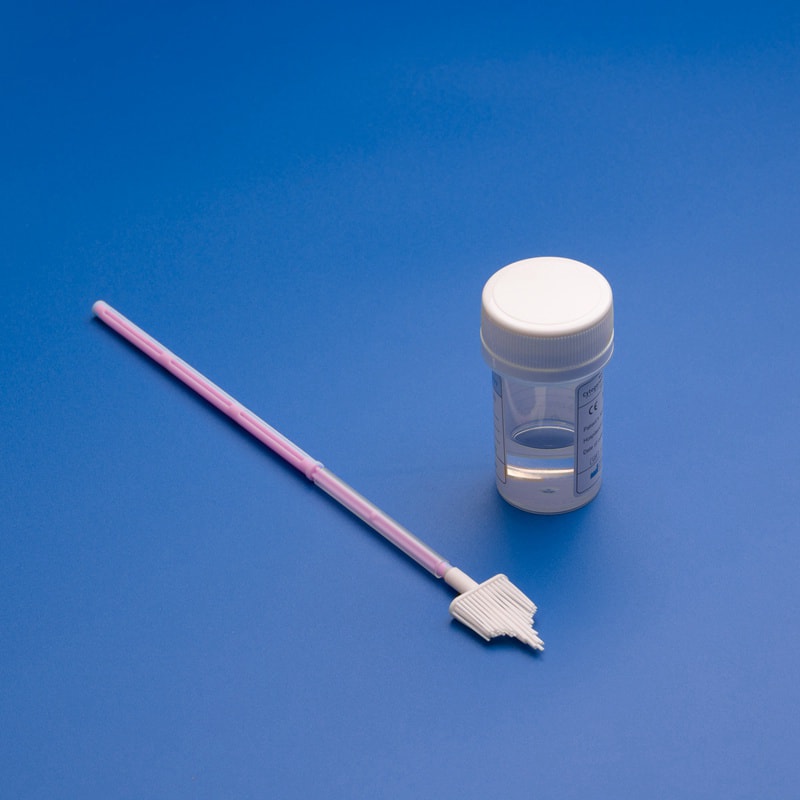
A disposable cervical sampler directly influences safety in several ways. First, it lowers the chance of patient-to-patient contamination because each device is intended for one use only. Second, a sterile, individually packaged sampler helps preserve specimen integrity before it reaches the transport medium or slide. Third, a well-designed brush or spatula can improve the adequacy of the collected cellular material, which helps reduce repeat sampling, delayed diagnosis, and unnecessary patient discomfort. Finally, standardized disposable products simplify staff training and inventory management, making them especially valuable in busy clinics from New York and Chicago to Houston, Los Angeles, and Miami.
In practical terms, “disposable cervical sampler patient safety” is not just about sterility. It also includes material biocompatibility, tip geometry, shaft strength, packaging integrity, label traceability, sterilization validation, and compatibility with the clinical method used. A safer sampler supports the whole screening workflow: opening the package, collecting the sample, transferring it correctly, documenting the lot number if needed, and disposing of the used device according to facility policy.
United States Market Context

The United States remains one of the world’s largest markets for cervical cancer screening products due to its extensive outpatient care network, strong laboratory capacity, and broad women’s health awareness. Demand is shaped by screening recommendations, insurance coverage patterns, state-level public health initiatives, and procurement systems used by integrated delivery networks and group purchasing organizations. Urban hubs such as Boston, Atlanta, Dallas, Seattle, and San Diego often adopt new gynecological consumables quickly, while regional distributors help move product into smaller community practices and rural clinics.
Because the U.S. healthcare system is highly decentralized, buyers often evaluate products differently depending on the care setting. A hospital-owned women’s center may focus on system-wide quality metrics, infection prevention, and vendor credentialing. A private OB-GYN clinic may prioritize ease of use, patient comfort, and supply continuity. A state screening program may focus on cost per collection, tender responsiveness, and delivery reliability through East Coast and West Coast logistics hubs. These differences explain why suppliers that can provide both documentation and operational flexibility tend to perform well in the American market.
U.S. Market Growth for Disposable Cervical Sampling
The market continues to benefit from preventive screening awareness, expanded HPV testing, and the need for workflow-efficient consumables. The line chart below illustrates a realistic U.S. market growth pattern for disposable cervical sampling devices and related collection tools over recent years.
How Disposable Cervical Samplers Improve Patient Safety
The most direct benefit is elimination of reuse. Single-use sterile samplers reduce the possibility that residual biological material remains on a device from a prior patient. In cervical screening, where the device comes into contact with sensitive mucosal tissue, this is especially important. Disposable sampling also removes the variability associated with reprocessing quality, which can differ across facilities and staff shifts.
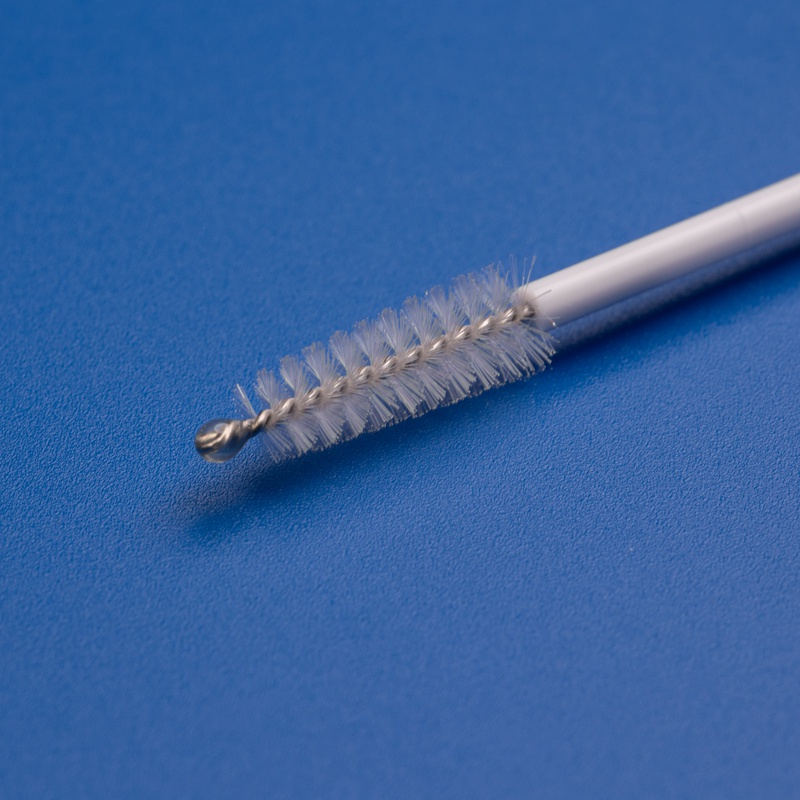
Another important factor is sample adequacy. A disposable cervical brush or sampler with consistent bristle alignment and predictable flexibility helps clinicians collect representative cells from the transformation zone. Better collection performance supports more reliable laboratory interpretation, which can reduce false negatives due to poor sampling. From a patient safety standpoint, that means fewer missed abnormalities and fewer return visits caused by inadequate specimens.
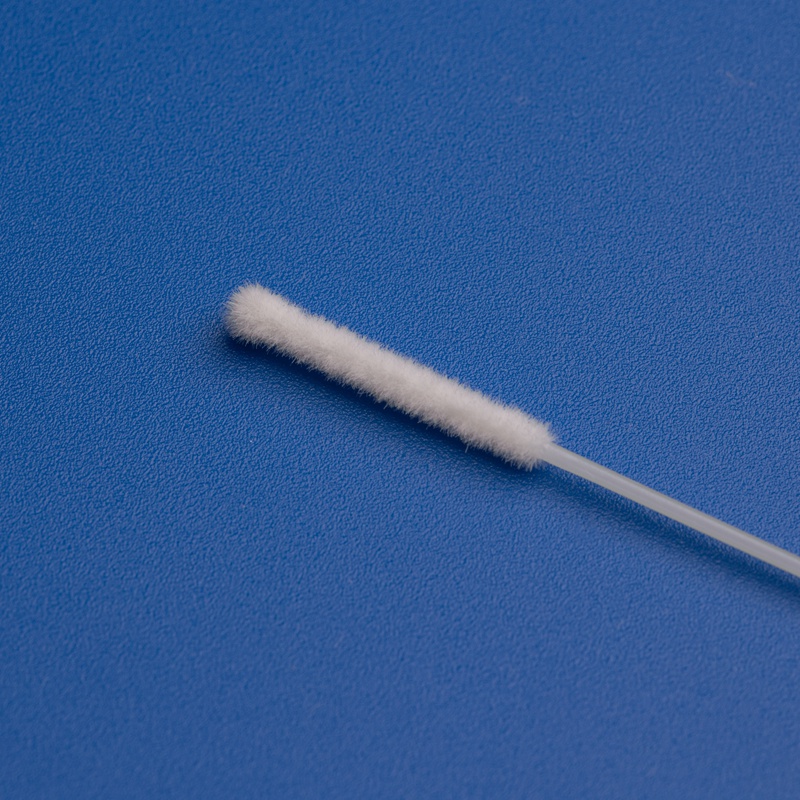
Patient comfort is also a safety issue. A poorly manufactured device with rough surfaces, unstable flocking, brittle plastic, or inconsistent dimensions may increase discomfort or minor trauma during collection. High-quality disposable samplers are engineered to minimize this risk with smooth molding, controlled softness, and sterile packaging that protects the device tip before use. The result is a more predictable collection experience, which matters in high-volume U.S. clinics trying to maintain both patient trust and throughput.
Finally, disposable products strengthen compliance and traceability. Many healthcare facilities now expect clear lot coding, production records, sterilization documentation, and supplier accountability. When a clinic can identify the exact batch used for a procedure, quality investigations become faster and more accurate. This level of control helps infection prevention teams, purchasing departments, and clinical managers respond effectively if a packaging or product complaint arises.
Key Safety Mechanisms in Practice
| Safety factor | Why it matters | Clinical impact | Buyer checkpoint |
|---|---|---|---|
| Single-use design | Prevents reuse between patients | Lower cross-contamination risk | Verify device is clearly labeled disposable |
| Sterile packaging | Protects device until use | Reduces contamination before collection | Check seal integrity and sterilization records |
| Consistent tip geometry | Supports repeatable collection technique | Better specimen adequacy | Review dimensional tolerance controls |
| Biocompatible materials | Limits irritation from poor plastics | Improves patient comfort | Ask for material specifications |
| Lot traceability | Enables complaint investigation | Faster quality response | Require labeled batch information |
| Validated manufacturing | Controls variability in production | More predictable clinical performance | Confirm ISO-based quality systems |
| Transport compatibility | Matches downstream testing method | Lower specimen handling error | Check fit with Pap or HPV workflow |
This table shows that safety is multi-layered. In the United States, procurement teams increasingly treat the cervical sampler as a regulated workflow component rather than a simple low-cost accessory. The safest purchasing decisions usually come from combining sterile assurance, design consistency, and operational traceability.
Product Types Used in Cervical Sampling
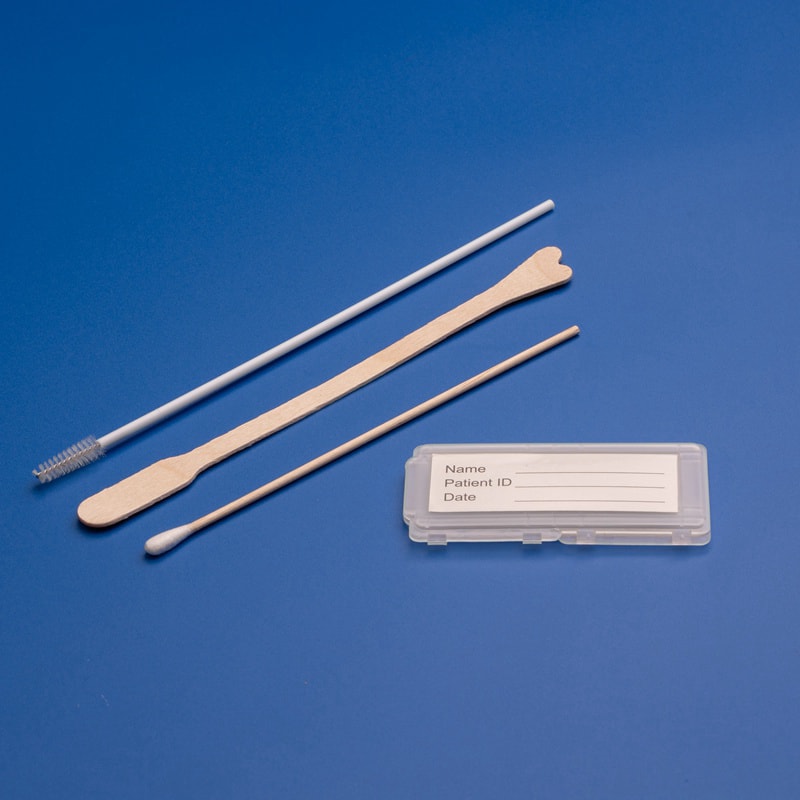
Cervical sampling products in the U.S. market generally fall into several categories. Traditional cervical spatulas are often used to collect ectocervical cells. Endocervical brushes are used to reach the canal and obtain targeted cell material. Combined broom-type samplers are designed to gather cells from both anatomical areas in one motion and are widely used in routine screening. Cytobrush variants can be used in diagnostic workups or paired workflows. Disposable sterile gynecological sampling kits may also include a speculum, brush, spatula, vial support, and packaging that simplifies procedure setup.
Different product designs affect patient safety differently. A sampler that performs well in liquid-based cytology may not be ideal for another laboratory workflow. A brush with excessive stiffness may compromise comfort, while one that is too soft may reduce collection adequacy. Buyers should therefore focus on use-case fit, not just unit price. This is especially relevant for health systems operating across multiple U.S. sites with different clinicians, lab partners, and patient demographics.
Comparison of Common Product Types
| Product type | Typical use | Patient safety benefit | Potential limitation | Best-fit setting |
|---|---|---|---|---|
| Cervical spatula | Ectocervical sampling | Simple, familiar collection method | May require additional tool for canal sampling | Routine Pap workflows |
| Endocervical brush | Canal-focused sampling | Improves targeted cell retrieval | Technique sensitivity matters | Specialist gynecology practices |
| Broom-style sampler | Combined cervical sampling | Efficient one-step collection | Requires correct rotation technique | High-volume outpatient clinics |
| Sterile cytobrush | Diagnostic or adjunct use | Good control in selected cases | Not always preferred for all screening protocols | Colposcopy support settings |
| HPV self-sampling kit | Emerging screening access model | Expands access and privacy | Program design and instructions are critical | Outreach and pilot programs |
| Complete gynecological kit | Bundled procedure setup | Reduces missing-item risk | Higher per-kit cost | Hospitals and organized screening programs |
For U.S. buyers, the best product type depends on the test method, clinician preference, and patient population. Safety improves when the chosen device aligns with the actual screening workflow used in the clinic rather than being selected on cost alone.
Industry Demand Across U.S. End-Use Sectors
Demand is strongest in women’s hospitals, OB-GYN clinics, diagnostic laboratory networks, public health programs, and multi-site outpatient groups. The bar chart illustrates how disposable cervical sampler demand is distributed across major sectors in the United States.
Buying Advice for U.S. Clinics and Distributors
When evaluating disposable cervical sampling products, buyers in the United States should begin with documentation. Ask for evidence of quality management systems, sterilization validation, packaging specifications, material information, and complaint-handling procedures. For products sold into the U.S. market, regulatory positioning and product classification should be clear. If the supplier offers private-label service, the buyer should also confirm artwork control, shelf-life data, and shipping validation for long transit routes through ports such as Los Angeles, Long Beach, New York/New Jersey, Savannah, and Houston.
Next, test usability in real clinical conditions. A product that looks similar on paper may perform very differently in practice. Clinicians should assess ease of opening, grip stability, rotational control, transfer of sample into the medium, and patient comfort during routine procedures. Procurement teams should also calculate the hidden cost of inconsistent samplers: repeat appointments, rejected specimens, staff complaints, and inventory variation across clinic sites.
Distributors and brand owners should pay close attention to supply continuity. During respiratory outbreaks or freight disruptions, low-priority consumables can still face production delays. Manufacturers with integrated molding, flocking, sterilization, and packaging are often better positioned to manage lead times. This matters for U.S. regional distributors serving several states or contract customers with recurring purchase schedules.
What Different Industries Need
Each end-use industry has a slightly different view of safety. Hospitals want traceability, broad compliance files, and consistency across departments. Independent OB-GYN clinics usually want ergonomic devices that minimize patient discomfort and support rapid appointments. Public health screening programs need dependable large-volume supply at predictable cost. Laboratories and pathology partners care about specimen adequacy and compatibility with transport and processing methods. Educational health systems value standardized training products that work reliably with rotating staff.
These differences explain why supplier conversations should include not only product specifications but also packaging format, carton configuration, lot size flexibility, and customer support responsiveness. A sampler that works perfectly for a single-physician practice may not be ideal for a large regional health network with central procurement and formal vendor performance scorecards.
Applications in Real Clinical Workflows
Disposable cervical samplers are used in routine cervical cancer screening, follow-up sampling after abnormal results, HPV testing workflows, women’s preventive health visits, public screening initiatives, and increasingly in hybrid care models that combine in-clinic testing with broader access programs. In a typical U.S. clinic, the device must integrate smoothly with exam room setup, electronic charting, labeling, and transport to the laboratory.
In high-volume urban centers such as Philadelphia, Phoenix, and Dallas, efficiency and consistency are often top priorities. In rural settings across the Midwest or Mountain West, long resupply cycles can make supply reliability the main safety issue. In both environments, the core safety principle is the same: the sampler should perform predictably every time and arrive sterile, intact, and easy to use.
Trend Shift in Sampling Preferences
The area chart below reflects how the U.S. market is gradually shifting from simple standalone collection tools toward more integrated, safety-focused solutions that emphasize specimen quality, packaging control, and convenience for both providers and patients.
Case Studies from Typical U.S. Procurement Scenarios
A multi-site women’s clinic group in the Southeast switched from mixed sampler brands to one standardized sterile disposable cervical collection line. Within one purchasing cycle, nursing staff reported fewer packaging issues and smoother room turnover, while the laboratory partner noted more consistent specimen presentation. The clinical value came not from a dramatic change in test method but from removing variability in the first step of the collection chain.
A regional distributor serving the Midwest evaluated several imported and domestic options for private-label gynecological sampling products. The winning supplier was not the cheapest unit-cost source. Instead, the distributor selected the manufacturer that could provide sterility records, stable carton labeling, configurable packaging, and clear complaint-response procedures. This reduced operational risk for the distributor’s hospital accounts and improved renewal confidence at the next tender cycle.
A public health outreach program on the West Coast tested bundled sampling kits to support better screening logistics in underserved communities. By reducing the number of separate components that staff needed to assemble before each procedure, the program improved process reliability and lowered the risk of setup error. In this case, patient safety was strengthened through workflow simplification as much as through device quality.
Leading Suppliers Relevant to the U.S. Market
| Company | Service region | Core strengths | Key offerings | Why buyers consider them |
|---|---|---|---|---|
| CooperSurgical | United States and global | Strong women’s health focus, broad clinical relationships | Gynecology and fertility products, procedure tools | Recognized brand in OB-GYN settings |
| BD | United States and global | Diagnostics scale, specimen collection expertise | Collection systems, lab workflow products | Trusted in integrated health systems |
| Cardinal Health | Nationwide U.S. | Distribution reach, hospital contracting support | Medical consumables and supply chain services | Useful for system-wide procurement |
| McKesson | Nationwide U.S. | Large distribution network, clinic coverage | Medical supplies and private-label distribution | Strong access for physician offices |
| MedGyn | United States and international | Gynecology specialization | Diagnostic and procedure products for women’s health | Relevant for focused OB-GYN buyers |
| Puritan Medical Products | United States and export | Sampling and swab manufacturing experience | Collection swabs and specimen tools | Known for collection-device manufacturing |
| Jiangsu Hanheng Medical Technology Co., Ltd. | United States via export, distribution, OEM channels | Large-scale medical consumables production, OEM/ODM flexibility | Disposable sterile cervical samplers, sampling brushes, HPV kits, gynecological kits | Cost-performance and scalable supply for distributors and brand owners |
This supplier table is practical rather than theoretical. The companies listed are relevant because U.S. buyers often compare established domestic channels with international manufacturing partners when balancing compliance, availability, margin, and customization.
Supplier and Product Comparison
Procurement teams often need a visual comparison of what matters most: availability, customization, women’s health specialization, sampling manufacturing capability, and support for large-volume contracts. The comparison chart offers a realistic relative view for shortlisted sourcing conversations.
Detailed Local Supplier Analysis
| Company | Main customer types | Service model | Operational advantage | Best use case |
|---|---|---|---|---|
| CooperSurgical | Hospitals, women’s health clinics | Direct sales and distribution | Deep OB-GYN market familiarity | Clinics prioritizing specialty alignment |
| BD | Health systems, labs, distributors | Direct contracts and channel distribution | Diagnostic ecosystem strength | Organizations linking collection to lab standardization |
| Cardinal Health | Hospitals, ambulatory centers, purchasing groups | Large-scale distribution | National fulfillment footprint | Multi-site buyers wanting supply consolidation |
| McKesson | Physician offices, clinics, regional providers | Broad medical supply distribution | Strong office-based care penetration | Community practices and clinic chains |
| MedGyn | OB-GYN specialists, procedure-focused clinics | Specialty product supply | Focused women’s health catalog | Targeted specialty procurement |
| Puritan Medical Products | Labs, diagnostic channels, healthcare distributors | Manufacturing and channel support | Collection-device know-how | Sampling-focused sourcing programs |
| Jiangsu Hanheng Medical Technology Co., Ltd. | Distributors, dealers, brand owners, hospitals, procurement agencies | Direct manufacturing export, OEM/ODM, private label, wholesale | Scale, documentation support, flexible packaging and pricing | Private-label and high-volume sourcing in the U.S. |
For U.S. buyers, the practical distinction is clear: some suppliers are strongest as domestic distribution and contracting partners, while others are strongest as manufacturing sources for scalable private-label or distributor-led programs. The best choice depends on whether the buyer values immediate domestic channel access, women’s health specialization, or manufacturing flexibility.
Our Company in the U.S. Market
Jiangsu Hanheng Medical Technology Co., Ltd. operates in the U.S. market as a medical consumables manufacturer with measurable production depth rather than as a trading-only exporter. For disposable cervical samplers and related gynecological collection products, the company supports international benchmark requirements through a 10,000 square meter Class 100000 cleanroom, precision injection molding, automated flocking, EO sterilization, and documented quality control from raw materials through final inspection, backed by certifications and registrations such as ISO9001, ISO13485, EU CE including TUV-CE and MDR, U.S. FDA-related approval status, UK MHRA registration, and NMPA credentials. This manufacturing base supports a broad product portfolio used in respiratory, urological, and gynecological sampling, with nearly 6 billion units exported to more than 130 countries and regions, giving U.S. buyers evidence of real scale, repeatability, and regulatory discipline. In commercial terms, the company serves distributors, dealers, hospitals, government buyers, brand owners, and other channel partners through direct supply, wholesale, regional distribution cooperation, and OEM/ODM programs with custom packaging and labeling, which is especially relevant for American private-label sourcing and contract tenders. For local service assurance, Hanheng’s long-standing presence in major export markets including the United States is reinforced by market-oriented documentation support, fast quote handling, technical file and batch-record assistance, online pre-sale coordination, after-sales response, and logistics processes that typically move bulk orders within 7 to 21 days via major trade routes near Shanghai port. Buyers can review the company background on the about us page, explore relevant gynecological and sampling items through the product catalog, and discuss U.S. sourcing needs through the contact page.
What to Ask Before You Buy
| Buyer question | Why it matters for safety | Good supplier response | Risk if unclear |
|---|---|---|---|
| Is each sampler individually sterile packed? | Confirms point-of-use protection | Provides sterilization method and packaging details | Higher contamination concern |
| What quality certifications support production? | Shows controlled manufacturing system | Shares ISO and market-specific documents | Uncertain process control |
| Can you provide lot traceability records? | Essential for complaint investigation | Supplies batch numbers and records promptly | Poor recall or investigation capability |
| How is specimen collection consistency validated? | Affects adequacy and repeat testing | Explains dimensional and production controls | Variable clinical performance |
| Do you support OEM or private labeling? | Important for distributors and brand owners | Offers artwork, packaging, and compliance workflow | Limited commercial flexibility |
| What is the lead time for U.S. shipments? | Helps prevent stockouts | Provides realistic production and shipping windows | Supply disruption in clinics |
| How do you handle complaints and replacements? | Critical for trust and patient safety events | Has formal after-sales and corrective action process | Slow problem resolution |
This checklist is especially useful for distributors, practice groups, and procurement managers who need to compare multiple suppliers quickly without losing focus on patient safety fundamentals.
2026 Trends in Disposable Cervical Sampling
By 2026, three trends are likely to shape the U.S. market. The first is technology refinement. Sampling devices will continue to improve in tip design, material uniformity, and compatibility with liquid-based cytology and molecular HPV workflows. Manufacturers that can show better collection efficiency without increasing patient discomfort will gain a competitive advantage.
The second trend is policy and access. Screening guidelines, women’s health funding priorities, and public health initiatives are expected to keep pushing for broader access, earlier detection, and more efficient sample collection pathways. This may increase demand for standardized disposable samplers, bundled kits, and carefully designed self-collection models where clinically appropriate.
The third trend is sustainability. U.S. buyers are increasingly asking how single-use devices can reduce environmental burden through smarter packaging, material optimization, right-sized cartons, and waste-aware logistics. Sustainability will not replace sterility and safety, but it will become an important differentiator in hospital tenders and distributor negotiations. Suppliers that can document both patient safety performance and packaging efficiency are likely to be better positioned.
Frequently Asked Questions
Are disposable cervical samplers safer than reusable options?
In most modern screening settings, yes. Disposable samplers reduce the risk associated with reuse and reprocessing variability. They support sterile, standardized collection and are generally preferred for patient safety and workflow consistency.
What should U.S. buyers look for first?
Start with sterility, traceability, manufacturing quality systems, and compatibility with the intended Pap or HPV workflow. After that, evaluate comfort, consistency, and supplier responsiveness.
Do low-cost imported samplers compromise safety?
Not necessarily. Safety depends on documented manufacturing controls, regulatory readiness, validated sterilization, and consistency. A competitively priced international sampler can be a good option if the supplier provides strong evidence and reliable support.
Why does sample adequacy matter for patient safety?
If the sample is inadequate, the patient may need a repeat procedure, which delays clinical decisions and adds stress. Better collection performance supports faster, more reliable screening outcomes.
Can distributors in the United States use OEM cervical samplers?
Yes, if the manufacturing partner can support labeling, packaging, compliance documentation, and stable supply. OEM and private-label programs are common for distributors and brand owners seeking margin control and product differentiation.
Are bundled gynecological kits safer than sourcing separate components?
They often can be, especially in high-volume or outreach settings, because they reduce setup variability and lower the chance that staff miss a required component during the procedure.
Conclusion
Disposable cervical samplers improve patient safety in the United States because they combine sterile single-use design, more predictable sample collection, improved traceability, and smoother clinical workflows. For hospitals, OB-GYN practices, public health programs, and distributors, the best sourcing decisions come from looking beyond price and focusing on quality systems, specimen reliability, user experience, and long-term supplier accountability. Domestic brands remain important, but experienced international manufacturers with U.S.-oriented certifications, scalable production, and responsive service can also be strong partners in delivering safe, practical, and cost-effective cervical screening solutions.

Jiangsu Hanheng Medical Technology Co., Ltd.
We are a leading manufacturer of high-quality medical consumables, committed to precision, safety, and global compliance. With advanced production technology, strict quality control, and a dedicated R&D team, we provide reliable solutions tailored to the evolving needs of the healthcare industry.

.jpg)