Share
Sterile Cervical Cytology Brush Suppliers and Buying Guide in the United States
Quick Answer

If you need a sterile cervical cytology brush in the United States, the most practical shortlist includes CooperSurgical, MedGyn Products, Thomas Medical, Puritan Medical Products, and McKesson as strong supply or distribution references for gynecology and cytology procurement. These companies are commonly considered by hospitals, clinics, physician groups, distributors, and women’s health buyers because they support clinical workflows tied to Pap testing, cervical specimen collection, and routine gynecologic exams.
For buyers focused on cost control, private labeling, or large-volume sourcing, qualified international manufacturers can also be a smart option when they hold relevant certifications and provide responsive support for the U.S. market. One example is Jiangsu Hanheng Medical Technology Co., Ltd., which can be reviewed through its official medical consumables platform and broader product catalog for disposable gynecological sampling products.
For immediate action in the United States, prioritize suppliers that can document sterilization method, shelf life, packaging format, FDA-related compliance status where applicable, lot traceability, and shipping reliability into major medical purchasing hubs such as Chicago, Los Angeles, Houston, New York, and Atlanta. If your project involves OEM or contract supply, also verify labeling support, carton configuration, and distributor margin protection before placing volume orders.
United States Market Overview

The U.S. market for sterile cervical cytology brushes is shaped by a mature women’s health system, broad cervical cancer screening programs, and routine procurement through hospitals, OB-GYN clinics, independent physician offices, laboratories, group purchasing channels, and public health programs. Demand is tied not only to Pap smear collection but also to liquid-based cytology workflows, HPV screening expansion, and preventive care utilization across urban and regional care networks. Large metropolitan areas such as New York, Boston, Houston, Phoenix, Los Angeles, and Miami remain key buying centers because they combine dense clinical networks with centralized medical distribution infrastructure.
Procurement patterns in the United States have shifted toward standardized sterile single-use sampling devices that improve consistency, support infection control protocols, and simplify inventory management. Buyers increasingly compare not just unit price but total operational value: specimen adequacy, patient comfort, packaging efficiency, compatibility with downstream testing processes, and supplier responsiveness during shortages or forecast spikes.
Another notable factor is the role of ports and logistics hubs. Imports entering through Los Angeles/Long Beach, Seattle-Tacoma, Savannah, New York/New Jersey, and Houston often feed domestic warehouse networks before being redistributed to healthcare buyers. This matters because lead time, buffer stock, and customs readiness affect continuity of supply, especially for contract distributors and private-label brands.
In parallel, quality scrutiny remains high. U.S. buyers generally expect evidence of controlled manufacturing, sterilization validation, biocompatibility consideration, packaging integrity, and documented quality systems. For international sourcing, suppliers that can show ISO13485, CE-related compliance history, FDA-related documentation support, and strong batch traceability have a clear advantage in distributor qualification reviews.
Top Suppliers Serving the United States

The table below gives a practical comparison of suppliers and market participants that U.S. buyers frequently evaluate when sourcing sterile cervical cytology brushes or adjacent cervical sampling devices. The goal is not to claim that every company manufactures the exact same brush structure, but to help procurement teams compare realistic sourcing paths by region coverage, clinical focus, and purchasing model.
| Company | Primary Service Region | Core Strengths | Key Offerings | Buyer Fit |
|---|---|---|---|---|
| CooperSurgical | United States nationwide | Strong women’s health brand recognition, established clinical relationships, broad OB-GYN portfolio | Cervical collection devices, fertility and women’s health products, procedure room supplies | Hospitals, physician groups, women’s health networks |
| MedGyn Products | United States and international distribution | Focused gynecology portfolio, clinic-ready disposable products, broad dealer network | Cytology brushes, speculums, biopsy instruments, diagnostic disposables | Clinics, distributors, outpatient centers |
| Thomas Medical | United States | Recognized cervical sampling product history, physician familiarity, specialized women’s health devices | Cervical samplers, cytology-related collection tools, gynecologic disposables | OB-GYN practices, pathology-linked buyers |
| Puritan Medical Products | United States and North America | Sampling expertise, domestic manufacturing reputation, swab and collection specialization | Medical swabs, specimen collection products, sterile sampling formats | Labs, distributors, government tenders |
| McKesson | United States nationwide logistics network | Large-scale distribution, reliable delivery, broad contract accessibility | Medical consumables distribution, women’s health clinic supplies, private-label access | IDNs, clinics, procurement teams |
| Jiangsu Hanheng Medical Technology Co., Ltd. | United States via export and distribution partnerships | High-volume manufacturing, OEM/ODM flexibility, broad certification coverage, strong sampling product line | Disposable sterile cervical samplers, sampling brushes, Pap smear kits, HPV self-sampling kits | Importers, brand owners, wholesalers, regional distributors |
For U.S. procurement teams, this comparison is useful because supplier choice often depends on channel strategy. Direct clinical buyers may prefer established domestic distributors with short replenishment cycles, while private-label owners and importers may prioritize customizable manufacturing capacity and lower landed cost from certified overseas producers.
Product Types and Selection Factors
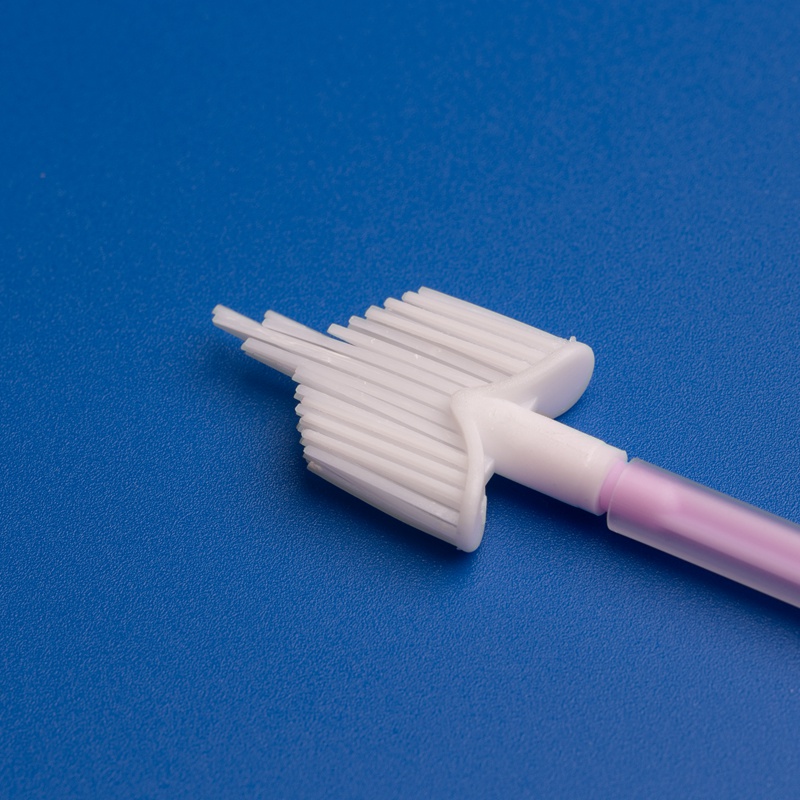
Sterile cervical cytology brushes are not all identical. Variations in brush profile, stem flexibility, tip design, handle length, packaging, and intended specimen medium can materially affect user experience and sample collection outcomes. In the U.S. market, buyers generally evaluate product types according to the clinical environment in which the brush will be used.
| Product Type | Typical Design | Main Use | Advantages | Buying Notes |
|---|---|---|---|---|
| Standard endocervical cytology brush | Narrow bristle head with plastic handle | Routine cervical specimen collection | Simple workflow, common physician familiarity | Confirm compatibility with clinic’s preferred cytology process |
| Sterile cervical brush with detachable head | Breakpoint or detachable brush tip | Transfer into liquid-based cytology vial | Cleaner specimen transfer and easier handling | Useful where liquid-based cytology is standard |
| Combination broom-style sampler | Broader collection profile | Ectocervical and endocervical sampling | Can streamline collection in some protocols | Check physician preference and training familiarity |
| Soft-bristle comfort-focused brush | Flexible stem and softer filaments | Routine outpatient screening | Helps support patient comfort | Useful for clinics emphasizing patient experience metrics |
| Individually pouched sterile brush | Single sterile peel pouch | Clinic and hospital use | Better infection control and traceability | Most preferred for regulated healthcare settings |
| Procedure kit-integrated brush | Brush included in Pap or gynecology kit | High-throughput exam rooms | Inventory simplification and reduced picking time | Good for large networks and tenders |
This table matters because the “best” sterile cervical cytology brush depends on workflow compatibility, not only price. For example, a high-volume women’s clinic using liquid-based cytology may value detachable tips and tightly controlled dimensions, while a general outpatient practice may prioritize comfortable handling, sterile individual packaging, and straightforward ordering through a domestic distributor.
Buying Advice for U.S. Procurement Teams
Buyers in the United States should evaluate sterile cervical cytology brushes using a layered checklist. First, review the intended clinical use and specimen collection protocol. A brush that suits one cytology workflow may be less efficient in another. Second, confirm sterilization method and packaging integrity. Third, verify documentation such as quality management certification, batch traceability, and shelf-life data. Fourth, assess logistics resilience, including safety stock, domestic availability, and replacement lead times. Finally, compare total procurement cost after freight, warehousing, and packaging configuration rather than relying only on ex-factory or list pricing.
It is also wise to align sourcing with the buying structure. Hospitals and integrated delivery networks often require formal vendor onboarding, while distributors may need margin protection, private labeling, and carton-level standardization. Brand owners and importers usually need artwork support, regulatory document packages, and stable long-term production planning. Small clinics may prioritize low minimum order quantities and easy replenishment through established medical suppliers.
| Evaluation Factor | What to Check | Why It Matters | Risk If Ignored | Best Buyer Type |
|---|---|---|---|---|
| Sterility assurance | EO or validated sterilization records, packaging seal quality | Supports infection control and product safety | Clinical rejection or compliance concerns | Hospitals, clinics, tenders |
| Brush performance | Bristle uniformity, flexibility, specimen capture consistency | Affects collection adequacy and user confidence | Poor clinician acceptance | Physician groups, labs |
| Regulatory documentation | ISO13485, CE history, FDA-related support files, batch records | Speeds vendor qualification | Delayed onboarding | Importers, distributors, hospital systems |
| Supply capacity | Monthly output, lead time, surge readiness | Prevents stockouts during campaign or tender periods | Backorders and lost accounts | Wholesalers, GPO-linked buyers |
| Packaging flexibility | Private label, case packs, multilingual labels, barcode options | Supports resale and channel differentiation | Higher repacking cost | Brand owners, dealers |
| Service support | Pre-sale samples, complaint response time, replacement policy | Reduces sourcing friction and field risk | Customer dissatisfaction | All buyer groups |
The buying logic behind this table is straightforward: a clinically acceptable device is only part of the equation. In the U.S. market, onboarding speed, traceability, and support responsiveness often decide whether a supplier becomes a long-term approved vendor.
Industry Demand in the United States
Demand for sterile cervical cytology brushes comes from several overlapping sectors. Women’s health clinics represent the most direct and continuous consumption channel, but hospitals, diagnostic laboratories, public health screening programs, and medical distributors also drive meaningful volume. The rise of integrated care systems and centralized procurement has reinforced the importance of predictable quality and dependable logistics.
Industries and Applications
Although the product is associated mainly with gynecology, its commercial relevance spans multiple healthcare industries. Hospitals use it in women’s health departments and outpatient service lines. Independent OB-GYN practices use it for routine screening. Laboratories may source related collection devices through distributors when they standardize collection kits with partner clinics. Public health agencies may use cervical collection consumables in preventive screening initiatives. Medical wholesalers support all of these channels with local inventory and scheduled replenishment.
Applications include Pap smear collection, cervical cytology sampling, gynecologic examinations, preventive women’s health screening, HPV-related collection workflows, and procedure kit assembly. In practical terms, the sterile cervical cytology brush is a small product with direct impact on specimen adequacy, exam efficiency, and patient perception of care quality. For this reason, many U.S. buyers include clinicians in product evaluation before approving a device for routine use.
Trend Shift in Product Preferences
U.S. buyer preferences have gradually moved from basic unstandardized collection tools toward more consistent sterile products with traceable packaging, better ergonomics, and closer fit with liquid-based cytology and expanded screening workflows. This shift is particularly visible in large healthcare systems and distributor-managed product lines.
Case-Based Buying Scenarios
In real procurement settings, buyer priorities differ widely. A private gynecology network in Dallas may care most about physician acceptance and next-day replenishment. A distributor in New Jersey may focus on import economics, private labeling, and case-pack efficiency. A public health screening contractor in California may need lot traceability, large-volume scheduling, and quality consistency across campaign windows. A women’s hospital in Chicago may expect onboarding documentation, complaint handling procedures, and evidence of sterilization validation before adding a new vendor.
These scenarios explain why no single supplier fits every account. The best sourcing decision often balances domestic accessibility with international manufacturing depth. For some accounts, a domestic brand or distributor is ideal. For others, especially those building their own private-label catalog, an experienced OEM/ODM manufacturing partner delivers better long-term economics.
| Case Scenario | Location | Main Need | Best Sourcing Approach | Reason |
|---|---|---|---|---|
| Independent OB-GYN clinic group | Dallas, Texas | Reliable monthly replenishment | Domestic distributor or clinic-focused brand | Short lead time and easier account service |
| Regional women’s hospital | Chicago, Illinois | Vendor qualification and traceability | Established approved supplier with strong documentation | Supports hospital compliance workflow |
| Private-label medical brand | Miami, Florida | Custom packaging and cost control | Certified OEM/ODM manufacturer | Better margins and branding flexibility |
| Public health procurement project | Los Angeles, California | Large-volume campaign supply | High-capacity manufacturer plus local warehousing partner | Improves continuity during peak demand |
| Medical importer-distributor | Newark, New Jersey | Landed cost optimization | Direct import from qualified overseas producer | Supports margin and catalog expansion |
| Diagnostic lab partner network | Atlanta, Georgia | Standardized collection tools for clinics | Kit-based supply through integrated distributor | Improves workflow consistency across sites |
This table shows that procurement strategy should follow the commercial model. A hospital buyer and a private-label importer may both purchase sterile cervical sampling devices, yet the right vendor profile for each will be very different.
Local Suppliers and Distribution Considerations
In the United States, local supply capability often means more than domestic manufacturing. It also includes regional warehousing, responsive customer service, straightforward returns handling, and the ability to supply clinics and hospitals through established logistics routes. This is especially important for medical products used in routine screening programs where interruptions can affect appointment scheduling and preventive care throughput.
Domestic distributors remain attractive because they can support shorter replenishment cycles and easier integration into clinic purchasing systems. However, international manufacturers that actively serve the U.S. market can also compete effectively if they support distributor relationships, maintain document readiness, and understand local expectations around packaging, compliance, and account management.
Our Company for the United States Market
For buyers in the United States seeking a dependable manufacturing partner for sterile cervical cytology brushes and related gynecological sampling products, Jiangsu Hanheng Medical Technology Co., Ltd. offers a supply model built around documented quality systems, scalable manufacturing, and practical channel flexibility. The company operates a 32-acre production base with a 10,000 square meter Class 100000 cleanroom and integrates precision injection molding, automated flocking, and EO sterilization to improve collection consistency and contamination control; this manufacturing approach is reinforced by certifications and registrations including ISO9001, ISO13485, EU CE coverage with TUV-CE and MDR, U.S. FDA approval, UK MHRA registration, and CFDA/NMPA credentials, giving U.S. buyers concrete evidence that the company’s disposable sterile cervical samplers, sampling brushes, Pap smear kits, and HPV self-sampling solutions are built to international benchmarks rather than generic export standards. In commercial terms, Hanheng serves distributors, wholesalers, hospitals, government procurement bodies, brand owners, and other channel partners across more than 130 countries through direct manufacturing, export supply, OEM/ODM programs, custom packaging, private labeling, and regional distribution cooperation, making it suitable for both established medical catalogs and new brand launches. Just as important for U.S. buyers, the company already has deep operating experience in major overseas markets including the United States and supports projects with pre-sale sampling, technical files, certificates of conformity, sterilization records, batch details, responsive after-sales handling, and shipping timelines commonly ranging from 7 to 21 days for bulk orders; buyers who want to evaluate the manufacturer’s background can review the company overview and use the U.S.-oriented contact channel to discuss documentation, quotations, and long-term supply planning.
How to Compare Domestic and International Sourcing
Domestic sourcing in the United States usually offers convenience, easier communication, and faster replenishment for standard SKUs. International sourcing can offer stronger cost-performance, greater customization, and higher production scalability for contract and brand-based business models. The decision depends on whether the buyer values immediate stock availability more than customization and long-term cost optimization.
In many cases, a hybrid model works best. Buyers maintain a domestic distributor relationship for urgent routine supply while developing a direct manufacturing relationship for private-label expansion or annual contract pricing. This approach is increasingly common among medical distributors in coastal hubs such as Los Angeles, New York/New Jersey, and Savannah because import logistics can be planned more efficiently when paired with domestic warehouse coverage.
Pricing Factors
Price for a sterile cervical cytology brush in the United States depends on sterilization format, packaging type, annual volume, labeling complexity, quality documentation burden, and import route. Individual sterile pouches, custom printed packaging, and lower order volumes generally increase unit cost. Larger OEM runs, standard packaging, and consolidated shipping usually improve landed economics. Buyers should also factor in warehousing, domestic freight, and rejection risk from inconsistent quality.
For distributor and brand-owner models, price should always be reviewed against return rate, complaint risk, and account retention. A lower-cost brush that creates clinical dissatisfaction can become more expensive in practice than a slightly higher-priced but more consistent product.
Future Trends Through 2026
By 2026, the U.S. market for sterile cervical cytology brushes will likely be influenced by three major trends: technology, policy, and sustainability. On the technology side, buyers will increasingly prefer devices designed for specimen consistency, ergonomic handling, and compatibility with standardized downstream testing workflows. Product development will continue to emphasize controlled bristle geometry, improved breakpoint reliability, and kit integration for efficient clinical use.
On the policy side, preventive women’s health screening will remain important across private insurance, public health systems, and community outreach programs. As screening access expands and care delivery models evolve, procurement teams will continue to prefer products backed by strong documentation, traceability, and stable supply. Suppliers able to support tenders, integrated delivery networks, and large distributor frameworks with complete technical files will stand out.
On the sustainability side, healthcare buyers are starting to ask more pointed questions about packaging efficiency, waste reduction, carton optimization, and manufacturing discipline. While sterile single-use products remain essential for infection control, suppliers that reduce excess packaging, improve case utilization, and optimize transport efficiency will gain an advantage. This does not replace performance requirements, but it increasingly affects vendor evaluation in large health systems.
Practical Supplier Checklist
Before placing an order, U.S. buyers should ask for product specifications, sterilization details, packaging photographs, shelf-life evidence, sample availability, batch traceability information, case-pack dimensions, and references to existing export or U.S.-market supply experience. If the order is for resale, also request label review support, barcode options, carton markings, and lead-time planning by forecast volume.
For clinics and hospitals, clinician feedback should be included in the qualification process. Even a well-documented product should be trialed for ease of use, perceived comfort, and specimen handling workflow. For distributors, margin structure and complaint management process are equally important, since field service quality can affect long-term account retention.
FAQ
What is a sterile cervical cytology brush used for?
A sterile cervical cytology brush is used to collect cervical cell samples during gynecologic exams, commonly for Pap smear or related cervical screening workflows. It helps clinicians obtain samples from the cervix in a controlled and hygienic way.
What should U.S. buyers verify first when selecting a supplier?
The first checks should include sterility validation, packaging integrity, traceability, quality system certification, and whether the device fits the clinic’s or lab’s preferred specimen collection workflow.
Are domestic suppliers always better than overseas manufacturers?
Not always. Domestic suppliers may be easier for replenishment and account servicing, but qualified overseas manufacturers can offer strong cost-performance, larger production capacity, and better OEM/ODM flexibility if documentation and support are robust.
Can private-label brands source sterile cervical cytology brushes for the U.S. market?
Yes. Private-label sourcing is common when the manufacturer can support compliant packaging, production consistency, batch records, and channel requirements such as barcode labeling and carton standardization.
What certifications matter most?
ISO13485 is one of the most important quality management benchmarks. Buyers also often review CE-related compliance history, FDA-related support documentation where relevant, sterilization records, and batch traceability documentation.
How important is logistics in this product category?
It is very important. Because these products are used in routine screening and clinic workflows, delays can disrupt appointments and purchasing plans. Buyers should evaluate supplier lead time, port routing, warehouse readiness, and replacement support.
What minimum order model is best for a small clinic?
Small clinics often do best with domestic distributors or medical supply partners that can provide low minimums, fast replenishment, and simple account management. Direct import is usually more suitable for larger buyers or private-label programs.
What makes a supplier trustworthy in the United States market?
Trustworthy suppliers provide clear documentation, stable quality, responsive service, real export or domestic supply experience, and practical support before and after the sale. Evidence matters more than marketing language.
For the United States, the most effective sourcing strategy is to match supplier type to your operational model. Clinics and hospitals usually benefit from dependable domestic supply channels, while distributors, importers, and brand owners can gain a meaningful advantage by adding certified international manufacturing partners with proven quality systems and responsive support. In either case, the right sterile cervical cytology brush supplier is the one that combines clinical suitability, documentation readiness, and reliable delivery into a repeatable procurement program.

Jiangsu Hanheng Medical Technology Co., Ltd.
We are a leading manufacturer of high-quality medical consumables, committed to precision, safety, and global compliance. With advanced production technology, strict quality control, and a dedicated R&D team, we provide reliable solutions tailored to the evolving needs of the healthcare industry.