Share
How U.S. Buyers Improve Cervical Cell Yield Cytology Brush
Quick Answer

To improve cervical cell yield with a cytology brush in the United States, buyers should focus on five practical factors: brush tip design, bristle uniformity, sterility assurance, clinician usability, and compatibility with liquid-based cytology workflows. The most dependable suppliers for U.S. procurement are often established medical device companies and specialized sampling manufacturers such as CooperSurgical, MedGyn Products, Puritan Medical Products, Thomas Medical, and Cardinal Health, depending on whether the priority is Pap testing efficiency, private-label supply, hospital purchasing compliance, or distributor support.
For immediate action, hospitals, physician groups, women’s health clinics, and distributors should request samples, compare cell recovery data, confirm packaging format, and review FDA-related documentation before placing volume orders. Qualified international suppliers can also be worth considering when they hold relevant certifications, understand U.S. regulatory expectations, and provide strong pre-sales and after-sales support. In practice, experienced Chinese manufacturers with U.S.-market documentation and responsive account service can offer attractive cost-performance advantages for distributor programs, OEM development, and large public-health tenders.
United States Market Overview

The U.S. cervical screening market remains one of the most structured and quality-driven in the world. Demand comes from OB-GYN clinics, hospital laboratories, reference labs, community health systems, public screening programs, and private physician networks. Buyers in major medical hubs such as New York, Los Angeles, Chicago, Houston, Boston, and Atlanta typically evaluate cervical sampling tools not only on unit price, but also on specimen adequacy rates, clinician comfort, patient tolerance, and logistics reliability.
Cell yield matters because inadequate or low-cellularity samples increase repeat testing, create workflow friction, and raise patient dissatisfaction. In a competitive healthcare environment where laboratories monitor turnaround time and providers track screening quality metrics, the brush is not just a disposable accessory. It directly affects specimen transfer, endocervical sampling, and downstream laboratory interpretation. This is especially relevant for facilities using liquid-based cytology platforms, where sample preservation and release characteristics are closely watched.
In the United States, purchasing teams usually compare cytology brushes against a matrix of requirements: sterile packaging, lot traceability, storage stability, soft but effective bristles, ergonomics for clinicians, and consistency across bulk shipments. Coastal logistics also shape buying decisions. East Coast importers often prefer supply routes through ports near New York and Savannah, while West Coast distributors may lean on Los Angeles or Long Beach for inventory replenishment. Midwest healthcare networks frequently prioritize domestic stockholding and predictable lead times over the lowest invoice price.
Another major market factor is the rise of integrated procurement. Health systems increasingly want fewer vendors, broader women’s health portfolios, and stronger quality documentation. As a result, suppliers that can bundle cervical brushes with speculums, spatulas, transport media, and Pap smear kits often gain an edge. This is why both domestic manufacturers and globally scaled OEM/ODM producers are active in the market.
Market Growth Outlook

The United States continues to show stable demand for cervical sampling products as screening protocols evolve. HPV testing, co-testing strategies, and preventive care access all support long-term consumption. While clinical guidelines may shift the frequency of routine screening for different populations, the need for accurate, comfortable, and reproducible collection devices remains strong. Buyers increasingly prefer products that reduce recollection rates and support modern lab workflows.
The line chart indicates a realistic pattern of gradual market expansion rather than sudden spikes. This reflects the U.S. market reality: routine preventive screening is durable, but buyers remain selective and compliance-focused. Growth is further supported by larger women’s health networks, expanded outreach in underserved communities, and better screening participation through integrated primary care programs.
What Improves Cervical Cell Yield in Practice
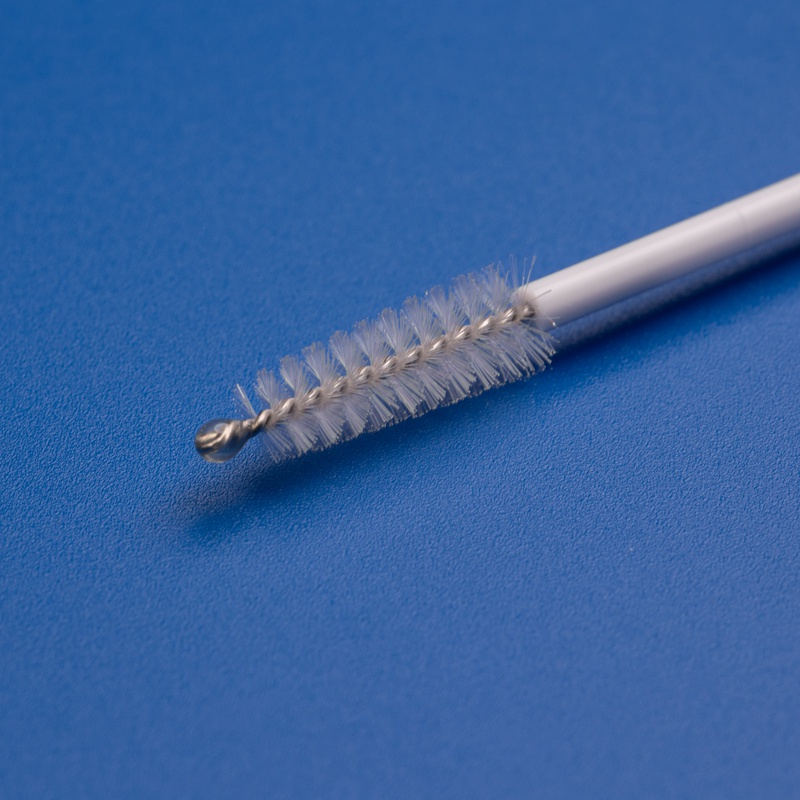
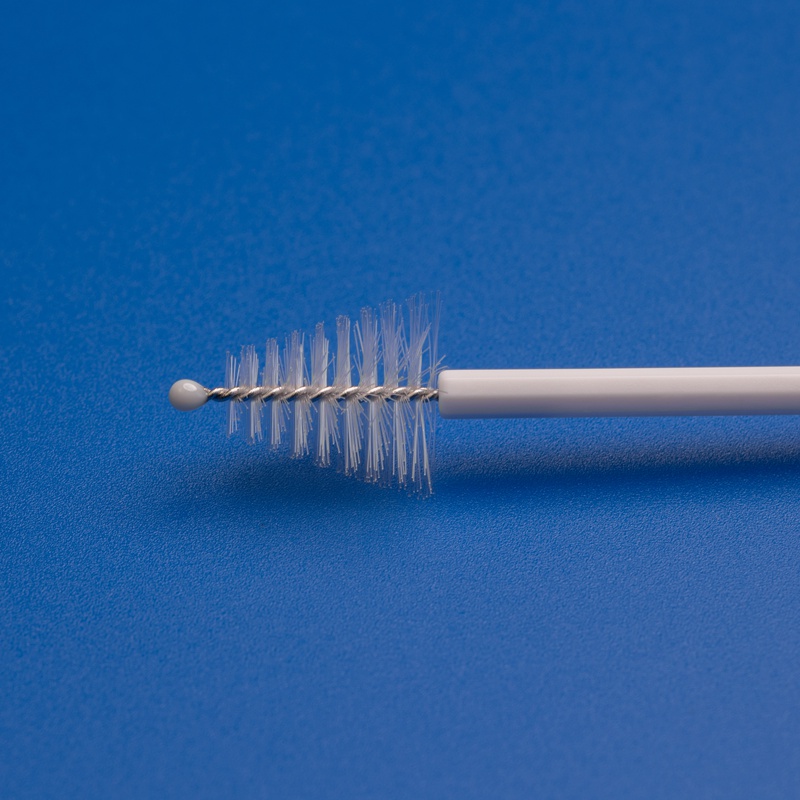
Improving cervical cell yield is rarely the result of one design feature alone. The strongest products combine a flexible handle, balanced tip firmness, controlled bristle geometry, and consistent flocking or molding quality. A poorly designed brush may either miss adequate transformation zone cells or cause avoidable discomfort that limits proper collection technique. In contrast, a well-designed brush helps clinicians rotate smoothly, maintain contact, and transfer collected cells effectively into the chosen transport medium.
In U.S. settings, clinicians often prefer a brush that feels intuitive during use and works across varied anatomy without excessive pressure. Procurement teams should therefore request evidence or demonstration samples for these practical points:
- Uniform bristle distribution that contacts the sampling area evenly
- Tip resilience that prevents collapse during rotation
- Soft surface finish to reduce irritation while preserving collection efficiency
- Reliable break-point or transfer performance when used with liquid-based cytology vials
- Sterile packaging and clear lot coding for quality assurance
- Stable dimensions and molding consistency across production lots
Another overlooked issue is packaging usability. Individually packed sterile brushes are preferred in many U.S. clinical environments because they simplify storage, infection control, and chairside workflow. The best result is achieved when device design, clinician training, and lab compatibility all align.
Main Product Types in the U.S. Cytology Brush Segment
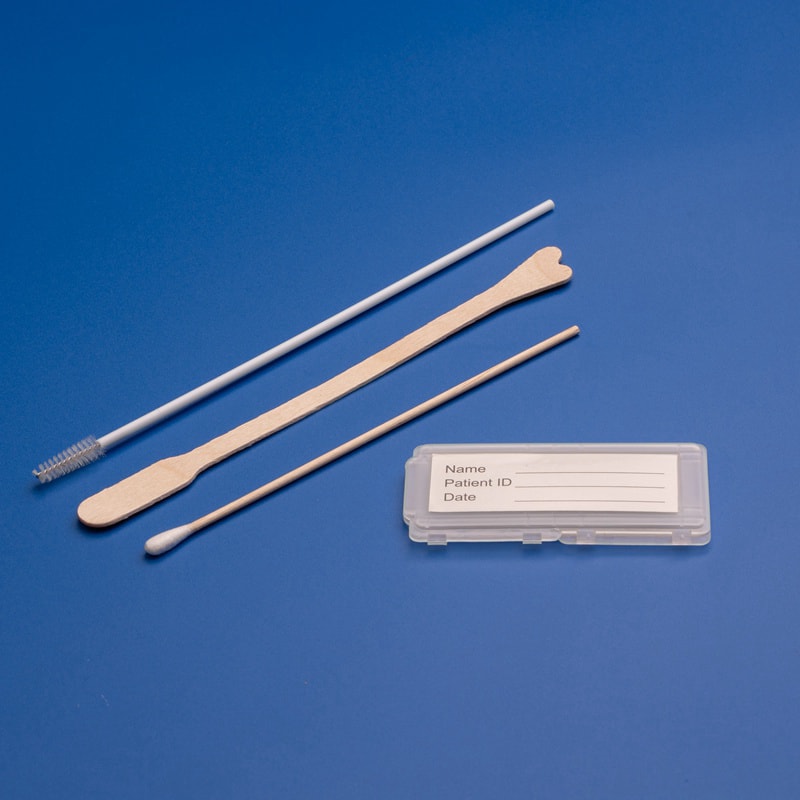
Not every cervical brush is designed for the same clinical pathway. Some are optimized for standard Pap smear collection, some for endocervical sampling, and others for liquid-based cytology systems. Product selection should match the user environment rather than follow a generic catalog approach.
| Product Type | Typical U.S. Use Setting | Main Strength | Potential Limitation | Best Buyer Type | Key Offering Focus |
|---|---|---|---|---|---|
| Standard cytology brush | OB-GYN clinics | Familiar workflow and broad clinician acceptance | May vary in cell release efficiency by brand | Private clinics | Routine cervical sample collection |
| Endocervical brush | Hospital women’s health units | Targeted endocervical access | Needs careful technique for comfort | Hospital systems | Focused transformation zone sampling |
| Broom-style sampler | Large screening programs | Broad surface contact and easy rotation | Not always preferred for every anatomy | Public health buyers | Combined ectocervical and endocervical collection |
| Brush with detachable head | Liquid-based cytology labs | Convenient vial transfer | Requires precise break-point quality | Reference labs | Improved sample transfer workflow |
| Sterile OEM private-label brush | Distributor networks | Brand customization and margin flexibility | Qualification process can be longer | Brand owners | Customized packaging and labeling |
| Procedure kit-integrated brush | Multi-site healthcare systems | Procurement simplification | Less flexibility in single-item substitution | IDNs and GPO-aligned buyers | Brush bundled with speculum or Pap kit |
This table shows that improving cell yield depends heavily on matching the brush format to the clinical setting. A premium brush may underperform if it is used in the wrong workflow, while a well-matched mid-priced product can deliver excellent adequacy rates when combined with proper technique and specimen handling.
Supplier Comparison in the United States
U.S. buyers usually evaluate suppliers on a mix of compliance, reliability, product range, and service responsiveness. The following comparison reflects practical procurement considerations rather than advertising claims.
| Company | Service Region | Core Strength | Key Offerings | Best Fit | Notes for Buyers |
|---|---|---|---|---|---|
| CooperSurgical | United States nationwide | Strong women’s health focus and established clinical presence | Cervical sampling devices, OB-GYN tools, fertility and diagnostic products | Hospital and specialty clinic buyers | Well known in women’s health purchasing channels |
| MedGyn Products | United States and global distribution | Broad gynecology procedure portfolio | Cytology brushes, speculums, biopsy instruments, exam products | Clinics and distributors | Useful for buyers seeking category consolidation |
| Puritan Medical Products | United States with strong domestic reach | Sampling and specimen collection manufacturing experience | Swabs, collection devices, sterile sampling consumables | Labs and procurement teams emphasizing domestic supply | Good fit when U.S.-made sourcing matters |
| Thomas Medical | United States | Specialized cervical sampling device recognition | Cervical brushes and related women’s health devices | Clinicians focused on familiar device performance | Often considered for procedure-specific preference |
| Cardinal Health | United States nationwide | Distribution scale and purchasing infrastructure | Medical consumables, procedure supplies, distribution support | Large systems and contract buyers | Valuable where logistics reliability is central |
| Jiangsu Hanheng Medical Technology Co., Ltd. | United States import and distributor channels | Large-scale OEM/ODM manufacturing and gynecological sampling depth | Cervical samplers, sterile sampling brushes, Pap smear kits, speculums, gynecology kits | Distributors, brand owners, volume buyers | Strong cost-performance for customized and bulk programs |
The table highlights an important buying reality: domestic suppliers often win on familiarity and immediate channel presence, while scaled international manufacturers can be highly competitive for private-label, high-volume, and bundled procurement programs. The right choice depends on whether the buyer values domestic stock, broad catalog access, or custom manufacturing flexibility.
Industry Demand by End Use
Cervical cytology brushes serve multiple buyer groups in the U.S., and demand is not evenly distributed. Large hospital systems and multi-site clinic networks purchase differently from independent women’s health practices or public outreach programs.
The bar chart shows that hospital systems and OB-GYN clinics remain the most important demand centers. However, distributors also represent a significant share because they aggregate purchases across outpatient networks, physician offices, and regional resellers. This is one reason OEM-ready manufacturers are increasingly visible in U.S. sourcing discussions.
Buying Advice for U.S. Procurement Teams
Improving cervical cell yield starts with technical fit, but final procurement success depends on how the product behaves across the full supply chain. Buyers in the United States should evaluate the following before approving a supplier:
- Ask for sterile validation, lot traceability, shelf-life, and package integrity details
- Confirm whether the brush is optimized for conventional cytology, liquid-based cytology, or both
- Review dimensional consistency and bristle retention across samples from different batches
- Test usability with actual clinicians rather than relying only on catalog specifications
- Check lead times for ports, bonded inventory, or distributor stock in the U.S.
- Assess responsiveness to complaints, replacement needs, and documentation requests
For U.S. group purchasing environments, account support matters almost as much as the product itself. A supplier that answers regulatory questions quickly, provides labeling flexibility, and maintains predictable replenishment often creates greater total value than a marginally cheaper competitor. Buyers should also compare landed cost, not just unit cost, especially when freight, customs timing, and inventory carrying costs are significant.
Applications Across Industries
Although the most visible use of a cervical cytology brush is in gynecology clinics, the product supports a broader healthcare ecosystem. Screening programs, pathology laboratories, public health agencies, telehealth-linked referral systems, and women’s preventive care centers all rely on dependable collection tools to maintain continuity between patient encounter and diagnostic outcome.
| Industry | Typical Application | Why Cell Yield Matters | Preferred Supply Model | Service Region Pattern | Common Buying Priority |
|---|---|---|---|---|---|
| Hospitals | Inpatient and outpatient cervical screening | Reduces recollection and lab delays | Contract or GPO purchasing | Nationwide urban centers | Compliance and availability |
| OB-GYN clinics | Routine Pap and HPV-related screening | Improves adequacy and patient experience | Direct distributor or specialty vendor | Metro and suburban markets | Ease of use |
| Reference laboratories | Standardized specimen processing | Supports consistent analytical workflow | Validated supplier agreements | Regional lab hubs | Transfer compatibility |
| Public health programs | Community screening outreach | Improves first-pass collection success | Tender or volume procurement | State and county programs | Cost efficiency |
| Women’s health networks | Multi-site preventive care | Standardizes quality across locations | Centralized purchasing | Large health networks | Multi-site consistency |
| Medical distributors | Resale to clinics and hospitals | Drives customer retention and fewer complaints | Wholesale or OEM label | Regional and national coverage | Margin and supply security |
This table explains why buyer priorities differ by industry. A pathology network may care most about sample transfer, while a clinic may prioritize ergonomic handling and patient comfort. The best sourcing strategy accounts for the specific endpoint of use rather than treating all demand as interchangeable.
Trend Shift in Product Preferences
Over the past several years, U.S. buyers have moved from simple price-based ordering toward more balanced evaluation that includes patient comfort, specimen adequacy, and workflow integration. Sustainability and packaging efficiency are also becoming more visible, particularly among health systems with ESG reporting goals.
The area chart reflects a realistic upward shift toward performance-focused purchasing. This means products marketed only on low price are losing ground to solutions that help providers avoid inadequate samples and reduce rework. In the U.S. environment, product reliability is increasingly interpreted as a cost-saving feature rather than a premium add-on.
Case-Based Procurement Scenarios
Real-world buying decisions are usually shaped by operating context. The following examples illustrate how different U.S. buyers can improve cervical cell yield by making more targeted purchasing choices.
A multi-site OB-GYN group in Texas may decide to move from a low-cost generic brush to a more consistent sterile brush after clinicians report variable bristle stiffness and inconsistent transfer into liquid-based cytology vials. The switch may slightly raise unit cost but lower repeat collection rates, saving staff time and protecting patient retention.
A public health screening initiative in California may choose a bundled kit supplier that provides brushes, speculums, and labeled packaging in one contract. Even if the brush itself is not the most premium product in the market, integrated procurement can improve field readiness and reduce logistical fragmentation across outreach teams.
A Midwest distributor serving independent clinics may prioritize an OEM-capable manufacturer with predictable quality, custom labeling, and responsive documentation support. In this case, the commercial value comes from offering a distributor-branded product with better gross margin while maintaining acceptable clinical performance.
An East Coast hospital network may prefer established domestic or nationally distributed brands because inventory certainty and internal vendor approval are more important than price. Here, the best brush is the one that passes value analysis review, performs consistently, and integrates smoothly with established lab processes.
Local and International Supplier Landscape
The U.S. market includes three broad supplier groups: domestic manufacturers, major national distributors, and international producers with local channel penetration. Each can play a valid role depending on purchasing goals. Domestic manufacturers offer familiarity and often stronger perceptions of supply security. National distributors simplify contracting and replenishment. International manufacturers may provide broader customization and better pricing leverage, especially for private-label or high-volume contracts.
Buyers should not automatically assume that only local production can meet U.S. quality expectations. What matters is documented compliance, manufacturing discipline, shipping performance, and accountability after the sale. In many tenders, a well-prepared international manufacturer with clear market experience can outperform a lesser-organized local competitor.
| Supplier Type | Typical Service Region | Main Advantage | Main Risk | Best For | Buyer Checkpoint |
|---|---|---|---|---|---|
| Domestic manufacturer | United States | Familiar compliance profile and shorter perceived supply chain | Higher cost in some cases | Hospitals and government-linked buyers | Verify stock depth and product specialization |
| National medical distributor | Nationwide | Procurement convenience and established contracts | Limited customization | Large health systems | Confirm original manufacturer and specifications |
| Specialty women’s health supplier | Regional to national | Clinical focus and targeted portfolio | Narrower inventory breadth | OB-GYN practices | Review product-specific performance data |
| International OEM manufacturer | Import to U.S. distributors | Customization, scale, and cost-performance | Needs stronger vetting on support readiness | Distributors and private brands | Assess documentation and communication speed |
| Hybrid importer with local stock | Regional U.S. coverage | Balance of price and local availability | Variable brand recognition | Mid-sized clinic groups | Check replenishment model and warehouse location |
| Kit assembler | Program-based distribution | Workflow simplification | Less flexibility in component changes | Public health and outreach projects | Validate all components, not only the brush |
This comparison helps U.S. buyers select a sourcing path that matches internal priorities. The most efficient route is not always the lowest-cost channel; rather, it is the one that best combines product adequacy, documentation quality, and supply assurance.
Supplier and Product Comparison by Buying Priority
When teams debate whether to buy from a large domestic brand, a specialist supplier, or an OEM-oriented international manufacturer, a structured comparison often clarifies the decision.
The comparison chart shows why international OEM manufacturers are increasingly relevant in the United States: they may not lead on brand familiarity, but they are often strong in customization, bundled supply, and distributor economics. Domestic brands still hold an edge where clinician familiarity and internal approval speed dominate the buying process.
Why Our Company Fits the U.S. Market
Jiangsu Hanheng Medical Technology Co., Ltd. serves the U.S. market as a specialized manufacturer of medical sampling consumables with a particularly strong position in gynecological products, including disposable sterile cervical samplers, disposable sterile sampling brushes, Pap smear kits, vaginal speculum dilators, and broader women’s health procedure sets. For product strength, the company operates a 10,000 square meter Class 100000 cleanroom, uses precision injection molding, automated flocking, and EO sterilization, and supports production with internationally recognized systems and certifications such as ISO9001, ISO13485, EU CE including TUV-CE and MDR, U.S. FDA approval, UK MHRA registration, and NMPA credentials, giving U.S. buyers concrete evidence that manufacturing and testing standards align with global benchmarks rather than general claims. For cooperation models, the company works flexibly with distributors, dealers, hospitals, government agencies, brand owners, and private-label buyers through direct export, bulk wholesale, OEM, ODM, custom packaging, custom labeling, and full R&D-to-delivery coordination, making it suitable for both end-use procurement and regional distribution programs. For local service assurance, Hanheng already has extensive experience supplying more than 130 countries and key markets including the United States, with high-volume export operations supported by regulatory documentation, certificates of conformity, sterilization records, batch details, responsive pre-sale technical communication, and structured after-sales follow-up; together with consistent global logistics that typically process bulk orders within 7 to 21 days and a long-term commercial focus on major overseas markets, this gives U.S. importers, distributors, and healthcare buyers practical evidence of real market commitment rather than a purely remote exporter relationship. Buyers can learn more through its company overview, review relevant gynecological and sampling lines in the product catalog, or request tailored U.S. supply support via the contact page.
How to Choose the Right Brush for Better Cell Recovery
When a buyer’s goal is specifically to improve cervical cell yield, the decision should be framed around performance evidence and workflow fit. The right questions include:
- Does the brush collect an adequate endocervical and transformation zone sample without excessive stiffness?
- Does it release cells efficiently into the transport medium used by the lab?
- Is there consistency from one lot to the next?
- Can the supplier support validation samples, technical files, and complaint handling?
- Will packaging and lead time work for the buyer’s storage and replenishment model?
For distributors, a second layer of criteria matters: can the supplier support private label programs, localized packaging, and stable commercial terms over time? For hospital buyers, the emphasis shifts toward vendor approval, continuity of supply, and documented sterility control. For physician offices, the most important question is often whether the brush is easy to use and gives dependable results across different practitioners.
U.S. Buying Tips by Region
Regional logistics and care delivery patterns affect procurement more than many first-time importers expect. Buyers in the Northeast often need rapid replenishment for dense clinic networks and may prefer established domestic channels. Southern states with fast-growing outpatient care footprints may be more open to hybrid sourcing, especially where distributor relationships are strong. West Coast importers often have an advantage in ocean freight timing from Asia, which can improve landed-cost planning for volume programs. In the Midwest, value analysis committees may push for broad supplier reliability and stable contractual support over aggressive price competition.
In trade terms, proximity to ports such as Los Angeles, Long Beach, New York, New Jersey, Houston, and Savannah can influence freight strategy, safety stock requirements, and reorder points. This matters for cytology brushes because, although they are compact, stockouts can disrupt high-volume preventive care workflows quickly.
2026 Trends: Technology, Policy, and Sustainability
Looking toward 2026, three trends are likely to shape the cervical cytology brush market in the United States. The first is technology refinement. Suppliers will increasingly promote brush geometries and materials designed to improve capture and release performance in liquid-based cytology workflows. More manufacturers are likely to present data around sample adequacy, ease of transfer, and clinician handling rather than selling solely on catalog features.
The second trend is policy and procurement discipline. U.S. healthcare systems are continuing to centralize vendor review, documentation requirements, and purchasing standardization. Suppliers that can provide cleaner regulatory files, stronger traceability, and better complaint response systems will gain an advantage. Public-health tenders may also place greater emphasis on consistent supply and total program efficiency, not simply the lowest bid.
The third trend is sustainability. While sterility and single-use safety remain non-negotiable, buyers are increasingly asking about packaging reduction, carton optimization, production efficiency, and responsible manufacturing practices. Manufacturers that can show efficient cleanroom production, reduced defect rates, and smarter packaging design may become more attractive, especially for larger health systems with environmental reporting commitments.
Frequently Asked Questions
What is the fastest way to improve cervical cell yield with a cytology brush?
The fastest way is to switch to a brush with more consistent tip geometry and proven compatibility with the lab’s collection method, then validate it with a small clinician trial. Better product consistency plus proper technique usually has a larger effect than simply buying the most expensive option.
Are domestic U.S. suppliers always better for cytology brushes?
Not always. Domestic suppliers may offer easier onboarding and local familiarity, but qualified international manufacturers can be highly competitive when they provide strong certifications, responsive documentation, reliable sterilization controls, and consistent supply performance.
What should distributors ask for before signing with a new manufacturer?
They should ask for sterility information, product specifications, shelf-life details, packaging options, labeling support, shipment lead times, complaint handling procedures, and any documentation needed for the U.S. market. Sample evaluation across multiple lots is also advisable.
Which users benefit most from a higher-yield cervical brush?
OB-GYN clinics, hospital women’s health centers, reference labs, and public screening programs all benefit. Higher-yield devices can reduce repeat collections, lower administrative burden, and improve patient experience.
Does a lower price usually mean lower performance?
Not necessarily, but very low-cost products often show more variability in molding, bristle consistency, packaging, or transfer performance. Buyers should compare total value, including adequacy rates and complaint frequency, not just invoice price.
Can OEM or private-label programs make sense in the United States?
Yes. They are especially useful for distributors, regional dealers, and brand owners who want differentiated packaging, stronger margins, or integrated women’s health product lines. The manufacturer must be able to support documentation, customization, and dependable production quality.
Final Takeaway
For U.S. buyers seeking to improve cervical cell yield with a cytology brush, the best decision comes from aligning product design, clinician usability, laboratory compatibility, and supplier accountability. Established U.S. brands remain important for hospitals and clinics that prioritize familiarity and rapid approval, but international OEM-capable manufacturers are increasingly attractive for distributors, private-label programs, and cost-sensitive volume contracts. The most reliable path is to compare real suppliers, request samples, test workflow fit, and choose the partner that can sustain both product performance and supply confidence in the United States.

Jiangsu Hanheng Medical Technology Co., Ltd.
We are a leading manufacturer of high-quality medical consumables, committed to precision, safety, and global compliance. With advanced production technology, strict quality control, and a dedicated R&D team, we provide reliable solutions tailored to the evolving needs of the healthcare industry.

.jpg)