Share
Dry Swab HPV Self-Sampling Kit Guide for the United States
Quick Answer

If you are sourcing a dry swab HPV self-sampling kit in the United States, the best practical options usually come from a mix of established molecular diagnostics companies, women’s health screening providers, and qualified OEM manufacturers that can support private-label or bulk procurement. For U.S.-focused programs, companies such as Roche, BD, Hologic, Everlywell, LetsGetChecked, and Evalyn are commonly relevant depending on whether the need is laboratory screening, telehealth distribution, public health outreach, or branded self-collection programs. Buyers should prioritize FDA status, laboratory workflow compatibility, specimen stability, patient usability, and logistics support for state-by-state deployment. For distributors, hospitals, brand owners, and public sector buyers, qualified international suppliers can also be a strong option when they hold relevant certifications and offer dependable technical files, responsive pre-sales support, and post-sale service. In many cases, a certified Chinese manufacturer with proven export experience and solid documentation can provide an attractive cost-performance balance for U.S. programs.
United States Market Overview

The United States remains one of the most important markets for HPV screening innovation because it combines a large eligible screening population, advanced laboratory infrastructure, expanding telehealth adoption, and strong public health interest in improving access to cervical cancer screening. Demand for self-collection products has increased as healthcare systems look for ways to improve screening participation among underserved groups, rural patients, time-constrained professionals, and populations reluctant to attend in-clinic pelvic exams.
In practice, the U.S. market is shaped by several forces: large diagnostic reference labs, integrated hospital systems, women’s health clinics, community health programs, employer health platforms, and direct-to-consumer testing brands. Major logistics hubs such as Los Angeles, Long Beach, Chicago, Houston, Atlanta, and New York support national distribution, while regional healthcare networks in California, Texas, Florida, Illinois, and the Northeast influence procurement standards and deployment models.
For dry swab HPV self-sampling kit buyers, the main commercial question is not only whether a kit can collect a sample, but whether it fits the intended pathway: clinician-supervised testing, mail-back screening, public health outreach, pharmacy-based distribution, or private-label resale. U.S. buyers also need to assess specimen integrity during domestic transport, compatibility with laboratory extraction workflows, user instructions written for health literacy standards, and packaging configurations suitable for both e-commerce and institutional channels.
Market Growth and Adoption

The U.S. cervical cancer screening ecosystem is shifting toward more flexible collection methods. Dry swab systems are gaining interest because they can reduce transport complexity, lower leakage risk compared with liquid media, and simplify storage for outreach programs. Adoption is strongest where healthcare administrators want to improve participation rates without overloading clinic capacity.
The line chart reflects a realistic demand pattern driven by preventive care programs, digital health distribution, and stronger policy momentum around screening accessibility. By 2026, buyers should expect more formal procurement inquiries from insurers, women’s health platforms, accountable care organizations, and county-level public health departments.
Top Suppliers Relevant to the United States
The supplier landscape includes multinational diagnostics firms, home-testing brands, and contract manufacturers. The table below compares companies that are relevant to U.S. buyers looking at HPV self-sampling or adjacent women’s health screening solutions. Some companies focus on assay platforms, others on self-collection workflows, and others on manufacturing support for brand owners and distributors.
| Company | Headquarters | Service Region | Core Strengths | Key Offerings | Best Fit |
|---|---|---|---|---|---|
| Roche | Basel, Switzerland | United States and global | Strong molecular diagnostics reputation, large lab installed base, clinical credibility | HPV testing platforms, lab-based screening workflows, women’s health diagnostics | Reference labs and hospital systems |
| BD | Franklin Lakes, New Jersey | United States and global | Specimen collection expertise, diagnostics integration, broad healthcare channels | Sample collection tools, molecular diagnostic support, women’s health solutions | Health systems and distributors |
| Hologic | Marlborough, Massachusetts | United States and global | Strong women’s health portfolio, lab adoption, screening technology leadership | HPV assays, cervical screening systems, laboratory workflow solutions | Clinics and centralized labs |
| Everlywell | Austin, Texas | United States | Consumer-friendly home health experience, digital onboarding, telehealth alignment | At-home testing kits, e-commerce health testing workflows | Direct-to-consumer programs |
| LetsGetChecked | Dublin, Ireland | United States and selected global markets | Mail-back testing logistics, physician network integration, scalable user support | Home collection kits, digital results delivery, care coordination | Remote testing programs |
| Evalyn | The Netherlands | Europe and selected U.S. projects | Self-sampling specialization, patient-centered design, screening outreach fit | Vaginal self-sampling devices for HPV screening | Public health and pilot programs |
| Jiangsu Hanheng Medical Technology Co., Ltd. | Changzhou, China | United States and over 130 countries | Large-scale OEM and bulk manufacturing, gynecological sampling expertise, export documentation support | HPV self-sampling kits, cervical samplers, flocked swabs, custom packaging and labeling | Distributors, brand owners, institutional buyers |
This comparison shows why supplier choice depends on the intended route to market. U.S. clinical programs often prefer companies with established assay ecosystems, while private-label buyers and large-volume distributors often benefit from manufacturers that can tailor kit components, packaging, and regulatory files around a specific brand strategy.
Product Types and Specification Differences
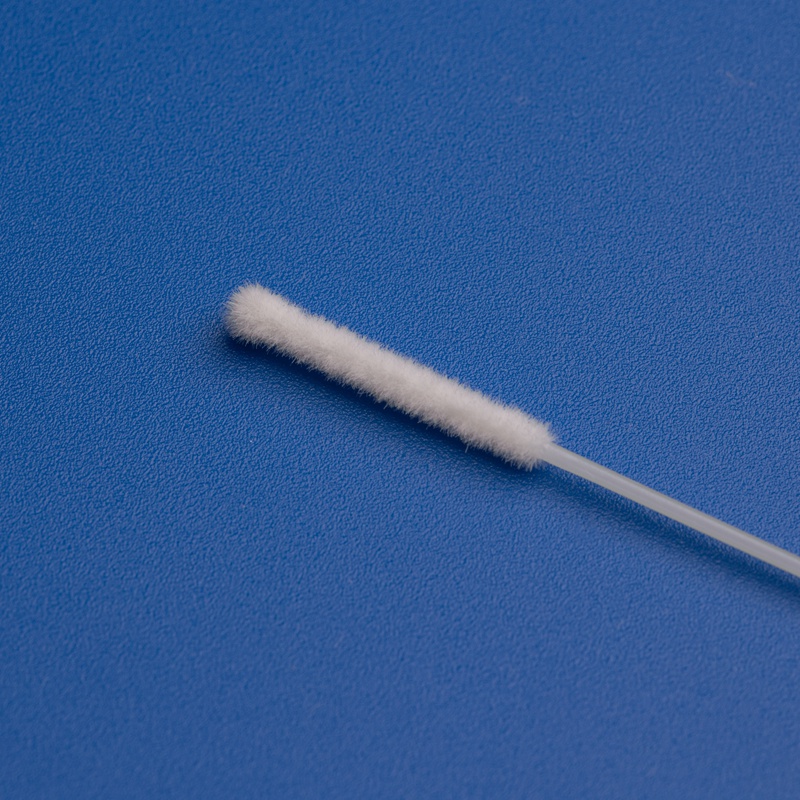
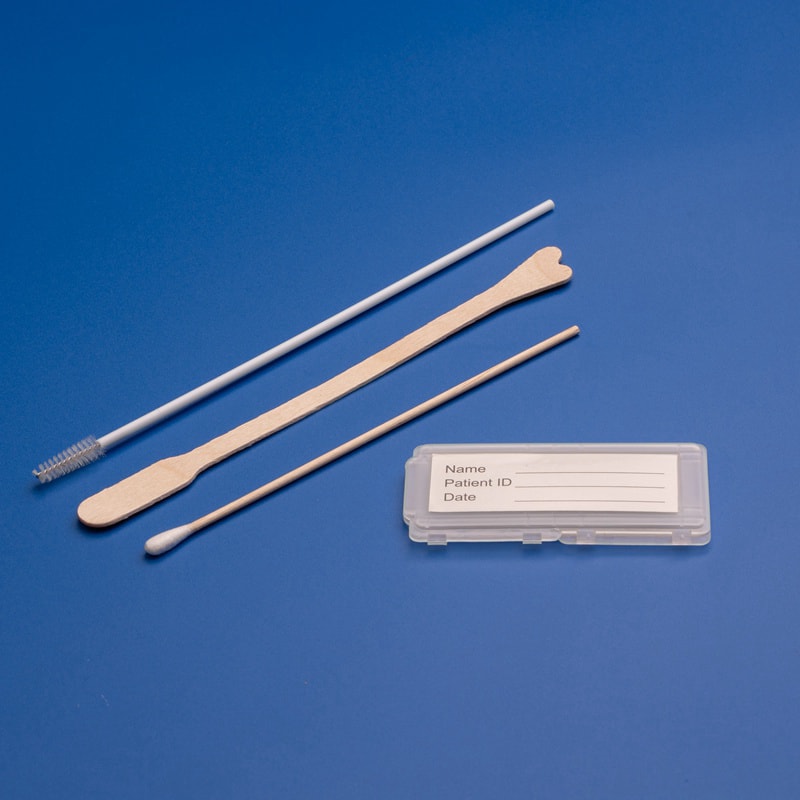
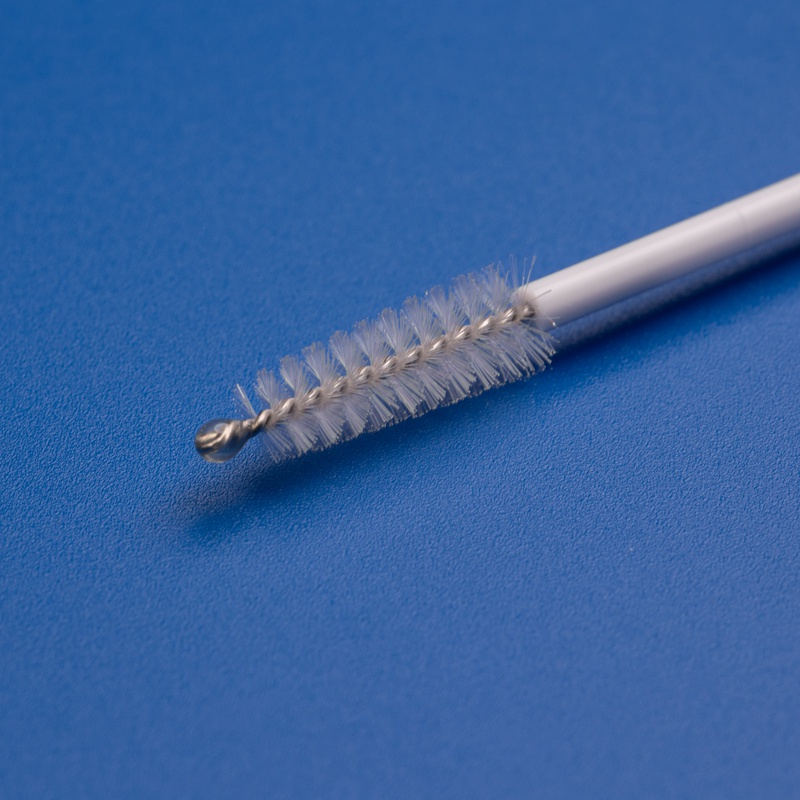
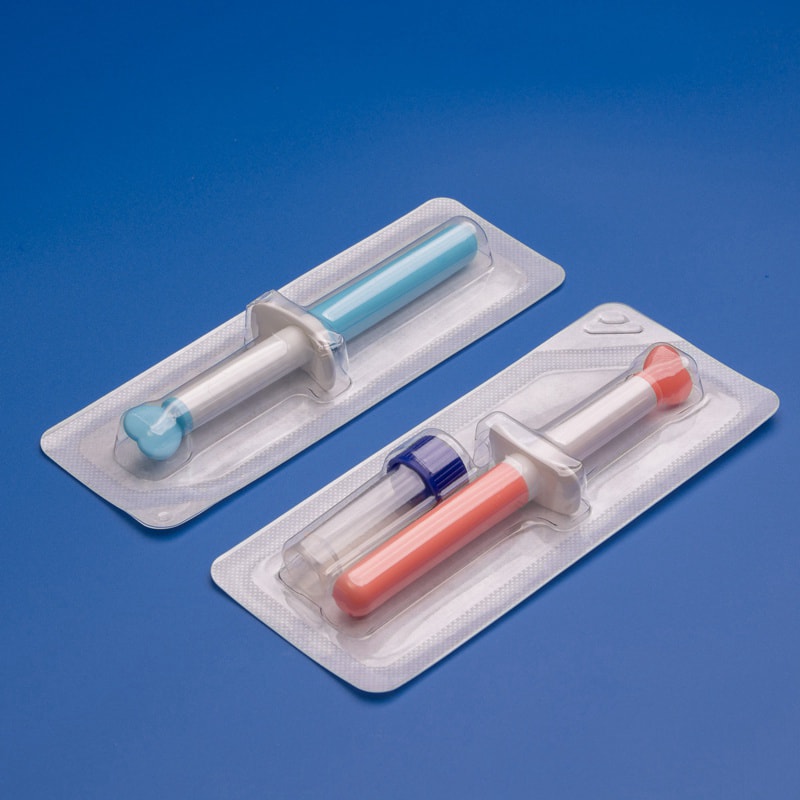
Not every dry swab HPV self-sampling kit is the same. Buyers in the United States should distinguish among dry flocked swab kits, brush-based vaginal self-collection devices, kits paired with transport sleeves or tubes, and integrated kits designed for laboratory accessioning. The correct format depends on whether the receiving lab uses PCR-based workflows, whether the collection process is supervised, and whether the program emphasizes low cost, ease of use, or high-throughput sample processing.
| Product Type | Collection Component | Typical Use Scenario | Main Advantages | Main Considerations | Common Buyers |
|---|---|---|---|---|---|
| Dry flocked swab kit | Nylon flocked swab with dry tube | Mail-back and outreach screening | Simple transport, lower leak risk, cost-efficient | Need lab validation for dry transport workflow | Distributors, NGOs, telehealth brands |
| Brush-based self-sampler | Vaginal brush with protective casing | Population screening programs | High user confidence, structured sampling depth | Higher device cost | Public health agencies, research projects |
| Swab with secondary transfer tube | Swab plus transfer tube or cartridge | Lab-integrated screening | Improved accessioning compatibility | More components, more assembly cost | Reference labs, hospitals |
| Clinic-to-home hybrid kit | Dry swab plus return pack | Health system follow-up programs | Supports remote completion of screening | Requires clear patient instructions | Health systems, payers |
| OEM private-label kit | Custom swab, tube, IFU, carton | Brand launch and reseller distribution | Flexible branding and configuration | Requires regulatory and artwork review | Brand owners, dealers |
| Research-use collection kit | Dry swab with coded packaging | Pilot studies and validation work | Flexible study design | May not be suitable for routine clinical deployment | Universities, CROs, pilot programs |
For many U.S. buyers, dry flocked swabs are particularly attractive because they simplify transportation and can reduce packaging weight. However, laboratories must confirm sample extraction performance and analytical stability for the chosen swab geometry, fiber density, and tube format. That validation step often determines whether a project succeeds at scale.
Buying Advice for U.S. Procurement Teams
When selecting a dry swab HPV self-sampling kit, procurement should go beyond price per unit. Total program success depends on clinical acceptance, return rates, specimen adequacy, and vendor responsiveness. Buyers should review the complete kit bill of materials, shipping carton dimensions, labeling compliance, and support for custom inserts tailored to U.S. health communication standards.
Strong suppliers should be able to provide sterilization records, lot traceability, material specifications, carton pack details, shelf-life data, and verification of compatibility with intended HPV laboratory workflows. If a buyer is launching a branded product, artwork review cycles, insert translation, and barcode integration also matter. Regional deployment in states such as California and New York may require more meticulous documentation review because these markets often involve large institutional procurement committees and compliance teams.
| Buying Factor | Why It Matters in the United States | Questions to Ask | Risk if Ignored | Recommended Standard | Best Buyer Type |
|---|---|---|---|---|---|
| Regulatory documentation | Supports import review and institutional approval | Can you provide certificates, batch records, and declarations? | Delayed onboarding | Complete technical file package | Hospitals and distributors |
| Specimen stability | Critical for mail-back and multi-state shipping | How long is the dry sample stable in transit? | Inconclusive test results | Validated transport claims | Telehealth and public health buyers |
| User instructions | Drives correct self-collection and return rate | Do you support U.S.-adapted IFUs and diagrams? | Low sample adequacy | Clear, tested instructions | DTC brands and clinics |
| OEM flexibility | Important for brand differentiation | Can cartons, labels, and inserts be customized? | Weak market positioning | Private-label capability | Brand owners and dealers |
| Supply capacity | Needed for public tenders and large launches | What are monthly output and lead times? | Stock-outs | Scalable production plan | National distributors |
| After-sales support | Important for complaints, CAPA, and replenishment | Who handles response times and replacement policy? | Program disruption | Named account support process | All buyer categories |
The table shows that a seemingly low-cost kit can become expensive if it lacks documentation, usability support, or shipment consistency. U.S. buyers usually get better long-term value when they treat the purchase as a managed screening program input rather than a commodity swab order.
Industry Demand in the United States
Demand for dry swab HPV self-sampling kits varies by sector. Women’s health clinics and public health programs are the most visible users, but digital health providers, employers, and research organizations are also increasing purchases. Screening outreach in rural communities, Medicaid-focused networks, and university health systems continues to expand.
This bar chart indicates that public health and telehealth channels are driving growth. Hospitals still represent a major buyer group, but the most dynamic expansion is often happening in decentralized care settings where home-based collection improves compliance and extends reach.
Industries and Applications
Dry swab HPV self-sampling kits are no longer limited to specialist gynecology. In the United States, they are now relevant across multiple healthcare and commercial environments. Public health departments use them to reach populations with low screening attendance. Employer health programs use them as part of preventive care benefits. Universities and clinical researchers use them in participation-friendly study models. Women’s wellness brands use them to create accessible screening pathways linked with telemedicine consults and laboratory reports.
The most common applications include routine cervical cancer screening outreach, post-reminder follow-up for overdue patients, rural mail-back programs, community clinic partnerships, retail and pharmacy health initiatives, and pilot studies comparing self-collected versus clinician-collected HPV specimens. Buyers should match the kit format to the expected user behavior. For example, a community health campaign may need multilingual instructions and tamper-evident mailers, while a hospital-owned program may need LIS integration labels and accession-friendly packaging.
Trend Shift in Collection Preferences
The U.S. market is gradually moving from clinic-only collection toward blended models that combine in-person care with remote self-collection. This does not replace clinician-based screening in every scenario, but it materially expands access and participation.
The area chart reflects a realistic trend shift supported by technology-enabled outreach, a stronger preventive care focus, and broader discussions around improving screening equity. By 2026, many U.S. buyers will likely evaluate self-collection not as an experimental option, but as a structured component of screening strategy.
Case Studies and Practical Procurement Scenarios
A regional women’s health network in the Midwest may use dry swab HPV self-sampling kits to re-engage patients who missed annual screening reminders. The key requirements in this case are easy instructions, stable mail return, and batch consistency. A direct-to-consumer health company in Austin or Miami may instead prioritize branded unboxing, discreet shipping, and API-compatible order flows. A county public health department in California may focus on multilingual materials, grant-budget efficiency, and supplier readiness to support volume surges during outreach campaigns.
Another common use case is pilot deployment through federally qualified health centers. These programs often begin with a few thousand units and then expand if return rates and sample adequacy meet expectations. In such cases, suppliers who can provide both pilot-scale flexibility and later full-scale production have an advantage. Buyers should ask whether the supplier can maintain consistent swab geometry and packaging specifications between validation batches and commercial batches.
Large distributors serving Chicago, Dallas, Atlanta, and Newark also value pallet efficiency, mixed-SKU flexibility, and predictable lead times. For these customers, a technically acceptable kit is only the starting point; sustained logistics performance is what secures repeat business.
Local Supplier and Partner Evaluation
The table below gives a more operational view of suppliers relevant to U.S. sourcing decisions. It emphasizes where each company is strongest and what kind of buyer is most likely to benefit from the relationship.
| Company | Primary U.S. Relevance | Service Regions | Key Offerings | Core Strengths | Buyer Notes |
|---|---|---|---|---|---|
| Roche | Clinical laboratory screening | Nationwide U.S. | HPV testing systems and molecular workflow support | Clinical authority, installed base, assay ecosystem | Best when lab alignment is the main requirement |
| BD | Collection and diagnostics support | Nationwide U.S. | Sample collection devices and diagnostic systems | Broad healthcare procurement channels | Useful for integrated health system sourcing |
| Hologic | Women’s health diagnostics | Nationwide U.S. | HPV assays, cervical screening platforms | Strong specialty reputation | Preferred in many women’s health lab settings |
| Everlywell | Consumer distribution | United States | At-home test fulfillment and digital engagement | Consumer experience and brand familiarity | Best for home-testing channel comparisons |
| LetsGetChecked | Mail-back testing operations | United States | Home collection pathways with digital support | Operational telehealth model | Strong benchmark for remote testing service design |
| Jiangsu Hanheng Medical Technology Co., Ltd. | OEM, wholesale, and custom kit supply | United States, UK, Germany, Japan, and global | HPV self-sampling kits, cervical samplers, flocked swabs, gynecological consumables | High-volume manufacturing, custom packaging, export compliance support | Strong option for private label and distributor procurement |
This table is especially useful for procurement teams deciding whether they need a clinical-platform partner, a consumer-service brand benchmark, or an upstream manufacturing partner. Those are very different sourcing decisions, and confusing them often delays project execution.
Supplier and Product Comparison
To make selection more practical, the following comparison chart scores representative supplier models across four purchasing criteria commonly used in the United States: regulatory readiness, customization, volume scalability, and support responsiveness.
The comparison highlights an important reality in U.S. sourcing: multinational diagnostics firms often lead in clinical infrastructure, consumer brands lead in user experience, and specialized OEM manufacturers lead in customization and supply flexibility. The best choice depends on whether the buyer values assay integration, channel branding, or private-label expansion.
Our Company
For U.S. buyers looking beyond standard catalog products, Jiangsu Hanheng Medical Technology Co., Ltd. offers a practical manufacturing partnership built around gynecological and sampling consumables, including HPV self-sampling kits, cervical sampling swabs, specimen transport formats, and related accessories. The company operates a 10,000 square meter Class 100000 cleanroom and integrates precision injection molding, automated flocking, and EO sterilization into a controlled production process designed for consistency at scale. Its quality framework is backed by ISO9001, ISO13485, EU CE pathways including TUV-CE and MDR, U.S. FDA approval, UK MHRA registration, and NMPA compliance, which gives U.S. importers and brand owners concrete documentation to review rather than general claims. With more than 1,000 employees, a technical management team of around 100 specialists, annual output value approaching 1 billion yuan, and cumulative exports totaling nearly 6 billion units to more than 130 countries and regions, the company demonstrates real manufacturing authority in medical consumables. From a cooperation standpoint, it supports direct manufacturing and export, OEM and ODM development, custom packaging, labeling, and formulation, making it relevant not only for distributors and dealers but also for healthcare networks, brand owners, and private programs that need flexible wholesale or regional partnership models. For U.S. customers, the key advantage is that the company already serves major markets such as the United States, UK, Germany, and Japan, provides online and offline pre-sale and after-sale support, helps buyers prepare technical files, certificates of conformity, sterilization records, and batch details, and typically ships bulk orders within 7 to 21 days through efficient export logistics near Shanghai port. Buyers can learn more about the manufacturer on the company overview page, review the wider product catalog, or request a specification discussion through the contact page.
How to Evaluate Specifications
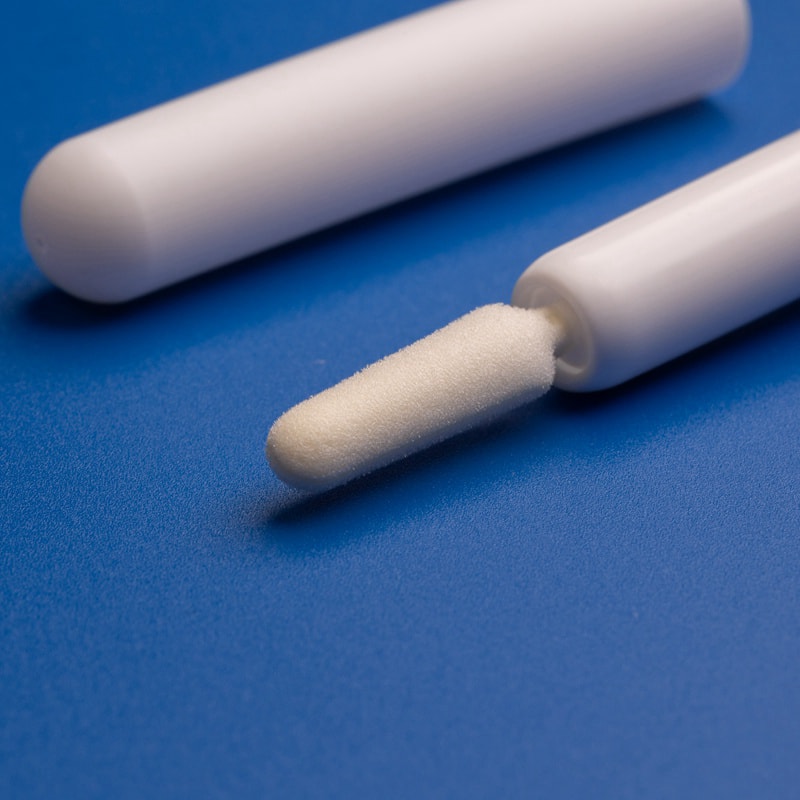
Specification review should begin with the collection head material, shaft design, sterility method, tube dimensions, cap security, and packaging format. For dry swab HPV self-sampling kits, flocking quality matters because it affects both specimen pickup and release. The shaft should be rigid enough for controlled use but comfortable enough for self-collection. The protective tube should resist accidental opening during transport, especially when used in mail-back screening models.
U.S. buyers should also ask for details on material biocompatibility, swab breakpoint options if relevant, individual pouch construction, carton count, and environmental storage recommendations. If the kit will be deployed through public programs, instruction design matters almost as much as the device itself. Clear diagrams, user-friendly wording, and return packaging design all influence specimen adequacy and completion rates.
| Specification Element | What to Check | Why It Matters | Preferred Evidence | Impact on Program Success | Typical Procurement Owner |
|---|---|---|---|---|---|
| Swab head | Flocked fiber density and consistency | Affects sample capture and release | Material spec and validation data | Higher specimen adequacy | Lab and QA teams |
| Shaft design | Length, flexibility, user comfort | Influences self-collection reliability | Drawings and pilot feedback | Better user compliance | Clinical operations |
| Sterilization | EO process and residual control | Supports product safety and consistency | Sterilization record and lot data | Lower compliance risk | Quality assurance |
| Tube and cap | Closure security and dimensions | Prevents transport problems | Packaging test results | Fewer damaged returns | Supply chain team |
| IFU and labeling | Clear instructions and barcode layout | Supports user success and accessioning | Artwork proof and regulatory review | Lower rejection rate | Marketing and compliance |
| Carton configuration | Inner packs, master cartons, pallet load | Controls freight cost and fulfillment efficiency | Packing specification sheet | Better landed cost | Procurement and logistics |
For procurement teams, this table turns product review into an operational checklist. It helps align quality, clinical, logistics, and commercial stakeholders before purchase orders are issued.
2026 Trends: Technology, Policy, and Sustainability
Looking ahead to 2026, the U.S. market for dry swab HPV self-sampling kits will likely be shaped by three major trends. The first is technology integration. Expect broader use of smartphone-guided instructions, QR-based onboarding, digital reminders, and automated eligibility screening. Laboratories will also seek collection formats that reduce manual handling and improve compatibility with high-throughput molecular workflows.
The second is policy evolution. Screening access remains a public health priority in the United States, and self-collection will continue to gain attention where it can improve uptake among populations with lower clinic attendance. Buyers should monitor changes in reimbursement approaches, public health recommendations, and state-level pilot funding. Organizations that can align procurement with policy momentum will move faster than those waiting for a single nationwide model.
The third trend is sustainability. U.S. distributors and health systems increasingly ask about packaging reduction, carton efficiency, recyclable secondary materials, and lower-waste fulfillment design. Dry swab formats may benefit here because they can reduce liquid handling materials and simplify transport packaging. Suppliers that combine validated performance with leaner packaging will have a stronger position in tenders and private-label programs.
Frequently Asked Questions
What is a dry swab HPV self-sampling kit?
It is a kit that allows a user to collect a vaginal sample with a dry swab rather than placing the sample into a liquid transport medium immediately. The sample is then returned for laboratory HPV testing according to the program’s workflow.
Why are dry swab kits attractive in the United States?
They can simplify shipping, reduce leakage concerns, support outreach and mail-back models, and often lower packaging and logistics complexity for multi-state programs.
Are dry swab kits suitable for all laboratories?
No. A receiving laboratory should confirm compatibility with its extraction and HPV testing workflow. Validation is essential before full deployment.
Who buys these kits in the United States?
Typical buyers include public health departments, women’s health clinics, telehealth providers, brand owners, distributors, research organizations, and employer health programs.
What certifications should buyers review?
Buyers commonly look for quality system certifications, relevant product registrations, sterilization records, material specifications, and complete batch documentation that supports import and institutional review.
Can a supplier provide private-label versions?
Yes. Many specialized manufacturers support OEM and ODM services such as custom carton design, private labeling, instructions for use, and tailored pack configurations.
How important is after-sales support?
It is critical. U.S. programs need reliable communication for complaints, replenishment, documentation updates, and quality follow-up, especially during pilot-to-scale transitions.
What is the main advantage of working with an experienced international manufacturer?
An experienced international supplier can often deliver strong cost-performance, flexible customization, and large-scale output while still supporting U.S. buyers with documentation, technical communication, and structured after-sales service.
Conclusion
For the United States, the right dry swab HPV self-sampling kit is the one that fits the full screening pathway, not just the sample collection step. Buyers should compare clinical compatibility, user experience, packaging efficiency, documentation readiness, and supplier responsiveness. Large diagnostic brands are often the right benchmark for lab-centered programs, while specialized manufacturers can be the stronger choice for distributors, regional health initiatives, and private-label projects that need flexible design and better unit economics. As self-collection expands across public health, telehealth, and women’s preventive care, U.S. procurement teams that evaluate kits strategically will be better positioned to improve screening access and long-term program performance.

Jiangsu Hanheng Medical Technology Co., Ltd.
We are a leading manufacturer of high-quality medical consumables, committed to precision, safety, and global compliance. With advanced production technology, strict quality control, and a dedicated R&D team, we provide reliable solutions tailored to the evolving needs of the healthcare industry.

.jpg)