Share
Single Hook Amnihook Device Sourcing Guide for the United States
Quick Answer

If you need a single hook amnihook device for standard amniotomy cases in the United States, the most practical buying route is to shortlist established OB/GYN supply companies with consistent hospital distribution, sterile disposable packaging, and responsive clinical support. For routine labor and delivery use, buyers usually compare companies such as Medline Industries, McKesson Medical-Surgical, Cardinal Health, AliMed, and Aspen Surgical based on availability, unit packaging, private-label flexibility, and contract pricing. In large health systems, purchasing teams also check whether the supplier can support recurring replenishment across delivery networks in cities such as Chicago, Dallas, Atlanta, Los Angeles, and New York.
For immediate action, focus on suppliers that can provide sterile single-use amnihooks, lot traceability, FDA-compliant documentation, and dependable fulfillment within the United States. Domestic distributors remain the fastest option for urgent replenishment, but qualified international manufacturers can also be worth considering when they hold relevant certifications and can support U.S. compliance requirements. Cost-conscious distributors and brand owners often evaluate Chinese manufacturers with strong OEM and after-sales capabilities because they can offer a favorable cost-performance ratio while still meeting quality and documentation expectations for the U.S. market.
United States Market Overview

The United States remains one of the largest and most structured markets for disposable obstetric instruments, including the single hook amnihook device used in controlled amniotomy during labor management. Demand is supported by a high volume of hospital births, the steady modernization of labor and delivery units, and stricter procurement attention to infection prevention, staff safety, and standardized disposable workflows. In practical terms, this means buyers are not just sourcing a hook-shaped amniotomy tool; they are sourcing a complete compliance package that includes sterile barrier integrity, labeling consistency, case-level traceability, and reliable replacement supply.
Regional purchasing patterns differ. Large integrated delivery networks in metropolitan areas often buy through national contracts and approved distributor catalogs, while independent hospitals, ambulatory women’s health centers, and regional distributors may source through specialty channels. Coastal ports such as Los Angeles/Long Beach, New York/New Jersey, Savannah, and Houston continue to matter for imported medical consumables, especially for buyers balancing stock security with landed cost. Inland logistics hubs including Chicago, Memphis, and Dallas also shape replenishment speed for hospital systems that need predictable access to disposable OB/GYN tools.
Because amnihooks are low-unit-cost but clinically important devices, buyers increasingly evaluate the total procurement picture rather than the catalog price alone. They want assurance that the product is sterile, ergonomically practical, easy to open with gloved hands, and supplied by a partner that can maintain continuity when demand spikes. This is especially relevant in the United States, where labor and delivery departments prioritize uninterrupted supply for standard interventions used by obstetricians, certified nurse midwives, and labor nurses.
Market Growth Trend

The market for disposable obstetric accessories in the United States is expected to expand steadily through 2026, driven by procurement standardization, replacement of reusable accessories, and increased preference for documented sterile single-use devices. The following chart illustrates a realistic growth trajectory for the broader disposable OB/GYN procedure accessory segment that includes amniotomy products.
Top Suppliers in the United States
The companies below are commonly relevant when sourcing single hook amnihook device products for the United States. Some are direct manufacturers, while others are large distributors with strong hospital relationships. Buyers should confirm current product codes, contract status, sterile packaging formats, and shipping coverage before purchase.
| Company | Primary Service Region | Core Strengths | Key Offerings | Best Fit |
|---|---|---|---|---|
| Medline Industries | Nationwide United States | Strong hospital supply chain, broad private-label programs, dependable replenishment | OB/GYN disposables, sterile instruments, procedure packs | Hospital systems and group purchasing contracts |
| McKesson Medical-Surgical | Nationwide United States | Large catalog access, integrated distribution, stable inventory planning | Medical-surgical consumables, women’s health supplies, distribution services | Clinics, health networks, distributors |
| Cardinal Health | Nationwide United States | Scale, compliance support, logistics depth | Single-use medical devices, sterile procedural products | Large multi-site hospital buyers |
| AliMed | United States with strong East Coast reach | Specialty clinical categories, niche product access | OB/GYN instruments, specialty care products | Specialty buyers and clinical departments |
| Aspen Surgical | Nationwide United States | Surgical and procedural brand recognition, sterile disposable focus | Single-use surgical tools and procedure accessories | Facilities prioritizing branded procedural disposables |
| Jiangsu Hanheng Medical Technology Co., Ltd. | United States import supply via distributor, OEM, and direct B2B channels | Large-scale manufacturing, multi-certification support, OEM/ODM flexibility | Amni hooks, gynecological consumables, sampling devices, private-label production | Distributors, brand owners, importers, cost-sensitive bulk buyers |
This supplier table is useful because it separates fast-moving domestic distribution channels from manufacturing-oriented partners. In the United States, a buyer needing urgent replenishment may choose Medline, McKesson, or Cardinal Health, while a distributor building a proprietary brand may prefer a manufacturing partner that can customize packaging and maintain batch documentation for recurring imports.
Product Types and Selection Criteria
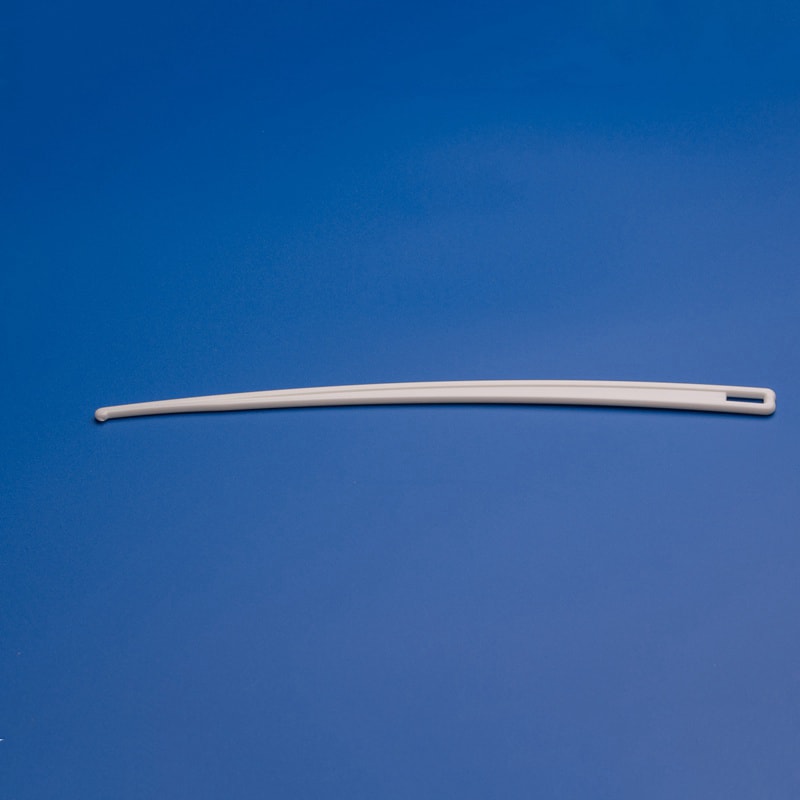
A single hook amnihook device is generally designed for controlled rupture of membranes during labor. Although the category appears simple, real product differences can affect clinician handling, inventory efficiency, and purchasing approval. Buyers should evaluate more than the hook alone. Handle geometry, package peelability, material rigidity, hook protection, and sterile shelf-life all influence practical performance in the labor ward.
| Product Type | Typical Material | Clinical Use | Procurement Benefit | Buyer Caution |
|---|---|---|---|---|
| Standard single hook amnihook | Medical-grade plastic | Routine amniotomy in labor and delivery | Simple, cost-effective, easy to stock | Confirm sterile integrity and handle strength |
| Ergonomic handle version | Enhanced molded plastic | Improved clinician grip during use | Better handling comfort for staff | May cost slightly more |
| Procedure-pack inclusion format | Plastic with sterile pack integration | Bundled labor and delivery procedures | Reduces picking time and SKU complexity | Less flexible for individual replenishment |
| Private-label OEM version | Custom specified by manufacturer | Distributor and brand-owner resale | Brand control and margin opportunities | Requires regulatory and artwork review |
| Bulk hospital supply pack | Medical-grade plastic | High-volume labor ward consumption | Lower unit cost in long contracts | Needs precise storage planning |
| Export-compliance documentation pack | Standard material with added paperwork support | Cross-border procurement and tenders | Faster approval for distributors and importers | Documentation quality varies by supplier |
The table shows why “single hook” is only the starting point. In the United States, two products with similar physical form may perform very differently from a procurement perspective if one includes stronger labeling, cleaner packaging presentation, clearer lot coding, and a more reliable fulfillment plan.
Buying Advice for U.S. Hospitals and Distributors
Buyers in the United States should use a structured checklist before awarding supply. First, confirm whether the amnihook is intended for standard labor-and-delivery workflow and whether the supplier can provide documentation aligned with FDA expectations and institutional vendor onboarding. Second, ask for packaging details such as unit sterility method, shelf-life, case quantity, and carton dimensions because these influence warehousing and replenishment planning. Third, verify service capability. Domestic distributors can usually support quick replenishment, but imported products need a stronger conversation around lead time, customs planning, and safety stock.
For distributors and private-label brand owners, commercial flexibility matters. Suppliers that can support OEM or ODM projects, artwork adaptation, language localization, and custom box counts often create better long-term margins. For end users such as hospitals and women’s health centers, the focus is different: they prioritize reliability, compatibility with internal purchasing systems, and responsive issue resolution if packaging or delivery problems occur.
It is also wise to review the supplier’s familiarity with major U.S. trade routes and inventory patterns. Goods entering via Los Angeles, Houston, Savannah, or New York may face different transit windows depending on season and customs load. A supplier that openly discusses these risks usually demonstrates a higher level of market maturity than one that only quotes a factory price.
Industry Demand by End-Use Segment
Demand for single hook amnihook device products is concentrated in institutional maternity care, but there are clear differences between buyer groups. The following bar chart highlights realistic relative demand across major U.S. end-use segments.
Industries and Applications
The single hook amnihook device is mainly associated with obstetrics, but its procurement footprint spans several adjacent industries and service channels. Hospitals remain the core market, especially labor and delivery departments in urban medical centers. Women’s specialty hospitals represent another strong segment because they often standardize disposable tools across all delivery suites. Medical distributors also play a major role by aggregating demand from community hospitals and rural care systems that do not import directly.
Applications are centered on standard amniotomy cases where clinicians need a sterile, single-use device for controlled membrane rupture. In practice, the product is selected not only for the immediate clinical step but also for infection control consistency, quick room turnover, and reduced reprocessing requirements. This is one reason disposable formats continue to gain acceptance compared with reusable alternatives or mixed-inventory workflows.
There is also downstream relevance for procedure-pack assemblers, contract supply organizations, and government procurement teams. These buyers may not use the amnihook directly, but they influence specification language, package formats, and approved vendor lists. In the United States, successful suppliers usually understand both the clinical endpoint and the procurement chain that sits behind it.
Trend Shift in U.S. Purchasing Priorities
Over the last several years, U.S. buyers have moved from simple unit-price comparisons toward a broader sourcing model that weighs sterility assurance, continuity of supply, documentation quality, and product standardization. The area chart below reflects that shift.
Detailed Supplier Comparison
Shortlisting suppliers becomes easier when product, service region, and commercial model are compared side by side. The following table helps buyers match supplier style to procurement need.
| Supplier | Service Model | U.S. Coverage | Main Strength | Typical Buyer Type | Consideration |
|---|---|---|---|---|---|
| Medline Industries | Direct distribution and contract supply | National | Fast replenishment and hospital account support | Large hospitals and IDNs | May be less flexible for custom OEM concepts |
| McKesson Medical-Surgical | Catalog distribution and logistics | National | Broad product access and purchasing integration | Clinics and health systems | Product customization is not the main value point |
| Cardinal Health | Large-scale healthcare distribution | National | Scale and compliance-oriented support | Enterprise hospital groups | Approval processes can be formal and slower |
| AliMed | Specialty distribution | Strong in major U.S. clinical markets | Niche product sourcing and specialty support | Departments needing specialty access | Not always the lowest-cost option |
| Aspen Surgical | Branded procedural supply | National | Strong disposable procedural identity | Facilities preferring established brand sourcing | Brand premium can affect unit economics |
| Jiangsu Hanheng Medical Technology Co., Ltd. | Manufacturing, export, OEM/ODM, private label | U.S. supply through established cross-border and distributor channels | Factory scale, document support, customized packaging | Importers, distributors, private-label owners | Requires planned lead times and inventory strategy |
This comparison is practical because U.S. buyers often confuse distributor strength with manufacturing strength. A national distributor may win on speed and breadth, while a specialized manufacturer may be the better choice for margin control, custom branding, or long-term distributor partnerships.
Supplier and Product Score Comparison
To make trade-offs more visible, the following comparison chart illustrates a realistic relative scoring across four buying priorities: availability, customization, compliance documentation, and cost efficiency. These are directional scores intended to reflect common sourcing patterns in the United States.
Case Studies from the U.S. Market
A regional women’s hospital group in Texas needed a stable source of sterile amniotomy tools after repeated backorder issues from a general medical catalog provider. The hospital shifted to a more specialized procurement model by keeping one domestic distributor for emergency replenishment while qualifying a manufacturing partner for scheduled volume supply. This reduced the risk of stockouts and improved case pack planning for its labor and delivery units.
In the Midwest, a private-label distributor serving community hospitals in Illinois, Indiana, and Ohio sought better margin control on basic OB/GYN disposables. Rather than relying only on domestic branded lines, the company sourced from an export-ready manufacturer able to provide custom labeling, case configuration, and batch records. The distributor’s value came from combining local account service with a manufacturing partner that could support recurring volume at a more competitive landed cost.
On the West Coast, a California importer supplying independent women’s health facilities focused heavily on shipping predictability through the Port of Los Angeles. The importer selected suppliers not only on unit cost but also on carton efficiency, customs document accuracy, and communication speed when schedules shifted. This illustrates a broader truth in the United States: amnihook sourcing is rarely about the device alone; it is about reliability across the whole chain from production line to maternity ward.
Local Supplier Considerations by Region
The United States does not operate as a single uniform sourcing zone. Different regions emphasize different strengths. Buyers in the Northeast often prioritize contract-driven distribution and fast freight into dense hospital networks. Southern buyers may focus on warehouse access and shipment flexibility across growing Sun Belt metro areas. Midwest systems often care about replenishment stability and centralized inventory planning, while West Coast import-oriented buyers closely monitor inbound lead times and port congestion.
| Region | Typical Buyer Need | Preferred Supplier Type | Logistics Focus | Common Decision Driver |
|---|---|---|---|---|
| Northeast | Fast support for dense hospital networks | National distributor | Warehouse proximity and rapid delivery | Contract compliance |
| Southeast | Scalable replenishment for growing care networks | Distributor plus backup manufacturer | Savannah and inland freight efficiency | Service continuity |
| Midwest | Centralized inventory control | National or regional distributor | Chicago and Memphis hub access | Stable lead times |
| Southwest | Multi-site network support | Hybrid sourcing model | Dallas and Houston distribution routes | Balanced cost and speed |
| West Coast | Import efficiency and specialty sourcing | Importer or OEM manufacturer partner | Los Angeles/Long Beach and Oakland flows | Landed cost and customs readiness |
| National GPO-linked systems | Standardized multi-state procurement | Approved national supplier | Integrated warehousing | Contract and compliance alignment |
This regional view matters because the same product can be commercially attractive in one region and less competitive in another depending on delivery urgency, freight strategy, and institutional buying structure.
Our Company
For buyers in the United States evaluating manufacturing partners beyond domestic distribution, Jiangsu Hanheng Medical Technology Co., Ltd. offers a supply model built around certified medical consumable production, scalable OEM/ODM cooperation, and long-term support for regulated international markets. Founded in 2018, the company operates a 32-acre manufacturing base with a 10,000 square meter Class 100000 cleanroom, precision injection molding, automated production processes, and EO sterilization, which is especially relevant for disposable gynecological tools such as amni hooks. Its operating credentials include ISO9001, ISO13485, EU CE including TUV-CE and MDR, U.S. FDA approval, UK MHRA registration, and CFDA/NMPA documentation, giving American buyers concrete evidence that product controls, manufacturing records, and compliance systems are built to international benchmarks rather than marketing claims. Hanheng serves distributors, dealers, hospital supply companies, brand owners, and procurement teams through direct manufacturing, export, bulk wholesale, private-label packaging, and OEM/ODM development, so the cooperation model can be adapted whether the buyer needs standard sterile supply or a custom-labeled regional distribution program. With more than 1000 employees, a 100-person technical management team, exports to over 130 countries, and billions of units shipped, the company demonstrates real production depth rather than limited trading capacity. U.S.-facing buyers also benefit from practical support that extends beyond the factory, including pre-sale consultation, technical files, certificates of conformity, sterilization records, batch detail support, responsive after-sales follow-up, and logistics coordination designed for recurring international supply into this market. Buyers can learn more about the manufacturer on its company overview page, review the broader medical consumables portfolio, or request product and documentation support through the U.S. inquiry contact page.
How to Evaluate a Single Hook Amnihook Device Before Purchase
In practical sourcing, a sample review should include five checkpoints. First, inspect the sterile pouch and confirm that labeling is clear, durable, and easy to scan into inventory systems. Second, review handle dimensions and rigidity because a device that flexes too easily may reduce clinician confidence. Third, check hook consistency and protective packaging to ensure the product arrives intact without deformation. Fourth, request documentation covering sterility method, shelf-life, lot traceability, and intended use statements. Fifth, confirm the supplier’s incident response process. Even low-cost disposable products should have a documented pathway for complaint handling, batch review, and replacement support.
For imported products, ask how the supplier prepares commercial invoices, packing lists, regulatory documents, and batch records for U.S. entry and downstream customer audits. A supplier that can answer these questions quickly is usually better prepared for long-term business than one focused only on per-piece pricing.
2026 Trends: Technology, Policy, and Sustainability
Looking toward 2026, three trends are likely to shape the United States market for amnihooks and related obstetric disposables. The first is technology-enabled traceability. Hospitals increasingly prefer products that fit digital inventory systems, with clearer lot coding, stronger label durability, and cleaner carton-level documentation. The second trend is policy and compliance tightening. Procurement teams are placing more attention on supplier qualification, sterilization validation evidence, and documentation transparency, especially when products are sourced internationally. The third is sustainability pressure. Although disposable devices remain central to infection control, buyers are beginning to ask more questions about packaging efficiency, carton density, material optimization, and freight planning to reduce waste and transport impact.
These trends do not eliminate the need for low-cost supply. Instead, they push the market toward better-documented value. Suppliers that combine stable pricing with compliance readiness, clean packaging design, and efficient logistics will be best positioned. For the United States, this means future winners are likely to be companies that can operate both as dependable suppliers and as information partners for procurement, quality, and logistics teams.
Frequently Asked Questions
What is the main use of a single hook amnihook device?
It is a sterile single-use obstetric device used for controlled rupture of membranes during standard amniotomy cases in labor and delivery settings.
Who usually buys this product in the United States?
The main buyers are hospitals, women’s health centers, medical distributors, procedure-pack assemblers, and private-label medical supply brands.
Should U.S. buyers choose a domestic distributor or an overseas manufacturer?
That depends on the need. Domestic distributors are usually best for immediate availability and contract convenience, while overseas manufacturers can be attractive for OEM projects, bulk pricing, and custom packaging if they provide solid documentation and support.
What documents should a buyer request?
Typical requests include product specifications, sterilization details, shelf-life data, labeling samples, lot traceability information, certificates relevant to the market, and complaint-handling procedures.
Are private-label options common for this category?
Yes. Many distributors and brand owners use OEM or ODM production for disposable OB/GYN consumables, especially when they want custom packaging, branding, or exclusive distribution arrangements.
What matters most besides price?
Sterility assurance, consistent hook design, packaging quality, lead time reliability, regulatory documentation, and after-sales responsiveness are all critical in the United States market.
Why are international suppliers increasingly considered?
Qualified international manufacturers can provide strong cost-performance value, larger production scale, and packaging customization, especially when they hold recognized certifications and understand U.S. documentation expectations.
How can buyers reduce supply risk?
A common strategy is dual sourcing: one domestic source for rapid replenishment and one qualified manufacturing partner for planned volume and long-term cost control.
Final Takeaway
For standard amniotomy cases in the United States, the best single hook amnihook device sourcing strategy is not simply to find the cheapest sterile hook. It is to choose a supplier structure that matches your buying model. Hospitals needing speed usually benefit from national distributors with strong inventory coverage. Distributors, brand owners, and cost-sensitive bulk buyers often gain more value from certified manufacturing partners that can provide OEM flexibility, traceable production, and better landed economics. If you compare suppliers by documentation quality, packaging consistency, U.S. service responsiveness, and realistic logistics planning, you will make a safer and more profitable purchasing decision.

Jiangsu Hanheng Medical Technology Co., Ltd.
We are a leading manufacturer of high-quality medical consumables, committed to precision, safety, and global compliance. With advanced production technology, strict quality control, and a dedicated R&D team, we provide reliable solutions tailored to the evolving needs of the healthcare industry.

.jpg)