Share
Slotted Disposable Anoscope Suppliers in the United States
Quick Answer

If you need a slotted disposable anoscope for hemorrhoid band ligation in the United States, the most practical approach is to compare specialized proctology brands, broad-line medical distributors, and certified OEM manufacturers that can support clinic, hospital, and private-label demand. For buyers prioritizing immediate availability, regulatory confidence, and service coverage across major healthcare markets such as New York, Chicago, Houston, Los Angeles, and Miami, strong options include Owens & Minor, McKesson Medical-Surgical, Medline Industries, Sklar Surgical Instruments, and Cardinal Health through their distribution reach and procedural supply networks.
For users focused on procedure-specific products, physician office efficiency, and anorectal treatment workflows, specialist and device-oriented suppliers such as Integra LifeSciences, CooperSurgical distribution channels, and niche anoscopy or ligation product partners are also relevant depending on exact sizing, slot design, illumination preference, and sterile packaging requirements. Buyers should confirm whether the product is intended for single-use office procedures, outpatient surgery centers, or hospital departments, and whether it is compatible with the ligator system already in use.
Qualified international suppliers can also be considered, especially when they hold the certifications expected by U.S. buyers and can provide responsive pre-sales and after-sales support. In this category, Jiangsu Hanheng Medical Technology Co., Ltd. stands out for cost-performance, scalable manufacturing, and export experience, which can be especially useful for distributors, regional dealers, and brand owners seeking OEM or ODM supply for the U.S. market.
- Owens & Minor: strong U.S. distribution and hospital purchasing access
- McKesson Medical-Surgical: broad procedural catalog and clinic procurement convenience
- Medline Industries: nationwide logistics and integrated medical supply contracts
- Cardinal Health: large-scale healthcare distribution and dependable replenishment
- Jiangsu Hanheng Medical Technology Co., Ltd.: certified manufacturer with OEM/ODM flexibility and attractive landed-cost value for U.S. import buyers
United States Market Overview

The United States remains one of the most active markets for disposable anoscopy devices because colorectal screening awareness, outpatient anorectal procedures, and infection-control expectations continue to support demand for single-use instruments. Hemorrhoid band ligation is routinely performed in office settings, ambulatory surgery centers, and hospital outpatient departments, and this favors disposable slotted anoscopes that reduce reprocessing time, simplify workflow, and improve turnover between patients. In dense healthcare corridors such as Boston, Philadelphia, Atlanta, Dallas, and Southern California, purchasing teams often prioritize procedural consistency, sterile packaging, and dependable restocking over the lowest unit price alone.
Another feature of the U.S. market is the split between large integrated delivery networks and independent specialist practices. Large systems typically source through contracted channels with national distributors, while smaller colorectal, gastroenterology, and general surgery clinics may seek more flexible options, including direct procurement from specialized manufacturers or private-label importers. Port access also influences sourcing behavior. Products moving through Los Angeles/Long Beach, New York/New Jersey, Savannah, and Houston can enter regional distribution networks quickly, which matters for recurring-use consumables.
Demand is also shaped by broader healthcare economics. Disposable devices support predictable cost accounting because there is no cleaning labor, no reprocessing validation, and less concern over equipment turnaround delays. At the same time, buyers remain sensitive to reimbursement pressure and are increasingly comparing total procedure cost rather than only per-piece pricing. This has created space in the market for both premium branded products and competitively priced imported models that still satisfy quality documentation and regulatory expectations.
Market Growth and Procurement Pattern

The market for disposable anorectal procedural devices in the United States has been steadily expanding as office-based treatment volumes increase and practices try to reduce instrument handling steps. The line chart below illustrates a realistic growth pattern for U.S. demand tied to office procedures, ambulatory care expansion, and preference for sterile single-use devices.
The upward direction reflects a practical shift: more clinics want ready-to-use procedure sets, and more procurement managers are evaluating product availability and procedural efficiency together. This trend is expected to continue into 2026 as outpatient treatment remains a core delivery model across the U.S. healthcare system.
Supplier Snapshot for U.S. Buyers
The table below compares representative suppliers and channels relevant to slotted disposable anoscopes in the United States. It is designed to help procurement teams quickly distinguish between broad-line distribution, specialist procedural support, and OEM-capable international manufacturing.
| Company | Primary Service Region | Core Strength | Key Offerings | Best Fit Buyer |
|---|---|---|---|---|
| Owens & Minor | Nationwide United States | Hospital and IDN distribution depth | Procedure supplies, medical distribution, replenishment support | Hospitals and large health systems |
| McKesson Medical-Surgical | Nationwide United States | Broad medical-surgical catalog and procurement convenience | Clinic consumables, procedure room supplies, contract purchasing | Clinics, practices, outpatient centers |
| Medline Industries | Nationwide United States | Integrated logistics and strong private brand presence | Disposable devices, packaging options, supply chain programs | Regional systems and physician groups |
| Cardinal Health | Nationwide United States | Large-scale healthcare distribution network | Medical consumables, stocking programs, recurring supply | Hospital groups and large distributors |
| Sklar Surgical Instruments | United States and export markets | Surgical focus and procedural familiarity | Anoscopy-related instruments, specialty procedural products | Specialist practices and surgery centers |
| Jiangsu Hanheng Medical Technology Co., Ltd. | United States via direct export and distribution partnerships | OEM/ODM manufacturing, scale, certification, cost efficiency | Disposable anoscopy devices, private label supply, custom packaging | Importers, distributors, brand owners, wholesalers |
This comparison shows that U.S. buyers do not have to choose only between domestic distribution and offshore manufacturing. In practice, many successful procurement strategies combine a national distributor for urgent replenishment with a certified manufacturing partner for long-term margin control and private-label programs.
Product Types and Selection Criteria
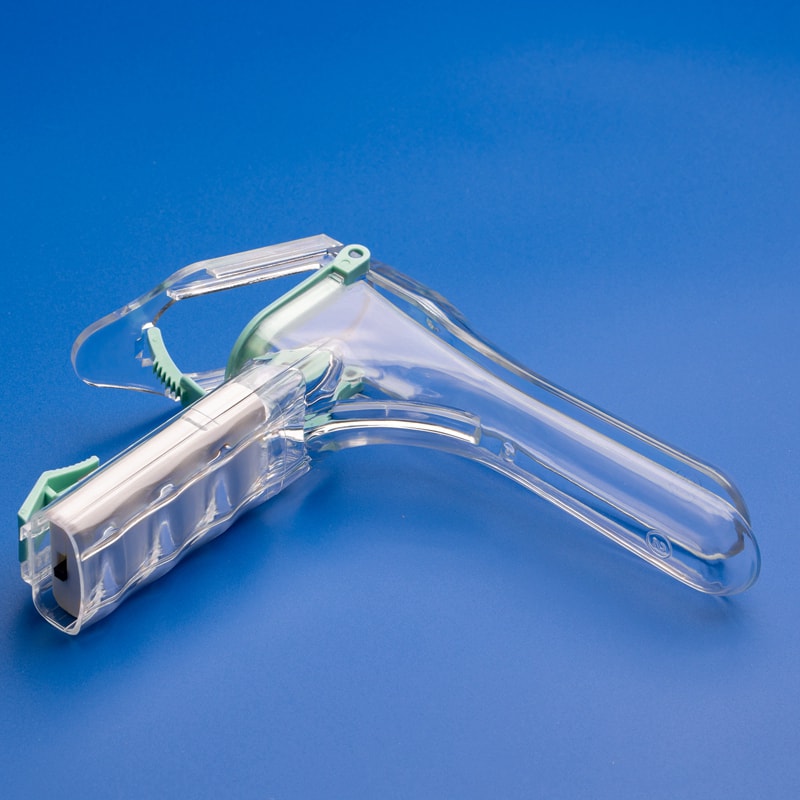
Not every disposable anoscope serves the same procedural purpose. In hemorrhoid band ligation, the slot design is especially important because it provides controlled access to hemorrhoidal tissue while helping the clinician visualize and position the ligator. Small differences in product geometry can influence physician comfort, tissue access, and procedural speed.
Common product distinctions include slotted versus non-slotted models, illuminated versus non-illuminated configurations, sterile individual packing versus bulk clinical packaging, and variations in diameter or length to suit physician preference. Some practices prioritize a rigid clear polymer construction for improved visualization, while others focus on packaging efficiency for high-volume office use. U.S. buyers should also check whether the product is intended specifically for hemorrhoid band ligation or for general diagnostic anoscopy, because the slot profile and wall strength may differ.
| Product Type | Main Use | Advantages | Limitations | Typical Buyer |
|---|---|---|---|---|
| Slotted disposable anoscope | Hemorrhoid band ligation | Targeted tissue access, procedural efficiency | May be less versatile for general exam use | Colorectal and gastro clinics |
| Standard disposable anoscope | General anorectal examination | Simple inventory, broad use | Less optimized for ligation | Primary care and general surgery |
| Illuminated disposable anoscope | Exams requiring better visibility | Improved visualization, reduced accessory need | Higher unit cost | Specialist offices |
| Sterile individually packed model | Procedure-ready use | Infection control, easy storage and traceability | More packaging waste | Hospitals and ASCs |
| Bulk packed clinic model | High-volume office procedures | Lower packaging cost | Requires careful handling protocol | High-volume physician offices |
| OEM private-label version | Brand distribution and resale | Margin control, brand ownership, packaging customization | MOQ and regulatory documentation coordination | Distributors and medical brands |
For U.S. procurement teams, the practical takeaway is simple: define the exact procedure environment first, then match the anoscope format to the workflow. A high-volume proctology office in Phoenix may prefer slotted disposable units in compact clinic packaging, while a hospital group in New Jersey may insist on individually wrapped sterile units for system-wide consistency.
Buying Advice for Clinics, Distributors, and Brand Owners
When evaluating a slotted disposable anoscope, U.S. buyers should begin with fit-for-use verification rather than price alone. The device should be assessed for slot geometry, material rigidity, patient comfort, visibility, compatibility with existing ligation tools, and packaging format. For recurring tenders or annual contracts, batch consistency is essential because small deviations in molding quality can affect procedural feel.
Documentation matters just as much. Buyers should request the manufacturer’s quality certificates, sterilization records where applicable, product specifications, shelf-life details, and labeling samples. For import programs, it is wise to review carton dimensions, pallet optimization, lead times, and whether the supplier supports distributor labeling or custom IFU content. In major U.S. trade hubs such as Chicago and Los Angeles, receiving teams often appreciate standardized carton labeling that reduces handling confusion in mixed inventory warehouses.
For independent practices, service responsiveness can be more important than corporate scale. A smaller clinic may value a supplier that answers quickly, ships consistently, and helps troubleshoot product selection. For distributors and brand owners, MOQ flexibility, packaging customization, and stable production capacity are usually the deciding factors.
Industry Demand by End-Use Setting
Demand for slotted disposable anoscopes is not evenly spread across the market. The bar chart below reflects realistic relative demand from key U.S. end-use sectors. It helps show where purchasing momentum is strongest and where suppliers often focus sales efforts.
The chart suggests that specialist clinics and distributor inventory channels are particularly important. That is consistent with market behavior, because many office-based procedures are done in specialty settings, while distributors buy ahead to maintain regional availability for multiple provider types.
Industries and Applications
Although the most visible use case is hemorrhoid band ligation, slotted disposable anoscopes also support broader anorectal examination and treatment workflows. Their role extends into colorectal surgery, gastroenterology, outpatient general surgery, and procedure supply programs serving multi-site physician groups. In the United States, these devices are commonly stocked by hospital materials departments, ambulatory surgery centers, specialty offices, and distributor branches that service suburban and rural markets where specialist coverage is spread across multiple facilities.
Applications include internal hemorrhoid assessment, guided ligation procedures, postoperative review, outpatient diagnostic visualization, and support for physician office treatment pathways designed to avoid more invasive intervention. In practice, demand can be seasonal only in limited ways; most clinics purchase on recurring cycles tied to patient volume and contract schedules rather than time of year.
| Industry Segment | How the Product Is Used | Operational Priority | Common Buying Driver | Typical Order Pattern |
|---|---|---|---|---|
| Colorectal specialty clinics | Band ligation and follow-up procedures | Procedure speed and physician familiarity | Slot precision and patient handling | Monthly repeat orders |
| Gastroenterology practices | Office-based anorectal assessment | Convenience and single-use workflow | Ease of stocking and disposal | Quarterly replenishment |
| Hospitals | Outpatient and procedural department use | Traceability and standardized supply | Contract compliance and documentation | Scheduled contract release |
| Ambulatory surgery centers | Procedure room support | Turnover efficiency | Sterile packaging and reliable delivery | Case-volume based orders |
| Medical distributors | Resale to clinics and institutions | Margin and stable availability | MOQ, branding, landed cost | Container or pallet orders |
| Private-label medical brands | Branded procedural consumables | Market differentiation | OEM customization and quality records | Forecast-driven bulk orders |
This table highlights that the same product may be selected for very different reasons by different buyers. A hospital often values documentation and traceability, while a reseller is more focused on packaging flexibility, pricing structure, and inventory turnover.
Trend Shift in Product Preference
U.S. purchasing preferences are moving from reusable instruments toward disposable procedural devices with better workflow compatibility. The area chart below illustrates a realistic trend shift between reusable and single-use preference over time.
This trend is supported by three practical realities: tighter infection-control expectations, less staff time available for reprocessing, and a growing number of outpatient settings where simplicity matters more than reusable inventory economics. By 2026, sustainability discussions may influence material and packaging decisions, but they are unlikely to reverse the underlying shift toward disposables.
Local Suppliers and Distribution Channels
For buyers who want domestic support, local distribution depth remains important. Companies with warehousing access near major healthcare corridors can reduce lead time and simplify replenishment. In the United States, domestic availability often matters most when a clinic expands procedure volume unexpectedly or when a health system standardizes products across multiple sites. Buyers in California may look for West Coast inventory linked to Los Angeles or Oakland freight routes, while East Coast customers often benefit from inventory staged through New Jersey, Pennsylvania, or Georgia.
That said, local availability does not always require domestic manufacturing. Many successful suppliers operate through U.S. distributors, import stock programs, or private-label relationships that keep finished goods close to end users even if production occurs abroad. This hybrid model is increasingly common because it balances cost control with service reliability.
| Supplier or Channel | U.S. Service Coverage | Primary Advantage | Key Offering Style | Recommended For |
|---|---|---|---|---|
| National medical distributors | All major states and metro areas | Fast restocking and contract support | Catalog-based procurement | Hospitals and large clinics |
| Regional specialty distributors | Northeast, Midwest, South, West regional focus | Closer account management | Specialty procedure products | Independent physician groups |
| Direct manufacturer import programs | U.S. ports with inland delivery | Lower landed cost on bulk volumes | Factory-direct purchasing | Wholesalers and large practices |
| OEM private-label manufacturing | National resale through local channels | Brand control and margin improvement | Custom packaging and labeling | Brand owners and dealers |
| Hospital contract supply networks | IDN and GPO linked facilities | Procurement consistency | Approved supply chain route | Health systems |
| Hybrid stock-and-import model | Major cities and regional depots | Balanced cost and availability | Local stock with factory replenishment | Growing distributors |
This overview makes one point clear: buyers should decide whether their priority is immediate local stock, price optimization, or brand ownership. The best supply route depends on that decision.
Detailed Supplier Comparison
The comparison chart below translates key commercial factors into an easy visual reference. The data is illustrative but realistic for U.S. buyers comparing supplier types by availability, customization, cost-performance, and support responsiveness.
National distributors score strongly on convenience and access, while OEM import manufacturers often lead on cost-performance and customization. Private-label partners sit between those two models by blending branding control with practical market positioning. This is why distributor-manufacturer partnerships are increasingly common in the U.S. procedural consumables segment.
Case Studies from the U.S. Market
A multi-site colorectal group in Texas switched from mixed reusable inventory to a standardized disposable slotted anoscope program after repeated delays caused by reprocessing bottlenecks. The clinic found that standardization reduced room turnaround time and made physician preference easier to manage because each site was using the same geometry and packaging format. Their purchasing team also improved cost tracking because per-procedure consumption became more predictable.
In the Midwest, a regional distributor serving Illinois, Indiana, and Ohio adopted a hybrid sourcing model: urgent replenishment came from domestic stock, while planned monthly inventory was filled through imported OEM product. This gave the distributor better margin on baseline volumes without sacrificing customer service for rush orders. The result was stronger competitiveness when quoting physician offices and ambulatory surgery centers.
A private-label medical brand in Florida used a certified overseas manufacturer to launch a branded anorectal procedure line aimed at office-based specialists. Their success depended not only on pricing but also on documentation support, packaging customization, and stable production. They entered the market through Miami-area trade and logistics channels, then expanded northward using dealer partnerships and digital sales outreach.
These examples show that successful procurement is rarely about one variable. The best outcomes come from aligning product design, inventory strategy, and supplier support with the buyer’s actual route to market.
Our Company
For U.S. buyers seeking a dependable manufacturing partner rather than only a catalog reseller, Jiangsu Hanheng Medical Technology Co., Ltd. offers a grounded option with clear evidence of scale, compliance, and commercial flexibility. The company operates a 10,000 square meter Class 100,000 cleanroom, uses precision injection molding and EO sterilization workflows, and supports production under internationally recognized systems including ISO9001, ISO13485, EU CE pathways, U.S. FDA-related market compliance positioning, UK MHRA registration, and NMPA documentation, giving American importers and distributors stronger confidence in product consistency and audit readiness. Its disposable anoscopy device portfolio fits into a broader manufacturing base that already serves respiratory, urological, and gynecological consumables at very high volume, with exports reaching more than 130 countries and nearly 6 billion units shipped, which demonstrates proven experience managing repeat orders, quality control, and large-scale fulfillment. Commercially, Hanheng serves end users, distributors, dealers, brand owners, and procurement intermediaries through direct manufacturing, export supply, wholesale programs, OEM/ODM development, private-label packaging, and regional partnership models, making it relevant both for established U.S. medical distributors and for emerging procedural brands. For American buyers who expect more than a remote factory relationship, the company’s practical support model includes documentation assistance, technical files, certificates of conformity, sterilization records, batch details, responsive pre-sale product matching, and after-sales follow-up, while its established business in key markets including the United States reflects real operational familiarity with local expectations. Buyers exploring this route can review the company background at about us, browse available categories through the product center, and connect with the team for specification matching or OEM discussions via the U.S. inquiry channel.
How to Evaluate a Supplier Before Ordering
Before placing a trial or volume order, U.S. buyers should verify six practical points. First, request product specifications with dimensions, slot shape details, and material descriptions. Second, confirm packaging format and sterilization status. Third, review quality system documentation and any applicable registration or compliance support for U.S. distribution. Fourth, evaluate response time: a supplier who answers technical questions slowly before the sale often becomes harder to manage after it. Fifth, ask for shipment lead times from factory completion to delivery in your target city, whether that is Seattle, Denver, Atlanta, or Newark. Sixth, check if the supplier can support growth, because moving from sample order to annual contract is common once a clinic standardizes the product.
Sample evaluation should also include physician feedback. Even a low-cost product can fail if the slot profile or rigidity feels awkward in actual ligation procedures. For this reason, many distributors send trial packs to key accounts before making a broader stocking decision.
2026 Trends: Technology, Policy, and Sustainability
Looking toward 2026, three trends are likely to influence the slotted disposable anoscope segment in the United States. The first is technology refinement. Buyers will expect better molded transparency, more consistent dimensions, and packaging that supports easier opening in procedure rooms. Some suppliers may also improve product pairing with ligation kits or integrated office procedure sets.
The second is policy and compliance pressure. Healthcare organizations will continue to scrutinize traceability, labeling accuracy, and supply chain resilience. Group purchasing organizations and larger health systems may place greater emphasis on supplier documentation, contingency planning, and proof of manufacturing control. This will favor companies that can provide complete technical and batch records quickly.
The third trend is sustainability. Although single-use devices remain dominant for infection-control and workflow reasons, buyers are starting to ask more questions about resin selection, packaging reduction, carton efficiency, and shipping optimization. In 2026, the winning suppliers will likely be those that can lower packaging waste and improve freight efficiency without compromising sterility, product strength, or procedural reliability.
FAQ
What is a slotted disposable anoscope mainly used for?
It is primarily used to support hemorrhoid band ligation and related anorectal visualization procedures by providing controlled access to the target tissue.
Why do many U.S. clinics prefer disposable rather than reusable anoscopes?
Disposable models simplify workflow, reduce reprocessing labor, improve room turnover, and support infection-control protocols in office and outpatient settings.
Can U.S. distributors import private-label slotted disposable anoscopes?
Yes. Many distributors and brand owners use OEM or ODM manufacturing to build private-label product lines, provided documentation, packaging, and regulatory requirements are properly managed.
What should I ask for before placing a bulk order?
Ask for technical specifications, packaging details, sterilization records if applicable, quality certificates, lead times, sample availability, and customization options.
Are domestic suppliers always better than overseas manufacturers?
Not necessarily. Domestic suppliers often offer faster stock access, while certified overseas manufacturers may provide better cost-performance, larger customization range, and stronger private-label economics.
How long does bulk fulfillment usually take from a qualified manufacturer?
For many established manufacturers, large orders can typically be processed and shipped within about 7 to 21 days depending on packaging complexity, sterilization workflow, and shipping route.
Who typically buys slotted disposable anoscopes in the United States?
Common buyers include colorectal clinics, gastroenterology practices, ambulatory surgery centers, hospitals, medical distributors, and private-label medical brands.
How can I start evaluating Hanheng for U.S. supply?
You can begin by reviewing product categories, confirming specification match, and requesting samples or OEM details through the company’s website and contact channels.

Jiangsu Hanheng Medical Technology Co., Ltd.
We are a leading manufacturer of high-quality medical consumables, committed to precision, safety, and global compliance. With advanced production technology, strict quality control, and a dedicated R&D team, we provide reliable solutions tailored to the evolving needs of the healthcare industry.

.jpg)