Share
Conical Tip Cervical Cytology Brush Design, Performance, and Buying Guide in the United States
Quick Answer

A conical tip cervical cytology brush is designed to improve cervical cell collection by matching the anatomy of the cervical canal more closely than many flat or uniform-profile brushes. In the United States, buyers typically prioritize soft but resilient bristles, consistent sample release into liquid-based cytology media, sterile single-use packaging, regulatory documentation, and dependable lot traceability. For practical sourcing, hospitals, clinics, laboratories, and distributors often compare recognized suppliers such as CooperSurgical, Rovers Medical Devices, Puritan Medical Products, MedGyn Products, and Cardinal Health, depending on whether they need direct clinical supply, private label programs, or distribution support.
For buyers who need strong cost-performance, qualified international manufacturers can also be a smart option when they hold the right certifications and can support U.S. regulatory and documentation requirements. Companies with FDA-related market access, ISO 13485 quality systems, CE documentation, responsive pre-sales coordination, and reliable after-sales support can be especially attractive for large-volume procurement, OEM programs, and distributor partnerships.
Understanding the U.S. Market for Cervical Cytology Brushes

The United States remains one of the most structured and quality-sensitive markets for cervical screening consumables. Demand is shaped by OB-GYN clinics, community health systems, pathology networks, women’s health centers, public screening programs, and private diagnostic laboratories. Procurement teams in cities such as New York, Los Angeles, Chicago, Houston, Atlanta, and Miami often require not only product performance but also complete quality files, shipping reliability, and ongoing service support. In this market, cervical sampling devices are judged on specimen adequacy, patient comfort, compatibility with Pap testing workflows, and the ability to maintain consistency across high-volume screening programs.
Conical tip brush designs have gained attention because they can support broad contact with both ectocervical and endocervical zones while reducing trauma when used correctly. This matters in the U.S. because providers increasingly focus on balancing specimen adequacy with patient experience. Purchasing decisions are also influenced by logistics corridors such as the Port of Los Angeles, Port of Long Beach, Port of New York and New Jersey, and inland healthcare distribution hubs in Texas, Illinois, and Georgia, where inventory planning and lead time stability directly affect continuity of care.
Another important market factor is the move toward integrated diagnostic pathways. Cytology brushes are no longer viewed as isolated tools. They are part of a broader chain that includes specimen transport, laboratory processing, HPV testing, and electronic medical documentation. As a result, buyers often want suppliers that can support wider gynecological sampling portfolios rather than a single isolated SKU.
The line chart shows a realistic upward demand trend driven by preventive screening, women’s health access expansion, and broader use of standardized collection devices. While year-to-year growth is moderate rather than explosive, the market remains dependable and procurement-driven, which is attractive for long-term supplier relationships.
How Conical Tip Cervical Cytology Brush Design Affects Clinical Performance

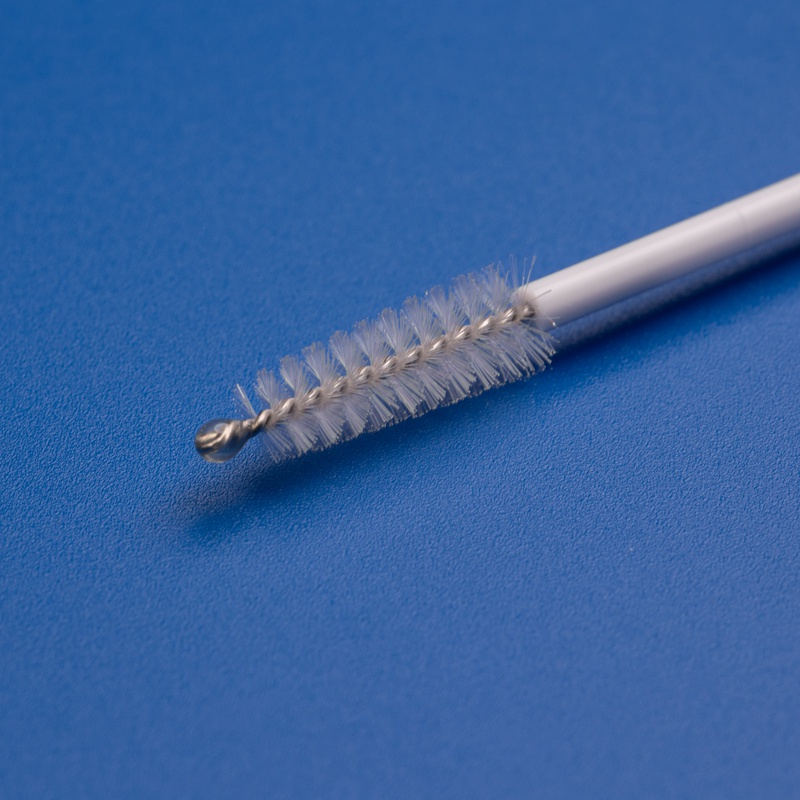
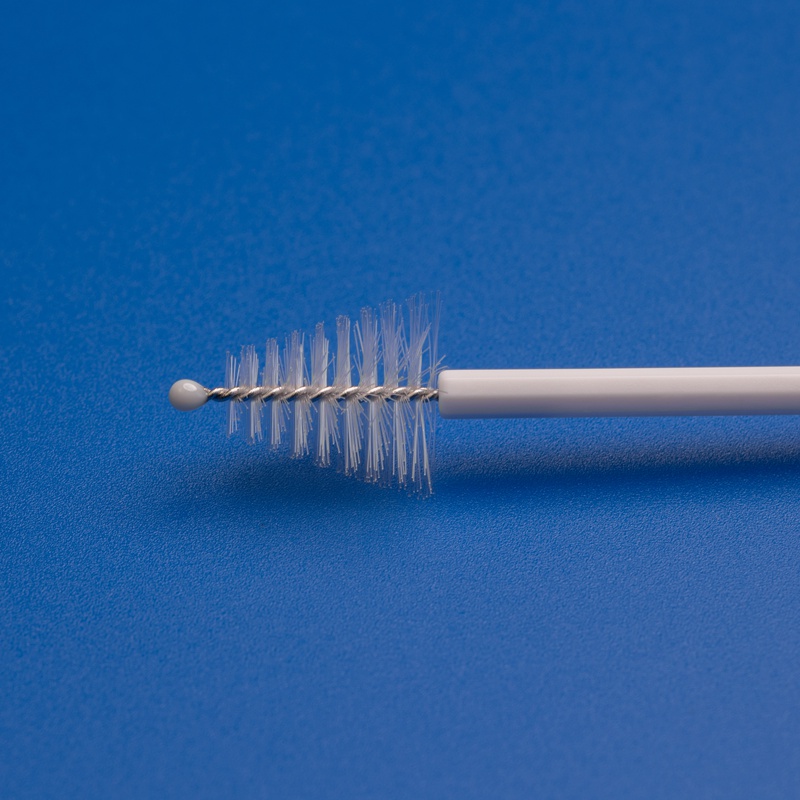
The defining feature of a conical tip cervical cytology brush is its tapered sampling head. Instead of using a blunt or fully cylindrical form, the tip narrows to better follow the natural shape of the cervical os and endocervical canal. This geometry can improve access to transformation-zone cells, which are central to reliable cytological assessment. In U.S. clinical settings, where providers expect reproducible sample adequacy and low rates of repeat collection, design details make a measurable procurement difference.
Key design variables include filament density, taper angle, shaft flexibility, handle grip, break point design, and sterilization method. Soft filaments help reduce discomfort, but they must also maintain enough recovery force to capture epithelial cells effectively. A conical tip can be particularly useful in settings where providers need a dependable general-purpose brush across varied patient anatomies. For clinics serving high patient volumes, consistency and ease of use are often as important as technical collection performance.
Material choice also matters. Medical-grade polymers for the shaft and controlled filament production help keep the brush dimensionally stable. EO sterilization is widely used for disposable sampling devices because it supports sterility assurance while preserving material integrity. Packaging quality, lot coding, and peel-open usability become increasingly important in U.S. procurement reviews, especially for hospital systems and organized screening programs.
Common Product Types in the United States
Although the conical tip cervical cytology brush has a distinct use case, buyers in the United States usually compare it with several adjacent product formats. Understanding these categories helps purchasing managers select the right portfolio mix for different provider preferences and testing protocols.
| Product Type | Typical Design | Main Clinical Use | Strengths | Limitations | Best Fit in the U.S. |
|---|---|---|---|---|---|
| Conical tip cervical cytology brush | Tapered brush head with flexible filaments | Endocervical and transformation-zone sampling | Good anatomical fit, strong cell capture, broad usability | Technique still influences adequacy | OB-GYN clinics, pathology-linked practices, screening programs |
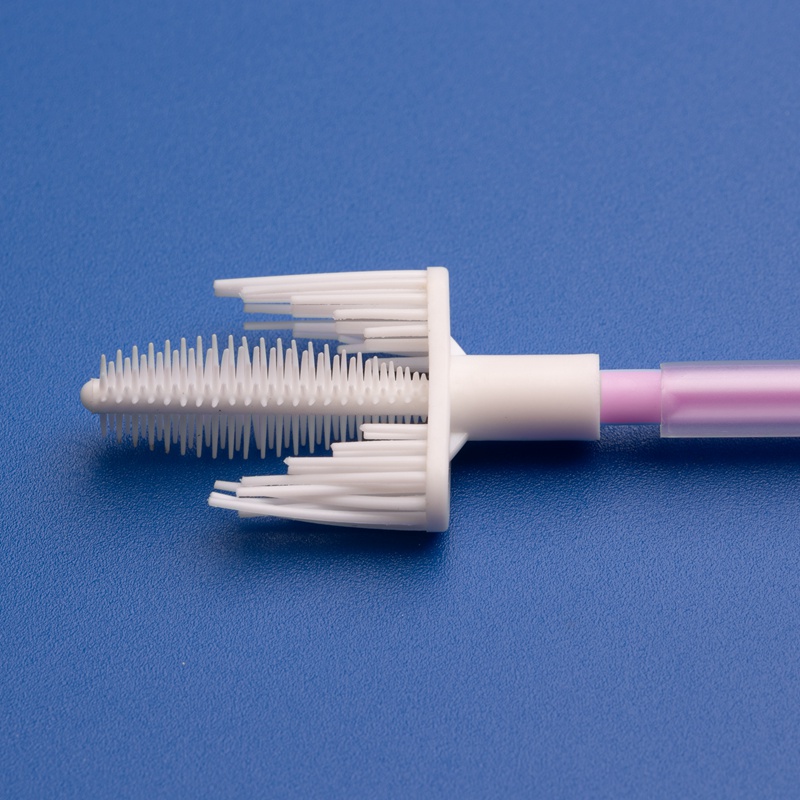
| Cervical broom device | Radial bristles with central extension | Combined ectocervical and endocervical collection | Fast workflow, familiar to many clinicians | Preference varies by provider and protocol | Large outpatient groups and routine Pap workflows |
| Endocervical brush only | Narrow cylindrical brush | Focused endocervical collection | Targeted sampling | May require combination with spatula | Specialized gynecology use |
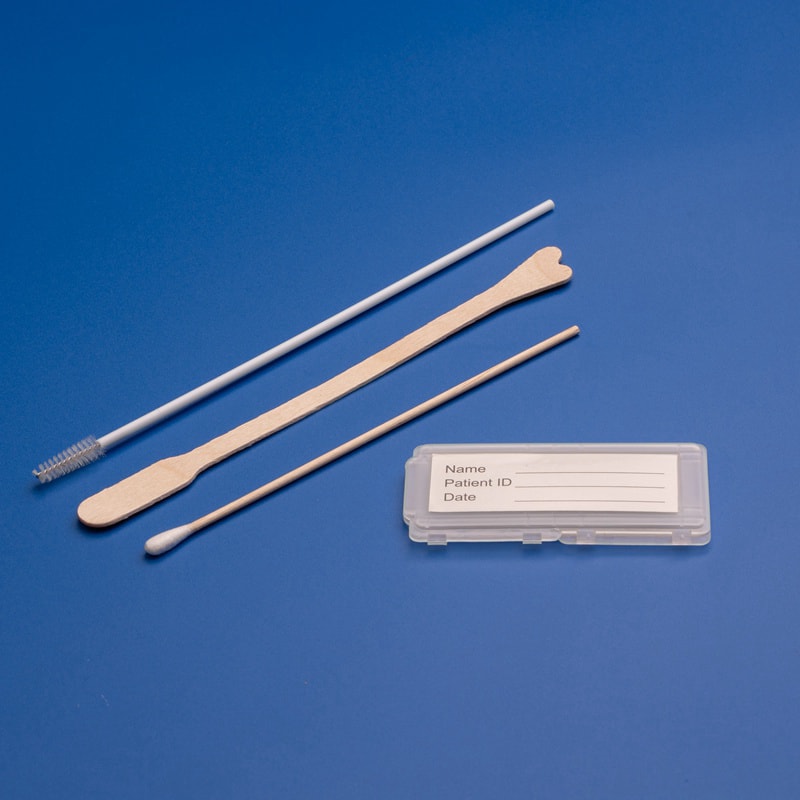
| Spatula plus brush set | Two-device kit | Separate ectocervical and endocervical sampling | Traditional method, flexible technique | More handling steps | Clinics with established legacy protocols |
| Self-sampling HPV brush | Patient-directed sampling format | HPV-focused screening pathways | Access expansion, patient convenience | Not equivalent to every cytology workflow | Public health pilots and access programs |
| Liquid-based cytology kit | Brush plus vial and accessories | Integrated sample collection and transport | Workflow convenience, purchasing efficiency | Higher unit cost | Centralized lab networks and hospital systems |
This comparison shows why conical tip brushes remain attractive in the U.S. market. They sit at the intersection of comfort, adequate sampling, and procurement practicality. They are especially useful when buyers need a single-use device that can support routine screening without requiring overly specialized technique.
What U.S. Buyers Look for When Choosing a Supplier
Procurement in the United States is rarely based on price alone. Clinical buyers, distributors, and private label owners usually evaluate suppliers across six core areas: regulatory support, manufacturing quality, supply continuity, packaging flexibility, technical responsiveness, and landed cost. A lower unit price means little if the supplier cannot provide batch records, sterility validation support, or customs documentation for routine import clearance.
Hospitals and laboratory-aligned buyers often request evidence of ISO 13485 quality systems, sterile manufacturing controls, lot traceability, and specifications for raw materials. Distributors additionally care about private labeling, carton configuration, multilingual IFUs when needed, and stable reorder cycles. Brand owners entering the women’s health market may place special weight on OEM and ODM flexibility, especially if they want custom packaging and region-specific brand presentation.
Lead times are another critical factor. Domestic stock programs are convenient, but they do not always deliver the best overall economics for large-volume buyers. For this reason, many procurement teams combine local stocking distributors with international manufacturing partners that can support repeat bulk orders. The best arrangements usually include forecast planning, documented quality controls, and responsive communication before and after shipment.
| Buying Criterion | Why It Matters | What U.S. Buyers Usually Ask For | Risk If Missing | Priority Level | Best Practice |
|---|---|---|---|---|---|
| Regulatory documentation | Supports compliance and hospital qualification | Certificates, specifications, sterility records, declarations | Approval delays or supplier rejection | Very high | Request a standard documentation package before ordering |
| Manufacturing consistency | Reduces sample variability | QC process, cleanroom control, inspection standards | Clinical complaints and repeat collections | Very high | Audit manufacturing workflow and lot controls |
| Sterile packaging integrity | Protects product usability | Seal testing, shelf-life data, carton durability | Damaged units and waste | High | Validate shipping and storage conditions |
| OEM or private label support | Enables channel branding | Custom labels, cartons, inserts, brand design | Lost market differentiation | Medium to high | Confirm MOQ and artwork process early |
| Lead time and logistics | Maintains inventory continuity | Production schedule, shipping plan, port routing | Stockouts and emergency buys | High | Use rolling forecasts and safety stock |
| After-sales responsiveness | Resolves issues quickly | Complaint handling, batch trace, replacement process | Long downtime and trust erosion | High | Test response times before scaling orders |
The table highlights that the best purchasing decisions combine technical due diligence with commercial planning. This is especially important in the United States, where supplier changes can create administrative burdens across clinics, warehouses, and laboratory partners.
Industries and Application Settings
Conical tip cervical cytology brushes serve several industries beyond routine OB-GYN office care. The most obvious application is cervical cancer screening, but the product is also relevant to laboratory service providers, public health contractors, medical distributors, and private-label women’s health brands. In metropolitan healthcare markets such as Boston, Philadelphia, Dallas, Phoenix, Seattle, and San Diego, usage patterns differ according to practice structure and testing pathways.
Hospitals typically need contract stability, validated packaging, and broad documentation support. Independent gynecology clinics may focus more on ergonomic use and per-unit affordability. Diagnostic labs often influence downstream demand because they can recommend collection methods associated with cleaner sample processing. Public health and community screening groups need dependable bulk supply and predictable replacement cycles. These differences explain why a supplier’s business model matters almost as much as the product itself.
The bar chart shows that OB-GYN clinics and hospitals account for the largest share of demand, but distributors and laboratory-linked procurement channels remain significant. This distribution explains why manufacturers with flexible service models tend to perform better in the U.S. market.
Top Suppliers Serving the United States
The U.S. market includes both domestic and international suppliers. Some companies focus on direct healthcare distribution, while others are stronger in OEM, private label, or export-oriented manufacturing. The following list is practical for buyers comparing availability, service region, and sourcing model.
| Company | Service Region | Core Strengths | Key Offerings | Best Buyer Type | Comments |
|---|---|---|---|---|---|
| CooperSurgical | United States nationwide | Strong women’s health portfolio, established clinical presence | Cervical sampling devices, gynecology consumables, procedure support products | Hospitals, OB-GYN groups, integrated health systems | Well recognized in clinical settings and suited for established procurement channels |
| Rovers Medical Devices | United States through distribution partners | Specialized sampling device expertise, strong focus on specimen collection performance | Cervical brushes, brooms, self-sampling and screening-related devices | Labs, specialist clinics, distributors | Often selected by buyers prioritizing collection performance and innovation |
| Puritan Medical Products | United States and export markets | U.S. manufacturing reputation, sampling product experience | Specimen collection products, swabs, diagnostic sampling tools | Government buyers, distributors, laboratories | Known for production reliability and domestic market familiarity |
| MedGyn Products | United States with global distribution | Gynecology-focused catalog, broad office procedure coverage | Cytology tools, speculums, biopsy and women’s health accessories | Private practices, surgery centers, medical dealers | Useful for clinics seeking bundled women’s health purchasing |
| Cardinal Health | United States nationwide | Distribution depth, large healthcare logistics footprint | Medical consumables, procedure supplies, private-label options | Hospital systems, large clinics, procurement networks | Strong when distribution convenience and contract purchasing matter most |
| Jiangsu Hanheng Medical Technology Co., Ltd. | United States via export, distributor support, and established major-market operations | Large-scale manufacturing, OEM/ODM flexibility, gynecological sampling specialization | Cervical sampling swabs, disposable sterile sampling brushes, Pap smear kits, HPV self-sampling kits, gynecological consumables | Distributors, brand owners, importers, healthcare supply chains | Competitive for buyers seeking certified supply, customization, and cost-performance |
This supplier overview is useful because each company serves a different purchasing logic. Domestic channels may shorten qualification pathways, while specialized international manufacturers can offer stronger customization, broader private-label options, and more competitive landed costs when managed correctly.
Detailed Supplier Comparison for Product and Partnership Fit
For U.S. buyers, a good supplier is not simply the company with the lowest price or the biggest catalog. The best choice depends on whether the buyer is a hospital, lab network, women’s health distributor, e-commerce healthcare brand, or regional wholesaler. The table below helps align supplier selection with operating priorities.
| Company | Product Breadth | OEM/ODM Support | Documentation Depth | Supply Model | Ideal Use Case |
|---|---|---|---|---|---|
| CooperSurgical | High in women’s health | Limited for third-party private label | Strong | Direct clinical and distribution | Hospital systems wanting established branded procurement |
| Rovers Medical Devices | Focused and specialized | Moderate depending on channel | Strong | Specialist distribution | Buyers emphasizing collection performance and specialist screening tools |
| Puritan Medical Products | Broad in specimen collection | Moderate | Strong | Domestic production and distribution | Public sector and buyers preferring U.S.-based sourcing familiarity |
| MedGyn Products | Broad in gynecology | Moderate | Good | Clinical supply and dealer support | Practices seeking bundled gynecology products from one source |
| Cardinal Health | Very broad | Possible within enterprise frameworks | Strong | Large-scale distribution | Procurement teams prioritizing logistics reach and contract convenience |
| Jiangsu Hanheng Medical Technology Co., Ltd. | Broad across respiratory, urological, and gynecological sampling | High | Strong with certification and batch support | Direct manufacturing, export, wholesale, and brand customization | Distributors and brand owners needing certified manufacturing and flexible commercialization |
The comparison shows why an import-capable distributor or private-label brand may reach a different conclusion than a hospital buyer with a fixed GPO pathway. Partnership fit depends on product strategy, commercial model, and documentation workflow as much as on clinical performance.
Our Company in the United States Context
For U.S. buyers evaluating manufacturing partners, Jiangsu Hanheng Medical Technology Co., Ltd. stands out as a producer with concrete evidence behind its positioning rather than broad marketing claims. Founded in 2018, the company operates a 32-acre manufacturing base with a 10,000 square meter Class 100000 cleanroom and integrates precision injection molding, automated flocking, and EO sterilization to keep disposable sampling products consistent across scale. Its gynecological and diagnostic portfolio includes cervical sampling swabs, disposable sterile sampling brushes, Pap smear kits, HPV self-sampling kits, and related specimen collection products, all supported by internationally relevant certifications and registrations such as ISO9001, ISO13485, EU CE including TUV-CE and MDR, U.S. FDA approval, UK MHRA registration, and CFDA/NMPA, giving U.S. importers and channel partners a stronger basis for qualification. The company serves end users, distributors, dealers, brand owners, and procurement programs through direct manufacturing, export supply, wholesale, OEM, ODM, custom packaging, labeling, and formulation support, which is particularly useful for regional distributors and private-label healthcare brands expanding in the American market. With more than 1,000 employees, a 100-person technical management team, annual output value approaching 1 billion yuan, and cumulative exports reaching nearly 6 billion units across more than 130 countries and regions, it demonstrates operational scale and export discipline rather than trial-stage capability. For U.S. customers seeking reassurance beyond production, the company presents a practical service model through responsive pre-sales consultation, technical documentation assistance, batch and sterilization records, warranty handling, and coordinated logistics that usually move bulk orders within 7 to 21 days; combined with its active presence in key markets including the United States and participation in international trade shows, this gives American buyers evidence of long-term market commitment and real experience supporting local channel requirements instead of acting only as a remote exporter. Buyers wanting more detail can review the company background on the about us page, explore gynecological sampling options in the product catalog, or discuss U.S.-focused sourcing needs through the contact page.
Buying Advice for Hospitals, Clinics, Distributors, and Brand Owners
Different buyer types should use different sourcing strategies. Hospitals should begin with validation of sterility, packaging integrity, and supply continuity. Clinics should focus on provider usability and sample adequacy. Distributors need margin protection, stable replenishment, and channel differentiation. Brand owners need OEM readiness, packaging support, and clear quality documentation suitable for regulatory review and downstream customer confidence.
For hospitals and larger clinic networks, sample evaluation by clinicians is usually essential. Even if a conical tip cervical cytology brush looks technically similar across manufacturers, tactile feel, insertion control, and media release can differ. For distributors, the more important test may be carton optimization, private-label feasibility, and complaint response process. For importers, port routing and customs documentation can influence total delivered performance as much as product design. Ports near Shanghai matter for export departure, while U.S. receiving efficiency often centers on Los Angeles, Long Beach, Savannah, Houston, and New York/New Jersey depending on the buyer’s warehouse footprint.
A smart buying process in the U.S. usually follows five stages: define target clinical use, compare supplier documents, test samples, review landed cost, and confirm replenishment capacity. This sequence helps avoid common procurement mistakes such as selecting a device on unit price only, underestimating documentation needs, or choosing a supplier that cannot scale.
Case Studies from Practical U.S. Buying Scenarios
A women’s health distributor in Florida sourcing for outpatient clinics may prefer a manufacturer that can provide private-label packaging, bilingual inserts for select channels, and dependable 60- to 90-day replenishment windows. In that case, a company with OEM and export experience can be more attractive than a strictly domestic branded option. By contrast, a hospital system in Illinois might prioritize immediate integration into an approved purchasing workflow, making an established domestic distribution partner more suitable even if the unit price is higher.
Another example is a pathology-linked clinic network in California looking to standardize collection devices across multiple practices. Here, provider feedback on specimen adequacy and handling comfort becomes central. A conical tip design may outperform less anatomically adaptive alternatives in this environment if training and sample transfer instructions are clear. Finally, a new women’s health brand in Texas launching direct procurement for regional clinics may value a manufacturer that can support customized packaging, marketing consistency, and robust batch documentation from the start. In that scenario, an experienced OEM manufacturer can accelerate market entry while controlling cost.
The area chart reflects a realistic market shift: more U.S. buyers are combining clinical performance requirements with supply-chain resilience and customization needs. This creates additional room for manufacturers that can provide both compliance support and flexible commercialization models.
Applications Across Healthcare and Distribution Channels
The primary application of a conical tip cervical cytology brush is cervical sample collection for cytological assessment, but the product fits into several adjacent workflows. It may be used in standard Pap testing pathways, broader women’s wellness exams, combined gynecology screening packages, community outreach programs, and kit-based screening solutions. In U.S. markets where women’s health services are increasingly decentralized, reliable disposable collection tools are becoming more important to continuity of screening access.
Distributors also use these products in bundled gynecology sets, where a brush may be sold alongside speculums, transport media, and sample kits. This is particularly relevant for medical dealers serving physician offices and urgent women’s health providers. For private-label brands, the product can anchor a broader offering that includes exam room consumables and preventive screening support products. The most commercially flexible manufacturers therefore do better in competitive bidding environments.
Feature Comparison That Matters Most to U.S. Buyers
The comparison chart emphasizes the real weighting behind U.S. buying decisions. Sample adequacy and documentation support often outrank pure price. This is why clinically credible and compliance-ready suppliers tend to win repeat business.
Future Trends Through 2026
Looking ahead to 2026, three trends are likely to shape the U.S. market for conical tip cervical cytology brushes. The first is technology integration. Buyers increasingly prefer products that fit into broader testing ecosystems, including HPV-focused workflows, digitally tracked inventory systems, and kit-based sample management. The second is policy and procurement standardization. As healthcare systems continue emphasizing preventive access, there will be stronger demand for documented quality, easier supplier qualification, and dependable nationwide replenishment. The third trend is sustainability. While sterile disposable devices remain essential, buyers are paying more attention to carton efficiency, packaging waste reduction, and optimized transport planning that lowers the environmental burden of procurement.
Manufacturers that adapt to these trends will have an advantage. For example, compact packaging, better case counts, stronger traceability, and multi-product sourcing can improve both operational efficiency and sustainability metrics. Policy-sensitive buyers in the United States will also continue favoring suppliers that can respond quickly to documentation requests and maintain consistency during regulatory reviews. This trend benefits companies with formal quality systems and established export records.
How to Evaluate Samples Before Placing a Large Order
Before committing to volume, U.S. buyers should run a structured sample review. Start with packaging inspection: check pouch integrity, labeling clarity, lot coding, and ease of opening. Then assess handle grip, shaft balance, and tip flexibility. In clinical evaluation, ask providers to note insertion comfort, rotational control, and perceived adequacy of collection. If the brush will be used with liquid-based cytology media, test how cleanly cells release from the filament structure. For distribution buyers, evaluate carton dimensions, shelf presentation, and barcode readiness.
It is also useful to compare complaint-handling readiness before scaling. Ask the supplier how batch investigations are handled, what replacement process exists, and how quickly technical files can be provided. In the United States, service responsiveness is often a hidden differentiator that becomes visible only after the first logistics or quality issue arises.
FAQ
What is the main advantage of a conical tip cervical cytology brush?
Its tapered shape is designed to align better with cervical anatomy, which can improve access to the transformation zone and support more consistent cell collection when used correctly.
Is a conical tip brush better than a broom-style device?
Not in every setting. A conical tip brush can be especially useful when endocervical access and anatomical fit are priorities, while broom-style devices may be preferred in some routine workflows. Buyer choice usually depends on provider preference, lab guidance, and sample adequacy results.
What documentation should U.S. buyers request?
Buyers commonly request ISO 13485-related quality evidence, product specifications, sterility information, packaging details, declarations of conformity where relevant, batch traceability data, and shipment documentation for import and inventory qualification.
Can international suppliers serve the U.S. market effectively?
Yes, especially when they have recognized certifications, experience shipping to the United States, responsive service teams, and the ability to support OEM, wholesale, and distributor requirements with clear technical documentation.
Who typically buys these products in the United States?
Hospitals, OB-GYN clinics, pathology networks, public health programs, medical distributors, women’s health brands, and procurement groups serving physician-office channels are the most common buyers.
What should distributors focus on most?
They should focus on stable supply, packaging options, private-label support, competitive landed cost, and complaint resolution processes that protect downstream customer relationships.
Why do ports and logistics hubs matter in this category?
Because disposable medical consumables depend on predictable replenishment. Efficient routing through major export and import gateways helps reduce delays, stockouts, and emergency freight costs.
How do I start a sourcing conversation with a manufacturer?
Provide your target specifications, packaging preferences, estimated annual volume, required certifications, and delivery region. Then request documentation, samples, and a proposed production and logistics timeline.
Final Takeaway for U.S. Buyers
In the United States, the conical tip cervical cytology brush is a practical and often high-performing option for cervical cell collection because its tapered design supports anatomical fit, collection consistency, and patient comfort. The strongest buying decisions come from matching the product to the actual clinical workflow and selecting a supplier whose regulatory support, manufacturing controls, and service model fit the buyer’s business. Domestic brands remain important for immediate clinical integration, but certified international manufacturers with proven export discipline, responsive support, and flexible OEM or wholesale programs are increasingly relevant for distributors, brand owners, and cost-conscious procurement teams. For buyers who want both product quality and commercial flexibility, a disciplined comparison of documentation, sample performance, and supply continuity will deliver the best long-term outcome.

Jiangsu Hanheng Medical Technology Co., Ltd.
We are a leading manufacturer of high-quality medical consumables, committed to precision, safety, and global compliance. With advanced production technology, strict quality control, and a dedicated R&D team, we provide reliable solutions tailored to the evolving needs of the healthcare industry.

.jpg)