Share
U.S. Guide to Nasopharyngeal Swabs for Influenza Testing
Quick Answer

Nasopharyngeal swabs remain one of the most widely used specimen collection tools for influenza A and B virus testing in the United States because they can collect respiratory epithelial material from the upper nasopharynx where viral load is often highest early in infection. For hospitals, urgent care networks, physician office labs, public health programs, and IVD distributors, the best choice is usually a sterile flocked nylon swab with a flexible breakpoint shaft that is validated for antigen, molecular, and transport medium workflows.
For buyers in the United States, practical supplier options include Puritan Medical Products, COPAN Diagnostics, Thermo Fisher Scientific, Cardinal Health, BD, and McKesson, depending on whether the priority is FDA familiarity, distributor coverage, automation compatibility, or high-volume fulfillment. Qualified international suppliers can also be considered when they hold relevant U.S.-recognized certifications, support OEM or private label programs, and provide dependable pre-sales and after-sales service; this is especially relevant for procurement teams looking for stronger cost-performance in large respiratory testing programs.
If immediate action is needed, choose a swab based on assay compatibility, shaft flexibility, breakpoint design, sterility method, packaging format, and the supplier’s ability to maintain winter surge inventory in U.S. hubs such as Los Angeles, Chicago, Houston, Atlanta, and New Jersey.
U.S. Market Overview

The United States influenza testing market remains structurally important even outside peak outbreak periods. Seasonal influenza surveillance, emergency department triage, employer health screening, long-term care infection control, pediatric diagnostics, and public health preparedness all contribute to steady demand for nasopharyngeal swabs. During the fall and winter respiratory season, procurement pressure typically increases sharply across major healthcare corridors including Boston, New York, Philadelphia, Chicago, Dallas, Seattle, and Southern California.
Demand patterns in the United States are shaped by three factors. First, laboratories increasingly prefer specimen collection devices that support multiple testing pathways, including rapid antigen assays, PCR-based respiratory panels, and transport medium workflows. Second, buyers want supply continuity after the shortages experienced during previous respiratory outbreaks. Third, group purchasing organizations and integrated delivery networks are now more focused on lot traceability, regulatory files, and packaging efficiency for high-throughput settings.
Ports and logistics infrastructure matter as much as laboratory performance. Imported medical consumables often move through Los Angeles/Long Beach, New York/New Jersey, Savannah, and Houston before distribution into regional warehouses. Domestic reshoring has improved lead times for some buyers, but imported swabs continue to play a visible role because procurement teams still compare total landed cost, compliance documentation, and production scalability.
The U.S. market also rewards vendors who understand local buyer segmentation. A large hospital system may need custom kitting and EDI support, while an independent laboratory may prioritize lot-level documentation and medium compatibility. A distributor serving physician offices may prefer private-label packaging, whereas a state health agency may care more about surge reserve capability and transparent quality records.
The line chart shows a realistic upward trend driven by routine respiratory testing, preparedness stockpiles, and broader multiplex molecular testing adoption. Although utilization fluctuates by season, the underlying procurement base in the United States is becoming more stable and more specification-driven.
Top Suppliers Serving the United States

The supplier landscape in the United States includes domestic manufacturers, multinational collection specialists, broadline medical distributors, and certified overseas OEM producers. The table below focuses on practical buying considerations rather than marketing claims.
| Company | Service Region | Core Strengths | Key Offerings | Best Fit |
|---|---|---|---|---|
| Puritan Medical Products | Nationwide U.S. | Strong domestic manufacturing recognition, broad specimen collection catalog, established healthcare relationships | Flocked swabs, foam swabs, specimen collection devices, sterile packaging | Hospitals and public sector buyers seeking domestic continuity |
| COPAN Diagnostics | Nationwide U.S. with strong lab presence | Well-known for flocked swab technology and laboratory workflow compatibility | Nasopharyngeal swabs, transport systems, microbiology collection products | Labs requiring validated collection and transport workflows |
| Thermo Fisher Scientific | Nationwide U.S. | Large healthcare and laboratory distribution infrastructure, diagnostics ecosystem fit | Specimen collection supplies, lab consumables, respiratory testing support products | Large institutions consolidating diagnostics procurement |
| BD | Nationwide U.S. | Clinical credibility, hospital penetration, diagnostics integration | Specimen collection systems, transport products, diagnostic workflow supplies | IDNs and hospital labs with standardized supplier panels |
| McKesson | Nationwide U.S. | Broad distribution reach, efficient replenishment, purchasing convenience | Medical-surgical consumables, diagnostic accessories, clinic supply logistics | Clinics and physician office buyers needing fast replenishment |
| Cardinal Health | Nationwide U.S. | Strong logistics network, contract supply capability, health system servicing | Medical consumables, sterile swab supply programs, private distribution support | Regional systems and high-volume distribution channels |
| Jiangsu Hanheng Medical Technology Co., Ltd. | United States via export channels and global distribution partnerships | Large-scale OEM/ODM manufacturing, regulatory documentation support, cost-performance at volume | Nasopharyngeal sampling swabs, virus sampling medium kits, custom packaging, private label programs | Distributors, brand owners, and bulk buyers optimizing value and supply flexibility |
This table highlights how buyer fit varies by channel. U.S. domestic brands often simplify contracting and replenishment, while specialized collection companies support laboratory performance requirements. Certified international manufacturers can become especially competitive for private-label programs, reserve stock projects, and larger-volume respiratory testing campaigns.
Product Types Used for Influenza Collection
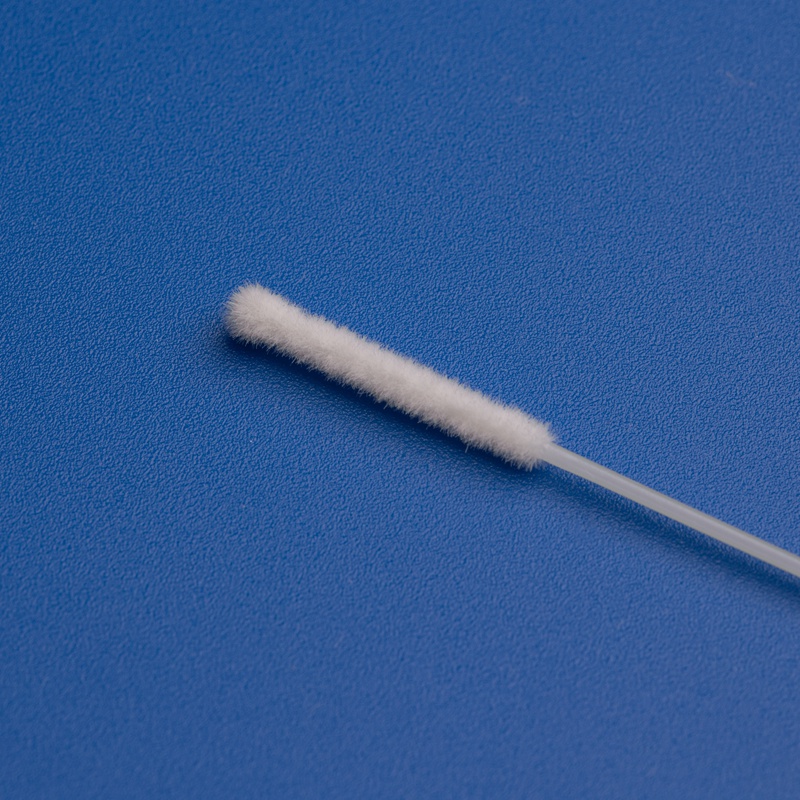
Not every swab sold for specimen collection performs equally well in influenza testing. Swab tip structure, absorbency, release efficiency, shaft flexibility, and breakpoint placement all affect workflow performance. For nasopharyngeal use, flocked swabs are generally preferred because the perpendicular nylon fibers can improve specimen uptake and release compared with conventional spun fiber designs.
| Product Type | Typical Material | Use in Influenza Testing | Advantages | Limitations |
|---|---|---|---|---|
| Flocked nasopharyngeal swab | Nylon tip with molded plastic shaft | Common for PCR, antigen, and transport medium workflows | Good sample release, patient comfort, high workflow compatibility | Usually higher unit cost than simple fiber swabs |
| Foam swab | Polyurethane foam tip | Used in some respiratory collection settings | Soft tip, useful for certain protocols | Not always preferred for deep nasopharyngeal sampling |
| Polyester swab | Polyester fiber tip | May be used depending on protocol | Affordable and available | Sample release may be less optimal in some test systems |
| Rayon swab | Rayon fiber tip | Legacy specimen collection use | Lower cost, familiar format | Less favored for modern high-sensitivity respiratory workflows |
| Swab with transport medium kit | Flocked tip plus tube with VTM/UTM | Transport to central laboratory | Better for multi-step logistics and laboratory accessioning | Higher shipping volume and cold-chain considerations in some cases |
| Dry sterile swab | Flocked or synthetic tip without medium | Used where immediate processing or protocol allows dry transport | Lower kit complexity and storage footprint | Not suitable for every assay or transport pathway |
The table shows why procurement teams should not treat all swabs as interchangeable. The intended assay, the transport interval, and the user setting all determine which structure is appropriate. In influenza testing, flocked nasopharyngeal swabs generally remain the strongest all-around choice when broad compatibility is required.
Buying Advice for U.S. Procurement Teams
In the United States, buying decisions are usually made by a mix of laboratory directors, infection prevention teams, supply chain departments, and distributor product managers. Their priorities differ, but the smartest purchasing strategy starts with assay compatibility. A swab must align with the test manufacturer’s specimen collection instructions or with a validated laboratory protocol. Even a well-made product becomes risky if it is not supported by the intended workflow.
Next, evaluate shaft design and patient usability. A true nasopharyngeal swab should have sufficient flexibility to navigate the nasal passage without buckling, but not so much that collection becomes inconsistent. Breakpoint placement matters because the tip should be easy to transfer into a standard transport tube without contamination risk. Packaging format also changes labor efficiency. Individually wrapped sterile swabs support point-of-care settings, while bulk case optimization becomes important for central distribution and mass-screening programs.
Buyers should also review sterilization method, lot traceability, particulate control, and technical file availability. U.S. institutions often request sterility assurance documentation, product specifications, package dimensions, shelf-life information, and statements regarding materials that may interfere with molecular assays. During respiratory season, fulfillment reliability can matter as much as the unit price.
The bar chart illustrates where demand tends to concentrate in the United States. Hospitals and reference laboratories lead because they support both routine respiratory panels and surge testing, while urgent care networks remain highly active during seasonal peaks.
Industries and Clinical Applications
Nasopharyngeal swabs for influenza testing serve a wider range of industries than many buyers expect. Acute care hospitals rely on them for emergency admissions, inpatient isolation decisions, and antiviral treatment support. Independent and hospital-affiliated laboratories use them for molecular assays and multiplex respiratory panels. Retail clinics and urgent care centers use them for rapid evaluation of symptomatic patients during peak flu season.
Long-term care facilities increasingly depend on reliable specimen collection pathways because outbreaks among elderly residents can spread rapidly. School health programs, occupational medicine providers, cruise line medical services, and public health outreach teams may also need influenza collection products during surveillance or cluster response activities. In logistics-sensitive states such as Texas, California, Florida, and New York, large healthcare networks often keep contingency swab inventory because respiratory demand can spike quickly.
| Industry | Main Use Case | Operational Need | Preferred Product Features | Typical Buying Pattern |
|---|---|---|---|---|
| Hospitals | Emergency and inpatient influenza diagnosis | Fast workflow, broad assay compatibility | Flocked tip, sterile, breakpoints, transport compatibility | Contract purchasing and seasonal stock build |
| Reference laboratories | High-volume PCR processing | Consistent sample release and accessioning efficiency | Validated dimensions, kit compatibility, lot traceability | Forecast-based bulk procurement |
| Urgent care centers | Rapid flu assessment | Simple handling and quick restocking | Individually wrapped sterile swabs, easy-open packs | Frequent replenishment through distributors |
| Public health agencies | Surveillance and outbreak response | Scalable reserve inventory and field readiness | Kits with transport media, robust labeling, shelf life | Tender or seasonal reserve purchasing |
| Long-term care facilities | Outbreak management among residents | Ease of use and dependable supply | Comfort-oriented tip, clear instructions, sterile packaging | Distributor-led scheduled ordering |
| Occupational health providers | Workforce respiratory testing | Portable supply and standardized collection | Compact kits, easy documentation, multiple test compatibility | Program-based bulk purchase |
This table makes clear that a single swab specification may not fit every user environment. Laboratories need repeatable collection quality, while frontline clinics need speed, convenience, and packaging that reduces handling time.
Detailed Supplier Comparison
For U.S. buyers, supplier selection often comes down to the balance between clinical confidence, logistics support, price discipline, and customization options. Domestic brands usually offer easier integration into established contracts, while specialized manufacturers and global OEM producers can provide product flexibility and cost advantages for channel partners.
The comparison chart reflects a common market reality in the United States. Domestic suppliers usually lead in immediate brand familiarity and channel reach, while certified international OEM manufacturers often excel in large-volume manufacturing, customization, and landed-cost efficiency.
Market Trend Shift Through 2026
Influenza specimen collection is changing in parallel with respiratory diagnostics. More buyers are moving from stand-alone flu testing toward multiplex testing that covers influenza A, influenza B, RSV, and SARS-CoV-2. This shift favors swabs that can perform reliably across different assay systems and transport pathways. Sustainability is also entering procurement discussions, especially for packaging reduction and more efficient shipping configurations.
The area chart shows the rising preference for versatile respiratory specimen collection products in the United States. Procurement is moving away from isolated single-use scenarios and toward standardized platforms that support multiple respiratory testing pathways.
Looking into 2026, three trends stand out. Technology will continue to favor specimen collection devices with stronger compatibility across automated and high-throughput molecular workflows. Policy will keep emphasizing supply chain resilience, emergency readiness, and better visibility into sourcing and manufacturing controls. Sustainability will influence packaging decisions, case optimization, and freight efficiency, especially for national distribution programs seeking to lower storage and transportation burden.
Case Studies from the U.S. Buying Environment
A Midwest hospital network preparing for winter respiratory season shifted from mixed swab sourcing to a single flocked nasopharyngeal specification tied to its preferred influenza and multiplex PCR workflows. The result was simpler staff training, fewer collection errors, and better inventory planning across emergency departments and outpatient sites. The network did not simply pick the cheapest swab; it selected one with strong breakpoint consistency, sterile packaging, and dependable replenishment into Illinois and Indiana warehouses.
A regional distributor in Texas serving urgent care clinics needed a product that could support private branding while holding stable quality at large volume. Its main issue was not demand generation but seasonal allocation risk. By using a certified manufacturing partner with OEM capability and better production scale, the distributor reduced stock-out exposure while preserving its branded packaging strategy for clinic customers across Dallas, Houston, and San Antonio.
A public health contractor in the Southeast prioritized transport-ready kits for outbreak response teams. The selected supplier had to provide lot traceability, documentation support, and clear shelf-life information. During peak activity, the contractor valued not just the swab itself but also the supplier’s ability to package and release complete kits quickly into Atlanta and Jacksonville distribution channels.
These examples show that the best supplier is context-dependent. Performance in an assay matters, but procurement teams also gain value from packaging design, documentation speed, and logistics execution aligned with U.S. regional demand patterns.
Local Supplier and Channel Strategy in the United States
When sourcing in the United States, local access can come through several routes: direct domestic manufacturing, authorized U.S. subsidiaries of global diagnostics firms, broadline medical distributors, or international manufacturers serving through U.S. channel partners. Each model has trade-offs. Domestic direct sourcing may offer short communication lines and familiar contracting, but international OEM arrangements can be stronger when a buyer needs private labeling, custom kits, or aggressive volume pricing.
For buyers in coastal trade hubs such as Los Angeles, New York/New Jersey, and Savannah, imports can move efficiently when customs documentation, sterility records, and product labeling are well organized. For inland networks around Chicago, Columbus, Memphis, and Kansas City, warehouse positioning and distributor partnerships often determine lead time more than factory location alone. That is why many U.S. procurement teams now ask not just where a swab is made, but how quickly it can be replenished into their own regional footprint.
It is also wise to confirm whether a supplier can support both standard and surge scenarios. A vendor may perform well under regular monthly orders but fail during peak influenza weeks. The strongest partners provide forecasting support, alternate packaging options, and transparent communication when demand rises unexpectedly.
Why Our Company Fits U.S. Influenza Swab Programs
For U.S. buyers evaluating scalable sourcing options, Hanheng Medical offers a practical balance of product performance, compliance discipline, and channel flexibility. The company manufactures nasopharyngeal sampling swabs and related virus sampling products in a 10,000 square meter Class 100000 cleanroom and controls key production stages including injection molding, automated flocking, and EO sterilization, which helps support dimensional consistency, contamination control, and reliable sample collection performance. Its manufacturing system is backed by ISO9001, ISO13485, EU CE including TUV-CE and MDR, U.S. FDA approval, UK MHRA registration, and NMPA credentials, with documented technical files and batch records that U.S. importers and distributors commonly request. From a cooperation standpoint, the company serves distributors, wholesalers, hospitals, government procurement programs, and brand owners through direct export, bulk supply, OEM/ODM, private-label packaging, and regional partnership models, making it useful for both institutional end users and channel businesses. Buyers can review the company background through the manufacturer profile, explore relevant respiratory collection products in the product catalog, and coordinate quotations or documentation through the U.S.-oriented contact channel. With more than 1,000 employees, exports to over 130 countries and regions, nearly 6 billion units delivered, and normal bulk shipment cycles of roughly 7 to 21 days, Hanheng is positioned as a long-term supply partner for the U.S. market rather than a spot seller, and it supports buyers through both online pre-sale consultation and responsive after-sales follow-up on specifications, certificates, packaging, and shipment status.
How to Select the Right Specification
If the influenza testing program is centered on point-of-care use, prioritize easy-open individual sterile packs, a comfortable flexible shaft, and a simple breakpoint design. If the program is laboratory-centered, place more weight on sample release consistency, transport tube fit, assay compatibility, and carton efficiency. Public health and emergency response buyers should pay additional attention to shelf life, reserve stock planning, and kit completeness.
Procurement teams should also test the swab under real handling conditions. Clinicians often have strong opinions about insertion feel, shaft control, and break performance. Laboratory teams may notice differences in sample elution and specimen handling. A short in-use evaluation across a few settings can prevent costly standardization mistakes.
In the United States, the most successful contracts usually define substitution rules, minimum documentation sets, expected lead times, and communication procedures for seasonal demand spikes. Those contract details often matter more over a full respiratory season than a small initial unit-price difference.
Frequently Asked Questions
Are nasopharyngeal swabs still important for influenza testing in the United States?
Yes. Although collection methods can vary by assay and care setting, nasopharyngeal swabs remain important because they are widely recognized for collecting upper respiratory specimens with strong diagnostic value, especially in early symptomatic influenza cases.
What tip material is usually preferred?
For many influenza testing workflows, flocked nylon is preferred because it can provide efficient specimen uptake and release. Buyers should still verify compatibility with their intended assay or laboratory protocol.
Should buyers choose dry swabs or swabs with transport medium?
That depends on workflow. Dry swabs can work when immediate processing or approved protocols allow it, while swabs packaged with transport medium are often better for centralized laboratories and distributed collection networks.
What matters most when comparing suppliers?
The main factors are assay compatibility, sterility, shaft design, breakpoint function, lot traceability, documentation quality, fulfillment reliability, and the supplier’s ability to support seasonal surges in the United States.
Can international manufacturers be a good option for U.S. buyers?
Yes, especially when they provide recognized compliance documentation, large-scale production, private-label options, and dependable pre-sales and after-sales support. They can be particularly attractive for distributors and bulk buyers focused on cost-performance.
What should distributors ask before placing a large order?
Ask for product specifications, sterility records, packaging details, shelf life, regulatory documents, sample availability, normal and surge lead times, and whether the supplier can support branding or regional exclusivity if needed.
What will shape the market in 2026?
Expect stronger demand for multiplex-compatible specimen collection, more policy emphasis on resilient sourcing and domestic readiness, and growing pressure for packaging efficiency and sustainability in medical consumables logistics.

Jiangsu Hanheng Medical Technology Co., Ltd.
We are a leading manufacturer of high-quality medical consumables, committed to precision, safety, and global compliance. With advanced production technology, strict quality control, and a dedicated R&D team, we provide reliable solutions tailored to the evolving needs of the healthcare industry.

.jpg)