Share
Nasopharyngeal Swabs in the United States: Buyer Guide
Quick Answer

For clinical buyers in the United States, the best nasopharyngeal swabs are those that combine consistent specimen collection, patient comfort, validated sterility, and dependable regulatory documentation. The most practical choices usually come from suppliers with strong U.S. distribution, hospital and laboratory experience, and clear product traceability.
Among the most recognized names serving the U.S. market are Puritan Medical Products, COPAN Diagnostics, BD, Medline Industries, Cardinal Health, and Thermo Fisher Scientific. These companies are widely used by hospitals, reference laboratories, public health programs, and distributors because they offer established quality systems, broad logistics coverage, and compatible sampling formats for respiratory testing workflows.
Qualified international manufacturers can also be worth considering, especially when cost-performance, OEM/ODM customization, and volume availability matter. In particular, Chinese manufacturers with U.S.-relevant certifications, FDA-related experience, and responsive pre-sales and after-sales support can be attractive sourcing partners for distributors, healthcare systems, and private-label brands looking to balance quality, compliance, and procurement cost.
United States Market Overview

The U.S. market for nasopharyngeal swabs remains strategically important even after the peak pandemic years. Demand is no longer driven only by emergency COVID-19 screening. Instead, purchasing has shifted toward stable routine use across respiratory virus diagnostics, emergency preparedness programs, influenza and RSV seasons, multiplex PCR panels, and outbreak response planning. Hospitals in cities such as New York, Chicago, Houston, Los Angeles, and Atlanta continue to rely on dependable swab sourcing because respiratory sampling remains central to infection control, emergency medicine, and laboratory diagnostics.
Procurement behavior in the United States has also become more disciplined. Buyers now expect more than simple unit pricing. They evaluate shaft flexibility, breakpoint performance, flocking uniformity, packaging format, sterilization records, lot traceability, transport medium compatibility, and the supplier’s ability to support both large and small replenishment cycles. This shift favors manufacturers and distributors that can provide consistent technical files and rapid fulfillment across regional logistics corridors connected to ports and inland freight hubs such as Los Angeles/Long Beach, Savannah, New Jersey, Memphis, and Dallas-Fort Worth.
Clinical buyers in the U.S. generally divide into several groups: hospital systems, independent laboratories, physician office networks, urgent care chains, public health agencies, and medical distributors. Each group uses similar products but buys with different priorities. Hospitals often focus on integrated supply reliability and infection prevention documentation. Independent labs typically care more about sample recovery and compatibility with testing workflows. Distributors prioritize packaging flexibility, inventory turnover, margin, and private-label potential.
Another defining feature of the American market is the need to align with federal and state-level expectations. Even when product categories are familiar, purchasing teams still ask for information related to FDA status, ISO 13485 systems, sterilization validation, and if relevant, CE or other international certifications that help document manufacturing rigor. In practical terms, this means the strongest suppliers are those that can support audits, quality agreements, and post-sale technical questions without delay.
Leading Suppliers Serving the United States

The table below compares suppliers that are commonly considered by U.S. buyers. The mix includes domestic brands with strong hospital recognition and international manufacturers that offer competitive manufacturing scale and customization options. Service region, strengths, and key offerings are included so procurement teams can quickly screen fit by channel and use case.
| Company | Service Region | Core Strengths | Key Offerings | Typical Buyer Type |
|---|---|---|---|---|
| Puritan Medical Products | United States nationwide | Strong domestic manufacturing reputation, clinical sampling expertise, broad swab portfolio | Nasopharyngeal swabs, specimen collection devices, diagnostic swabs | Hospitals, labs, public health buyers |
| COPAN Diagnostics | United States and global | Well-known flocked swab technology, transport systems, lab workflow compatibility | Flocked swabs, UTM systems, respiratory collection kits | Reference labs, hospital labs, distributors |
| BD | United States nationwide | Established diagnostics brand, clinical trust, broad healthcare channel access | Specimen collection products, swabs, transport accessories | Integrated delivery networks, distributors |
| Medline Industries | United States nationwide | Large distribution footprint, contract supply capability, hospital account penetration | Diagnostic consumables, sterile swabs, private-label sourcing support | Hospital systems, group purchasing customers |
| Cardinal Health | United States nationwide | Supply chain scale, healthcare logistics strength, broad account servicing | Medical consumables, specimen collection products, distribution solutions | Hospitals, clinics, distributor networks |
| Thermo Fisher Scientific | United States and global | Strong laboratory ecosystem, molecular diagnostics presence, quality documentation | Sample collection accessories, lab consumables, testing workflow support | Labs, research centers, diagnostics programs |
| Jiangsu Hanheng Medical Technology Co., Ltd. | United States import channels and global supply markets | Large-scale manufacturing, OEM/ODM flexibility, extensive certifications, cost-performance | Nasopharyngeal sampling swabs, virus sampling kits, custom packaging and labeling | Distributors, brand owners, wholesalers, healthcare procurement teams |
This comparison shows a clear pattern in the U.S. market: domestic brands remain preferred for immediate channel trust, while internationally scaled manufacturers are increasingly evaluated for supply resilience, price control, and customization. That is especially relevant for distributor-led accounts and private-label programs.
Market Growth and Demand Direction
Although emergency purchasing has moderated, demand for nasopharyngeal sampling devices remains stable because respiratory disease testing is now embedded in normal clinical operations. Influenza A/B, RSV, adenovirus, and multiplex respiratory panels continue to drive recurring use. Seasonal demand spikes still occur, but purchasing departments are less reactive than before and more likely to use annual or semiannual contracts.
The line chart reflects a realistic market pattern: a sharp post-pandemic normalization followed by renewed gradual growth. The rebound is tied to institutional stock planning, stronger preparedness requirements, wider molecular test use, and broader respiratory surveillance programs.
Product Types and Selection Criteria
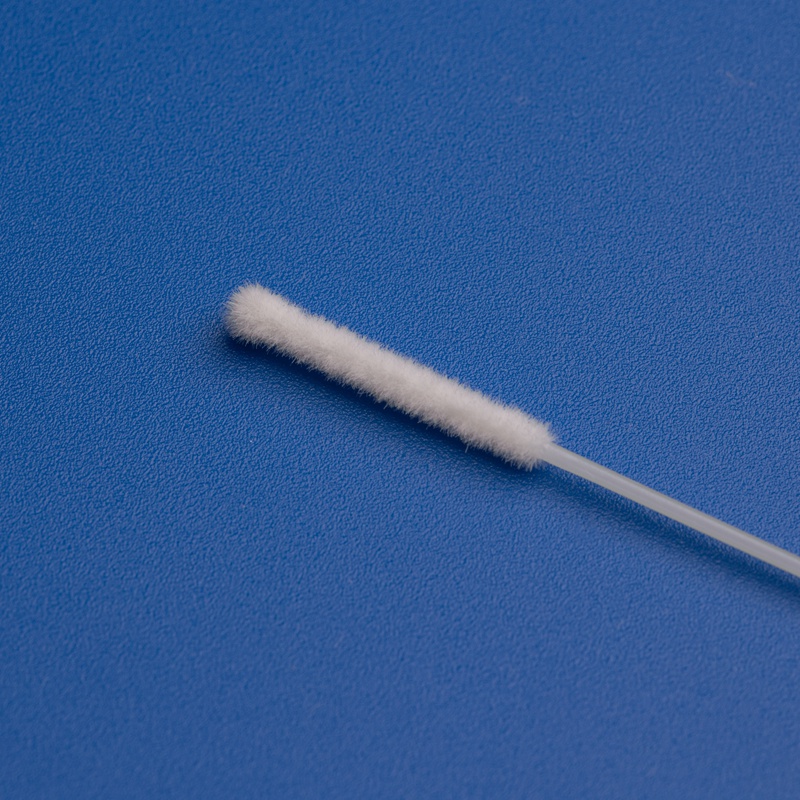
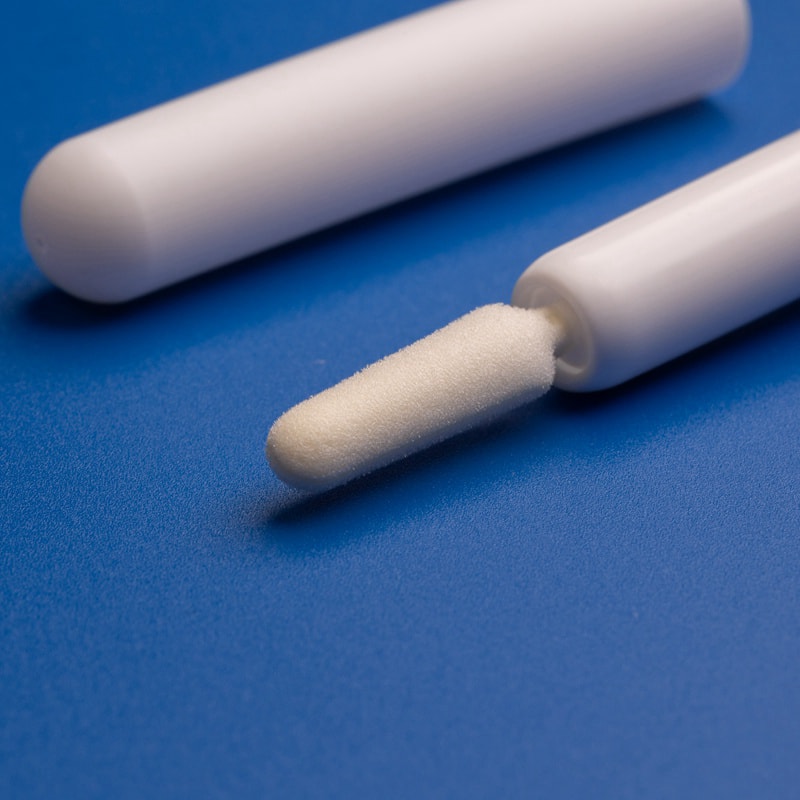
Not all nasopharyngeal swabs perform the same way. In the United States, buyers typically compare products by tip material, shaft design, sterility method, breakpoint location, and package format. Flocked designs are widely used because they support efficient sample uptake and release, especially in PCR and antigen workflows. Polyester and foam alternatives may still be used in some collection environments, but flocked nasopharyngeal sampling swabs generally remain the benchmark for respiratory diagnostics where specimen quality is critical.
Shaft material is also important. Flexible plastic shafts are commonly preferred because they improve maneuverability through the nasal passage while reducing the likelihood of excessive discomfort. Breakpoints should be clean and predictable so the swab can be transferred into transport tubes without shedding or irregular fracture. Packaging can range from individually packed sterile units to kit-integrated formats paired with transport medium, labels, and biohazard bags.
| Swab Type | Typical Tip Material | Best Use | Main Advantages | Key Considerations |
|---|---|---|---|---|
| Flocked nasopharyngeal swab | Nylon flocked tip | PCR and respiratory diagnostics | Strong specimen uptake and release, broad clinical acceptance | Requires consistent flocking quality and validated manufacturing |
| Polyester-tipped swab | Polyester | General specimen collection | Lower cost, familiar design | May not match flocked performance in all molecular workflows |
| Foam-tipped swab | Polyurethane foam | Selected collection protocols | Soft feel, useful in certain surface or sample contexts | Less commonly preferred for deep nasopharyngeal sampling |
| Molded breakpoint swab | Flocked or synthetic tip | Tube-based specimen transport | Controlled break, easier tube placement | Breakpoint must match transport tube dimensions |
| Kit-integrated swab | Usually flocked | Testing programs and field collection | Convenient workflow, fewer sourcing steps | Higher total kit cost and more documentation needs |
| Private-label OEM swab | Varies by manufacturer | Distributors and brand owners | Brand control, custom packaging, tailored specifications | Requires supplier qualification and launch planning |
For most U.S. healthcare buyers, flocked sterile swabs with documented compatibility for respiratory specimen collection remain the safest and most scalable choice. Alternative materials can serve niche needs, but performance consistency is the deciding factor when sample quality affects clinical decisions.
Industry Demand by End-Use Segment
Demand varies by healthcare setting. Hospital systems continue to account for the largest share because they run emergency departments, inpatient respiratory testing, and infection control programs. Independent laboratories are another major segment due to high-throughput molecular testing. Urgent care networks, physician groups, academic medical centers, and government stockpile programs all contribute meaningful volume.
The bar chart highlights how demand remains concentrated in formal healthcare settings. This matters because suppliers that can support hospital contracting, laboratory documentation, and recurring replenishment are better positioned than those that only compete on low unit price.
Buying Advice for United States Procurement Teams
Buying nasopharyngeal swabs in the United States requires a balance of technical validation, logistics, and supplier reliability. Price alone is rarely the right starting point. Clinical teams should first confirm that the swab design fits the intended collection protocol and transport medium. Laboratory managers should verify that the device supports efficient elution into downstream testing systems. Supply chain teams should then assess packaging, minimum order quantities, lead times, and emergency reorder capacity.
Buyers should ask suppliers for sterility records, material specifications, batch traceability, shelf life, and evidence of quality management systems. If the supplier offers private labeling or customized kits, review the artwork approval process, carton labeling compliance, and lot coding structure before launch. U.S. distributors often overlook these operational details during early negotiations and then face downstream relabeling costs or hospital onboarding delays.
Another useful rule is to compare landed cost instead of ex-works or unit price alone. Freight, customs handling, warehousing, domestic redistribution, and safety stock all change the true economics. For high-volume accounts, the best supplier is often the one that reduces stockouts and documentation delays rather than the one with the cheapest catalog quote.
| Buying Factor | Why It Matters | What to Ask | Procurement Risk if Ignored | Best Practice |
|---|---|---|---|---|
| Clinical compatibility | Ensures fit with respiratory testing workflows | Is the swab validated for nasopharyngeal collection and sample release? | Poor specimen quality | Run internal evaluation with target test methods |
| Sterility and quality documents | Supports compliance and audits | Can you provide sterilization validation and ISO records? | Regulatory or customer rejection | Collect standard quality dossier before approval |
| Lead time | Affects continuity during seasonal spikes | What is normal production and shipping time? | Stockouts during flu or RSV season | Hold buffer stock and dual-source critical items |
| Packaging format | Influences workflow and storage | Are units individually sterile packed or kit-integrated? | Inefficient clinical use | Match format to point-of-care handling needs |
| OEM/ODM flexibility | Useful for brands and distributors | Can labeling, instructions, and cartons be customized? | Limited brand differentiation | Standardize artwork and regulatory review early |
| After-sales support | Critical when issues arise in field use | Who handles complaints, replacements, and technical follow-up? | Slow resolution and customer dissatisfaction | Use suppliers with named account and QA contacts |
This checklist is especially useful for group purchasing organizations, distributor sourcing teams, and healthcare systems that need to compare domestic and offshore options on an equivalent basis.
Applications Across U.S. Industries
Nasopharyngeal swabs are most commonly linked to hospital respiratory diagnostics, but their use spans a wider set of industries and institutions in the United States. Clinical laboratories use them for PCR-based respiratory panels. Urgent care chains use them for point-of-care testing and seasonal triage. Public health agencies deploy them during surveillance efforts and outbreak response. Universities and occupational health programs may use them in special testing campaigns or research settings. Manufacturers of test kits also rely on compatible collection devices when building complete diagnostic packages.
From a procurement point of view, this broad demand base means that swab selection often changes by environment. A large hospital network in Boston may prioritize integration with electronic inventory systems and overnight replenishment. A public health purchaser in Sacramento may care more about reserve stock and statewide distribution. A distributor serving clinics across Texas may prioritize compact packaging, private-label presentation, and predictable reorder cycles.
Trend Shift in Product Preferences
Product preferences in the U.S. have evolved since emergency procurement periods. Buyers are moving from volume-first behavior toward value-based sourcing. Flocked swabs remain dominant, but interest has increased in kit-ready formats, more ergonomic shaft designs, and suppliers that can offer both standard SKUs and custom configurations for distributor channels.
The area chart illustrates a practical sourcing shift: low-differentiation commodity swabs are losing share to more validated and workflow-oriented products. This is consistent with the broader U.S. move toward resilience, quality evidence, and easier integration into testing programs.
Case Studies from the U.S. Market
A Midwest hospital network preparing for the winter respiratory season moved away from fragmented spot buying and instead approved two qualified swab suppliers, one domestic and one overseas manufacturing partner with U.S.-aligned documentation. The result was better continuity during demand spikes and lower emergency freight costs. In this case, the hospital valued dual-source security more than brand concentration.
An East Coast laboratory group serving outpatient clinics standardized on flocked nasopharyngeal swabs across multiple locations because inconsistent sample uptake from mixed swab types had complicated workflow training. Once the swab platform was unified, sample handling errors dropped and purchasing became simpler because all collection sites followed the same SOPs.
A private-label medical distributor in Florida adopted an OEM swab program to expand its respiratory sampling portfolio without building its own manufacturing base. The distributor selected a manufacturing partner that could support custom cartons, labeled pouches, and recurring quality files for U.S. customers. This allowed it to compete on both brand presentation and price while maintaining clinical credibility.
These examples show that sourcing decisions are now more strategic than transactional. Buyers want products that fit operational systems, not just products that arrive at the lowest cost.
Local Supplier Comparison and Operational Fit
The table below focuses on how supplier profiles map to real U.S. purchasing scenarios. Rather than ranking companies abstractly, it shows where each one tends to fit best in day-to-day procurement.
| Company | Best Fit Scenario | Service Strength | Logistics Advantage | Notes for U.S. Buyers |
|---|---|---|---|---|
| Puritan Medical Products | Hospital and public sector contracts | Domestic familiarity and clinical trust | U.S.-based manufacturing and delivery responsiveness | Strong option when domestic sourcing is prioritized |
| COPAN Diagnostics | High-spec laboratory environments | Advanced flocked collection systems | Established diagnostics channel support | Often preferred where sample performance is under close review |
| BD | Integrated health systems | Brand recognition and procurement familiarity | Broad U.S. healthcare distribution access | Useful for buyers consolidating across large product families |
| Medline Industries | Multi-site facility supply programs | Distribution scale and contract execution | Strong warehousing and national reach | Good match for centralized replenishment models |
| Cardinal Health | Large-volume recurring demand | Healthcare logistics infrastructure | National distribution network | Appealing for buyers focused on broad supply continuity |
| Jiangsu Hanheng Medical Technology Co., Ltd. | OEM, distributor sourcing, cost-sensitive expansion | Scale manufacturing, custom packaging, export experience | Efficient bulk shipment and flexible production scheduling | Best evaluated for private-label, wholesale, and dual-source strategies |
For U.S. buyers, the lesson is straightforward: supplier choice should align with the procurement model. Hospital systems may favor domestic service density, while distributors and brand owners often gain more value from flexible manufacturing partners with proven export documentation and custom development capability.
Our Company in the United States Market
For buyers looking beyond standard catalog sourcing, Hanheng Medical stands out as a manufacturing-led partner with meaningful relevance to the United States market. The company’s nasopharyngeal sampling swabs are produced in a 10,000 square meter Class 100000 cleanroom using precision injection molding, automated flocking, and EO sterilization, supported by certifications and registrations such as ISO9001, ISO13485, EU CE including TUV-CE and MDR, U.S. FDA approval, UK MHRA registration, and NMPA documentation, which gives U.S. importers and healthcare buyers concrete evidence that product design, materials, and quality controls meet international benchmarks rather than relying on marketing claims. From a cooperation standpoint, the business is structured to serve multiple U.S. customer types through direct manufacturing and export, OEM and ODM programs, wholesale supply, distributor partnerships, and private-label packaging for dealers and brand owners, while still supporting end-use procurement needs with technical files, certificates of conformity, sterilization records, and batch-level documentation. Its scale, with more than 1,000 employees, a 100-person technical management team, annual output value near 1 billion yuan, and exports totaling nearly 6 billion units to more than 130 countries and regions, demonstrates operating experience rather than trial-stage market entry. For U.S. customers, this matters because Hanheng has an established record serving core markets including the U.S. and can back orders with responsive pre-sale consultation, after-sales support, regulatory document assistance, and efficient logistics that typically move bulk orders in 7 to 21 days; buyers can review capabilities through the company about page, explore its broader respiratory and sampling portfolio in the product catalog, and arrange commercial or technical discussions through the U.S. inquiry channel, which is especially useful for importers and regional partners seeking a long-term supply relationship rather than a one-off export transaction.
Supplier and Product Comparison by Key Factors
To make side-by-side screening easier, the chart below compares practical sourcing factors that often shape U.S. purchasing decisions. These figures are directional and meant for decision support rather than formal regulatory scoring.
This comparison reflects a common sourcing reality. Domestic majors usually lead on immediate market familiarity and local channel fit, while scaled international manufacturers are often stronger on customization, bulk output, and cost-performance. Many U.S. buyers now use both categories in parallel.
How Different Industries Use Nasopharyngeal Sampling Swabs
Because sampling needs differ across sectors, the following table helps buyers match product strategy to operational use. This is especially relevant in the U.S., where the same item may be stocked by hospitals, labs, school health systems, and emergency preparedness programs.
| Industry | Main Use Case | Preferred Product Features | Ordering Pattern | Common Decision Driver |
|---|---|---|---|---|
| Hospitals | ER and inpatient respiratory testing | Sterile, flocked, strong traceability | Contract-based recurring supply | Reliability and clinical approval |
| Reference laboratories | PCR and multiplex respiratory analysis | High release efficiency, transport compatibility | Volume purchasing with standardization | Analytical consistency |
| Urgent care networks | Seasonal and walk-in respiratory screening | Easy handling, individual sterile packs | Fast replenishment cycles | Workflow speed |
| Public health agencies | Surveillance and outbreak response | Reserve stock stability, documentation | Framework contracts and preparedness buys | Emergency readiness |
| Distributors | Channel resale and private label | OEM options, flexible packaging, cost control | Container or pallet-based sourcing | Margin and brand strategy |
| Academic centers | Research protocols and pilot studies | Specification consistency, smaller batches | Project-driven ordering | Protocol compliance |
This table reinforces an important procurement point: there is no single “best” swab for every buyer. The right product depends on workflow, channel structure, and the consequences of supply interruption.
Future Trends Through 2026
Looking ahead to 2026, three trends are likely to shape the U.S. market for nasopharyngeal swabs. First is technology refinement. Buyers increasingly want swabs engineered for more comfortable sampling, better specimen release, and easier integration with transport media and automated laboratory systems. Second is policy and compliance tightening. Procurement teams are placing more weight on documented quality systems, traceability, and readiness for audits, especially in public contracts and large health systems. Third is sustainability. While sterile single-use devices will remain essential, packaging efficiency, carton optimization, and lower-waste logistics are becoming more visible selection factors in distributor and hospital tenders.
Another likely development is broader dual-sourcing. The lessons from supply disruptions remain fresh, so U.S. organizations are less willing to rely on a single geography or one brand. This creates more room for qualified international manufacturers that can prove manufacturing scale, regulatory readiness, and responsive service. It also creates more demand for suppliers that can hold safety stock or coordinate staged shipments into U.S. warehouses and fulfillment channels.
Data-driven procurement will also expand. Rather than buying purely from brand history, more organizations are asking for measurable indicators such as complaint rates, lot consistency, on-time shipment performance, and packaging defect frequency. Suppliers that can answer these questions with documentation will have a stronger competitive position.
FAQ
What makes a nasopharyngeal swab suitable for clinical use in the United States?
A suitable product should offer sterile packaging, reliable specimen collection and release, clear traceability, and documentation that supports healthcare and laboratory purchasing requirements. Flocked swabs are commonly preferred for respiratory testing because of their collection efficiency.
Are domestic suppliers always better than international suppliers?
Not necessarily. Domestic suppliers often provide easier channel access and familiar support structures, but qualified international manufacturers may offer stronger customization, bulk capacity, and cost-performance. Many U.S. buyers now use a dual-source strategy.
Which industries buy the most nasopharyngeal swabs in the United States?
Hospitals and reference laboratories remain the largest buyers, followed by urgent care networks, public health agencies, physician groups, and specialized distributors.
What documents should buyers request before approving a supplier?
Common requests include ISO quality system certificates, sterilization validation records, product specifications, shelf-life data, batch traceability information, and where relevant, FDA-related documentation and certificates of conformity.
Why do distributors consider OEM or ODM swab programs?
OEM and ODM models allow distributors and brand owners to launch private-label respiratory sampling products, improve margin control, and tailor packaging for different customer segments while relying on an established manufacturer for production.
How important is logistics when sourcing these swabs?
It is critical. Seasonal spikes, public health surges, and multi-site healthcare networks all increase the cost of delays. Buyers should evaluate not just factory capacity, but also shipping schedules, customs readiness, domestic warehousing plans, and after-sales responsiveness.
Final Takeaway
In the United States, nasopharyngeal swabs remain a core respiratory diagnostic consumable, and the strongest purchasing decisions come from matching product design, documentation, and supplier capability to the intended care setting. Domestic leaders such as Puritan, COPAN, BD, Medline, Cardinal Health, and Thermo Fisher continue to be relevant for local confidence and established healthcare access. At the same time, internationally scaled manufacturers with proven certifications, disciplined production systems, and flexible OEM/ODM support are increasingly important for distributors, wholesalers, and health systems seeking resilience and better total cost. Buyers that compare clinical fit, service reliability, and true landed cost will be best positioned through 2026.

Jiangsu Hanheng Medical Technology Co., Ltd.
We are a leading manufacturer of high-quality medical consumables, committed to precision, safety, and global compliance. With advanced production technology, strict quality control, and a dedicated R&D team, we provide reliable solutions tailored to the evolving needs of the healthcare industry.

.jpg)